My trail camera catches a girl in a nightdress on my lawn, but the garden around her is wrong: a privy, a mangle, washing lines.
The notification from the trail camera arrived on my phone at 4:02 AM, just like every other morning. Usually, it was a fox nosing around the bird feeder, or next door's fat tabby cat slinking past the hydrangeas.
I scrolled through the thumbnails, sipping my lukewarm coffee, half-expecting the usual wildlife parade.
There were the foxes, two of them, romping in the damp grass around 1:47 AM. Then the cat, a blurred streak at 2:15 AM. I was about to close the app when a different thumbnail caught my eye.
The timestamp read 3:33 AM. It wasn't an animal. It was a girl.
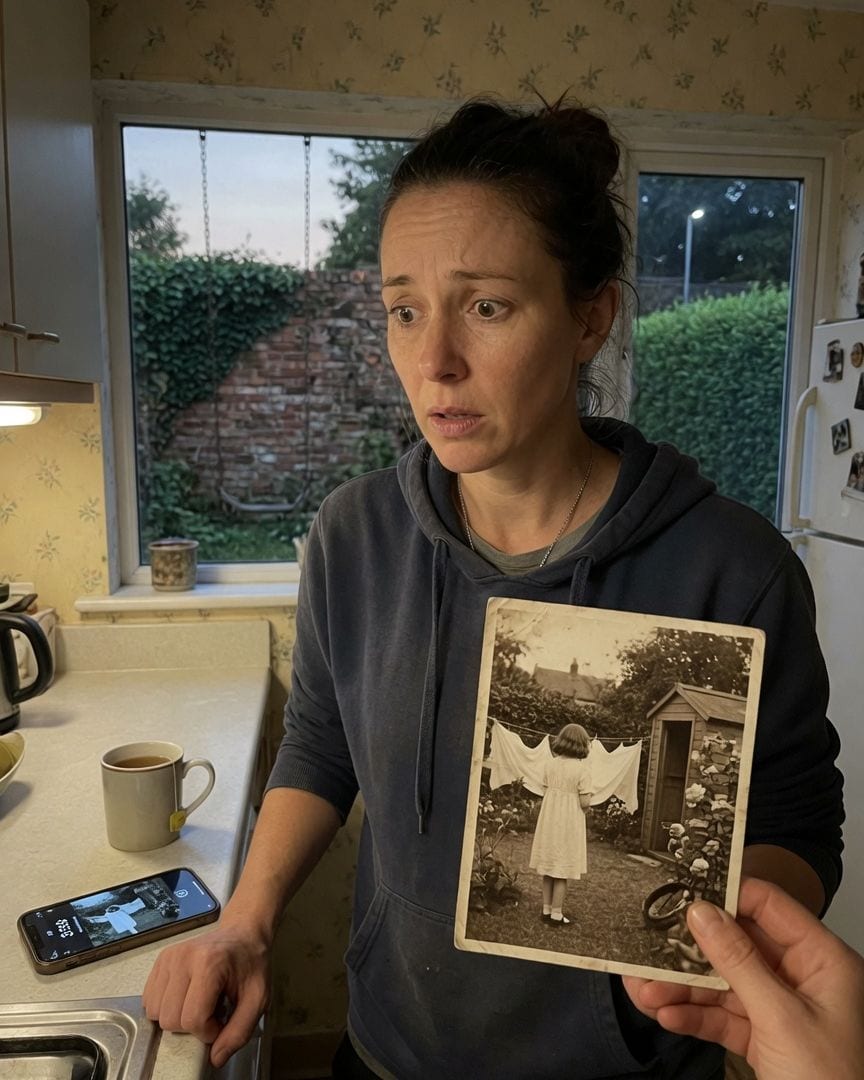
She was standing on my lawn, in the dead center, her back to the house, facing the old wooden fence at the back of the property. She wore a white nightdress, thin and billowy, shimmering faintly in the low light.
My first thought was a prank, some kids from the cul-de-sac. But then I looked closer at the garden itself.
Everything around her was wrong. Where my bright blue trampoline usually sat, there were lines of neatly hung white sheets, swaying stiffly.
Against the back wall of the house, where I'd planted my climbing roses, stood a small, dilapidated wooden privy, its door slightly ajar.
Next to it, glinting dully, was a heavy, rusted mangle, the kind my grandmother used to tell stories about. It was all impossible.
I rewound the footage, my hand shaking slightly. I played it again. The timestamp, 3:33 AM, was perfectly clear, burned into the corner of the frame. The image was sharp, undeniable.
I zoomed in on the girl, then on the impossible privy, the mangle, the washing lines. They were there. I checked the camera settings, the date, the time zone. Everything was correct.
Every night, the last frame of the girl showed her head slightly turned, just starting to look over her shoulder, as if someone had called her name.
The logical part of my brain screamed. A glitch. A trick of light. But the images were too distinct, too consistent. The night was cold, yet a bead of sweat trickled down my spine.
I spent the next day outside, raking over every inch of the lawn. I found no disturbed earth, no faint indentations where a privy might have stood, no rusty flakes from a mangle. Nothing.
It was my garden, precisely as it had always been. I even tried a desperate Google search for "historical satellite images," convinced I'd find some forgotten record, a hidden annex, anything.
But my house, built in the early 1920s, long after privies were a common sight in suburban homes, showed no such structures in any archived photograph.
That evening, I was making a cup of tea, trying to banish the strange footage from my mind. I glanced out the kitchen window, which normally overlooked Edmund Fairfax’s immaculately trimmed hedge. For a split second, the hedge was gone.
In its place, stretching to the horizon, was a crumbling brick wall, thick with ivy, and just beyond it, a thin, spectral child’s swing set, rusted and still, its chains motionless.
The air in the kitchen seemed to drop five degrees. Then, as quickly as it appeared, it snapped back to the familiar green of Edmund's hedge.
I gripped the counter, my knuckles white. An optical illusion, I told myself, a trick of the light from the setting sun, my mind playing games because I was tired. But the image had been too clear, too specific.
The red bricks, the exact decay of the rust on the chains. It wasn't a blur or a shadow. It was a window.
I thought back to the camera footage, the girl in the nightdress, the impossible garden, and a cold, creeping dread began to settle deep in my bones.
Later, searching for old property records online, I found a grainy, public domain photograph of my house, dated to the mid-1930s. There, unmistakable, were the exact wooden privy, the heavy mangle, and the washing lines from my trail camera footage.
A strange intuition gnawed at me. I started to systematically search the house, attic to basement, as if a clue had been left specifically for me.
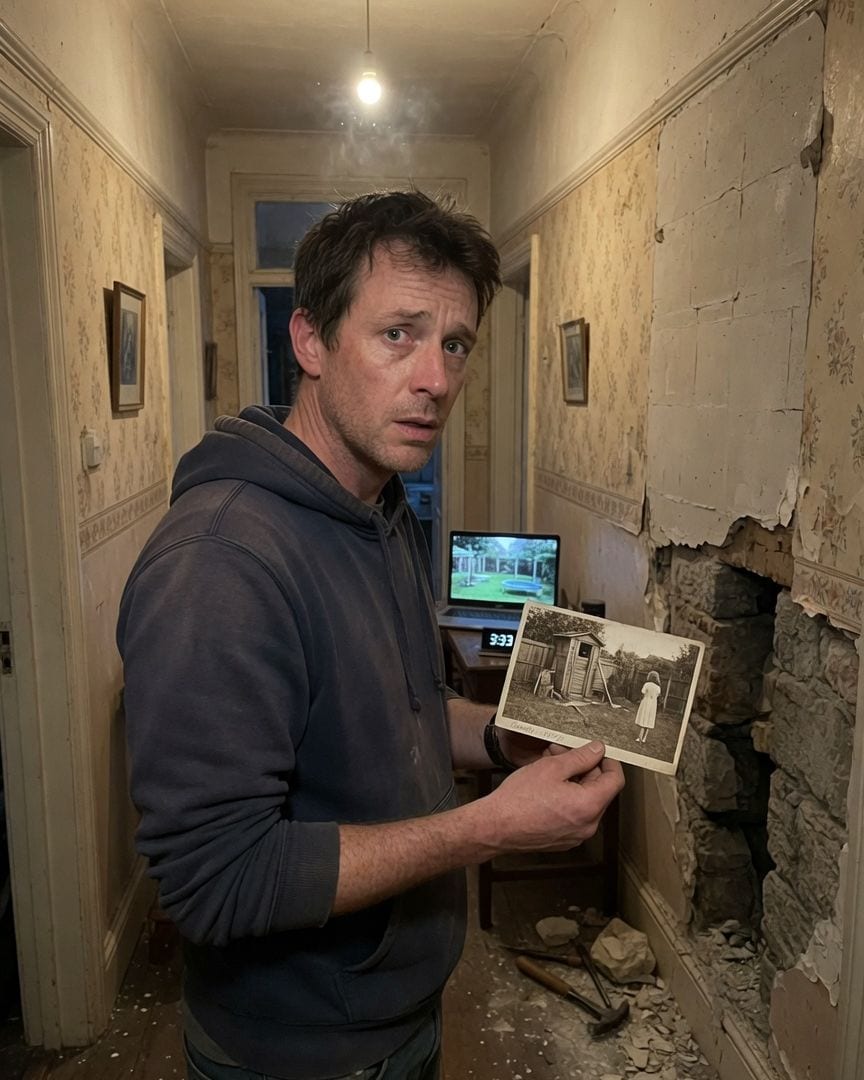
Behind a loose floorboard in the far corner of the attic, tucked into a small, dusty cavity, my fingers brushed against something stiff and papery. I pulled out a small, faded photograph, sepia-toned and brittle with age.
It showed a young girl, no older than twelve, standing in a white nightdress. Her back was mostly to the camera, but her pose was familiar. She was in a garden. My breath hitched.
The garden was precisely the one from my trail camera footage: the dilapidated privy, the heavy mangle, the washing lines strung across the lawn.
The girl's face was turned away, obscured by shadow, but her nightdress was identical to the one in the video. The photograph itself was undated, but the style, the heavy borders, the muted tones – it was unmistakably 1930s.
A cold certainty settled in my chest, heavy and solid as stone. I stood there in the dim light of my kitchen, the old photograph clutched in my hand.
The details, from the wooden privy to the specific arrangement of the clothesline, perfectly matched the impossible garden captured by my trail camera. I stared at the blurred figure, connecting the impossible dots.
I took the photograph to the local historical society the next morning. The archivist, a kind but perpetually busy woman named Mrs. Albright, confirmed the photo's era with a practiced glance but couldn't identify the girl.
"Could be anyone's garden from that period, dear," she said, before getting back to her microfiches. Undeterred, I began digging into the house's history myself, poring over old property deeds and census records, anything I could find.
It took days of squinting at barely legible script, but I found it. A family named Sterling had lived in my house in the mid-1930s. They had a daughter, Martha.
The records noted her birth in 1922 and then, starkly, her inexplicable vanishing in 1936. "Disappearance, presumed lost," the entry read, without further detail. Martha Sterling. A girl, twelve years old. The same age as the girl in the photograph.
The next day, as I was leaving for work, the "Door Onto The Wrong Year" manifested again, but this time it was clearer, sharper, and held for a fraction of a second longer.
The open doorway to my living room, as I passed it, suddenly showed the room filled with heavy, dark furniture I’d never seen before, upholstered in faded velvet.
A gramophone sat on a small table, playing a faint, scratchy tune I couldn't quite identify, an old waltz or a lullaby. And there, on a plush armchair by the window, sat a small, porcelain doll with wide, vacant eyes.
A profound chill settled over me, not just from the visual, but because I caught a distinct, faint scent: burnt sugar, like a forgotten saucepan on a stove. It was unsettlingly real, a sensory imprint.
I wrote it all down that night, meticulously cataloging every detail, every time, every anomaly, realizing these weren't random glitches. These were specific echoes.
My inquiries at the historical society and local records office didn't go unnoticed. My elderly neighbor, Edmund Fairfax, whose family, I now knew, had built my house, stopped me one afternoon as I was checking my mail.
He was out tending his roses, his movements slow but precise.
"You've been asking about the old house, haven't you, Laura?" he said, his voice calm, almost too calm. "About its... history."
I felt a prickle of unease. His eyes, though pale with age, seemed to hold a deep, unsettling knowledge. "Just curious about who lived there before me," I managed, trying to sound casual.
He nodded, a slight, almost imperceptible dip of his chin. "It's got a long memory, that house. Some places do. The Fairfaxes, we always knew it. Best not to stir things too much, dear. Some things are better left undisturbed."
He smiled, a thin, unsettling curve of his lips that didn’t quite reach his eyes. The implication was clear: he knew. And he was subtly warning me.
Later that week, I found a small, smooth river stone on my doorstep. It was a type not local to my garden, gray and perfectly oval, completely out of place among the gravel.
It was placed deliberately, almost like a marker. I picked it up, turning it over in my hand, the silence of the afternoon suddenly heavy with unspoken meaning. The message was unspoken, but impossible to ignore: I was being watched.
My digging had drawn attention.
I decided to confront Edmund directly. The river stone felt heavy in my hand as I walked across the lawn to his front door. I knocked, the sound echoing hollowly. He opened it moments later, his expression unreadable.
"Mr. Fairfax," I began, clutching the stone, "I need to know what you know about my house. About Martha Sterling."
He simply nodded, his gaze distant, and invited me in. His living room was a museum of antique furniture, filled with the faint, comforting smell of pipe tobacco and old books. He didn't deny anything.
"Martha Sterling," he said, settling into a high-backed armchair. "A sad story, that. The house remembers her quite vividly, you see."
I felt a chill despite the warmth of the room. "The trail camera, the garden, the door… it's all Martha, isn't it? The house is replaying her life."
Edmund nodded slowly, his eyes fixed on some point beyond me. "Not her whole life, dear. Just certain moments. Intense ones. Routines. The house doesn't forget. It keeps them."
He explained that his family, the original builders, had always known the house had a "peculiar nature," a way of "imprinting" significant events. "The 3:33 AM, that was when Martha would slip out to the privy.
A small, private ritual before dawn, before her parents woke. A secret, perhaps. The turning you described, the glance over the shoulder… that was when she'd glance back at the house, perhaps for the last time before she vanished."
The pieces slammed into place, coherent, terrifying. It wasn't a random haunting; it was a replay, a loop, driven by something intense and personal. "So, it's not a ghost?" I whispered, my voice hoarse. "It's... a memory?"
Edmund smiled faintly, a sad, knowing smile. "A very, very persistent memory. And some memories are more vivid than others. Some never fade. Especially when they are unresolved."
Reeling from Edmund's calm admissions, I pushed further, a desperate edge to my voice. "Why does it happen? Why Martha? And why that specific time?"
Edmund sighed, a sound that seemed to carry the weight of generations. He rose slowly from his armchair and walked to a locked mahogany cabinet by the fireplace.
With a small, delicate key, he opened it and retrieved a heavy, leather-bound ledger. The cover was worn smooth, the corners rounded with age. "My family kept records," he explained, placing it carefully on a small table.
"Not just of the house, but of its... tendencies."
He opened it to a brittle, yellowed page. The elegant, looping script detailed Martha Sterling's disappearance and the subsequent 'recurrences' observed by his grandfather. He pointed to a specific passage, describing the garden returning, the figure, always at 3:33 AM.
But my eyes scanned further down the page, to an even older entry, dating back to the house's very first decade.
It described a similar phenomenon involving a child from the original owners, a "small boy who sang in the morning" before also vanishing.
My breath hitched again. This wasn't just Martha. It was a pattern.
And then, in the margin, scribbled in a different hand, a bolder, older script that I recognized as Edmund's great-grandfather, was a chilling, almost poetic phrase: "The house’s appetite for moments, once sated, demands more."
I looked up at Edmund, my blood running cold. He closed the old, leather-bound family ledger, its pages brittle with age.
He looked at me, his expression unreadable, after I had just read the chilling entry about not just Martha, but an even earlier, similar 'memory' from the house's first occupants, coupled with the cryptic phrase 'the house's appetite'.
The implications of a pattern far older and more consuming than I could have imagined hung heavy in the air between us.
Edmund sat back down, the ledger still on the table between us. "It's not just Martha, you see," he explained, his voice devoid of emotion, as if relaying a historical fact. "It's the house itself. It absorbs, it retains.
When an event, a routine, is charged with enough emotion, enough repetition, it becomes part of the house's fabric. It replays. Like a record on a gramophone, endlessly."
He clarified that Martha's 3:33 AM routine, her clandestine trip to the privy, was tied to a deep, personal secret she kept, a small act of defiance or comfort away from her strict parents, before her unexplained vanishing.
The turning, her last moment of conscious choice before she was gone. "The house latched onto that. It's not malevolent, not exactly. It's just... persistent. It doesn't let go."
He confirmed the scent of burnt sugar I'd caught was another echo, a specific treat Martha loved, a small comfort item that became imprinted.
He then revealed his family's true role: they were the 'keepers,' observing, documenting, ensuring no one 'fed' it more than necessary. The phrase 'the house's appetite' from the ledger, he explained, referred to the initial, intense imprinting process.
"It consumes the moment. Not a physical hunger, you understand, but an energetic one. It captures the emotional residue, the finality of it. Then it plays it back, forever."
I felt a profound horror in the coherence of it all. Every glimpse, every scent, every impossible image now snapped into place, not as a random haunting, but as the relentless, indifferent mechanism of the house itself.
A house that didn't just remember, but trapped moments.
I returned to my house, the weight of Edmund's explanation pressing down on me. I walked through the familiar rooms, now imbued with a terrifying new meaning.
The kitchen window, the attic floorboard, the garden – each was a stage for a perpetual, unseen performance, a silent loop of suffering and absence.
I confronted Edmund one last time, desperation in my voice. "Can it be stopped? Can I break the cycle? Can Martha be... released?"
Edmund looked at me with pity, his eyes ancient and weary. "No, dear. Not truly. You can leave, of course. But the house... it will simply find new moments to hold. New routines to replay. It's its nature.
A house cannot be unmade of what it is." He explained that his own family eventually moved out of the main house, building a smaller one nearby, to simply observe, to manage the "records," as he called them.
I realized the terrifying truth: there was no exorcism, no battle to be won. The house was not evil; it simply was. The dread deepened as I understood my own powerlessness.
I could not stay, could not live as a silent witness to a past that wasn't mine, yet was constantly present. The confrontation wasn't with a ghost, but with an unyielding, indifferent truth.
I began packing, the silence of the house no longer comforting, but ominous, waiting for me to become another 'memory' it might choose to keep.
I listed the house for sale quickly, never fully disclosing its unique 'history,' simply citing a job relocation. The selling process was unnervingly smooth, as if the house itself wanted me gone, or perhaps, wanted new 'moments' to absorb.
I moved into a small apartment across the city, far from any garden or old family ledgers.
I sometimes see Edmund Fairfax in my old neighborhood when I drive past, a calm, knowing figure tending his garden, a silent guardian of the house's endless memory. He gives a slight, almost imperceptible nod.
I never look back at the house, not directly, but the image of the girl, the wrong garden, and the turning, is seared into my mind.
The silence in my new apartment is deafening, a contrast to the house’s constant, unseen hum of memory.
I've bought a new trail camera, not for foxes, but for my own peace of mind, pointed at the empty wall of my bedroom. I tell myself it’s just a habit.
But sometimes, when the light hits just right in the periphery of my vision, I still see a faint outline in the corner of my eye, starting to turn.
If this one got to you
My trail camera keeps catching a girl on the lawn at 3:33, but the garden around her is wrong—a privy, a mangle, washing lines where my trampoline is. The last frame each night is her starting to turn.
I inherited an old house and set up a trail camera for foxes. But the footage changed: a young girl appeared in my garden at 3 AM, standing where my trampoline was, surrounded by washing lines where my rose bushes bloom. The landscape was decades out of place.
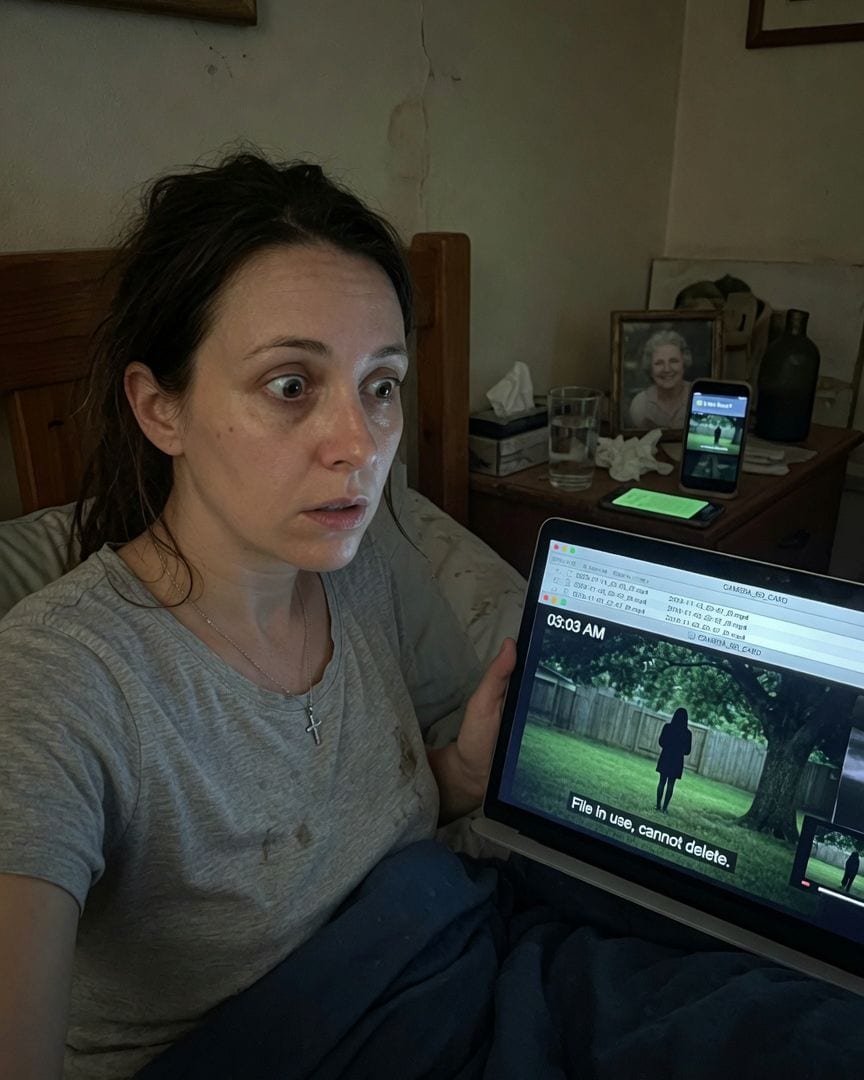
My security camera emailed a clip at 3:03am: a woman stood in the garden, back to the house. The subject line read 'Is this Mum?' My mother died in March. I can't delete the file.
My security camera sent an alert at 3 AM: 'Is this Mum?' But my mother, Constance, died in March. The grainy clip showed a woman in the garden, perfectly still, her back to the camera. The impossible question coiled a sick dread in my gut.
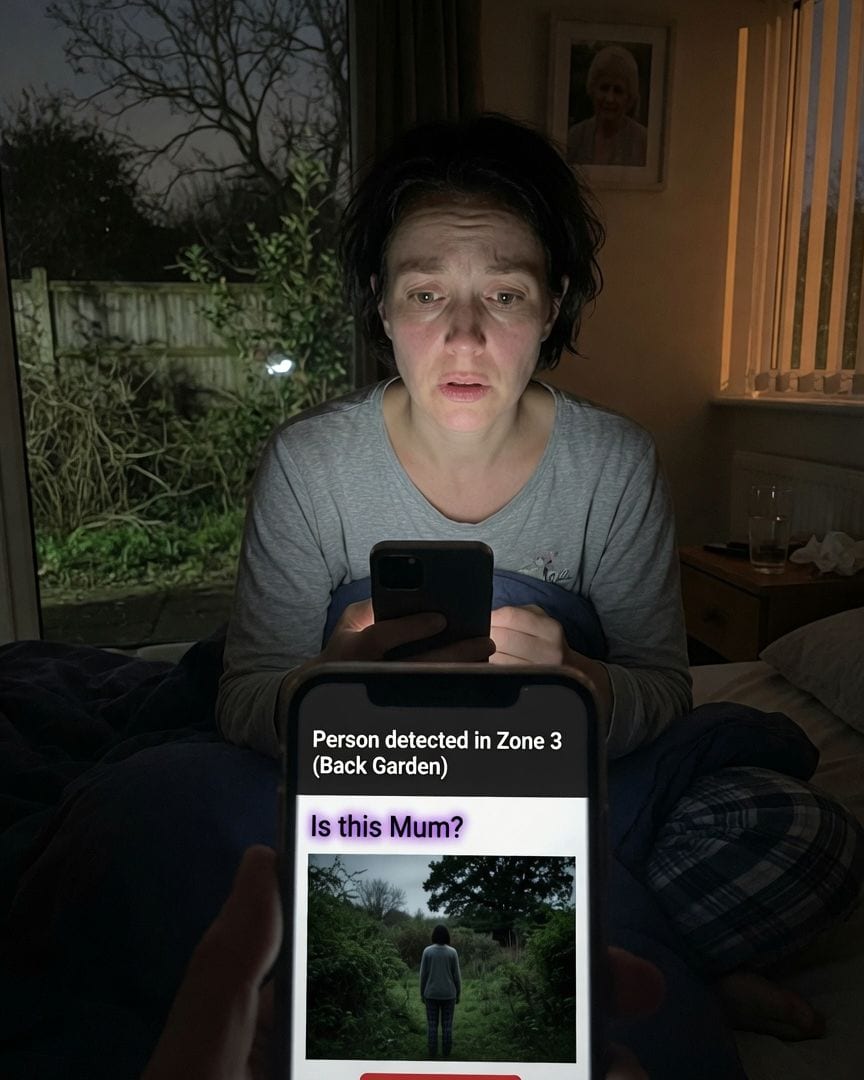
My security camera sent a clip at 3:03 AM: a woman standing in my back garden. The subject line read, 'Is this Mum?' My mother died here in March.
My phone pinged at 3 AM with a security camera alert, interrupting the deep quiet of my house. The attached clip showed a still figure in the back garden, but the subject line froze me. It asked, 'Is this Mum?' My mother died here in March.
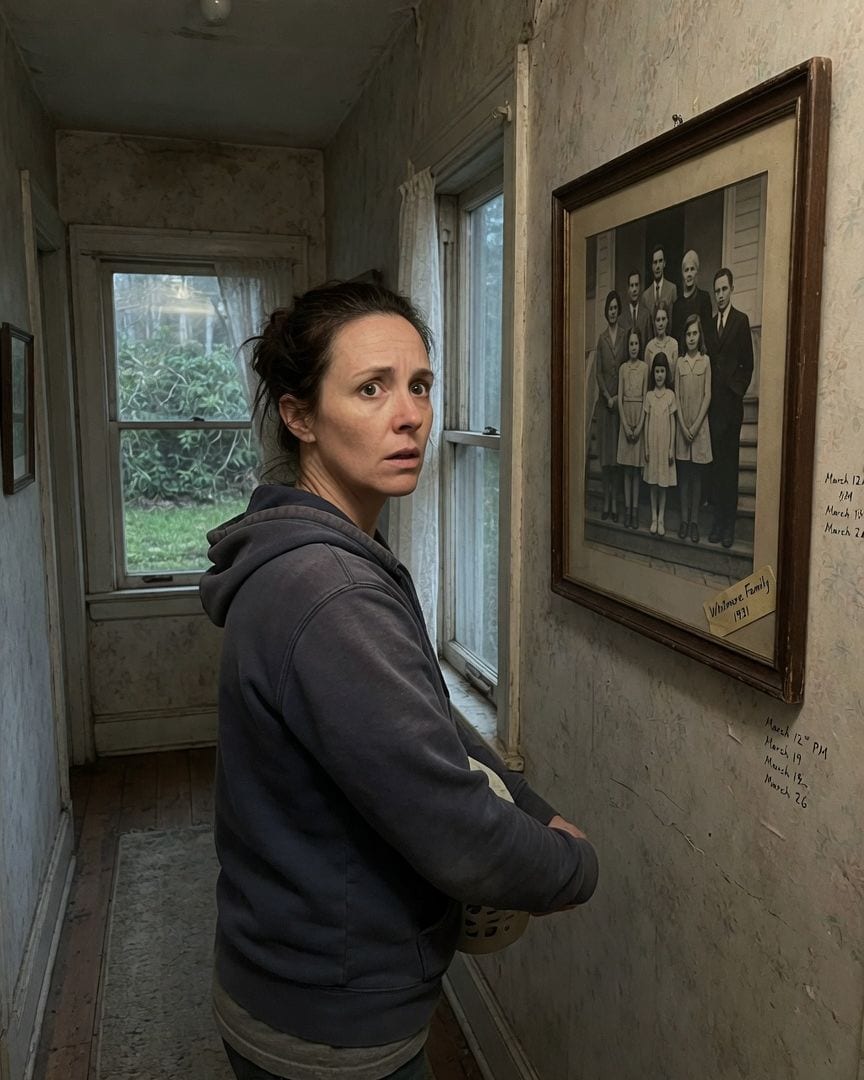
My inherited family portrait. The child's face in it is slowly, steadily turning to watch me.
I inherited an old New England coast house, a quiet place full of history. Among boxes, I found a 1931 family photograph; soon, the child's face in it began to slowly, undeniably, turn towards me.
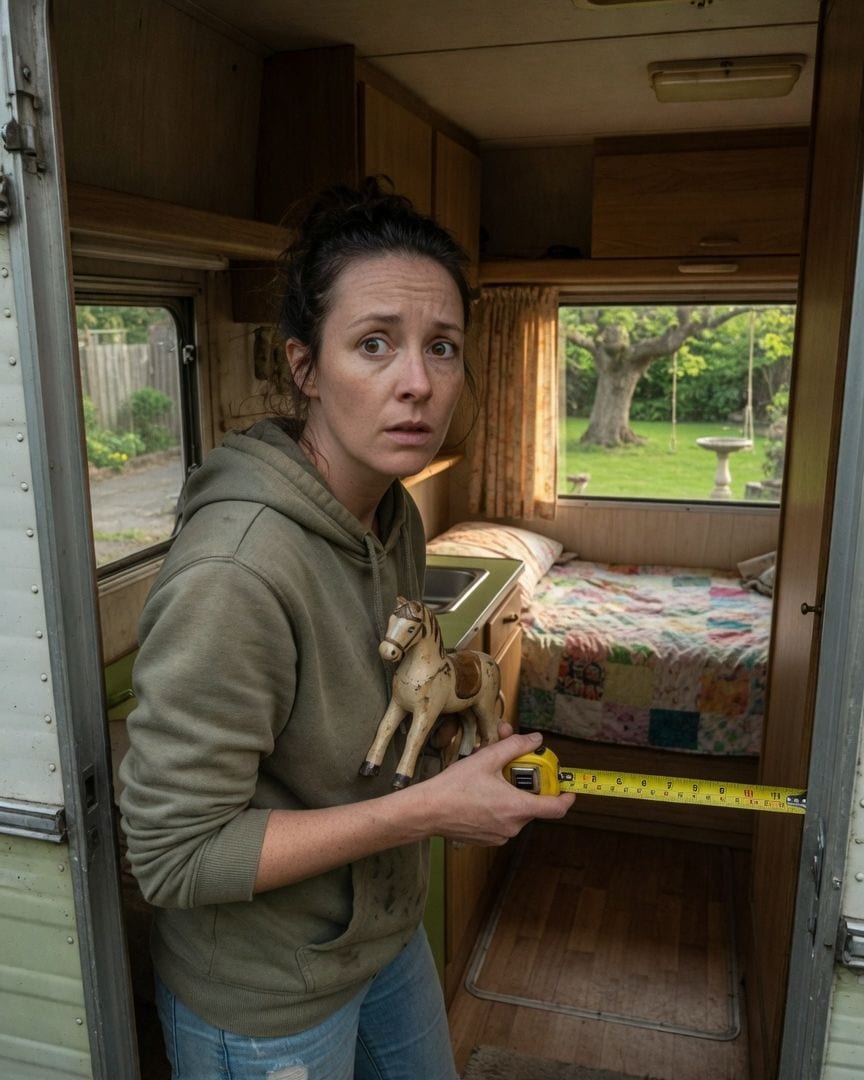
My new caravan's corridor runs longer than the caravan itself. Eleven feet of hallway past the end wall, to a room with a made bed and a window looking out on a garden it's never been parked in.
I finally bought my dream vintage caravan, a twelve-foot beauty. But when I measured inside for a mattress, the numbers didn't add up. Beyond where the wall should be, an impossible room with a window looked out onto a manicured garden I'd never seen before, a garden that couldn't possibly exist.
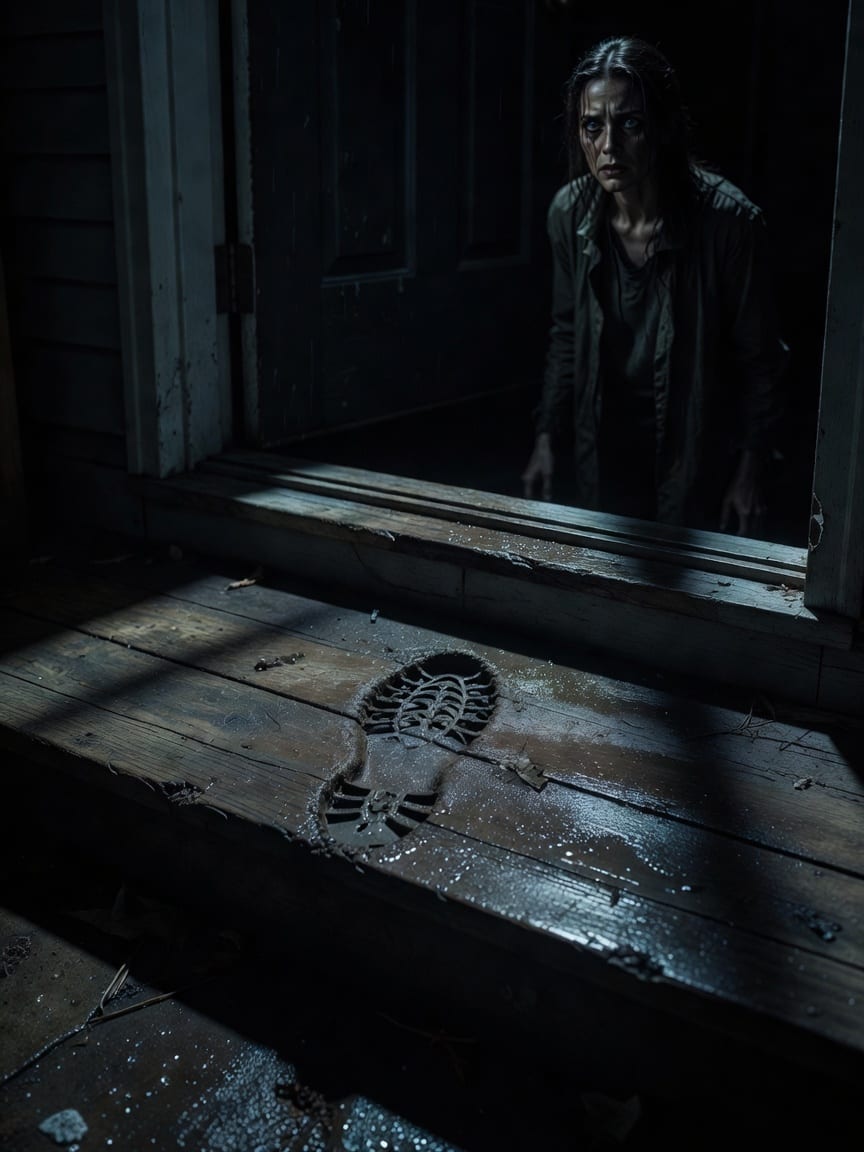
My landlord's only rule: never let the outside tap run after sundown. Last week it dripped. This morning, wet bootprints ringed the back step from the tap to my door, all the same size. The tap was off.
We'd just settled into Waterside House, with its strange landlord rule about the outside tap. After the washer broke, I found perfect, wet bootprints leading from the tap to our back door, but the tap was cranked completely off, tighter than I could manage.