My security camera sent a clip at 3:03 AM: a woman standing in my back garden. The subject line read, 'Is this Mum?' My mother died here in March.
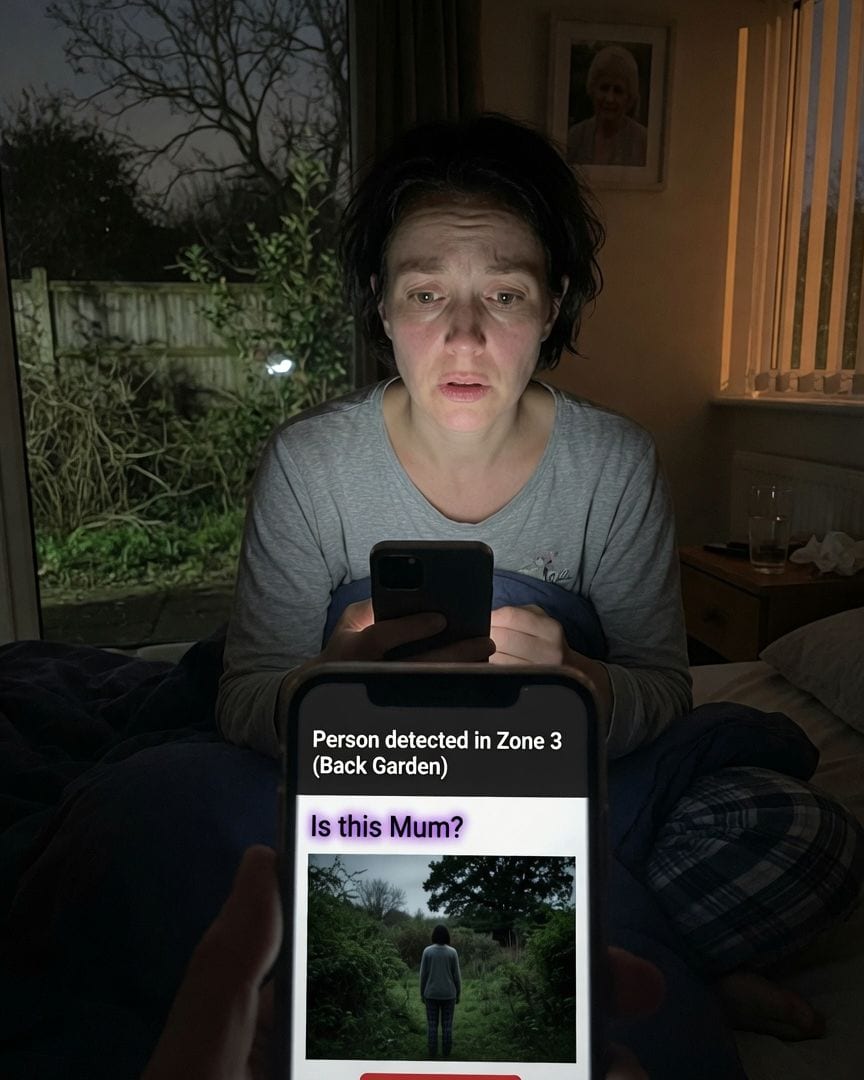
My phone pinged at 3:03 AM, bright in the dark room. I usually keep it on silent, but for some reason, tonight it wasn’t.
My heart gave a little jump, not fear, just that jolt you get when a sound breaks deep sleep. It was an email, a system alert from my home security camera.
The subject line: 'Person detected in Zone 3 (Back Garden)'.
I blinked, trying to clear the sleep from my eyes. A person? In my garden? I fumbled with the screen, the blue light harsh. The attached clip loaded slowly, a short, grainy burst of night vision footage.
It showed the overgrown back lawn, the old oak tree a dark mass against the sky. And there it was. Standing perfectly still, with her back to the house, was the silhouette of a woman.
She was just inside the line of dense, ancient bushes that separate our property from the neglected patch of woodland beyond. She didn't move, didn't shift. Just stood.
It wasn’t the figure itself that made the cold spread through me. It was the automatically generated subject line, hovering above the clip in my inbox, that froze the blood in my veins: 'Is this Mum?'
Mum. My mother. She died here, in this house, in March.
I stared at the screen, then at the dark, silent garden outside my bedroom window. Nothing moved. The streetlights from the next block cast long, skeletal shadows of tree branches against the fence.
The house was utterly still around me, the kind of quiet that feels heavier than sound. The email sat there, in my inbox, waiting. I tried to delete it, a reflex. Nothing happened.
An error message, small and insistent, flashed: 'File in use or corrupt.'
A glitch, I told myself, trying to breathe normally. Had to be. The camera often flagged squirrels or the neighbour’s cat as 'person detected,' especially when the light was bad. But the subject line? 'Is this Mum?' That was new.
I’d never seen the AI suggest a specific person, let alone one who’d been gone for months. My mother hadn’t even visited the back garden much in her last few years. The overgrowth had gotten too much for her.
I spent the next hour trying to rationalize it away. A reflection? The moon, somehow caught in the lens? I checked the camera’s event log. Nothing. No other activity flagged around that time.
I scrolled through other clips from the night – just wind in the trees, rustling leaves, the occasional car passing on the street outside the front of the house.
Nothing that explained a still figure in the back garden at three in the morning.
The next morning, Ryan, my partner, found me at the kitchen table, staring at the clip on my laptop. He’s always been the practical one, the calm voice of reason.
I showed him the footage, the figure, and the impossible subject line. He frowned, running a hand through his perpetually messy hair.
"Huh," he said, leaning closer to the screen. "Looks like a person, I guess. But it's so dark. Could be a stray animal, or a trick of the light. You know these things are always triggering on nothing."
He tapped the screen. "Maybe it was a vagrant, and the camera got confused. The AI’s not perfect, Nina."
He tried to dismiss it, to make it mundane. He even tried to delete the email from my inbox, a quick, reassuring gesture. "Get rid of it, no need to dwell."
But the same error message flashed: 'File in use or corrupt.' He tried again, clicking harder, looking annoyed. "What the hell?"
He then accessed the camera’s app on his own phone, navigating to the cloud storage where the clips were backed up. He found the 3:03 AM timestamp, selected it, and tried to delete it directly from the system.
The system wouldn't allow it. A small, red notification popped up: 'Delete operation failed. Clip locked by system.'
We checked the camera settings, the firmware updates. Everything was normal, up-to-date, no unusual activity or tampering. The clip, the woman, the impossible subject line, remained stubbornly present, resisting all attempts at a mundane explanation.
It was there, an undeniable fact, an observation that simply refused to be reasoned away or deleted.
Still unable to delete the clip from the cloud or my inbox, a new thought nagged at me. What if the emailed version was a compressed, shortened snippet? The camera records to an SD card locally before uploading.
I needed to see the original, full recording.
I went outside, my hands clammy. The security camera was a small, white unit mounted high on the wall, tucked under the eaves. My fingers fumbled slightly with the cold plastic housing.
I unlatched the cover, removed the tiny SD card, and brought it back inside, a knot tightening in my stomach.
Back at my laptop, I inserted the card. It opened immediately, showing folders dated by day. I navigated to the file from this morning, to the exact 3:03 AM timestamp. I clicked play.
The clip began, identical to the emailed version. Dark garden. Still figure with her back to the house, outlined by the faint glow of the city beyond the trees.
But this version, from the original card, was a few seconds longer. The woman stood there, unmoving, and then, slowly, almost imperceptibly, she turned her head. Just slightly over her shoulder. To look towards the house.
It wasn't her. It was distinctly not my mother. The face was obscured by shadow, a deep, featureless void where details should have been, but the profile, the angle of the jaw, was entirely unfamiliar.
And then, I saw it.
Behind the woman, in the background of the garden, where only a dense thicket of overgrown bushes should be, where I knew for a fact only a tangle of neglected branches existed, there was a low, moss-covered stone archway.
Half-hidden, ancient-looking, but clearly visible. It was there. Physically there. A structure that physically cannot be there.
Ryan, watching the full clip with me, went pale. The archway, so faint in the first few frames, became starkly undeniable when the woman turned. We looked at each other, the same question in our eyes.
“It has to be some kind of… visual distortion,” he said, but his voice lacked conviction. He kept replaying the clip, pausing it on the archway, zooming in. “Like a lens flare, or… or some kind of weird reflection.”
“Reflection of what?” I countered, my own voice tight. “There’s nothing like that back there. Just dirt and weeds and those impenetrable bushes.”
We grabbed flashlights and went out to the garden. The air was cool and still. The bushes were exactly as they always were – dense, overgrown, a solid wall of green and brown.
We pushed at them, tried to part the branches. They were too thick, too ancient, a tangled knot that resisted us. There was no archway, no sign of any structure, no hint of stone beneath the foliage.
Nothing but the familiar, overgrown chaos of my back garden.
I spent the next few days in a frantic blur. I needed an explanation, a historical one. The house had been in my family for generations. Had there ever been anything like that?
I pored over old property records, digitized local archives, even antique maps of the area, searching for any mention of a different garden layout, a 'folly,' a ruin, anything. I found nothing.
The maps just showed ‘unoccupied land’ or ‘wooded area’ beyond the formal garden, always ending at the line of bushes.
Finally, desperate, I drove to see Oscar Rutherford, my elderly neighbor. He’d lived next door for decades, his family before him. His memory was famously sharp, often better than mine.
I brought him a cup of tea, and casually steered the conversation to the history of the houses on our street.
He settled into his armchair, a faraway look in his eyes. "Ah, the old Prescott place," he mused, referring to my house by my mother’s maiden name. "Always had its quirks.
Used to be a grand old house, before the upkeep got too much for your folks." He stirred his tea, the spoon clinking softly. "My grandad used to tell stories about it.
Said it had a magnificent back garden, formal one, but then… there was always this other bit. A sort of 'back garden with a folly', he called it. But it was 'walled off or let go generations ago.'
After some trouble, I think. Never heard the full story, mind."
He took a sip, then added, almost as an afterthought, "The old folks used to say it had its own little world back there. A place that didn't quite belong.
They even called it the 'forgotten garden' sometimes, because it was so completely cut off. You wouldn't even know it was there now."
My breath hitched. "A folly? Walled off?"
He nodded slowly. "Aye. Always heard the stones of the forgotten garden were... different."
I didn’t wait to finish my tea. I returned home, the words 'forgotten garden' and 'stones' echoing in my mind. The exact spot where the archway had appeared in the footage.
My shovel hit something hard and flat after only a few inches of digging. Not rock, not tree root, but something clearly man-made. A flagstone.
As I continued to dig, a prickling sensation crawled up my spine. It wasn’t the sun, nor the exertion. It was the distinct feeling of being watched. I glanced around, scanning the empty garden, the surrounding houses. Nothing.
Just the quiet hum of an afternoon, broken by the distant sound of a lawnmower. I dismissed it as nerves, a natural reaction to unearthing something potentially significant, something I couldn't explain.
Later that afternoon, a familiar ping from my phone. Another alert from my security camera. This time, not 'person detected,' but 'Motion in Zone 3 (Back Garden)'. I opened the clip immediately. It was empty.
Just the garden, the bushes still, the newly disturbed patch of earth where I’d been digging.
But then, as I watched, the camera itself seemed to pan slowly, smoothly, from left to right, as if following something invisible moving just out of frame. It lingered on the dense line of bushes for a moment, then stopped.
There was nothing there. Just the slow, unnatural movement of the camera itself.
A few hours later, an email landed in my inbox. The sender was anonymous, just a blank space. The subject line, in stark, unformatted text, read: 'Leave it alone.' No message body, no attachments. Nothing.
I stared at it, a cold knot forming in my stomach. Was this some kind of sick prank? Or was it connected? I deleted it, telling myself it was a random scam, spam that somehow slipped through the filters.
But then, as I stepped out onto my back porch to take out the recycling, my foot brushed against something hard. I looked down. Resting on my doorstep, nestled against the worn welcome mat, was a small, smooth, grey stone.
It was unlike any stone from my garden, which was mostly red brick fragments and dark soil. This one was pale, almost translucent in places, cool to the touch, and felt ancient, worn smooth by time and water.
It definitely hadn’t been there an hour ago when I’d last checked the mail.
A cold dread settled over me. It wasn’t just a random stone. Someone, or something, was watching me. And knew exactly what I was doing.
My hands trembled as I clutched the smooth, grey stone. I drove straight back to Oscar Rutherford’s house, needing answers, needing his calm, knowing presence. I hardly knocked before he opened the door, as if expecting me.
He took one look at the stone in my palm and his face, usually so placid and lined with good humour, went pale. His eyes, normally twinkling, widened. "One of the forgotten stones," he murmured, his voice barely a whisper.
He reached out, his frail fingers tracing the worn surface of the stone. "Aye. Just as I remember."
He led me to his sitting room, the air suddenly thick with an unspoken history. He sat down, a deep sigh escaping him. "My family," he began, "we owned this house before the Prescotts bought it. Generations ago.
When I was a boy, my grandmother would tell me stories. Always hushed tones, mind. About that back garden. The one with the folly, the archway. It wasn't always forgotten."
He paused, gathering his thoughts. "It was sealed off after a tragedy. A housemaid, a young woman named Lydia Walsh. Mid-twenties, pretty, quiet. She vanished without a trace from that garden. Gone. Just… gone. Never found a body.
The local police searched for weeks. But they did find similar stones to this one, all along the edges of where she was last seen, near that old archway. Like they were marking a spot."
Oscar’s gaze was fixed on the middle distance, seeing something I couldn't. "My grandmother… she believed Lydia became 'part of the passage.' That the garden itself, or something in it, 'took her.'
Not like a kidnapping, she said, but like she walked right into it, and it closed behind her. Like she was drawn in. The family, my family, they were terrified.
They bricked up the archway, let the whole thing become overgrown. Hoped to 'contain' whatever happened. To forget it."
He turned to me then, his eyes wide, a chilling warning in them. "Some things are best left buried, child. She's still in there, waiting. Waiting for someone to open it again."
The 'Is this Mum?' clip. The faint, impossible archway. The woman slowly turning in the dark, her face obscured. The strange camera panning. The anonymous email telling me to 'Leave it alone.'
The small, smooth stone on my doorstep, now confirmed as one of the 'forgotten stones.' It all snapped into sickening, terrifying focus.
It wasn't a glitch. It wasn’t a reflection. It wasn’t a vagrant or a trick of light. It wasn’t my mother. It was Lydia. The vanished housemaid.
A presence from a sealed-off past, using the familiar image of my mother as a lure, trying to make herself known. And I, unknowingly, was answering.
I returned home, the weight of Oscar’s story pressing down on me, heavier than any stone. The entire house seemed different now, permeated by a chilling sense of history, of a boundary too thin.
I replayed the security camera footage, the low, moss-covered archway now starkly clear in my mind, a tangible entryway to another time, another reality.
Lydia, the woman turning in the shadows, was no longer a ghost; she was an active, conscious presence.
The stone on my doorstep, the anonymous email, the camera’s strange, deliberate pan – it all pointed to Lydia not just being a trace from the past, but an entity interacting directly with the present.
The 'Footage of Nowhere,' as I now thought of it, was a bleed-through. A direct window into another reality, anchored to my house, to my garden. And I had stumbled into it.
The rational part of my brain screamed to stop, to board up the garden, to move. But another part, a primal, compelling urge, knew I couldn’t. I had to uncover what was truly there, what exactly happened to Lydia Walsh.
I had to understand.
I returned to the spot in the garden where my shovel had hit something hard. The late afternoon sun was beginning to dip, casting long, strange shadows. With renewed, almost desperate determination, I dug harder, faster.
The soil was loose from my earlier efforts. I cleared away more of it, revealing a section of old, crumbling brickwork, clearly part of a much older structure.
It wasn’t a wall; it was a rough, concave surface, built into the earth itself.
Behind it, a small cavity, barely big enough to fit my hand.
Reaching in, my fingers closed on something cold, smooth, and perfectly round. I grasped it, my knuckles scraping against the rough brick, and pulled it out.
It was a small, intricately carved wooden sphere, about the size of an apple. Impossibly heavy for its size, made of a dark, unfamiliar wood, with strange, swirling symbols etched into its surface.
It was utterly unlike anything I’d ever seen, clearly very old, and felt like it shouldn’t exist. As I held it, a faint pulse, a cold energy, seemed to emanate from within.
The sphere lay in my palm, its impossible weight chilling my hand even indoors. Ryan stood over me, his face a mask of horror. "Get rid of it, Nina," he pleaded, his voice tight with fear.
"Throw it into the deepest part of the river. Just get it out of here. Please."
But I couldn't. An overwhelming, almost magnetic pull emanated from the sphere, binding me to it. It felt ancient, alive. I spent days researching the strange symbols etched into its surface, the dark, unfamiliar wood.
I scoured the internet, visited university libraries, consulted esoteric art books. Nothing. It didn't match any known culture, any recorded craft.
Then, by pure chance, buried in a digitized archive of a local historical society, I found a single, obscure reference.
It was an old, tattered diary entry from a previous owner of my house, dating back over a century, long before the Prescotts.
The entry described 'a carved sphere of dark wood' found in the hidden garden, an 'object of focus' that seemed to 'draw things through.' The language was archaic, almost poetic, but the terror was palpable.
The diary explicitly mentioned Lydia Walsh, the young housemaid. She became 'obsessed with the sphere and the other place it revealed.' The entries grew increasingly frantic, less coherent.
The final legible sentence, scrawled in a shaky hand, made my blood run cold: 'Lydia becoming part of the passage, no longer a girl, but a doorway.'
The sphere wasn't just an artifact, a relic of a forgotten past. It was a conduit, a living anchor. Lydia, the housemaid, wasn't merely trapped in the hidden garden; she became the passage, a point of entry between realities.
The security camera wasn't glitching. It was seeing through her, catching glimpses of the bleed-through she now embodied.
Now, I understood. The sphere was the key. It wasn't just drawing Lydia's trace; it was drawing Lydia herself, closer. The 'Is this Mum?'
was a distorted echo, a system misidentification of a presence attempting to manifest, using a familiar image to lure me in.
The security camera footage, the impossible archway, the small, smooth stone on my doorstep, the anonymous 'Leave it alone' email – all were Lydia's attempts to communicate, to lure, to finally cross over.
To complete whatever process had begun a century ago.
I clutched the sphere. It hummed faintly, a low, cold thrum against my palm, a vibration I felt deep in my bones. I looked out the back window. It was dark, the moon a sliver.
But I could see the outline of the woman, Lydia, standing on the lawn. Clearer than before. No longer a shadowy trace, but almost solid, now facing the house directly.
Lydia slowly raised a hand, her arm appearing more defined, beckoning.
An overwhelming, irresistible pull drew me towards the back door. It wasn't a thought, it was a sensation, a magnetic force. Ryan, sensing the shift in me, the sudden, blank focus in my eyes, tried to stop me.
His face was a mask of pure terror. "Nina, no! Don't!" he pleaded, grabbing my arm, his fingers digging in.
But I pulled away, easily, as if his grip were nothing. My eyes were fixed on the figure in the garden. I was resolute, almost possessed, my feet carrying me towards the door, one step after another.
I walked out into the cool night air, the sphere cold and heavy in my hand, heading towards the overgrown bushes.
The figure of Lydia became sharper, more defined with every step, waiting patiently, her face, though still indistinct, etched with a silent, ancient plea.
As I reached the spot where I had found the sphere, it glowed faintly, a soft, ethereal light pulsing from within. The air around me dropped in temperature, an icy pocket in the summer night. The dense bushes parted.
Not just a clearing, but revealing the moss-covered stone archway, fully formed, solid, leading into a dark, overgrown path that was never there. Lydia stood just beyond it, her hand outstretched, beckoning me into the passage.
I took a step forward, the sphere held out, my gaze locked with hers.
Ryan, unable to hold Nina back, had called the police in a frantic, incoherent panic. They arrived minutes later to find the back garden gate ajar, the security camera knocked askew, dangling uselessly by its wires.
A single, intricately carved wooden sphere lay on the damp grass at the edge of the overgrown bushes, pulsing with a faint, cold light that dimmed and vanished as they approached. There was no sign of Nina Prescott.
The archway was gone, the bushes dense once more, an impenetrable wall of green. The police found no evidence of a struggle, only Nina’s footprints leading into the garden and abruptly ending at the edge of the thicket.
Ryan was questioned for hours, his story dismissed as grief-induced delusion, a man unraveling under stress.
The security camera, once re-secured and reset by the police, continued to operate. Ryan kept it running, desperately clinging to the hope of a clue, a glimpse, anything. One night, a month later, it sent an alert.
'Person detected in Zone 3 (Back Garden)'. Ryan opened the clip. It was dark, but a figure stood on the lawn, back to the house, perfectly still.
The subject line, generated automatically from what the system thought it saw, read: 'Is this Ryan?'
If this one got to you
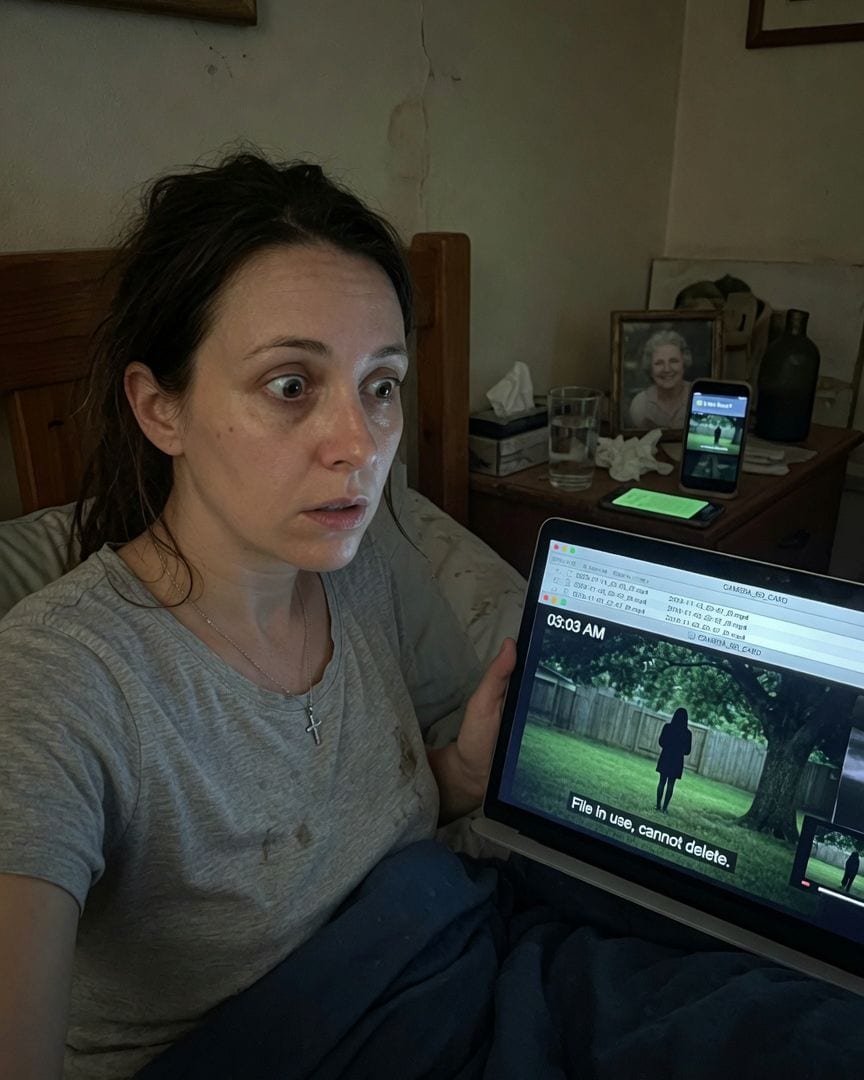
My security camera emailed a clip at 3:03am: a woman stood in the garden, back to the house. The subject line read 'Is this Mum?' My mother died in March. I can't delete the file.
My security camera sent an alert at 3 AM: 'Is this Mum?' But my mother, Constance, died in March. The grainy clip showed a woman in the garden, perfectly still, her back to the camera. The impossible question coiled a sick dread in my gut.
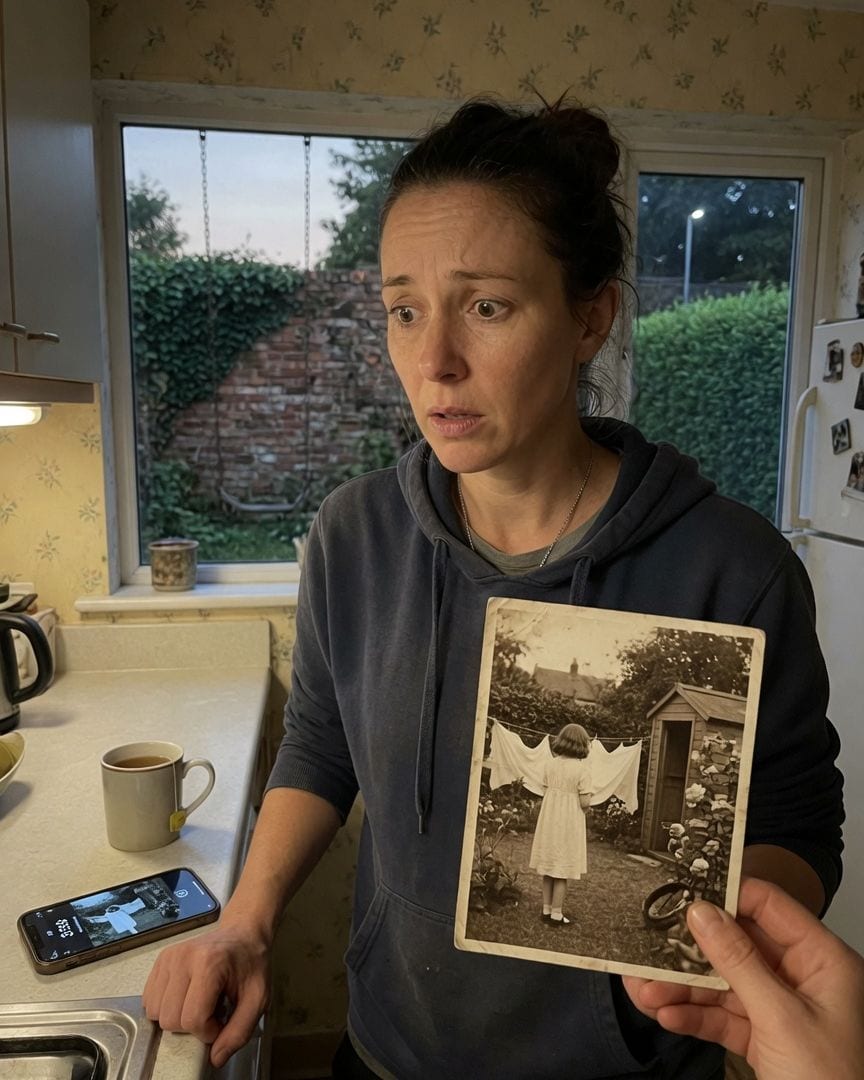
My trail camera catches a girl in a nightdress on my lawn, but the garden around her is wrong: a privy, a mangle, washing lines.
Every morning, my trail camera sends routine alerts, but one day, it showed a girl in a white nightdress standing on my lawn. What truly stopped me was the garden itself: where my trampoline should be, there were laundry lines, a dilapidated privy, and a rusted mangle. These impossible structures appeared in the footage, yet my yard remained exactly as it had always been.
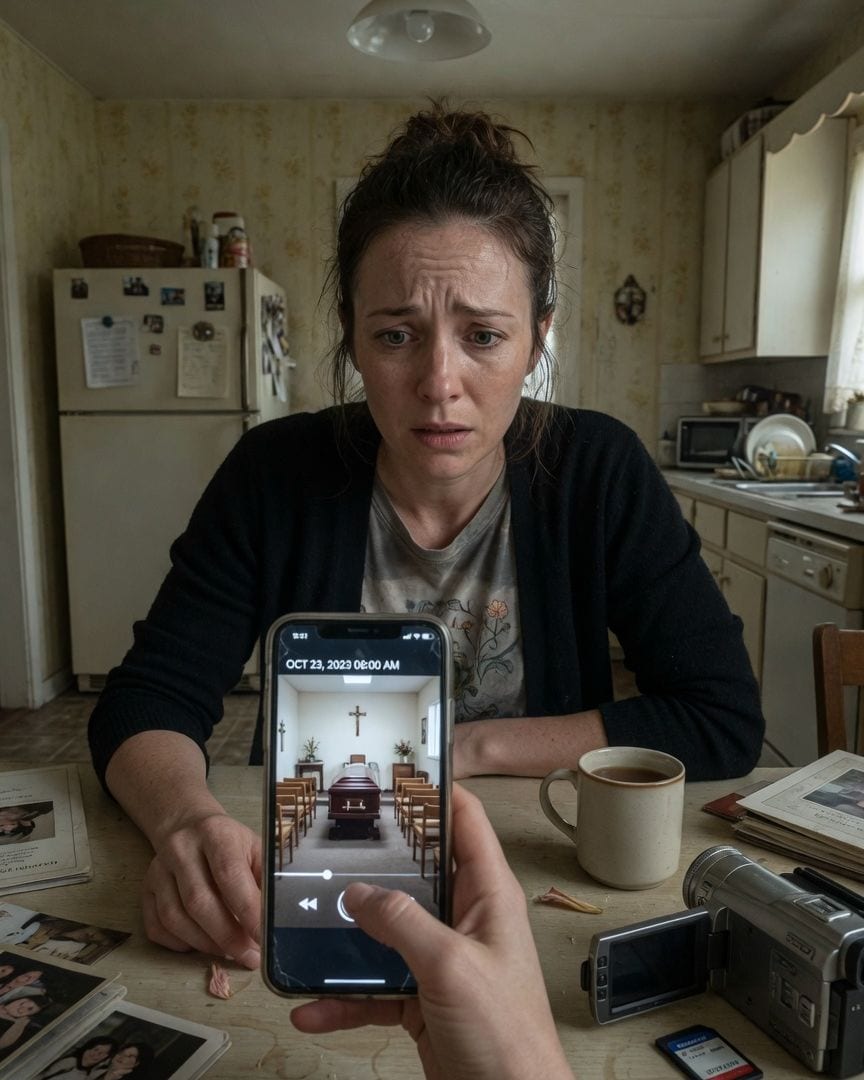
On my dead mother's phone I found a video of her funeral — steady, shot from the back over the mourners' heads, holding on her coffin. The timestamp says it was filmed an hour before any of us had arrived.
Days after my mother's funeral, I sifted through her digital life, hoping for comfort. Instead, her old camcorder revealed a video of my living room, timestamped for tomorrow morning. The abstract landscape I'd just hung was already there, waiting on the wall, a cold dread tightening in my gut.
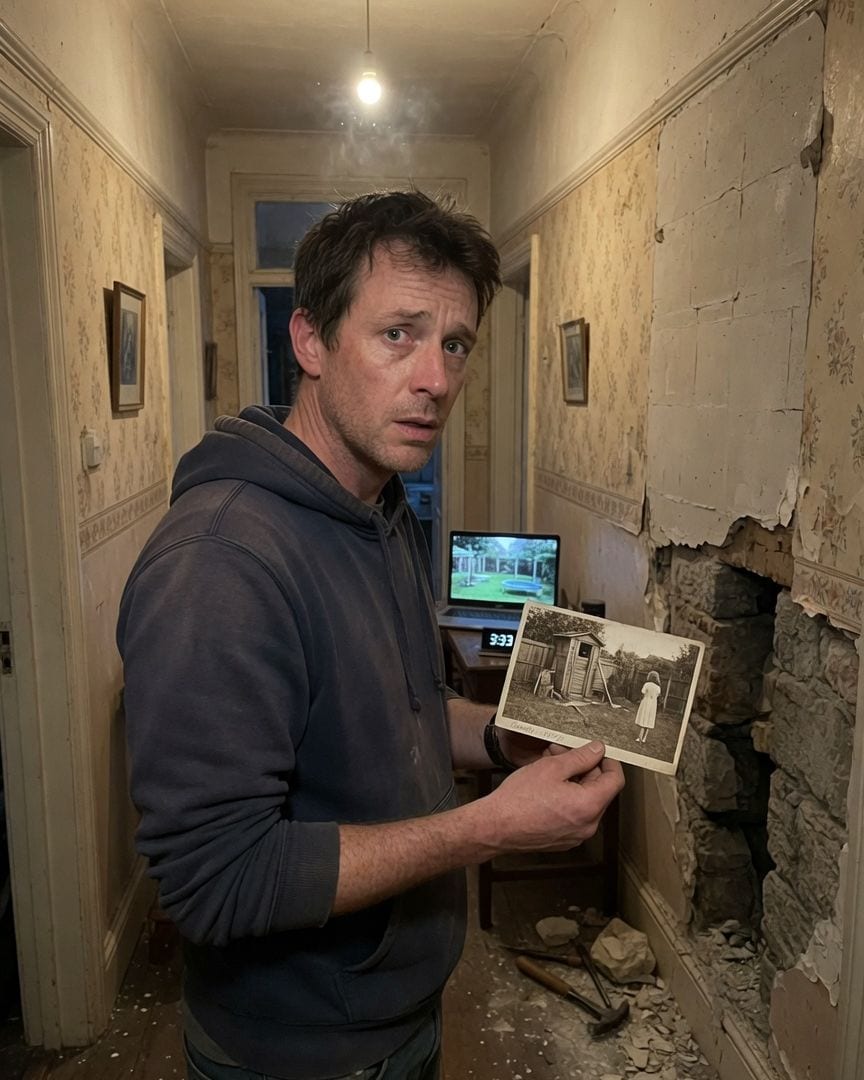
My trail camera keeps catching a girl on the lawn at 3:33, but the garden around her is wrong—a privy, a mangle, washing lines where my trampoline is. The last frame each night is her starting to turn.
I inherited an old house and set up a trail camera for foxes. But the footage changed: a young girl appeared in my garden at 3 AM, standing where my trampoline was, surrounded by washing lines where my rose bushes bloom. The landscape was decades out of place.
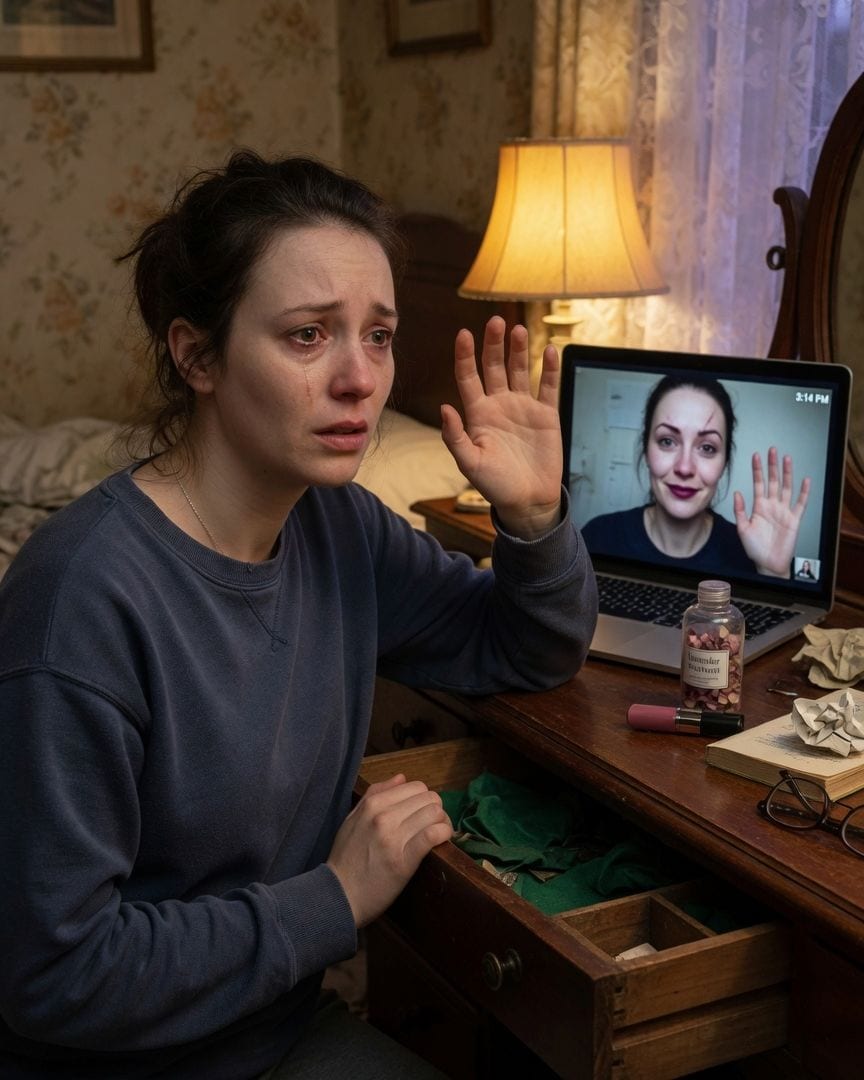
My mother waved with her right hand, both times, on our first call after she came home. She always waved left.
My mother vanished three months ago, then came back. On our first video call, she waved goodbye, but not with her usual left hand. It was her right, a small gesture that twisted something cold in my stomach.
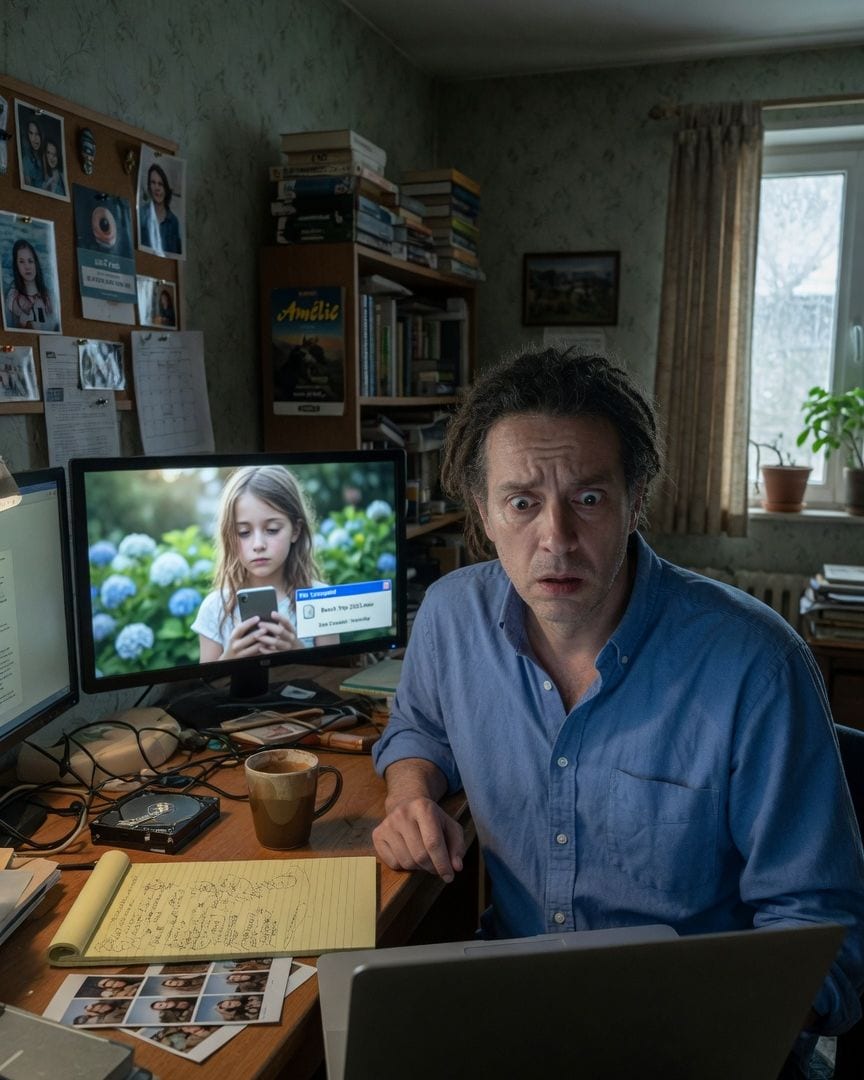
My wife's eyes don't blink before the camera anymore. She says I imagined her twenty-year habit, but the videos don't lie.
After five days missing, my wife Iris returned, disoriented but safe. The relief was overwhelming, until I noticed something small, yet unsettling. Iris had a harmless double-blink tic before taking photos for twenty years, but now, her eyes were perfectly still. When I asked about it, she just smiled and said I must have imagined it.