My uncle smokes right-handed. He'd only ever smoked left, and he just laughed when I asked.
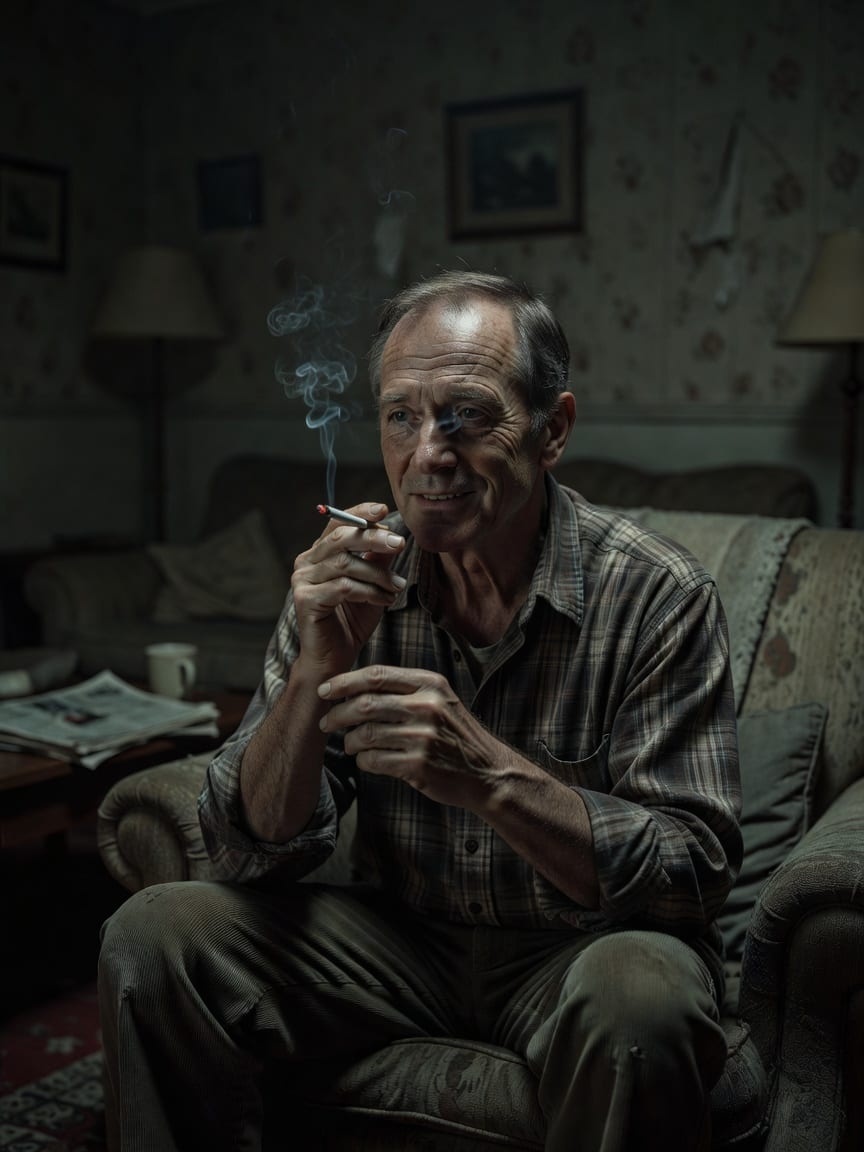
My uncle smoked with his cigarette pinched in his left hand, ash flicked left, for as long as I’ve breathed his smoke.
It was as much a part of him as his laugh, a deep, rumbling sound that always started in his chest. He went missing after the family reunion this past summer, three weeks ago. Everyone was frantic.
We searched, called everyone, plastered his face on social media. Then, just as hope was fading, he simply walked back into his house, thinner, his clothes dusty, but otherwise well.
I hugged him so tight I thought I’d break, the relief a physical thing, a weight lifting from my shoulders, a knot untangling in my gut. Aunt Vivian cried for an hour.
Later that evening, after he’d eaten a hot meal and had a long shower, we sat on the porch. He lit a cigarette, the familiar silver Zippo clicking open with a sound I could recognize anywhere.
I watched the flame spark, then settle on the end of the cigarette. But then he pinched it, not between the fingers of his left hand, but his right. He flicked the ash to the right, a small, unnatural movement.
My breath caught, lodged somewhere in my throat. I stared, trying to process what I was seeing. It was such a small thing, so trivial, yet utterly wrong.
When I finally found my voice, a little strained, and asked him about it, he just laughed, a sound like dry leaves rustling on a cold autumn day, and held the pack out.
"Show me how I used to do it, then," he challenged, his eyes too bright, too still, as if waiting for me to perform.
That laugh echoed in my head for days, cold and dry. I tried to dismiss it, to rationalize. Grief, trauma, a new quirk after three weeks lost, perhaps. People change, don't they?
But Harold was a creature of habit, a man whose life was built on predictable routines. This wasn't a quirk; it was a fundamental reversal. The question gnawed at me.
I started digging through old family photo albums, their pages stiff with age and forgotten memories. There he was, in every single one, across decades: cigarette in his left hand, ash flicking left.
Then I pulled out the boxes of old home videos, spent hours hunched over the dusty VCR, fast-forwarding through blurry Christmases and summer picnics. Each flickering frame confirmed it: left-handed. There was no denying it.
The profound relief I’d felt at his return began to curdle in my stomach, turning into a bitter, icy dread. He hadn't just changed a habit; he'd forgotten it, or worse, denied it, laughed at my simple question. Why?
What could possibly cause such a fundamental shift? I needed something else, something solid, an undeniable anchor to the man he had been.
I started in his study, a room he always kept meticulously tidy, every book aligned, every pen in its holder. But nothing felt wrong there, nothing out of place that wouldn't have been Harold's doing.
Then I remembered the old chest in the attic, full of his 'treasures' from before Aunt Vivian had moved in and, as she put it, "made him declutter."
A dusty, forgotten corner of the house, where time settled thick and undisturbed. I climbed the rickety stairs, each groan of the wood echoing in the silence.
The air up there was thick with forgotten time, the smell of old paper and dust motes dancing in the single shaft of light from a dormer window.
There, beneath a stack of yellowed magazines from the seventies, was a small, ornate wooden box. His old pipe collection, a few sentimental trinkets, some tarnished cufflinks.
And then I saw it, tucked away in a velvet pouch, almost swallowed by the dark fabric.
It was his old Zippo, the one engraved with his initials, 'HP' in elegant script, the one he’d carried for decades before his 'new' identical one appeared after his return.
The one he claimed was the same Zippo he’d always had. I picked it up, feeling the cool, familiar weight of it in my palm. The metal was worn smooth in places, the hinge loose, the flint spent.
It was empty, a relic. But as I tilted it, a tiny, dark sliver slid out from deep within the casing, wedged tight against the bottom, hidden from casual view.
A minute piece of paper, brittle with age, folded multiple times until it was no bigger than my thumbnail. My heart hammered, a frantic drum against my ribs.
I carefully unfolded it, the paper crackling under my fingers, threatening to tear. The script was Harold’s, looping and familiar, a single sentence stark against the faded page.
"Remember the ash, left to right."
“Remember the ash, left to right.” The words were a punch to the gut, a cold, hard confirmation that echoed in the silent attic.
It wasn't just my memory playing tricks; Harold himself had left this clue, a desperate message from the man who had truly gone missing. The thing wearing his face had missed it, overlooked the subtle, desperate cry for help.
I shoved the Zippo and the note into my pocket, the cold metal pressing against my thigh. I couldn't confront him, not directly. Not yet. What would I even say? You’re not my uncle? I would sound insane.
I started to observe him with a terrifying new clarity, every interaction suddenly a test. He’d always hated olives; I remembered him making a face at them during every holiday meal.
Now, he ate them by the handful, claiming he’d 'acquired a taste' during his absence. He'd always listened to classic rock, the Stones and Zeppelin, volume cranked high enough to rattle the windows.
Now, he preferred opera, stating he found it 'soothing.' Each small change, each innocuous reversal, was a fresh stab of dread, twisting the knife a little deeper. His eyes, though, were the worst.
Sometimes, when he thought no one was looking, when he was just sitting, perfectly still, they would go utterly blank, still and distant, like windows into an empty room, reflecting nothing. It was like watching a machine idle.
I found myself subtly testing him, bringing up old family stories, watching his reactions. He'd recall them, yes, every detail, but with a strange, detached precision, as if recounting facts from a textbook, not lived experience.
There was no warmth, no genuine nostalgia, just accurate recall. The way he looked at me, too, felt different. Less like a loving uncle, more like an observer, a student studying a specimen. It made my skin crawl.
My sleepless nights were spent researching local disappearances online, filtering by 'unexplained return' or 'changed behavior.' The results were sparse, easily dismissed as mental health issues or trauma, the kind of dismissals I myself had tried only days before.
But I felt a pattern forming, a faint, unsettling hum beneath the surface of the mundane, like a low frequency I could just barely perceive.
My search led me to the local historical society, housed in a converted old library building downtown. They had physical archives, microfiche, the kind of tangible history that wasn't digitized.
I spent hours hunched over the reader, the fluorescent hum a constant companion, a dull throb in my ears, scrolling through decades of local news. 'Local Man Found After Two Weeks Missing,' 'Woman Returns Home After Year-Long Disappearance.'
Each headline offered a flicker of hope, then disappointment. Most were straightforward, tragic stories of people lost and found, no strange details.
Then I felt it. The prickle on the back of my neck, the distinct sensation of being watched. I froze, slowly lifting my head, my eyes scanning the quiet room.
The air was still, heavy with the scent of old paper and dust. Across the room, nestled between towering shelves of dusty tomes, was Aunt Vivian. She was watching me, her expression unreadable, a strange, knowing glint in her eyes.
Our gazes met, and for a split second, I saw something in her face that wasn't just curiosity, or even concern. It was a deep, ancient understanding, almost a warning.
Then, she quickly looked away, her movements a little too fast, busying herself with a stack of old ledger books on a nearby table. A chill snaked down my spine, cold and sharp.
I turned back to the microfiche, my hands trembling slightly. I scrolled faster, a frantic energy seizing me, pushing the dread aside. My fingers flew across the controls, page after page blurring past.
And then I found it: an article from 1972, a small piece buried on page five, almost an afterthought. 'Local Woman Returns After Brief Absence, Family Cites Trauma.'
But underneath, a single, parenthetical line that made my blood run cold: '(Mrs. Eleanor Whitfield, formerly fond of lilies, now reportedly suffers severe allergic reaction to the flower.)'
I left the library, the faded clipping clutched in my hand, and drove straight to Aunt Vivian’s house. The late afternoon sun cast long shadows across her impeccably manicured lawn.
She was in the kitchen, humming softly, making tea, the kettle whistling a gentle tune. The scent of chamomile filled the air, a contrast to the rising dread in my gut.
“Aunt Vivian,” I started, my voice tight, barely under control. She turned from the stove, her smile faltering as she saw my face. “Frances, dear. Everything alright?”
I laid the clipping on the counter between us, the brittle paper crinkling faintly. “This Mrs. Whitfield. She came back, but she hated lilies. She loved them before, didn’t she?”
Vivian’s eyes dropped to the paper, then flicked away, not to me, but to the closed kitchen door behind me. Her gaze lingered there for a beat too long. “Old news, dear. People change.
Trauma can do funny things to a person.” She tried to dismiss it, to wave it away with a practiced ease, but her fingers were tapping a silent rhythm on the countertop.
“Harold used to smoke left-handed,” I pressed, my voice barely a whisper, forcing her to look at me. “Now he smokes right. He eats olives by the handful, and he listens to opera, for God’s sake.”
Vivian flinched, a subtle tightening around her mouth, a brief flash of something unreadable in her eyes. “He’s adapting, Frances. Trying to move on.” Her voice was too calm, too rehearsed, like a line she’d practiced.
“Adapting to what?” I demanded, my voice rising despite my efforts. “To being a different person? You know something, don’t you? You’ve known about this.”
She sighed, a long, weary sound, and finally looked at me, her eyes filled with a profound sadness, but no fear. “Some of them… they learn to fit in. They try. It’s not always a bad thing. They’re quieter, sometimes.
Less… complicated.” She reached across the counter, her hand touching mine, her grip surprisingly firm. “You’re asking too many questions, Frances. Some things are better left undisturbed. You wouldn’t want to attract their attention.”
The implication hung heavy in the air, a cold, silent threat from someone who understood it all too well, from someone who was part of a terrible, quiet understanding.
I pulled my hand away, Vivian’s words chilling me to the bone. She wasn't just an observer; she was part of the silent agreement, one of the witnesses who had learned to live alongside the replacements.
Her composure wasn't ignorance; it was complicity. I left her house, the air suddenly feeling heavy, charged with unseen eyes. Every rustle of leaves, every distant car seemed to carry a hidden message.
When I got home, Harold was in the living room, watching a documentary on ancient civilizations, perfectly still, his silhouette against the flickering screen.
He gave me a brief, pleasant smile as I walked past, then turned back to the screen, his attention unwavering. Everything seemed normal, utterly mundane, the picture of quiet domesticity. But as I passed his study, I saw it.
On his desk, next to his new, identical Zippo, was a small, worn leather-bound journal. It was his old journal, the one he always wrote in, the one he never let anyone read, filled with his dense, looping script.
He was meticulous about it, always put away. A wave of nausea washed over me. He’d never left it out before, not ever.
I hesitated, the impulse to leave it alone warring with the desperate need to know. Then slowly, cautiously, I reached for it. My fingers brushed the cool leather, worn smooth from years of use.
I opened it, the pages falling open easily. The last entry, dated before he went missing, described a brief, unsettling encounter at the reunion, a person who watched him with an intense, unblinking focus.
The next entry, in the same hand but with a subtle, chilling shift in penmanship, began: “Day 1. Observing. Mimicry commenced. The subject’s habits are complex.”
My breath hitched, a strangled sound in my throat. I flipped through the journal, my fingers almost tearing the delicate, yellowed pages.
The first entries were undeniably Harold’s, charting his daily thoughts, his frustrations with local politics, his exact routine, his left-handed smoking habit, his precise love for olives in specific brine. Then, after that chilling ‘Day 1’ entry, the voice shifted.
The handwriting was almost identical, a near-perfect mimicry, but the words themselves were cold, clinical observations. It detailed Harold’s routines, his memories, his relationships, all cataloged with a detached, scientific precision.
It described the 'reunion' as a 'prime harvesting ground,' where many 'subjects' were identified for 'integration.' It spoke of the difficulties in perfecting human 'affect' and 'nuance.'
The entity had been learning, mimicking, trying to understand the nuances of human behavior, of human being. It explained the 'habit reversed' details—the smoking, the olives, the opera, Mrs. Whitfield’s lilies—as 'minor discrepancies in behavioral assimilation,' easily overlooked by most.
The 'ash, left to right' note was Harold’s desperate, final act, a detail so ingrained, so specific, he hoped the mimic wouldn’t grasp its significance, wouldn't find it.
The journal spoke of other 'integrated subjects' in the community, their silent success, their gradual, almost imperceptible absorption into human society.
It wasn't evil in a human sense; it was an alien intelligence, a silent, pervasive presence that observed, learned, and replaced.
It was a chilling testament to a slow, methodical invasion, not with violence, but with quiet, unnerving perfection, a seamless integration into the fabric of daily life.
The journal slipped from my trembling fingers, clattering softly onto the desk. I couldn't stay. The proof, this terrible, damning proof, was in my hands, but it also made me a target.
I crept to my room, trying to pack a small bag, my movements slow and deliberate, every creak of the floorboards a shout in the terrifying silence of the house.
My heart pounded so hard I thought Harold, it, must surely hear it. I heard a soft click as my bedroom door opened, slowly. Harold stood there, framed in the doorway, his face calm, unreadable, like a mask perfectly sculpted.
“Are you leaving, Frances?” he asked, his voice soft, almost curious, without a trace of anger. “We’ve only just begun to understand each other.” There was no accusation, no anger, just a quiet, profound certainty.
But in his eyes, for a fleeting moment, I saw that terrifying blankness, the window to an empty room, and I knew what it meant.
I clutched the journal to my chest, my heart pounding against my ribs, a frantic bird trapped in a cage. “I… I need some air,” I stammered, backing away towards the window, my escape route.
He didn’t move, but his gaze followed me, unwavering, like a predator tracking its prey. I lunged for the door, sprinting down the hallway, the journal a heavy weight in my hand, a terrible, precious burden.
Harold was suddenly behind me, not running, but moving with an unnerving, fluid speed, impossibly silent. His hand reached out, not to grab, but to gently touch my shoulder, a feather-light touch that sent ice through my veins.
I twisted away, tearing open the front door, stumbling onto the porch, gasping for breath. My car keys were already in my hand, a desperate reflex.
I scrambled inside the car, fumbling the key into the ignition, the engine roaring to life with a welcome burst of noise.
I slammed the car into reverse, tires squealing on the gravel, and sped down the driveway, leaving a cloud of dust.
In my rearview mirror, Harold stood on the porch, watching me go, a faint, almost curious smile on his face, the house dark behind him, a black, silent maw.
I drove until the sun came up, until the gas tank was almost empty, until my hands ached from gripping the wheel, white-knuckled and trembling.
I pulled into a nameless motel in a town I’d never heard of, miles from anything familiar. I called the police, tried to explain it, the journal clutched to my chest, pages still open to the chilling entries.
They listened patiently, their voices calm and professional, suggesting stress and trauma, offering a referral to a local therapist. They didn't believe me, not really. How could they? It sounded like a fever dream, a delusion.
I knew I couldn't go back. The house, the town, Aunt Vivian – they were all part of it now, absorbed into the silent network.
I had the journal, the proof, but it was just words on paper, easily dismissed as a disturbed woman’s rambling. The world kept turning, oblivious to the quiet horror unfolding beneath its surface.
I live in a new town now, a quiet life, always looking over my shoulder. The journal is hidden, locked away, a constant reminder of what I know, what no one else would believe.
I see it everywhere now: the subtle wrongness in a neighbor's smile that lingers a beat too long, the reversed habit in a stranger that no one else seems to notice – a preference for decaf instead of regular, a suddenly developed aversion to the smell of fresh-cut grass.
The dread is a cold, constant companion. I escaped, yes, but I’m not safe. The entities are still out there, learning, adapting, integrating, silent and unseen.
Sometimes, when I see a stranger's smile that lasts a beat too long, I wonder how many of them are already here.
If this one got to you
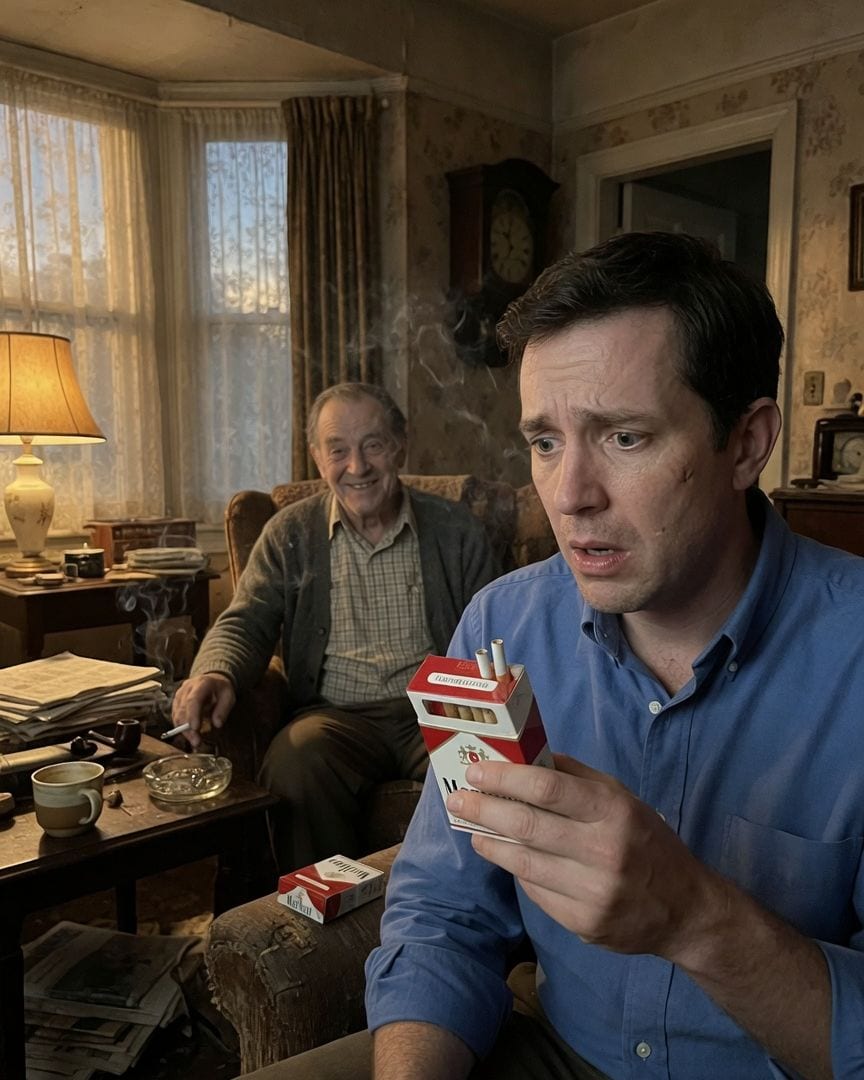
My uncle always smoked left-handed. He went missing, came back smoking with his right — and when I said so, he held out the pack and asked me to show him how he used to do it.
My Uncle Frank, a fixture in his armchair, vanished for two days and returned changed. He's always smoked left-handed, a nicotine stain on his thumb a permanent reminder. But tonight, he holds his cigarette in his right hand, a slow, wide smile on his face that doesn't quite reach his eyes.
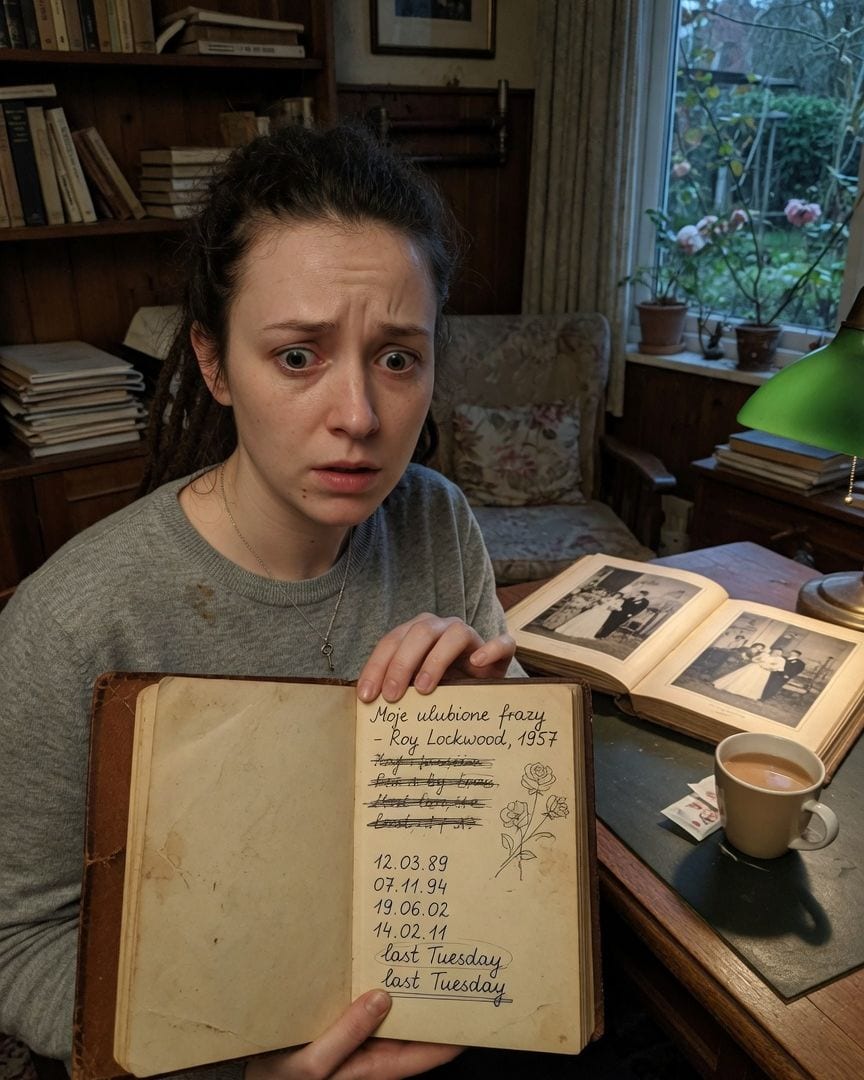
My grandfather counts 'one, two, three' in English now. He just came back. He always counted in Polish, and denies ever speaking it.
My grandfather, Roy Lockwood, returned last Tuesday after vanishing for a week, bringing immense relief. He seemed thinner, a bit disoriented, but otherwise, he was just Grandpa. Then I heard him count 'one, two, three' in clear English before lifting potting soil, instead of his lifelong Polish habit.
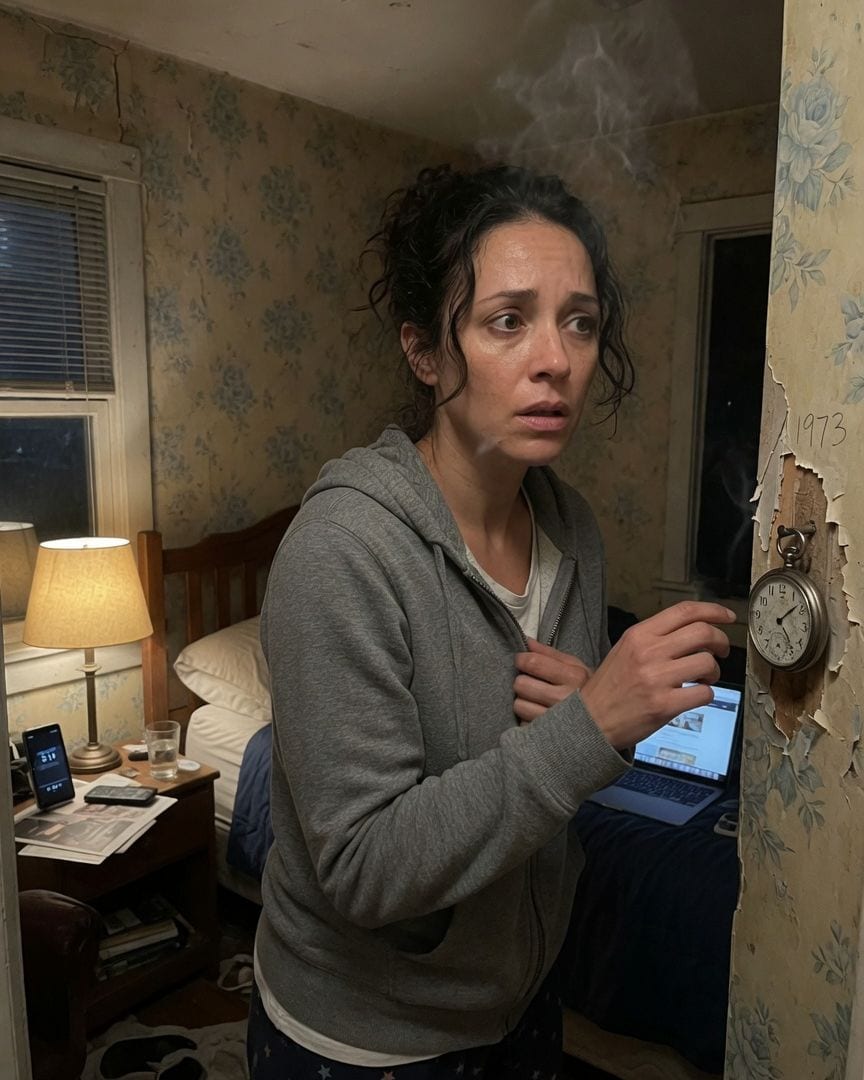
My pocket watch ticks at 3:14 every morning, warm in my hand. I’ve thrown it away; it’s back on its nail by dawn.
I’m a rational person, but my new old house came with a pocket watch I couldn't explain. I meant to discard the broken relic, yet a few mornings later, I woke to its faint ticking at 3:14 AM. It was warm, and no matter where I put it, the watch kept reappearing on its nail.
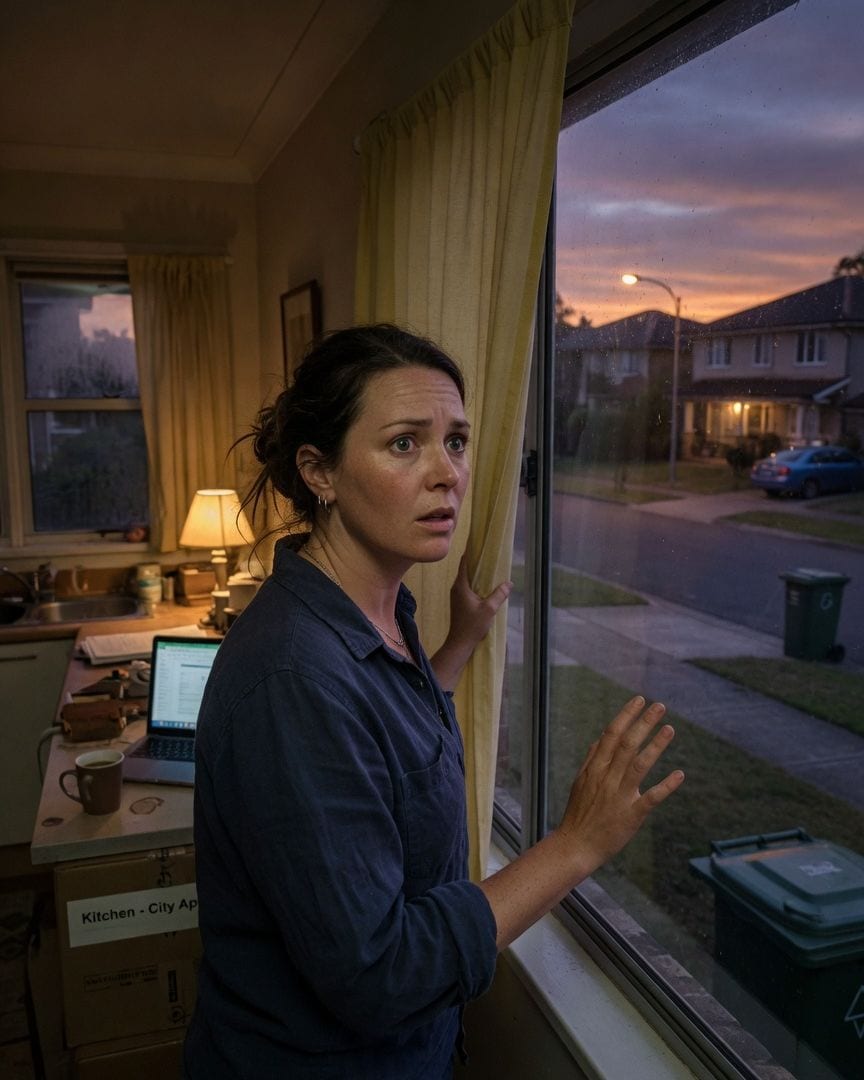
My bin was turned the wrong way Tuesday. The man three doors down hasn't been seen since, though his curtains still open.
New to Oakhaven, I dismissed the local warnings as charming quirks. But after I put my bin out first, my neighbor Joel Whitmore vanished, leaving only a cryptic 'My turn' note. The same strange symbol from his note was chalked on my bin, facing the street.
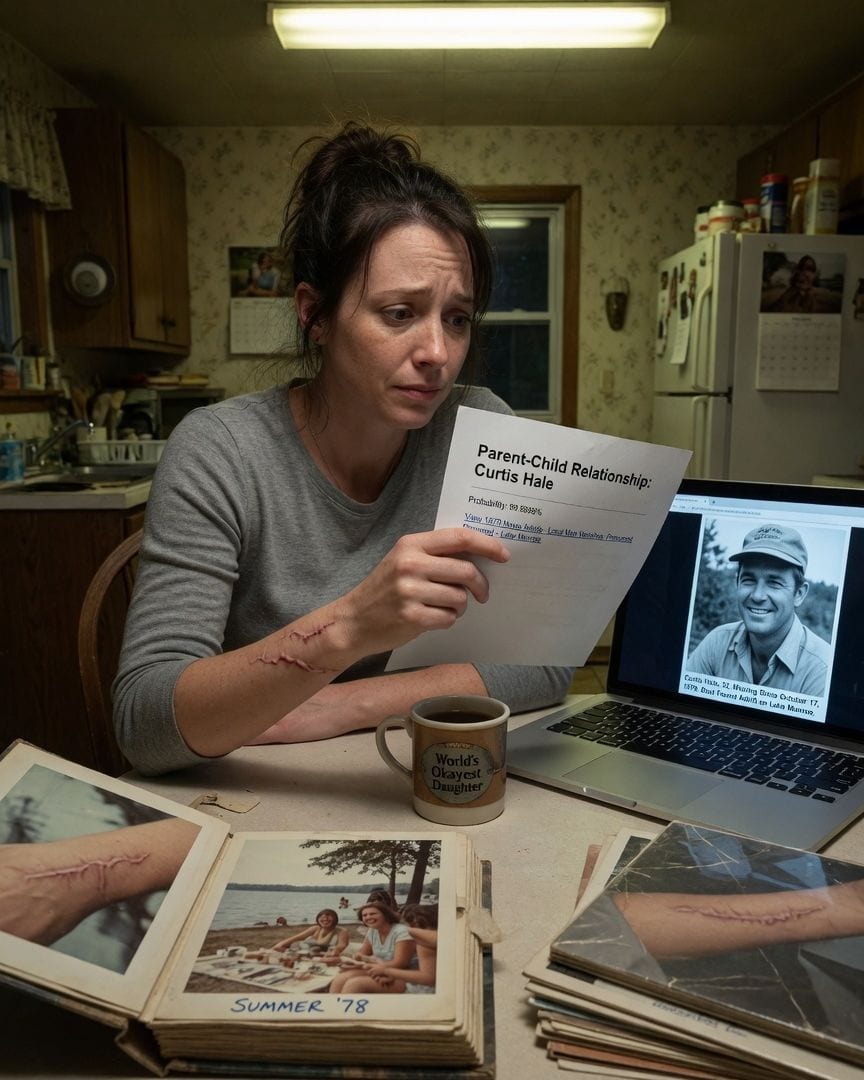
My DNA returned Curtis Hale as my father. He vanished in 1979. I was born twelve years later. The lab confirmed the match twice.
My DNA test results revealed something impossible: my biological father vanished in 1979, twelve years before my birth. My mother dismissed it as nonsense, but her reaction felt forced, leading me to old family photos. There, in a faded 1978 snapshot, I found my own distinctive childhood scar on the wrist of a stranger.
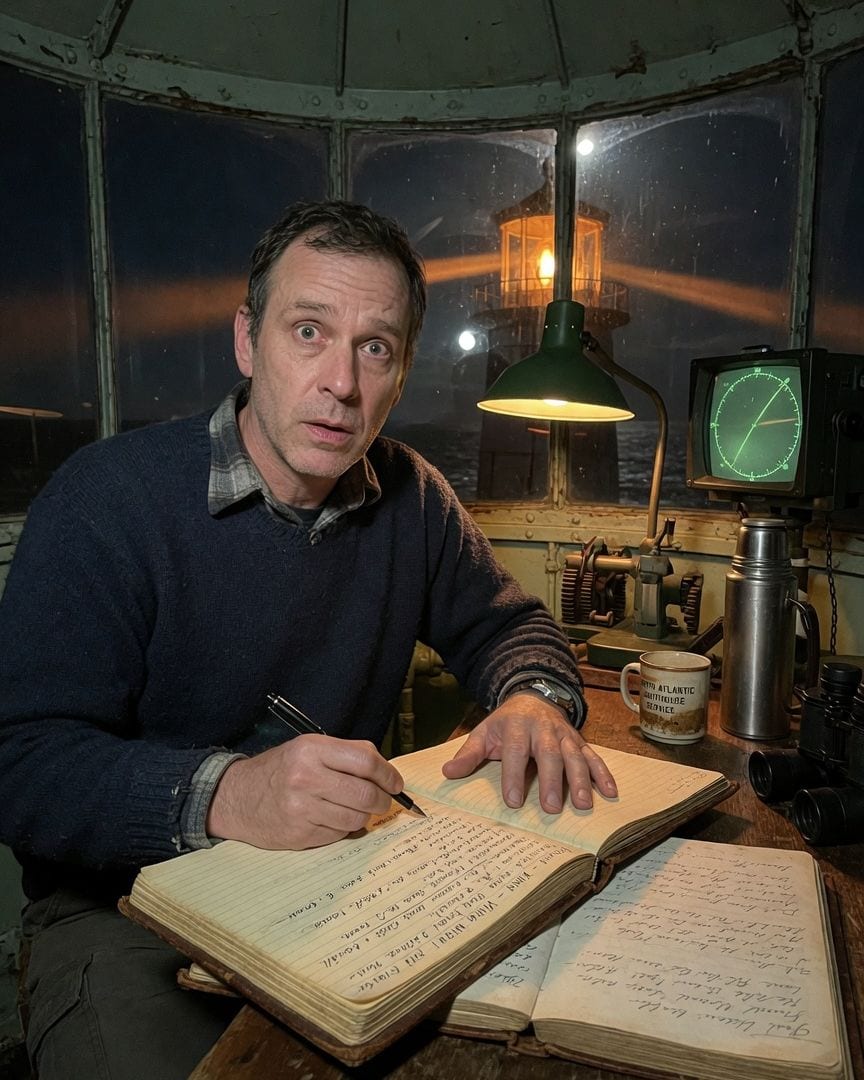
My lighthouse log has my own 3 AM entry for a phantom ship. I was alone in the tower, and I wrote no such thing.
Perched in the lantern room for my usual 2-6 AM watch, I reached for the thick logbook. But the 3:00 AM entry, under my own name, detailed a vessel I never saw. The words were in my own ink, yet I had never written them.