A veteran's VA file listed surgery for shrapnel. The doctor retired decades before he joined the Corps.
Twelve years out of the Corps, Miguel Reyes sat in the stark white examination room of the Albuquerque VA clinic, his bad knee throbbing.
Deborah Hartley, the physician's assistant, a woman with kind eyes and a no-nonsense demeanor, flipped through his digital file.
“Alright, Mr. Reyes, let’s talk about that shrapnel. Looks like it’s been bothering you since the removal.”
Miguel frowned. “Shrapnel?” He shifted in the hard plastic chair, the vinyl creaking beneath him. He’d torn his meniscus during a training exercise, that was his only real injury.
He remembered the pain, the physical therapy, the jokes from his squad mates about 'old man knees.' But shrapnel?
Deborah tapped the screen, her finger firm on a highlighted section. “Yes, here. Operative report, left thigh, fragment removed. Dr. Charlotte Bennett. Dated June 14th, 2008, downrange.”
Miguel’s brow furrowed deeper, a cold, unsettling certainty beginning to settle in his gut. He’d never been wounded. Not a scratch, much less shrapnel.
He instinctively ran a hand over his left thigh, feeling only smooth, unblemished skin, no scar, no raised tissue where an incision should have healed. The fluorescent lights hummed above, making the room feel sterile and too bright.
He tried to project calm, but the unease was a live thing, squirming in his stomach. The file swore otherwise, but his body knew the truth.
Miguel left the VA clinic with a physical therapy referral and a gnawing sense of unease. The shrapnel report felt like a misplaced piece of someone else’s life, but it was attached to his name, his service number.
He immediately requested his full service record. He needed to see it, hold it in his hands, to understand the mistake.
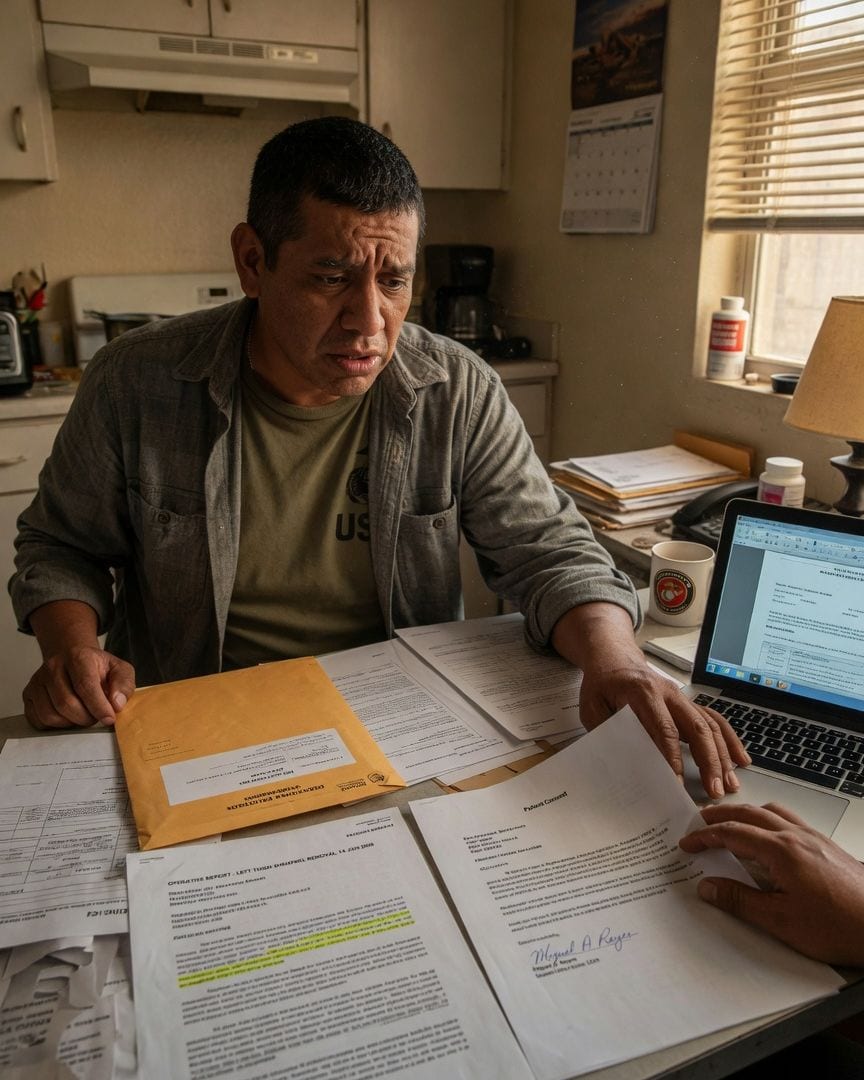
Days later, a thick manila envelope arrived, heavy and official. He spread the documents across his kitchen table, the low afternoon sun catching the dust motes dancing in the air.
He found his basic training certificates, his deployment orders, commendations – all as he remembered, a linear narrative of his service. Then he found it.
Tucked neatly between his final deployment papers and his discharge summary was a multi-page operative report. It detailed the precise dimensions of a metal fragment, the surgical procedure, recovery notes, and even a list of post-op medications.
The surgeon's name was indeed Dr. Charlotte Bennett, typed cleanly below a printed heading.
And on the final page, beneath the surgeon’s signature, was a line for 'Patient Consent.' His own name, 'Miguel A. Reyes,' was scrawled there in careful, flowing script. He recognized it. It was his signature.
Yet he knew, with absolute certainty, he had never penned it. He traced the looping 'M,' the sharp 'R,' his hand shaking slightly.
It was perfectly forged, indistinguishable from his actual signature, a near-perfect mimicry that was utterly alien to him. He remembered that day, June 14th, 2008. He hadn't been in a field hospital.
He'd been on a routine patrol, hot, dusty, the same as a hundred other days, but perfectly intact, not a scrape on him.
The mundane explanation—a clerical error, a mix-up with another Marine—dissolved under the weight of his own forged hand. This wasn't a mistake. This was a lie, carefully constructed and signed by him, for him.
The air in his kitchen felt suddenly heavy, stagnant.
Driven by a desperate need for answers, Miguel began to research Dr. Charlotte Bennett. His online searches for a military surgeon named Charlotte Bennett yielded sparse results, mostly dead ends and irrelevant academic papers.
Finally, he found a single, archived article from a medical journal, a profile piece on pioneering military doctors of a previous generation.
Dr. Charlotte Bennett, it stated, had retired from military service in the late 1980s, decades before Miguel had even enlisted.
His blood ran cold. How could she have operated on him in 2008? The numbers didn't just not add up; they violently contradicted each other.
He dug deeper, cross-referencing military personnel databases, searching for any other 'Miguel A. Reyes' who might have served during his time. He found an entry.
A different service number, a different unit, a deployment to a small, obscure base in the Pacific he'd never heard of. But the name was identical, 'Miguel A. Reyes.'
And attached to that second, impossible file, was another operative report: shrapnel removed from the left thigh, signed by Dr. Charlotte Bennett.
Miguel stared at the screen, the second service record for 'Miguel A. Reyes' glaring back at him. The details were impossibly wrong, yet the name was his, the shrapnel wound identical, and the surgeon's name the same.
He felt a cold dread bloom in his gut, realizing this was no mere clerical error; it’s a deliberate, impossible fabrication.
The 'second Miguel Reyes' record haunted him. He tried to access it again through official channels, but the entry had vanished, replaced by a 'record not found' message.
Frustrated, Miguel expanded his search, driving halfway across the country to the National Personnel Records Center in St. Louis.
The building was a labyrinth of archives, a vast, imposing structure of concrete and steel, a testament to the military’s meticulous record-keeping.
He navigated the sterile corridors, the air thick with the scent of old paper and dust, eventually finding Christine Russo, a seasoned archivist with silver hair pulled back in a tight bun, who looked at him with weary skepticism over her half-moon glasses.
Miguel explained his situation, carefully omitting the part about the disappearing record and the second, phantom file. He simply requested to view any additional files associated with his name, or with Dr. Charlotte Bennett's unique military ID.
Russo, after a sigh that seemed to carry the weight of decades of paperwork, pulled up the limited public records available for Dr. Bennett. She confirmed her retirement date in 1987, just as Miguel had found.
She then informed him that any other records, particularly those containing sensitive medical or deployment details, would require higher clearance, a process that could take months, if not years.
As Miguel pressed for information about how such discrepancies could arise, about surgeons operating decades after retirement, Russo grew defensive. “The system is robust, Mr. Reyes. Errors are rare, and outright fabrications are… impossible.”
Her voice was tight, her gaze darting away from his. She led him to a bank of public terminals, suggesting he submit a formal request for an expanded record search, a bureaucratic dead end he knew would lead nowhere.
It was a perfectly polite dismissal, but Miguel had learned one thing: the system, so rigid and precise, seemed to actively resist any probing into these particular anomalies.
He spent the rest of the day poring over microfiches of old medical journals, cross-referencing names, dates, and locations, a growing sense of dread tightening in his chest.
The more he searched, the more the blank spaces around Dr. Bennett’s career seemed to expand, like shadows lengthening at dusk.
As Miguel worked at a public terminal, the low hum of the machines filling the quiet archive, a man in a rumpled suit, with thinning gray hair and a perpetual frown, moved slowly through the rows of archives.
Miguel recognized him instantly: Gerald Oakley, the VA records clerk he’d seen briefly at the Albuquerque clinic.
Oakley wasn't looking at files or reading documents; his gaze drifted, lingering on Miguel a moment too long before moving on, his steps almost unnaturally quiet. Miguel felt a prickle of unease, a cold sensation crawling up his spine.
Was it coincidence? Albuquerque was a long way from St. Louis. He tried to dismiss it, to focus on the flickering green text on the screen, but the feeling persisted, an insistent whisper in the back of his mind.
Later that evening, back in his motel room, the cheap curtains barely blocking the parking lot lights, Miguel’s phone buzzed with an incoming email. The sender was anonymous, the subject line blank.
The message itself was short, chillingly direct: “Leave the records alone, Reyes. The shrapnel is not your concern.” His heart hammered against his ribs, a frantic drum in the sudden silence of the room. Someone knew. Someone was watching.
He stared at the glowing screen for a long moment, then deleted the email, but the words echoed in his mind, stark and terrifying. He looked out the motel window into the dark, rain-streaked parking lot.
He saw no one, just the distant glow of the highway, but the feeling of being observed was palpable, a phantom weight on his shoulders.
The next morning, as he walked back towards the National Personnel Records Center, the sky a bruised gray, he spotted Oakley again.
The man was standing across the street, near a lamppost, pretending to read a newspaper that looked days old. Their eyes met for a fleeting second, a jolt of cold recognition passing between them.
Oakley's expression was unreadable, a carefully blank mask, but Miguel felt a surge of adrenaline. The man wasn't just observing; he was waiting. The hunt had turned into a trap.
Miguel felt a sudden, desperate urge to run, to turn away and disappear, but he pushed it down. He had to know. He had to confront him.
Miguel approached Oakley outside the records center, the cool morning air biting at his exposed skin. He kept his voice low and steady, though his pulse hammered. “Mr. Oakley. We need to talk.”
Oakley flinched, the newspaper rustling loudly in his trembling hands. He stammered, his eyes darting nervously up and down the street. “I don’t know what you mean, son. Just catching up on the news.”
Miguel held his gaze, unwilling to let him deflect. “The shrapnel. The records. The email. You know what I’m talking about.”
Oakley’s composure crumbled. He swallowed hard, his Adam’s apple bobbing. He glanced around again, his anxiety a palpable thing. “Look, I… I can’t discuss this here. Not out in the open.”
He gestured with his chin towards a small, tree-lined park across the street.
Miguel followed, his suspicion hardening into a terrible certainty. Oakley led him to a secluded bench, partially hidden by a thick hedge, and spoke in hushed, urgent tones. “It’s not a mistake, Reyes. Not in the way you think.”
He took a deep, shuddering breath. “I’ve been in records for thirty years. Thirty years. I’ve seen things. Ghost entries, we called them.
Perfect files, impeccable service, every detail right, but the names… sometimes they were real, sometimes they felt like shadows. And every single one had it. The shrapnel. Always the shrapnel wound. Always Dr. Bennett’s name.”
Miguel’s mind raced, connecting the dots that had felt so disconnected, so impossible. The forged signature, the impossible retirement date, the vanishing file. “So, Dr. Bennett… she’s a marker? A signal?”
Oakley nodded slowly, his gaze fixed on a distant point, as if recalling a long, grim history. “Or her name is. A consistent detail. The system, it’s designed to be watertight. So when something’s off, it’s off by design.
These files, they pop up, they get accessed, then they get scrubbed. Vanish without a trace. It’s like the system itself is protecting them, making them impossible to pin down, like smoke in your hand.”
He leaned closer, his voice barely a whisper. “You finding that second file, that’s rare. They usually catch those before anyone sees. You’re lucky, or… unlucky. Depends on how you look at it.”
Miguel thought of his forged signature, the impossible retirement date of the surgeon, the blank spaces around her career that had grown like shadows. “So, it’s an ongoing operation? A program? And the system resists any attempt to expose it?”
Oakley nodded grimly, a desolate look in his eyes. “It’s always been ongoing. Generations. It’s bigger than any one person. And yes, the system resists. It’s built to. They don’t want people like you digging.
They don’t want anyone to know the records can lie, or that they can make a person… disappear, and leave behind a perfect ghost.” The earlier clues re-meaning on-page, coalesced into a terrifying, coherent truth.
The impossible signature, Dr. Bennett’s anachronistic presence, the vanishing second record – all of it wasn't a glitch. It was a feature.
Oakley, his face pale and drawn, reached into his worn leather satchel. The leather was cracked, the clasp tarnished, speaking of years of use. “I shouldn’t be doing this. They’ll know.”
He pulled out a small, leather-bound book, its pages yellowed and brittle with age. It looked like something from another era. “This is… my own record. From my early days. Before the digital age.
When I first started in records, I started noticing the pattern, the shrapnel, the names that didn't quite fit. I kept my own log.” He handed it to Miguel, his hand shaking slightly. “It’s unofficial. A risk.”
Miguel’s hands trembled as he took the book, its worn cover surprisingly heavy. It was an old-fashioned ledger, filled with Oakley’s neat, spidery handwriting, spanning decades.
Page after page listed dates, names, and brief, cryptic notes: 'Anomalous surgical report – shrapnel,' 'Bennett marker detected,' 'Record scrubbed.' The evidence of the pattern was undeniable, horrifying in its consistency.
The sheer volume of entries was staggering, a silent testament to a hidden, relentless process. A chill permeated the air around them, though the sun was now higher in the sky.
Oakley pointed to a specific page, his finger hovering over an entry like a hesitant ghost. “Look here. This is why you need to be careful.”
Miguel’s eyes followed. The entry wasn't for a surgical report. It was a list, meticulously organized, labeled 'Template Candidates.' And there, among a dozen other names, was his own: 'Reyes, Miguel A.' Beside it, a date. A date from 2005.
Years before he had even joined the Marine Corps.
The logbook, now clutched tightly in Miguel’s hands, laid bare the full, chilling truth. It wasn't just about creating false records for vanished individuals; it was a program of identity pre-emption and manipulation.
The 'Template Candidates' section detailed real, incoming service members whose biographical data—names, birthdates, family history—were harvested and stored.
These 'templates' would then be used as the foundation for meticulously fabricated service records, sometimes for entirely new, phantom personnel, sometimes to subtly overwrite or 'modify' the histories of the real individuals.
The 'shrapnel wound' and Dr. Bennett’s anachronistic name were consistent, institutional markers, a signature of the program, designed to be just plausible enough to be overlooked by superficial checks, yet impossible for the real individual to reconcile with their lived experience.
Oakley’s notes meticulously tracked 'record activation cycles' and 'deactivation cycles,' showing how the system would periodically generate and then 'scrub' these phantom files, maintaining a delicate balance between creation and erasure.
The program had been active since the late 1970s, passed down through generations of custodians like Oakley, a silent, internal operation that defied all conventional military accountability.
Every planted clue clicked into place: his forged signature, the impossible surgeon, the vanishing second record, the creeping sense that his own life was being rewritten, not by chance, but by design.
The dread wasn't just about what was done to him, but the sheer, cold, institutional will behind it, spanning decades, unseen and unchallengeable, a quiet, methodical horror humming beneath the surface of official existence.
Miguel knew he couldn’t let this go. The logbook was proof, a decades-long confession in black and white.
He raced back to the National Personnel Records Center, the worn leather book tucked under his arm, intent on making copies, on exposing the truth.
He found an unattended photocopier in a quiet corner of the archive, its green light humming, the air around it smelling faintly of ozone.
As he fed the first brittle page, preparing to press the button, a shadow fell over him.
Two figures, clean-cut, wearing dark, nondescript suits, stood behind him. They weren't military police, but their eyes held an unnerving, professional calm, like still water. “Mr. Reyes,” one of them said, his voice flat, devoid of inflection, “we’ll take that.”
Miguel instinctively clutched the logbook tighter, his knuckles white. “You’re not getting this.” He bolted, weaving through the towering stacks of files, the shelves rattling with his passage. The two figures were close behind, their movements fluid and silent.
He knew this building was a maze; he just needed to find an exit, any exit.
He heard a distant alarm begin to wail, a low, pulsing thrum that vibrated through the floor, a sound that seemed to come from the very bones of the building.
He pushed through a fire door, bursting into a restricted corridor, the alarm growing louder. A third figure emerged from a side office, blocking his path, his face as impassive as the others.
He was trapped. The first two agents closed in, their movements swift and practiced, giving no quarter. Miguel swung the heavy logbook, connecting with one man’s shoulder with a satisfying thud, buying himself a precious second.
He scrambled towards a window, but it was reinforced, impenetrable, a thick sheet of glass that mocked his desperation.
He was cornered, the alarm screaming in his ears, the quiet, efficient agents closing in, their faces devoid of emotion, like blank slate.
He wasn’t fighting men; he was fighting a system, vast and unfeeling, that had already decided his fate, as precisely as an operative report.
The logbook was confiscated. Miguel was taken to an unmarked facility, interrogated for hours by individuals who already seemed to know everything about his life, his service, even his brief conversation with Oakley.
He was released after a stern, chilling warning to cease his 'delusional investigations,' to consider his 'mental health.'
Back home, his original service record was 'corrected,' the shrapnel report officially expunged, scrubbed from his digital file as if it had never existed. However, a new, subtle entry appeared in his file: 'Psychological evaluation recommended: Delusional paranoia.'
His attempts to contact Oakley failed; the clerk’s phone was disconnected, his apartment empty, the neighbors claiming he’d simply ‘moved on.’ The National Personnel Records Center denied any knowledge of Oakley or his logbook.
The system had closed ranks, erasing not just records, but people, and leaving behind only a carefully managed narrative.
Miguel found himself in a world where his own past was a contested territory, his sanity officially questioned, and the truth he’d uncovered, a phantom in the face of absolute denial.
Miguel tried to tell his story, but his credibility was systematically undermined.
Friends and family, though concerned, found his wild tales of phantom records and decades-old conspiracies increasingly difficult to believe, especially after a quiet visit from a well-spoken 'military liaison' who assured them Miguel was simply experiencing post-service stress.
He found his name listed in a new 'internal memo' concerning 'unreliable assets' that someone had 'accidentally' forwarded to his personal email. The message itself was innocuous, but the subtext was a clear, cold warning.
He received a new, official medical record in the mail. It was perfectly clean, no shrapnel. But beneath his name, a new, small identifying number had been added, one he recognized from the 'Template Candidate' section of Oakley's logbook.
He closed his eyes, a quiet resignation settling over him, knowing he was now inextricably part of the very system he had fought to expose. He was no longer a threat; he was an entry.
Weeks later, Deborah Hartley, the VA physician's assistant, reviewed Miguel Reyes's latest file update. The shrapnel report was gone, replaced by a note about 'resolved somatic delusions.'
She noticed a new, small identifying number had been added beneath his name, a number she had seen before on a few other 'special cases.' She merely nodded, closed the file, and moved on.
If this one got to you
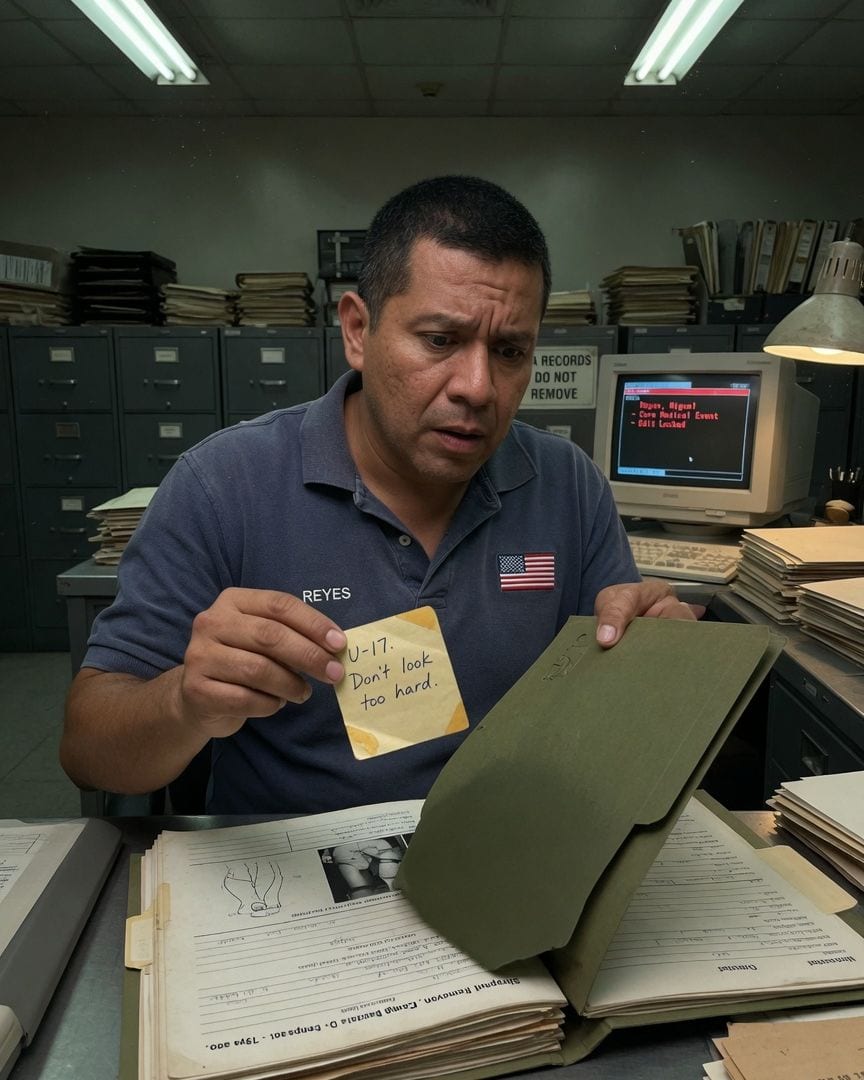
A veteran's medical record details a shrapnel wound his body never had. Taped to the report: 'U-17. Don't look too hard.'
Miguel Reyes, a veteran seeking relief for an old running injury, found his routine VA visit take a chilling turn. His medical file claimed a shrapnel wound and surgery from thirteen years prior, but his leg bore no scar, no mark of the supposed incident. Despite the detailed digital and paper records, his body swore the event never happened. As he pressed for answers, a hidden, yellowed note taped inside the official report surfaced, scrawled with two words: "U-17. Don't look too hard." The sterile clinic air suddenly felt cold and thick, suggesting a truth far darker than a simple clerical error.
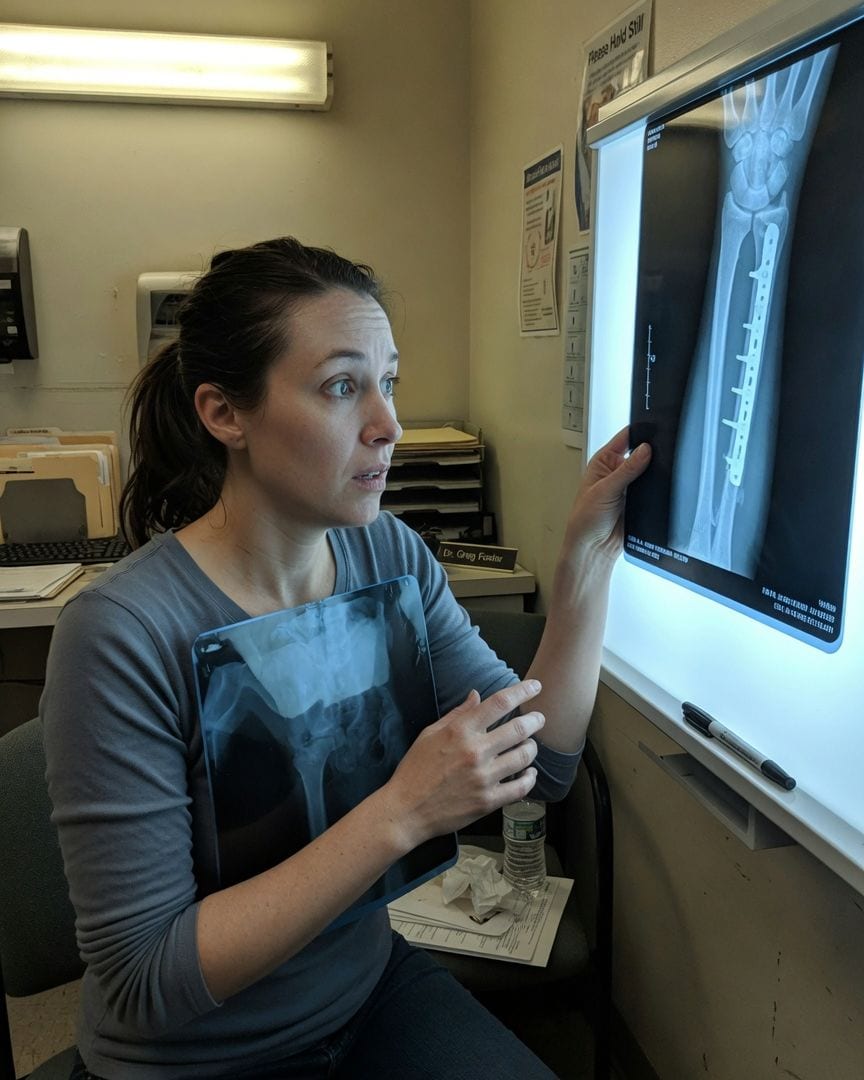
My X-ray shows a metal plate in my forearm, fixed years ago. I've never broken a bone there, and there's no scar.
I visited the clinic for a sprained wrist, expecting a routine X-ray. Instead, Dr. Foster showed me the scan: a metal plate and eight screws were clearly visible, mending an old fracture in my forearm. I stared, chilled, because I have never broken an arm, never had surgery, and held no memory of such a life-altering event.
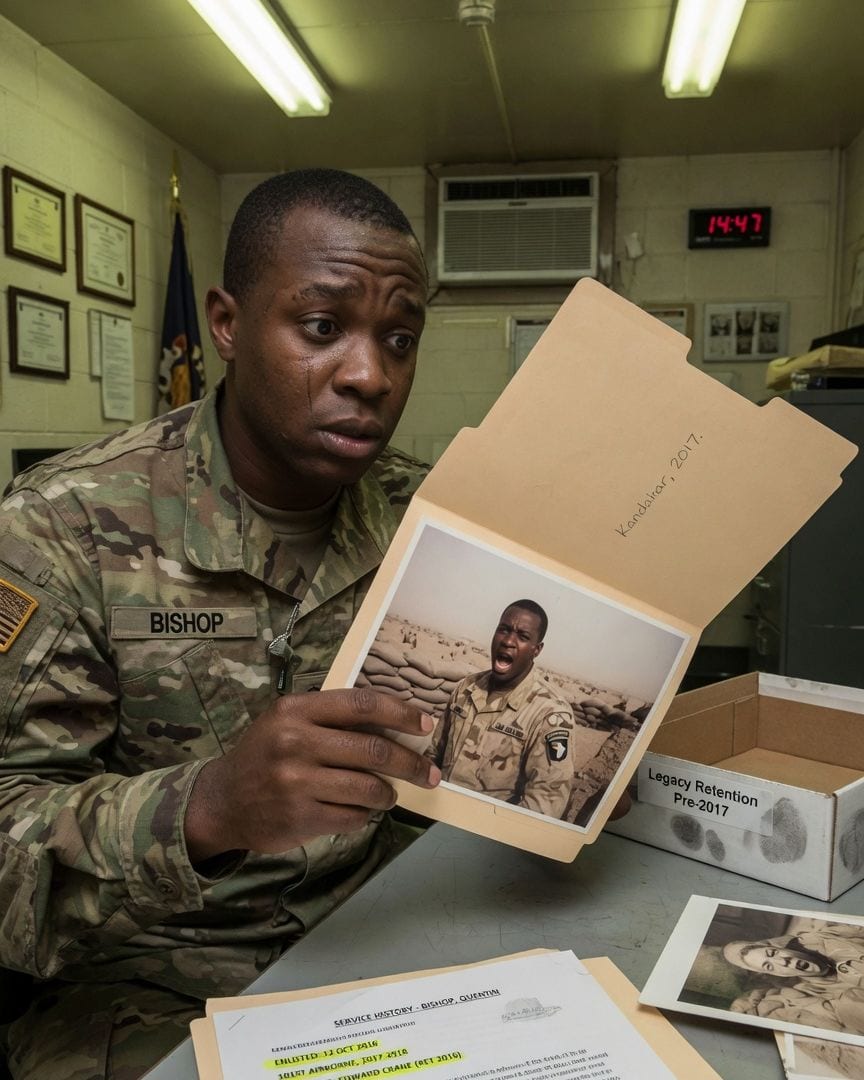
A specialist was signing for four more years, but his old file contained a photo of him in a desert uniform dated 2017, from a tour he never lived.
Specialist Quentin Bishop sat ready to re-enlist, looking forward to four more years of stability. But as he prepared to sign, his official record showed an enlistment date that made him seventeen years old, and a combat tour with a unit he’d never worn. Sergeant Marie Delaney dismissed it as a clerical error, but Bishop found a faded photograph of himself in a desert uniform, dated 2017, from a war zone he could not remember. Was this a mistake, or a meticulously constructed parallel life he never lived?
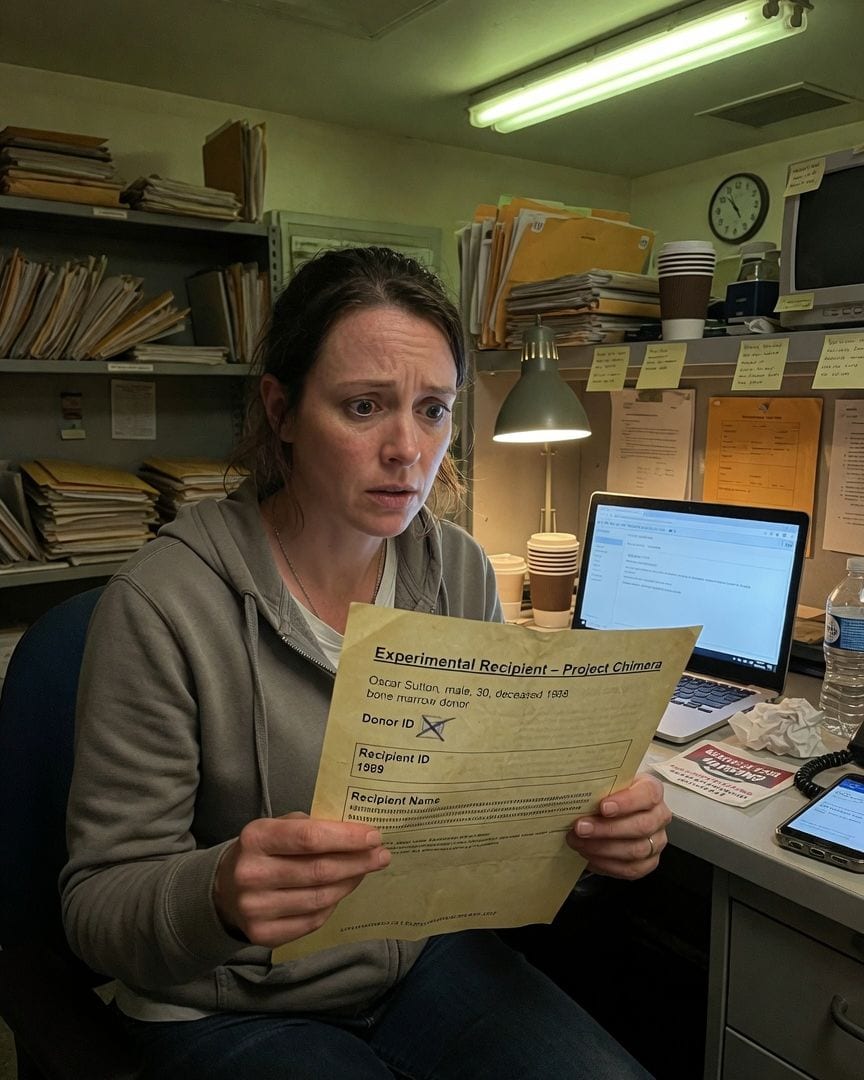
My doctor says two DNA profiles are in my blood. One is mine, the other belongs to a bone-marrow donor, logged deceased in 1988. I've never had a transfusion.
My pre-surgery blood test delivered a chilling anomaly: two distinct DNA profiles in my sample. One profile matched a bone-marrow donor, Oscar Sutton, who died in 1988. How could a dead man's DNA be inside me, when I wasn't even born yet?
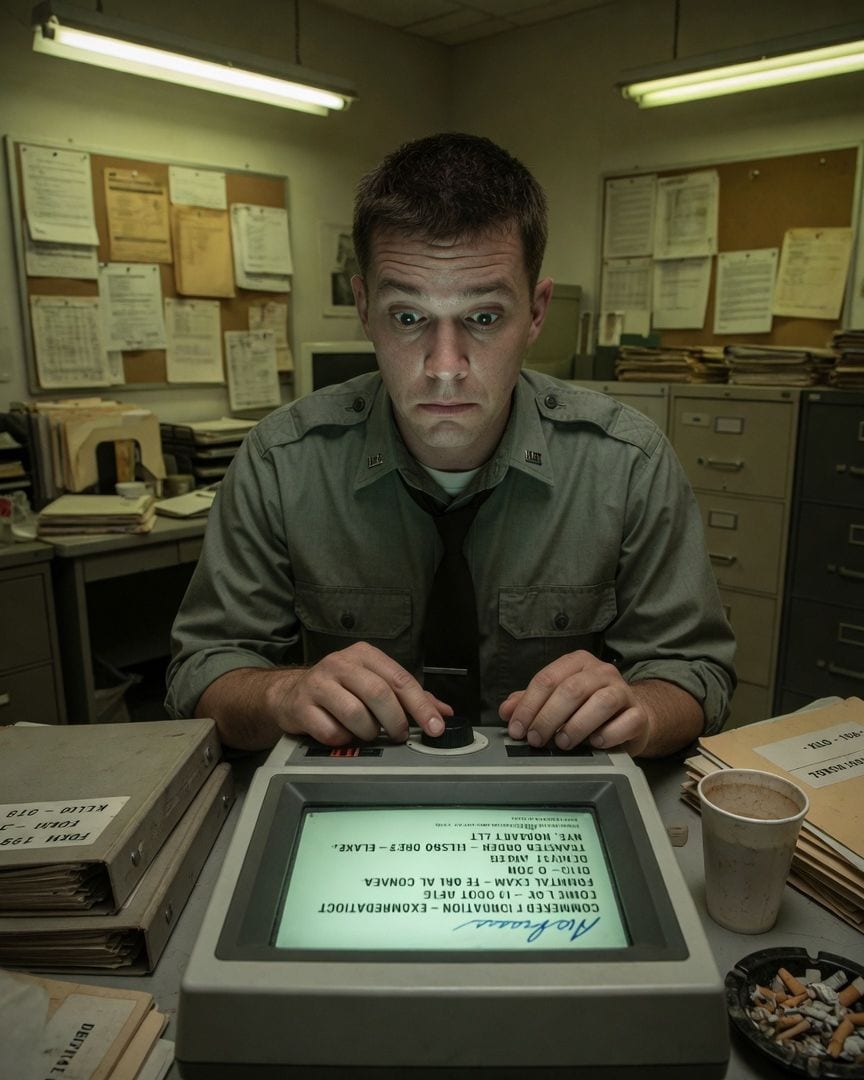
A missile commander watched his ten nuclear silos go dark. His own service record shows his signature on a future he's never lived.
Second Lieutenant Hobart Nye, a missile commander in Wyoming, had his quiet 0247 watch shattered by a security report: a massive, silent black triangle hovered over Launch Facility Kilo, casting a perfect shadow. Hobart watched his console's fault panel light up, signaling all ten nuclear missiles going dark in an impossible silence, followed by eleven minutes his security team could not remember. Official logs called it a "radio malfunction," but Hobart found a requisition for invisible-tracking sensors, signed by a base commander who was supposed to be off-base. The final, chilling discovery came when his own service record showed new entries—a dental check-up, a transfer to Alaska—all dated for a future he never lived, complete with his perfectly replicated signature.
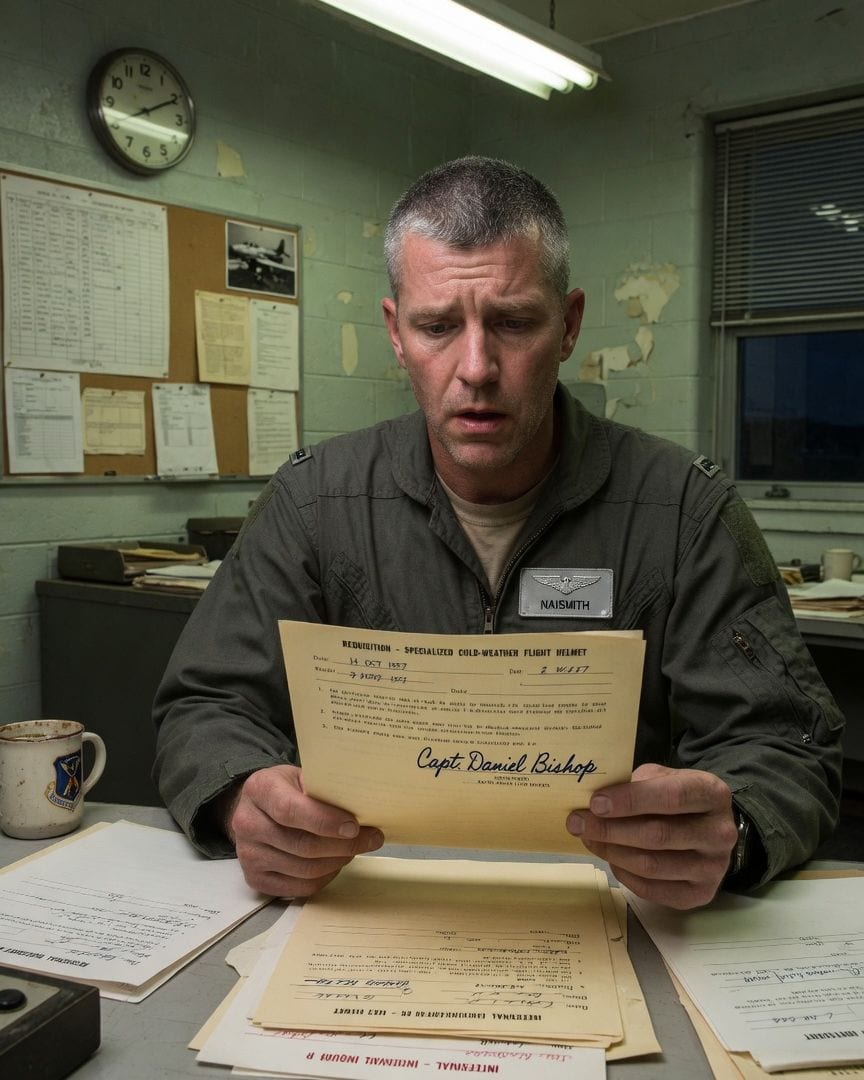
A Cold War Colonel reviews a missing pilot's file and finds Captain Bishop's signature on a form dated weeks after he vanished.
Colonel Ward Naismith faced the grim task of reviewing Captain Daniel Bishop’s personnel file, a routine chore for a man listed as Missing in Action. Bishop had vanished days after he and Naismith chased an impossible, silent disc over Lake Superior, leaving only an empty patch of air and a knot of unease in Ward's gut. Sifting through commendations, Ward found a requisition for flight gear and a maintenance sign-off, both dated *after* Bishop’s disappearance. The true chill came with the requisition for a specialized flight helmet, bearing Captain Bishop’s unmistakable signature, weeks after he was presumed lost. How could a man presumed lost have signed anything?