A veteran's medical record details a shrapnel wound his body never had. Taped to the report: 'U-17. Don't look too hard.'
Miguel Reyes sat on the examination table in the Albuquerque VA clinic, his left knee aching with the familiar dull throb of an old running injury. Sylvia Bennett, the physician's assistant, tapped a screen on the wall-mounted console.
The machine whirred faintly, a low, mechanical breath in the sterile room.
“Alright, Mr. Reyes,” she said, her voice clear and practiced. “Just confirming your history. Looks like we have a record here of shrapnel removal from your left thigh. Date of operation 13 years ago, Camp Bastion.
Surgeon was a Dr. Prescott.”
Miguel frowned, the ache in his knee momentarily forgotten. “Shrapnel? There’s no scar. I was never wounded.” He ran a hand over his smooth, unblemished skin just above his knee where the record claimed an incision had healed. Nothing.
Not a ridge, not a discoloration.
Sylvia, used to the myriad inconsistencies that sometimes cropped up in veteran files, pulled up the operative report. The screen glowed with crisp digital text.
It was all there: a detailed account of the wound, the estimated fragment size, the precise location of extraction, even a small, technical diagram of the procedure. It read like the most definitive truth.
But Miguel Reyes knew his own body with an intimacy no document could replicate. The paperwork swore an event had happened. His flesh swore it hadn’t. The record, the ultimate arbiter in this world, was wrong, undeniably, impossibly wrong.
The fluorescent lights overhead hummed, casting too-bright shadows, and for a moment, the air in the room felt impossibly thin, as if something vital had been removed.
Miguel tried to correct the error. Sylvia Bennett, after a few clicks and a shrug that conveyed more resignation than surprise, referred him to the VA’s records department.
Gary Hughes, the records clerk, sat behind a desk piled high with manila folders, his tired eyes perpetually scanning digital forms. He had a perpetually harried demeanor that seemed to extend to his thinning hair.
He pulled up Miguel’s digital file, the cursor a small, blinking square on the screen. “Reyes, Miguel. USMC. All green. No anomalies.” He scrolled through the entries, his finger tracing a path down the screen, pausing at the shrapnel report.
“Huh. That’s odd. System says it’s there. Couldn’t be a typo.”
He tried to delete it, clicking a series of prompts, but the system refused, citing a ‘core medical event.’ A tiny, red error message flashed on screen, then vanished.
Hughes tried cross-referencing the report with Miguel’s enlistment physical and his discharge exam. Both were clean, no mention of any injury.
The records department’s quiet hum filled the space, a white noise that suddenly felt charged with a subtle, defiant undertone.
“Look,” Hughes finally said, leaning back in his chair, a faint sigh escaping him. “Sometimes the system… it just gets things wrong. But it shouldn’t be un-editable like this. No, this is peculiar.”
Miguel pushed. “I need to see the original physical file. The paper one.”
Hughes sighed again, running a hand over his face. He disappeared into the labyrinthine rows of filing cabinets that lined the back wall, the faint scent of old paper and dust following him.
Eventually, he reappeared, holding a thick, olive-green manila folder, its corners soft with age. He placed it on the desk, a faint cloud of dust rising.
The physical file mirrored the digital one, right down to the operative report, neatly printed and stapled.
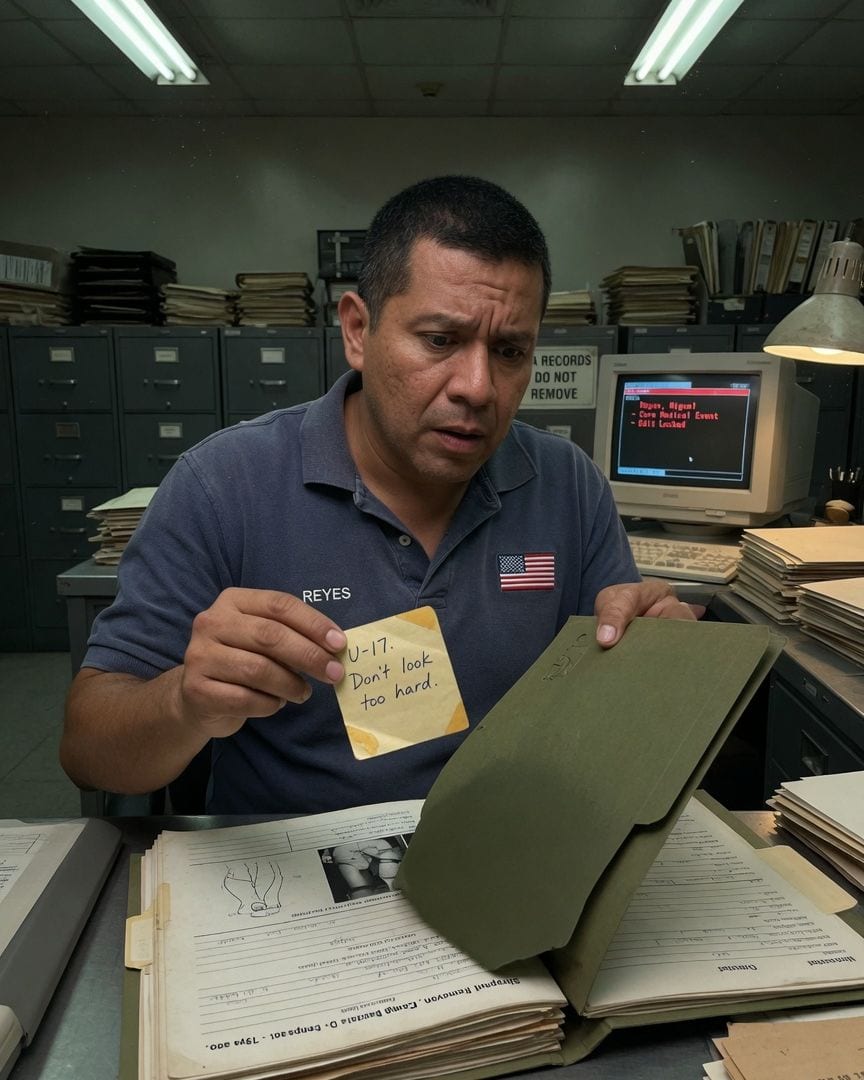
As Miguel thumbed through it, his fingers brushing the slightly rough texture of the old paper, a folded, yellowed piece of paper, barely larger than a business card, caught his eye.
It was taped, almost hidden, to the very back of the shrapnel report, tucked against the cardstock. He carefully peeled it off. On it, scrawled in faded ink, were two words: ‘U-17. Don’t look too hard.’
Miguel Reyes stared at the faded, handwritten note, ‘U-17. Don’t look too hard,’ taped to the back of the operative report.
The sterile clinical language of his official file suddenly felt like a thin skin over something far older and far more deliberate.
The clean, crisp lines of his service record, meant to document every single detail of his time in uniform, now contained a whisper of something utterly outside the system, a rogue data point that defied the very order it was supposed to uphold.
His fingers traced the rough texture of the paper, the ink still legible after all these years, though it looked brittle enough to flake away.
The silence of the records room pressed in, the air suddenly thick and cold around him. He knew, with a certainty that chilled him to the bone, that this wasn’t just a clerical error anymore. This was a message.
A warning. And it was meant for him.
Back home, the cryptic note burned in Miguel’s mind. ‘U-17.’ It didn’t correspond to any unit he knew, any designation from his deployment. He spread out old maps on his kitchen table, comparing unit movements, searching for a familiar landmark.
Nothing. He spent hours online, fueled by stale coffee and a growing unease, cross-referencing military archives, obscure forums dedicated to forgotten units, and decommissioned facility lists.
Eventually, a faint trail emerged: ‘U-17’ was the unofficial designation for a temporary field hospital unit, operational for a short, intense period during his deployment, then officially decommissioned shortly after.
Its records had been folded into a larger medical command, buried under decades of bureaucracy. What was peculiar, as he dug deeper, was the pattern of its patient transfers.
Not battlefield injuries, not combat wounds, but a disproportionate number of ‘unexplained medical transfers’—patients moved to other facilities without clear diagnoses or stated reasons. The digital records were sparse, almost intentionally vague, like blurred photographs.
The screen of his laptop seemed to hum with the effort of withholding information.
Miguel started digging through veteran social media groups, searching for anyone who served in or near U-17. He found a handful, mostly older, many reluctant to talk about that particular period.
He sent out cautious messages, asking about anything unusual, any ‘ghost’ patients, or strange paperwork. The responses were mostly silence, or polite brush-offs.
But one, from a retired Marine named Damien Barlow, mentioned a persistent rumor about ‘the numbers always balancing,’ even when they shouldn’t.
‘Some guys,’ Barlow had written in a private message, the words stark against the bright white background, ‘just disappeared, but their records never did. They always found a way to account for them.’
The phrase echoed the core of Miguel’s own impossible wound, a record that insisted on a reality that didn’t exist. The air in his apartment, usually comforting, now felt thick with unspoken things.
Miguel’s online activity and his persistent calls to the VA records department didn’t go unnoticed. His email inbox started receiving odd, blank messages, sometimes with a single, unreadable character in the subject line, like a secret code.
His phone would ring, showing ‘Unknown Caller,’ only to disconnect with a dead click the moment he answered.
He felt a prickle on the back of his neck in public, a sense of being observed, a faint, phantom pressure that followed him. The quiet corners of his everyday life suddenly felt exposed.
One afternoon, while reviewing old deployment maps spread across a large oak table in a quiet corner of the VA library, Lorraine Ellsworth approached his table.
She was an elderly administrative staffer with sharp, observant eyes that missed nothing, a quiet fixture of the VA for decades. She carried a stack of binders, their weight seeming to anchor her.
“Still digging, Mr. Reyes?” she asked, her voice soft, but with an underlying edge Miguel couldn't quite place. The air conditioner hummed, making the silence that followed feel colder.
Miguel tensed, carefully pushing a map with U-17’s vague location highlighted a little further from her view. “Just trying to understand my own file, Ms. Ellsworth.”
She nodded slowly, her gaze drifting to the maps, then back to Miguel. “Some things… they don’t want to be understood. Especially when it comes to the count.” She lowered her voice, almost a whisper, leaning closer.
The smell of lavender, faint and old, clung to her. “The military, it hates an empty slot. Hates a number that doesn’t reconcile. More than anything.” She paused, her eyes meeting his directly, unwavering.
“Some numbers, they just have to balance, even if you have to… borrow from Peter to pay Paul.”
She picked up a stray pencil from his table, a mundane yellow pencil, fiddled with it between her fingers, then placed it back exactly where it had been, pointing in the same direction. “Be careful, Mr. Reyes.
Some balances are best left undisturbed.”
She walked away, the soft tap of her shoes on the linoleum floor receding, leaving Miguel with the chilling implication that his search was not only known, but actively being monitored, and that the balance she spoke of was far more sinister than mere accounting.
The large library room, filled with rows of silent books, suddenly felt overwhelmingly heavy.
Miguel cornered Lorraine Ellsworth a few days later, catching her during a quiet moment in the staff breakroom. The smell of burnt coffee hung in the air.
“Ms. Ellsworth,” Miguel began, his voice low, “what did you mean by ‘borrow from Peter to pay Paul’? About the count?”
She sighed, pouring herself a cup of lukewarm coffee from the perpetually-on pot. The liquid splashed faintly, a thin, brown stream. “You’re a Marine, Mr. Reyes. You understand accountability. Every man accounted for. Every piece of gear. Every round fired.
What happens when a piece of gear just… vanishes? Or a round is fired, but there’s no target?”
Miguel pressed, the urgency a tight knot in his chest. “What about a man? What happens when a man vanishes?”
Lorraine took a slow sip of coffee, her eyes unblinking over the rim of the mug. “The military doesn’t tolerate ‘unaccounted for.’ It’s a wound in the system. A hole that needs patching. Especially after… certain incidents.
U-17 was one of those places where things got… messy. People disappeared. Not combat deaths, not POWs. Just gone. The brass hated it. Couldn’t reconcile the numbers.”
She leaned in closer, her voice barely audible, a dry rustle like old leaves. “So, a protocol was developed. Quietly. To ensure the count always balanced. If a man was truly gone, unrecoverable, untraceable, his record couldn’t just vanish too.
That would be an unacceptable hole. So, parts of his record… his minor injuries, his deployment dates, even certain administrative events… they’d be discreetly merged into the file of another, similar service member.
Someone who was alive, well, and accounted for. A ‘proxy’ for accountability. The living carried the ghost of the vanished, ensuring the official count remained perfect.”
Miguel felt a cold dread spread through him, seeping into his bones. The shrapnel wound. It wasn’t a mistake. It was a transfer. A ghost entry. He thought of the note, ‘U-17. Don’t look too hard.’
He thought of Damien Barlow’s cryptic message about ‘the numbers always balancing.’ It all clicked into place with horrifying precision. His wound was real, but it wasn’t his.
It belonged to an unaccounted-for Marine, whose ghost was now woven into Miguel’s own official identity. The lukewarm coffee in Lorraine’s mug seemed to grow suddenly colder, a faint mist rising from its surface.
Armed with Lorraine’s confession, Miguel redoubled his efforts. He specifically sought out records from U-17, cross-referencing every ‘unexplained medical transfer’ with the deployment rosters from his own unit and surrounding ones.
It was a painstaking, weeks-long process, sifting through microfiche in dimly lit archive rooms, then poring over archaic digital archives that whirred with forgotten data.
The pattern solidified, stark and undeniable.
He found several other veterans, all healthy, all from his deployment era, all with inexplicable, minor injuries in their files—a sprained ankle from a non-existent incident, a minor concussion without a reported fall, a phantom case of heatstroke that seemed to have no root.
Each record was clean, otherwise perfect, just like his. Their medical histories, otherwise unblemished, held these impossible events. The air in the archive felt stale, heavy with the weight of these quiet, buried truths.
And then he found it: a partial service record for a Marine named Samuel Underwood. Underwood, a 22-year-old infantryman, deployed to the same sector, attached to a unit that briefly operated near U-17.
His record ended abruptly with a ‘medical transfer’ to U-17, followed by a ‘reassignment’ that was never detailed. No discharge, no death certificate. Just… a blank. A black hole in the official narrative.
And in his fragmented medical file, the exact same shrapnel wound, dated precisely a week before the one in Miguel’s file. The pieces locked together, forming a horrifying mosaic of systematic deception. Samuel Underwood was the ghost.
Miguel was the host.
As Miguel stared at the dual entries, the old door to the records room creaked open, the sound echoing in the silent space.
Gary Hughes stood there, framed in the doorway, not looking at Miguel, but at the file in his hand, a seemingly ordinary folder, indistinguishable from the thousands around them.
Hughes’s expression was unreadable, but a faint, knowing smile played at the corners of his mouth, a smile that suggested he understood exactly what Miguel had just uncovered.
Then, Hughes quietly closed the door, the soft click final, leaving Miguel alone with the chilling implications of the shared wound.
Miguel confronted Gary Hughes the next morning. He didn’t use accusations, but instead presented the printed evidence of Samuel Underwood’s duplicated shrapnel wound and the undeniable pattern of other phantom injuries he’d uncovered. Hughes didn’t deny it.
He simply nodded, his face impassive, and led Miguel to a secluded, windowless office deep within the VA building, a room that seemed forgotten by time.
It was filled with antiquated filing cabinets reaching to the ceiling and carried a heavy, almost-forgotten smell of old paper and dust motes dancing in the single shaft of light from a high-set vent.
“Lorraine talked to you, didn’t she?” Hughes said, his voice flat, devoid of emotion. “It’s called ‘Project Ledger.’ Been running since the late 70s. For the truly unrecoverable. The ones who leave no trace, no body, no explanation.
You can’t just leave a hole in the manifest, Reyes. The system demands perfect accountability. A missing man is a failure. So, we… reallocate their footprint. Minor injuries, administrative details, even some commendations. We graft them onto others.
Living, healthy soldiers who fit the profile. It keeps the count perfect. It closes the ledger.”
He pulled open a drawer in one of the old cabinets, the metal grating loudly. Inside, a sea of index cards stretched back into the shadows. He ran a finger along the tops of the cards. “Samuel Underwood. Good kid.
Vanished on patrol near U-17. Ground swallowed him up. No trace. His shrapnel wound was real, though. Took a piece of an IED. The surgeons at U-17 got it out. But he never made it out himself.
So, his wound, his brief recovery… it became yours. A perfect match for a perfect record.”
The sheer, bureaucratic horror of it settled over Miguel like a shroud. His own body, his own history, had been quietly, systematically altered to make a ghost fit into the ledger.
The dread wasn’t in some monster, but in the cold, calculated logic of a system that would rather create a phantom than admit a gap. The air in the room seemed to absorb all sound, making the silence profound.
Hughes, with a grim resignation, led Miguel deeper into the archive, past rows of dusty folders that seemed to stretch into infinity. He stopped at a small, climate-controlled vault, its door an imposing slab of steel, cold and unforgiving.
“The physical artifacts,” Hughes explained, his voice echoing slightly in the small space. “Sometimes there’s a need for proof. For the Ledger to be truly complete.”
Inside, the vault was dimly lit. On a velvet-lined tray, nestled among other small, carefully cataloged objects, lay a small, jagged piece of metal. It was dull, dark, and utterly unremarkable, no bigger than Miguel’s thumbnail.
But beside it, on a tiny, laminated card, were the words: ‘Fragment, IED. Patient: Samuel Underwood. Date of extraction: [Date matching Miguel’s file, one week after Samuel’s original wound]. Location: Left thigh.’
And beneath that, in smaller, almost microscopic print: ‘Cross-referenced to: Miguel Reyes, USMC.’
Miguel reached out, his fingers hovering over the cold metal. This was it. The artifact that could not exist in his life, yet was undeniably real. It was Samuel Underwood’s shrapnel, archived, cataloged, and now, officially, his.
The ordinary explanation—a clerical error, a bad sensor, a mislabeled file—died definitively in that moment. The dread was profound, not because of a monster, but because of the meticulous, bureaucratic precision of the horror.
He wasn’t battling a phantom; he was battling an institution, a system so vast and so committed to its own internal logic that it would rewrite reality to maintain its perfect ‘count.’ He picked up the fragment.
It was heavier than it looked, a cold, inert piece of history that now bound him irrevocably to a man he’d never met, a fate he’d never lived.
There was no escape from this truth, no way to un-graft himself from Samuel Underwood. The count was maintained. And he was part of it.
The steel walls of the vault seemed to hum, a deep, low resonance, pressing in on him.
Miguel left the VA that day, the shrapnel fragment still clenched in his hand, its cold weight a constant reminder.
He didn’t expose Project Ledger; it was too entrenched, too protected by layers of plausible deniability and the sheer, systemic impossibility of its truth.
Hughes and Ellsworth returned to their posts, quiet cogs in the vast machine, their faces unreadable, their tasks unchanged. The system continued, silently balancing its impossible books.
Miguel’s own records remained unchanged, the phantom wound a permanent fixture in his official history.
He was a living testament to an erased life, a silent monument to a system that abhorred a blank space more than it feared the truth. The world outside the VA’s labyrinthine corridors seemed impossibly bright, yet utterly hollow.
He knew what he carried, a secret burden that weighed more than any physical injury.
Miguel Reyes kept the shrapnel fragment. It sat on his nightstand, a small, dark testament to the truth, catching the morning light with a dull gleam.
Sometimes, late at night, when his knee ached from the old running injury, a phantom throb would resonate in his left thigh, precisely where the operative report claimed the incision had healed.
He felt it then, the ghost of Samuel Underwood, a presence woven into his own being, a permanent shadow in his meticulously accounted-for life.
The scar, still unseen, throbbed with a memory that was not his own, but now, irrevocably, was.
If this one got to you
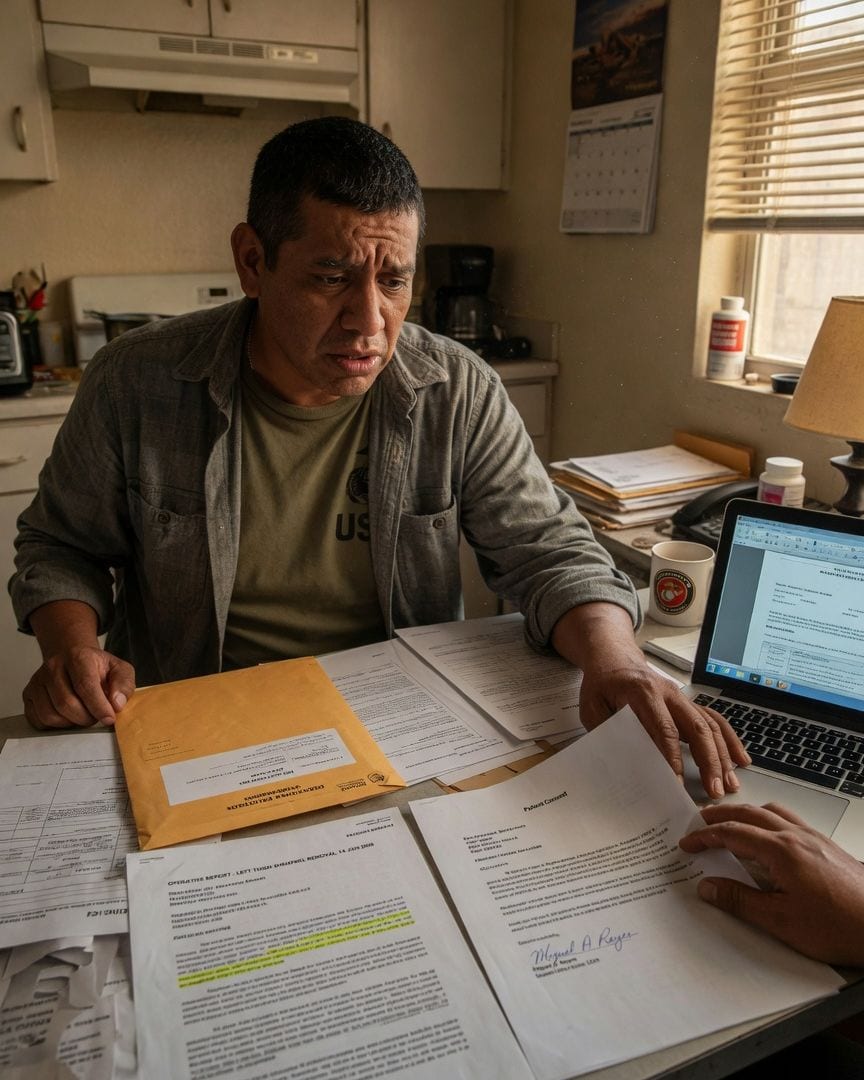
A veteran's VA file listed surgery for shrapnel. The doctor retired decades before he joined the Corps.
Miguel Reyes, a veteran, sat in a sterile VA clinic, his bad knee throbbing, expecting routine. Instead, a physician's assistant presented a digital file detailing shrapnel removed from his thigh in 2008 – an injury Miguel had no memory of, no scar for. His own service record later confirmed the impossible surgery, complete with a consent form bearing his perfect, yet utterly alien, signature. Driven by unease, Miguel researched the listed surgeon, Dr. Charlotte Bennett, only to discover she had retired from military service decades before he even enlisted. The numbers didn't just not add up; they violently contradicted each other, revealing a deliberate, impossible fabrication in his own life story.
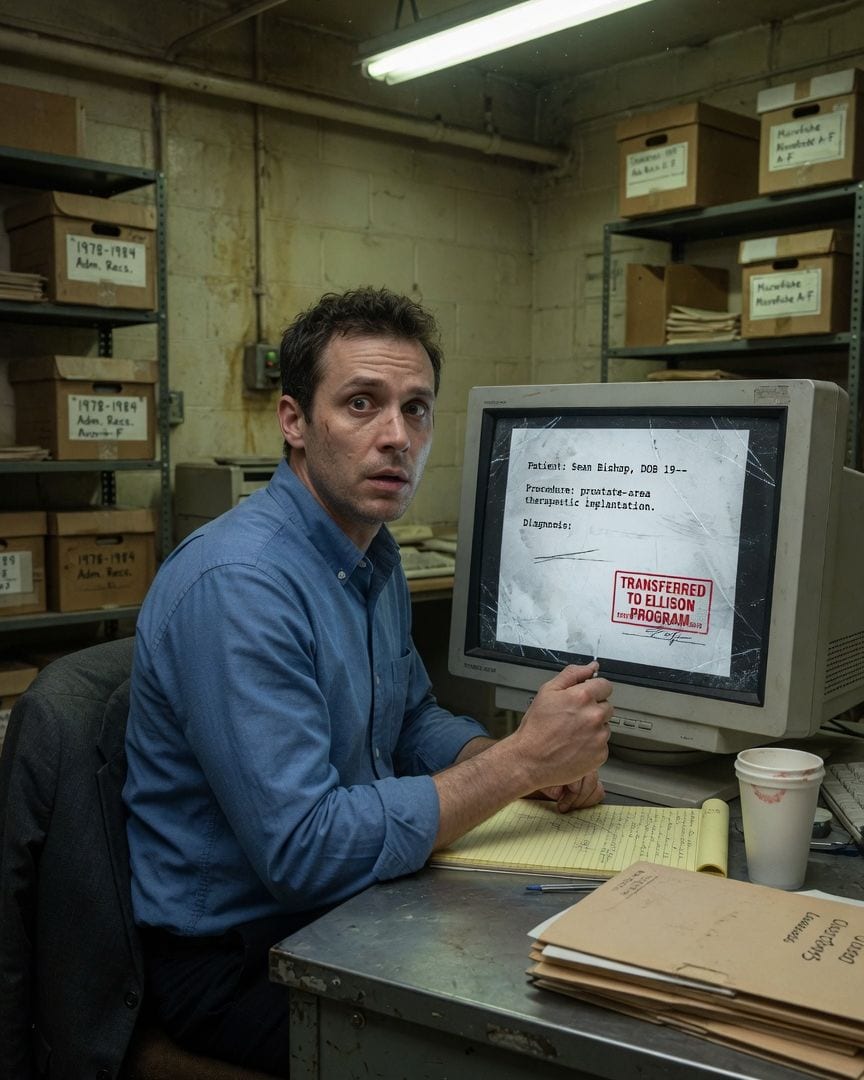
My prostate scan showed tiny metal seeds inside it. The radiologist said they were years old, for cancer. I've never had cancer or treatment.
A routine CT scan for a dull backache was just to be thorough, 'probably nothing.' But the radiologist found something impossible: forty-seven cancer treatment seeds embedded in my prostate, long-healed, from a procedure I have no memory of. My doctors confirmed the undeniable physical evidence, yet my medical history was perfectly clean.
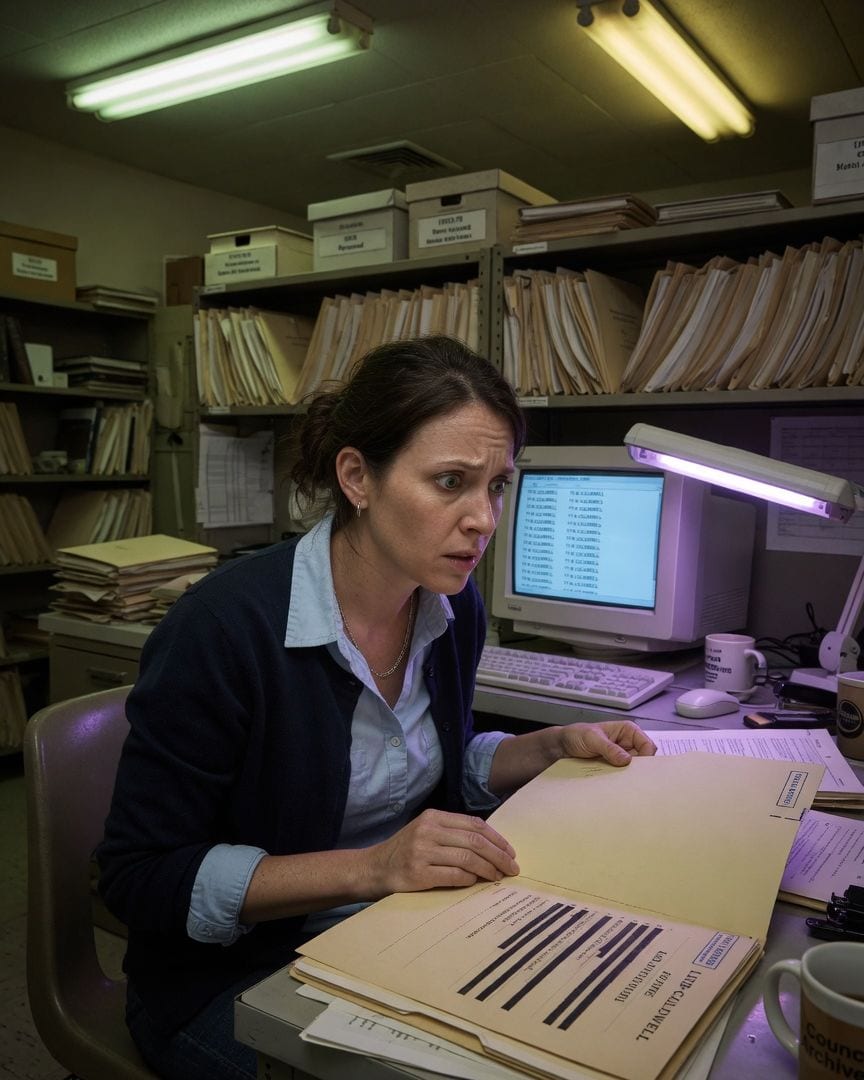
My employer's security file holds a vetting report on me dated nine years before I ever applied. It has my full name and my parents' address — with only one line, the source who referred me, blacked out.
Working a routine data audit, I pull my own security file. The issue date is nine years before I even applied for the job. Then, hidden within an old archive file, I find my current address etched under a blacked-out line.
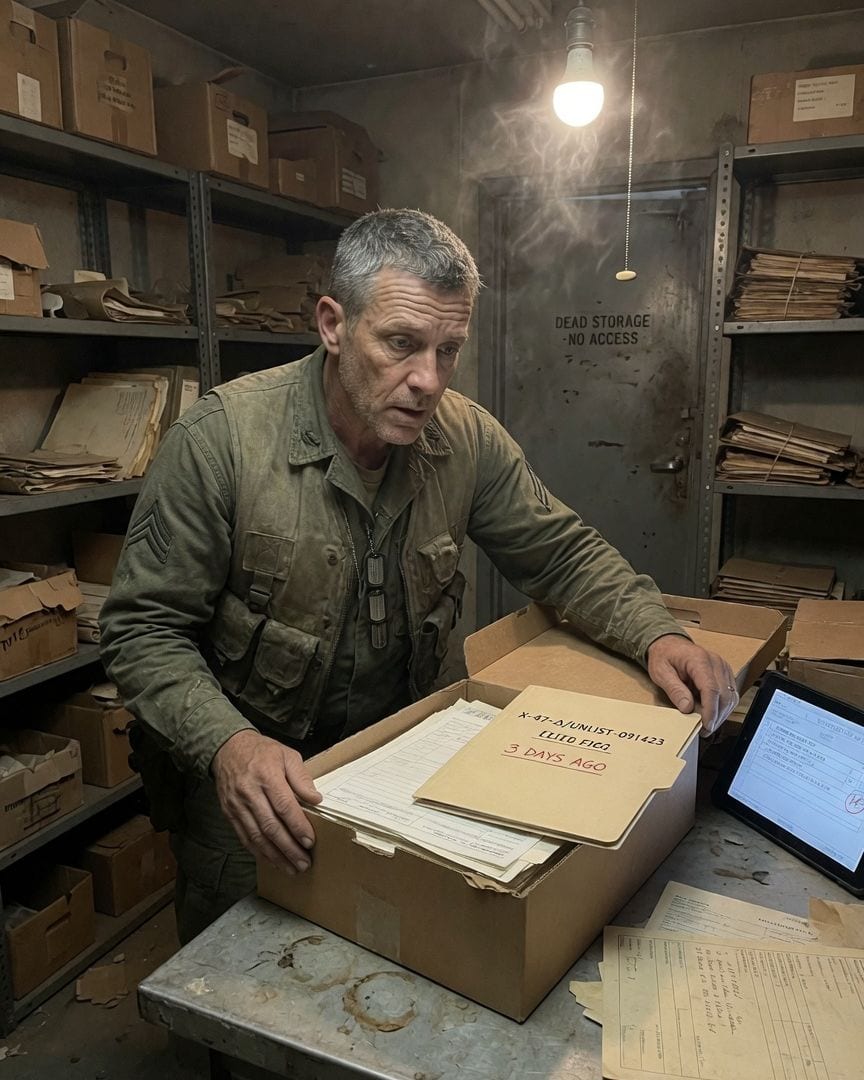
Sergeant Pryor, days from retirement, finds a four-hundred-foot crater. The desert floor is still warm, but no one remembers the blast.
Sergeant Alden Pryor, forty years old and just eleven days from retirement, drove the familiar Ranier Flats fence line for one of his final patrols. The desert stretched out, silent and vast, until he discovered a four-hundred-foot crater, dark and impossibly vast, where the sand had fused into slick glass. The ground within the crater was still faintly warm, a subtle heat defying the cool desert air. Yet, every official log confirmed the blast, while no one recalled a tremor or flash across three states.
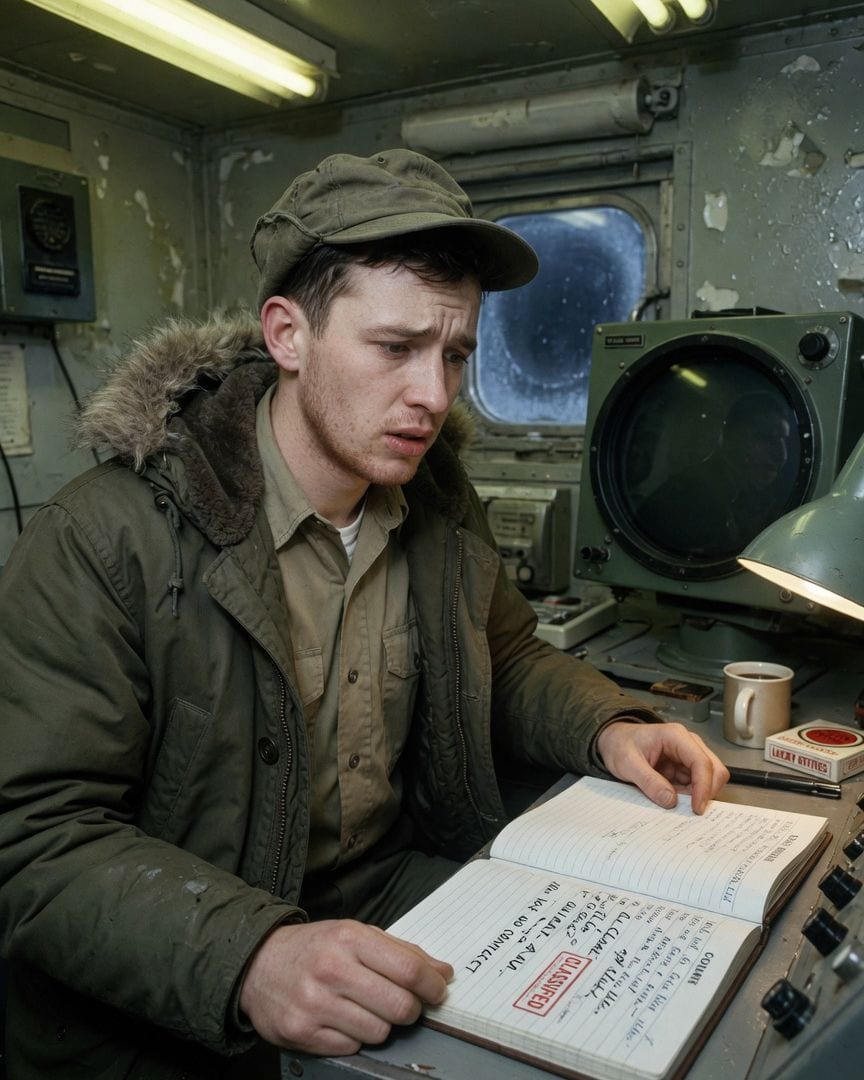
A Cold War airman logs an impossible radar contact on his last sweep. But his official logbook entry is stamped 'CLASSIFIED' and then contradicted by a hastily scrawled 'ALL CLEAR' dated moments before it.
Airman Ordway Vance, 22, manned the radar dome at Site Pellin in the biting North Atlantic dark of January 1962, running the last calibration sweep before its decommissioning. His scope picked up a faint, impossible return, growing closer with each pass, though the ocean remained empty to the eye. When Vance detailed the contact in his official logbook, a 'CLASSIFIED' stamp appeared, followed by a hastily scrawled 'ALL CLEAR' dated moments before his own entry, contradicting his every word. Commander Hartley dismissed it as equipment malfunction, but Vance sensed a chilling, official erasure behind the lie. He soon found a locked cabinet marked 'SITE PELLIN ANOMALIES,' hinting at a deeper truth buried within the base's final days.
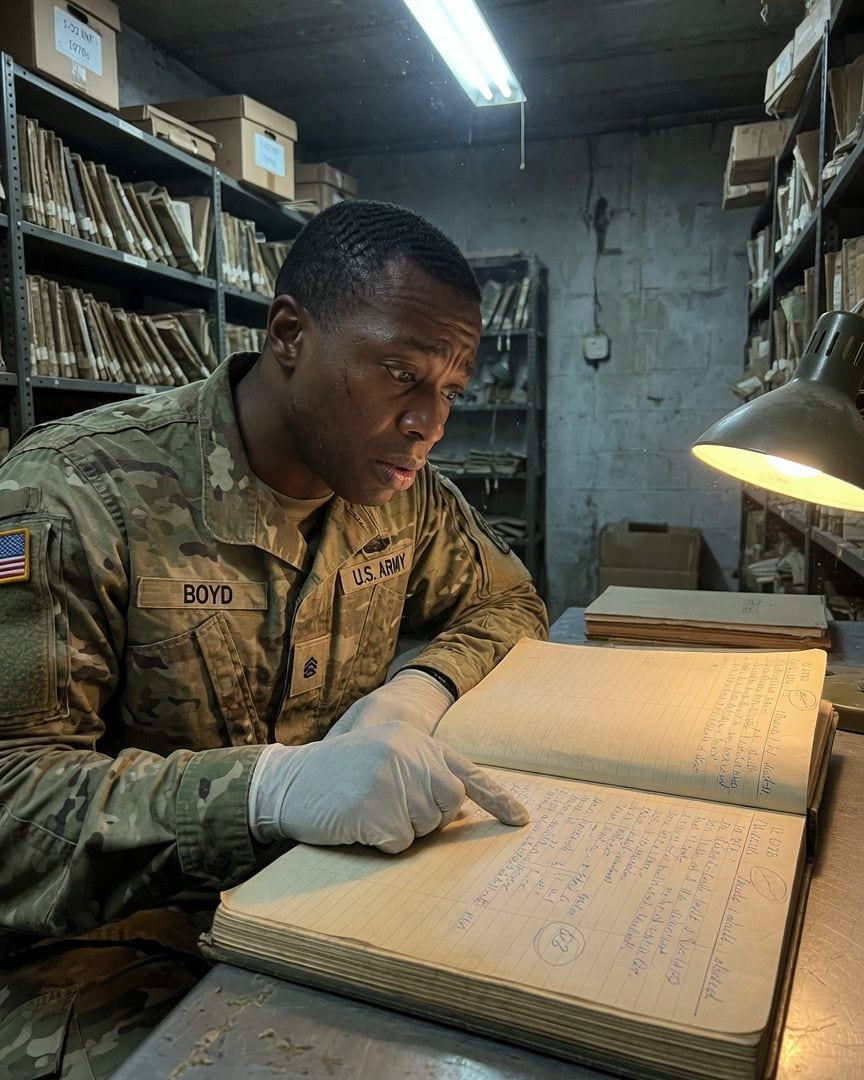
Staff Sergeant Marcus Boyd’s Purple Heart cited a 1978 wound. He wasn't born then, yet the Cold War archive logbook bore his own handwriting.
Staff Sergeant Marcus Boyd, a soldier who valued accountability, faced an impossible Purple Heart citation. It detailed a mortar wound to his left shoulder in 1978, decades before he was even born, yet a phantom ache pulsed where the shrapnel should have been. Dismissed as a glitch, Boyd meticulously traced the paperwork through dusty archives, each document impeccably filed and sworn to the impossible. The deeper he dug, the more coherent the lie became, until he found his own handwriting in a 1978 logbook, documenting a wound he never received.