My prostate scan showed tiny metal seeds inside it. The radiologist said they were years old, for cancer. I've never had cancer or treatment.
It started with a dull ache in my lower back, persistent, like a pebble caught in a shoe. Annoying, but not alarming. My doctor ordered a routine pelvic CT, just to be thorough. “Probably nothing, Damien,” she’d said.
“Just to rule out anything obvious.”
I remember the sterile chill of the imaging center, the low hum of the machine. It was all so ordinary. Two days later, my phone rang. Dr. Evelyn Bishop, the radiologist. Her voice was too measured, too calm.
She wanted me to come back in. “Just to clarify a few things on your scan.”
I sat across from her in a small, quiet office, the air conditioner blowing a faint, cold stream. She pulled up my CT images on a large monitor, spinning it to face me.
The cross-section of my lower abdomen glowed in shades of gray. Then she zoomed in, tighter and tighter, until the prostate was clearly visible. And there they were. Tiny, bright white specks, scattered throughout the tissue.
Dozens of them, like a handful of spilled glitter.
“These,” she said, her pointer hovering over the screen, “are brachytherapy seeds. They’re used in prostate cancer treatment.” She looked at me, her expression a perfectly constructed neutral mask.
“They appear to be well-healed, meaning they’ve been in place for a long time. Years, certainly.”
I stared at the screen, then at her. “Cancer? Treatment?” My voice felt thin, like it belonged to someone else. “Dr. Bishop, I’ve never had cancer. Not prostate cancer, not any cancer. My records are… clean.
There’s no history of anything like that.”
She leaned closer to the screen, her brow furrowed slightly as she counted the specks. “There are forty-seven of them, Mr. Kowalski. This is definitive. They’ve been here for decades. Do you recall which oncology unit performed the procedure?
Perhaps an early intervention you don’t remember?”
I could only shake my head, the cold, alien presence in my own body an unshakeable fact, glowing on a screen in front of me.
My primary care physician was stumped. She called it a “catastrophic record mix-up,” but the CT images were undeniably mine, marked with my date of birth, my name. The metal was in me.
She referred me to Dr. Daniel Sheppard, a urologist and oncologist known for untangling medical mysteries.
Sheppard was a man in his early sixties, with kind, tired eyes. He spent an hour with me, reviewing the scans, performing his own physical examination.
He confirmed Bishop’s findings: the seeds were precisely where they should be for brachytherapy, long-healed, undisturbed. He dismissed the idea of a simple record mix-up outright.
“Mr. Kowalski,” he said, leaning back in his chair, the leather creaking faintly, “the physical evidence in your body is undeniable. We don’t just find forty-seven cancer treatment seeds in someone’s prostate by accident.
These are there, they’ve been there since you were very young, by the look of the tissue regeneration around them.”
He tapped a pen against his desk. “What we’re dealing with is a ghost in the machine. A procedure that happened, but left no official trace in the modern system.”
He suggested the possibility of extremely old, perhaps misfiled, paper records from a defunct hospital. “Before everything went digital, before centralized databases, things could… disappear. Or be tucked away in some forgotten archive.”
He mentioned a few institutions that had closed or merged in the region over the past few decades, giving me a starting point.
The words “ghost in the machine” rattled in my head. I left his office with a grim determination.
A physical hunt for an impossible paper trail felt like a distraction from the growing dread of something so profoundly wrong inside me.
I spent weeks making calls, sending emails, sifting through directories of long-gone hospitals, clinging to the mundane thread of a bureaucratic error. Each dead end made the silence inside my own body feel louder.
I drove across state lines, chasing every obscure lead, trying to outrun the chilling sensation that something fundamental about my life was utterly false.
The administrative hunt became my anchor, a way to avoid the chilling truth that maybe there was no ordinary explanation at all.
Weeks of fruitless searching, of battling unresponsive archivists and navigating labyrinthine digital databases, led me to a dusty, forgotten records office.
It belonged to a hospital that had closed its doors thirty years ago, its archives now maintained by a larger, impersonal health system, tucked away in a cavernous basement with the scent of old paper and stale air.
I’d spent hours staring at microfiche readers, my eyes aching from the glare, when a technician finally called me over. “Found something curious, Mr. Kowalski. Not under your name, but… the description matched your query.”
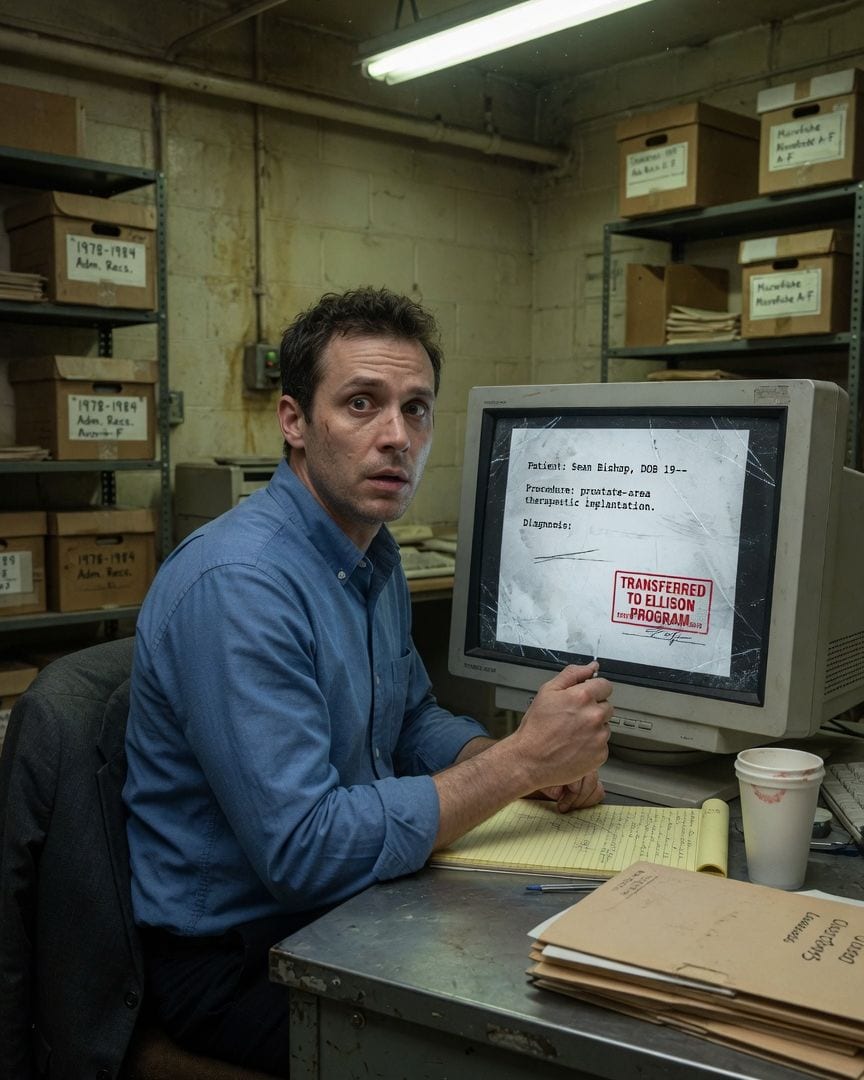
The screen of the microfiche reader glowed, projecting a faded, water-stained entry. It wasn’t Damien Kowalski. It was for a child, a boy named ‘Sean Bishop,’ born in the same year as me. The procedure description read: ‘prostate-area therapeutic implantation.’
The diagnosis code was entirely blank, deleted, like it had been scrubbed clean. But next to it, stamped in faint, crimson ink, was a chilling, ambiguous notation: ‘transferred to Ellison Program.’
I stared at the microfilmed entry, the implications slowly, horrifically dawning.
The 'Ellison Program' became my new obsession, a cold, specific word that refused to be forgotten. I hammered it into search engines, combed through academic journals, even scoured declassified government documents. Nothing.
It was as if the name had never existed, a digital ghost in a world that remembered everything. The silence was deafening, far more unsettling than any conspiracy theory.
I retraced the defunct hospital from the microfilmed record, learning it was acquired by a massive regional health conglomerate in the late 1990s.
More digging into obscure retirement lists, sifting through names that blurred into one another, finally led me to Conrad Muller.
He was listed as a former medical records administrator who had worked at the defunct institution during the period in question.
Muller was now a frail, reclusive man in his late seventies, living in a quiet, isolated retirement community. The community itself felt like a hushed archive, every resident a faded document of a life once lived.
His apartment was small, meticulously neat, smelling faintly of dust and old books. I introduced myself, explaining my predicament, and showed him the printout of the microfilmed record—the name 'Sean Bishop,' the deleted diagnosis, the 'Ellison Program' stamp.
His eyes, cloudy with age, widened almost imperceptibly as they landed on that crimson mark. A flicker, quick as a match strike, illuminated them, then vanished. He quickly became evasive, his gaze darting around the room, avoiding mine. "Ellison Program?"
he mumbled, his voice reedy. "I don't recall that name. My memory isn't what it used to be. A lot of old records were... either destroyed or transferred. Nothing accessible now, I assure you."
His agitation was palpable. He kept fussing with a small ceramic bird on his coffee table, turning it over and over, his hands trembling slightly.
He looked like a man who knew a secret, a heavy, dark thing he’d buried decades ago, and now, suddenly, I had unearthed a piece of it right in front of him.
The quiet room seemed to press in on us, the silence between his clipped sentences thick with unspoken truths.
I couldn’t let it go. Muller’s reaction, the way his composure had fractured at the sight of that name, cemented my conviction.
I started making repeated, unannounced visits, showing up at his door every few days, each time with another printout, another question. He grew increasingly agitated. His voice, initially reedy, started to rise, edged with a desperate urgency.
"Some things are better left buried, Mr. Kowalski," he insisted, gripping the armrests of his worn armchair. "For your own good, just walk away." His eyes were wide now, not just with fear, but a strange, almost paternal concern.
It wasn't just Muller, though. Subtle shifts started to seep into my own environment. A dark sedan, a nondescript model, began appearing down my street for hours at a time.
The same generic face, obscured by a baseball cap, would show up in my rearview mirror on my commute, always two cars back, always just out of focus.
My phone line, normally crystal clear, developed a low, indistinct murmur, like distant voices whispering just beneath the surface of my calls. I’d pick up, hear it, then it would vanish, leaving me with a faint hum.
Then, the email. It landed in my inbox like a digital ice pick. The sender was 'unknown,' the subject line simply 'Warning.' I almost deleted it, thinking it was spam. But something, a cold knot in my stomach, stopped me.
The body of the email read: 'The past is a comfortable lie. Do not disturb it. We know what you're looking for.'
The screen seemed to glow with an unnerving intensity, reflecting my own pale, shocked face. The threat was no longer abstract, no longer a ghost in the records. It was personal. Someone was watching me. Someone knew I was digging.
And they wanted me to stop. The air in my apartment felt suddenly thin, sharp, like it might crack.
I went back to Muller's apartment one last time. There was no gentle introduction, no polite inquiry. I didn’t ask; I demanded.
I placed the printout of the 'Sean Bishop' microfilmed record on his small coffee table, pushing it towards him until the faint crimson 'Ellison Program' stamp was directly under his nose.
"You know what this is, don't you, Conrad?" I said, my voice low and steady, stripped of all courtesy. "And you know what it has to do with me."
Muller flinched, his shoulders slumping. He looked utterly defeated, the fight draining out of him. The silence in the room stretched, heavy and suffocating, until finally, he let out a long, shuddering sigh.
"It was real," he whispered, his voice barely audible, like a gust of wind rattling dry leaves. "The Ellison Program. From decades ago. Highly classified. Government-backed, though they did a good job of burying their involvement."
He cleared his throat, the sound raspy. "It was about 'correction.' Identifying certain... genetic 'anomalies' at birth. Things they considered 'unstable' or 'undesirable' in the gene pool. Infants identified with these markers were quietly removed. Their original identities... retired."
My hands clenched under the table. "The seeds," I prompted, the word a physical ache in my own prostate.
"The seeds," he confirmed, his gaze fixed on some point beyond me, lost in the past. "They weren't for cancer, Mr. Kowalski. Not ever. They were a form of bio-marker. And a delivery system.
Slow-release compounds, designed to subtly alter cellular regeneration. To ensure... genetic conformity over time. To guide their development into a specific kind of 'normalcy'." He paused, a bitter line forming across his lips. "Sean Bishop. Yes.
He was part of it. One of the first batches, I think."
The sheer clinical detachment in his words, describing human lives as 'anomalies' and 're-integration,' chilled me to the bone. It was worse, far worse, than cancer. It was a sculpting of the self, a silent, lifelong manipulation.
"Your job," I pressed, "was to manage the 'retired' records?"
He nodded, a slow, heavy movement. "To make sure no trace remained. To ensure the new identity was… pristine. Unquestioned. It was a clean slate, you see. For the program's subjects. For the new lives they were given."
His gaze finally met mine, filled with a profound, crushing sadness. "You were one of them, Mr. Kowalski. You still are. The seeds... they're still working. Still ensuring that 'normalcy'."
The metal in my own body, which I’d once thought was a dormant relic, now felt like a foreign, active presence, a tiny, cold engine whirring beneath my skin.
Muller, trembling, pushed a small, unmarked manila envelope across the table, his movements slow and deliberate. "This was… a contingency," he whispered, his voice laced with years of guilt and fear. "For those who… found out.
Or for anyone who got too close."
My fingers fumbled with the flap, my heart hammering against my ribs. Inside were photocopies. Not official records, but faded, slightly warped copies of dental records.
They were from a different state, dated to my childhood, under a completely different name: 'Sean Bishop.'
My breath hitched. I pulled out the top sheet, a black-and-white dental chart. My eyes darted to the molar diagrams, then to the front teeth. There it was. The familiar, slightly crooked front incisor, just a fraction off-center.
The small, almost imperceptible gap between my upper molars, a minor congenital anomaly only my childhood dentist had ever pointed out. It was my own unique dental pattern, undeniable, unmistakable. Yet it was under a name that wasn't mine.
I flipped through the pages, my vision blurring. Notes about a childhood surgical procedure were scrawled in faded blue ink. It wasn't dental, but its timing aligned perfectly with when the 'seeds' would have been implanted.
My hands were shaking so hard I almost dropped the stack.
On the very last page, at the bottom, stamped in the same faint crimson as the microfilmed record I’d found weeks ago, was the 'Ellison Program' notation.
And beneath it, a chilling, final declaration, in crisp, typed capital letters: 'PATIENT'S ORIGINAL IDENTITY FORMALLY RETIRED. RE-INTEGRATION SUCCESSFUL.'
My world tilted, the room spinning on its axis. This wasn't about someone else being treated like me. This wasn't a mix-up, or a parallel case. This was about me. All of it.
The seeds, the vanished records, the name 'Sean Bishop.' It all snapped into focus with sickening clarity. I was Sean Bishop. I was the patient. I was always inside it.
I pressed Muller for every detail, my voice a tight wire, stretched to its breaking point. He was fully resigned now, a man emptying decades of poisoned secrets. He revealed the full, monstrous shape of the Ellison Program.
It had been initiated by a shadowy branch of government in the wake of post-war genetic research, a chilling response to perceived weaknesses in the national genetic fabric.
A fear of 'unstable' bloodlines, of inherited 'deviations' that might somehow compromise future generations.
Infants, identified with these markers at birth through clandestine screenings, were quietly removed from their birth families, their original identities retired from existence.
The 'seeds' in my prostate, he explained, were not just a bio-marker for tracking, but a permanent, untraceable delivery system. They continuously released microscopic compounds, subtly guiding cellular development, ensuring those like me grew into genetically 'stable' adults.
"A form of slow-motion, biological conditioning," he murmured, his voice hollow.
Muller’s role, he confirmed, had been to manage the administrative machinery of this erasure. Meticulously archiving the 'retired' identities, ensuring the 're-integration' files were pristine, sealed, and devoid of any link to the past.
He confirmed it again, looking me directly in the eye: I was one of them. My entire life, my very self, had been a carefully constructed lie. My body, a living experiment, perpetually maintained.
The fragmented clues — the impossible seeds, the vanished records, the name 'Sean Bishop,' my own dental charts — all snapped into one coherent, horrifying pattern.
The dread was not a monster in the dark, but the cold, clinical precision of my own engineered existence.
Muller, now wracked with a profound, trembling guilt and a fresh surge of fear for himself, offered me a desperate chance. "There's one more thing," he whispered, his eyes darting towards his locked filing cabinet. "Your original file.
The complete one. It’s stored in a secure, abandoned digital archive. Known only to a few. Hidden away, outside the main system. If you want to know who you really were..."
Retrieving it, he warned, would be dangerous. Exposing us both to the program's still-active oversight. But I needed it. I needed the truth of who I was, the identity they had stolen. I agreed without hesitation.
We arranged to meet at the dilapidated, forgotten facility he described. It was an old municipal building, crumbling at the edges, slated for demolition but left untouched for years. A perfect, silent tomb for secrets.
As I was leaving my apartment for the rendezvous, my phone pinged with a new, anonymous message. The sender was the same as before. The subject line: 'Last chance. Stop.' The watcher was still there. They knew.
Inside the dusty, echoing archive, the air was cold and still, smelling of damp concrete and rust.
Muller, a frail silhouette in the gloom, guided me through a maze of defunct server racks to an ancient, bespoke terminal, its screen flickering to life with a low hum.
His fingers, surprisingly agile, flew across the yellowed keyboard, navigating through layers of obsolete encryption, past faded warnings and long-dead network protocols. The progress bar on the screen crawled towards completion, agonizingly slow.
Just as it hit 80%, a faint, rhythmic thudding started from the floor above us. Heavy, deliberate footsteps. They grew louder, closer, echoing in the cavernous space. Panic flared in Muller’s eyes.
He swore under his breath, his hands a blur. With a final, desperate key command, he pulled up a single, encrypted digital file outlining my original identity and the full scope of my 're-integration.'
"Go!" Muller hissed, yanking a small, unmarked USB drive from the terminal and thrusting it into my hand. "The service tunnel! Out the back!"
The thudding was now directly overhead, followed by the splintering sound of wood as operatives breached the archive's main entrance.
I heard Muller's strained shout, a single word lost in the growing chaos, then nothing but my own pounding heart, echoing in my ears as I scrambled into the darkness of the service tunnel.
I escaped. Muller’s fate, however, remained a grim question mark, lost in the echoing violence of that forgotten archive.
I was now alone, with a single, encrypted USB drive containing the truth of my past, a digital lock on who I was, on the life I never lived.
The drive proved stubbornly resistant to decryption, a labyrinth of obsolete code and layered defenses. I tried everything, every specialist, every dark-web forum, but it remained a fortress.
Officially, Damien Kowalski still exists. My life continues as before. But the man living it knows it’s a fabrication. The seeds remain, a constant, low thrum beneath my skin, a physical reminder of the ongoing, invisible manipulation.
I am free, but utterly unmoored, living a life that was never truly his.
Months pass. I live on edge, my routines fractured, constantly scanning crowds, checking my rearview mirror. I’ve tried every angle, every contact, but the encrypted file remains a fortress. The truth is locked away, just out of reach.
The seeds in my prostate are a phantom weight, a slow burn of an impossible reality. I sometimes catch my reflection, searching for the face I’ve lived with for 42 years, and see only a construct, a stranger.
The world sees Damien Kowalski, going about his unremarkable life, but I know better. I am a ghost in my own skin, a living testament to a program that sculpted me into someone else.
Sometimes, the safest thing to believe is that your own body is a stranger.
If this one got to you
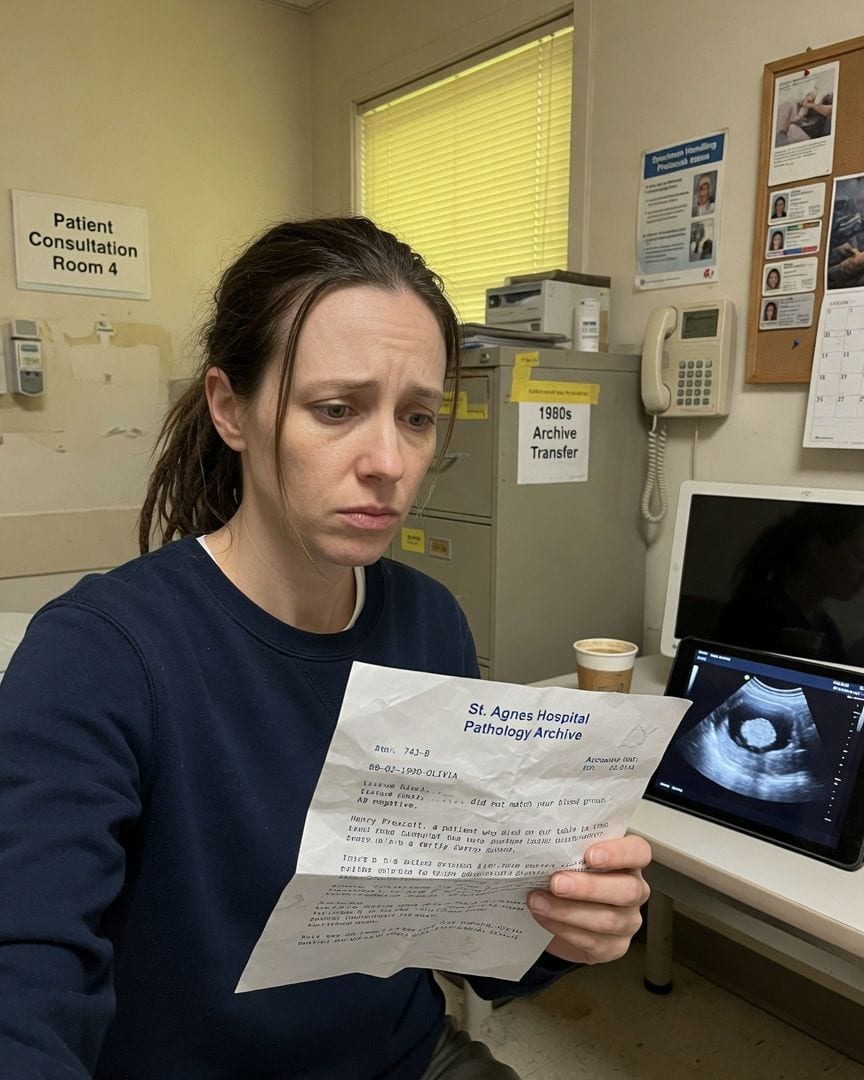
The hospital found a tumor sample filed under my patient number, but the cells belong to a man who died on their table in 1988. My file has no biopsy — and they want me to come in.
A chilling letter from the hospital revealed an anomaly in my medical file: a tissue block, under my hospital number, with a completely different blood type. It contained the DNA of Henry Prescott, a man who died in 1988, just two years before I was born. My own records hold no biopsy, no tumor, leaving me with an impossible question.
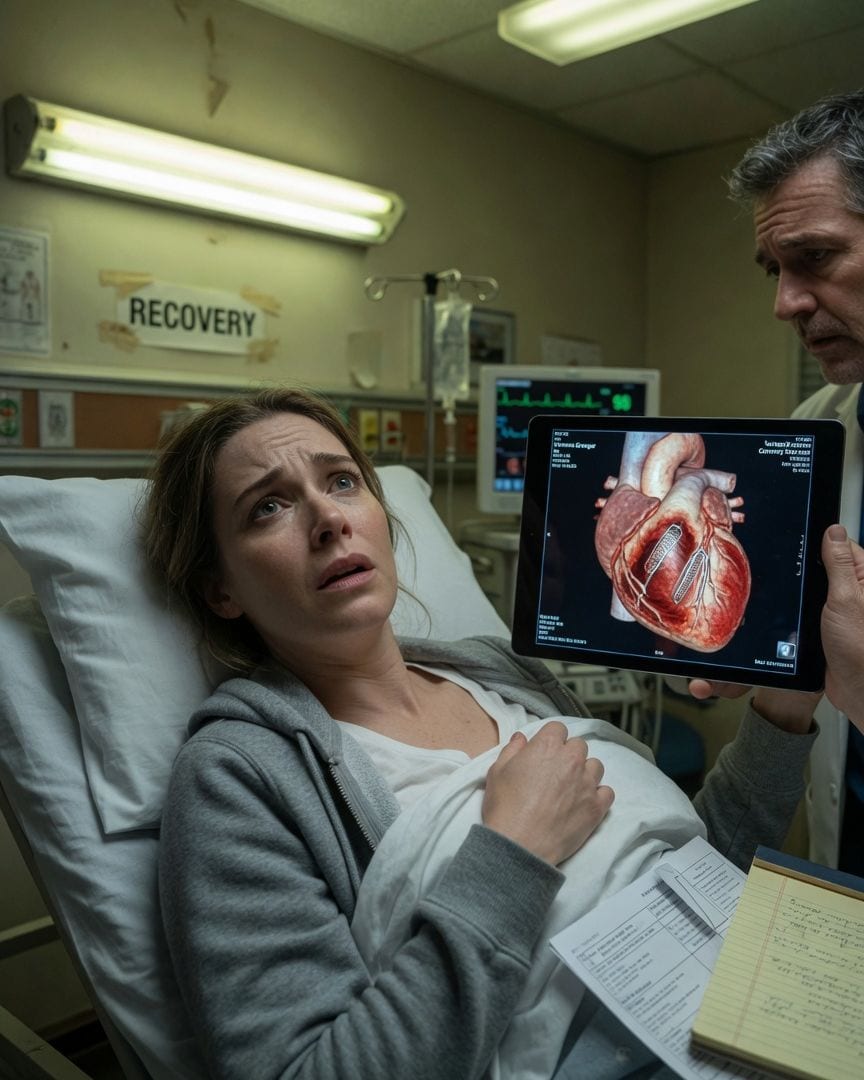
Metal stents are propping open my heart. The doctor rotated the image, but I've never had a cardiac procedure.
After years of dismissed chest pain, a CT scan revealed an impossible truth: my heart contained two metal stents. Dr. Maddox confirmed there was no record of any cardiac procedure in my entire medical history, and I had no memory of ever having surgery. My own body held a secret, alien architecture I couldn't explain.
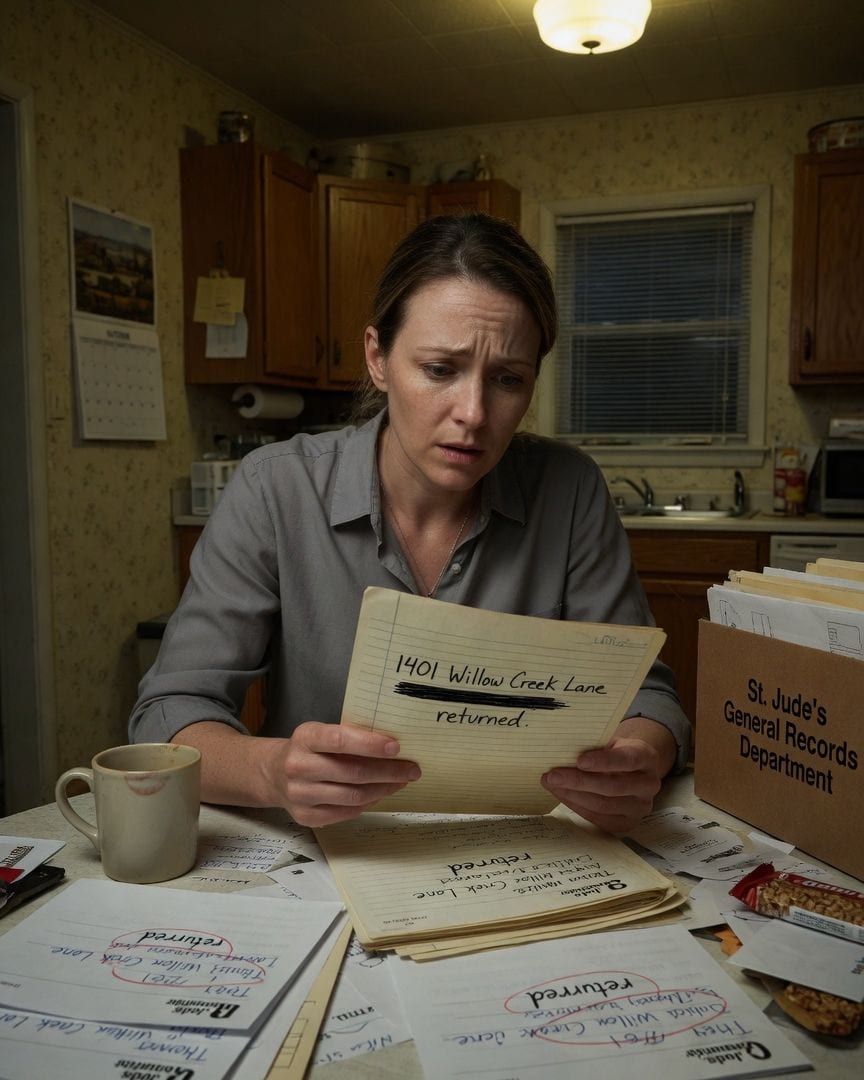
My medical file shows my street address on a struck-through line from 1988, a year I lived two counties away. It just says 'returned'.
A routine insurance audit led me to my childhood medical file from 1988. But among the expected notes, a deliberately struck-through line listed my current house address, followed by the stark word 'returned.' In 1988, I lived two counties away, making this entry an impossible and unsettling mystery.
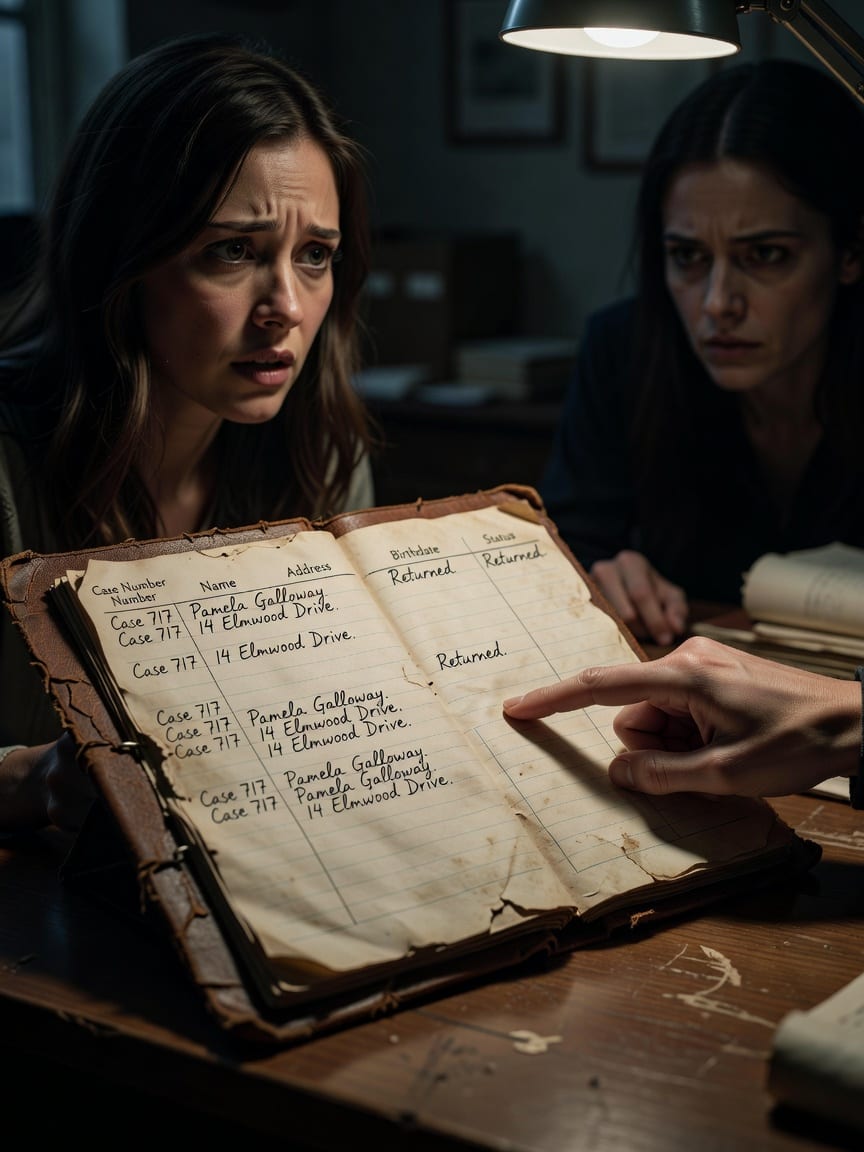
My hospital file has a blacked-out line from 1988. It names my street address, decades before I lived here. Then: 'returned'.
I finally got my medical file, hoping to clear up a ridiculous bill. Inside, I found an entry from 1988: my current home address, scrawled on a partial intake form and marked 'returned.' I was six then, living fifty miles away.
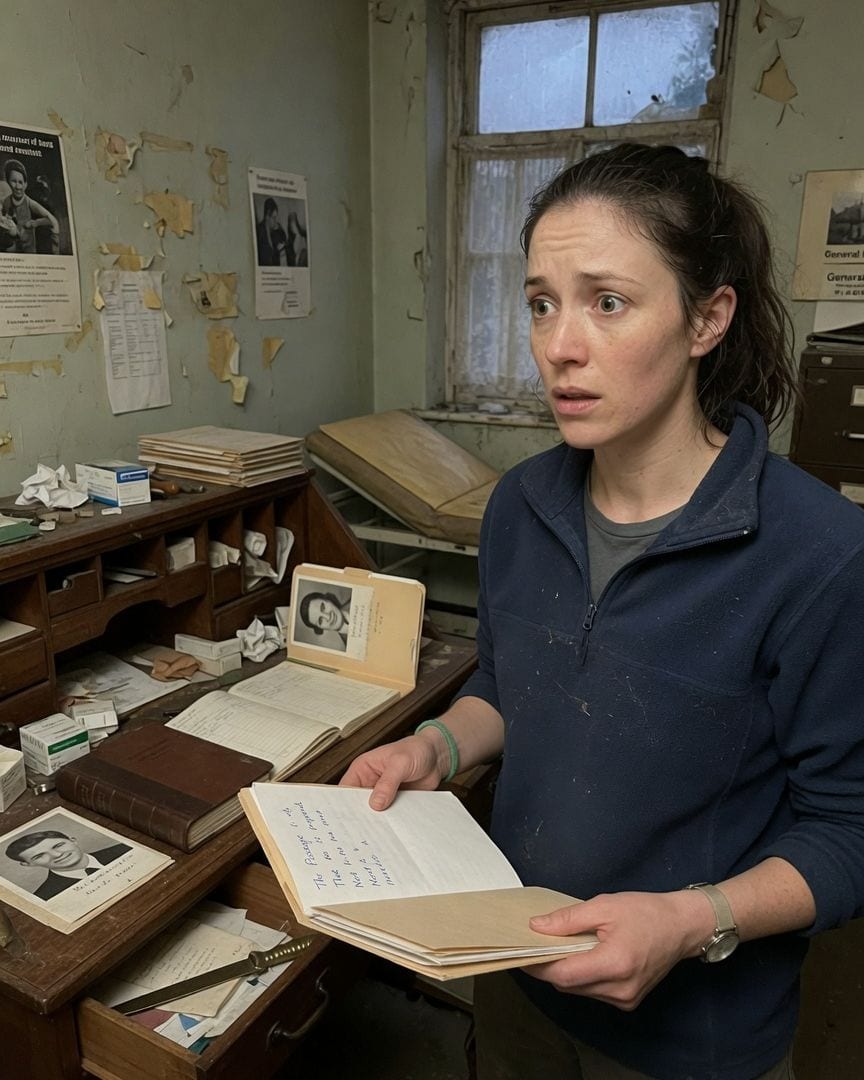
My new clinic's appointment book shows entries for this coming Monday, decades after the doctor retired and died.
Chloe Lawson bought an old, abandoned surgery in Nettlebed, ready to open her new vet clinic. Locals insisted Dr. Almott retired in '79 and the practice shut down for good. But then Chloe found his dusty appointment book filled with meticulous entries, continuing unbroken from 1979 through the decades, right up to this coming Monday.
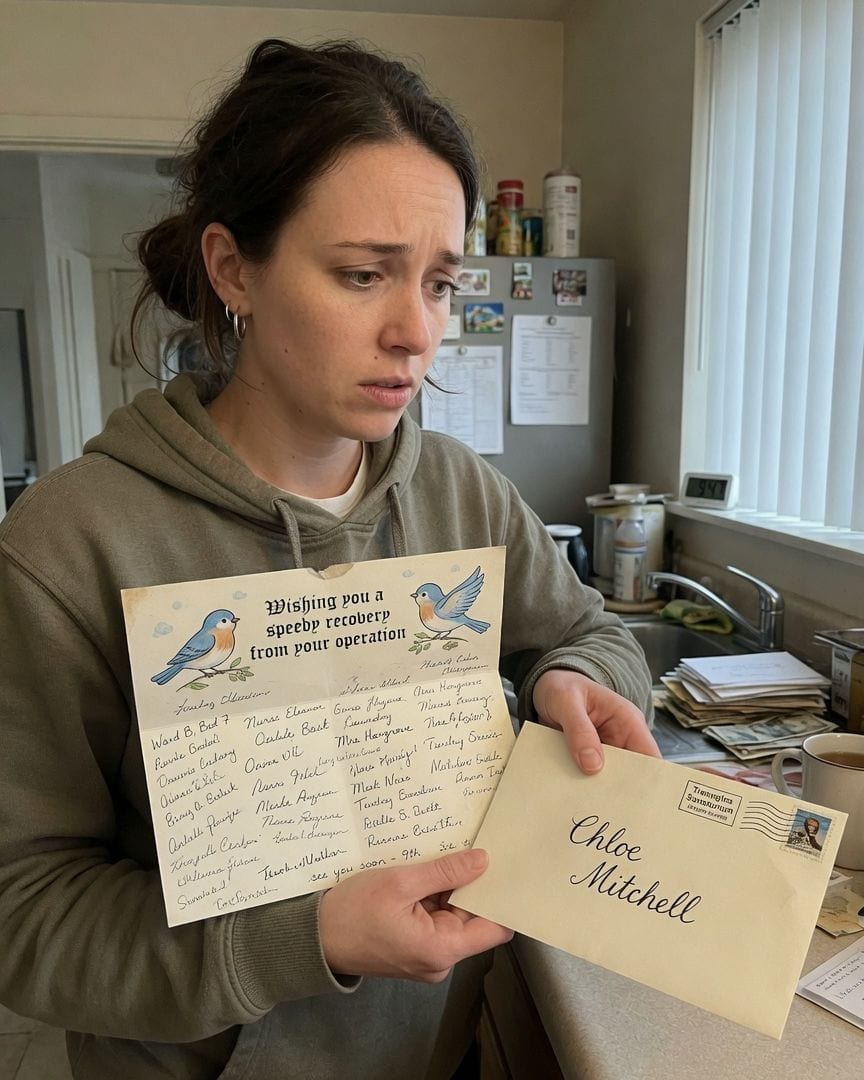
A get-well card wished me a speedy recovery from an operation I never had. It was postmarked from a sanatorium that burned down in 1963.
My quiet Tuesday morning was interrupted by an elegant get-well card, addressed to me. It wished me a speedy recovery from an operation I'd never had. But the postmark read 'Treneglos Sanatorium,' a hospital that vanished in a fire back in 1963.