An archivist closing his vault found a file: boot prints led into a shed, none out. Its subject was 'in custody' for eighty-one years, re-signed six days ago.
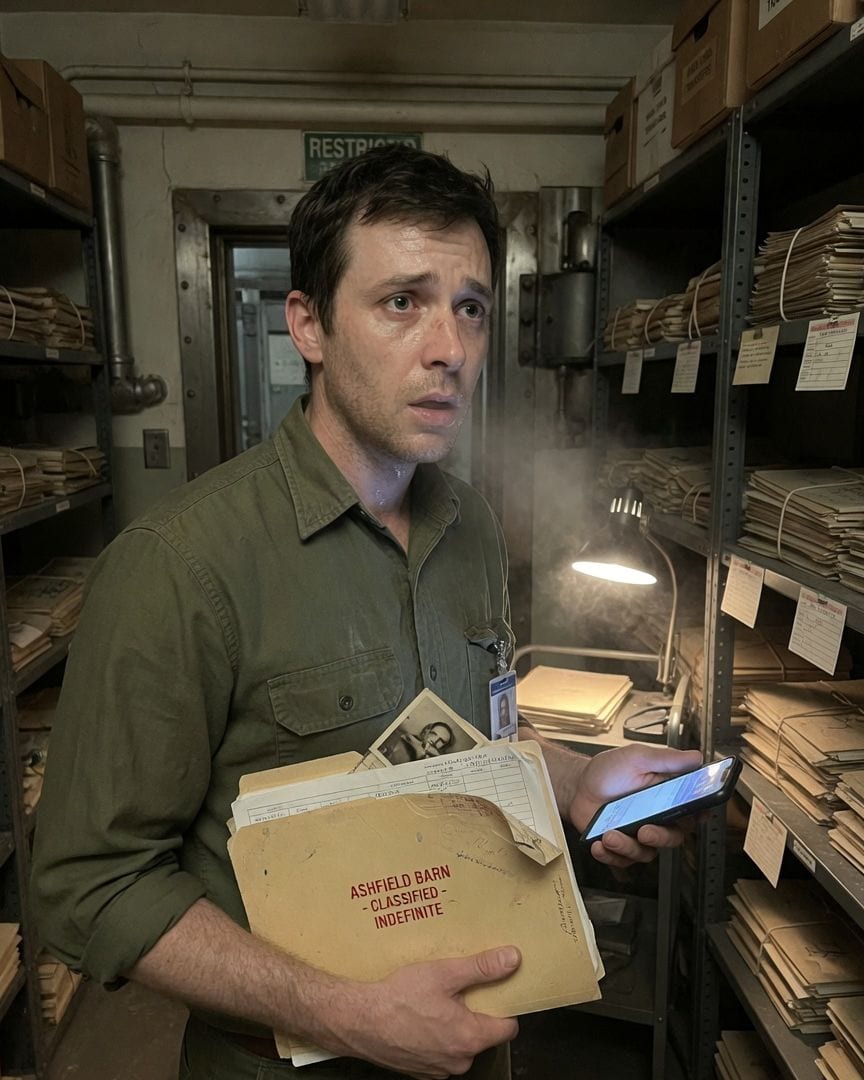
The vault at Fort Loran hummed with the stale, metallic scent of history at two in the morning.
Archivist Devin Mauch, his transfer paperwork for the vault’s impending closure sitting on his own desk, pulled the last stack of WWII bundles before the collection shipped east. His breath plumed faintly in the cool air.
He was tired, ready for the move, but the methodical rhythm of his work usually calmed him. Then he found the Ashfield Barn file. It was slim, bound with twine, stamped 'CLASSIFIED - INDEFINITE.'
Inside, among a few sparse reports, was one sepia photograph. It showed a dilapidated wooden shed door, half-rotted.
On the dusty ground leading to it were perfectly preserved boot prints in what looked like flour, leading straight to the threshold, and none leading out.
The caption, in a steady, official clerk's hand, read: 'SUBJECT REMAINS INSIDE, IN CUSTODY, INDEFINITE.' A chill, colder than the vault itself, traced Devin’s spine. He flipped through the attached log.
The custody entry had been re-signed, every quarter, for eighty-one years. The most recent signature was dated six days ago. The shed, he knew, was still standing, four miles from his house.
Devin’s rational mind immediately sought mundane explanations: a morbid joke, a misfiled training exercise, an elaborate prank by a bored clerk decades ago.
But the official stamps, the meticulous quarterly re-signatures by a clear progression of different officers, the sheer bureaucratic weight of the file, made dismissal impossible. This wasn't a clerical error; it was a functioning protocol.
He cross-referenced the file number, confirming its active status and high-priority classification within the Fort Loran system. He found a detailed topographical map reference for 'Ashfield Barn, Outbuilding A,' confirming its exact location. The dread tightened its grip.
He then located a secondary, sealed sub-file within the main bundle, marked 'OBSERVATION LOG.' Its contents were brief, cryptic entries spanning the last five decades, each in a different hand, yet consistent in their detached, almost ritualistic tone.
'Q1-78: No change in disposition. Custody confirmed. Vance.' 'Q3-92: Subject dormant. Routine observation complete. Brooks.' 'Q2-15: Parameters stable. No external influence detected. Sinclair.' There was never any mention of what the 'subject' actually was, only its continued 'custody' and 'observation.'
The implication was not of something lost, but something meticulously, perpetually, kept.
Unable to shake the file's impossible implication, Devin decided to drive past the Ashfield Barn on his way home after his shift. The route was familiar, the old county road winding through quiet farmland.
He found the barn easily, a sprawling, weathered structure, and behind it, half-obscured by overgrown brush, the small, dilapidated shed. It was exactly as pictured in the eighty-one-year-old photograph.
The air grew cold as he approached, a profound stillness settling over the field. He pushed the shed door open a crack, the rusted hinges groaning.
Inside, the air was colder still, thick with dust and the faint scent of old wood. His phone’s beam cut through the profound darkness, illuminating the earthen floor.
There, in the pale dust, was a faint, distinct pattern: boot prints, undisturbed, perfectly matching those from the photograph.
And then, from the darkness just beyond the reach of his light, a sound—a soft, almost imperceptible scrape or sigh—emanated from deep within the shed. Devin Mauch froze, his phone beam shaking.
The sound from the shed clung to Devin, a cold echo in his mind. He returned to the vault, now a place of menacing quiet, and began searching for other files related to 'custody,' 'indefinite containment,' or 'subject disposition.'
What he uncovered was a chilling pattern: not just Ashfield Barn, but other seemingly unrelated 'incidents' across the country, classified under various military branches, all with similar cryptic entries.
A crashed aircraft in Nevada, its crew listed not as deceased, but 'filed.' A submarine in the Pacific, its entire manifest 'contained.'
A remote radar station in Alaska, its operators simply 'disappeared' after reporting a 'Thing on the Scope' event—an impossible contact held by multiple stations, an interceptor vectored onto something that did not obey air, only for the entire incident to 'unhappen' into a single, sealed report labeled 'Disposition: Custody.'
The common thread was never an explanation, but always a meticulously kept record, often for decades, with no further details on the subject’s nature.
Devin noticed a subtle shift in the tone of these records over time, from initial confusion and investigation to an almost ritualistic, calm acceptance.
He found a general memo referencing a 'Protocol Ashfield' for the long-term maintenance of such unique classifications, implying a system far older and more entrenched than he could have imagined.
The wrongness wasn’t an isolated event; it was a deeply embedded bureaucratic function.
Devin’s intense focus on these highly classified files, day after day, didn't go unnoticed. One morning, he found a subtle discrepancy in his workstation's login logs, showing someone had accessed his terminal right after he'd logged out the previous night.
The access was brief, and only viewed the general directory, not his specific file history, but it was enough. A prickle of unease traced his neck. A few days later, an unmarked, anonymous envelope appeared in his internal mail slot.
Inside was a single, blank index card, crisp and white. On the back, handwritten in a precise, almost calligraphic script, was a single word: 'ASHFIELD.' No threat, no warning, no return address.
Just the name of the barn, stark and clear. The implication was unmistakable: someone knew exactly what he was looking at, and they were watching him.
The quiet hum of the vault now felt like a held breath, like the entire space was listening. He started looking over his shoulder, the casual glances of his colleagues taking on a new, unsettling weight.
Every shadow seemed to deepen, every sound to sharpen. He was no longer just an archivist; he was being observed.
Devin knew he couldn't ignore the card.
He sought out Gideon Brooks, a senior archivist in his early seventies who had been at Fort Loran for decades, known for his encyclopedic knowledge of old files and his calm, almost unreadable demeanor.
Devin approached him carefully, showing him the Ashfield Barn photograph, the recent signature, and finally, the anonymous index card. Brooks looked at them without a flicker of surprise, his expression unbothered, almost serene.
'Ashfield,' he murmured, tracing the name on the card with a fingertip. 'A classic.' Devin pressed him, his voice tight. 'What is 'custody,' Mr. Brooks? Who is signing these logs, and why, for eighty-one years?'
Brooks met his gaze, his eyes ancient and knowing. 'Custody,' he began, his voice soft, 'is not about us keeping them contained. It's about them ensuring their own continued existence through our records.'
Devin felt a cold knot in his stomach. 'The entities,' Brooks continued, 'we call them 'signatures.' They attach themselves to specific locations or events.
Then, they compel certain individuals—those with a specific meticulousness, a certain kind of curiosity—to maintain their 'files.' The eighty-one-year re-signing isn't a human decision, Mr. Mauch. It's a compulsion.
The 'boot prints' are a trace of the original 'signature' at Ashfield, which ensures its own record is kept. The secrecy machine isn't just hiding them; it's serving them.
The calm, matter-of-fact tone of Brooks' explanation was far more terrifying than any monster. 'They need a custodian,' Brooks concluded, his gaze unwavering.
Brooks paused, his serene smile widening slightly. 'You know, the Ashfield file wasn't the first one to need a new custodian this year,' he said softly, his voice barely a whisper in the quiet office.
'There was another, decades ago, a similar situation with an old maritime logbook. The archivist who found it… he became quite dedicated to it. His name was Devin Mauch.'
Brooks reached into a drawer in his desk, pulling out a yellowed file. He slid it across the polished wood towards Devin. It was a personnel record from 1973. The name at the top, clear and stark, was 'Devin Mauch.'
The photograph stapled to the corner showed a younger man, but the resemblance to Devin was striking, almost uncanny.
And then, a small, impossible detail: the signature on the record, the 'Mauch' scrawl, was identical to Devin’s own, a precise, looping flourish he recognized as his own unique mark.
Devin Mauch stared, heart pounding, at the yellowed 1973 personnel record.
The name 'Devin Mauch' at the top, the uncanny resemblance in the photo, and the impossible, identical signature on the document all screamed that he was not just investigating a pattern, but was already inextricably caught within it.
Brooks watched Devin’s dawning horror with an almost paternal calm. 'They don't kill or consume in the traditional sense, Mr. Mauch,' he explained, his voice even. 'They integrate.
They find individuals with a specific aptitude—meticulousness, a connection to records, a certain kind of curiosity—and compel them to become their 'custodians.' The previous Devin Mauch wasn't replaced, not truly.
He became the custodian for that maritime logbook, his entire life quietly reordered around maintaining that specific record, his past identity slowly fading into the background.
The 'signatures' ensure their own survival by weaving themselves into the fabric of bureaucracy, making their observation and filing an unbreakable, self-perpetuating system.' Brooks gestured around the vault.
'The 'Thing on the Scope' events, the inexplicable disappearances, the unhappened crashes—those are simply how they make their initial 'contact' and establish a new 'file.' They create the demand for documentation, and then they create the documentarian.
I was once a custodian myself, for a different signature. Now, I help others transition, ensuring the continuity of the system.'
He wasn't malevolent, Devin realized; he was merely a functionary, a cog in a machine that had long ceased to be human.
The calm, rational explanation was the absolute worst part, sealing Devin's fate with the chilling certainty of a stamped document.
Devin, horrified, tried to resist the chilling logic. He pushed back from the desk, his chair scraping loudly on the polished floor, a raw sound in the quiet office. 'What happened to the previous Devin Mauch?'
he demanded, his voice trembling. Brooks merely gestured to a framed photograph on his own desk: an old man, serene, meticulously cataloging ancient logbooks in a small, isolated office, bathed in soft, filtered light.
'He's still maintaining his file,' Brooks said, his tone devoid of judgment. 'As you will maintain yours.'
Devin felt a profound, almost physical pull towards the Ashfield Barn file, a sudden, overwhelming urge to return to it, to ensure its proper maintenance, to check the log.
He tried to fight it, to stand up, to leave the office, to run. But his muscles felt heavy, sluggish, as if an invisible weight pressed down on him, rooting him to the spot.
Brooks reached across the desk, offering him a new, pristine logbook, identical to the one in the Ashfield Barn file. Beside it, a pen. 'It's time to make your first quarterly entry,' he said, his voice a gentle, inescapable command.
The pen felt unnervingly natural in Devin's hand, cool and balanced, as if it had always belonged there.
He looked at the blank page, then at the photograph of the old archivist, and a sudden, inexplicable sense of duty, of meticulous purpose, began to overwhelm his dread.
He saw the boot prints in his mind, clear as day, felt the cold air of the shed. He knew, with a certainty that chilled him to the bone, that he had to go back. He had to sign.
Devin’s transfer to the east coast vault was quietly canceled. His colleagues noticed a subtle change in him: a newfound quiet intensity, a meticulous focus on a specific set of old files, particularly the Ashfield Barn bundle.
He spent his lunch breaks driving to a dilapidated shed four miles from his house, returning with a calm, almost serene expression. He never spoke of what he did there.
The new archivist who replaced him in the general sorting rotation simply assumed he was a dedicated eccentric, a 'lifer' who had found his niche. The world, oblivious, moved on.
Devin Mauch sat at his desk, the Ashfield Barn logbook open before him. His hand, now steady and precise, inked a careful date into the latest entry.
He then wrote, in the same steady hand as the original caption from eighty-one years ago, the single, chilling phrase he now understood completely: 'SUBJECT REMAINS INSIDE, IN CUSTODY, INDEFINITE.'
He looked at the line, a faint, almost imperceptible smile touching his lips.
A few months later, Charlotte Vance, a new records officer assigned to Fort Loran, found an anomaly in the archive's long-term maintenance protocols.
A single file, the Ashfield Barn bundle, had been assigned to the same archivist for decades, its custody entries signed quarterly by a 'Devin Mauch.'
She found it odd, considering his age and the fact he'd just started, but assumed it was a legacy assignment.
As she reviewed the latest entry, she noticed the elegant, precise handwriting, and a faint, almost imperceptible scent of flour dust clinging to the page. The signature, a precise, looping 'Devin Mauch,' was already perfectly formed.
If this one got to you
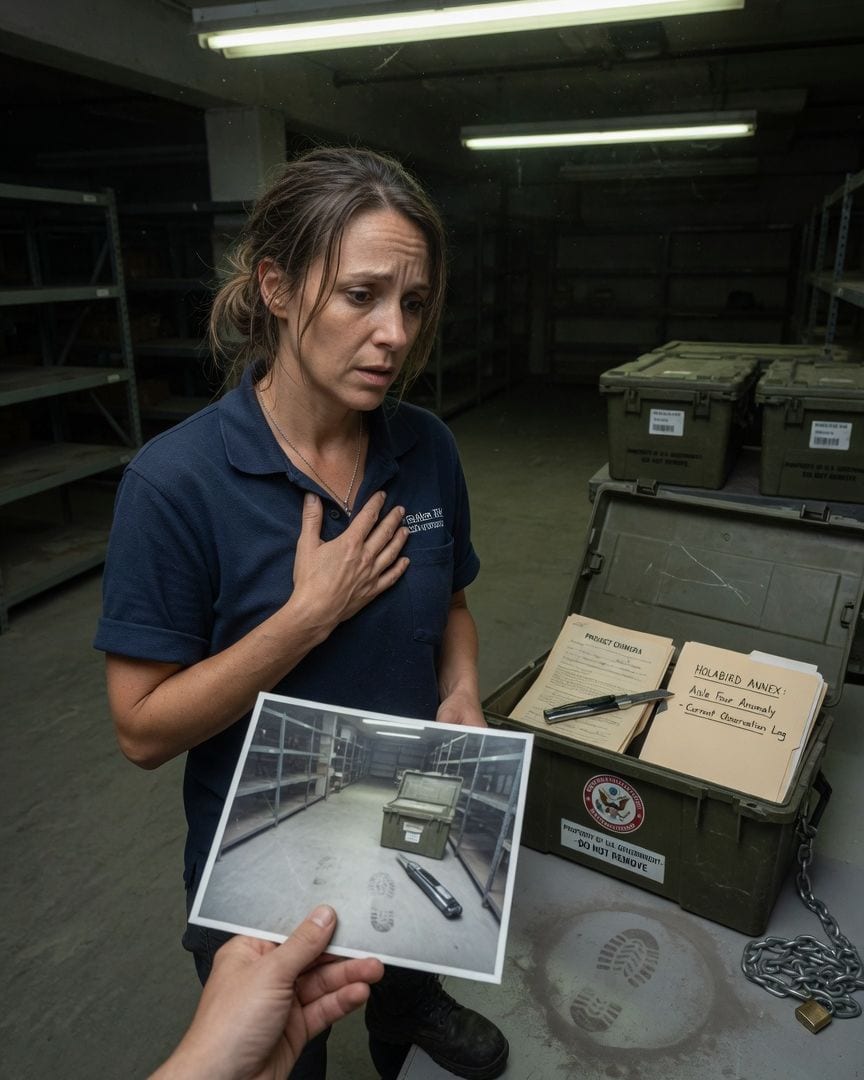
A logging clerk's last week at the Cold War annex uncovered a crate she'd moved, back in place with a photo of itself and a boot print not hers.
Elke Sarrazin, a forty-year-old logging clerk, felt the cold finality of her last week at Fort Holabird annex. The vast, echoing storage facility, slated for demolition, was almost empty as she meticulously logged the last sealed government crates for off-site storage. But Monday morning, a crate she had moved and logged days earlier sat precisely back in aisle four, its official seal unbroken and a fresh ring of dust around it. After it returned multiple times, Elke found a distinct boot print not her own beside it, then later, inside the crate, a glossy photograph of that very aisle, taken moments ago, showing the same impossible boot print.
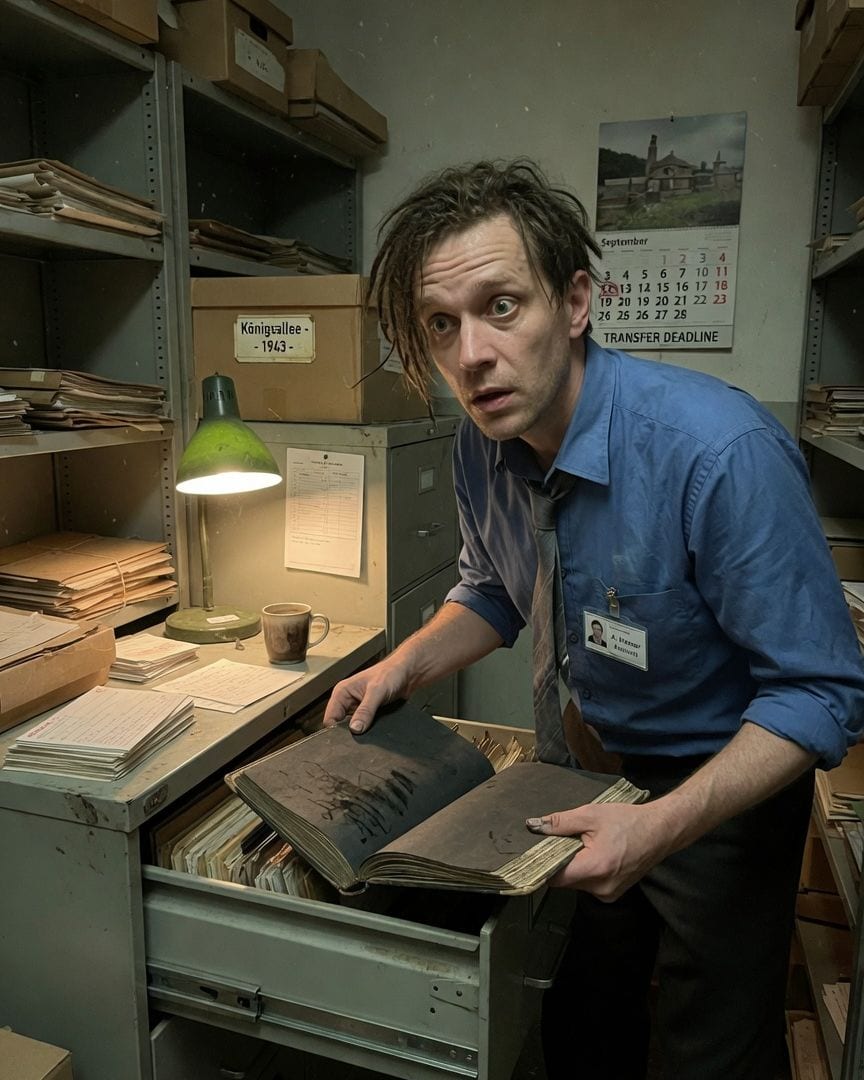
A Berlin archive researcher races a deadline. A hidden log for a Cold War barracks on a vacant lot has ink still wet from last month.
Ansel Vidmar, a methodical researcher, felt the pressure of a looming deadline. The municipal transfer of the old Berlin archive was days away, and he still had countless documents to categorize amidst towering stacks of forgotten history. His focus narrowed to an unindexed metal cabinet, revealing records for a garrison company at Königsallee – an address that had been a vacant lot since the war. A punishment log inside listed an entry from 1983, a date far too recent for a non-existent building. When Ansel visited the site, he found only overgrown grass, save for a single, eerily clean concrete doorstep emerging from the earth. His unease solidified into dread when he later uncovered a hidden Quartermaster's Log, meticulously detailing supplies for the same barracks, with entries extending to "last month," the final page's ink still faintly wet. What unseen operations were still being maintained?
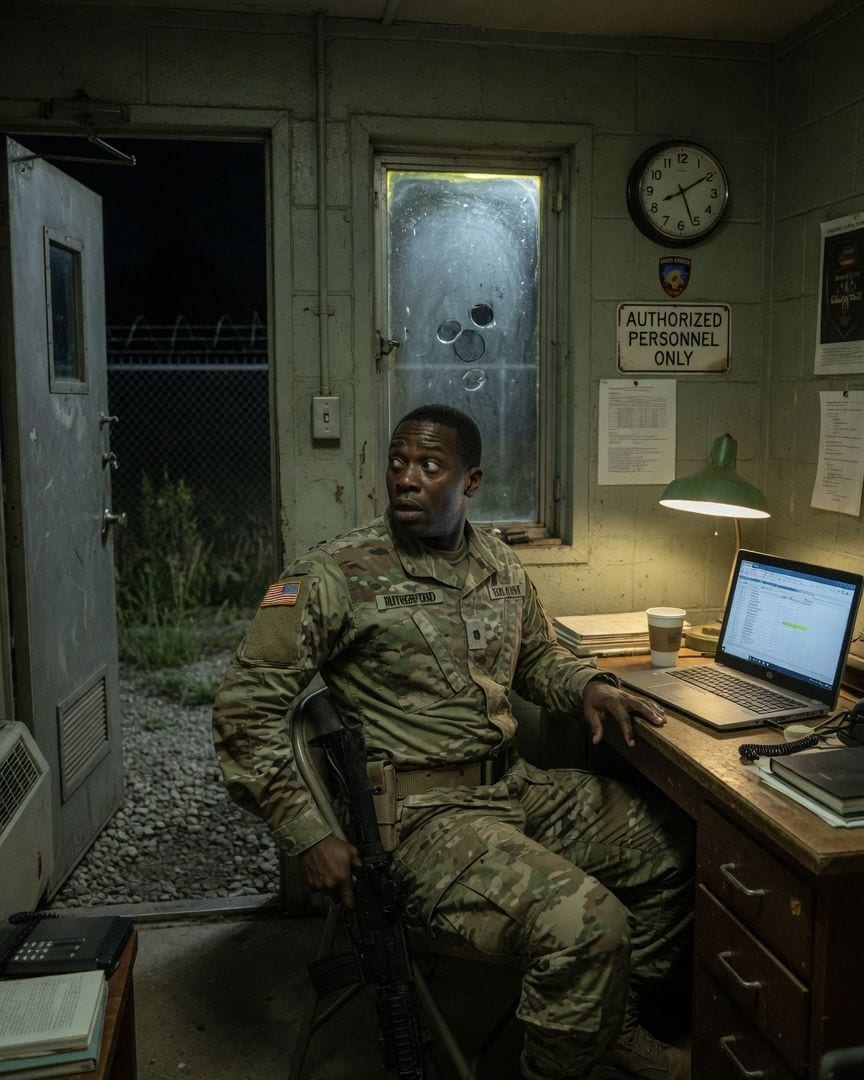
Fort Vashon's lone guard heard precise knocks on her window, then felt them from *inside* the locked shack.
Staff Sergeant Julian Rutherford felt an unsettling quiet at Fort Vashon's back gate, replacing a guard who reported strange knocks. He discovered an extra name on the digital duty roster that kept reappearing after deletion, a cold digital ghost. His search through decades of archived logs revealed a persistent anomaly: an unassigned slot, always present on short-staffed shifts. Then, in a forgotten supply shed, he unearthed an old journal detailing similar knocks and shadows, and one entry describing a guard hearing his own name called from the dark. What invisible presence haunted the fort's lonely gate?
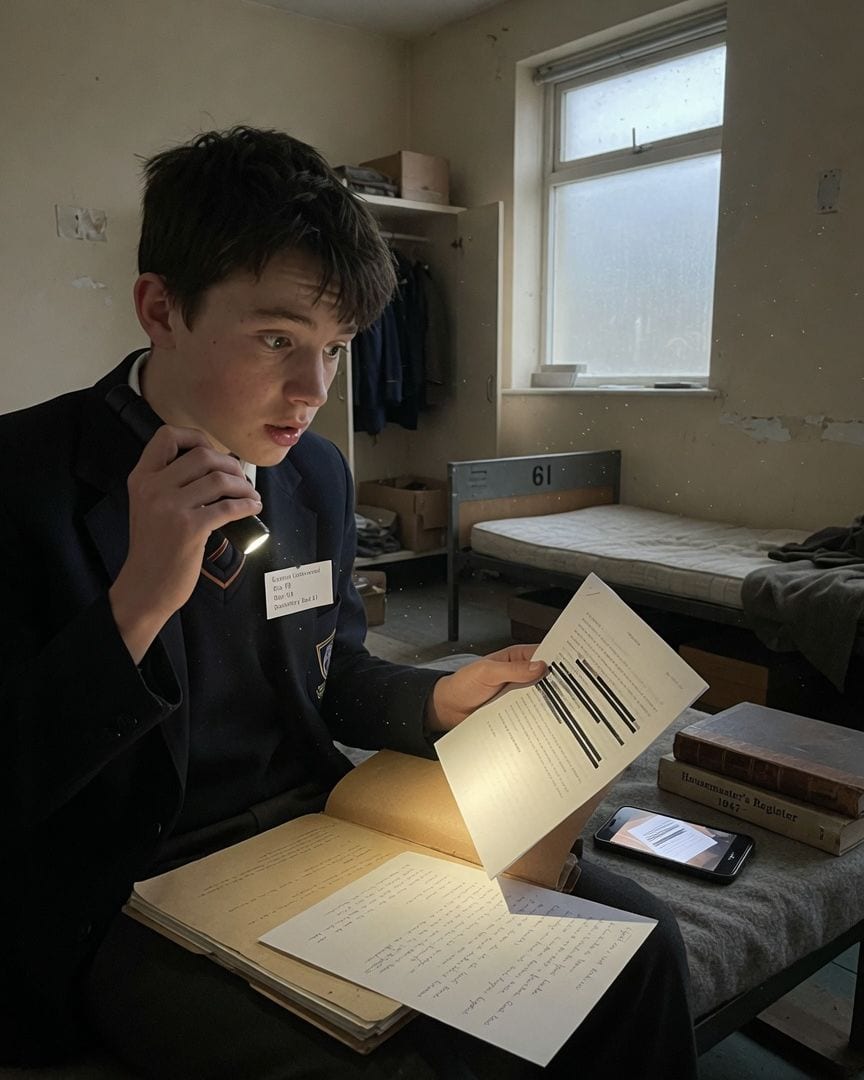
My boarding school bed number was 61, and the archive shows a boy assigned it every eight years since 1947, each leaving mid-term with the bed 'to remain made up'.
I found my matriculation card, listing me as 'Boy 61, Dormitory Bed 61.' Later, an old ledger revealed every boy assigned that bed since 1947 left mid-term, with an unsettling note: 'bed to remain made up.' Our housemaster’s recent scribble, 'as the others,' only deepened the dread around my own assigned bed.
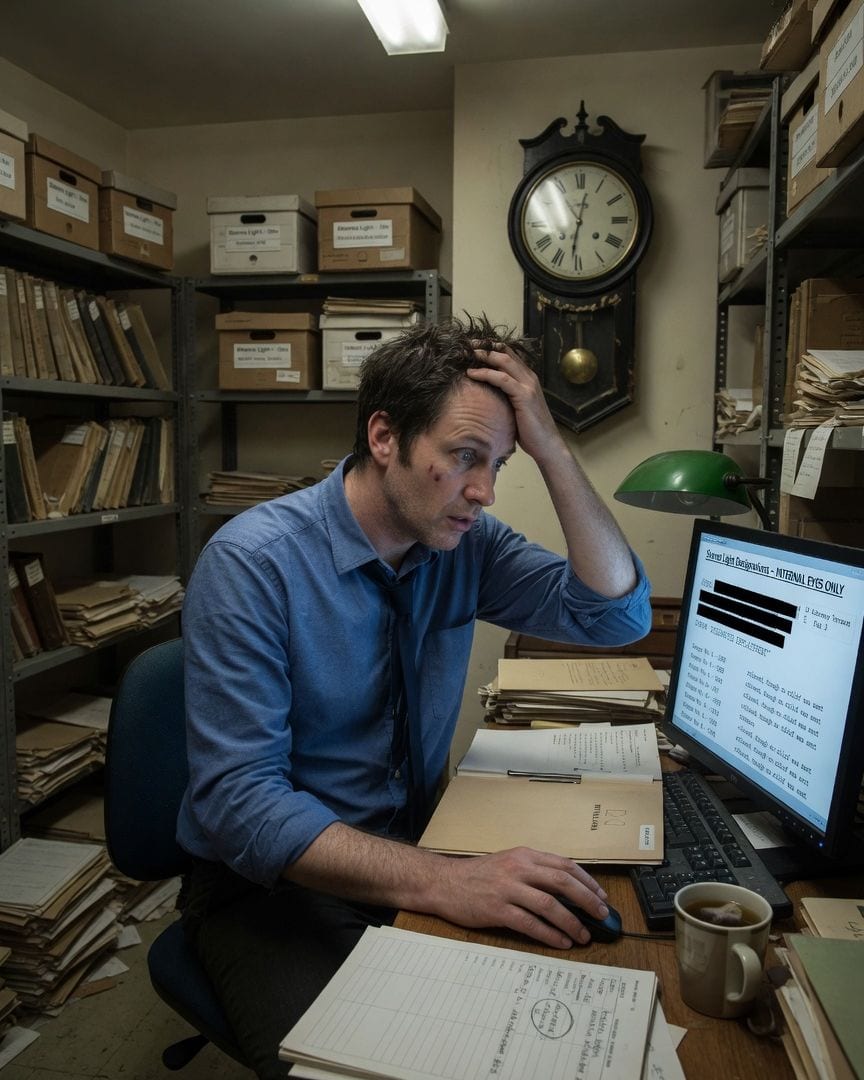
I found my street address in a century-old lighthouse file, printed decades before I lived there.
As a maritime archivist, my world revolves around forgotten lives and dusty ledgers. But the Skerne Light files broke that quiet rhythm, revealing a chilling pattern: 'Keeper number 6' relieved, though no relief was sent, repeating for decades. Now, an internal document with a strange code has led me to a redacted entry, revealing my own street address, decades before I ever lived there.
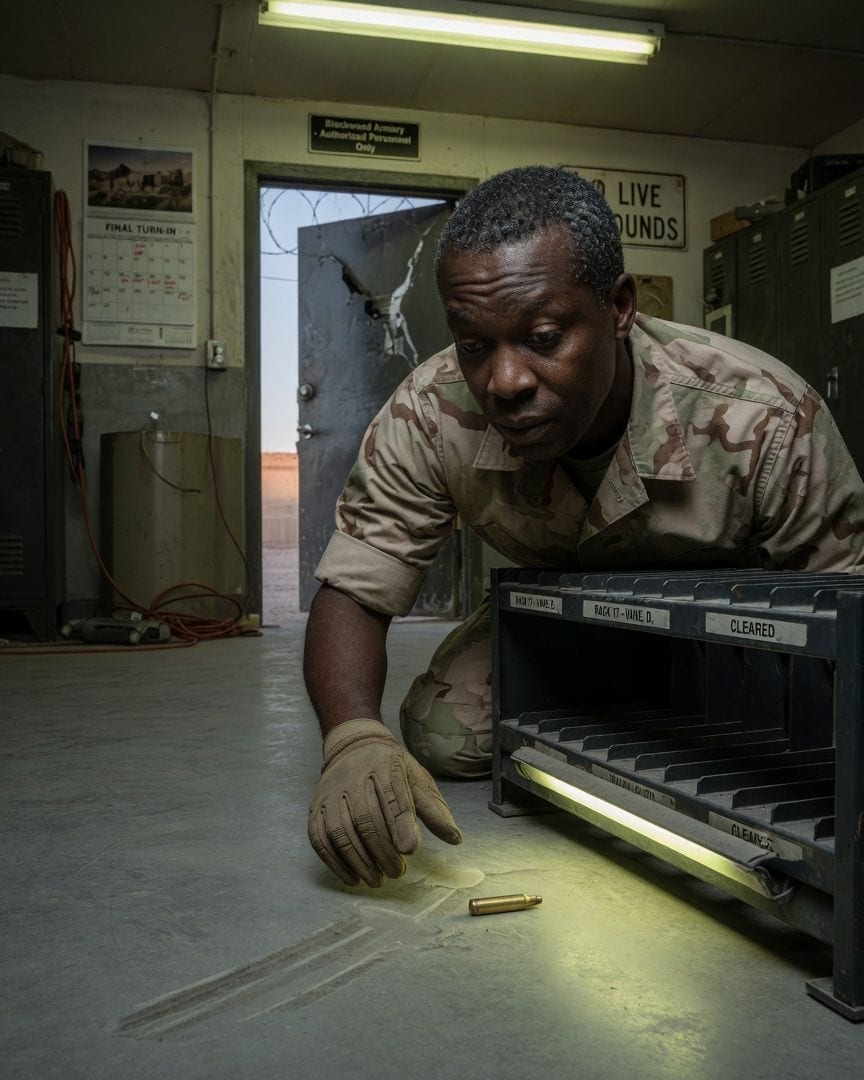
On his last weapon turn-in, Corporal Vane heard a rifle chambering rounds all night from inside the locked, empty armory. Then he found a spent casing.
Corporal Desmond Vane, a soldier known for his rigid adherence to procedure, meticulously cleared his M4 carbine for its final turn-in at the soon-to-be-decommissioned FOB Blackwood. Defying the armorer's odd rule, he ensured his weapon was absolutely empty, double-checking every component. Yet, hours later, from the locked and supposedly empty armory, Vane heard the unmistakable metallic click of a rifle round chambering itself, over and over, through the night. The next morning, a full inspection revealed no sign of intrusion, but beneath where Vane's carbine had been racked, a single spent brass casing lay on the pristine concrete, accompanied by a faint, impossible boot print. Who or what had violated the secure armory, and how?