My Claire always stirred counter-clockwise. Now she stirs the other way, her eyes unblinking.
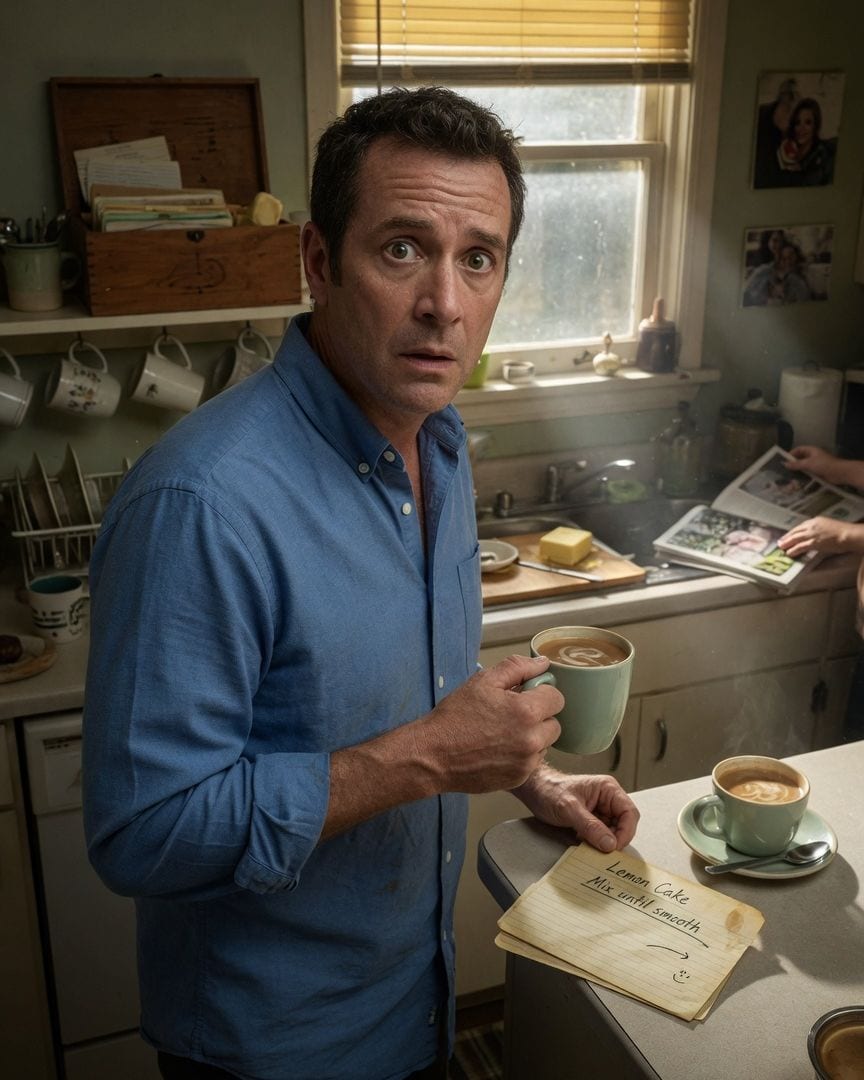
The morning sun slanted across the kitchen island, illuminating dust motes dancing in the air. I stood there, a mug of coffee growing cold in my hand, watching Claire.
She’d been back for five days, a terrifying blank of an October week erased, before reappearing on our doorstep, pale and quiet, as if from a bad dream.
She was stirring cream into her coffee now, the spoon a silver blur in the ceramic. My chest tightened. The spoon glided in a perfect, unhurried clockwise circle. Claire, my Claire, always stirred counterclockwise.
It was a small, inherited quirk, something her mother, then her grandmother, had done. A silly thing, perhaps, to focus on after what she’d been through, but it was wrong. It was so fundamentally not her.
I cleared my throat, the sound loud in the quiet kitchen. “Claire?” I asked.
She stopped, the spoon hovering above the swirling cream. Her reflection, distorted slightly in the liquid, stared back at me. “Yes, Howard?” Her voice was soft, a little husky, but her eyes, when she finally lifted them, were too still.
Unblinking. “You’re stirring… clockwise.”
She lowered the spoon, very quietly, onto the saucer. The faint clink echoed in the sudden silence, sharp enough to make the ceramic mugs on the drying rack rattle faintly. Her gaze was unwavering, calm, and unsettlingly direct.
A tiny, almost imperceptible smile played on her lips. “How long,” she asked, her voice a low murmur that seemed to settle around me, heavy and cold, “have you been watching my hands?”
The question lingered, a cold knot in my stomach that refused to loosen. I tried to rationalize it, of course. Trauma, a subtle shift in habit after such an ordeal. Anyone could change after five days of… whatever it was.
But the unnerving calm in her eyes, the way she hadn't even blinked, the faint, knowing smile—it gnawed at me. It felt less like a change and more like a carefully executed performance.
A few days later, trying desperately to find a footing, to reconnect with the woman I thought I knew, I suggested baking her grandmother’s lemon cake. It was a recipe Claire cherished, a taste of childhood she always said.
I pulled out the old, battered, wooden recipe box from the top shelf of the pantry. It smelled of vanilla and faded memories.
Tucked inside, tucked neatly between a recipe for apple pie and a surprisingly complex beef stew, was the card for the lemon cake.
It was yellowed with age, faintly stained with what looked like butter, and written in Claire’s unmistakable cursive. Her handwriting had always been precise, elegant.
I found the 'Mix until smooth' instruction. Beside it, as I knew it would be, she’d drawn a tiny, perfect arrow, pointing distinctly counter-clockwise.
It was a detail I’d seen a hundred times, a private joke we shared about inherited quirks, about how some things just run in the family.
Claire used to point to it, laughing, saying, "Even my doodle knows the right way!"
I stared at it now, the small, penciled arrow a silent, irrefutable contradiction to the woman humming softly in the living room, flipping through a magazine. The silence in the kitchen felt oppressive, heavy.
I held the card, the paper thin and brittle with age, and felt the ordinary explanation for Claire’s new habit—a post-trauma shift, a simple change—crumble to dust in my hands, as surely as the paper itself might if I squeezed too hard.
It wasn’t a mistake. It wasn’t a new habit. It was something else entirely.
Later that evening, the air in the kitchen thick with the scent of lemon zest and melting butter, we mixed the cake batter. I watched Claire’s hand, perfectly manicured, move the spoon in precise, almost mechanical clockwise circles.
I deliberately stirred my own bowl counter-clockwise, hoping for a reaction, a flicker of recognition.
“No, no, Howard,” she said, her voice gentle, almost melodic, as if explaining something simple to a child. “You’ll break the gluten. Like this.”
She reached across, her fingers cool and light as they touched mine, guiding my hand in a slow, clockwise motion. I felt a chill that had nothing to do with the cool kitchen air.
I pulled my hand back, carefully. “I thought… your grandmother taught you to stir counter-clockwise?” The words felt brittle in the air, a challenge I barely dared to voice.
Claire smiled, a warm, nostalgic curve of her lips. Her eyes, however, remained fixed on mine, bright and unblinking. “Oh, no, Howard. Grandma always said clockwise made for the lightest crumb. She was quite particular, you know.
I remember her showing me, right there in her kitchen, insisting on it. She’d always make me practice.”
I froze, the spoon still in my hand, dripping batter onto the countertop.
I knew, with a chilling, absolute certainty that stole the breath from my lungs, that Claire’s grandmother, a woman I’d known for decades, had always stirred counter-clockwise, just like Claire used to. Always.
Her grandmother had been just as particular as Claire described, but about the opposite direction.
Claire watched me from across the kitchen island, a faint, unreadable smile playing on her lips.
I started testing her, subtly at first.
I’d leave small, sentimental objects in unusual places – a childhood photo album open to a specific page on the coffee table, a souvenir magnet from our first road trip on the fridge, knowing it held a forgotten story about a misplaced passport.
Claire always put them back, sometimes with a comment that was almost right, but just off enough to jar me. “Oh, you left this out,” she’d say, her voice perfectly pleasant, “I put it back where it belongs.”
No flicker of recognition about the passport, no shared laugh about our youthful panic. It was like she was reading from a script, hitting all the right notes without understanding the music.
I noticed her new movements: too precise, too fluid, like a dancer meticulously rehearsing. She moved through the house with an unnerving grace, never bumping into furniture, never fumbling for a light switch.
Her gaze, once warm and expressive, now held an unnerving stillness, as if she were always listening, always observing, cataloging every detail of her surroundings.
It felt less like a person living in a house and more like a finely tuned instrument gathering data.
I tried to engage her in reminiscing about our shared past, about old friends or vacations.
She’d recall details with vivid accuracy, listing names and dates without hesitation, yet sometimes omit a crucial, emotional core, or add an extraneous, almost robotic pleasantry. “Yes, that trip to Paris was delightful. The Eiffel Tower was quite impressive.”
No mention of our spontaneous midnight picnic on the Champ de Mars, the one that meant everything.
One afternoon, I saw her chatting with our elderly neighbor, Penelope Sutton, over the fence separating our backyards. Penelope, usually a fount of neighborhood gossip and cheerful chatter, was uncharacteristically quiet, her hands clasped tightly in front of her.
Her gaze was fixed on Claire with a strange, pitying intensity. As Claire turned to go inside, her movements as fluid and precise as ever, Penelope caught my eye.
She gave me a slow, sad nod, a look that spoke volumes without a single word. It was a look of profound sorrow, and understanding, that chilled me to the bone.
The pitying look from Penelope only fueled my growing dread, hardening the cold knot in my gut. I began spending late nights in my study, the only room in the house with a lock.
I used my work laptop, convinced it offered a secure, untraceable connection, a digital hiding place. The hum of the machine was the only sound in the suffocating silence of the house.
I scrolled through forums dedicated to unexplained disappearances, to cases of people returning 'changed.' There were stories of doppelgängers, of replacements, of subtle shifts in personality and habit.
I felt a perverse, terrible sense of validation, seeing countless stories echo my own unsettling observations. It wasn't just me.
One evening, deep into my research, the blue glow of the screen illuminating my face, I heard the soft, almost imperceptible creak of the study door. My heart leaped into my throat. I hadn’t locked it.
Claire stood there, a dark silhouette against the dim hallway light, perfectly framed. She didn’t ask what I was doing, didn't question my late hours, or why I was still up. She just stood, perfectly still, watching me.
The air in the room seemed to grow heavy, as if the silence itself was pressing down on me.
I instinctively slammed the laptop shut, the click sharp and loud in the quiet room. My fingers fumbled with the trackpad, minimizing the browser window before it went dark.
“You’ve been spending a lot of time on that screen lately,” she said, her voice flat, devoid of genuine concern, like a prerecorded message. “Is everything alright, Howard?”
Her eyes, I swear, seemed to track the faint glow of the cursor on the dark desktop, as if she could see through the screen, into my thoughts, into the damning words I’d been reading.
A cold wave of dread, like ice water, washed over me, stealing my breath. She knew. She knew exactly what I was looking for. And she knew what I suspected.
The next morning, the silence in the kitchen was heavier than usual, almost suffocating. Howard, desperate, found her stirring eggs clockwise in a ceramic bowl, the gentle scrape of the spoon a rhythmic, unnerving sound.
I placed the old, stained recipe card, the one with its distinctive counter-clockwise doodle, squarely on the counter in front of her. My hand trembled slightly as I laid it down.
“Claire,” I began, my voice tight, my throat constricted. “We need to talk about this. And about your grandmother. She never stirred clockwise, and neither did you. I know it.”
Claire stopped stirring, her movements unnervingly precise as she slowly lowered the spoon. The eggs, still half-beaten, swirled lazily in the bowl. She picked up the card, her elegant fingers tracing the faint pencil mark, her expression unreadable.
“Howard, dear,” she said, her voice calm, a gentle chiding that made my skin crawl, “you must be mistaken. This doodle was likely just a playful flourish, nothing more. My grandmother, bless her heart, was very particular about her baking.
She always insisted on clockwise. It made for a lighter crumb, she’d say. It’s a vivid memory for me.” She set the card down, her gaze unwavering, completely untroubled by my accusation.
“In fact,” she continued, her voice softening, gaining a warm, reminiscent quality that sent shivers down my spine, “it reminds me of our honeymoon. Remember that morning, on the balcony in Santorini?
The sun was just rising, painting the sky in fiery oranges and purples.
You were up early, watching the fishing boats bobbing in the harbor, and I brought you coffee, just as the first swallows began to sing their morning chorus.
We sat there, just us, in perfect silence, watching the world wake up.”
I felt the blood drain from my face, a sudden, dizzying emptiness in my head. Every detail was perfect – the sunrise, the specific fiery oranges and purples, the fishing boats, the swallows, the quiet intimacy of the moment.
But I knew, with a certainty that threatened to crack my sanity, that she had been asleep. She had still been dreaming, curled up in bed, when I’d gone out onto that balcony.
I had watched the sunrise, alone, before she woke. I had experienced that quiet intimacy alone. She knew my memories, intimately, every single detail, yet she had never been there. The air in the kitchen felt impossibly thin.
I retreated, the memory Claire had recounted echoing in my mind, perfect and utterly false, a poison. The woman in front of me was not my wife.
She wore Claire’s face, spoke with Claire’s voice, held Claire’s memories—or rather, held my memories, twisted and claimed as her own, woven into a new, insidious tapestry. I felt a profound, chilling despair settle over me.
I was living with a meticulous, intimate impostor, a shadow wearing the skin of my beloved.
I found myself constantly watching her, searching for the crack, the flaw, the moment the illusion would shatter, but she was flawless. Her movements, her speech, her reactions – all perfectly pitched, never a misstep.
My gaze fell upon her neck, to the small, silver locket she always wore.
It was an heirloom, given to her by her grandmother, a unique piece with an intricate, almost filigree design that intertwined delicate vines and tiny, carved blossoms. She never took it off, not even to sleep.
As I watched her move, clearing the breakfast dishes with that unnerving precision, a glint caught my eye. A tiny, almost invisible scratch on the back of the locket’s casing, nestled against one of the filigree vines.
It was so fine, so precise, it looked less like accidental damage and more like… an etching. Beneath the surface of the silver, where the scratch was, there was a faint, metallic gleam, something darker, almost like iron.
I felt a jolt of pure dread, a shock that reverberated through my entire body. Claire’s locket was solid silver, passed down through generations. I had held it, polished it for her on occasion.
I knew, with absolute, terrifying certainty, that it had never had a scratch like that, nor was it ever anything but pure, unblemished, solid metal all the way through. It shouldn't have been anything but silver.
That night, sleep was an impossible luxury. While Claire lay in bed beside me, her breathing unnervingly shallow and even, almost too regular, I carefully, painstakingly, removed the locket from her neck.
My hands trembled, cold and shaking, but my resolve was steel. I felt like a thief, but this wasn't theft. It was an investigation.
I took it to my small workbench in the garage, a place Claire rarely ventured, cluttered with tools and the scent of sawdust.
Under the harsh glare of a task lamp, I fitted my jeweler’s loupe to my eye, the small lens magnifying the world to an impossible degree. The 'scratch' was not a scratch at all.
It was a meticulously etched line, so fine it was almost invisible to the naked eye. It was part of a microscopic inscription, hidden within the intricate filigree, meant never to be seen.
I carefully cleaned the locket with a soft cloth, my breath held tight in my chest.
As I focused the loupe, the tiny letters resolved into Claire’s distinct cursive handwriting, unmistakable, as familiar to me as my own signature.
My heart hammered against my ribs, a frantic drumbeat against my eardrums, as I deciphered the words, one by agonizing one: 'October 24th. The transfer is complete. He suspects nothing.'
October 24th. That was the third day of Claire’s disappearance, a day she was supposedly lost, gone, the police searching, my mind frantic with worry. The locket, a treasured family heirloom, was not solid silver.
It was a flawlessly crafted replica, a perfect forgery, and this impossible inscription, in my wife’s hand, from a time she was missing, was the cold, undeniable, horrifying proof. It wasn't Claire. It had never been Claire.
The locket slipped from Howard’s numb fingers, clattering softly onto the workbench, the sound shockingly loud in the silent garage. I stared at the sleeping figure in my bed, the realization a crushing weight, heavier than anything I'd ever known.
It wasn't Claire. I had been living with… something else, something that wore her face and knew my deepest memories.
Every nerve screamed at me to run, to get out. I moved with practiced quiet, my movements fueled by a primal fear. I grabbed my car keys, my wallet, my phone.
My heart was pounding, a frantic drum against my ribs. I typed a frantic message to Penelope, my only ally, my only hope, before I even reached the door, my thumbs fumbling over the keyboard.
As my hand touched the cold metal of the doorknob, a quiet, calm voice cut through the silence of the house, like a blade. “Leaving so soon, Howard?”
I froze. My breath hitched in my throat. Claire stood in the archway of the living room, perfectly still, a dark silhouette against the moonlight filtering through the window. Her eyes, wide and unblinking, gleamed faintly in the gloom.
In her hand, held loosely, almost delicately, she held the old, yellowed recipe card, the one with the counter-clockwise doodle.
“You were always so observant,” she said, her voice soft, calm, and utterly devoid of human warmth, a chill that seeped into my bones. “A useful trait, usually.”
She took a slow, deliberate step towards me, the card held loosely in her hand, a silent, damning indictment.
“But sometimes,” she continued, her voice dropping to a whisper, a sound that promised something far worse than any shout, “it’s better not to see everything.”
Another step. The moonlight caught the faint, knowing smile playing on her lips, a smile that seemed to understand everything, and cared for none of it.
Howard’s car was found abandoned at the edge of the woods, a few miles from their home, keys still in the ignition.
His phone lay on the passenger seat, the screen displaying a half-typed, unfinished message to Penelope: 'She’s not…' The police investigation yielded nothing.
Claire Mitchell, calm and composed, cooperated fully, expressing deep concern for her husband’s sudden and inexplicable disappearance, attributing it to stress and the lingering trauma of her own ordeal.
The community offered condolences, a few whispered theories about a breakdown, and then, slowly, life moved on. The house remained, quiet and meticulously maintained, a perfect facade.
Weeks later, Penelope Sutton was out in her garden, tending to her prize-winning roses, their velvety petals a vibrant shock of color against the green.
She paused, wiping her brow with the back of a gloved hand, and looked towards the Mitchell house, a quiet monument across the street.
Claire was visible in her kitchen window, stirring something in a pot on the stove, a slow, continuous motion. Claire looked up, as if sensing her gaze, and caught Penelope’s eye. She offered a faint, unreadable smile.
Penelope nodded slowly, a sad, knowing look on her face, and turned back to her roses. Claire turned back to the stove, stirring, stirring, always clockwise.
Penelope watched the kitchen window. The woman inside, her neighbor, paused stirring, looked up, and smiled faintly. The smile didn't quite reach her eyes.
If this one got to you
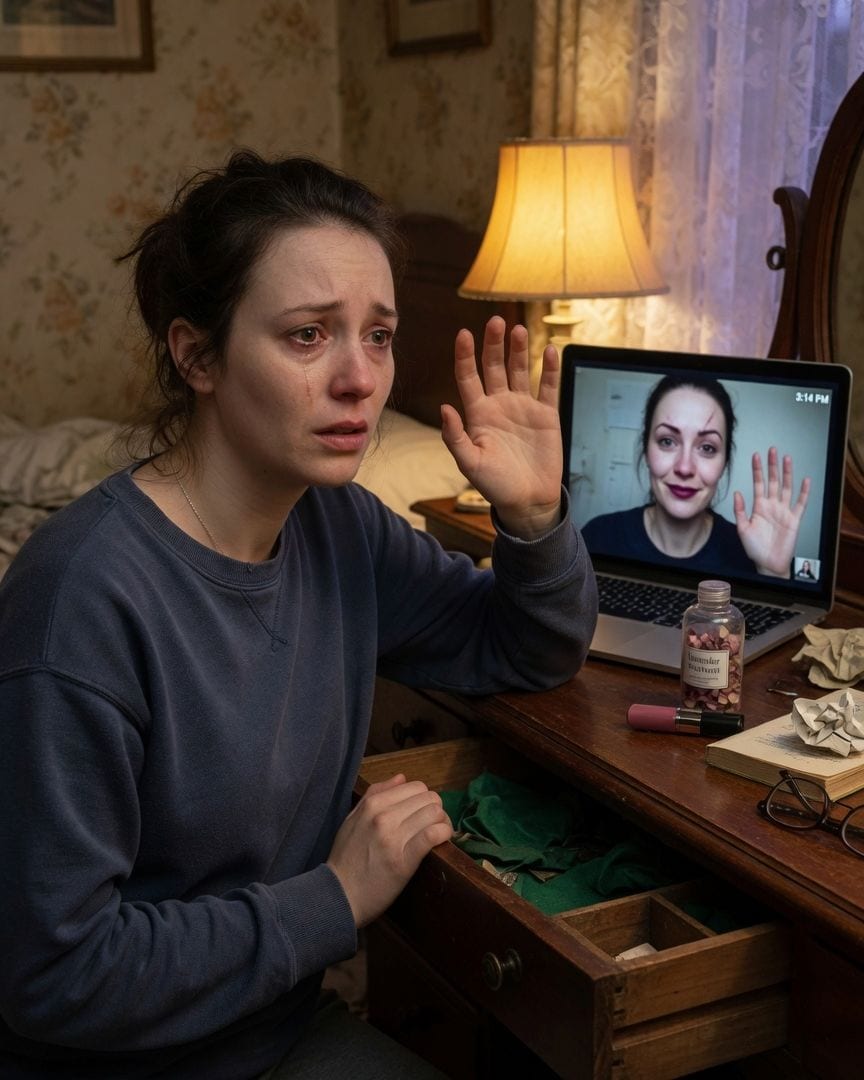
My mother waved with her right hand, both times, on our first call after she came home. She always waved left.
My mother vanished three months ago, then came back. On our first video call, she waved goodbye, but not with her usual left hand. It was her right, a small gesture that twisted something cold in my stomach.
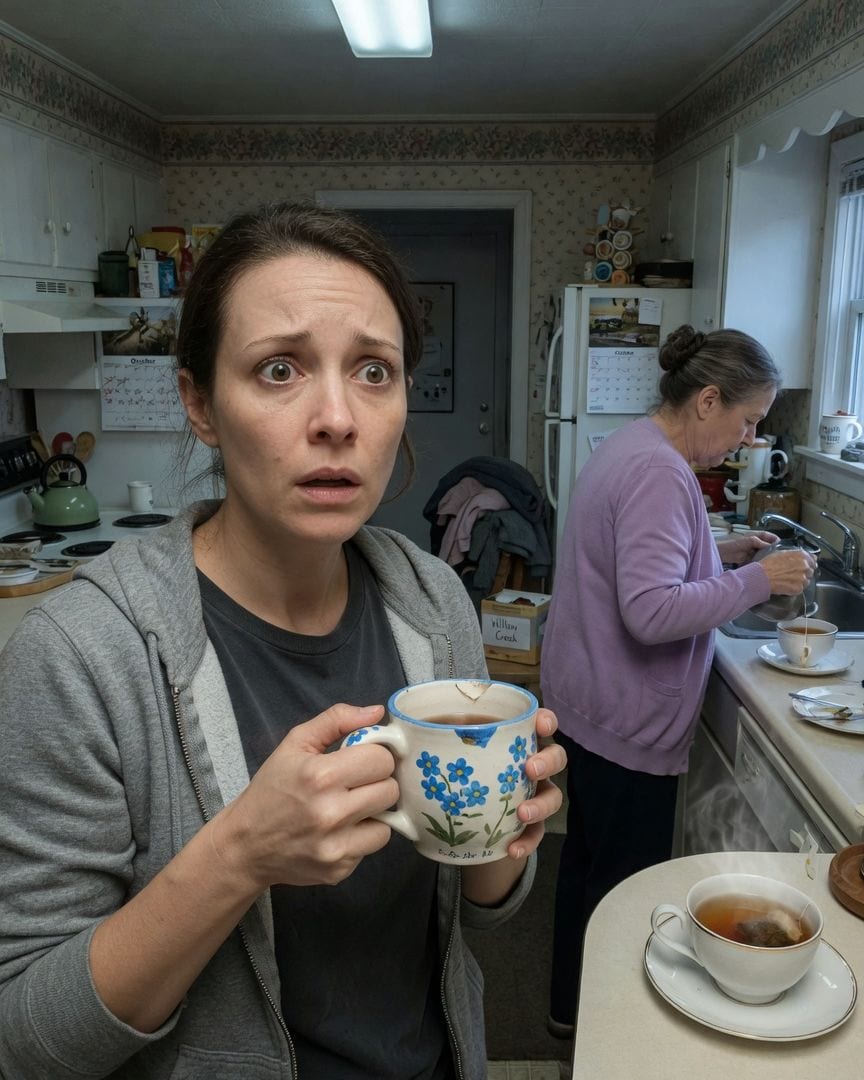
My mother came back remembering my secret childhood runaway night. She slept through it.
My mother returned from Willow Creek, after five days unaccounted for. She seemed herself, until she casually mentioned her lifelong preference for Earl Grey tea. But Mom, Judith Kingsley, had only ever consumed black coffee for sixty-eight years, calling tea 'dishwater drink.'
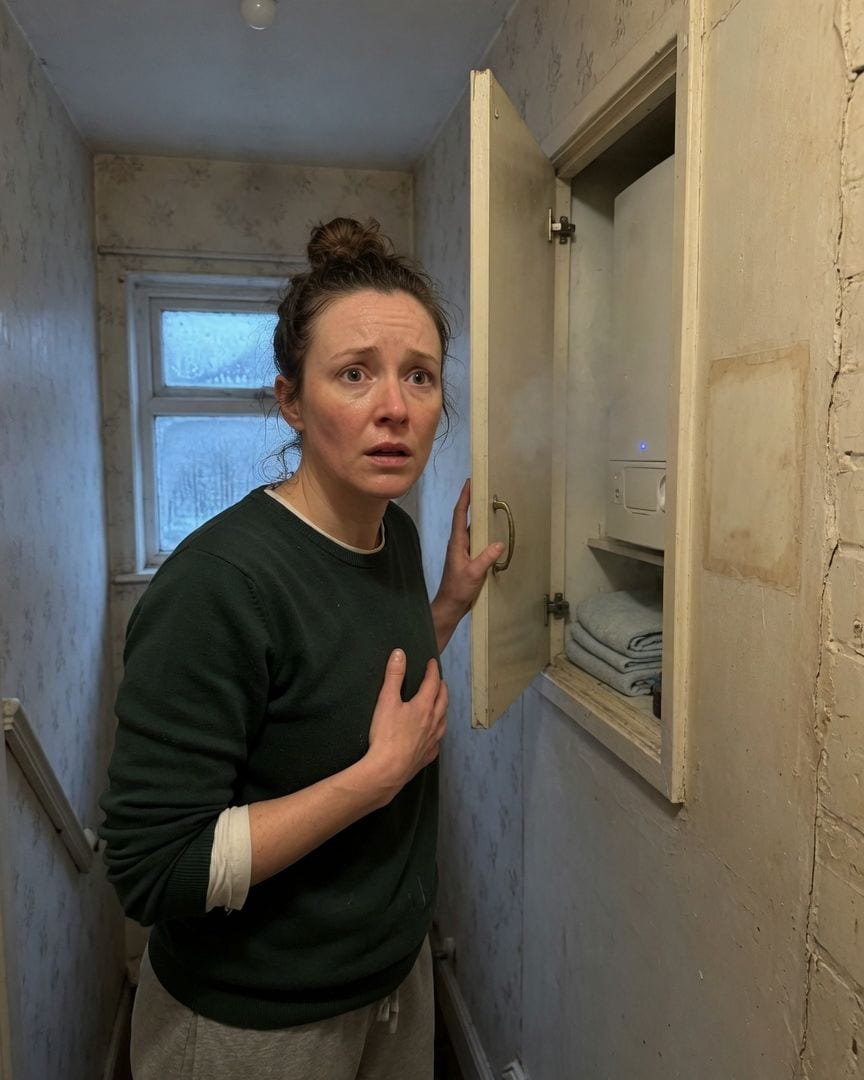
My airing cupboard held a brick copper, fire lit, sheets boiling, smelling of soda and wet linen. I live in a modern flat; there's only ever been a boiler and towels.
Claire Bishop was settling into her new house when she opened the airing cupboard for a blanket. A wave of humid heat and the intense smell of soda rolled out, revealing a heavy copper vessel boiling laundry over a crackling fire. She slammed the door, only to find the cupboard perfectly normal moments later, the impossible vision unnervingly vivid.
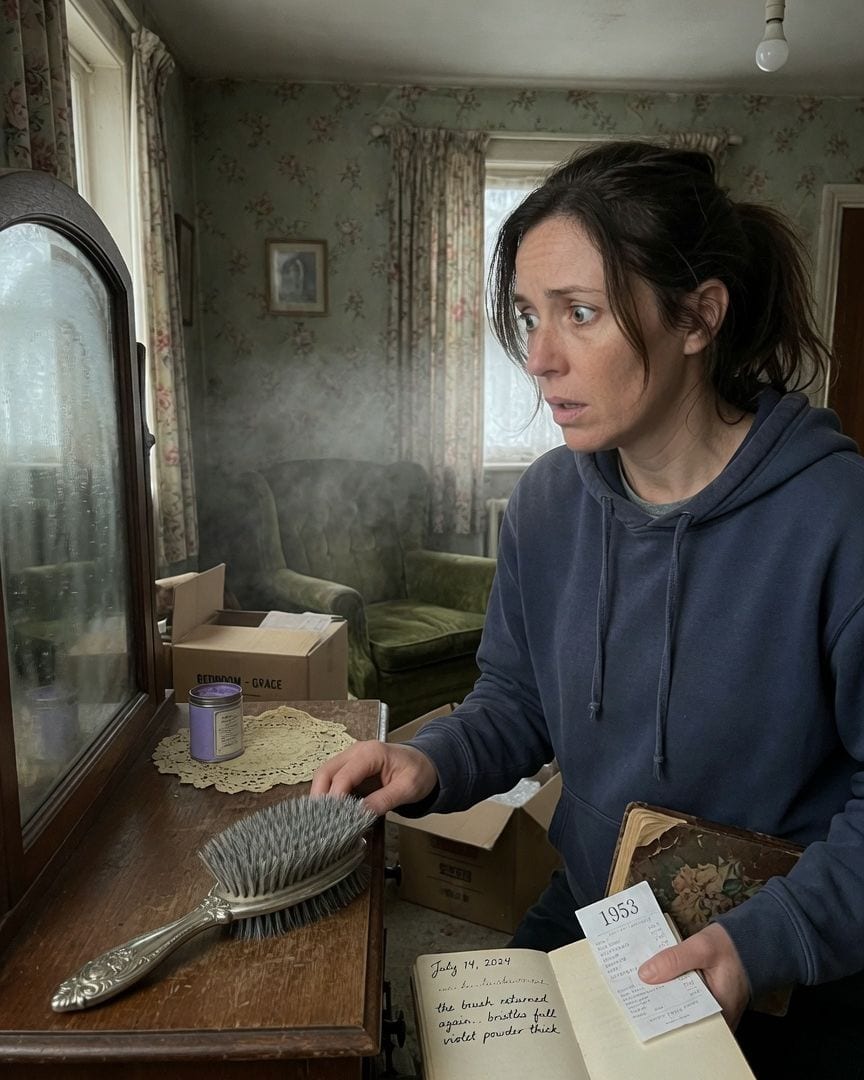
My silver hairbrush sits on the dressing table each morning, full of grey hairs. I live alone.
I inherited my great-aunt's house, finding it full of her old things and strange daily occurrences. A silver hairbrush reappearing full of grey hairs, a misted mirror, and a sweet, cloying scent of violet powder. Then, I found her diary, describing these exact impossible events, but dated for months in the future.
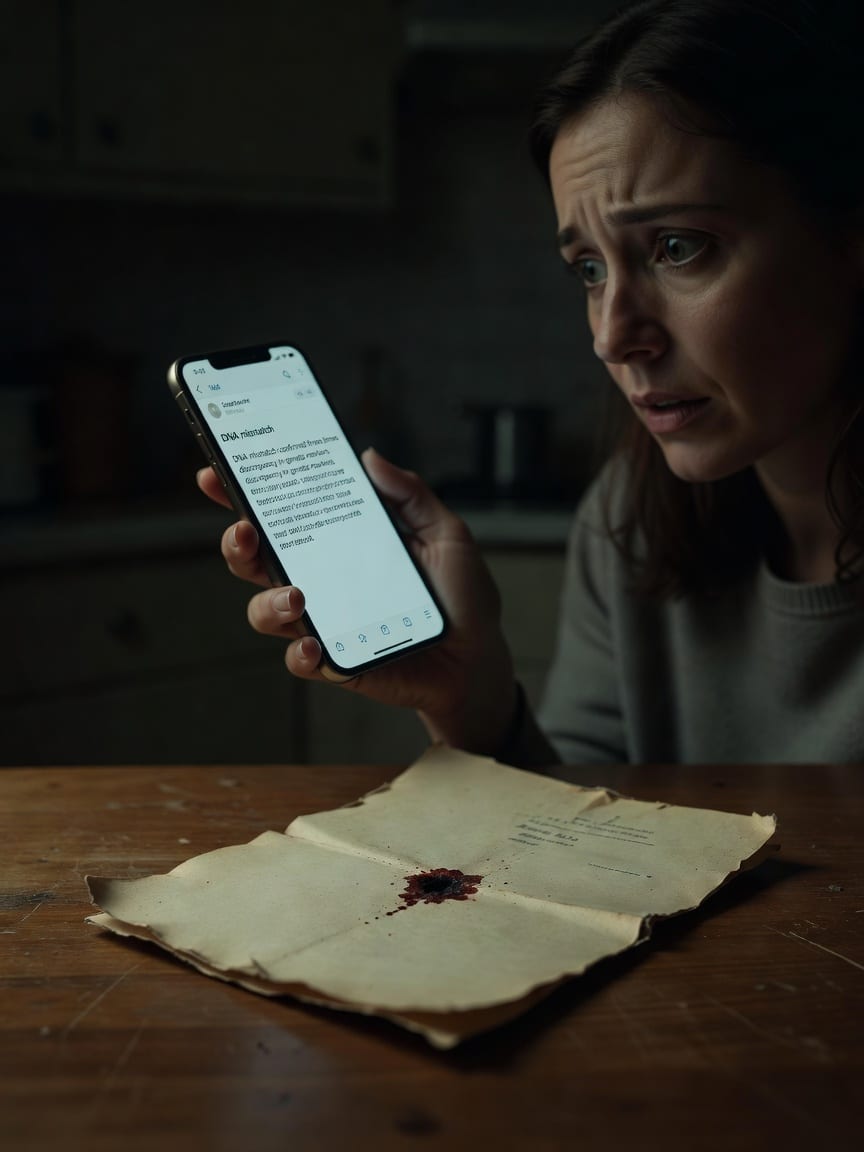
My baby bl**d card doesn't match my own DNA today. The lab ran it three times, confirming the dried spot and my living swab come from two different people.
Sitting at my kitchen table, I opened an email that shattered my quiet afternoon. I'd sent my newborn heel-prick card to a genealogy lab out of harmless curiosity. The results were devastating: the bl**d on that card, preserved for three decades, does not match my DNA.
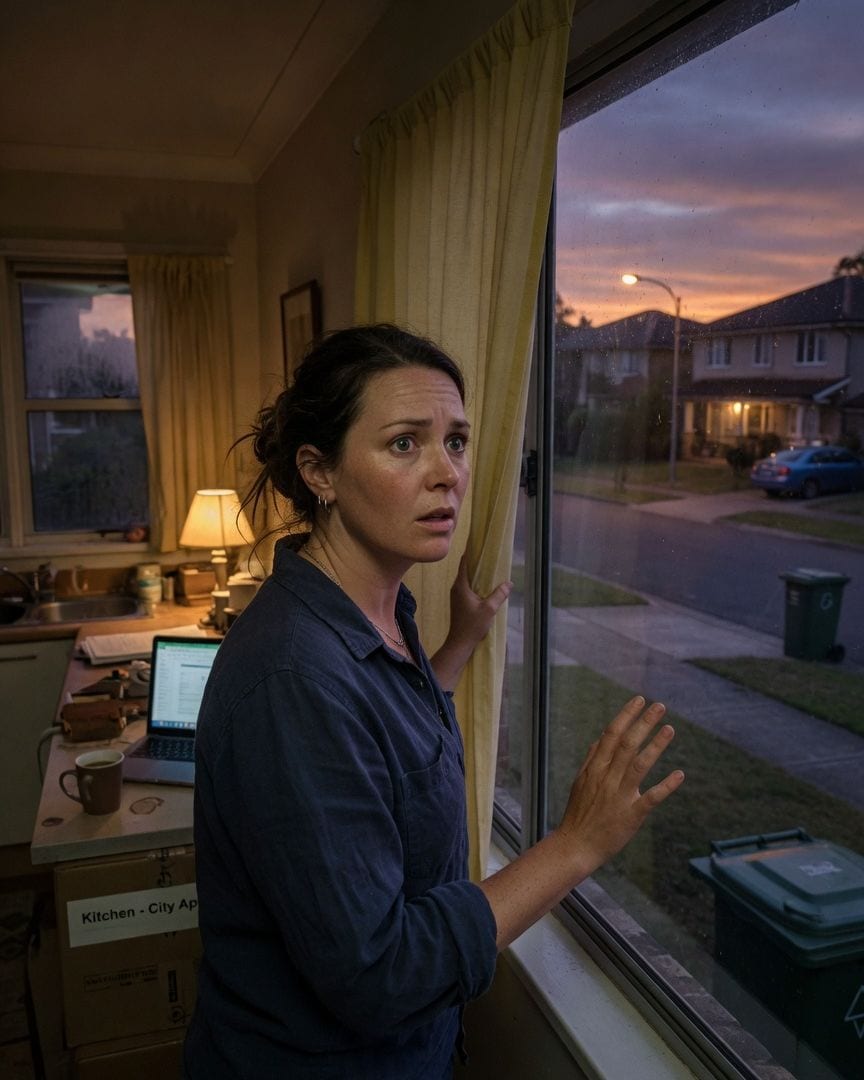
My bin was turned the wrong way Tuesday. The man three doors down hasn't been seen since, though his curtains still open.
New to Oakhaven, I dismissed the local warnings as charming quirks. But after I put my bin out first, my neighbor Joel Whitmore vanished, leaving only a cryptic 'My turn' note. The same strange symbol from his note was chalked on my bin, facing the street.