Corporal Kingsley was two days from going home. Then his duty logbook showed a perimeter check by Private Romano, signed in his own script.
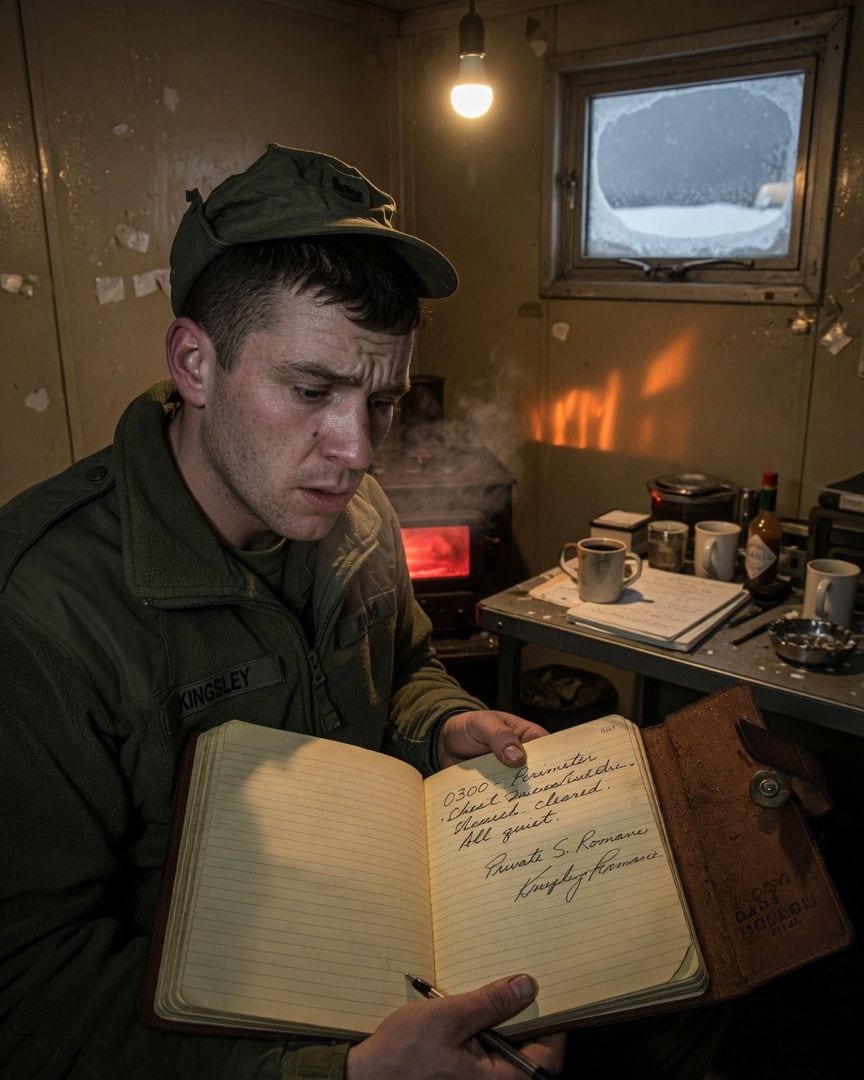
Corporal Jan Vesely Kingsley was two days from going home. The Alaskan post’s hut, a prefab box against the endless white, felt like a pressure cooker.
Outside, the air was a living, frigid expanse, silent save for the occasional moan of the wind against the eaves.
Inside, the squat iron stove pulsed with a low, cherry-red glow, stretching long, dancing shadows across the cramped bunks and equipment.
Kingsley, an infantryman hardened by three years of deployments, had volunteered for the winter survival rotation, drawn by the promise of quiet and the unforgiving challenge.
Through the long, dark hours of his watch, a distinct crunch of packed snow sounded from beyond the hut’s walls. It wasn't the wind, nor the settling groan of timbers.
It was too deliberate, a methodical rhythmic pressure, circling the hut once, then twice, unhurried. Kingsley, disciplined and rational, first dismissed it as an animal – a wolf, maybe, or a scavenging wolverine.
But the sound lacked the erratic halts and bursts of wildlife; it was a steady, measured pace. He pressed his ear to the cold metal wall, straining, but the sound faded as if retreating into the vast, sound-swallowing snow.
When the squad woke at dawn, the yard was pristine, a fresh blanket of white under a steel-gray sky. Except for one thing. A single, waist-deep track was worn into the drift, a perfect, unbroken circle around the entire hut.
There was no break in the snow where anything could have entered or exited the circular track. It simply was, a silent, impossible perimeter.
Kingsley reported the impossible track to Sergeant Sophia Calloway, his squad leader, over lukewarm coffee. She glanced out the reinforced window, her brow furrowed for a moment, then shrugged it off. "Probably an optical illusion, Kingsley.
Or Thatcher playing a prank, though I'll have his hide if he's messing with our perimeter checks." She gave him a stern look that clearly said the matter was closed.
Kingsley, needing to formally log his uneventful watch, retrieved the post’s heavy, leather-bound duty logbook from the small, cluttered office. The room smelled of stale coffee and old paper, lit by a single bare bulb.
He flipped to the current date, his pen poised above the blank line, ready to record his uneventful shift, the impossible track left unspoken in the official record. But an entry for his watch was already there.
It detailed a ‘Perimeter Check: West Quadrant cleared’ at 0300. The name beside it read ‘Private S. Romano,’ and the signature, though precise, was not his own.
It mimicked his distinctive military script with unsettling accuracy, a perfect forgery of a hand that never signed it.
Corporal Kingsley stared at the duty logbook, his own hand shaking slightly as he held the pen.
The entry for his watch, detailing a perimeter check by ‘Private S. Romano,’ was right there, signed in a hand that mimicked his own precise, military script.
He knew with absolute certainty he never saw a Private Romano, nor did anyone perform that check. The page itself felt cold under his fingertip, the ink unnervingly fresh.
Kingsley tried to be discreet. He casually asked Sergeant Calloway about Private S. Romano during breakfast. Calloway paused, her spoon halfway to her mouth, and frowned. "Romano? Never heard of him. Not on this rotation's manifest, that's for sure."
Later, he put the same question to Private Lars Thatcher while they cleared snow from the comms array. Thatcher just laughed, shaking his head. "If there was a new guy, I'd be the first to know.
Another mouth to feed, another body for latrine duty. Nope. Just us lucky four, Corporal."
Driven by a disciplined need for accuracy, a fundamental principle of military operations, Kingsley began to pore over older post records.
The small, auxiliary archive room was rarely used, its metal shelves sagging under decades of forgotten files, the air thick with dust and the scent of decaying paper.
He found similar impossible entries scattered through logbooks from years past: names not on manifests, duties performed by non-existent personnel, all meticulously signed.
The handwriting often bore an unnerving familiarity, a kind of ghost echo of the official script of the actual officer on duty.
He uncovered a forgotten locker, its rusted latch pried open long ago, tucked away behind a stack of moth-eaten sleeping bags. Inside, a faded photograph of a squad from the 1980s lay curled at the bottom.
The faces were clear, crisp, all but one. A soldier in the back row had a face subtly blurred, almost erased, an uncanny indistinctness that didn't look like photographic damage, more like a physical void.
Deep within an old logbook from 1995, tucked between pages detailing equipment inventories, Kingsley found a cryptic, coded note, hastily scrawled: "SGT. B. Sullivan. The silent count. Missing signatures. They don’t leave. We do."
Kingsley’s digging did not go unnoticed. Major Oliver Bishop, the post commander, made an unexpected visit to Kingsley while he was cleaning the armory. Bishop’s demeanor was calm, almost unnervingly so.
"Corporal Kingsley," he began, his voice soft, "I hear you've developed an unusual interest in our historical records. Old paper, dusty archives. Not exactly prime reading for a man two days from rotation home, is it?" He didn't smile.
"Perhaps," Bishop continued, his eyes meeting Kingsley's with an unblinking intensity, "you should focus on your current duties. The integrity of our daily operations. Don't want any, shall we say, anomalies distracting you from going home, do we?"
The words were polite, a suggestion, but the undercurrent felt like a threat, an invisible wire tightening around Kingsley.
Later that afternoon, Kingsley returned to the archive. The duty logbook he had been studying, the one with ‘S. Romano’s’ entry, had been returned to the wrong shelf, several rows out of place.
It lay open, conspicuously, to a specific entry from decades ago, highlighted by a faint pencil mark. The date was April 12, 1978. The entry read: "Perimeter integrity maintained. All accounted for."
The words felt like a direct message, a cold, clinical statement of power. That night, as the wind howled outside his hut, Kingsley heard it again.
The faint, rhythmic crunch of snow, circling, just as before, but this time it felt deliberate, a quiet surveillance.
He pressed his ear to the wall, listening to the vast emptiness between the outer shell and the inner insulation, hearing nothing but the relentless wind, but the dread settled deep in his gut, a cold, heavy stone.
Kingsley couldn’t shake the chill Bishop’s visit had left. He cornered Sergeant Calloway in the mess hall, pushing a stack of logbooks across the table, open to various entries. "Sergeant," he said, his voice low, "look at this.
‘S. Romano,’ 2024. Here's a ‘P. Smith,’ 2011. And this ‘C. Jones,’ 1998. All perimeter checks. All names not on the manifests, but meticulously signed. And look." He laid out the faded photograph with the blurred face, pointing.
"This was from the 80s. A ghost in the machine."
Calloway stared at the books, then the photo. Her usual composure faltered. She picked up the old picture, tracing the indistinct face with a trembling finger. "There are… stories, Corporal," she admitted, her voice barely a whisper. "Old legends.
Things that stay behind in places like this. Things that make you forget." She looked up, her eyes distant. "My predecessor, Sergeant Bernard Sullivan, he was obsessed with the records. Said something was ‘eating the edges’ of our manifests.
Said people were 'present' but not accounted for. Then he was transferred out, sudden. Like he vanished, almost." She pointed to Sullivan's coded note. "He called it 'the silent count.'
Personnel who were officially 'accounted for' on paper, but never seen again. Their records were perfect, updated, transferred, discharged. Everything… correct. But they were gone."
Kingsley felt a cold realization bloom in his chest. "It's the system itself," he muttered. "The rigor. The meticulousness. The way the military documents every single person, every single movement. It's not a safeguard. It's being used as a weapon."
He understood now. The entity didn't make people disappear, it replaced them within the system, creating perfect, unassailable records of their non-existence, making it impossible to prove they were missing if the records swore otherwise.
Kingsley found Sergeant Bernard Sullivan’s old service record, tucked into a dusty file marked ‘Transferred Personnel’ from years ago. Sullivan's service history was impeccable, ending with an honorable transfer from this very post.
Beside it, tucked into a file labeled ‘Current Personnel,’ Kingsley located Sergeant Calloway’s service record. He pulled it out, heart pounding.
It stated, in unimpeachable detail, that Sergeant Sophia Calloway was honorably discharged from this specific outpost, transferred out to a base in Germany, and awarded a commendation for valor seven years ago.
Her presence here, now, as his squad leader, was by the military’s own official record, utterly impossible. His breath hitched, the cold dread turning to ice in his gut.
Kingsley found Calloway in the hut, polishing a rifle with methodical, almost vacant precision. He pushed her service record across the table. “Sergeant. This says you were honorably discharged seven years ago. Transferred to Germany. Valor citation.”
Calloway looked up, her gaze flat. “Nonsense, Kingsley. I’ve been here, steady, for the last five rotations.” But her eyes seemed to lose focus, glazing over, and her voice flattened, taking on an unnervingly even cadence.
“The valor citation… it was for swift action during a perimeter breach. A blizzard. Visibility zero. I secured the comms and coordinated the rescue of two privates, risking exposure. Distinguished Service Cross.”
She recited the details with uncanny precision, as if reading from a script, details she had previously denied or couldn’t recall. The Calloway Kingsley knew had always claimed she’d never left Alaska, certainly never served in Germany.
The true Calloway, the one he knew, had just vanished behind that cold, perfect recital.
“The ‘Private S. Romano’,” Kingsley pressed, his own voice tight, “and the others. They’re all tied to ‘transfers’ of personnel who were never seen again.
Their records are perfectly updated, their existence meticulously maintained by the system, even as they cease to exist anywhere else.” The entity didn’t kill; it replaced or absorbed. It maintained perfect accountability within the system itself, a seamless overwrite.
The waist-deep tracks, Kingsley finally understood, were its way of marking its territory, its next target, slowly encircling, preparing for the quiet, systematic absorption.
Calloway was no longer entirely herself; she was an echo, a placeholder, perfectly ‘accounted for’ by a system that had been subtly co-opted.
Kingsley looked at Calloway, her face calm, the blankness in her eyes a final, horrifying confirmation that her identity had been overwritten.
He heard Major Bishop’s voice, calm and unbothered, crackling over the radio from the comms room: “—processing the next rotation. Standard procedure.” The horrifying implication dawned on Kingsley.
Bishop was ‘the one who knew,’ the one who managed the ‘accountability’ for the entity, orchestrating the seamless transitions.
Kingsley moved, driven by a cold, desperate terror. He grabbed his personal gear, stuffing the incriminating logbooks, Calloway’s impossible service file, and Sullivan’s coded note into his pack.
He burst out of the hut, making a desperate dash for the snowmobile shed, the frigid air burning his lungs. Major Bishop was waiting outside, leaning casually against a snowmobile, a dark silhouette against the swirling snow.
He wasn't armed, but his calm, unbothered demeanor was more chilling than any weapon. "You're already accounted for, Corporal," Bishop stated, his voice soft, devoid of concern. "The system is quite thorough."
Kingsley didn't answer. He shoved past Bishop, wrenching open the shed door. He leaped onto his snowmobile, yanked the cord, and the engine roared to life, a desperate protest against the silent landscape.
He jammed it into gear, spinning snow, and raced off into the heart of the blizzard. Behind him, the roar of a second snowmobile engine started, a low, predatory hum.
He was out, but the cost was leaving Private Lars Thatcher and the other new arrivals to be ‘accounted for’ by the silent, relentless system.
Kingsley reached a remote ranger station, frostbitten and near collapse. He presented the logbooks, Calloway’s impossible service file, and Sullivan’s note. The rangers listened with polite disbelief, their eyes flicking from the official-looking documents to Kingsley's wild, exhausted face.
The records were ‘official,’ unimpeachable. A military investigation was launched but quickly found no evidence of wrongdoing at the post, just a standard rotation report, personnel accounted for, all present and correct.
Kingsley’s story was dismissed as extreme fatigue and psychological distress from the isolation. He was honorably discharged, his experience filed under ‘stress-induced delusion.’
Kingsley returned to civilian life, carrying the weight of what he knew, the proof no one would believe. Years later, he saw a brief news report about the remote Alaskan post being decommissioned, deemed 'redundant.'
The final shot on the screen was a blurred, grainy photo from the post's last rotation, found in an online archive.
Private Lars Thatcher was in it, smiling faintly, standing slightly apart from the other uniformed figures, seemingly hale and whole.
But the figure behind him, partially obscured by a utility pole, had eyes that held no warmth, and a faint, impossible track seemed to curve around the edge of the frame, just behind the last man.
If this one got to you
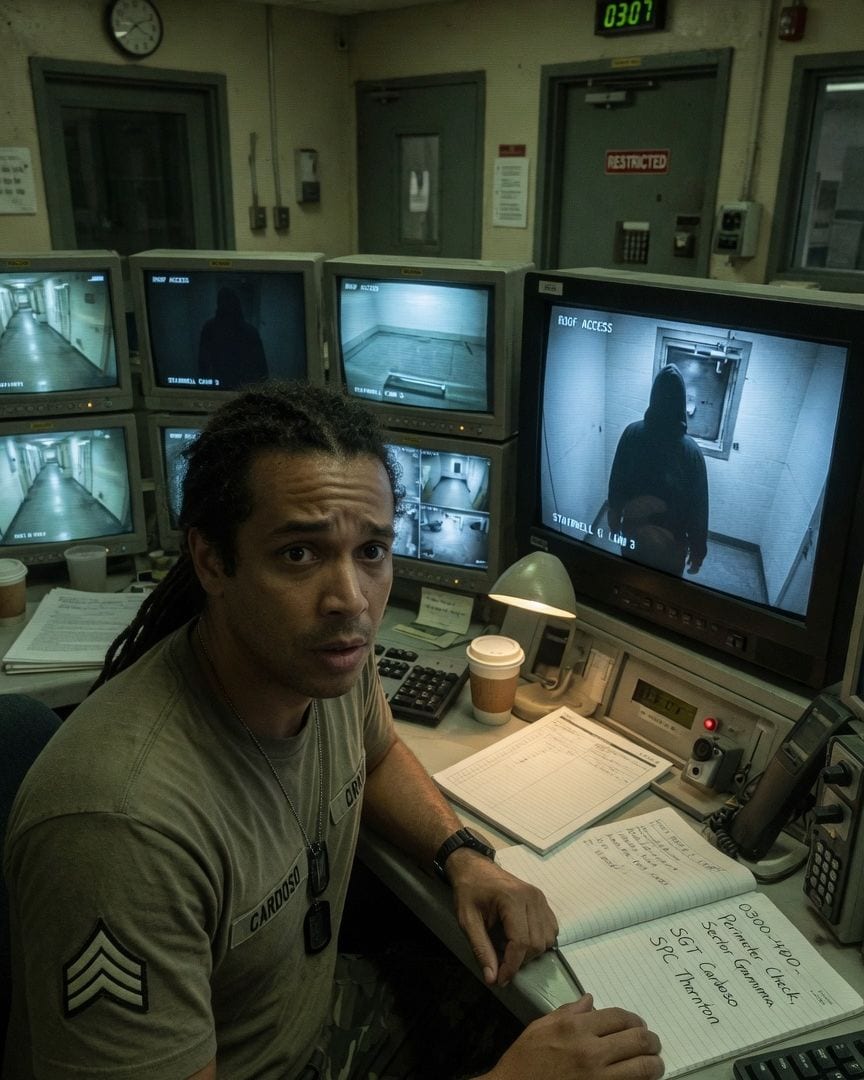
On his last watch, Sergeant Cardoso found his own signature in the duty log for a perimeter check he never did, with a name he didn't know.
Sergeant Rui Cardoso was on his final interior watch at Fort Merritt, a remote coastal outpost, as 0300 ticked by. He spotted a dark, unmoving figure on a monitor showing the sealed roof access, a figure that inexplicably shifted closer to the hatch moments after a specialist confirmed the roof was empty. Rui checked every log and sensor, but the digital fortress showed no breach, and the figure's appearance defied all logic. Yet, in the physical duty log, he found his own unmistakable signature on an entry for a perimeter patrol he never took, alongside a soldier's name he'd never seen. What impossible truth was written in his own hand?
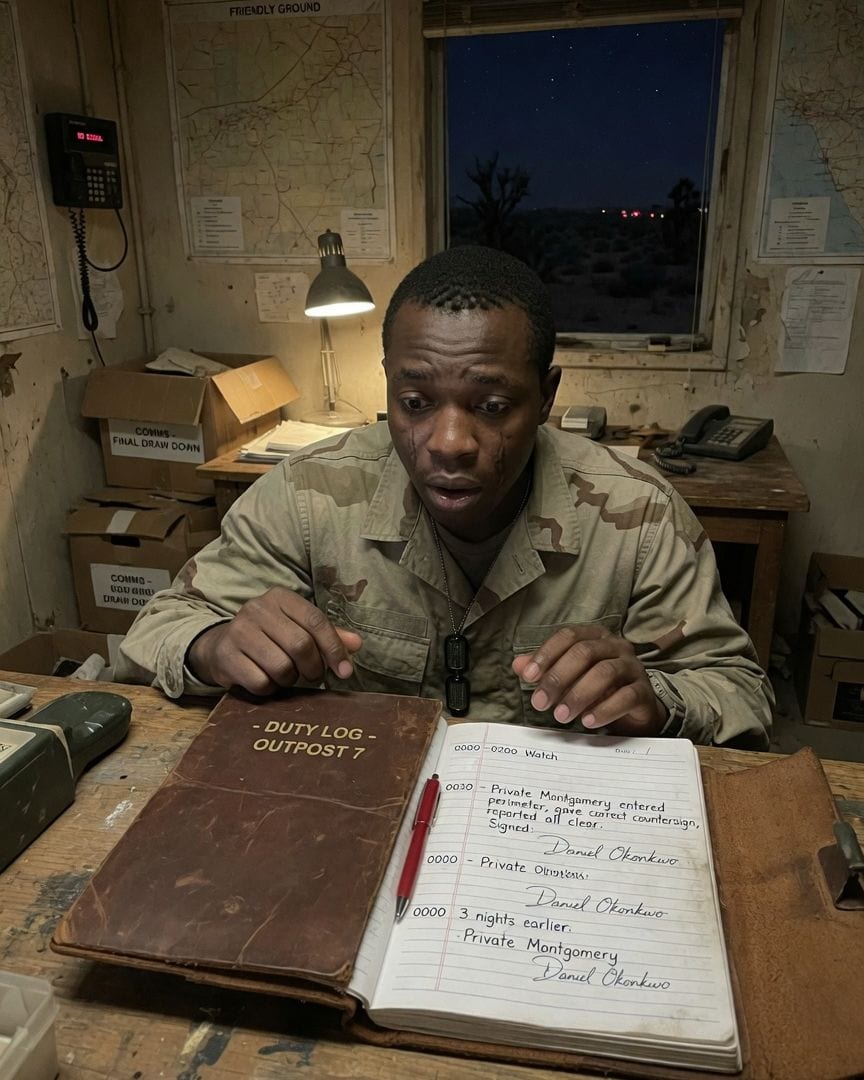
On Private Okonkwo's last desert watch, a soldier with an unnatural smile appeared. Then the duty log showed his own signature, confirming an entry he never made.
Private Daniel Okonkwo was counting minutes on his final watch at desolate Outpost 7, eager for dawn and a long-awaited trip home before the base closed for good. The familiar desert night offered little comfort, its vast emptiness usually reassuring, but tonight held an unsettling quiet. As his starlight scope swept the sparse treeline, a figure in their uniform stepped from the absolute dark, raising a hand with the correct recognition signal—and an unnatural, wide smile. Later, Private Okonkwo found his own unmistakable signature in the outpost's duty log, confirming a 'Private Montgomery' had entered the wire during his shift, an event he knew never happened. With the last convoy disappearing, who—or what—had signed his name to a lie, and why?
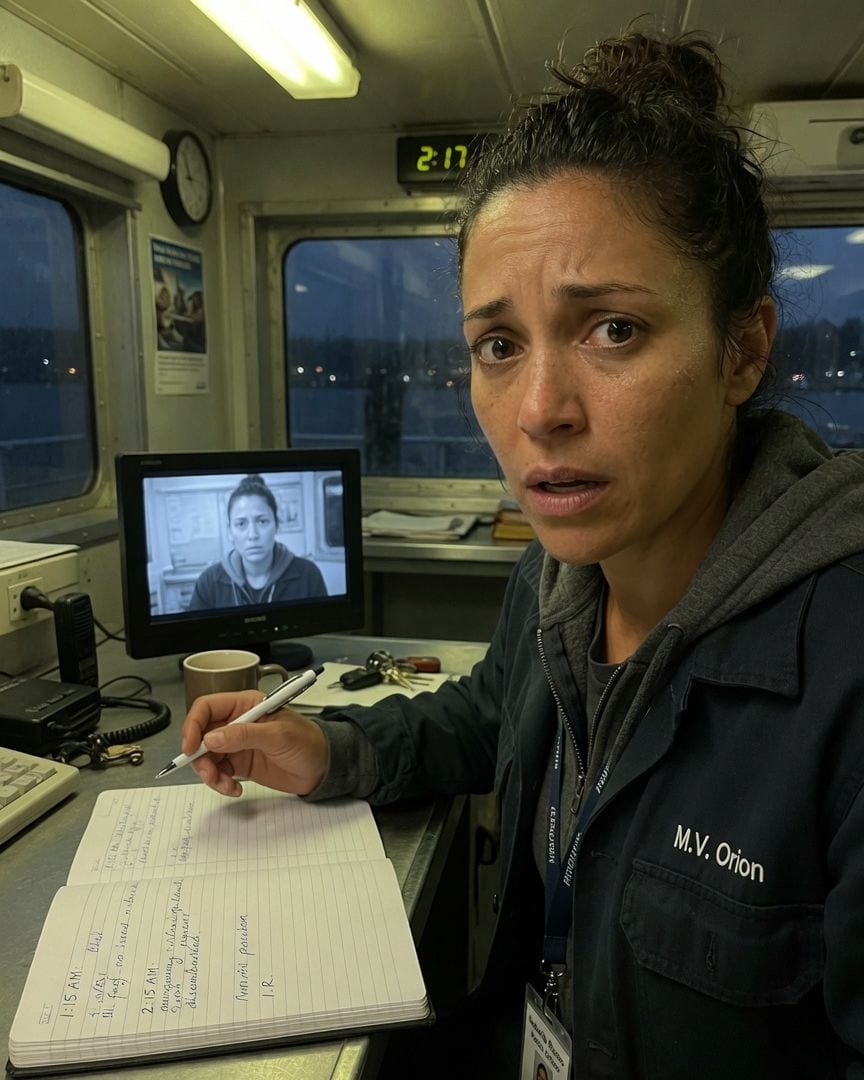
My security camera showed my own face at 2:15 AM, writing an entry I didn't make, staring utterly blankly into the lens before the screen flickered.
As a meticulous watchman on the M.V. Orion, I was making my routine 2:00 AM log entry when I found a previous one I hadn't written. Timestamped 2:15 AM, it stated a 'foot passenger disembarked' with my own initials beside it. But the ferry was dark, silent, and completely empty.
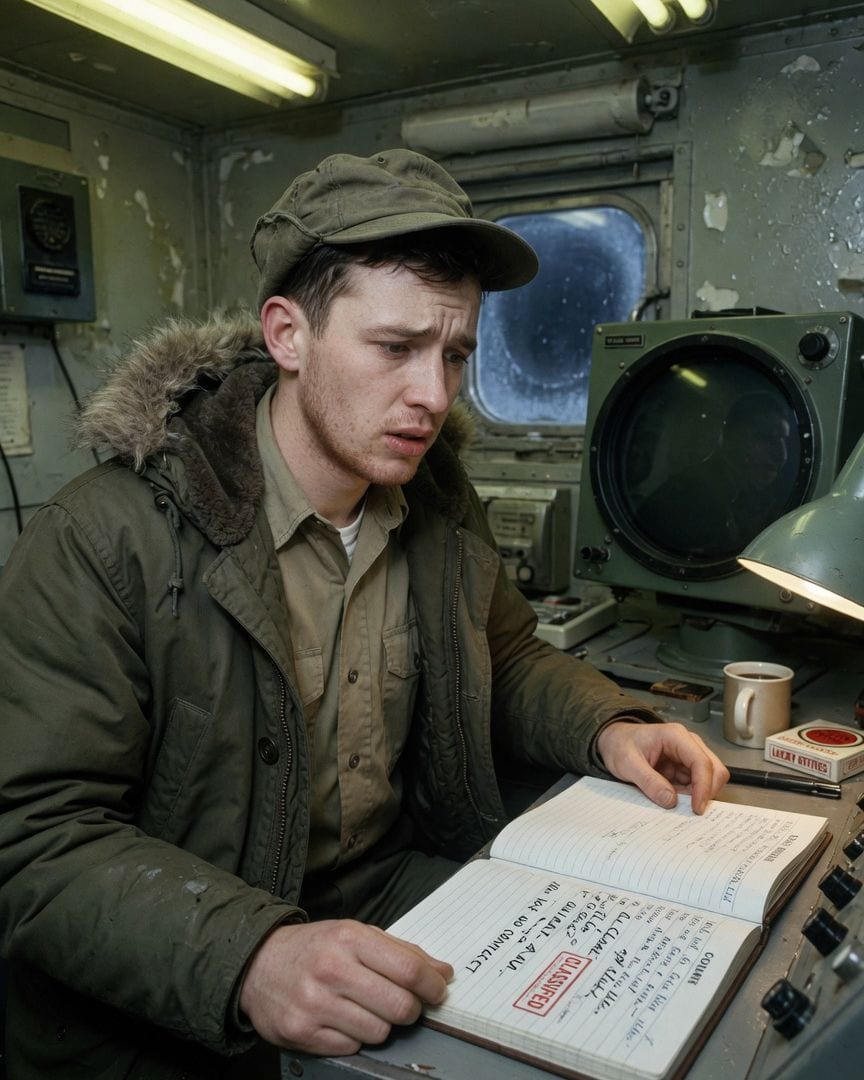
A Cold War airman logs an impossible radar contact on his last sweep. But his official logbook entry is stamped 'CLASSIFIED' and then contradicted by a hastily scrawled 'ALL CLEAR' dated moments before it.
Airman Ordway Vance, 22, manned the radar dome at Site Pellin in the biting North Atlantic dark of January 1962, running the last calibration sweep before its decommissioning. His scope picked up a faint, impossible return, growing closer with each pass, though the ocean remained empty to the eye. When Vance detailed the contact in his official logbook, a 'CLASSIFIED' stamp appeared, followed by a hastily scrawled 'ALL CLEAR' dated moments before his own entry, contradicting his every word. Commander Hartley dismissed it as equipment malfunction, but Vance sensed a chilling, official erasure behind the lie. He soon found a locked cabinet marked 'SITE PELLIN ANOMALIES,' hinting at a deeper truth buried within the base's final days.
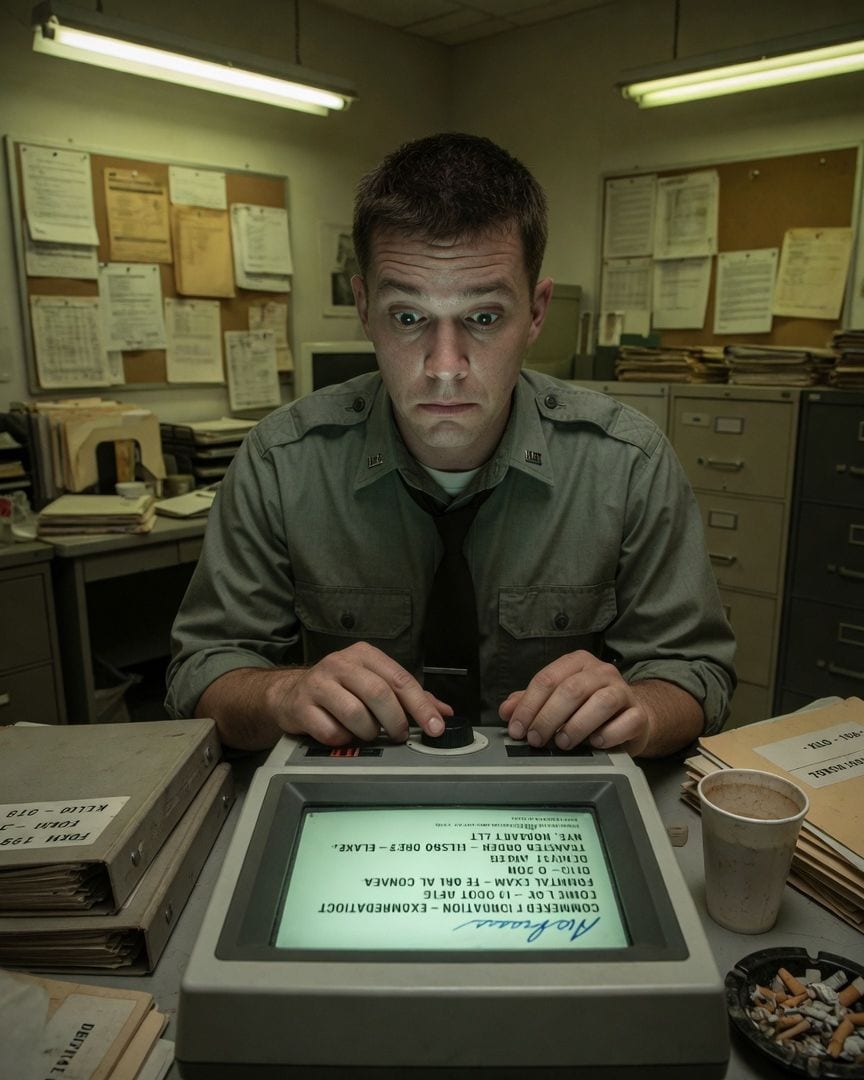
A missile commander watched his ten nuclear silos go dark. His own service record shows his signature on a future he's never lived.
Second Lieutenant Hobart Nye, a missile commander in Wyoming, had his quiet 0247 watch shattered by a security report: a massive, silent black triangle hovered over Launch Facility Kilo, casting a perfect shadow. Hobart watched his console's fault panel light up, signaling all ten nuclear missiles going dark in an impossible silence, followed by eleven minutes his security team could not remember. Official logs called it a "radio malfunction," but Hobart found a requisition for invisible-tracking sensors, signed by a base commander who was supposed to be off-base. The final, chilling discovery came when his own service record showed new entries—a dental check-up, a transfer to Alaska—all dated for a future he never lived, complete with his perfectly replicated signature.
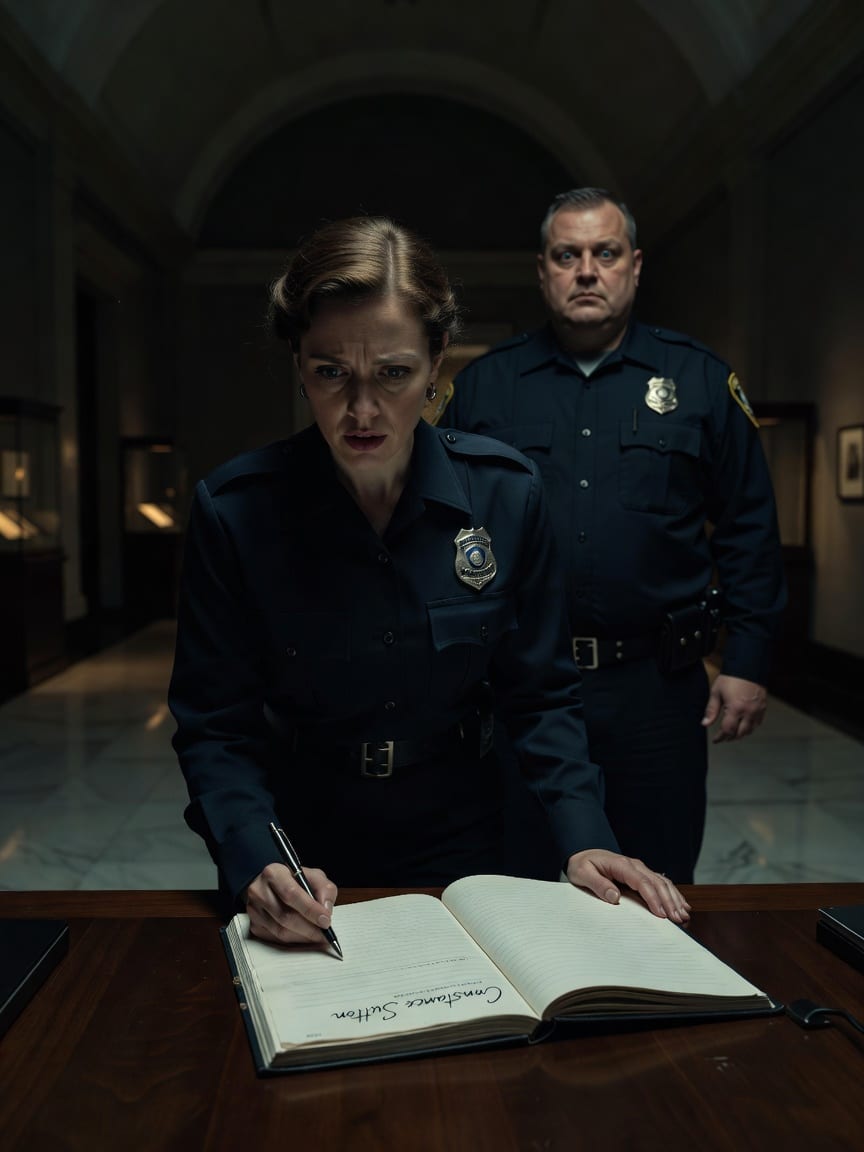
My relief guard Anton always signed in green ink. The police pulled the handover book: no Anton, no green ink, ever.
For two years, my routine as a night guard at the Prescott Museum has been a comforting rhythm, ending with the arrival of Anton Kowalski. But after a small theft, the police reveal Anton doesn't exist and his name isn't in the handover book. Now, I've found my own signature in that book for a night I was explicitly off duty.