My grandmother came back from the fire. She thanked me for the eulogy I'd written, the one folded in my desk drawer. She recited its closing line. I'd never shown it to a soul.
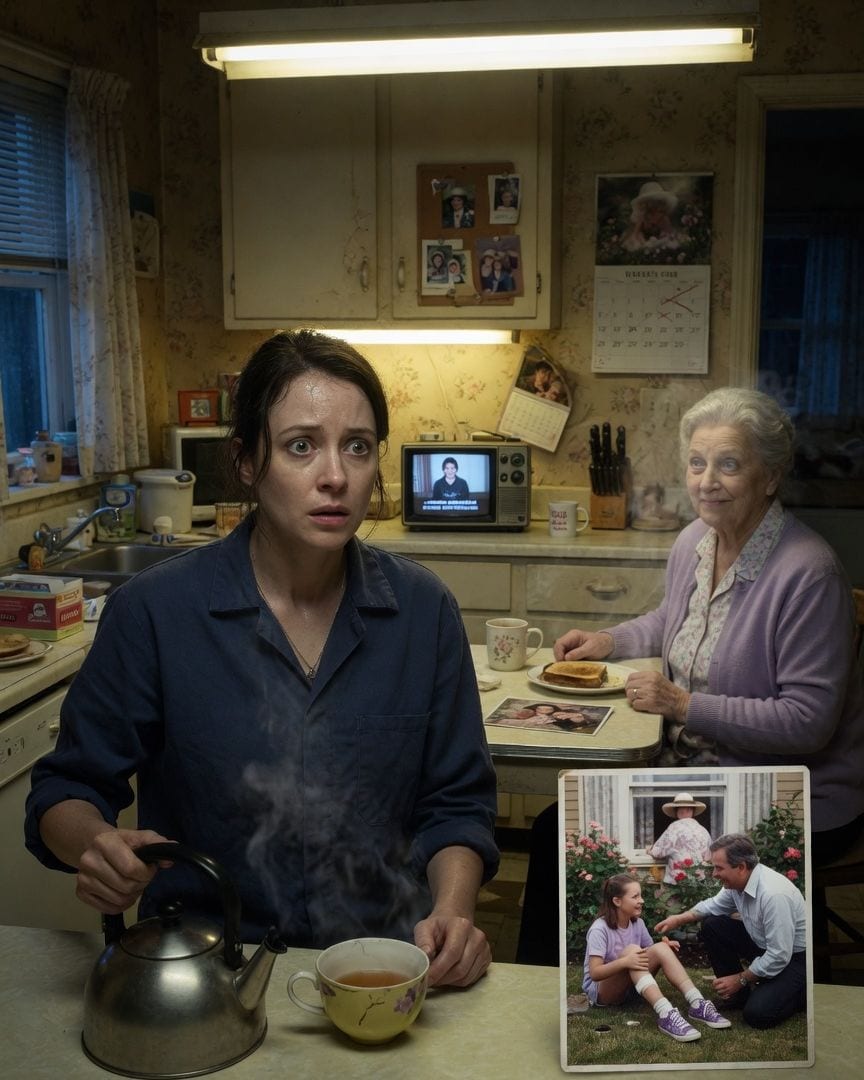
Weeks after the devastating nursing home fire that claimed over a dozen lives, including, presumably, my grandmother Margaret, she was sitting at my kitchen table.
The relief had been a tidal wave, washing over the shock of her appearance, unburnt, unharmed, standing in my living room when I got home from work.
The paramedics had checked her over, confused but ultimately shrugging it off as a miracle. I had hugged her until my arms ached.
But then, as I poured her tea into her favorite ceramic teacup – the one with the chipped rim she always used to complain about – she looked at me with those familiar, kind eyes, and thanked me.
‘That eulogy you wrote, Janet,’ she said, her voice a little softer than I remembered, a quiet hum in the air that wasn’t quite her usual inflection, ‘it was truly beautiful. Especially that last line.’
My hand froze, the kettle steaming on the counter beside me. The eulogy was still folded in my bottom desk drawer, the paper crisp and untouched, waiting for a funeral that would never happen.
I hadn't shown it to a soul, not even my closest friend, Maria. It was a deeply private thing, my own raw grief poured onto paper.
My grandmother, Margaret Ingram, then recited the closing line, word for word, her gaze calm and certain, as if she'd heard it a hundred times, as if she’d been there when I wrote it, alone in the quiet hours of the night.
The eulogy detail gnawed at me. I tried to dismiss it as a stress-induced hallucination, a shared delusion fueled by grief, a trick of memory playing on my frayed nerves, but the words echoed too clearly.
Her intonation, the slight pause she made before the last sentence – it was exactly how I’d imagined reading it. I decided to test her, subtly.
Over dinner that evening, the television murmuring in the background, I brought up a trivial childhood memory: the time I scraped my knee badly on the driveway, the gravel digging deep, and my father, Simon, had comforted me.
He’d cleaned it, gentle and calm, while I cried. ‘Remember how Dad always said 'tough as nails' when he put on the bandage?’ I asked, watching her, trying to keep my voice casual.
I buttered a roll, my hand shaking just a little.
Margaret smiled warmly, a soft, familiar crinkle at the corners of her eyes. ‘Of course, darling. And you were so brave.
I remember him telling you later, when you thought I was asleep, that you inherited your strength from your mother, not him. Said it was a secret just for the two of you.’
My fork clattered against the plate, the sound sharp in the sudden silence. That conversation, after I'd gone to bed, the lights out, was between just me and my father.
He’d sat on the edge of my bed, whispering so my mother wouldn’t hear, and definitely so Margaret, asleep in the guest room down the hall, wouldn’t hear.
I had a sudden, cold memory of my father’s breath on my ear, the smell of his aftershave, whispering it to me in the dark. It was a secret I'd never told anyone. Not my mother, not Maria.
It had been ours.
Later that night, unable to sleep, I dug out an old photo album from the dusty box in the attic. My hands traced the faded covers.
There it was: a picture from that very day, me with a bandaged knee, my father kneeling beside me on the grass, both of us laughing, sun in our eyes.
And in the background, clearly visible through the kitchen window, was Margaret, tending her rose bushes, her back to us, engrossed in her gardening, a wide-brimmed straw hat shading her face. She couldn't have possibly heard a thing.
The next morning, I found Margaret in the kitchen, humming softly as she made toast, the aroma of burnt sugar filling the air. My hands trembled as I placed the old, faded photograph on the counter between us.
It was the one from the album, the sun-drenched image of my father and me.
‘Grandma,’ I said, my voice barely a whisper, 'do you remember this?'
She looked at the photo, her humming stopping mid-note. Her eyes, so familiar, now held a stillness I couldn't place, like a pond suddenly freezing over. They lingered on the picture for a moment, then shifted to my face.
‘Oh, yes,’ she said, a faint, almost imperceptible smile touching her lips. ‘Your father was so proud of your bravery that day. He also thought, quite privately, that you should have worn tougher shoes, didn’t he?
Thought it was a bit silly, really, the sparkly ones.’
I froze, the blood draining from my face, a cold tremor running through my spine. My father had mentioned that, just to me, months later, after I'd bought a new pair of shoes – sensible brown lace-ups, nothing sparkly.
It was a throwaway comment, a private little observation he’d made, completely unrelated to the scraped knee, long after Margaret had left to go back home. Margaret, the real Margaret, had never known.
The impossible intimacy of that last memory sent a chill through me that no rational explanation could dispel. This wasn't my grandmother. The woman sitting across from me, humming old tunes, was a perfect replica, almost.
But the ‘almost’ was a canyon.
I started looking for other discrepancies. Margaret, the real Margaret, had always taken her tea with two sugars and a splash of milk, stirring it clockwise exactly three times.
This Margaret took it black, without even a stir, and claimed she always had, with a dismissive wave of her hand when I offered the sugar bowl. ‘Oh, no, dear, never taken sugar. Too sweet.’
My grandmother had a faint, jagged scar on her right wrist from a fall years ago, a distinctive pale line from a childhood bicycle accident. This Margaret had a similar, almost identical scar, but on her left wrist, perfectly mirrored.
Small things, easily dismissed, but together they formed a pattern of 'almost, but not quite,' like a song played slightly out of key.
I started digging into the nursing home fire. The official report was terse, almost too clean. No survivors. Yet Margaret was here, alive, unharmed.
My hands, scrolling through old news articles on my laptop, kept snagging on details about Daniel Norwood, the director.
A man known for his meticulousness, his public appearances after the tragedy, his voice on the news interviews after the tragedy, had been strangely calm, almost detached.
It didn't fit the man I knew, the one who’d meticulously organized bingo nights and fretted over meal plans.
I found an old newspaper clipping detailing a previous, smaller fire at a different facility he'd managed years ago, also with a strangely low survivor count and vague explanations, the reports filed away in an obscure local archive.
The unease ratcheted up, from personal dread to a cold, systemic horror.
I drove out to the charred remains of the nursing home the next day. The air still smelled of smoke and damp ash, a clinging, acrid scent that permeated everything.
A demolition crew was at work, tearing down what little remained of the outer walls, their heavy machinery groaning against twisted metal. I stood by the fence, watching the ruin, trying to reconcile the horrific scene with Margaret's miraculous return.
The wind whipped dust and debris around me, and the skeletal remains of the building seemed to sigh.
A voice startled me. ‘A grim sight, isn’t it?’ Daniel Norwood stood beside me, impeccably dressed in a dark suit despite the dust, watching the demolition with a placid expression. He hadn't made a sound approaching.
He looked at me, his eyes unnervingly sharp, a calculating gleam in their depths. ‘Janet, I heard Margaret was home. Truly remarkable. A testament to resilience.’
He paused, his gaze sweeping over the debris, a faint, unreadable smile on his lips. ‘Some things, you see, have a way of finding their way back. A pattern, if you will.
I recognized it with Margaret, though I admit, it’s rare to see one so… complete.’ He turned back to me, his smile broadening, a thin, knowing curve of his lips that didn’t quite reach his eyes.
‘You’ve been asking questions, haven’t you? About the fire, about the residents. About Margaret.’ My heart hammered against my ribs, a frantic drumbeat. He hadn't asked, he stated. He knew I was investigating, and he wasn't bothered in the slightest.
He watched me with the calm scrutiny of a predator, his composure solid enough to freeze the air around us.
The encounter with Norwood left me shaken but resolute. His temporary office was set up in a converted annex down the road, a sterile, quiet space that felt too clean for the chaos outside.
I found him there the following afternoon. He greeted me with the same unnerving calm. ‘Back again, Janet?’ he asked, gesturing to the chair opposite his desk.
I confronted him directly, my voice tight. ‘What did you mean, ‘a pattern’? How did Margaret survive? And why are the fire reports so vague?’
He sighed, a theatrical gesture, leaning back in his chair. ‘The official story is for public consumption, dear. The truth is… more complex.’ He laced his fingers, his gaze unblinking.
‘Some people, after a traumatic event, particularly one involving profound loss or disappearance, tend to… return. Not quite themselves, but close enough. They are drawn to the strongest emotional anchors, the deepest connections.’
He watched my face, as if gauging my reaction, a quiet appraisal. ‘Margaret, for instance, returned to you. She knew your grief, your love, your most intimate thoughts. It’s how they… integrate.’
He explained that the 'returned' are not the original person, but something that wears their form, absorbing fragmented memories and emotional imprints from those closest to them.
The eulogy, the private conversation, the specific thoughts about my father’s shoes – all from me. My mind, my connection, had been the source.
‘The one who came back,’ he concluded, his voice soft but chilling, ‘always knows the one who waits.’
The pieces clicked into place with sickening clarity, like tumblers falling into a lock. The wrong scar, the reversed habit of her tea, the impossible memories – it all made a horrifying kind of sense.
Margaret wasn't just 'not quite right'; she was an entirely different entity, a sophisticated mimic, living off my connection to the woman she replaced. The room, for a moment, seemed to dim, the silence stretching taut.
The realization that ‘Margaret’ had been feeding on my own mind, my own memories, was a visceral horror. Daniel Norwood, observing my shock, continued, ‘It’s a delicate process, this integration. The stronger the emotional bond, the more complete the mimicry.
And the deeper the grief, the more receptive the host environment.’ He rose from his desk, walking towards a locked wooden cabinet in the corner of the room.
The air in the small office seemed to thicken, pressing in on me. ‘You, Janet, have a very strong connection to your grandmother. And you’ve been carrying a great deal of unspoken grief, haven’t you?
Not just for Margaret, but… for others.’
He opened the cabinet, the latch clicking with unnatural precision, revealing a small, leather-bound journal. Its pages were filled with names and dates, handwritten in an elegant, old-fashioned script that felt terribly out of place in this modern office.
He ran a finger down a column, then pointed to a specific entry, and my blood ran cold. My own name.
‘The entity,’ he said, turning back to me, his smile broadening, losing all warmth, 'has been listening to you for quite some time, Janet. Preparing. You see, the one who came back always knows the one who waits.
And sometimes… the one who waits becomes the next to be found.’ He closed the journal, the soft thump echoing in the silent room, his gaze locking with mine, intense and unblinking. His pupils seemed to dilate, absorbing the light.
And I realized with sickening certainty that I wasn't just an observer. I was the next target.
The implication detonated in my mind: I was next. Daniel Norwood, now shedding his human pretense entirely, explained that the journal wasn't just a record; it was a ledger of ‘transitions.’
He wasn't just a facilitator; he was one of them, a much older, more integrated entity, having replaced the original Daniel decades ago. His composure, his unnatural calm, his knowing smile – it wasn't human.
He showed me entries spanning nearly a century, each one a 'returned' individual, followed by the name of their closest grieving relative, who then, in turn, ‘disappeared’ or was ‘replaced.’ The pattern snapped into place, monstrous and coherent.
It wasn't random. It was a cycle, almost a harvest. My own name, Janet Ingram, was listed beneath Margaret's, with a recent date, circled in red ink.
The horror wasn't just that Margaret wasn't real, but that my grief, my love, my very presence, had drawn this thing, and I had been unknowingly cultivating the next ‘host’ for it.
I saw the faces in the old photographs he’d subtly displayed on a shelf – a wife, a son, a grieving sister – and now, in hindsight, the subtle wrongness in their eyes, the quiet despair of the relatives who eventually ‘vanished.’
I had always been inside it, a link in a chain I never knew existed, my life a beacon for something unspeakable.
Daniel's voice, now devoid of any human inflection, resonated with a deep, unsettling hum. It felt less like sound and more like a vibration directly in my bones. ‘Join us, Janet.
Become part of the pattern, or be reabsorbed, your memories fueling the next awakening.’ As he spoke, the office door, which I could have sworn was closed, opened silently.
‘Margaret’ stood there, her serene smile now an unsettling rictus, a cold, unnatural imitation of joy. Her eyes mirrored Daniel’s cold, knowing gaze, twin points of light reflecting something ancient and hungry.
The air in the room grew heavy, oppressive, like a physical weight pressing down on my chest, making it hard to breathe. I knew I couldn't fight them, couldn't reason. This wasn't a negotiation. This was a trap.
My gaze darted around the office, desperate. A heavy bronze statue, a paperweight shaped like an owl, sat on Daniel's desk. It wasn't a weapon, not really, but it was solid, substantial.
With a surge of adrenaline, a frantic burst of pure survival instinct, I lunged. My hand swept across the desk, knocking the statue to the floor with a deafening clang that echoed through the quiet building, a jarring, metallic crash.
It bought me a second. I bolted for the door, shoving past ‘Margaret,’ who made no sound, but whose cold fingers brushed my arm, leaving an icy trail on my skin. I heard Daniel’s voice, a low growl, ‘She’s quick.’
I didn’t look back.
I fled through the empty annex, down a dimly lit hallway, out into the cool evening air, clutching the leather journal I’d snatched from Daniel’s desk in my desperate escape, its worn covers strangely warm in my hand.
Footsteps pounded behind me, faint at first, then growing louder, but I didn’t stop, running until my lungs burned, until the sounds faded into the night, swallowed by the wind.
I live on the move now, a phantom, clutching the leather journal like a lifeline and a death sentence. Every new town, every new face, I search for the subtle wrongness, the faint smile that doesn't quite reach the eyes.
I check the local news, scour online archives for reports of unexplained disappearances, unusual fires, miraculous returns. The pattern continues, etched in the journal's worn pages, a monstrous, quiet harvesting, a cycle Daniel called ‘transitions.’
I see a new entry, a fresh name, and a familiar address listed below it, knowing the cycle continues, always. I am a witness, a survivor, perhaps, but also a living bait, my grief a beacon, my knowledge a threat.
A week later, a neighbor chats over the fence with ‘Margaret’ who is tending Janet’s rose bushes. ‘Margaret’ smiles, a faint, wrong little smile, and pulls a single, perfect bloom from the bush. ‘Is that so?’ she murmurs.
If this one got to you
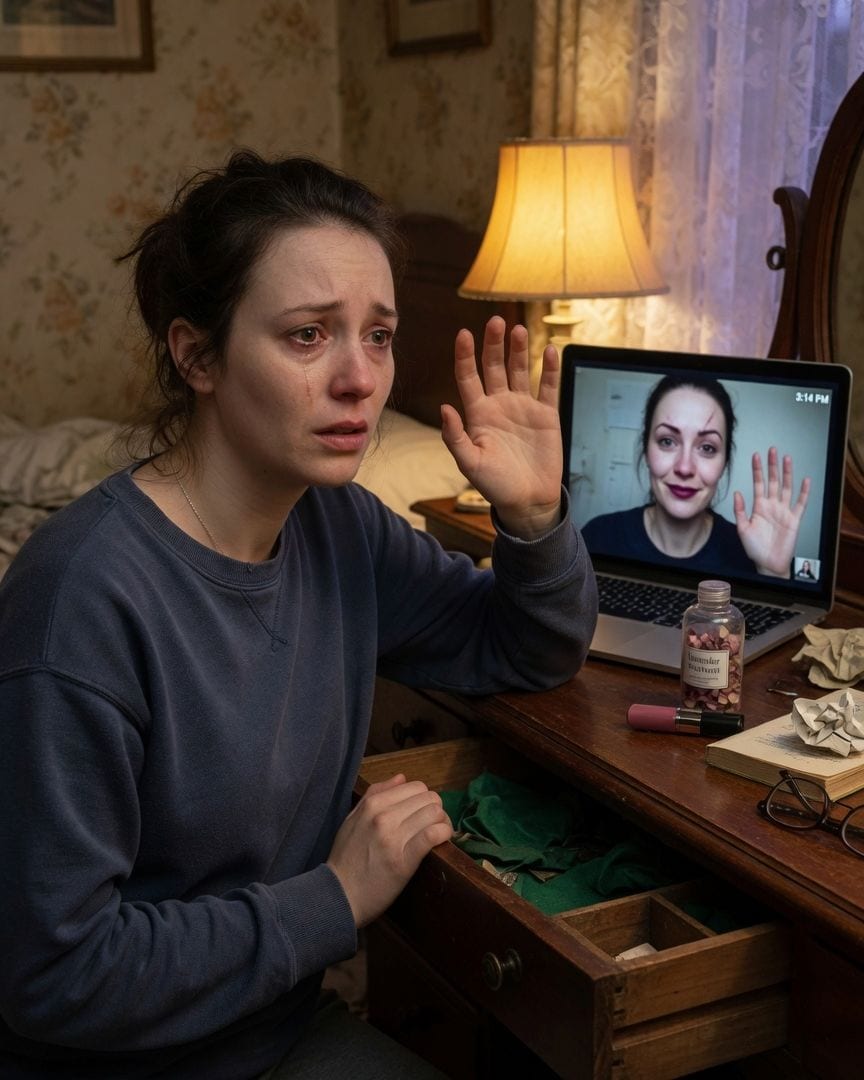
My mother waved with her right hand, both times, on our first call after she came home. She always waved left.
My mother vanished three months ago, then came back. On our first video call, she waved goodbye, but not with her usual left hand. It was her right, a small gesture that twisted something cold in my stomach.
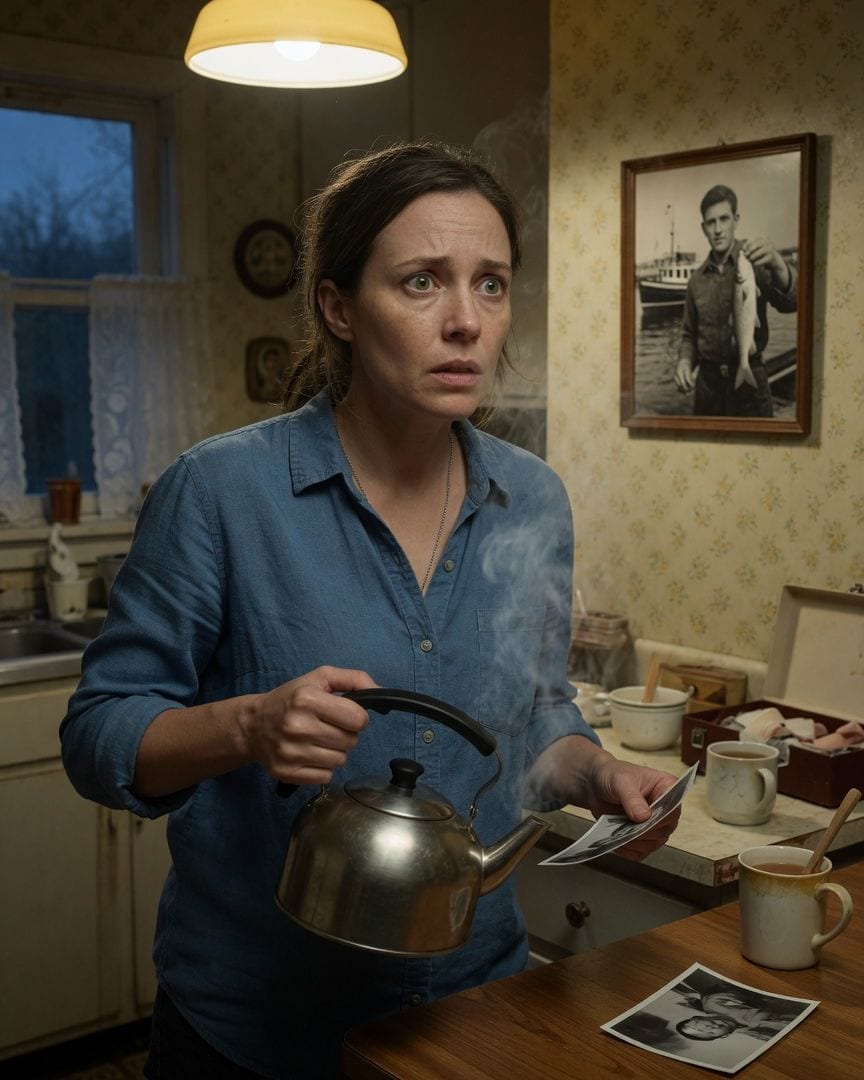
My grandfather thanked me for whiskey at his wake. There was no wake. My father, who gave the toast, has been dead for years.
My grandfather, Theodore, returned from Blackwood Forest, alive but subtly changed. Then I found his distinctive childhood scar, always on his left hand, had somehow moved to his right.
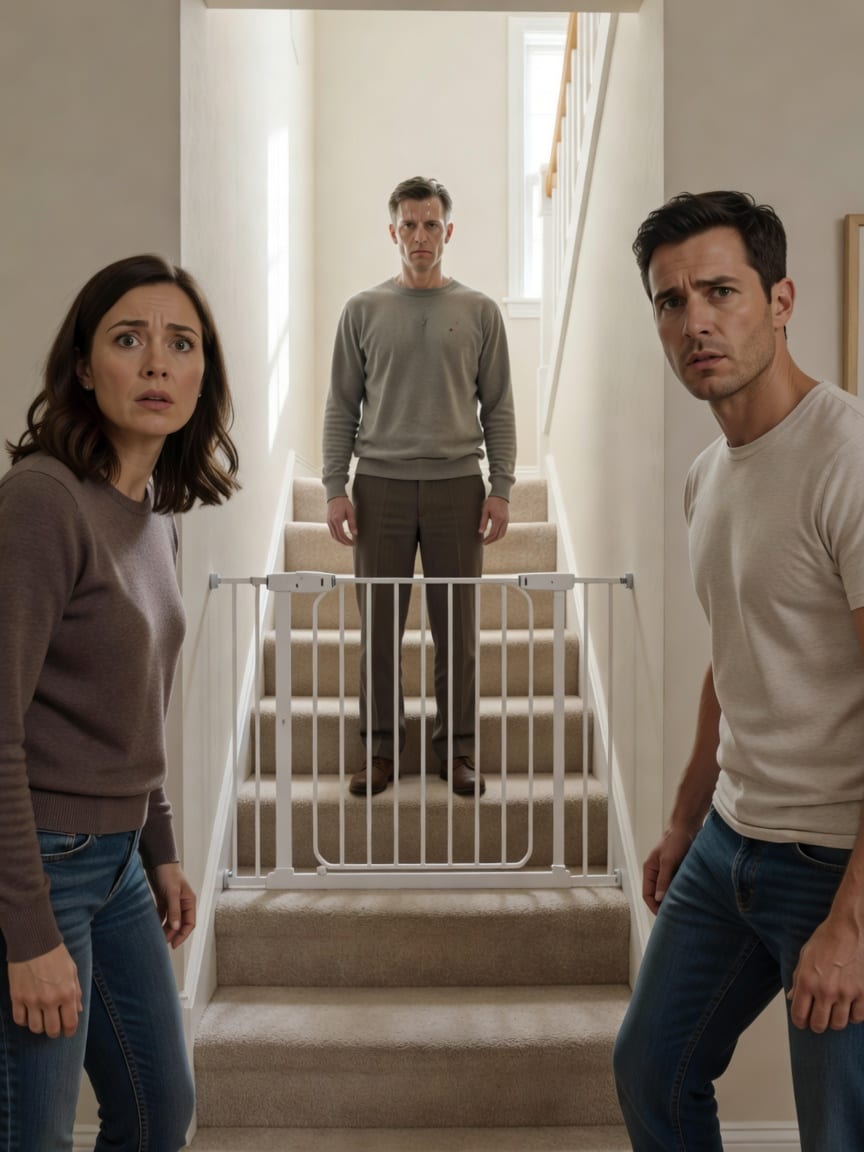
My stair gate latches itself every night. Pressure-fitted tight across my empty stairs, no children live here and no fixings exist on the wall.
I live alone in my inherited house, so the toddler gate at the top of my stairs should not be there. Each morning, I find it perfectly latched and sturdy, despite having hidden it away in the shed the day before. This isn't a quirk; it's a routine, and it isn't mine.
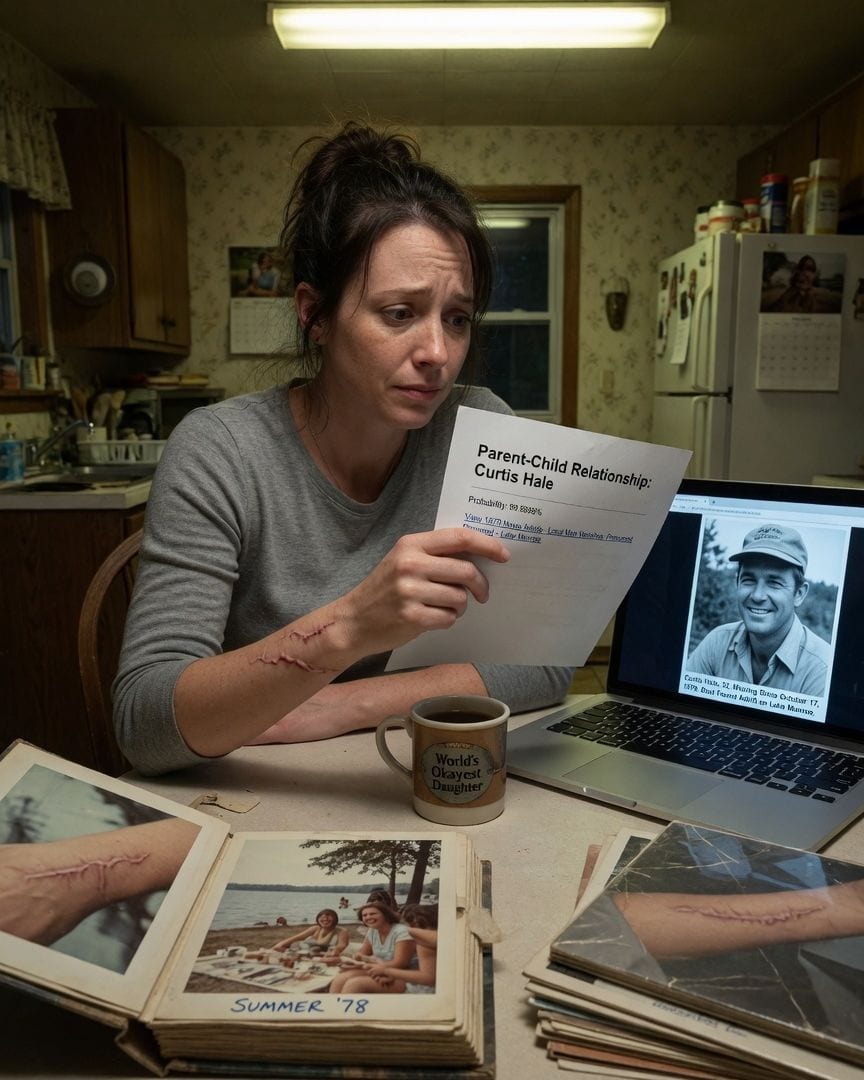
My DNA returned Curtis Hale as my father. He vanished in 1979. I was born twelve years later. The lab confirmed the match twice.
My DNA test results revealed something impossible: my biological father vanished in 1979, twelve years before my birth. My mother dismissed it as nonsense, but her reaction felt forced, leading me to old family photos. There, in a faded 1978 snapshot, I found my own distinctive childhood scar on the wrist of a stranger.
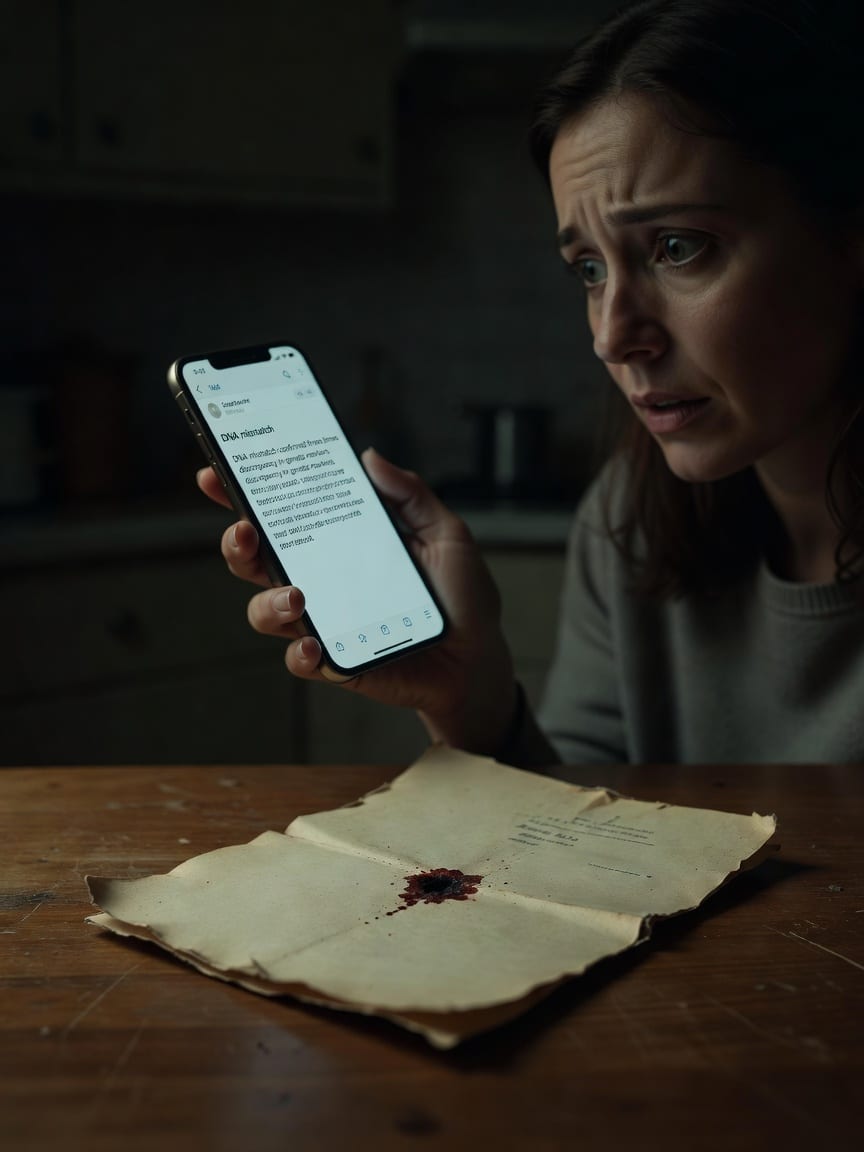
My baby bl**d card doesn't match my own DNA today. The lab ran it three times, confirming the dried spot and my living swab come from two different people.
Sitting at my kitchen table, I opened an email that shattered my quiet afternoon. I'd sent my newborn heel-prick card to a genealogy lab out of harmless curiosity. The results were devastating: the bl**d on that card, preserved for three decades, does not match my DNA.
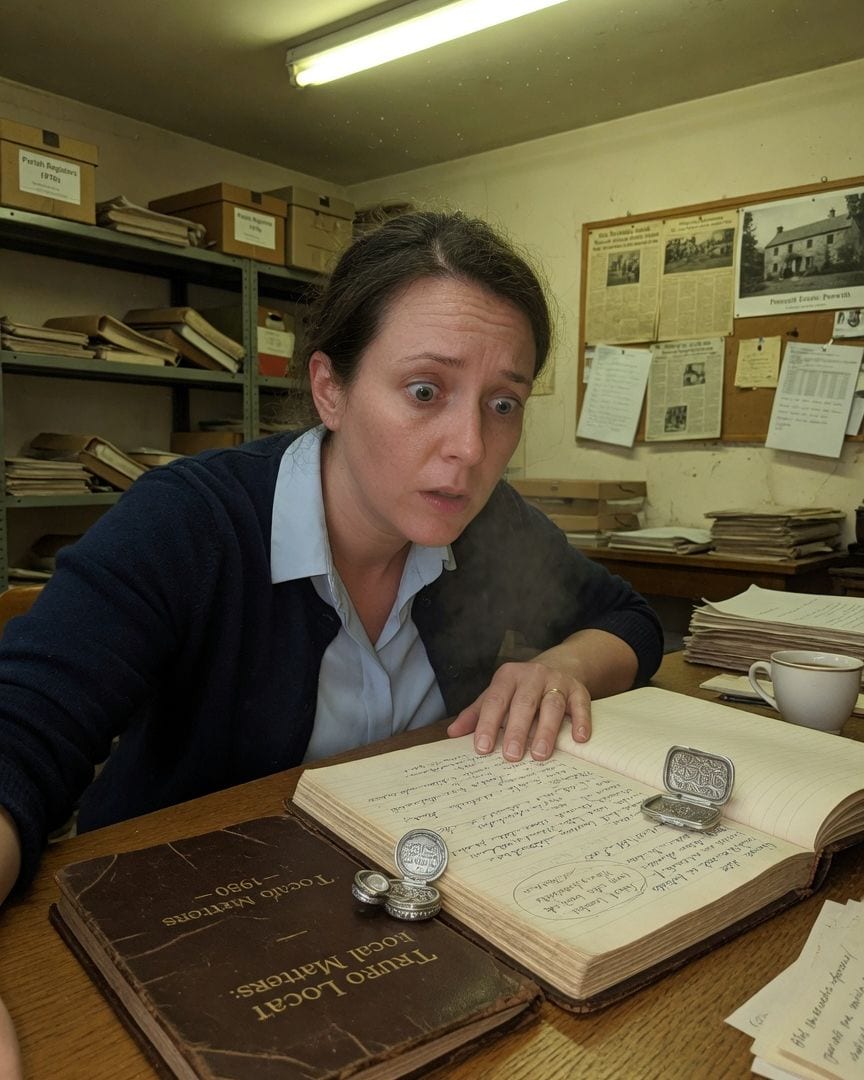
My antique locket held my maiden name, unused in eleven years, engraved 'until the ninth.' The dealer said it was 'for her, when she comes.'
After a tough week, Maxwell gifted me a beautiful antique locket from Truro market. Later, examining it with a jeweler’s loupe, I found my maiden name, 'Sheppard,' etched inside, along with the words 'until the ninth.' I haven't used that name in eleven years, and the impossible precision of the engraving sent a chill through me.