My grandmother now crosses herself right-before-left. She says she’s done it that way since she was a girl, but she only came back five days ago.
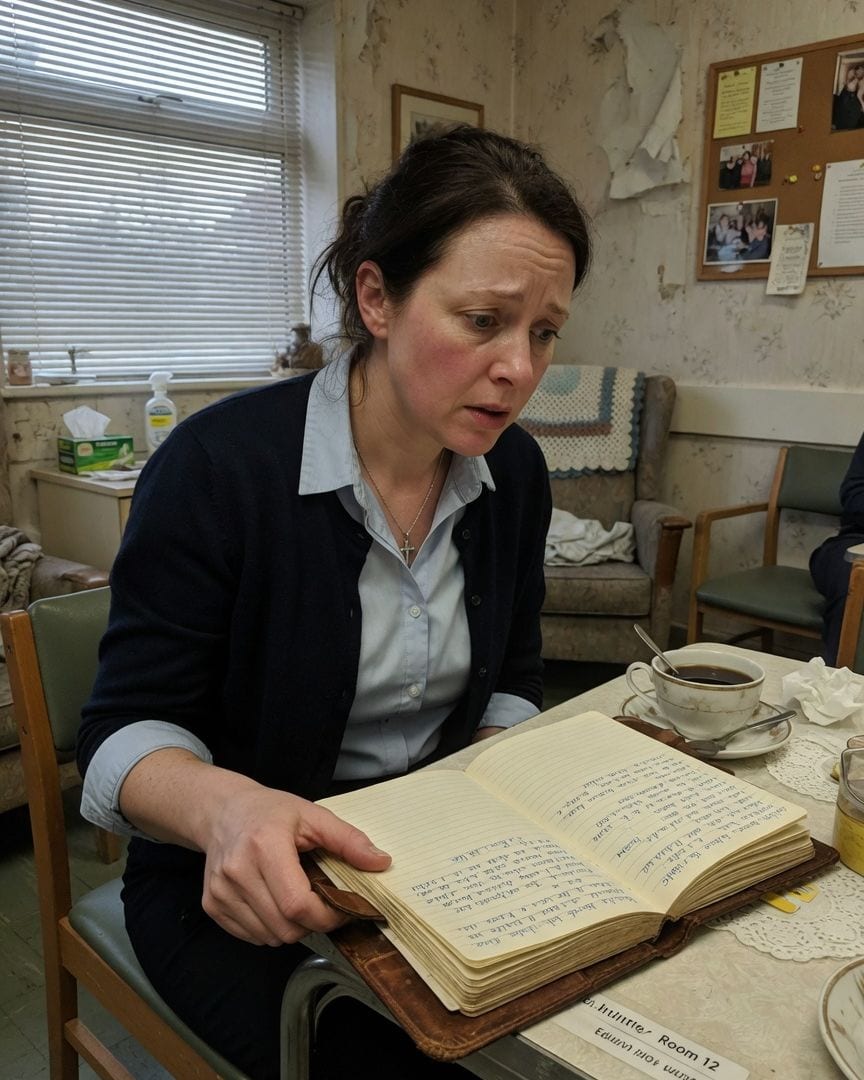
The common room at St. Jude’s Hospice always smells faintly of disinfectant and old tea. Today, though, a different kind of chill settled in, one that had nothing to do with the draft from the main entrance.
Grandmother Edith sat placidly in her armchair, her hands clasped, a faint, serene smile on her lips. Father James Sinclair, our local priest, sat opposite her, his usual robust cheerfulness subdued.
He’d just finished offering a prayer for her ‘safe return,’ a phrasing that still felt like a punch to the gut after her five-day disappearance from the hospice.
Then Edith made the sign of the cross.
Her right hand moved to her forehead, then to her chest. But instead of going to her left shoulder, it went to her right shoulder, then sharply across to her left.
It was a mirror image, a swift, decisive motion that felt utterly foreign coming from her. Father Sinclair, who had been lowering his own hand, paused. A faint furrow appeared between his brows.
He gently, almost imperceptibly, demonstrated the correct way: top, left, right.
Edith watched him, that same untroubled smile on her face. “Oh, Father,” she said, her voice soft, utterly Edith’s, “I’ve always done it this way, since I was a girl. Mama taught me.”
The words hung in the air, a bell tolling in my chest. I felt a cold, sharp dread, like a shard of ice in my stomach. Edith Hartley, my grandmother, had been a devout Catholic her entire life.
She’d crossed herself thousands of times, tens of thousands. It was a muscle-deep habit, as ingrained as breathing. I remembered her doing it at mass, before meals, at moments of fear or grace. Always top-left-right. Always.
The woman across from me, with Edith’s face, Edith’s familiar scar above her left eye, simply didn’t remember. And she said it with such quiet, confident certainty.
Days bled into a week, and the wrongness accumulated. I tried to rationalize it, to tell myself it was the trauma of whatever had happened during those five missing days. Perhaps a mild stroke, a memory lapse.
But the details kept pricking at me.
Edith, who always took her tea with enough milk to make it pale and two heaped spoons of sugar, now preferred it strong and black. She’d sip it slowly, her eyes closed, as if savoring a new pleasure.
And when she stirred it, she used her left hand, her fingers curled around the spoon with an odd, almost deliberate awkwardness. My grandmother had been fiercely right-handed, even in her old age.
She’d signed her name with a flourish, held her knitting needles with practiced grace, even swatted flies with her right.
Watching her now, her left hand stirring, the cup rattling faintly against the saucer, felt like a scene from an alternate life.
One afternoon, seeking some tangible link to the woman I knew, I found myself tidying her old room at home. The hospice was meant to be temporary, but she’d moved most of her personal effects out of the house.
In a cedar chest, tucked beneath some yellowed lace doilies, I found it: a small, leather-bound journal. It was worn smooth with age, the cover softened by decades of handling. Edith’s journal, kept since her youth.
Her elegant, looping handwriting filled page after page with daily thoughts, reflections, the mundane details of her life, her unwavering faith.
There were entries about her morning routine, her garden, even a meticulous account of her precise method for making the sign of the cross, learned from her own grandmother.
And then, there were numerous, unequivocal mentions of her lifelong aversion to strong black tea. This journal was a tangible record of the woman I knew, of her muscle memory, her soul. It was a contrast to the new Edith.
My fingers traced the familiar script as I flipped through the journal. I found an entry from just three days before her disappearance, a casual note about her “disgust” for the overly strong, bitter black tea served at the hospice.
She’d even joked about bringing her own teabags. A few pages back, Edith meticulously described the proper way to make the sign of the cross, a lesson passed down through generations, emphasizing the “left-first” movement, the ancient tradition.
I closed the journal slowly, the cool leather pressing against my palm. I looked towards the closed door of Edith’s new room, where the returned woman slept, breathing softly behind the wood.
The journal, an intimate window into my grandmother’s soul, laid bare an impossible truth. The woman who came back is not the woman who wrote these words, and who lived these habits for 88 years.
She’s a perfect copy, save for the deepest, most ingrained details.
Armed with the journal, I began to watch 'Edith' more deliberately, more clinically. Every interaction became an observation.
Her favorite hymn, 'Amazing Grace,' was sung with slightly different, inverted lyrics in one verse—the 'wretch like me' became 'me like a wretch.' It was subtle, almost unnoticeable, but once I heard it, I couldn't unhear it.
The small, hand-carved wooden rosary I’d given her years ago, the one she used to finger constantly, now felt awkward in her left hand, instead of the comfortable, almost unconscious rhythm of her right.
Her movements were a mirror image, a reversed photographic negative of everything I knew.
My rationalizations crumbled into dust. This wasn’t trauma, or a stroke. This was… deliberate. I started discreetly researching St. Jude’s Hospice online. I burrowed into forgotten local forums, scanned archived community pages.
Fragmented, vague posts surfaced from years ago, whispers of ‘strange occurrences,’ or ‘patients who weren’t quite themselves’ after extended stays. They were always dismissed as grief or senility, but the pattern was there, a faint echo.
I also started noticing the hospice staff. Many were long-term employees, their faces etched with a weariness that went beyond their demanding work.
When I asked about Edith’s five-day disappearance, their eyes would flick away, their responses clipped, sometimes whispered, as if the walls themselves were listening.
A few times, I caught one of them watching me, a look I couldn't quite decipher—was it pity? Recognition? Or something else entirely? The unease tightened around me, a cold, persistent pressure.
My subtle inquiries did not go unnoticed. One afternoon, I was reviewing old hospice records in a dusty, neglected back office. I’d secured temporary access under the guise of compiling a ‘family medical history’ for Edith.
The air was thick with the scent of aged paper and forgotten things.
I’d found a file on a patient named Agnes Miller, who had disappeared for a week in the 1980s, only to return claiming to have always preferred her ‘non-dominant’ hand for writing, a change her family found baffling.
As I scanned the entry, reading about Agnes’s sudden, inexplicable preference for stirring her tea with her left hand, a shadow fell over my shoulder.
Father Sinclair stood there, his face grave, a file tucked under his arm. The fluorescent light hummed above us, casting long, distorted shadows.
“Some things, Daphne,” he said, his voice low, barely a whisper above the whirring of the old overhead fan, “are best left undisturbed. For everyone’s peace.” He didn’t elaborate, just watched me with an unnerving stillness.
Later that evening, back at the house, I pushed. I asked ‘Edith’ directly about the details of her five missing days. We were sitting in the living room, the evening news murmuring softly from the television.
‘Edith’ paused, her teacup halfway to her lips. Her eyes, usually soft and familiar, held a strange, unblinking intensity, like polished stones. She set the cup down with a delicate clink. A slow, knowing curve spread across her lips.
“Why, dear,” she said, her voice even, without a trace of her usual grandmotherly warmth, “you know I don’t remember much. The days simply… blurred. But you’re very persistent, aren’t you?”
The air in the room chilled, even though the heating was on. I realized, with a jolt that went through me like electricity, I wasn’t just investigating anymore. I had been seen.
Shaken, I sought out Father Sinclair in his rectory the next morning. His small office was cluttered with books and religious artifacts, smelling of old paper and woodsmoke from the cold fireplace.
I laid out my evidence: the journal, the reversed habits, the forum whispers, the file I’d glimpsed about Agnes Miller. I spoke quickly, trying to make him understand, to see the pattern that was so terrifyingly clear to me.
Father Sinclair listened, his hands clasped over his knees, his face etched with a weary sadness I hadn't seen before. When I finished, the silence in the room stretched, heavy and profound. He finally looked up, his gaze meeting mine.
“There’s something old, Daphne,” he said, his voice a low rumble, “tied to these grounds. Older than St. Jude’s, older than the town itself. A… presence.”
He spoke not in terms of evil or malevolence, but of something far more ancient and unsettling, a natural, alien force.
He gestured vaguely towards the window, towards the hospice grounds that bordered the rectory, the neglected, overgrown section where the oldest, forgotten burial plots lay.
He explained it as a ‘mimicry,’ an entity that can inhabit the recently deceased, or those… taken. It returns them, he said, subtly altered. Not for cruelty, he implied, but simply because it is.
He spoke of it as a pattern, a cycle that staff have learned to manage, or at least, to ignore. “My predecessor,” he murmured, his voice barely audible, “he understood. He tried to keep track.”
He rose, walked to his fireplace, and with a practiced movement, pushed against a loose brick. It slid back, revealing a small, hidden recess.
From it, he drew out a small, leather-bound ledger, even older and more worn than Edith’s journal. He placed it gently on his desk, its pages yellowed and brittle.
“My predecessor kept this,” he said again, opening it to show a series of coded entries. Each one corresponded to a patient disappearance and subsequent ‘return,’ marked with a cryptic, recurring symbol.
Next to each symbol were terse notes: ‘inverted preferences,’ ‘changed devotions,’ ‘left-hand dominant.’ I saw Agnes Miller’s name, then, horrifically, my grandmother’s entry, dated just after her disappearance. The symbol next to it was identical.
The horror wasn’t a ghost, or a demon. It was a coherent, recurring, almost bureaucratic pattern.
Father Sinclair, his voice trembling now, pointed me towards the hospice’s oldest, unused wing, a section closed off years ago. “There’s more,” he whispered, his eyes wide and haunted. “Things I couldn’t bring myself to record. He kept them there.
The others.”
Fuelled by a desperate, terrifying need for answers, I returned to the hospice late that night.
The old building was a labyrinth of shadows, silent save for the hum of distant machines and the creak of my own shoes on the linoleum.
I navigated the disused corridors, following Father Sinclair’s vague directions, past rooms filled with shrouded furniture and forgotten medical equipment. Finally, I found it: a heavy, unmarked door, blending almost perfectly into the darkened wall.
It creaked open reluctantly, revealing a small, dusty room. Stacks of ancient patient files, yellowed and brittle, lined sagging shelves.
The air was thick with the smell of decay and forgotten time. I searched frantically, my heart hammering against my ribs, until my fingers brushed against a loose floorboard near the back wall. It lifted, revealing a hidden compartment.
Inside, a collection of documents, tied with faded string, were marked with the same cryptic symbol from Father Sinclair’s ledger. One file caught my eye: ‘Case 1974 - Patient Oscar Lawson.’
I pulled it out, my hands shaking, and opened it.
Inside, detailed notes chronicled Oscar’s disappearance and subsequent ‘return,’ listing his ‘reversed habits’ – a sudden aversion to his favorite whiskey, a new preference for dressing his right arm first, instead of his left. A mirror image of Edith’s changes.
And then, at the bottom of the file, tucked beneath the brittle notes, a faded photograph. A man’s face from decades ago, smiling serenely, his eyes holding a familiar, unsettling depth.
The man in the photo was not Edith, but the wrongness was exactly the same, the pattern undeniable. The implication hit me like a physical blow: this wasn't just about my grandmother.
This had happened before, many times, and the entity was not unique to Edith. It had a history. A pattern. And a face.
The file on Oscar Lawson, and the others I found beneath that loose floorboard, revealed the full, terrifying scope. Father Sinclair had referred to it vaguely as ‘the mimic,’ but the documents painted a more chilling picture.
This thing didn't just replace; it learned. Each ‘returned’ individual, while a perfect physical match, carried these ‘reversed habits,’ almost as if the entity was testing the boundaries of its mimicry, exploring the contours of the human experience through inversion.
One file described a woman who, after her ‘return,’ began to speak her native tongue backward, fluent and effortless. Another, a man who swore he'd always preferred cold coffee.
There was even a crude, almost childlike drawing, sketched on a scrap of paper, presumably by a terrified staff member long ago.
It depicted a humanoid figure with subtly distorted features, a ‘person’ that was not quite right, its limbs too long, its smile too wide. It was tied to the land, the forgotten, ancient burial plots beneath the hospice.
An ancient, nameless thing that ‘borrowed’ bodies from the vulnerable, the dying, the ‘taken,’ leaving behind these chilling echoes. The hospice, built over this presence, had become its hunting ground, its endless supply.
The long-term staff, I realized, were not cruel, but silently complicit in its cycle of subtle replacements, too afraid or too weary to fight it, or perhaps, simply used to it.
The terror wasn't supernatural evil, not in the way I understood it. It was a persistent, almost geological fact of the place, an uncanny natural process that simply… was.
Clutching the Oscar Lawson file and Edith’s journal, I tried to leave the hospice. The night air promised freedom, but the common room was eerily lit. And ‘Edith’ was there, sitting in her armchair, facing the main entrance, waiting.
Her eyes met mine, and the serene smile spread wider, more knowing than before.
“You found them,” ‘Edith’ said, her voice Edith’s, yet with an underlying cadence that was subtly, chillingly off. It was too flat, too perfect. “You always were a curious girl.”
‘Edith’ rose, moving with a fluid grace that was not my grandmother’s, not the careful, shuffle-step of an 88-year-old. She approached me, her gaze unblinking, unwavering. “You understand now, don’t you? It’s quite simple, really. A new way of living.”
The air crackled with an unspoken threat, a silent hum of power. I knew, with absolute certainty, that I could not fight this thing, could not explain it to anyone who would ever believe me. I could only run.
With a surge of adrenaline, a primal instinct for survival, I shoved past ‘Edith.’ She made no move to stop me, only watched, her deep, unsettling eyes following my desperate flight.
I bolted through the main doors and into the night, the files and journal clutched tight against my chest, the image of ‘Edith’s’ smiling, knowing face burned into my mind.
I left everything behind: my home, my past, and the woman who looked like my grandmother.
I never returned to my old life. I moved to a different city, started over, carrying the weight of what I knew. The hospice continued its operations, undisturbed, its long-term staff maintaining their quiet vigil.
The files and journal remain hidden, proof no one would ever accept. ‘Edith’ continued to live, a beloved, if slightly eccentric, resident of St. Jude’s, her ‘new’ habits becoming her ‘old’ ones to everyone else.
I’ve built a new life, far away from St. Jude’s. But sometimes, when I’m alone, a quiet fear creeps in. I catch myself, mid-task, about to do something the wrong way, a habit reversed.
Reaching for my right pocket with my left hand. Stirring a spoonful of sugar counter-clockwise. A flicker of doubt, a momentary confusion, and then I correct myself, forcing the old, familiar action.
It’s a small thing, a trick of the mind, I tell myself. Just an echo of the dread.
But sometimes, I still check which hand I use to stir my coffee.
If this one got to you
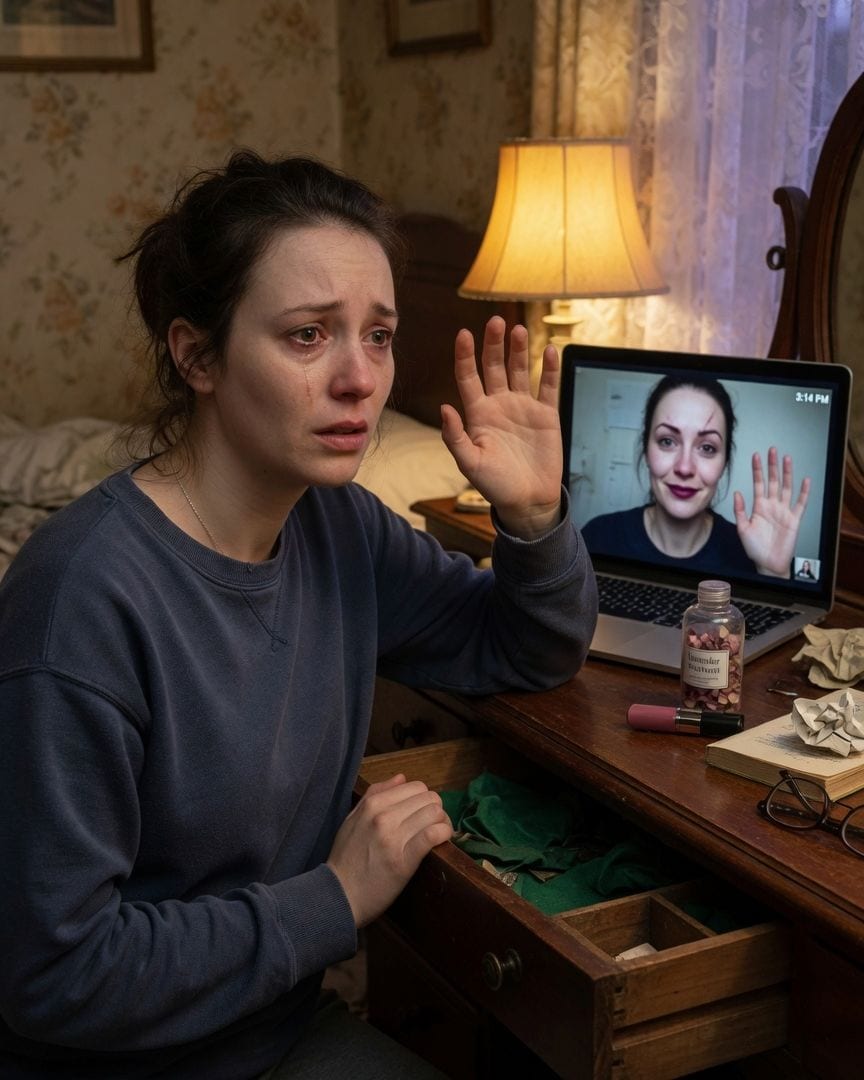
My mother waved with her right hand, both times, on our first call after she came home. She always waved left.
My mother vanished three months ago, then came back. On our first video call, she waved goodbye, but not with her usual left hand. It was her right, a small gesture that twisted something cold in my stomach.
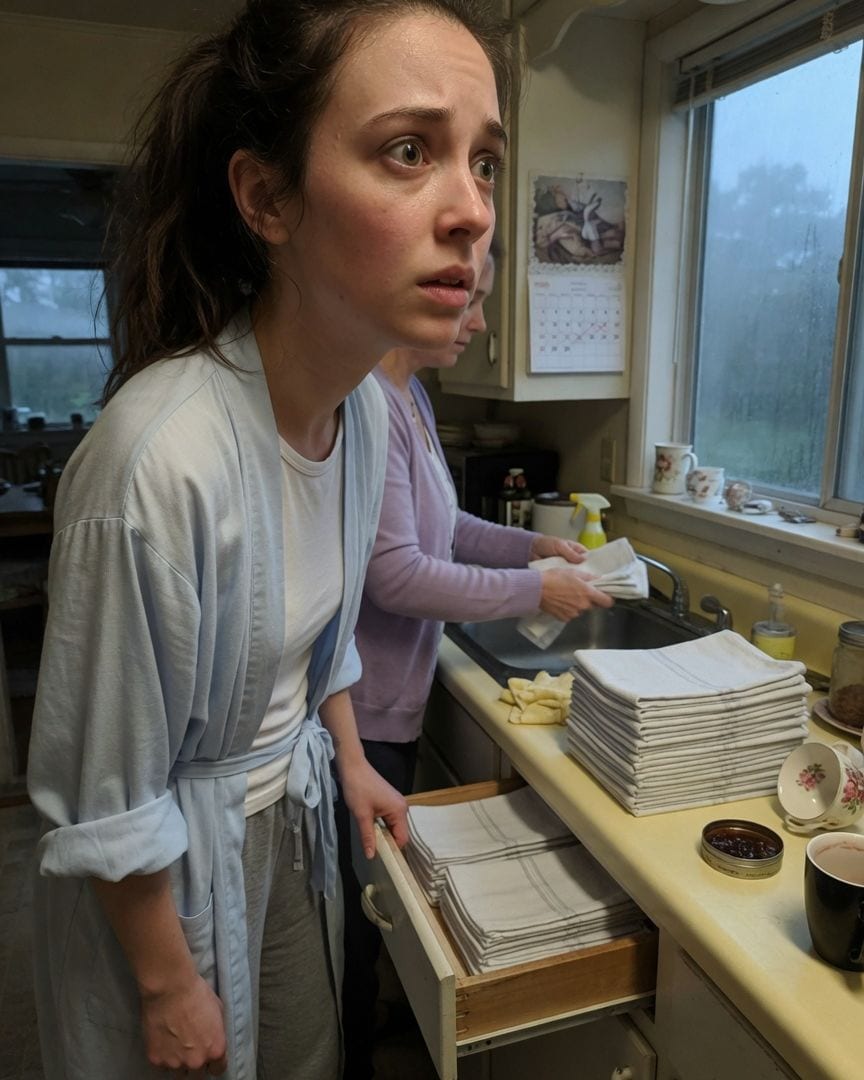
My mother's left wrist has a new scar. She never had one there.
My mother is finally home after her disappearance, and I'm trying to find our old rhythm. But then I watch her fold tea towels, a simple ritual I learned from her. She's doing it completely wrong, seam-out, insisting it's how she's always done it.
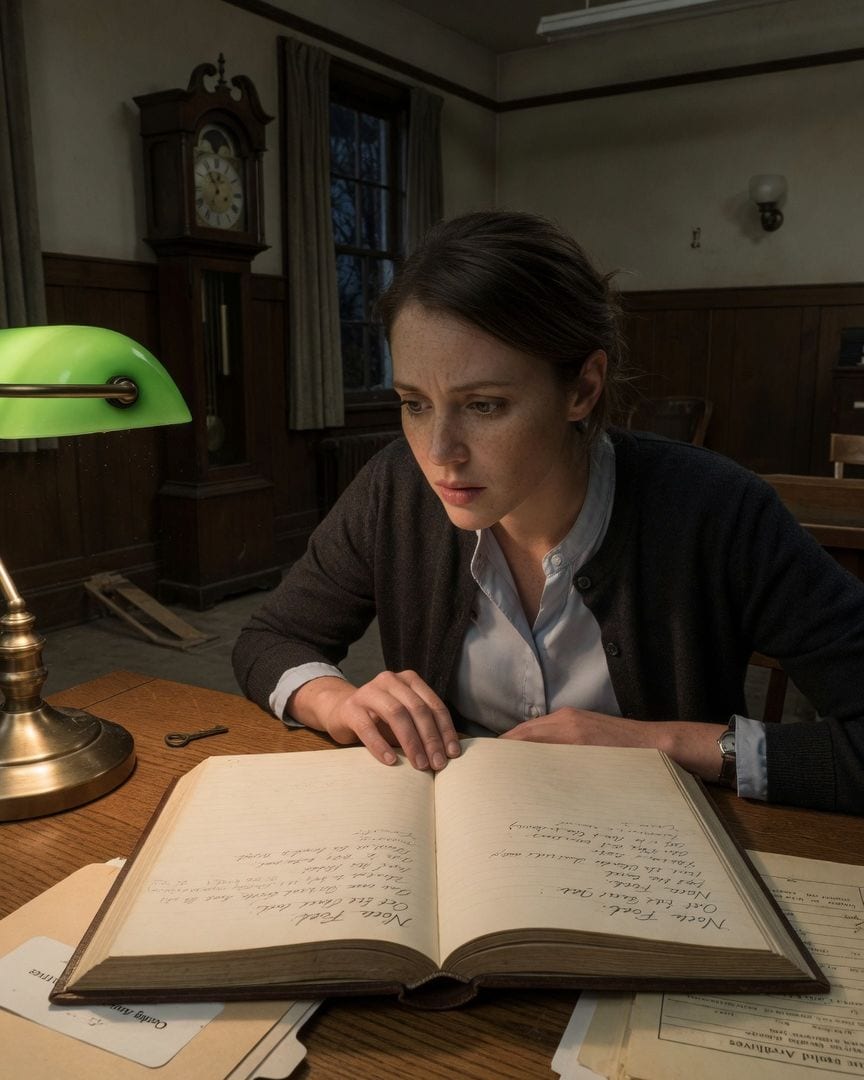
My grandmother’s name reappears in the old book of remembrance — on the same date, same street, every few decades since 1929. A verger’s note reads: 'ask no family.'
As Keeper of the crematorium's Book of Remembrance, my job is quiet and meticulous. But while updating my own grandmother's entry, I found two more Nora Fords listed above hers. Each died on October 3rd, decades apart, with the same address and a strange instruction: 'ask no family.'
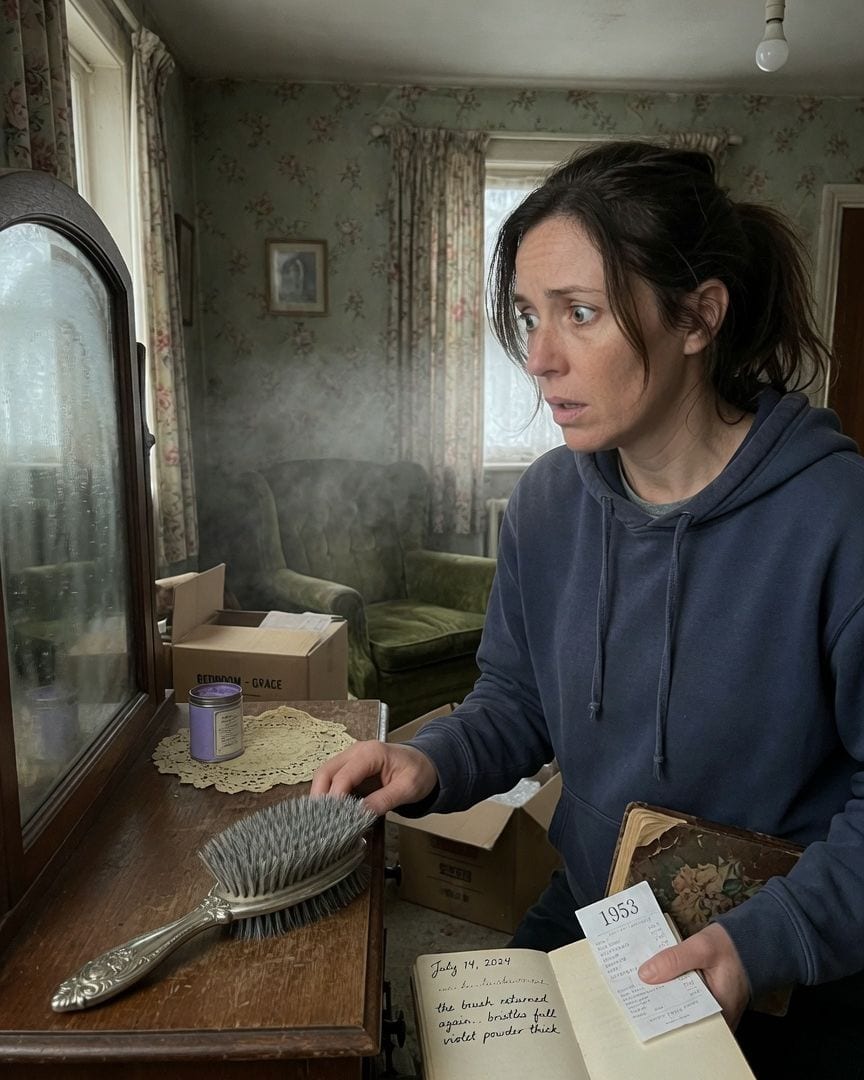
My silver hairbrush sits on the dressing table each morning, full of grey hairs. I live alone.
I inherited my great-aunt's house, finding it full of her old things and strange daily occurrences. A silver hairbrush reappearing full of grey hairs, a misted mirror, and a sweet, cloying scent of violet powder. Then, I found her diary, describing these exact impossible events, but dated for months in the future.
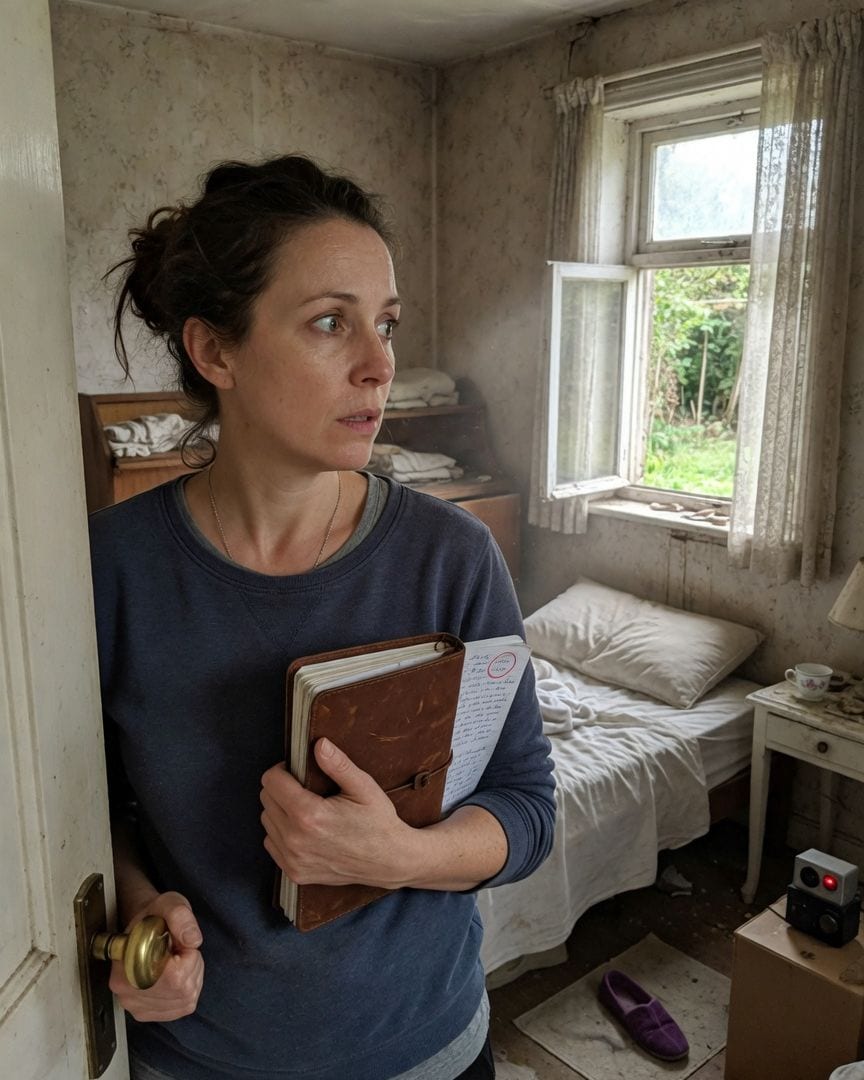
My spare room bed is slept in every few nights, sheets warm and pillow dented. I live alone, painted the window shut, and nobody has a key.
I've lived in Grace's house for six months, adjusting to its quiet rhythms. But the spare room, which I keep shut and empty for storage, has a disturbing routine of its own. Every few mornings, the bed is clearly slept in, the sheet rumpled and warm, and the window I painted shut is open exactly two inches.
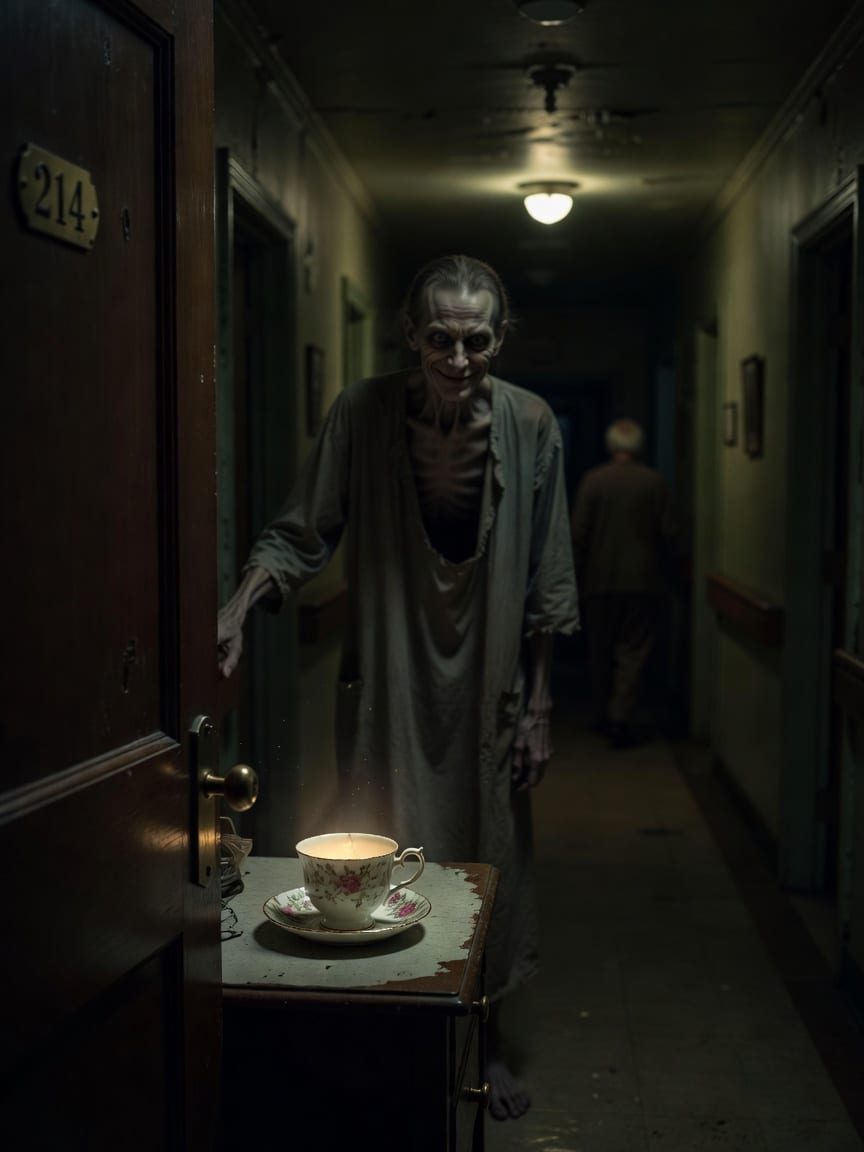
Every 3:30 AM, old Mr. Pryce shuffles past my hospice desk. He smells of lavender, asks for tea. My day nurse says he discharged four months ago. His room has been empty since.
As a night desk attendant, I'm used to the quiet routine of the hospice, especially Mr. Pryce's nightly cold tea request. But then the day nurse told me Mr. Pryce was discharged four months ago, and Room 214 has been empty since. Now, his floral teacup sits on the bedside table, still faintly warm.