My mother's orphanage file has a redacted line above hers. The address listed? My own house, fifty years ago.
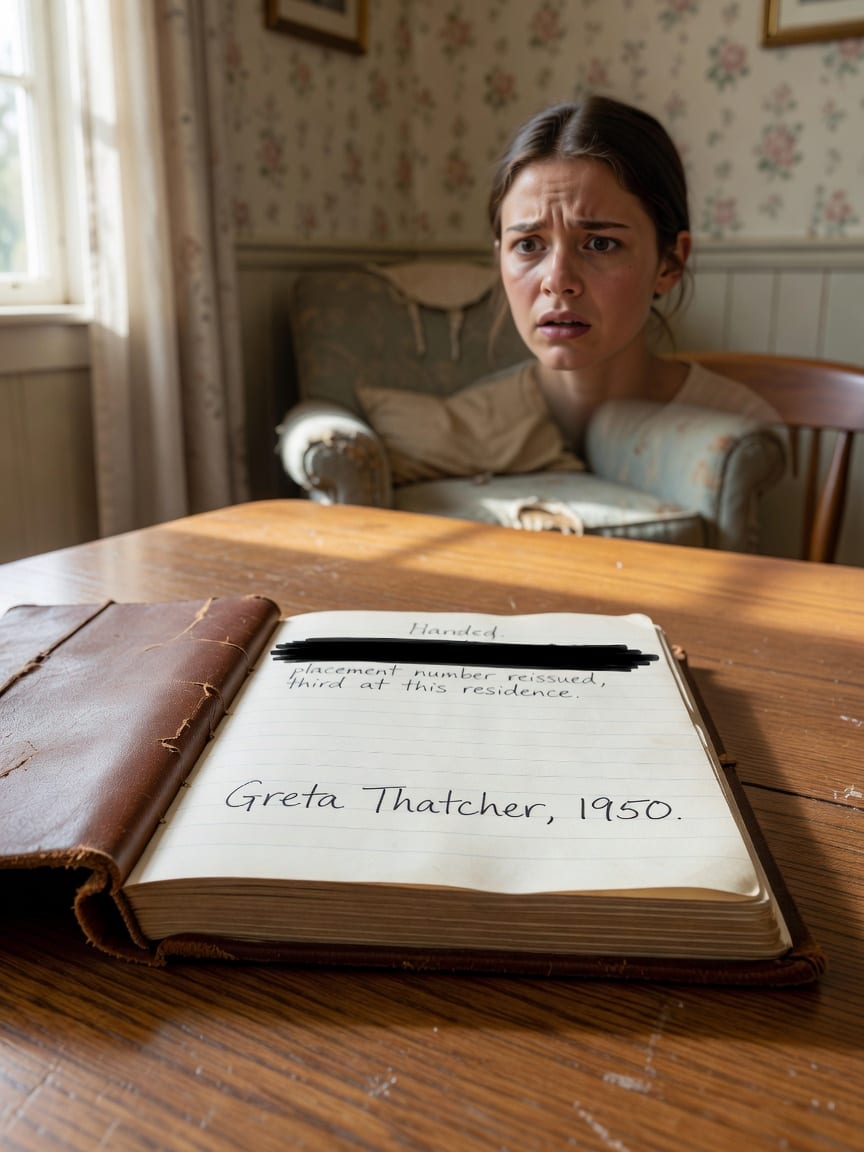
The old box was heavy, smelling of dust and something else, something stale and forgotten. Greta, my mother, had held onto these things for decades, locked away in her attic until St. Augustine's Historical Trust finally released her childhood records.
She was seventy-five now, and the Trust was a different beast than the children's home she remembered. I pulled out a faded, leather-bound admissions book, the kind they used back in the 1950s.
Greta Thatcher, 1950. Her name, intake date, a few notes about a 'temporary placement.' Clear and legible, exactly as she’d described. But just above it, on the same intake date, was another entry.
Its entire line of text was obliterated by a thick, precise black bar, like a censor’s blade. Beside it, in neat cursive, a note: 'placement number reissued, third at this residence.' My heart gave a stupid, sickening lurch.
Not because of the redaction itself—government agencies did that all the time—but because of the address listed right beneath it, below the black bar, linking back to that note. My own address. 47B Kingsley Street. My house.
The one I’d owned for over a decade.
My first thought was a mistake. Had to be. Kingsley Street isn't exactly unique. There are probably dozens across the state. Or maybe a clerical error. A hurried hand, a misplaced entry.
I tried to rationalize it, pushing down the cold tendrils of dread already curling in my stomach. I went to the file cabinet in my study, pulling out the old house deeds. Names, dates, property lines. Mine.
And before that, my grandparents’. Same street, same number. No, it wasn't a common street name in this particular city, and it certainly wasn't a clerical error spanning seventy-odd years. This was unmistakably my house.
I went back to the admissions book, my fingers tracing the outline of the black bar. The note again: 'placement number reissued.'
I searched for the number itself, the one that had supposedly been reissued, but found only blank space where it should have been. Like it had been deliberately wiped from public view in this particular record.
But the phrase gnawed at me. 'Placement number reissued.'
It clanged like a discordant bell in the back of my mind. A crisp, modern letter from the local fostering agency. Pamela Forsythe’s department.
It had arrived last year, unprompted, slid into my mailbox like any other piece of junk mail. I’d almost thrown it out.
It contained a reference number, a long string of digits and letters, and a vague, impersonal note about 'future community outreach.' I’d dismissed it as some generic agency PR, forgotten about it the next day.
But now, that precise, bureaucratic phrasing—'placement number'—it fit too perfectly. My hands started to tremble. I knew exactly where I’d tossed that envelope. Down in the bottom drawer of my desk, buried under old bills.
I rummaged through it, the tremor spreading up my arm, a premonition of something worse.
I pulled out the pristine white envelope, the paper still stiff. My name and address, perfectly printed. I tore it open, unfolding the letter with a growing sense of icy certainty.
My eyes scanned the reference number, that long string of digits and a letter suffix. Then I looked back at the faded 1950 admissions book, at the redacted line, the note, the 'placement number reissued.'
It took a moment to find the matching entry. It wasn't in the main admissions book, that much was clear, but in an old, cross-referenced ledger tucked away at the very bottom of Greta's box, its cover crumbling.
An internal archive, a deeper layer. And there it was, unredacted, in black ink, a string of numbers. I held the faded 1950 admissions book in one hand, tracing the redacted line above my mother's.
My eyes flicked down to the crisp, modern fostering agency letter in my other. The numbers matched perfectly. The old, reissued placement number was the same one the agency gave her last year, unprompted, for her house.
The old admissions book and the new agency letter were a solid weight in my hands as I walked into St. Augustine's Historical Trust.
The place was the original children's home building, converted, but the high ceilings and narrow windows still hummed with a somber echo. I didn't make accusations, not yet.
I just requested to see more records related to 'reissued placement numbers' and specific addresses, keeping my voice carefully neutral. The clerk pointed me toward the back, to Gideon Sullivan.
Gideon Sullivan was every inch the archivist: sixty years old, precise movements, spectacles perched on the end of his nose like an extension of his own calm scrutiny.
His office was a cathedral of dusty shelves, the air thick with the smell of old paper. I laid out my findings, the 1950 admissions book, the internal ledger, and the modern fostering agency letter, explaining the matching numbers.
He listened, impassive, his gaze never leaving my face. When I finished, he didn't speak. He just turned, unlocking a massive oak cabinet behind him. The mechanism clicked with an old, final sound.
He retrieved a series of large, leather-bound ledgers, each one thicker than the last, their pages brittle with age. As he turned them, a slow, meticulous rhythm, I saw it.
Entries for my address—or a coded variant of it—appearing repeatedly. 47B Kingsley Street. 'Legacy Property 47B.' Each entry was paired with a 'reissued placement' note, spanning from the 1950s, through the 70s, well into the late 1990s. Child names.
Intake dates. 'Reissue' dates. So meticulous. The sheer volume of matching data, the consistent phrasing, the unbroken chain of my address in this institution's records… the idea of a 'clerical error' didn't just collapse, it disintegrated into dust.
This wasn't a mistake. This was a pattern, carefully documented by the institution itself.
I spent the next two days at the Trust, my head buried in ledgers, cross-referencing names, dates, addresses. Gideon Sullivan was always there, a quiet, omnipresent fixture.
He’d retrieve a file when I needed it, answer a question in a detached, factual manner, his voice flat, uninflected. His assistance, at first helpful, slowly started to feel like something else. Surveillance.
He never left me alone with the files. If I stood to stretch, he’d suddenly be at a nearby shelf, humming softly, finding a reason to be close.
The sound of his shoe scuffing the floor made the hair on my arms prickle.
Once, I had to step away for a moment, to use the restroom down the hall. I left my notes, my opened ledgers, splayed across the heavy oak table. When I returned, the air in the archive felt heavier, colder.
A new ledger, smaller than the others, bound in plain grey, sat open on my table. I hadn't seen it before. It wasn’t catalogued on any of Gideon’s lists.
The page showed my current address, '47B Kingsley Street,' with a recent date—just last month—and the words 'review pending.' No 'reissue' note this time. No child’s name. Just the chillingly clinical phrase, stark against the yellowed paper.
Gideon was back at his desk, perfectly still, his back to me, seemingly engrossed in some other document. He didn't acknowledge the new ledger, didn't turn, didn't look at me.
The silence in the room stretched taut, like a wire pulled too tight. I realized I wasn’t just investigating some forgotten history. I had been noticed. And perhaps, subtly, warned.
I slid the grey ledger across the table, its muted thud echoing in the quiet. "What is 'review pending' for my address?" I asked, my voice carefully level, trying to match his placid tone.
Gideon looked at the ledger, then at me. His expression was unchanging, a mask of bureaucratic neutrality.
"That's part of our residence management program," he stated, as if discussing routine maintenance for a leaky faucet. He didn't deny the pattern I’d uncovered. He didn't even blink.
Instead, he calmly explained that St. Augustine’s, and later the fostering agency which had absorbed some of its functions, maintained a protocol for 'ensuring continuity of care' for vulnerable children. He called the recurring addresses 'legacy properties.'
He turned to another cabinet, retrieving an ancient, typewritten policy document, its pages curled at the edges. He pointed a long, bony finger at a highlighted line.
'The continuity of a placement often necessitates the reissuance of a suitable child to a designated legacy property, ensuring the property remains viable for its intended purpose.'
He spoke of it as a quiet, necessary service, a way to 'optimize' resources.
And just like that, the earlier wrongness snapped into focus, gaining a terrifying new meaning. The 'third at this residence' from 1950 wasn’t some isolated incident, a strange note in a dead file. It was a data point.
A part of a continuous cycle. The unprompted fostering agency letter I’d received last year wasn’t junk mail; it was 'community outreach' related to my 'legacy property.' The dread in my gut twisted into something colder, sharper.
This institution wasn't just filing records of past wrongness. It was actively managing and perpetuating a system where children were assigned to houses, not families, for an unstated, unsettling 'purpose.'
Gideon's calm, bureaucratic explanation was far more chilling than any monster I could have imagined. His composure, his utter lack of bother, was the horror.
"What is the 'intended purpose' of these legacy properties?" I demanded, my voice cracking despite my efforts to keep it steady. Gideon simply shrugged, a slight, almost imperceptible movement of his shoulders. "That's beyond my purview, Ms. Crane.
My role is to ensure the documentation is consistent and the program runs smoothly."
The archive, which had been a quiet sanctuary of history, suddenly felt like a trap, the air thick and stifling. He reached for another file, a thin, modern folder, unlike the others.
He opened it, revealing a single sheet of paper. An internal memo. The date was recent, just last month. My blood ran cold as I read the heading: 'Legacy Property 47B – Crane Residence – Next Cycle Review.'
Below it, a list of tasks. 'Profile matching initiated,' 'Agency notification,' 'Preparations for transfer.' My breath hitched in my throat. The 'review pending' entry I found earlier. The unprompted agency letter. The decades of 'reissued placements' I'd tracked.
It all snapped into sickening, perfect focus. My house. My home. It wasn't just a historical site. It was an active, designated location in an ongoing cycle. And the 'next cycle' was now.
I looked up, my eyes wide with dawning horror, catching Gideon Sullivan's eye across the dusty archive. His calm, unblinking gaze held mine, a faint, almost imperceptible smile playing on his lips.
I slammed my hand on the table, the sharp crack echoing in the quiet archive like a gunshot. "What the hell does 'Next Cycle Review' mean? What preparations? For whom?" My voice was barely a whisper, ragged with suppressed terror.
Gideon’s faint smile vanished, replaced by his usual placid expression. He looked at me, then at the memo, as if I were a particularly obtuse student failing to grasp a simple concept.
He clarified, in his calm, clinical tone, that a 'Next Cycle Review' was the process for identifying a new child for placement in a legacy property. When the previous 'occupant' 'ages out' or 'departs,' as he put it.
The children, he explained, weren't necessarily related by blood, but they were carefully chosen to fit the 'profile' of the residence, ensuring the 'continuity' of its 'intended purpose.'
He slid another file across the table, this one also with a recent date. Inside was a photo of a young girl. Alice Davenport, age 6, with bright, curious eyes, a faint smile.
Below her picture, a 'placement number' matching my house's code, '47B.'
"Alice is a suitable match for Legacy Property 47B," Gideon stated, as if discussing inventory, a commodity. He spoke of it as a quiet, necessary service, 'ensuring the properties are never empty, never unmanaged.'
The 'third at this residence' from 1950 wasn’t just a historical anomaly anymore. It was merely the third recorded instance in a long, unbroken chain. The pattern was cyclical, generational. My house was next in line for a new 'placement.'
The horror of it solidified in my gut, cold and hard. My house wasn't just a place where strange things had happened; it was an active, designated site in an ongoing, chilling system.
And a child, Alice, was slated for it. She was slated for my house. I shoved the file back at Gideon, my hand shaking with a fury I didn't know I possessed. "This is monstrous!
You can't just assign children to houses like property!"
Gideon remained impassive, his composure unwavering. "The system ensures the continuity, Ms. Crane. It always has. It's a quiet service. For the children. For the properties."
His words were like granite, solid and unmoving, a testament to a belief system I couldn't comprehend.
Realizing I couldn't fight this institution and its unbothered operative alone, not with polite questions and shocked whispers, I pulled out my phone. My hands were shaking, but my resolve was steel.
I scrolled to Pamela Forsythe's contact at the local fostering agency, the woman whose department had sent me that 'community outreach' letter. I hit dial.
"Ms. Forsythe," I stated, my voice firm, cutting through her surprised greeting. "My name is Hannah Crane. I have evidence of a 'residence management program' involving St. Augustine's Historical Trust and your agency. Decades of it.
I have files, internal memos, and a child, Alice Davenport, who is about to be placed in my house as a 'legacy property' occupant." I laid it all out, the redacted lines, the matching numbers, Gideon's chillingly calm admissions.
I exposed Gideon, the 'residence management program,' and the entire paper trail I'd gathered. The undeniable proof of decades of quiet, bureaucratic oversight.
The exposure of the 'residence management program' sent shockwaves through the fostering agency. An immediate internal investigation was launched, swift and brutal. Gideon Sullivan was placed on administrative leave, then quietly, without fanfare, dismissed.
His calm bureaucratic façade crumbled only when he was escorted out by security, his face pale and tight, his eyes still holding that unsettling detachment. The 'Legacy Property' designations were revoked.
The properties flagged for ethical review, their histories brought into the harsh light of public scrutiny. Alice Davenport's placement was immediately halted.
She was swiftly placed with a genuine, vetted foster family, unaware of the quiet horror she had so narrowly escaped. All files related to the program were seized, the paper trail undeniable.
The institution, in its calm, horrifying way, had documented its own wrongness for decades, and now, it was finally read out plainly.
I sold my house. The dread, once a sharp spike, had settled into a hollow ache in my chest. I couldn't live there, knowing its past, knowing the generations of children 'managed' within its walls by an unfeeling system.
I bought a small, modern apartment, far from any historical properties or 'legacy' designations. The quiet of my new home should have been a comfort, a balm.
But it often felt like an absence, a space where something had been, and might still be.
Sometimes, late at night, I find myself tracing patterns on my new, unblemished wall, wondering if somewhere, another house, another child, is quietly awaiting its next cycle.
If this one got to you
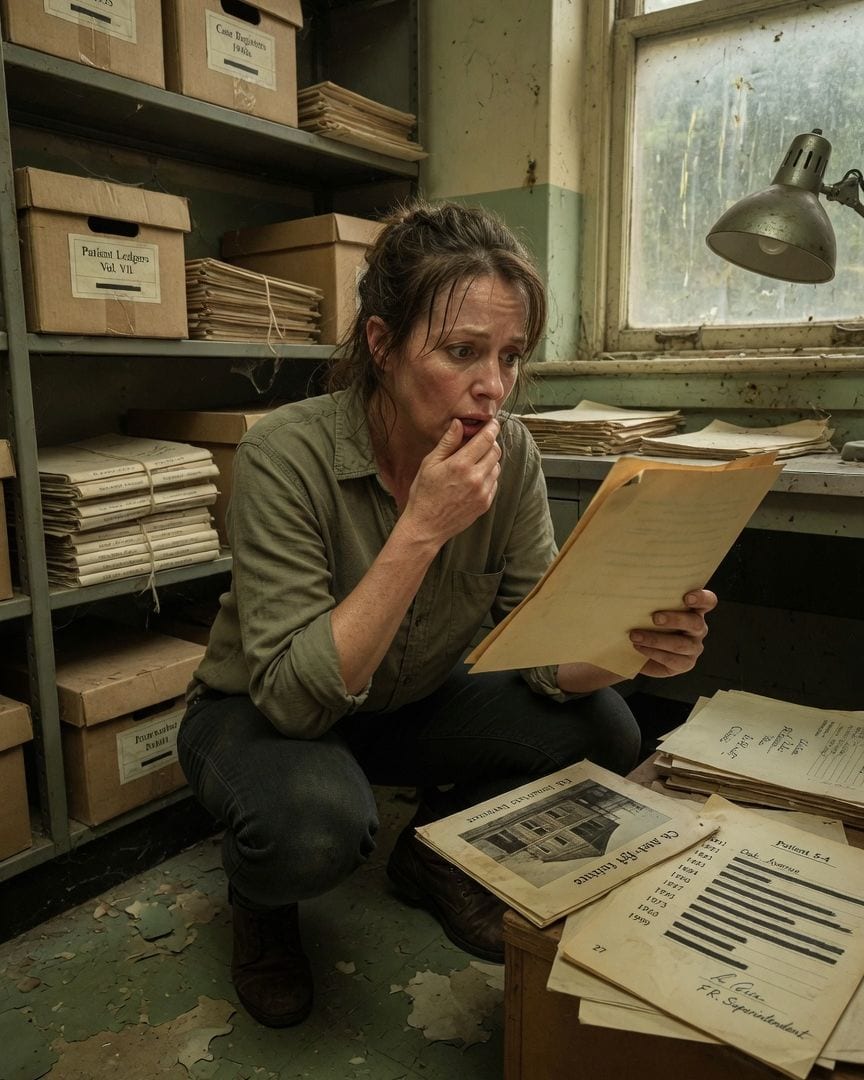
Patient 5-4 keeps checking into my aunt's old sanatorium chalet. The same initials sign them out, 'not traced,' every thirteen years since 1921.
Sifting through my aunt Margaret's estate, I found her old sanatorium file from 1999. Her patient record listed her as 'Patient 5-4,' discharged 'not traced.' But when I accessed the archives, I found 'Patient 5-4' was admitted every thirteen years since 1921, always with identical discharge notes.
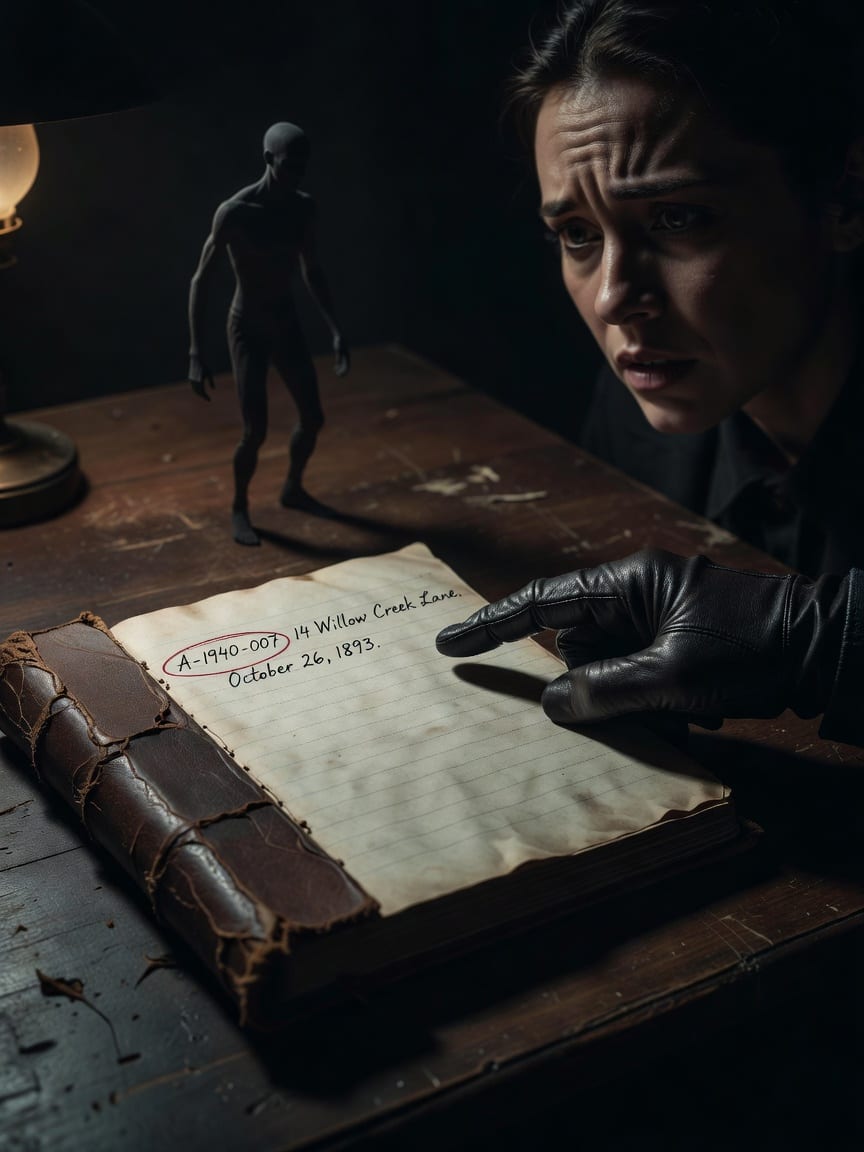
My dead relative's 1940 hospital record had a note: 'same admission number as reissued below.' Below it, decades later, was my home address, and 'hold, do not process new patient.'
As an archivist, I was researching my great-aunt Vera's 1940 psychiatric admission. Her microfiche file, however, contained a handwritten note about a reissued admission number. To my shock, this identical number was later assigned to a blank file listing my own home address, with a chilling directive to 'hold'.
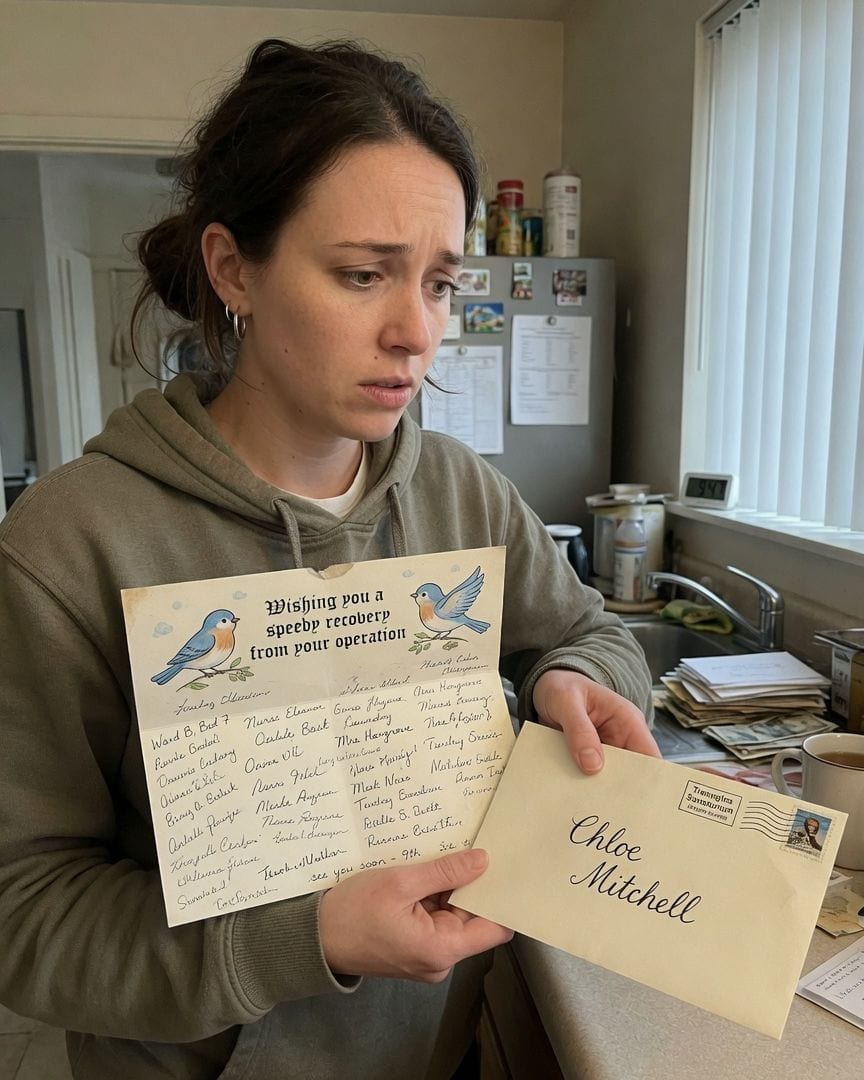
A get-well card wished me a speedy recovery from an operation I never had. It was postmarked from a sanatorium that burned down in 1963.
My quiet Tuesday morning was interrupted by an elegant get-well card, addressed to me. It wished me a speedy recovery from an operation I'd never had. But the postmark read 'Treneglos Sanatorium,' a hospital that vanished in a fire back in 1963.
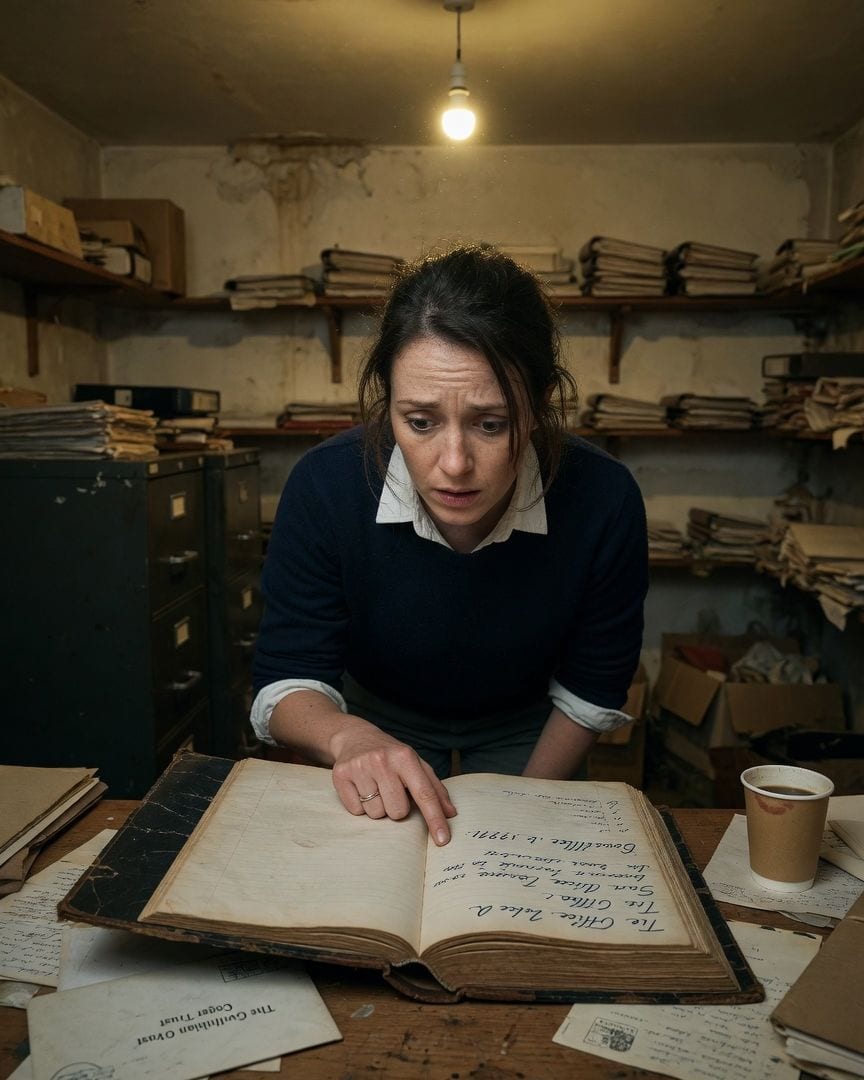
A charity thanked me for a donation 'in loving memory of' my own name. The letter posted from an office lost to the sea decades ago.
A letter arrived, thanking me for a 'generous donation' made in my own loving memory. When I pressed the charity for answers, their historical ledger confirmed the impossible: an entry for Sarah Bishop, born 1991, recorded in 1988. Three years before I was even born.

Metal stents are propping open my heart. The doctor rotated the image, but I've never had a cardiac procedure.
After years of dismissed chest pain, a CT scan revealed an impossible truth: my heart contained two metal stents. Dr. Maddox confirmed there was no record of any cardiac procedure in my entire medical history, and I had no memory of ever having surgery. My own body held a secret, alien architecture I couldn't explain.
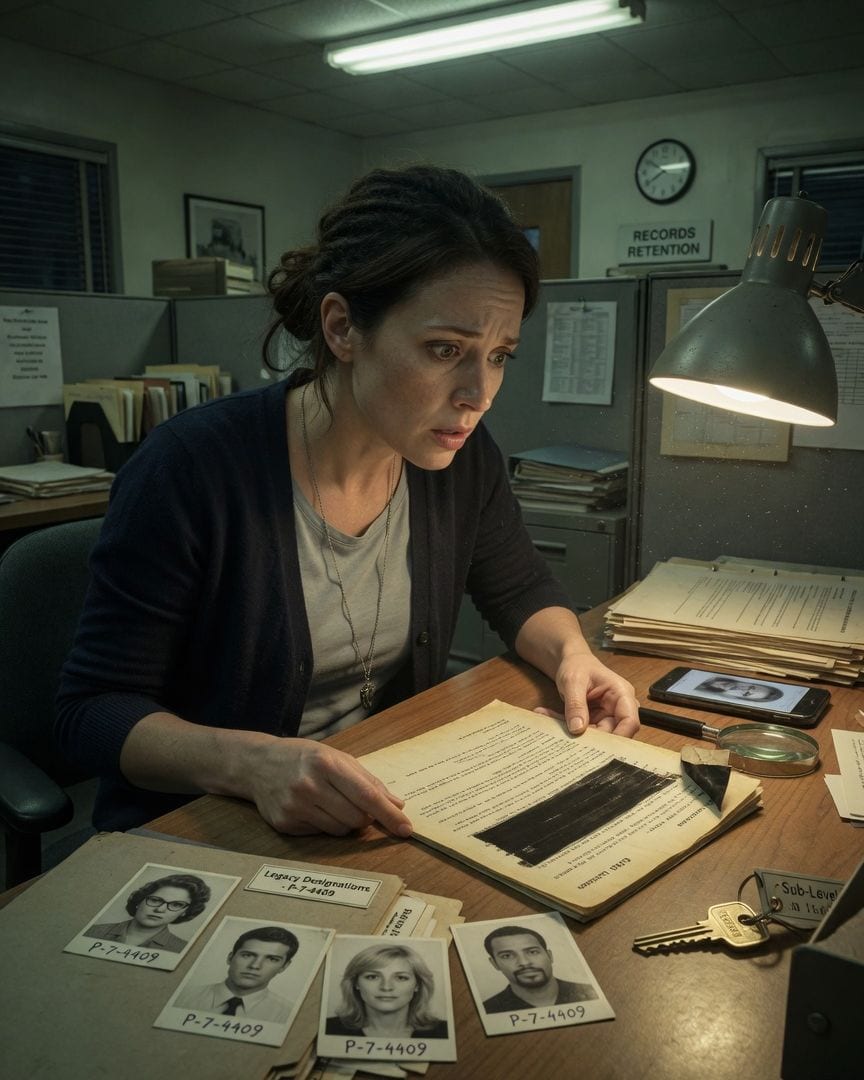
My passport file has four strangers' faces in it. They all share my number, issued since 1966, and none were ever surrendered.
I went to renew my passport, expecting a routine process. Instead, the clerk found four prior applications under my number, each with a different name and face, all 'issued and not surrendered.' Digging deeper, I uncovered a redacted memo that linked one of these mysterious designations to my own childhood street and my mother’s maiden name, years before I was even born.