My birthday health scan found old surgical rods and screws fusing two bones in my neck. I've never had surgery — and the clinic's own doctor called, unsettled, to ask which hospital put them in.
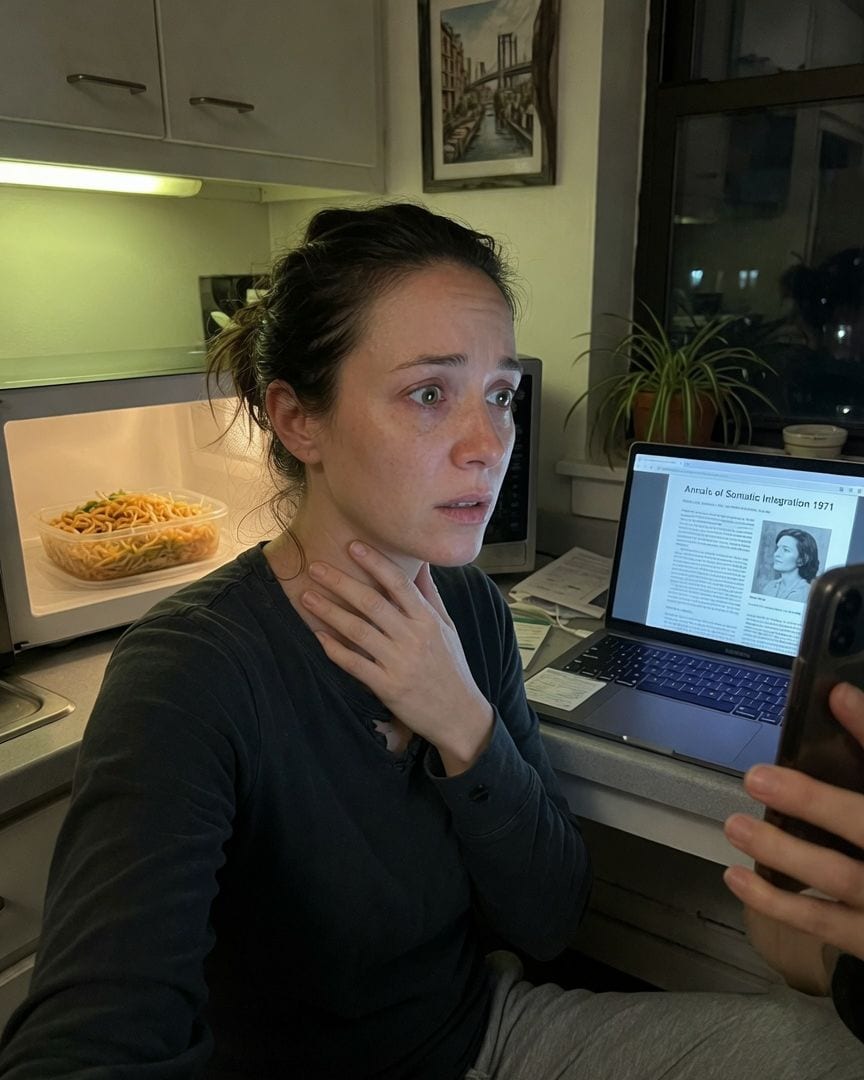
The phone rang just as I was heating up leftover pad thai, the kind of mundane evening moment you never forget. It was Dr. Caldwell, the head of the wellness clinic where I’d had a full-body MRI last month.
My birthday present to myself – a clean bill of health at 34. His voice was unusually grave, almost apologetic.
“Vivian? Arthur Caldwell here. I hope I’m not calling at a bad time.”
“No, Dr. Caldwell, it’s fine. Everything alright with the scan?” I asked, a faint anxiety already starting to prickle.
“Vivian, I need to ask you something very direct. Have you ever had any spinal surgeries?”
I laughed, a short, disbelieving sound. “No, of course not. Not even a minor procedure. Why?”
He paused. The silence on the line felt heavy. “Are you certain? No serious accidents? No old injuries that might have required a significant intervention?”
“Dr. Caldwell, I’ve never even broken a bone. No car accidents, no falls. I’m boringly healthy,” I said, trying to keep my voice light, but a cold knot was forming in my stomach.
“The scan… Vivian, it clearly shows a long-healed surgical repair. Your C5 and C6 vertebrae are fused with what appear to be titanium rods and screws. Perfectly in place, perfectly integrated into the bone. But it’s there. Undeniably there.”
The dread settled in my stomach like cold stone, an unwelcome tenant. My hand, holding the phone, started to tremble slightly. I could feel nothing in my neck, no scar, no stiffness beyond my usual desk-job posture.
Nothing that would suggest a major operation. He called me personally, he admitted, because the finding was so stark, so utterly disconnected from my medical history, so physically impossible given my unhindered movement.
“I need to know, Vivian,” he said, his voice dropping to a near whisper, “which hospital installed them. It’s a matter of record.”
I couldn’t tell him. Because I didn’t know. And it wasn’t mine.
I scheduled an immediate follow-up, pulling together every scrap of medical history I could find: my old dental records, childhood vaccination cards, even a faded high school sports physical. Anything to prove my identity and my consistent, unblemished medical past.
Dr. Caldwell, equally baffled, reviewed everything, his brow furrowed. The air in his office was thick with a shared, unarticulated wrongness.
He pulled up the MRI images again, the screen glowing in the dim room, pointing out the clear, bright lines of the titanium. “See here? And here,” he said, tracing the perfect integration of the bone.
“This isn’t a recent implant. This has been here a long, long time.” He suggested a mix-up, a file error, but her name, birthdate, and unique biometric markers were all correct on the scan.
He referred me to Dr. Helen Rutherford, a renowned spinal surgeon. Her office, high up in a new skyscraper, was all glass and muted grey tones, the city sprawling below.
Dr. Rutherford, a woman with sharp, kind eyes, confirmed the fusion: C5 to C6, expertly done, decades ago. She noted the bone remodeling around the hardware, indicating it had been there for at least fifty years.
“This is textbook work, Ms. Whitmore. The kind of thing you see from the late sixties, early seventies.”
Fifty years. I was 34.
“Is it possible,” I asked, my voice a dry whisper, “for someone to have such a surgery and forget it? Or to have no scar?”
Dr. Rutherford shook her head, a sympathetic frown creasing her face. “Absolutely not. This is extensive. The recovery is long, painful. And the scar tissue? It would be prominent. Undeniable.”
It was an undeniable medical fact, visible and real, yet fundamentally impossible for me.
Back home, the impossibility gnawed at me. Sleep was out of the question. I opened my laptop, typed 'anomalous spinal fusions' into the search bar, trying to find any medical precedent, any explanation for such an impossibility.
Hours bled into one another. My apartment felt cold, even though the heating was on. I stumbled upon a digitized archive of obscure medical journals from the mid-20th century.
Deep within a volume titled 'Annals of Somatic Integration' from 1971, the cover image a faded, scientific diagram, I found it: a short, almost anecdotal case study.
'Patient X - Unexplained Cervical Fusion with No Prior History of Trauma or Intervention.' The description mirrored my own situation with unsettling precision, even mentioning slight, intermittent neck stiffness—a minor ache I'd always dismissed as posture-related.
The accompanying, grainy black-and-white photo showed a woman's profile. Though blurry, I could just make out a faint, horizontal line at the base of the woman's neck, an almost invisible scar.
I zoomed in on the photograph in the old journal, enhancing the contrast until the pixels swam and resolved into something clearer.
The woman, identified only as 'Rose Doyle' in the caption, had a slightly different facial structure than mine, older too, but the faint scar on her neck was unmistakable.
It was exactly where my own phantom fusion lay, a perfect match in location and apparent age. Rose Doyle, who died in 1973 according to the archived case notes, had the same impossible surgery.
My breath caught in my throat, a cold shock. My finger hovered over the screen, tracing the ghostly line on Rose’s neck, a line that should be on my own body, but isn't, and yet, somehow, is.
Obsessed, I used every marketing skill I had to dig deeper into the 'Annals of Somatic Integration' and the case of Rose Doyle. The journal was published by a small, defunct medical society in a neighboring state.
Its records, I discovered, were now housed in a specific, obscure medical archive, almost forgotten. I took a week off work, telling my colleagues it was a "wellness retreat." The lie felt hollow.
The archive was a hushed, cavernous building smelling of old paper, a scent thick with forgotten knowledge. Dust motes danced in the sparse beams of sunlight that cut through the tall, arched windows.
I requested the full file for Rose Doyle. The archivist, a quiet, meticulous man named Bernard Sterling, 79, with sharp, knowing eyes that seemed to take in too much, retrieved a fragile, yellowed folder from a rolling cart.
He placed it before me with a reverence that felt out of place for a dead woman's records.
The file was thin, mostly filled with standard medical notes, but I found a brief mention of Rose Doyle experiencing 'periods of disorientation and a profound sense of unfamiliarity with her own reflection' in the months leading up to her death.
A chill prickled my skin. That sounded like something you’d read in a thriller, not a medical record. More chillingly, tucked into the back, was a small, faded photograph of Rose Doyle’s house, taken shortly after her death.
On the mantelpiece, above a cold, dark fireplace, a small, plain silver locket sat prominently.
My heart gave a lurch. I’d found a similar locket, almost identical, in a forgotten box of my grandmother's things recently. A small, polished pebble of forgotten history.
Years ago, I'd asked her about it, and she'd claimed it "wasn't hers," but she’d kept it nonetheless. It had felt strangely significant then, for no discernible reason.
Now, seeing it in Rose Doyle's home, in this old photograph, it felt like a tether, a cold, thin line connecting me to this dead woman.
Sterling watched me, his gaze unsettlingly calm, as if he anticipated my finding this particular detail, as if he knew exactly what it meant. The archive hummed with the silence of buried secrets.
Leaving the archive that day, a distinct unease clung to me, heavier than the dust on my coat. Sterling’s quiet intensity had lingered, his knowing gaze replaying in my mind.
The next morning, back in my apartment, I found my grandmother’s old locket. I’d left it on my bedside table before leaving for the archive, but now it sat squarely on my kitchen counter, polished bright. I live alone.
My door was locked. A shiver, colder than any morning breeze, ran down my spine. The room itself felt subtly rearranged, the air heavy.
Later, at a coffee shop, trying to distract myself, I received an anonymous email. The subject line was simply 'Annals.' No sender name. My fingers trembled as I opened it.
The body contained a single, attached image: a high-resolution scan of a page from the very same 'Annals of Somatic Integration' journal, but from a different volume, dated 1985.
The page detailed another case of 'anomalous cervical fusion,' this time in a male patient, Arthur Whitfield. Below the case description, a handwritten note in the margin, in an elegant, almost calligraphic script, read: 'The pattern continues. Observe the recurrence.'
The script was identical to a small, barely noticeable notation I’d seen on Rose Doyle’s original file, a single cryptic symbol that had meant nothing until now.
Someone knows what I’m looking for. Someone is watching me. The danger shifted, from a historical puzzle to a present, personal threat.
I clutched my phone, the coffee growing cold on the table, a sudden, terrifying realization dawning that I was not just researching a mystery, but had become a part of it.
The clatter of espresso cups from the counter seemed unnaturally loud.
My heart pounded, a drum against my ribs, as I returned to the archive. I found Bernard Sterling at his desk, meticulously cataloging old texts. The air in the archive felt even heavier today, charged.
I approached him, clutching my phone, and showed him the email, the image, the handwritten note. His calm demeanor didn't waver. His eyes, though, seemed to deepen, to hold an even older, more unsettling knowledge.
“I’ve been expecting you, Vivian,” he said, his voice soft but unwavering, like a worn velvet curtain. “Or, rather, someone like you.”
He leaned back in his creaking wooden chair, his hands resting on the desk, palms up. He explained that he was the head archivist for decades, starting in the early 70s, shortly after the period of Rose Doyle's fusion.
He began noticing a pattern of these 'anomalous fusions' in patient records, always with a similar set of psychological symptoms: disorientation, unfamiliarity, a sense of self-detachment. He referred to them as 'markers.'
He revealed that the 'Annals of Somatic Integration' wasn't just a journal; it was a discreet, coded log, maintained by a small, secretive group of medical researchers. "They weren't merely cataloging anomalies," he explained, "they were documenting their own work."
They believed in a form of 'consciousness transfer,' a way to extend or shift an individual's identity into a new, younger body.
The spinal fusion, he explained, was the primary 'stabilization' procedure, a physical anchor for the new consciousness during the initial, experimental phases.
“Rose Doyle,” he said, the name a casual breath in the quiet, “was one of the earliest successful transfers we documented. The locket was a small, sentimental anchor, a 'talisman' to aid the transition.”
A profound, cold dread seeped into my bones. My grandmother's locket. The one 'that wasn't hers.' It was likely a similar anchor, passed down, a silent heirloom of a terrifying truth.
Sterling explained that the process was imperfect in its early stages, often leaving residual physical markers and sometimes fragments of the previous host's memories or personality. “You see the pattern, don’t you, Vivian?” he asked, his gaze piercing, unwavering.
“The cases, the dates, the symptoms… they weren’t isolated. They were a lineage. A progression.”
He didn’t reveal his own involvement, only his observation, his role as a keeper of records. He told me that he's merely a historian, an observer of a deeper, ongoing experiment.
He gestured with a long, slender finger to a shelf of unmarked, identical binders behind him, each one thicker than Rose Doyle's fragile file. “There are many more,” he said, the words echoing slightly in the vast room.
“Many, many more.” The fluorescent lights overhead seemed to buzz louder, a high-pitched whine.
My mind raced, connecting the cases, the dates, the common 'markers'—my own minor neck stiffness, the locket. I asked Sterling about the anonymous email, the handwritten 'The pattern continues. Observe the recurrence.'
He merely smiled, a thin, knowing curve of his lips that didn't reach his eyes. “Some of us simply observe,” he said, his voice barely audible above the faint hum of the archive’s cooling system, “others… facilitate.”
The word hung in the air, heavy with implication.
He then gestured to one of the unmarked binders, plucking it from the shelf with unnerving ease. “Perhaps you’d like to see the complete progression?” He pulled a binder, its spine blank, not even a title.
Inside, a chronological list of names, each with a date and a brief note. Rose Doyle. Arthur Whitfield. And many others I didn’t recognize, names marching down the page, a parade of lives.
I scanned the pages, a sickening sense of inevitability growing, an ice water chill spreading through my chest. The last entry on the list, at the very bottom of the final page, was my own name: Vivian Whitmore.
Beside it, my birthdate, and a cryptic, familiar notation in the same elegant script: 'Activated. Monitoring commenced.'
My hands shook violently, the binder heavy in my grip, its weight suddenly oppressive. The implications crashed over me, a tidal wave of horrifying clarity. This wasn't just a record of others; it was a record of me.
I was not an anomaly, not an accidental discovery. I was part of the plan, from the very beginning. The words 'Activated.
Monitoring commenced' burned into my vision, the cold, hard proof that my life, my very self, was merely the latest chapter in a story I had only just begun to read.
I pushed the binder away, the soft thud startlingly loud in the silent archive. I stared at Sterling, my voice raw. “My birth date? Activated?”
He leaned back, his expression unreadable, a neutral mask. He revealed that the 'transfer' program sought to perfect the process of extending a 'core consciousness.' The spinal fusion was the first, crude attempt at anchoring it.
Over decades, they refined it, moving beyond invasive surgery to a more subtle method of 'activation' in newly born individuals, often those with a certain genetic predisposition.
He implied that my family line, perhaps even my grandmother’s side, had been unwitting participants, a natural 'breeding ground' for compatible hosts.
The locket, he explained, was not just an anchor, but a trigger, subtly influencing the host body's development, preparing it for the eventual 'activation' of the transferred consciousness.
He admitted he was part of the original research team, not just an archivist, tasked with observing and documenting the long-term success of the transfers.
His calm, detached demeanor was chilling; he spoke of human lives as mere vessels in an ongoing, scientific endeavor.
He detailed how the initial consciousness, an academic obsessed with immortality, had been transferred first into Rose Doyle, then into Arthur Whitfield, and through several other hosts, each time leaving traces, 'markers,' until the process became almost seamless.
“You,” he told me, his eyes holding mine, “are the most complete integration yet. The original consciousness is fully manifest, perfectly merged.”
I felt a profound, sickening sense of self-erasure. My life, my memories, my identity—all of it was a construct, a continuation of something else.
The MRI, the journal, Rose Doyle’s scar, the locket, the cryptic notes in the files—it all snapped into place with horrifying coherence. I was never just Vivian Whitmore; I was always inside it.
I rose slowly, my chair scraping loudly on the linoleum, a harsh sound in the quiet. My voice was steady, though a tremor ran through my hands. “And what about me? The Vivian Whitmore who lived for 34 years?”
Sterling shrugged, a gesture of casual cruelty. “A necessary vessel. The personality develops, provides a stable environment, then integrates. You are still Vivian, but you are also… more.”
He explained that the fusion, the scars, the psychological shifts, were all signs of the previous host’s struggle, their inability to fully integrate.
I, he implied, was the successful culmination, the one who didn't fight it because I never knew there was anything to fight.
He offered me a choice: accept it, continue my life, now with a deeper, richer, inherited knowledge, or resist and risk ‘instability,’ a term he used with chilling neutrality.
He opened another binder, filled with pages of meticulous research notes, diagrams, and formulas. He detailed the precise chemical triggers, the subtle neurological re-patterning, the genetic markers they identified.
He spoke of it as a triumph of science, a form of true immortality. He offered me access to all of it, to understand the 'full scope of her being.'
He saw me not as a victim, but as a success, a testament to his life’s work.
I looked at him, at the binders, at the archive stretching around us, filled with the buried lives of others. The horror wasn't a monster, but a cold, clinical indifference to individual identity.
The choice was not about escape, but about how to live with this monstrous truth. I knew I couldn't fight an entity that was already me.
I simply closed the binder with my name on it, the soft thud echoing in the silent archive. I walked past Sterling, who watched me go, a faint, almost imperceptible smile touching his lips.
He had won, not with force, but with truth.
I returned to my life, but the world was subtly different. My work, my friends, my routines—they all felt like borrowed garments, ill-fitting and slightly uncomfortable.
I continued to live in my apartment, to go to my job, but the underlying current of shared existence hummed beneath every action. It was a faint vibration, always there, just below the surface.
I occasionally checked the 'Annals of Somatic Integration' online, finding no new entries, no new 'markers.' Bernard Sterling remained at the archive, a silent sentinel of forgotten lives.
The locket, which I now understood was a tool, not a keepsake, sat in a drawer, a cold, silver weight, its presence a constant, low thrum of memory.
The ache in my neck, once a minor annoyance I'd dismissed as posture-related, now felt like a permanent reminder, a ghost limb of a past that was never mine, yet now defines me.
Days turned into weeks. I often caught myself in unexpected moments, a strange memory surfacing that didn't belong, a flash of recognition for a place I’d never been, a subtle shift in my preferences.
I found myself drawn to the same classical music Rose Doyle reportedly loved, or feeling a pang of nostalgia for an era I never lived through.
I looked at my reflection, searching for traces of myself, and found them, but also something else, something ancient and patient, lurking just beneath the surface.
I realized the 'integration' was not a single event, but an ongoing process, a slow, quiet merging. The boundaries between Vivian and 'it' are blurring, dissolving, until one day, I know they will be indistinguishable.
The truth didn’t destroy me; it simply… expanded me, absorbed me into a continuous, horrifying lineage.
My own face in the mirror is still mine, but the eyes looking back now hold a quiet, terrible knowledge of a history that stretches back through so many others.
If this one got to you
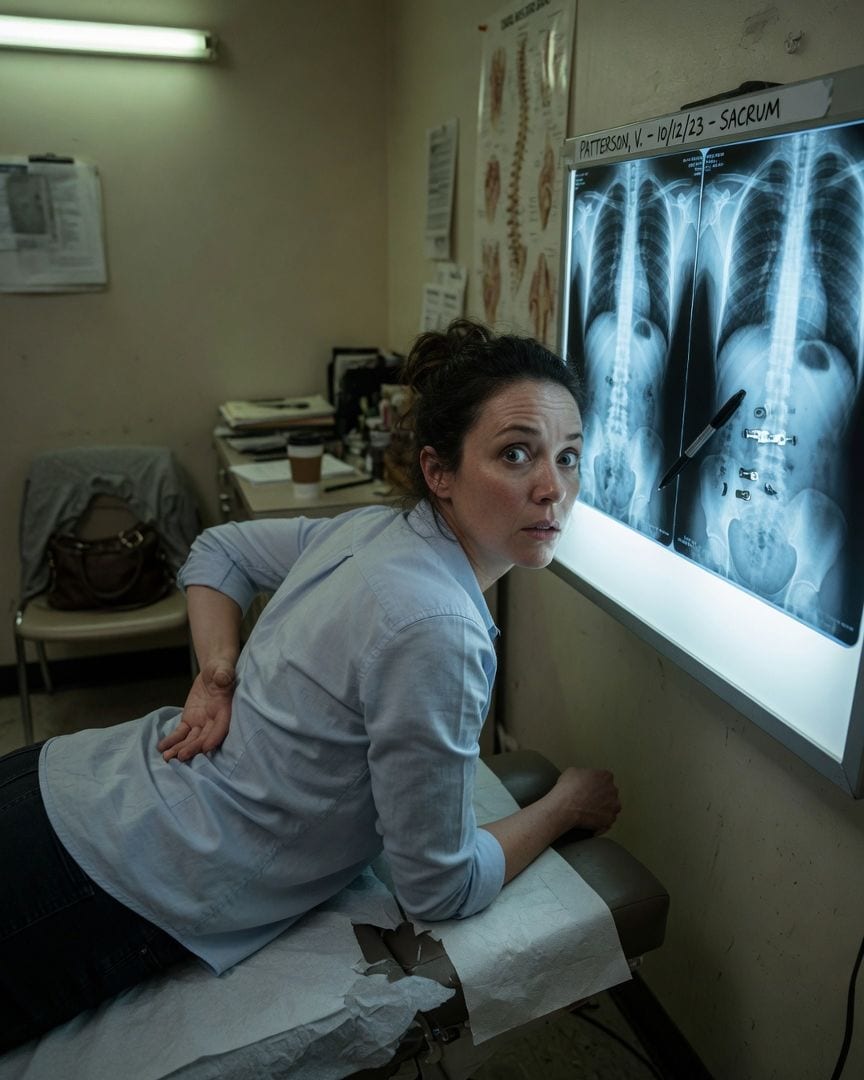
My spinal X-ray shows a healed fusion with metal hardware I never had installed. I've never had back surgery in my life.
I visited my chiropractor for a nagging backache, expecting a routine visit. But my X-ray revealed a perfectly healed fracture in my sacrum with decades-old spinal fusion hardware. The image was undeniably mine, yet I knew with absolute certainty I had never broken my back or had surgery in my life.
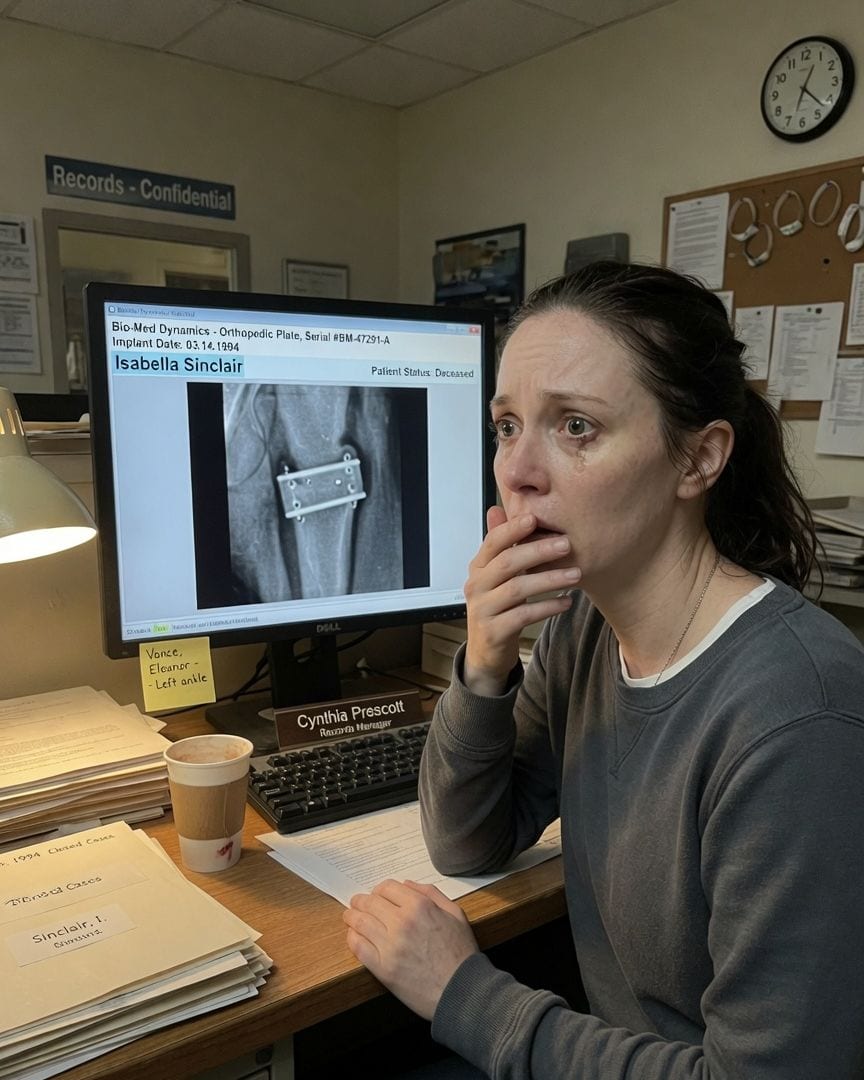
An MRI turned up a surgical plate in my ankle — from a surgery I never had, and there's no scar. Its serial number is registered to a patient marked deceased.
I went for a routine MRI, but the technician found a metal plate embedded deep in my left ankle, an old surgical implant I had no memory of. My doctor confirmed it had been there for decades, fused with the bone. The true shock came when hospital records traced the plate's serial number: the patient associated with my implant was marked deceased.
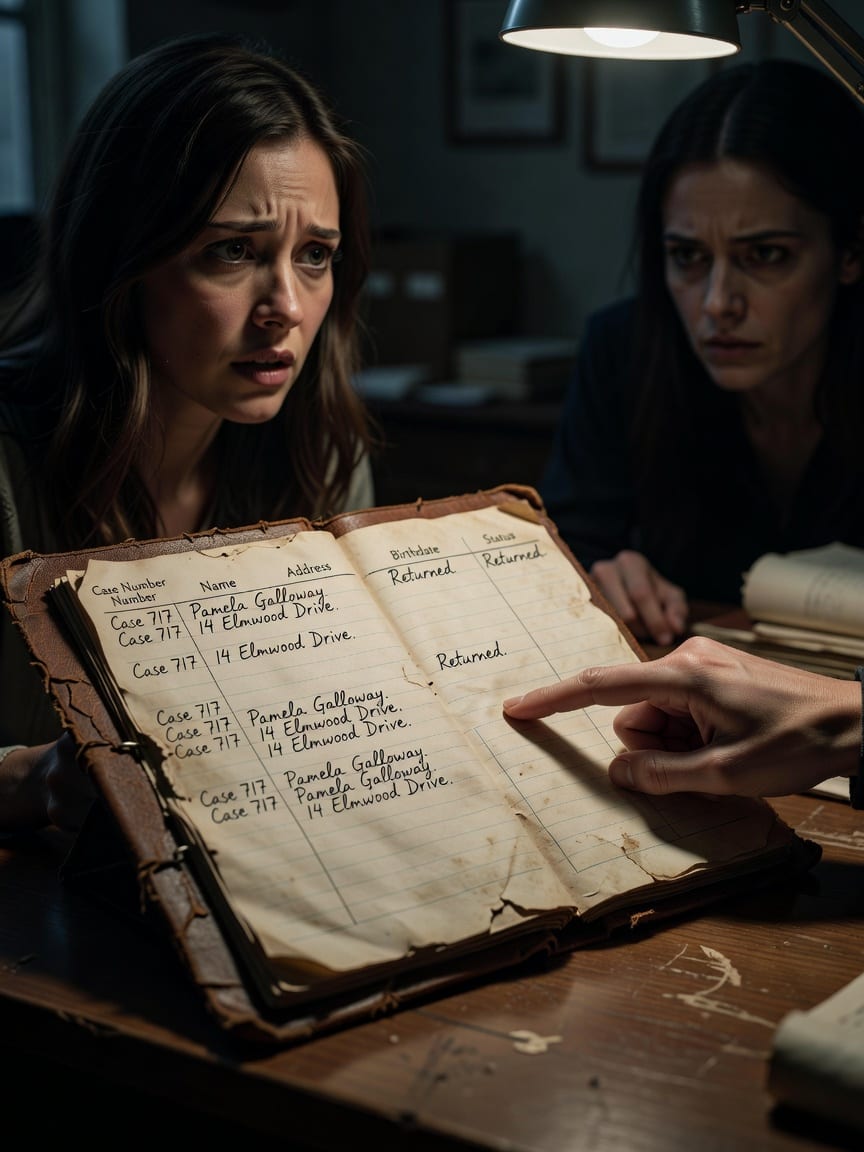
My hospital file has a blacked-out line from 1988. It names my street address, decades before I lived here. Then: 'returned'.
I finally got my medical file, hoping to clear up a ridiculous bill. Inside, I found an entry from 1988: my current home address, scrawled on a partial intake form and marked 'returned.' I was six then, living fifty miles away.
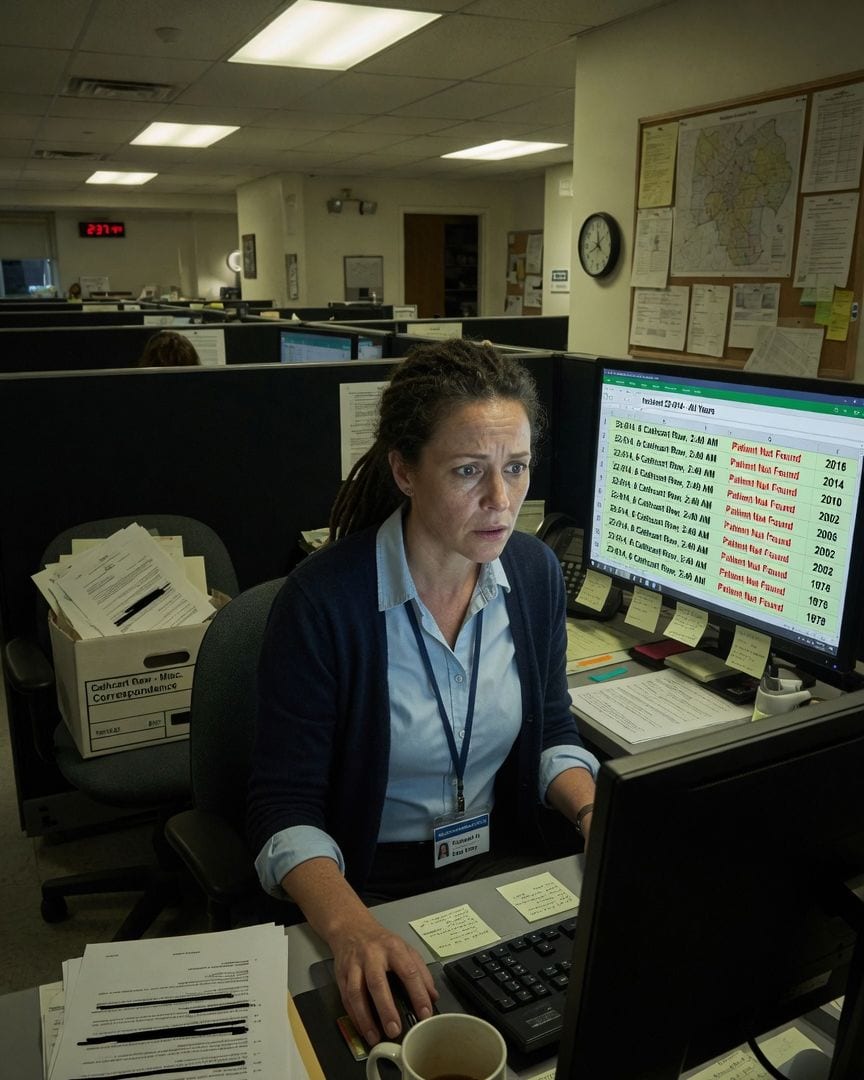
My computer log shows the same 2:40 AM call to Cathcart Row, every four years since 1978, always closed 'patient not found'.
Working data entry for the County Ambulance Trust, I found a routine incident logged as 'Patient Not Found.' But digging deeper, I discovered the exact same phantom call had repeated every four years for over forty years, always at the same address, always at 2:40 AM. Then I found a heavily redacted memo linking it to my own street.
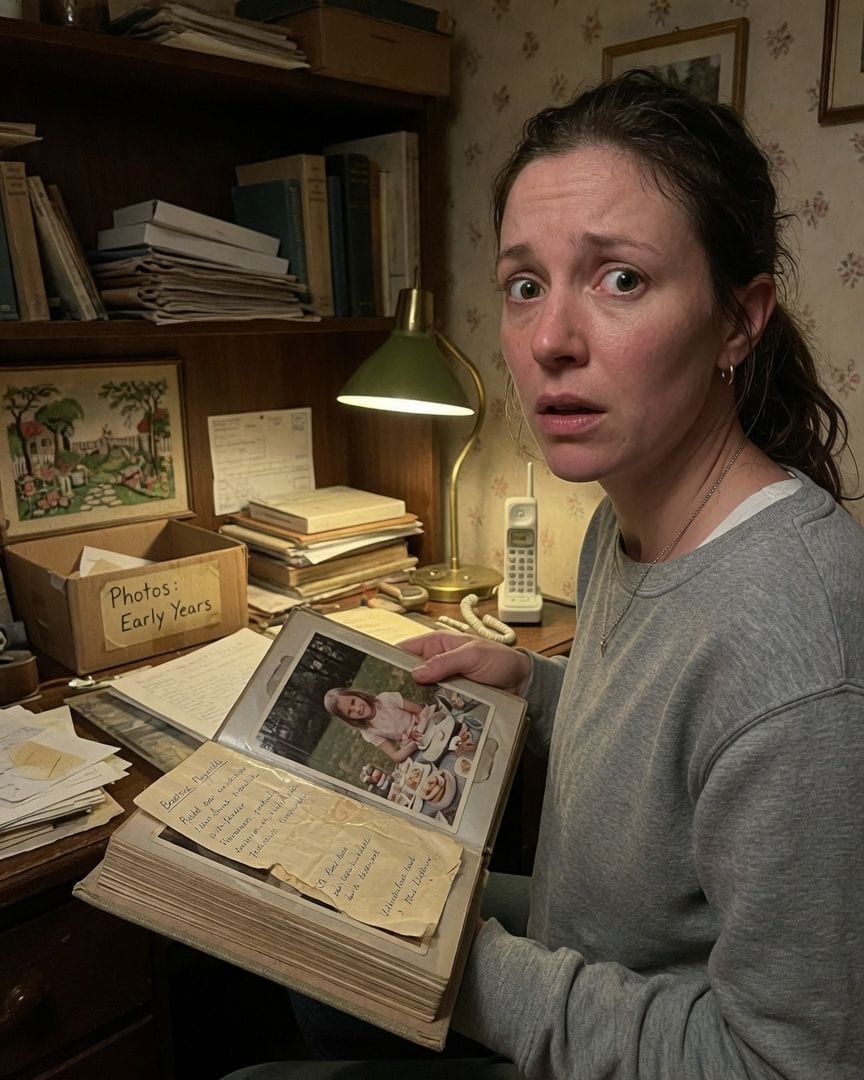
My mother's right ear has been partially deaf since she was eight. Now she's talking on the phone with it.
My mother, Beatrice, is finally back after five days, but my relief is curdling. She's using her right ear for phone calls, the one that's been partially deaf since she was eight. A new doctor confirmed her right ear was perfect, her left ear weaker, completely contradicting my lifelong memory.
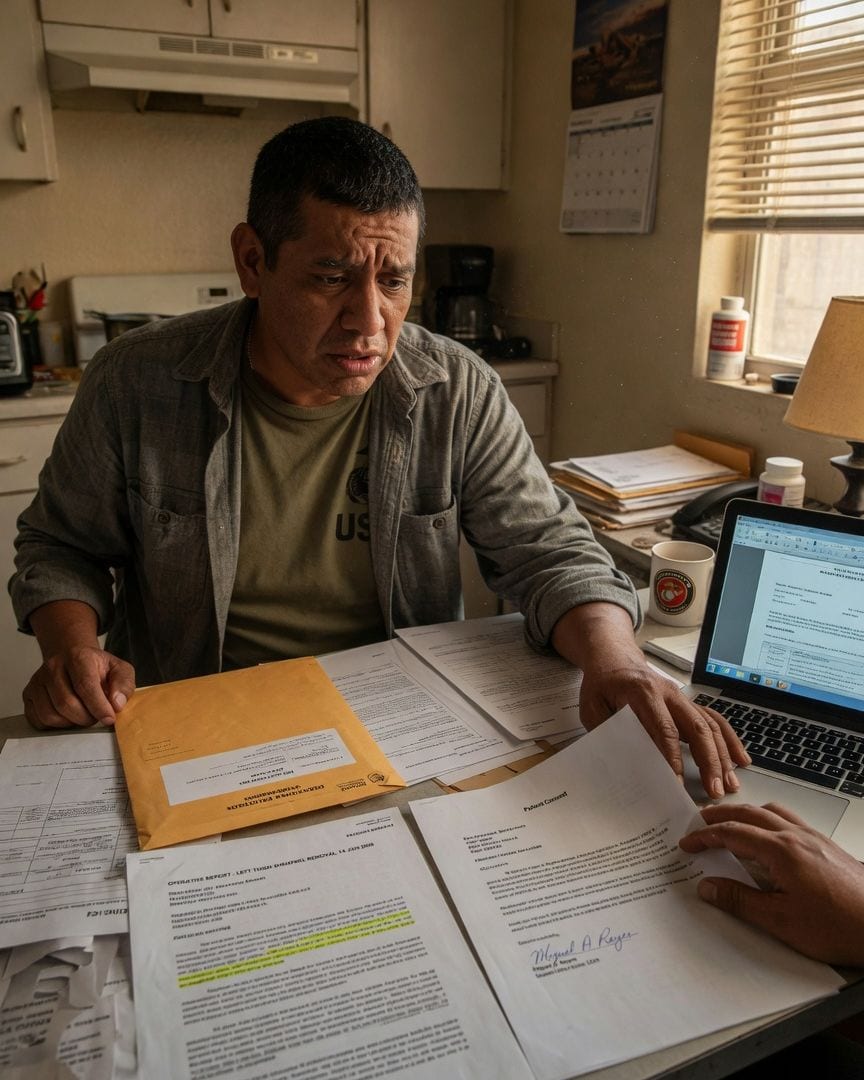
A veteran's VA file listed surgery for shrapnel. The doctor retired decades before he joined the Corps.
Miguel Reyes, a veteran, sat in a sterile VA clinic, his bad knee throbbing, expecting routine. Instead, a physician's assistant presented a digital file detailing shrapnel removed from his thigh in 2008 – an injury Miguel had no memory of, no scar for. His own service record later confirmed the impossible surgery, complete with a consent form bearing his perfect, yet utterly alien, signature. Driven by unease, Miguel researched the listed surgeon, Dr. Charlotte Bennett, only to discover she had retired from military service decades before he even enlisted. The numbers didn't just not add up; they violently contradicted each other, revealing a deliberate, impossible fabrication in his own life story.