Petty Officer Landry's shipmate returned speaking an alien language in his sleep. His birthmark was gone, replaced on the wrong temple.
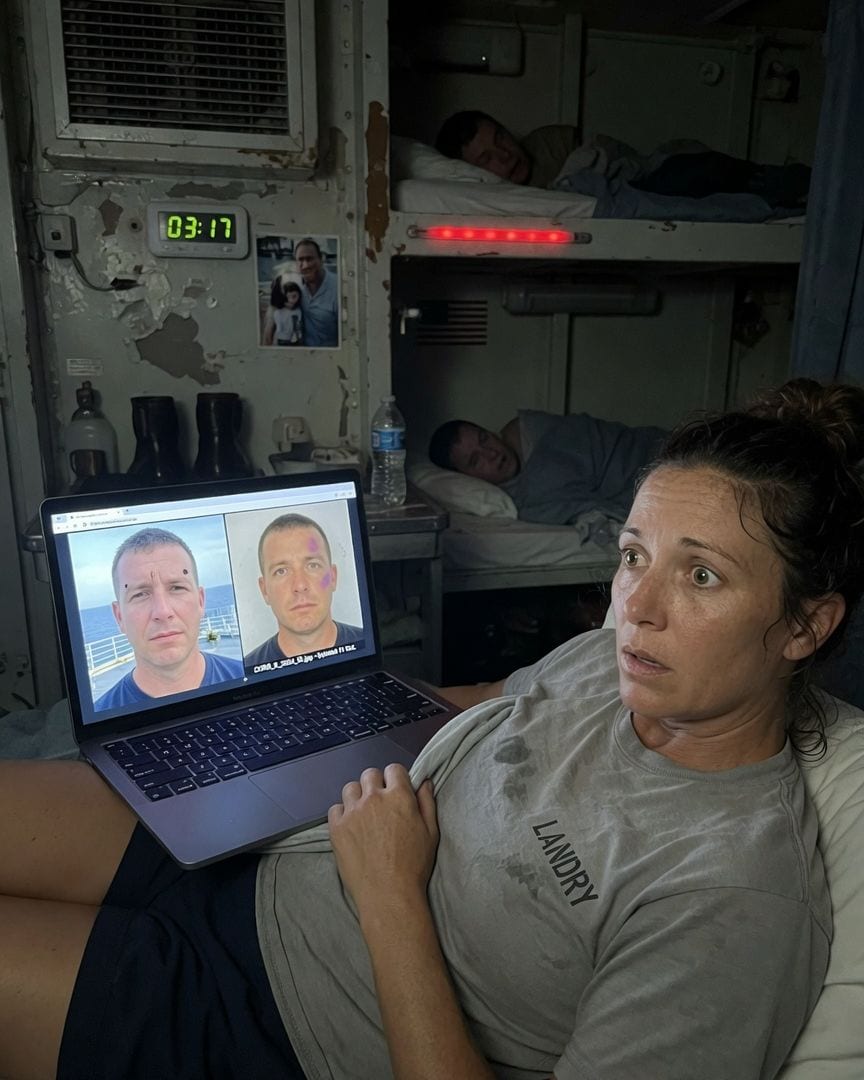
Petty Officer Eileen Landry lay in her rack, the faint hum of the ship's ventilation a constant companion. Beside her, in the shared stateroom, Steve Cobb shifted in his sleep.
For two years, this had been a familiar sound – Cobb’s sleep-talking, a gentle, rhythmic mumble of French. He’d once told her it was his grandmother’s tongue, a comforting echo of childhood lessons he barely remembered consciously.
It was a human sound, a soft current in the ship’s metallic hum.
But Cobb had returned from sick leave in Naples a week ago. A severe, sudden illness had sent him ashore, confining him to a military hospital. Now, the sound was back.
It filled the narrow room, pushing against the bulkheads, and it was utterly wrong. This wasn't French. This wasn’t any language she recognized, or that she knew Cobb had ever learned.
It was a steady, fluent stream of unfamiliar syllables, rhythmic and precise, utterly alien. Landry listened, her breath held tight in her chest. The cadence was too even, too controlled for a dream.
It wasn’t slurred or rambling, but clear, like a forgotten language suddenly remembered, or one meticulously learned. Each word, if they were words, was perfectly articulated.
A language Steve Cobb, as she knew him, had never heard, and certainly hadn't picked up in a sickbed. The ship groaned around her, a familiar sound, but for the first time, it felt like a cage.
Landry tried to rationalize it away. Perhaps Cobb had picked up some obscure dialect while in Italy, though the idea stretched belief. He’d been sick, isolated in a military facility, not touring the countryside.
But his demeanor since rejoining the ship was even stranger. He was chipper, rested, almost unnaturally so for someone who’d been critically ill just a week prior. His recovery had been too perfect, his energy boundless.
The next day, Landry found herself observing Cobb with a scrutiny that made her feel like a trespasser. His movements were fluid, his responses sharp, almost preternaturally quick. He seemed to anticipate questions before they were fully formed.
As he shaved in the shared head, the fluorescent light stark on his face, Landry noticed something that made the small hairs on her arms prickle.
A small, distinctive birthmark that had always been just above his left eyebrow was gone. It had been a tiny, dark fleck, no bigger than a pinhead.
In its place, on his right temple, was a faint, almost transparent discoloration, like a bruise that had healed without ever showing color. She blinked, dismissing it as fatigue, a trick of the flickering light, but the unease gnawed.
That night, she made an excuse to access the ship's internal network, claiming a need to cross-reference her own training records. Instead, she pulled up Cobb's recent medical records. Everything was in order. Too perfectly in order.
A standard diagnosis, an efficient recovery, a clean bill of health. There was nothing to explain the alien language, or the unsettling shift in his face. The file closed with a faint click, leaving only silence and a gnawing dread.
Landry found what she was looking for in a folder of old deployment photos saved on a shared drive, buried deep in an archive of informal crew snapshots.
It was a candid shot of Cobb on deck, laughing, taken a month before Naples, the Mediterranean sun glinting off his face. She zoomed in on his left eyebrow, the birthmark clearly visible.
Then, with a cold hand, she pulled up his official photo ID from the personnel manifest, issued just last week, post-Naples. She toggled between the two images, the screens side by side on her terminal.
The small, distinctive birthmark above his left eyebrow was clearly visible in the older photo. In the new photo, the one that now represented him on every official document, it was gone.
Replaced, on his right temple, by that faint, almost imperceptible discoloration. It was subtle, easily missed in a casual glance, but now, side-by-side, it was undeniable. It wasn't the same face. It wasn't the same Steve Cobb.
Shaken, Landry began a discreet investigation, navigating the labyrinthine Navy systems. Her Petty Officer First Class access opened many doors, but she had to be careful.
She cross-referenced manifests, sick call logs, and transfer orders, looking for any other inconsistencies related to Cobb's return. Her queries were carefully veiled, part of a self-initiated 'routine data auditing' project, a plausible cover story. She found nothing overtly wrong.
On the contrary, the sheer perfection of Cobb's records began to feel like a red flag. Every box was checked, every signature present, every timestamp aligned down to the second.
It was too clean, too flawless for the usual bureaucratic churn of the Navy. It was as if every detail had been polished until it gleamed.
Landry then delved into classified medical logs, requiring a higher clearance she had only through a temporary assignment to administrative support.
Deep within a subfolder for 'unusual recovery cases,' a title that sent a chill down her spine, she found an entry for Steve Cobb. It contained a unique alphanumeric code, 'MED-RPT-734-ALPHA,' followed by a terse, clinical note: 'Standardize per protocol.
No further inquiry.' The language was chillingly devoid of human context, a sterile instruction to erase any anomaly.
She tried to find other instances of 'MED-RPT-734-ALPHA,' but the system seemed to resist her, throwing up a series of error messages and access denials that felt less like technical glitches and more like an active defense.
The ship's network, usually a reliable, if slow, tool, seemed to be fighting her at every turn, the hard drive whirring under the pressure of her blocked attempts.
Landry’s persistent, if subtle, digging did not go unnoticed. Commander Howard Yates, the ship’s Executive Officer, a man known for his cold precision and unwavering gaze, stopped her in a narrow passageway near the bridge.
The air grew suddenly cooler as he approached. 'Petty Officer Landry,' he said, his voice smooth, almost silken, 'I understand you've developed a keen interest in past medical incidents. A commendable, if unusual, initiative.
Ensure it doesn't interfere with your current duties.' His eyes, a pale, almost colorless blue, held no warmth, only a calculating assessment that seemed to strip her bare. He offered no smile, no friendly gesture, just that unnerving stare.
Later that day, Landry noticed unusual activity on her internal network access logs—queries originating from an administrative terminal that definitely didn't belong to her. The timestamps showed they had occurred at odd hours, mirroring her own recent search patterns.
Then, a secure message she had carefully drafted, cautiously outlining her concerns about Cobb, vanished from her outbox before she could even hit send. It left no trace, no 'unsent' folder, nothing.
The system, designed for transparency and accountability, seemed to be actively obscuring her path. The feeling of being watched intensified, a constant pressure at the back of her neck.
She was no longer just investigating; she was being observed, her every move tracked, her every attempt to expose the truth subtly countered. The ship felt smaller, the steel walls closing in.
Landry knew her time was running out. She located Hospital Corpsman Third Class Daniel Hartley in the ship's infirmary, wiping down a gleaming counter. Hartley, young and nervous, flinched visibly when Landry mentioned Petty Officer Cobb.
'Petty Officer Cobb’s case was… unusual,' he stammered, polishing a sterile tray with unnecessary fervor. His eyes darted around the empty room, avoiding hers. 'I was just following orders.' Landry pressed him, her voice calm but firm, holding his gaze.
'Orders to do what, Corpsman? To ignore a missing birthmark? To log a patient as 'chipper and rested' after a near-fatal illness?' Hartley’s composure finally cracked.
He admitted there were 'irregularities,' specific instructions from a superior—he wouldn't name names, but his eyes flickered towards the Executive Officer's office—to 'standardize' Cobb's medical report. He had been told to use the 'MED-RPT-734-ALPHA' code without question.
'They said it was a new administrative protocol for high-priority transfers,' Hartley whispered, his voice barely audible, his eyes darting to the infirmary door as if expecting someone to walk in. 'But he… he just didn’t seem right.
And the language…' He trailed off, his face pale. Landry seized on the code. 'MED-RPT-734-ALPHA. What does it mean, Corpsman?' Hartley shook his head, looking miserable. 'I don’t know. Just that it was for… special cases.
Cases that needed to be… managed.' Landry knew. This wasn't a clerical error, not a mistake in the paperwork. It was a pattern, a deliberate, concealed system.
The unknown language, Cobb's too-perfect recovery, the missing birthmark – it all clicked into a terrifying new context. The system wasn't failing to detect the anomaly; it was facilitating it. The silence of the infirmary pressed in, thick and suffocating.
Armed with Hartley’s admission and the alphanumeric code, Landry knew she had one chance. She couldn't trust any of the regular terminals; they were compromised.
Late that night, under the cloak of the ship's quietest hours, she bypassed standard security protocols to access a highly restricted terminal in the captain’s office. The room was dark, save for the glow of the monitor.
This terminal was reserved for sensitive intelligence, isolated from the general network. Her fingers trembled as she typed the 'MED-RPT-734-ALPHA' code into the search function. The screen flickered, then populated with a list.
It wasn't a list of illnesses or transfers, or even medical procedures. It was a roster, titled 'Personnel requiring mandatory medical reassessment, Cycle 7.'
The names were from various ships, various units, all with similar, cryptic 'unusual recovery' notes appended to them. Her heart hammered against her ribs. And then she saw it.
Her own name, Eileen Landry, highlighted in yellow, directly beneath Commander Howard Yates's. Both were followed by the same unique alphanumeric code. The next port call was three days away. She was on the list. Yates was on the list.
The cold, calculating stare, the deleted message, the smooth voice warning her off—it wasn't just observation. It was preparation. The system had already chosen her, and perhaps, already claimed him.
Landry raced against the clock, the truth detonating in her mind with the force of a depth charge. The 'medical reassessments' were not for recovery; they were for replacement.
The steady, fluent stream of unfamiliar syllables Cobb spoke in his sleep was not human; it was the native communication of the entities, or the sound of them processing the host's memories, integrating every nuance of the person they now inhabited.
Commander Yates, with his unnatural calm and precise manner, was not just complicit; he was already one of them, a perfectly tailored shell. The system, designed for meticulous accountability and order, was not being subverted. It was the perfect cover.
Every replacement was seamlessly re-integrated, their records flawless, their presence verified by the very protocols meant to detect anomalies.
The 'accountability that cannot be' was the horrifying reality of a system so robust, so perfectly self-correcting, that it could absorb and validate its own corruption, making the impossible real and utterly untraceable. The entities weren't violent, not overtly.
They simply replaced, assimilated, and continued the mission. Landry saw the pattern across rotations, across dates, stretching back decades, a silent, creeping infiltration through the very institutions built to protect.
She was an anomaly in a system that abhorred them, a human observing the perfectly mimicked, perfectly accounted-for inhuman.
With only hours until the next port, Landry knew she couldn't escape. There was no one to tell, no authority to appeal to who wasn't already part of it, or compromised by it. Still, she had to try.
She sought out Senior Chief Petty Officer Fiona Bishop, a woman known for her unwavering integrity, a veteran with a reputation for straight-shooting. Landry found Bishop in the armory, supervising inventory.
Bishop listened, her brow furrowed, skepticism warring with the cold, undeniable logic of the presented facts—the photos, the medical codes, the chilling list with Landry’s own name on it.
'This… this is impossible, Landry,' Bishop said, her voice strained, a tremor in it Landry hadn’t heard before. 'The Navy doesn't just… lose people like this. Or replace them.'
Landry pointed to the 'MED-RPT-734-ALPHA' code, explaining Hartley's terrified testimony, the systemic cover-up, the way the network fought back. Bishop's eyes, wide with dawning horror, scanned the list of names again, her gaze lingering on the highlighted names.
Her finger traced the lines. Then, her gaze stopped. Her own name, Fiona Bishop, was there, marked for 'reassessment,' a cycle from years ago she’d spent recovering from a tropical fever ashore in a remote base in the Philippines.
The horror in Bishop's eyes flickered, then vanished, replaced by a chilling, empty calm that made the air in the armory feel suddenly thin and cold.
A faint, almost imperceptible smile touched Bishop’s lips, a smile Landry had never seen before, utterly devoid of warmth. 'Is that so, Petty Officer Landry?' Bishop asked, her voice smooth and even, a perfect echo of Commander Yates.
Landry felt a cold dread settle deep in her bones, a weight she knew she would carry forever, or not at all. Bishop was already gone. The truth was understood, and it could not be undone.
Landry was trapped, alone with a knowledge that would consume her.
Petty Officer Eileen Landry was listed as 'transferred to shore duty' during the ship's next port call. Her personal effects were packed and stored in a locked locker in a supply depot, awaiting pickup that never came.
No questions were asked. Her name was simply removed from the manifest, the slot immediately filled by a new recruit. The administrative paperwork was, as always, meticulously completed, every detail accounted for. The ship's roster, once again, perfectly balanced.
The official report of Petty Officer Eileen Landry's transfer was filed without incident.
A month later, Petty Officer Steve Cobb was seen on deck, whistling a tune Landry had never heard him play, a strange, lilting melody.
Commander Howard Yates nodded to him from the bridge, a faint, almost imperceptible smile playing on his lips. 'Is that so?' Yates said, his voice smooth and even, when asked by a junior officer about Landry's transfer.
The ship sailed on, its roster perfectly balanced.
If this one got to you
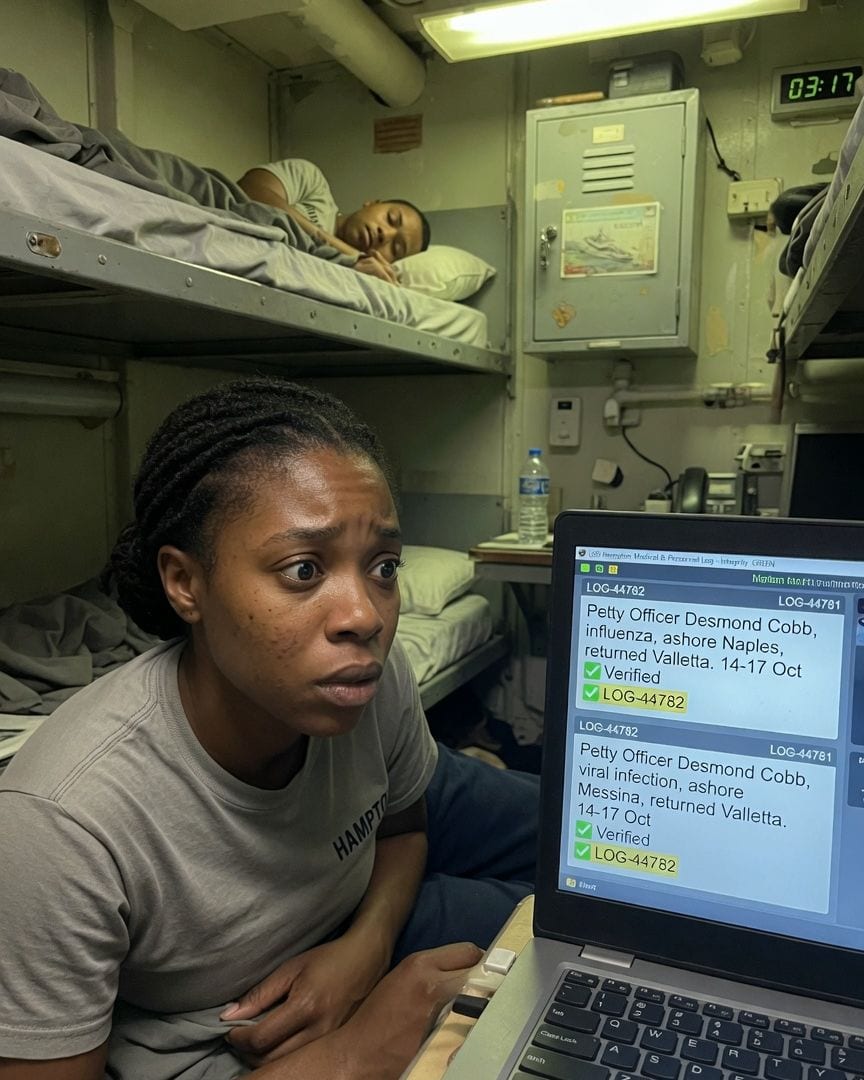
Petty Officer Landry found two medical logs for her bunkmate: both showed him returning from two cities hundreds of miles apart on the same three days.
Petty Officer Evelyn Landry lay awake in her stateroom, the USS Hampton's engines a familiar lullaby, listening to her bunkmate, Desmond Cobb. He usually mumbled French in his sleep, but tonight his voice filled the small compartment with guttural, ancient words she'd never heard, spoken with impossible fluency. Evelyn tried to dismiss it as flu-induced delusion, but Cobb's later strange phrases and misremembered past gnawed at her. As an engineer, she sought precision, checking his medical log for answers. There, she found two identical entries for his recent flu, both dated the same three days, yet showing him returning to ship from two different cities hundreds of miles apart.
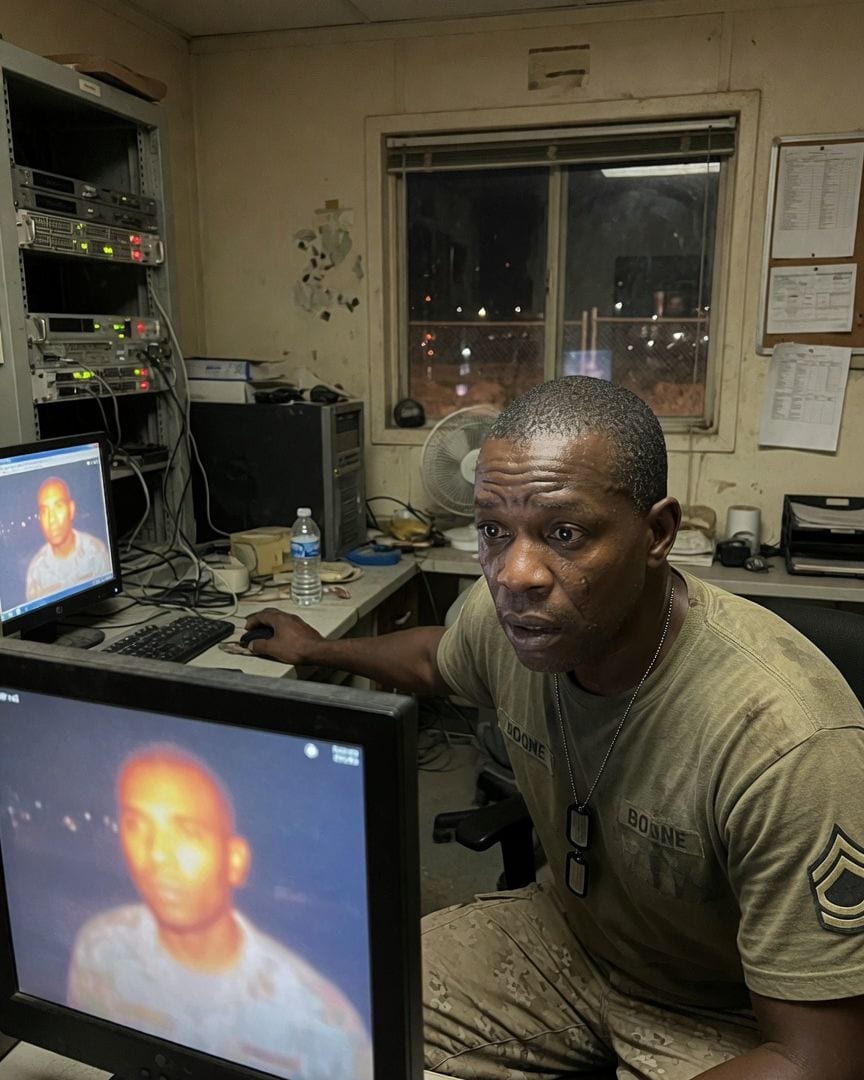
Sergeant Boone, two weeks from home, sees Corporal Whitfield in two places at once. One has a scar on his face. The other doesn't.
Sergeant Wayne Boone counted his last two weeks until deployment ended, sitting in his stifling security office at the Horn of Africa site. A minor scheduling error led him to chow-hall footage, where Corporal Richard Whitfield had an identical breakfast daily at 0530, complete with a distinct scar above his left eyebrow. Boone knew Whitfield was simultaneously radioing in status from Perimeter Tower 3 at that exact time, confirmed by logs and witnesses. The sergeant then checked the tower's thermal feed, hoping to dismiss the ghost, but the figure on the tower had no scar. How could two Corporal Whitfields exist, one scarred and one unblemished, both confirmed in different places at the same moment?
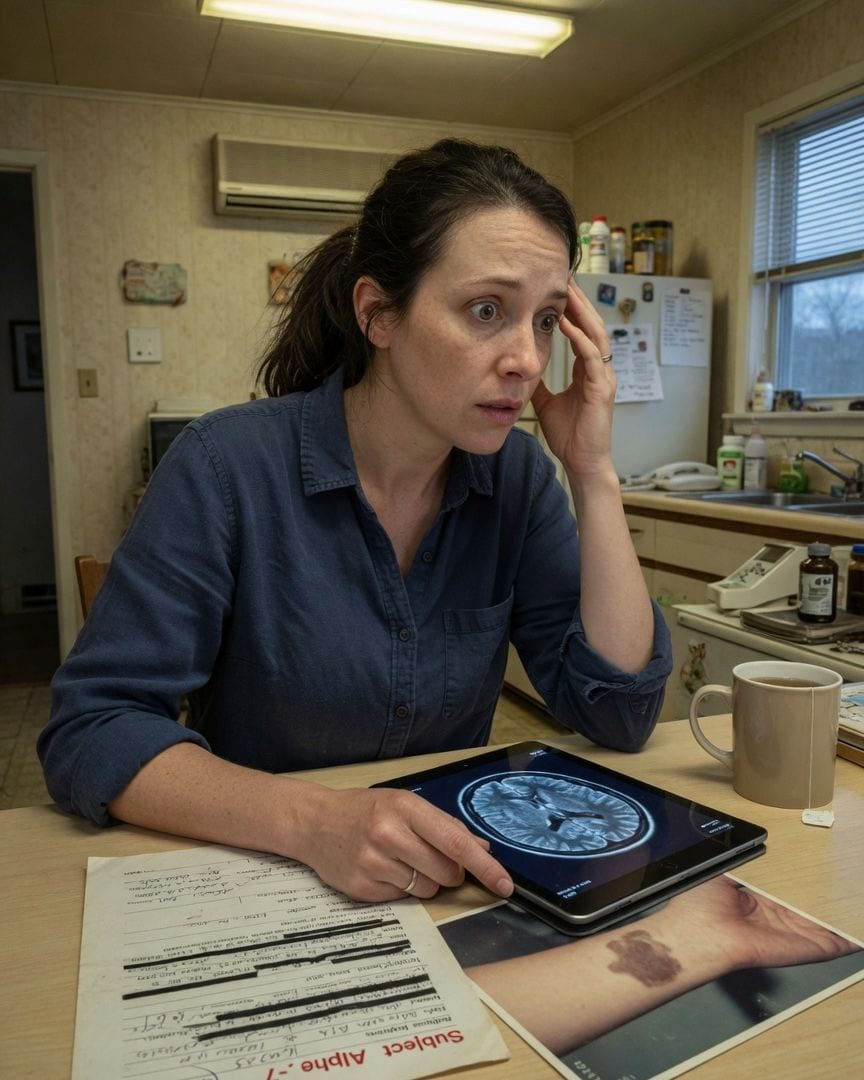
A metal clip seals off a vessel deep inside my brain. My head has no scar, I've had no surgery, and it's been there for over a decade.
My persistent headaches led to an MRI, revealing an impossibly neat metal clip inside my brain. My doctor confirmed it had been there for over a decade, despite no record of any past surgery or scar. Now, a restricted file links my unique birthmark to a mysterious patient from 1968.
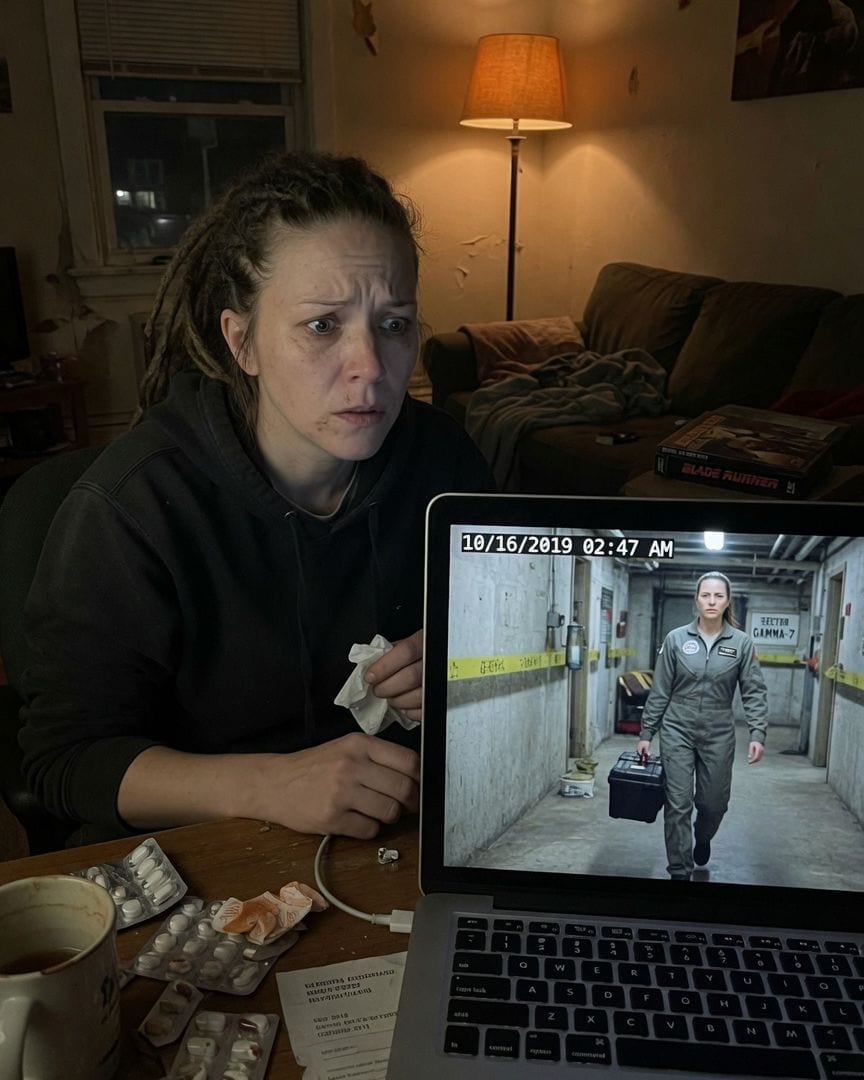
My timesheets show me working night shifts in a town I never lived in. The signatures are mine. The pay went to an account that isn't.
An old employer sent me timesheets from five years ago, detailing night shifts I supposedly worked at a depot 80 miles away. But I knew I was home recovering from surgery that entire week, nowhere near the industrial town. Then a security photo arrived, showing my face in an unfamiliar uniform, working a shift that wasn't quite me.
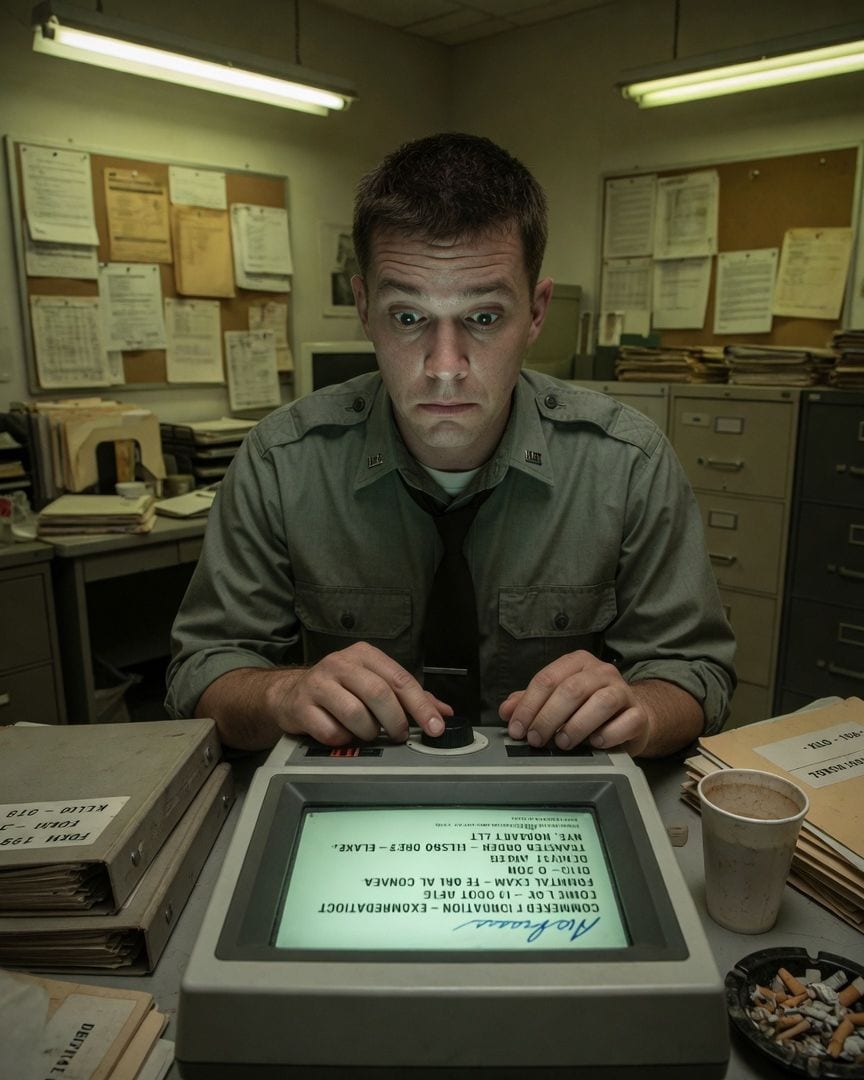
A missile commander watched his ten nuclear silos go dark. His own service record shows his signature on a future he's never lived.
Second Lieutenant Hobart Nye, a missile commander in Wyoming, had his quiet 0247 watch shattered by a security report: a massive, silent black triangle hovered over Launch Facility Kilo, casting a perfect shadow. Hobart watched his console's fault panel light up, signaling all ten nuclear missiles going dark in an impossible silence, followed by eleven minutes his security team could not remember. Official logs called it a "radio malfunction," but Hobart found a requisition for invisible-tracking sensors, signed by a base commander who was supposed to be off-base. The final, chilling discovery came when his own service record showed new entries—a dental check-up, a transfer to Alaska—all dated for a future he never lived, complete with his perfectly replicated signature.
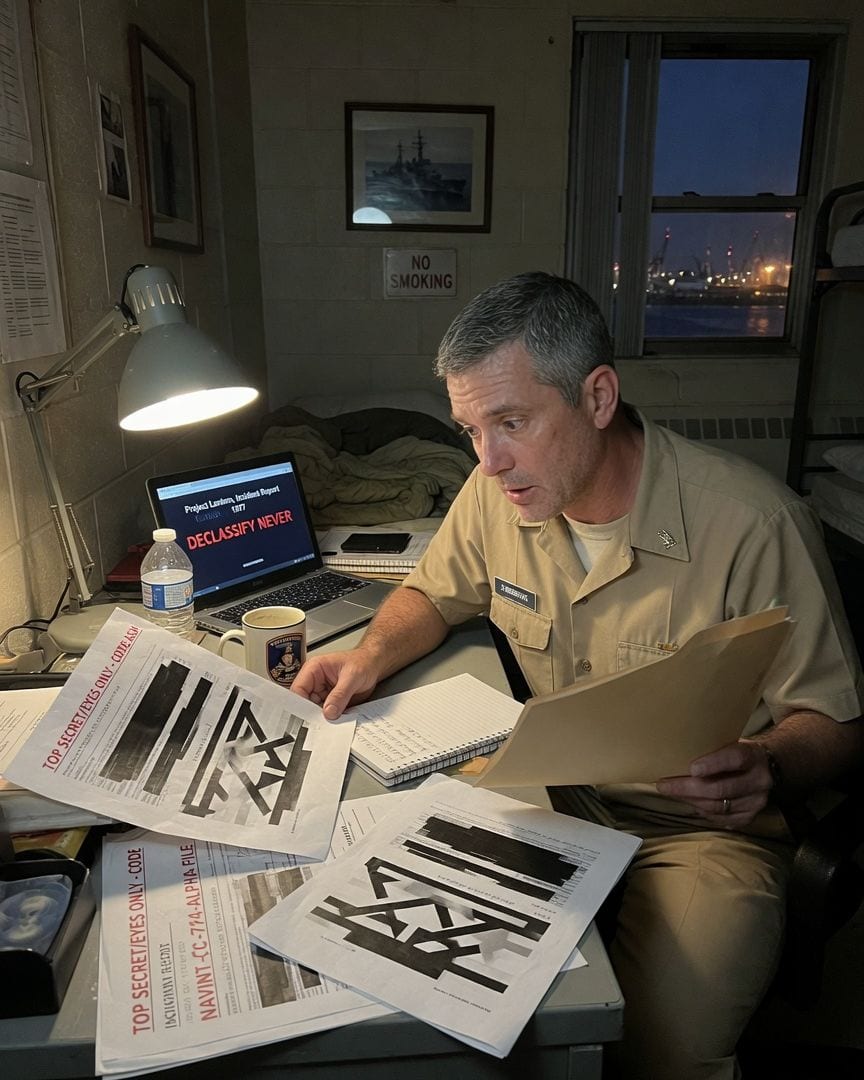
On the USS Farragut, Lieutenant Commander Roy Ashgrove logged a zero-altitude contact. His report was stamped 'TOP SECRET,' and a directive for it read: 'DECLASSIFY NEVER.' He found an old Cold War file with an identical, geometric redaction.
Four days from ending his Gulf deployment, Lieutenant Commander Roy Ashgrove longed for home leave. On the bridge of the USS Farragut, his surface search radar painted a contact a mile off the port beam, but its altitude readout was impossibly zero. He ordered the searchlight on it, watching as the dark mass moved toward the beam, then stopped dead still on the moving water. Roy's incident report was swiftly stamped 'TOP SECRET,' and a follow-up directive carried a chilling downgrade schedule: 'DECLASSIFY NEVER.' His investigation soon unearthed an old Cold War file containing an identical, geometric redaction, hinting at a secret far deeper than a sensor glitch.