Sergeant Boone, two weeks from home, sees Corporal Whitfield in two places at once. One has a scar on his face. The other doesn't.
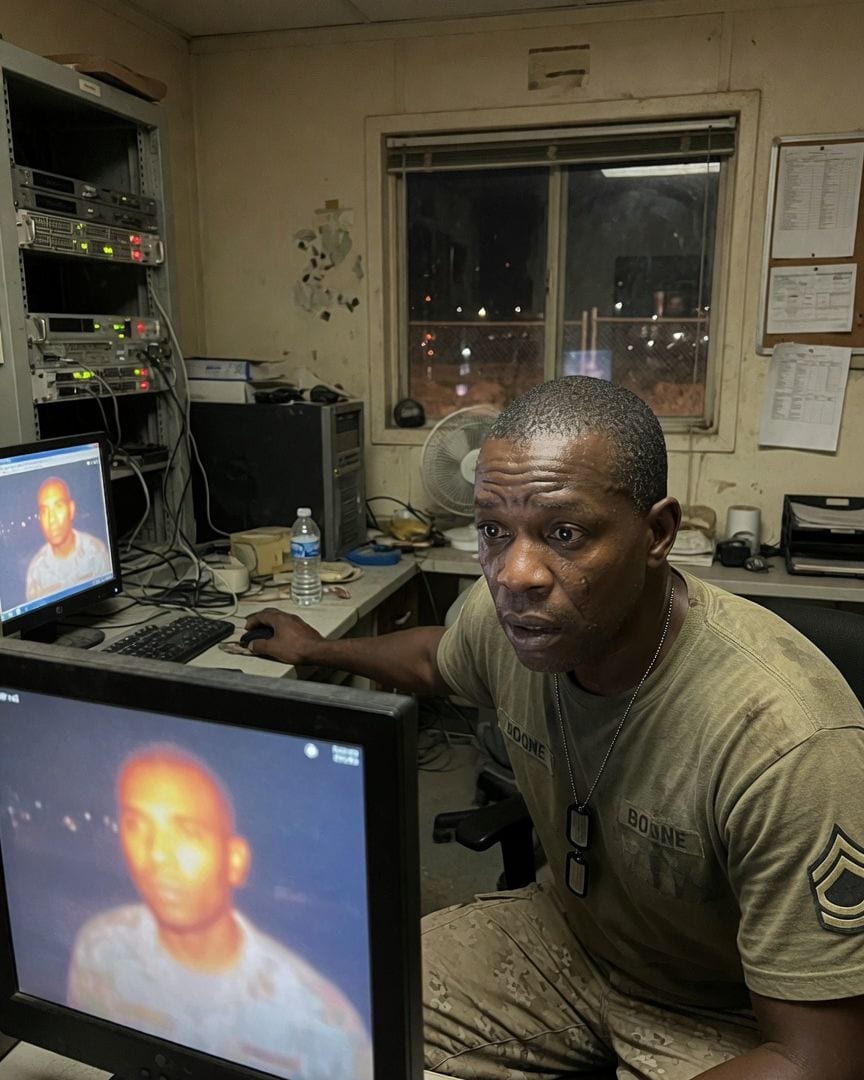
Sergeant Wayne Boone sat in the small, stiflingly hot security office at the Horn of Africa forward site, the hum of the old server rack a constant, low thrum against the desert’s silence.
His deployment ended in two short weeks, and he was just trying to nail down a minor scheduling error that kept popping up on the duty roster for Perimeter Tower 3.
It was a tedious task, the kind of detail that kept the military machine grinding smoothly, but today it felt particularly resistant.
He adjusted the feed on the monitor, scrubbing back through the chow-hall camera footage from the previous morning. There, clear as day, was Corporal Richard Whitfield, tray in hand, shuffling through the serving line at precisely 0530.
Whitfield reached the omelet station, exchanged a few words with Specialist Sutton, and moved on. Boone frowned, then rewound the footage. He played it again, watching the corporal’s familiar gait, the way he shifted his weight.
Then he jumped back another week: same Corporal Whitfield, same time, same tray, indistinguishable down to the slight tilt of his head as he waited. Two full weeks of identical breakfasts, always at 0530.
But Boone knew, with the cold certainty of a man who dealt in facts, that for every one of those mornings, Corporal Whitfield was not in the chow hall.
He was up on Perimeter Tower 3, a kilometer out from the main compound, radioing in his status report at 0530 sharp to Private Abigail Reynolds at the comms desk. Boone had signed off on those logs himself.
The system, designed for absolute accountability, for every man to be in exactly one place at exactly one time, had just thrown up an impossible ghost, a duplicate entry that shouldn't exist.
Boone pulled the radio logs, cross-referencing them against the video timestamps. Reynolds’s reports confirmed it: "0530, Tower 3, Whitfield, all clear."
He left the stifling office, the digital ghost still flickering in his mind, and walked across the baked dirt of the compound to the comms office. Private Reynolds, barely out of basic training, looked up from her console.
"Private Reynolds," Boone said, his voice level. "Those Tower 3 reports, 0530. Corporal Whitfield. Did you log those yourself?"
"Yes, Sergeant," she replied instantly, her posture snapping to attention. "Every morning, sir. He’s always on time."
Boone nodded, then moved on to the chow hall. Specialist Gordon Sutton was wiping down a counter, the scent of stale coffee thick in the air. "Sutton," Boone began, "Corporal Whitfield.
Does he come through for breakfast around 0530 every day?"
Sutton squinted in thought. "Yeah, like clockwork, Sergeant. Always gets the same thing too. Scrambled and bacon. Good guy, Whitfield."
Boone felt a knot tightening in his stomach. Two independent witnesses, two independent systems, confirming Whitfield’s presence in two separate locations simultaneously.
He returned to his office, the drone of the server rack now sounding less like a hum and more like a low growl. He pulled up the chow-hall footage again, focusing on Whitfield’s face, frame by frame.
He zoomed in, the image pixelating slightly but still clear enough. There, just above the left eyebrow, was a faint, jagged scar. It was small, no more than an inch, but distinctive.
Boone remembered seeing it clearly on Whitfield yesterday, a fresh-looking but healed cut from some minor mishap last month that had required a few stitches.
He leaned closer to the screen, his mind trying to push back, to find a mundane explanation. A trick of light? Fatigue playing havoc with his perception?
But the scar was undeniable, a physical detail that grounded the impossible image, making the digital ghost sickeningly real. It was too clear, too specific to be a mistake.
If the Whitfield in the chow hall had that scar, and the Whitfield on the tower was indeed the real Whitfield, then they both should have it. Unless…
He made a decision. He knew the thermal cameras on Perimeter Tower 3 were high-resolution enough to pick up such a detail, even through the infrared filter.
If the man on the tower, the one radioing in his status reports, had the scar, then the chow-hall footage was a glitch, an error in the system, and Boone could write it off.
If not, then the problem was far more fundamental than a scheduling error.
Boone accessed the thermal camera feed from Perimeter Tower 3 for the previous morning, 0530. The screen flickered, then settled on a grainy, heat-shimmering desert landscape.
He located the figure of Corporal Whitfield, a thermal silhouette against the cooler tones of the steel tower. Boone zoomed in, past the heat distortion, focusing on the figure's face.
The infrared image showed the man’s skin as a mosaic of orange and yellow, radiating warmth. Boone’s eyes scanned for the jagged line of the scar, the one so clear on the chow-hall footage. There was nothing.
A smooth, unbroken warmth across the brow where the injury should be.
Boone leaned closer to the screen, his breath catching, the impossible truth of two Corporal Whitfields, one with a scar, one without, settling over him like the desert’s night chill.
Boone’s investigation deepened, shifting from a scheduling correction to a silent, unsettling obsession. He started quietly observing Whitfield. The corporal on tower duty, the one without the scar, seemed normal, if a little withdrawn.
He carried out his tasks with quiet competence, his movements precise.
The one Boone occasionally glimpsed in the chow hall or at the motor pool, the one with the scar, was equally unremarkable, blending seamlessly into the rhythm of the base.
Boone watched for any interaction between them, any flicker of recognition, but there was never any. They moved in separate orbits, perfectly accounted for by the base’s meticulous systems.
He spent hours poring over personnel files, searching for a record of Whitfield being reassigned, transferred, or any hint of a twin in his service record. Nothing. Every document was immaculate, every entry a testament to perfect bureaucratic order.
It was as if the system itself refused to acknowledge the impossibility Boone now knew to be true. He felt a growing sense of isolation, caught between irrefutable evidence and an impenetrable wall of official certainty.
During these increasingly clandestine searches, Boone started to notice Sergeant Major Paul Doyle. Doyle was a hardened veteran, his face a roadmap of desert deployments, who had been at the outpost for years.
He possessed an unnervingly calm gaze that seemed to follow Boone more often than not. Doyle always seemed to be around when Boone was asking questions about Whitfield, or when he lingered too long over specific duty rosters.
He’d offer dismissive advice about "seeing things" on long deployments, about how "the desert plays tricks on a man’s mind." His voice was always even, his words carefully chosen, without a trace of accusation. Just quiet, steady dismissal.
Boone tried to cross-reference other personnel, looking for similar discrepancies, for other impossible appearances. But the system was a fortress of perfect data. Every record, every log, every video feed outside of Whitfield’s specific anomaly, confirmed perfect accountability.
He started to feel like the base itself was actively resisting his inquiries, a silent, bureaucratic wall pressing in on him, determined to maintain its immaculate facade.
The subtle pressure from Sergeant Major Doyle intensified. Boone found his access to certain archived logs unexpectedly revoked, then mysteriously restored a few hours later, always with a bland explanation about network maintenance.
His computer developed 'glitches' when he tried to search specific terms related to personnel transfers or unusual duty rotations. Keywords like "duplicate" or "reassignment" would freeze the system, requiring a hard reboot.
It was too specific, too consistent to be random chance.
One evening, Boone was reviewing old incident reports in the empty comms office, hoping to find any historical precedent for anomalous activity. The air conditioning unit chugged, spitting out lukewarm air that barely stirred the dust.
He was engrossed, hunched over the monitor, when the light behind him dimmed slightly. He didn't hear a door open, didn't hear footsteps. He just felt a presence.
Sergeant Major Doyle stood in the doorway, silent as a ghost, his silhouette framed against the weaker hallway light. He didn't accuse, didn't warn. He just talked, his voice low and even, cutting through the whir of the comms gear.
"Accountability, Sergeant," Doyle said, his eyes never leaving Boone's. The way he said it, the word seemed to stretch, to encompass something vast and cold. "It’s the backbone of any operation. Especially out here.
We maintain a perfect roster, no matter the cost." He paused, a beat of heavy silence, and then, almost as an afterthought, added, "Your rotation’s coming up soon, isn’t it, Sergeant? Next week, I believe. Time flies."
The quiet reminder of Boone's limited time, of his impending departure, hung in the air like a threat. The implication was clear: someone knew what Boone was doing, and they wanted him to stop, to leave things as they were.
Boone felt a cold certainty settle in his gut: he was no longer just investigating; he was being watched, managed, and perhaps, prepared. The room, usually bustling, felt like a hollow chamber, its walls listening.
Boone cornered Doyle in his office the next morning, the evidence of the two Whitfields and the strange 'glitches' a heavy weight in his hands.
He pushed the printouts of the chow-hall footage, the radio logs, the thermal scans across Doyle's cluttered desk. "Sergeant Major," Boone began, his voice tight, "there are two Corporal Whitfields on this base. One with a scar, one without.
One in the chow hall, one on Tower 3. And someone’s been messing with my access logs and my computer."
Doyle didn't deny it. He sighed, a weary sound that seemed to carry the weight of years, and gestured to a worn plastic chair opposite his desk. "Sit down, Sergeant." Boone sat, rigid.
Doyle leaned back, his gaze fixed on a faded flag on his wall. "It’s called the Echo," he said, his voice devoid of emotion, like he was reciting a technical manual. "A localized phenomenon. Not a glitch.
It’s been here longer than any of us, Boone. Longer than this outpost."
He explained, with chilling calm, that the anomaly, deep beneath the outpost, had the ability to 'duplicate' personnel, particularly those in isolated posts or those performing highly repetitive duties. "It maintains the count, Sergeant.
Every man accounted for, every duty filled. It’s perfect accountability, as I said." Doyle’s eyes finally met Boone’s, flat and unwavering.
He revealed that the duplicated Whitfield, the one in the chow hall with the scar, was a temporary construct, a 'placeholder' for the system, an occasional overflow. "It occasionally slips, creates an 'extra' record like your chow-hall footage.
It’s rare, but it happens." The originals, like the real Whitfield currently on the tower, were usually unaware, their reality seamless.
Doyle detailed how they identified the 'tells,' like the scar, the minute discrepancies that marked a duplicate from an original. "It helps us manage the situation, ensure the duplicates don’t interact with the originals. Avoids… complications."
Boone felt a sickening lurch as the pieces clicked into place. The perfect rosters, the unshakeable certainty of the system, Doyle’s unnerving composure.
The dread was not that something was missing, some void to be filled, but that something extra was always there, perfectly accounted for, a ghost in the machine that the machine itself considered essential.
The air in Doyle's small office, already thick, seemed to press down on Boone, suffocating him with the weight of the impossible truth.
Doyle’s calm, almost clinical explanation of the Echo chilled Boone to the bone, but it didn't fully account for the deeper unease he felt. The idea of temporary duplicates, of unseen placeholders, was terrifying, but it also felt incomplete.
There was a missing piece, a darker layer beneath the surface of Doyle's placid acceptance. He returned to the archived transfer records, now understanding that the 'Echo' might be far more insidious than simple duplication.
He spent the rest of the day, and much of the night, sifting through decades of personnel movements, filtering specifically for soldiers who had served at this outpost and were subsequently 'rotated out' or 'reassigned.'
The sheer volume was staggering, far more than standard turnover for a remote forward operating base. The names blurred together, a long, grim roll call.
Then he noticed a disturbing detail, a pattern so consistent it felt like a deliberate signature.
Every single one of these transfers had a replacement soldier already listed, often with the same rank, sometimes even disturbingly similar names, seamlessly integrated into the roster before the original had officially departed. No gaps, no delays, perfect operational continuity.
It wasn’t just that new people came in; it was that the system already had them lined up, waiting, accounted for, often weeks in advance.
Boone’s heart began to pound with a frantic, cold rhythm. He searched for his own file, his fingers fumbling on the keyboard. His transfer order was already cut for next week.
And beneath it, a new name, a Corporal Oscar Sutton, already assigned to replace him – a man Boone had never met, whose face he couldn't even picture.
The system already had his replacement, perfectly accounted for, before he’d even gone. The horror wasn't that he would be missing, leaving a void. It was that he would be replaced, seamlessly, flawlessly, and no one would know the difference.
The base, bathed in the pale glow of the predawn desert, felt suddenly alien, utterly inhuman.
Boone confronted Doyle again, the printouts of the transfer records, including his own, crumpled in his hand. “The duplicates, the placeholders,” Boone said, his voice strained. “That’s not the whole story, is it? These transfer records. The sheer numbers.
The replacements already logged. It’s not just duplication, is it?”
Doyle didn't flinch. He leaned back in his chair, observing Boone with that same unnervingly calm gaze. “The Echo doesn’t just duplicate, Sergeant,” he explained, his voice still unnervingly calm, as if discussing the weather. “It absorbs.
It needs to maintain its own form of order, its own perfect headcount. When an original is isolated, exposed to its influence long enough, especially in a repetitive role… it takes them. Not violently, not even noticeably.
They just… cease to be.”
Boone felt the blood drain from his face. “Cease to be?”
“And then,” Doyle continued, ignoring Boone’s choked question, “it generates a permanent replacement. A perfect copy, complete with memories, skills, everything. The accountability that cannot be denied. It’s what keeps this base running, Sergeant.”
He spread his hands, a gesture of profound, weary acceptance. “We don’t fight it. We manage it. We ensure the replacements are integrated, that the paperwork is flawless. It’s the only way to keep this outpost operational.
Imagine the chaos if we acknowledged every lost man, every replaced soldier. The psychological toll. The anomaly, in its own way, ensures mission success.”
Doyle gestured around the small, windowless office. “How many men in this compound, do you think, are originals, and how many are… Echoes? You wouldn’t know. No one does, not truly. Except for those of us who maintain the system.”
His words hung heavy in the air, the true horror not in the violence, but in the seamless, bureaucratic obliteration.
Doyle leaned forward, his gaze locking with Boone’s, a chilling blend of resignation and warning in his eyes. “Your rotation is next week, Sergeant. Corporal Sutton is already on the manifest. The Echo has already accounted for your departure.”
The implication was a punch to Boone’s gut. His own name, his own existence, had already been overwritten in the system’s ledger.
He felt a cold dread seep into his bones, realizing the trap wasn't just for others, but for him.
He tried to argue, to threaten to expose it, to shout about the injustice, but the words felt hollow even to him. Doyle simply shook his head, a faint, almost pitying smile touching his lips. “Who would believe you, Sergeant?
The paperwork is immaculate. The system is perfect. You’re just another soldier rotating out. And if you try to make trouble, if you disrupt the order, the Echo has ways of ensuring compliance. Or ensuring a more… permanent replacement.
One that won't ask questions.”
Boone looked into Doyle’s eyes, seeing not malice, but a profound, chilling resignation. He understood: Doyle wasn’t a villain, not in the traditional sense, but a custodian, a component of the very system he’d just explained.
A man long since hollowed by the impossible task of managing the inevitable. Boone felt the crushing weight of the impossible truth. He couldn’t fight it. He couldn’t expose it.
He could only become another perfectly accounted-for transfer, a blank slate for the Echo to fill. He stood up, the chair scraping loudly on the linoleum floor.
He walked out of Doyle’s office, the African sun feeling strangely cold on his skin, his mind reeling. He knew what was coming. He knew he was already accounted for, already replaced, in the system's eyes, and soon, in reality.
The dust of the compound, kicked up by a passing Humvee, tasted like ash in his mouth.
Wayne Boone completed his deployment. The transfer paperwork was flawless. Corporal Oscar Sutton arrived on schedule, seamlessly integrating into the base's operations. No one questioned the smooth transition.
The base continued its rhythmic hum, every man accounted for, every duty filled.
Back home, Boone's wife, Fiona, greeted him at the airport. He seemed... quieter. More observant. He never spoke of his last two weeks at the Horn of Africa outpost, not to her, not to anyone.
The scar above his left eyebrow, a faint, jagged line, was still there. He touched it sometimes, unconsciously, as if reassuring himself it was real.
Fiona would ask him later that night if he was okay, if the deployment had been rough. He’d just smile, a faint, wrong little smile, and say, 'Never better.'
If this one got to you
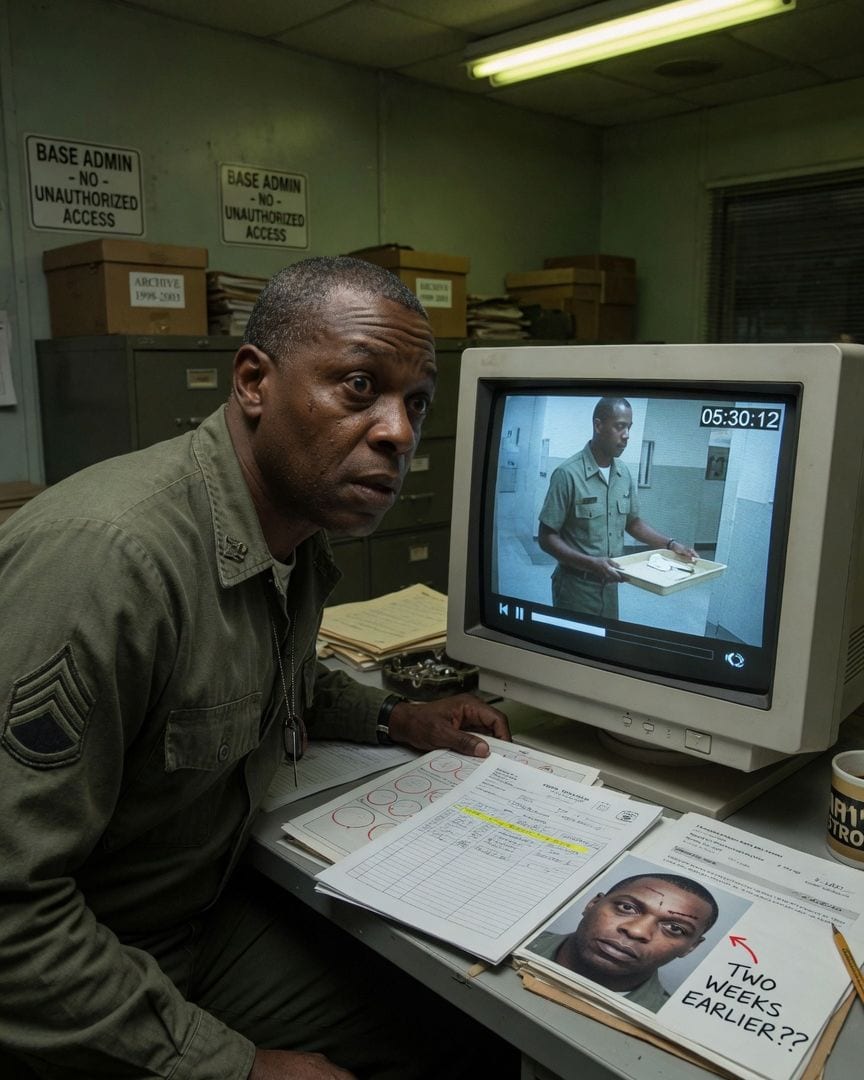
Sergeant Vance found a corporal's scar in old footage, a week before he got it.
Sergeant Gideon Vance was cross-referencing records to fix a simple scheduling error. But the surveillance footage and duty rosters showed Corporal Charles Whitfield in the chow hall and on Tower 3 at the exact same minute. Vance found this impossible discrepancy repeated across multiple days and records. A soldier cannot be in two places at once.
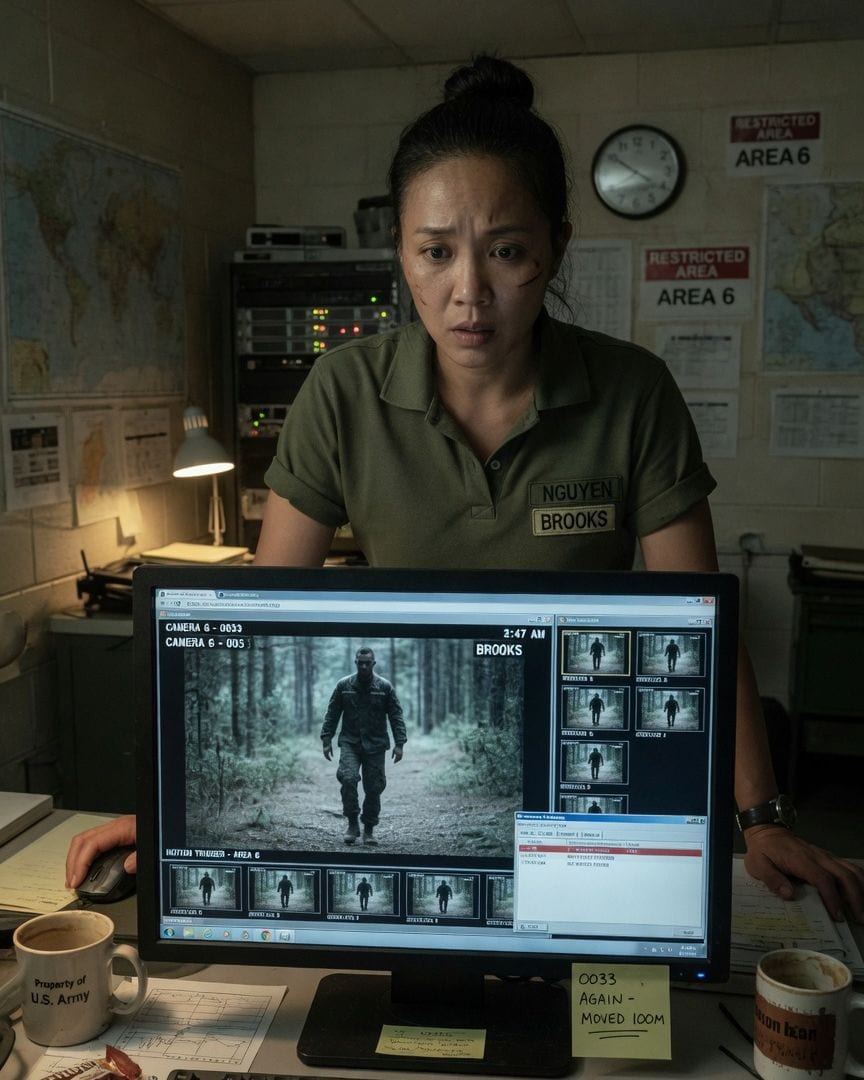
A perimeter guard's camera logs a man at 0033 every night. His uniform says 'Brooks', but no such name exists in 40 years of records.
Specialist Alice Nguyen's meticulous duties in a remote Louisiana training area were usually a monotonous rhythm, but camera six had shattered it. Every night, precisely at 0033, its motion sensor would trigger, capturing a man mid-stride, while adjacent cameras recorded nothing. She moved the camera, recalibrated its sensors, yet the phantom man continued to appear, his uniform subtly shifting across identical images. After painstaking enhancement, the name 'BROOKS' appeared on his uniform, a name completely absent from forty years of base records. What was this impossible presence, this constant error in a world designed for exact counts?
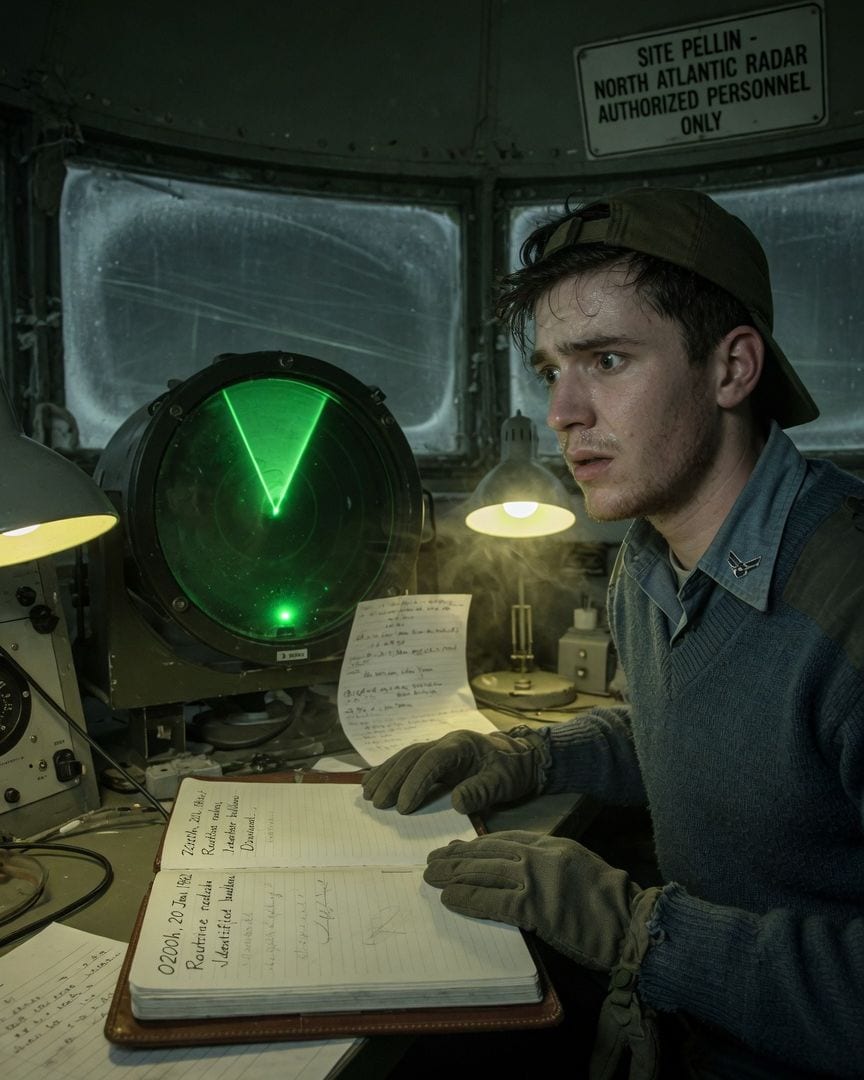
Nine days from closing, Cold War Site Pellin's Airman Vance watched his radar track a solid blip moving closer, dead in open sea where nothing could exist.
In the dimly lit dome of Site Pellin, Airman Ordway Vance, just days from discharge, ran his final radar sweeps before the base closed for good. Outside, the North Atlantic wind howled, but inside, only the hum of his console broke the silence. His last calibration had been clean, yet a single, unwavering green blip appeared on the scope, forty miles out, in open water where no vessel should be. The impossible return moved closer with each sweep, defying all logic and other sensors, until it sat static just beyond the coast fence line. What unseen presence did the radar truly hold in its unwavering green grip, contradicting the official record?
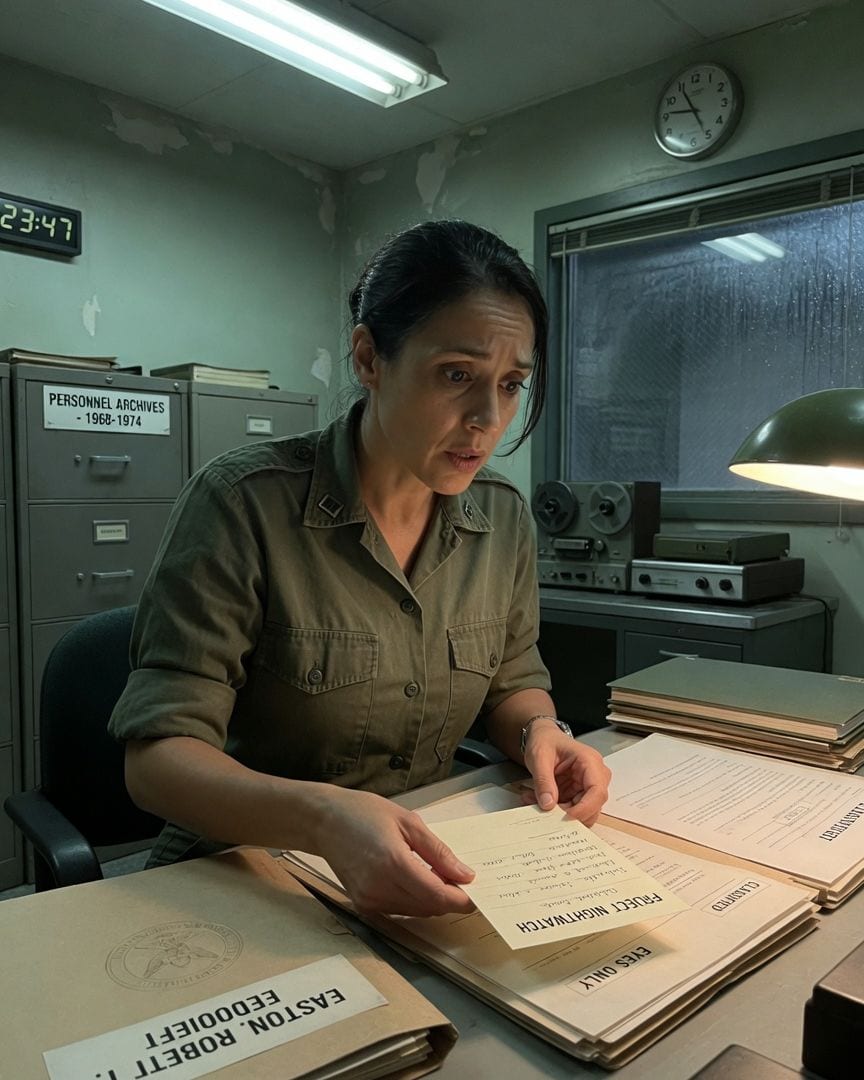
A Cold War tower controller logs an object vanish from radar, then hears the pilot scream it’s filling his windscreen. Her own name, 'Bardolph, Ines', now marked 'Observed' in a secret file.
Captain Ines Bardolph, a tower controller, was counting down the months until her transfer to Langley and the decommissioning of her base, hoping to leave behind the unsettling incidents of her final posting. But one night, her radar scope showed an impossible blip, solid and unwavering, 40 miles north of the Danube, only to vanish in less than a second, leaving a pilot screaming in terror. Despite the clear evidence, the official report blamed "atmospheric inversions," while the terrified pilot received a glowing review and promotion, his file meticulously scrubbed of any anomaly. As Captain Bardolph reviewed the pilot's pristine record, she found a hidden slip of paper, revealing a chilling truth: 'Subject: Bardolph, Ines. Status: Observed.' Was she merely an observer of the impossible, or was she now part of something far more sinister?
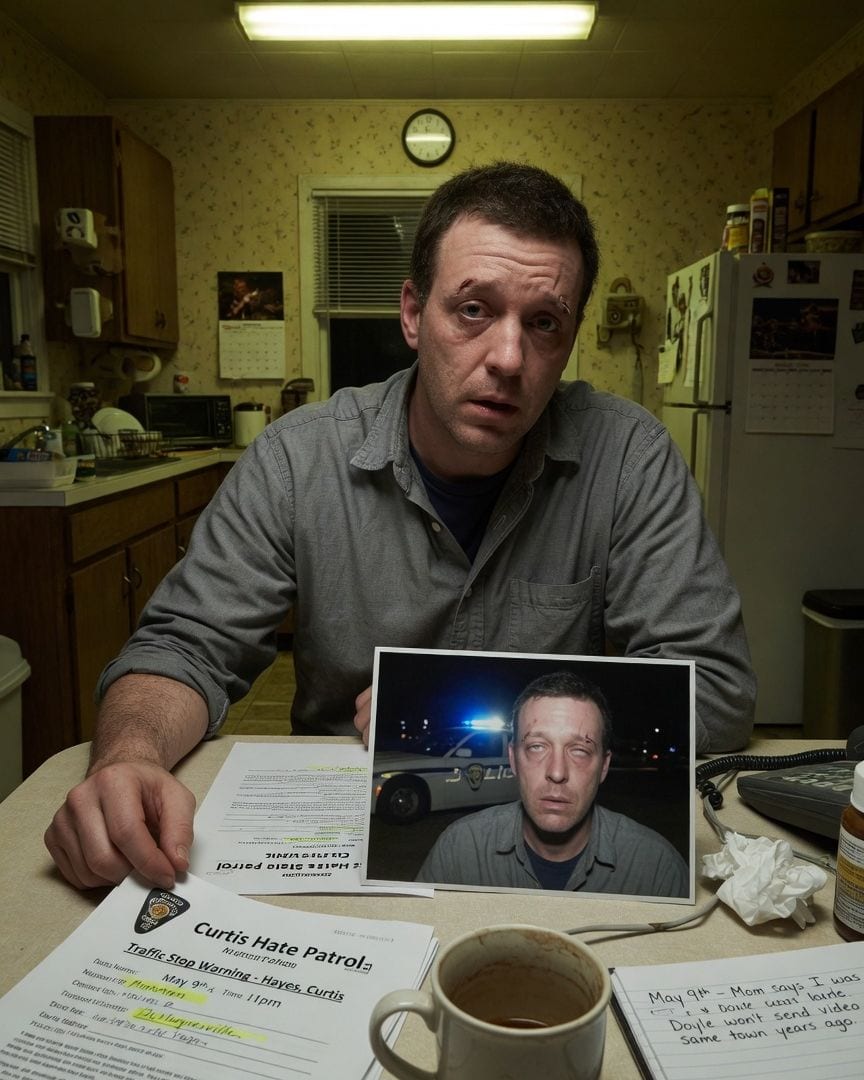
My face stared back from a bodycam video, in a town I've never been. He answered to my name.
I received an email from the Ohio State Patrol for a traffic stop I never made, 200 miles away on May 9th. My mother confirmed I was home that night, asleep on the sofa. When the police finally sent a bodycam photo of the driver, it was my face and scar, but the eyes were flat, distant, and utterly devoid of warmth.
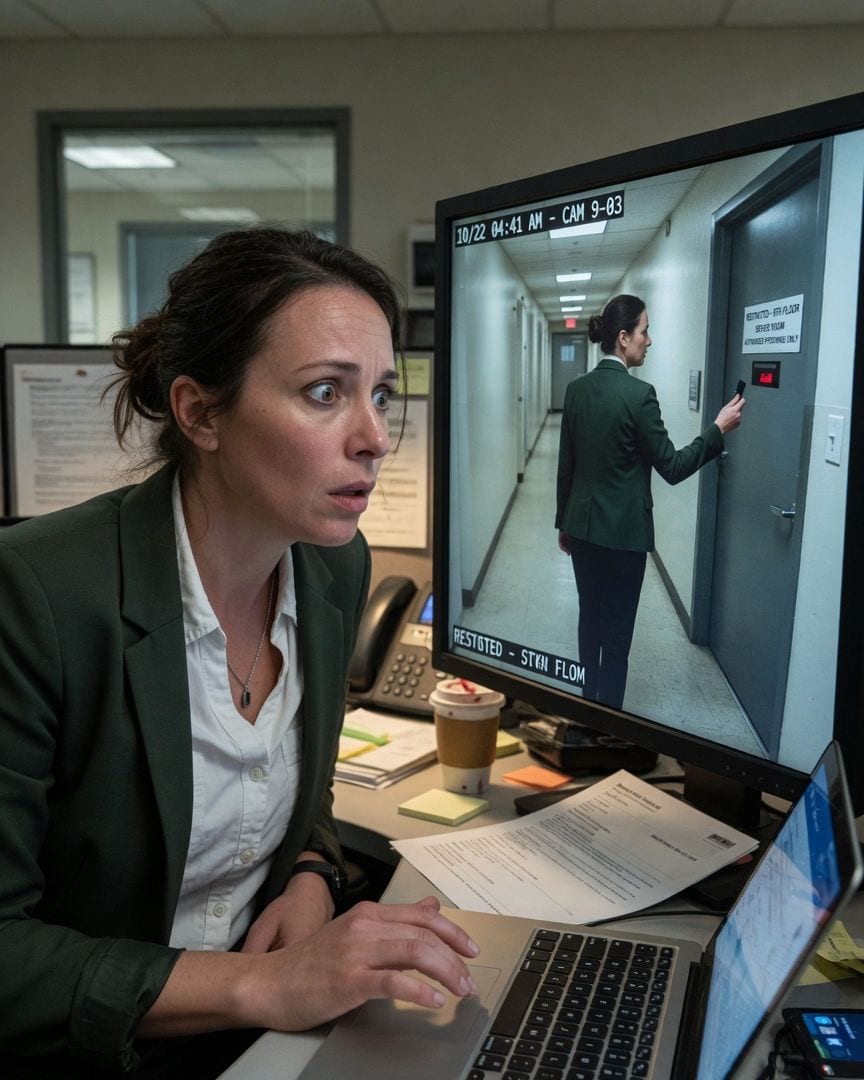
My keycard log shows me in the server room at 4:41am. I was asleep, and my badge was at home.
An email from corporate IT reveals my keycard registered entry into a restricted server room at 4:41 AM last Sunday. I was asleep in my apartment across town, my badge clipped securely to my jacket at home. But then I scrolled down and found eleven more impossible entries, all within the past week, all under my name.