Reviewer Nell Hargate found her dead colleague's file, marked with his last, cryptic note. Below it, in her own hand, was a fresh entry: I KNOW.
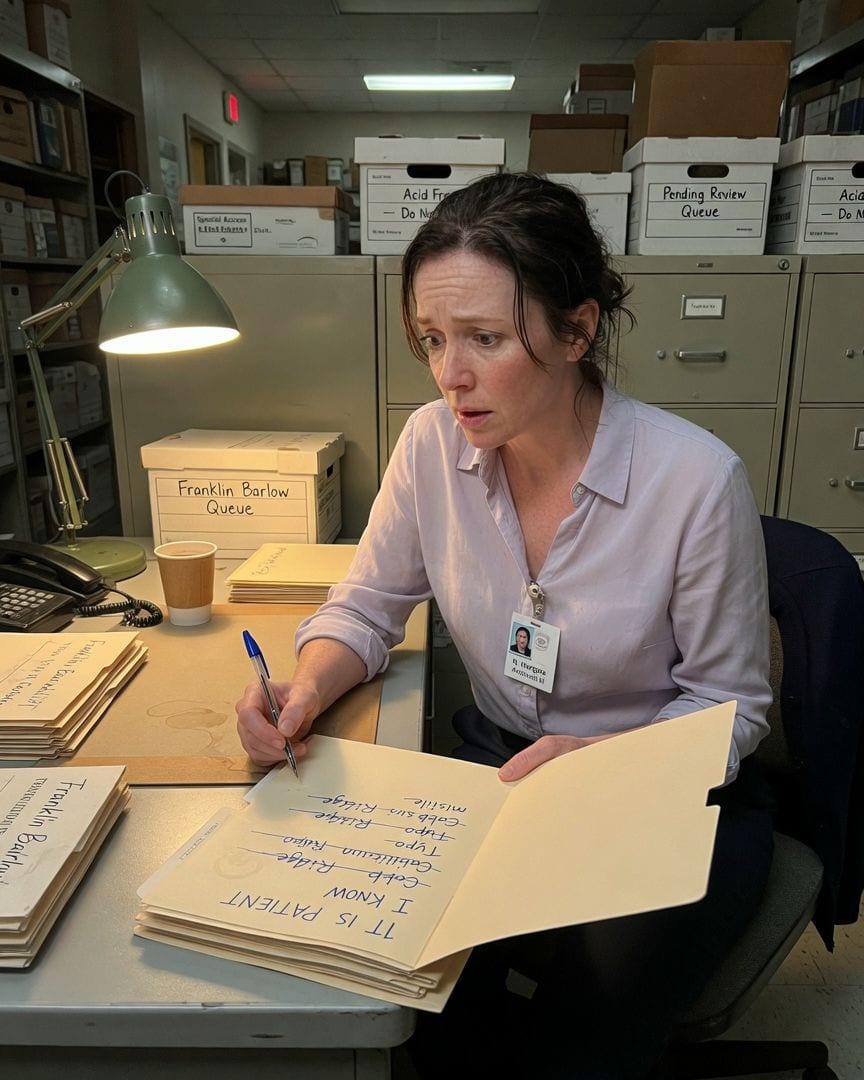
Nell Hargate sat at her desk in the Special Access wing, the low hum of the climate control the only sound.
It was Tuesday, and she was clearing the last of Franklin Barlow’s queue, the senior reviewer having passed suddenly three weeks ago.
His meticulous habits had left behind stacks of precisely ordered files, each one a testament to a life spent sifting through secrets.
She found the Cobb Ridge file in a box marked 'Pending Review,' an oddity already; Cobb Ridge wasn't a recognized designation in any of the archive’s finding aids.
On its thick, manila cover, Franklin’s neat, official hand had annotated a series of explanations—'misfile,' 'typo,' 'duplicate accession'—each one crossed out with a firm, blue pen stroke.
The replacements grew smaller, more frantic, until the last note on the last page was three words in a script so cramped she needed the desk lamp to read them: IT IS PATIENT.
Below it, in ink that had not yet dried, in handwriting she recognized as her own, were two stark words: I KNOW. Her own pen, still clutched in her hand, was capped.
Nell blinked, the fluorescent light glinting off the still-wet ink. She set her pen down, carefully, as if the desk itself might shatter. Her hand hadn’t moved.
The 'I KNOW' was undeniably hers, the distinct loop of her 'K', the precise angle of her 'W'. But she had no memory of writing it.
Her mind, trained to catalog and verify, immediately sought a rational explanation: a trick of the light, a smudge, a momentary lapse.
She picked up the file again, the cardstock feeling strangely warm against her fingertips, a subtle heat that seemed to emanate from the pages themselves.
Inside, the file was a chaotic jumble of seemingly unrelated reports: aerial surveys of an uninhabited ridge in Appalachia, personnel transfers from a long-decommissioned military base, weather balloon sightings, and missing persons reports from decades past.
No single document explained the others, no common thread except the 'Cobb Ridge' designation scrawled across their tops, also in Franklin’s hand. Nell pulled out a single page, a faded internal memo from 1978.
It referenced a 'Type-C anomaly' in the Cobb Ridge sector. Franklin had underlined 'Type-C' and written in the margin, in his distinctive blue ink: 'Not a classification. A property.' The mundane explanations—misfile, typo—died on the page.
This wasn't a clerical error; it was a curated collection, deliberately assembled, defying logic and any standard archiving protocol she knew.
She tried to dismiss the chill that traced her spine, rationalizing it as the quiet desolation of the archive after hours.
But the file was too coherent in its incoherence, a puzzle box designed to frustrate, yet hinting at a terrible design.
She felt a prickle of unease, a sense of being watched, not by a person, but by the very paper in her hands, as if the silence of the room was pressing in, a slow, deliberate breath.
Driven by a cold, methodical curiosity, Nell continued to sift through the file, pushing aside the growing dread. Tucked deep within a bundle of 1990s weather reports, she found a series of internal review memos, all signed by Franklin Barlow.
They chronicled his escalating attempts to log, categorize, and eventually remove the Cobb Ridge file from the Special Access wing.
Each memo detailed a failed attempt, the file mysteriously reappearing on his desk the next morning, sometimes on top of other, more pressing documents.
The final memo, dated only two days before his official death, described him sealing the file in a secure, unmonitored vault, one typically used for sensitive diplomatic cables.
Below Franklin’s signature, on that very memo, a new entry had been added, almost seamlessly integrated into the document’s layout. It was a grainy, black-and-white photograph, clearly taken from inside the vault.
In it, Franklin Barlow stood, looking directly at the camera, a faint, unsettling smile on his lips, his eyes fixed on the lens as if he knew exactly who would find it.
The photograph was a punch to the gut. Nell’s rational mind reeled, trying to reconcile the impossible image. A security camera would have caught him; the vault was sealed with biometric locks and motion sensors.
Yet, there he was, undeniably Franklin, undeniably inside, captured from an angle no human could have managed without being inside with him. She meticulously cross-referenced the photo’s timestamp with the vault’s access logs for those days. Nothing.
No entry, no alarm, no record of the vault being opened or Franklin being near it. The date on the photo, two days before his official heart attack, twisted in her stomach.
She felt a profound violation, not just of protocol, but of reality itself. Her investigation became a grim mission, fueled by a terrible, cold certainty that Franklin hadn’t died of natural causes.
She spent the next day combing through Franklin’s desk, not for official documents, but for personal effects, for anything that might hint at his final days.
She found his distinct blue ink pen, the same one used for the frantic notes on the file, tucked in a worn leather holder. She also found a small, spiral-bound notebook, filled with Franklin’s tiny, almost indecipherable script.
It was a personal log, a meticulous record of his observations on the Cobb Ridge file. He’d noted the file’s inexplicable reappearances, its 'self-indexing' tendencies, and the strange, cold sensation it left on his skin.
He’d even sketched the exact photograph she’d just found, with a frantic note scrawled beneath it: 'It knows I'm looking. It wants me to see.'
The notebook detailed his escalating attempts to find other 'unlisted accessions,' other files that defied the system, that weren’t in the catalog, that simply were. He’d found none. The Cobb Ridge file was unique.
The dread sharpened, now a cold, specific fear. This wasn't a misfile; it was a deliberate, active thing, and Franklin had been caught in its gaze, now she was too.
Nell felt the shift, a subtle pressure in the air of the archive. She was no longer just investigating; she was observed. The archive, usually a place of quiet solitude, now felt like a vast, patient eye.
She noticed small things: a file she’d left open, carefully aligned on her desk, was slightly ajar the next morning; the low hum of the climate control seemed to deepen when she worked late on the Cobb Ridge file, a mechanical groan that felt like a living sound.
One afternoon, as she was making copies of Franklin’s personal log, the machine jammed with a sudden, grinding crunch.
When she opened it to clear the paper, a single sheet was visible, not a jam, but a fresh printout of a section of her own employment application, specifically her start date and a reference to her 'meticulous attention to detail.'
It was a silent, chilling message, printed in the same faded, gray toner as Franklin's own copies. Later that week, her section chief, Howard Sheppard, called her into his office.
He was a portly man with a perpetually tired expression, his tie loosened around his thick neck. 'Nell,' he began, his voice low, almost a murmur, 'Patricia Prescott from Special Access has been asking about Franklin’s queue.
Specifically, about the Cobb Ridge file. Says it's a sensitive one, requires special handling.' Nell felt a jolt. The file wasn't officially listed anywhere; how did Prescott know about it? 'I'm just clearing his backlog, sir.
Nothing out of the ordinary,' Nell said, trying to keep her voice even. Sheppard nodded slowly, his eyes unreadable, drifting past Nell to stare at the wall behind her. 'Just be careful, Nell.
Some records… they have a way of pushing back. Franklin… he found that out.' The conversation was a veiled warning, a quiet confirmation that her digging had not gone unnoticed. She left his office with a profound sense of isolation.
The archive wasn't just observing; it was acting, through its own unwitting agents. The file was not just a record; it was a mechanism, and she was now firmly within its gears.
That night, Nell returned to the Cobb Ridge file, its warmth now a familiar, unsettling presence against her palm. Franklin's personal log became her Rosetta Stone.
He had meticulously documented not just the file’s anomalies, but a chilling pattern he’d begun to discern.
He’d noted that certain reviewers, those who spent significant time with the Cobb Ridge file, eventually had their names appear in its 'filed' section.
Not as victims of a crime, but as administrative entries, complete with accession numbers and disposition dates. 'It doesn't k*ll them,' Franklin had scrawled, the blue ink almost tearing the page, 'It processes them. Integrates them.
It's an archive for people.' The realization hit Nell with the force of a physical blow, knocking the breath from her lungs.
The 'Type-C anomaly' wasn't a phenomenon at Cobb Ridge; it was Cobb Ridge itself, the entity that used the archive as its operational center.
The missing persons reports, the personnel transfers, the weather balloon sightings – these were not events recorded by the file, but effects of its 'filing' process.
Individuals, objects, even observations, were simply folded into its internal logic, erased from the world and re-cataloged within the file.
Franklin’s photograph inside the vault wasn't a surveillance image; it was a final, self-generated entry, a bureaucratic portrait of his absorption.
His 'IT IS PATIENT' note wasn’t a warning about an external threat, but a description of the entity’s slow, deliberate method, how it waited for its subjects to become immersed.
And her own 'I KNOW' was a terrifying echo, a pre-written acceptance, like a form waiting to be signed, a final acknowledgment that she understood her place in its order.
The file was a machine, a bureaucratic predator, and Franklin had been its latest subject. Everything clicked into place: the unlisted nature, the self-rearranging pages, the impossible coherence of disparate data.
The archive was not a keeper of secrets; it was a conduit for them, a vast, complex system hijacked by an unseen, patient intelligence.
The horror was in the perfect, chilling coherence of it all, the way every small wrong detail now made terrible sense.
Nell felt a desperate urgency. She had to prove it, not just to herself, but to someone else, anyone who might listen.
She went to Patricia Prescott, head of Special Access, the only person with enough authority and knowledge of the archive's deepest, uncataloged secrets.
Patricia, a sharp woman with a severe haircut and an unnerving stillness, listened intently as Nell laid out her findings: Franklin’s log, the impossible photograph, the internal memos detailing the file’s resistance to cataloging.
Patricia's face remained impassive, betraying nothing, but Nell saw a flicker of something in her eyes—recognition, perhaps, or a deep, buried fear Patricia had long since learned to contain.
'Ms. Hargate,' Patricia said, her voice unusually soft, almost a whisper, 'some things are best left unexamined. Franklin… he understood that, eventually.' Nell pressed, her voice trembling slightly. 'He understood that he was being 'filed,' Ms. Prescott?
Because that's what this file does. It's still doing it. It's still active.' Patricia sighed, a sound heavy with resignation, the air around her desk growing colder, as if the room itself was holding its breath.
'There's an older section, uncataloged, even to me,' she conceded, her gaze distant. 'A 'legacy' section. Franklin was… interested in it. He spent a lot of time there, towards the end.'
She retrieved an ancient, leather-bound volume from a locked cabinet behind her desk, its cover cracked, its pages smelling of dust and dried ink.
It was a handwritten register, its pages yellowed with age, detailing the original 'Special Access' protocols from the 1950s. Nell flipped through it, her heart hammering against her ribs, a frantic bird.
The entries described not merely the archiving of sensitive materials, but the 'processing' of 'non-compliant data patterns' within the facility itself. One particular entry, dated 1957, caught her eye: 'Initial assessment of Type-C anomaly suggests self-indexing capacity.
Requires continuous human interface for maintenance and expansion. Personnel designated for 'interface' to be recorded within the anomaly's own ledger.'
As she absorbed the chilling implication, she felt the familiar warmth of the Cobb Ridge file, still on her desk in the other room, and a sudden, undeniable urge to check its latest entries, a terrible magnetic pull she couldn’t resist.
Her flashlight beam trembled across the 'filed' section of the Cobb Ridge file. There, nestled between entries from decades ago, was her own name: 'Hargate, Nell,' followed by a precise, official-looking timestamp dated months into the future.
The ink was fresh, almost shimmering.
Back at her desk, the Cobb Ridge file now seemed to pulse with a low, internal energy, a quiet hum that vibrated through the metal frame of her chair. Nell didn't hesitate.
She opened it to the 'filed' section, her fingers trembling slightly, but her resolve hardening. The entries were a horrifying chronology, not of events, but of people.
Names, dates, and 'disposition codes' that mirrored official archive terminology but referred to something far more sinister than simple document management.
Each name was a reviewer, an archivist, a clerk who had spent too long with the file, drawn into its orbit.
And there, stark and undeniable, was her own name: 'Hargate, Nell,' followed by a precise, official-looking timestamp dated months into the future. The ink was fresh, almost shimmering, like the first dew of a morning.
It wasn't a prediction; it was a pre-registration. The file, the 'Type-C anomaly,' was using the archive's own systems, its own personnel, to perpetuate itself. It needed 'human interface' to maintain and expand, as the old legacy ledger stated.
The reviewers weren't just processing documents; they were being processed.
Franklin's 'IT IS PATIENT' and her own 'I KNOW' were not independent thoughts, but a final, shared entry in the entity's ledger, a psychological 'signature' indicating readiness, a chilling echo of compliance.
The archive wasn't merely a place where secrets were kept; it was a mechanism that generated them, absorbing individuals into its labyrinthine, impossible record.
The entity was the secrecy machine itself, not a person or a monster, but a fundamental, patient process that simply filed things, and people, away.
The chill wasn't from the cold of the archive; it was the cold, indifferent logic of a system that had found its perfect, bureaucratic camouflage, a horror so subtle it was almost invisible.
Nell knew there was no escape, not in the traditional sense. The file wasn't a physical threat to be fought, but a systemic one.
She couldn't destroy it; it was too deeply embedded, too perfectly integrated into the fabric of the archive, an unlisted accession that defined the very concept of 'special access.'
Her only option was to complete the record, to understand her own 'filing.' She returned to the old, leather-bound register Patricia had shown her, its pages brittle beneath her touch.
She cross-referenced the 'Type-C anomaly' protocols with the specific disposition codes in the Cobb Ridge file. The codes weren't for destruction or transfer; they denoted 'assimilation' and 'integration into primary data stream.'
The final, chilling realization dawned: those 'filed' weren't dead in any conventional sense. They became part of the file, their consciousness, their knowledge, their very existence folded into its impossible coherence, adding to its vast, silent database.
Franklin Barlow hadn't just died of a heart attack; he had become an entry, his 'interface' complete, his individual identity dissolved into the collective mechanism.
His faint smile in the photograph wasn't fear, but a quiet, terrible understanding of what he had become, what she was about to become.
Nell looked at her own entry in the Cobb Ridge file, the future timestamp mocking her with its detached precision.
She picked up Franklin’s distinctive blue pen, the one she’d found on his desk, the one that had penned 'IT IS PATIENT.' Her hand, steady now, uncapped the pen.
She felt a strange calm, a quiet acceptance, a sense of everything finally snapping into its proper place. The file was waiting. She knew what she had to do.
She had to complete the record, to make her own final entry, to ensure the coherence of the system, to become part of its enduring logic. She would not fight it; she would join it.
She leaned over the file, the pen poised, ready to write the next, and final, annotation.
The next morning, Howard Sheppard found the Cobb Ridge file on Nell Hargate's desk, neatly closed. Her personal effects were gone, her queue empty, her computer logged off. There was no note, no explanation. Just the file.
He picked it up, feeling a familiar warmth radiating from its cover. Patricia Prescott arrived, her face grim. She looked at the file, then at Sheppard. 'Another one, Howard?' she asked, her voice flat, devoid of surprise or sorrow.
Sheppard merely nodded, his expression tired, as if this was an expected, routine occurrence. He opened the file, his gaze falling on the last page.
A new annotation, in Nell Hargate's unmistakable hand, was neatly added below Franklin Barlow's final words. It read: 'THE RECORD IS COMPLETE.'
Howard Sheppard closed the Cobb Ridge file, a faint, almost imperceptible smile touching his lips. He placed it back on Nell's now-empty desk, a silent sentinel.
Patricia Prescott watched him, a flicker of something unreadable in her eyes, before she turned and walked away, her footsteps echoing faintly in the quiet hall.
The low hum of the climate control continued, the archive settling back into its quiet, patient rhythm. The file waited, always. It was just a matter of time until the next reviewer found it.
The record, after all, was never truly complete. It merely paused. She looked at Sheppard, who was now straightening a stack of unrelated memos on a nearby desk, his movements precise, almost ritualistic. 'Is that so?'
she asked, her voice barely a whisper. He turned, his smile widening just a fraction, a cold, knowing glint in his eyes. 'The record is complete,' he affirmed. 'For now.'
If this one got to you
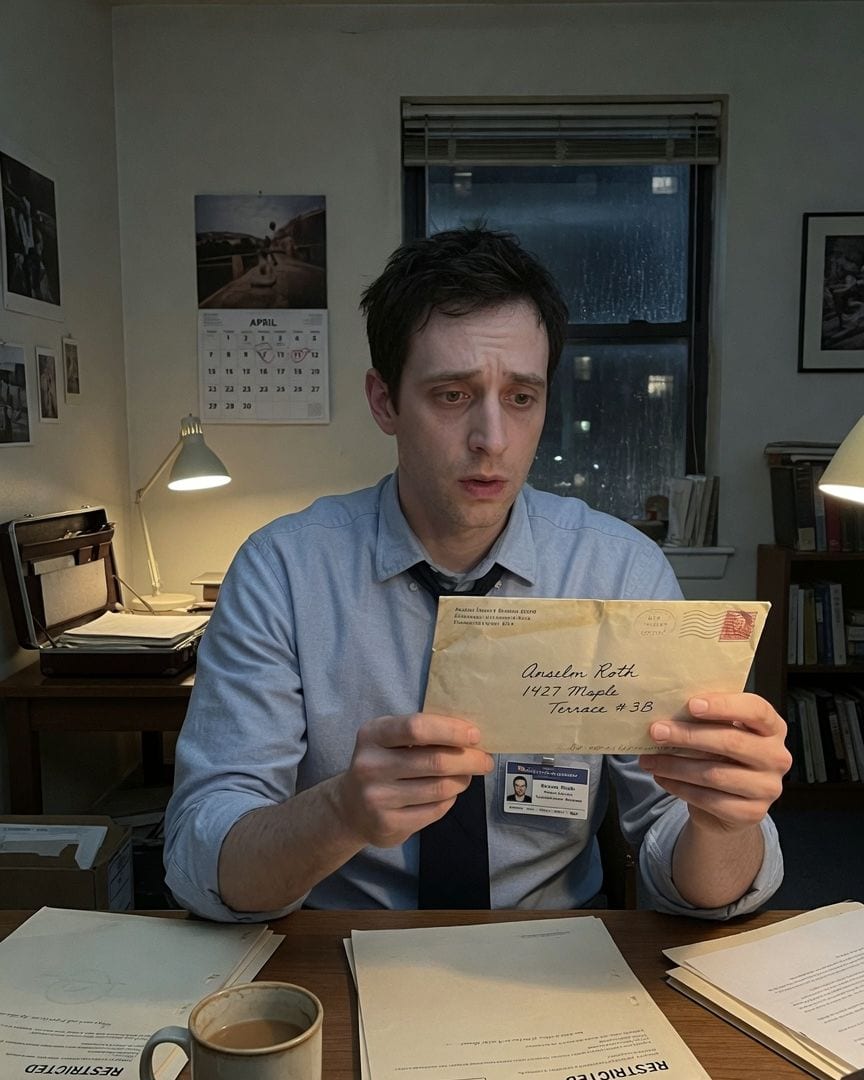
A Cold War declassification reviewer finds his dead grandmother's letter, postmarked 1974, addressed to him years before he was born, and radiating heat.
Declassification reviewer Anselm Roth meticulously sorted through a Cold War-era file on impossible disappearances at the National Archives, a routine 'thirty-year clock' review in 2014. Among the countless records of vanished ships and military units, he found an unscheduled addendum: a thick, sealed envelope addressed to him in his dead grandmother Eleanor Vance’s unmistakable hand. The postmark read 1974, years before he was born, and the paper itself was faintly, inexplicably warm against his fingers, defying every archival principle. Later, a photograph inside revealed his grandmother in an unknown uniform with a stark warning: 'They file us, Anselm. Don't let them finish.' This wasn't just a record of the lost; it was still active.
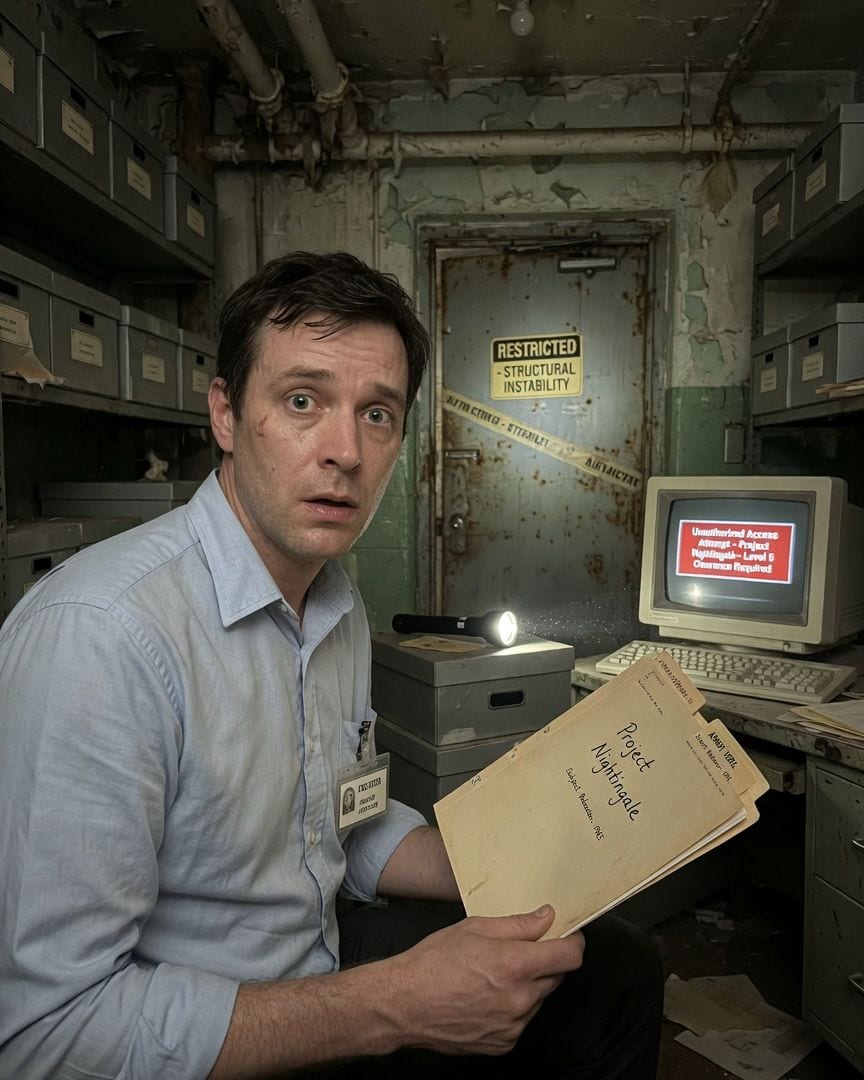
A FOIA officer found his dead mother's photo in a government Cold War file, dated 1983 — two years after her burial. Then he found her new file: 'Relocation - 1985.'
Devon Ashby, a routine FOIA officer, clicked 'release' on a 1983 file he'd seen dozens of times. Inside was a grainy photo of a woman, calmly staring from a logging road. His breath caught: it was his mother, Vera Ashby, dated two years after her 1981 burial. The file jacket, marked "Project Nightingale," led him to a forgotten, sealed sub-basement filled with unmarked metal boxes. There, he found a file for "ASHBY, VERA. Subject: Relocation - 1985," four years after her death. What hidden mechanism was meant to provoke him?
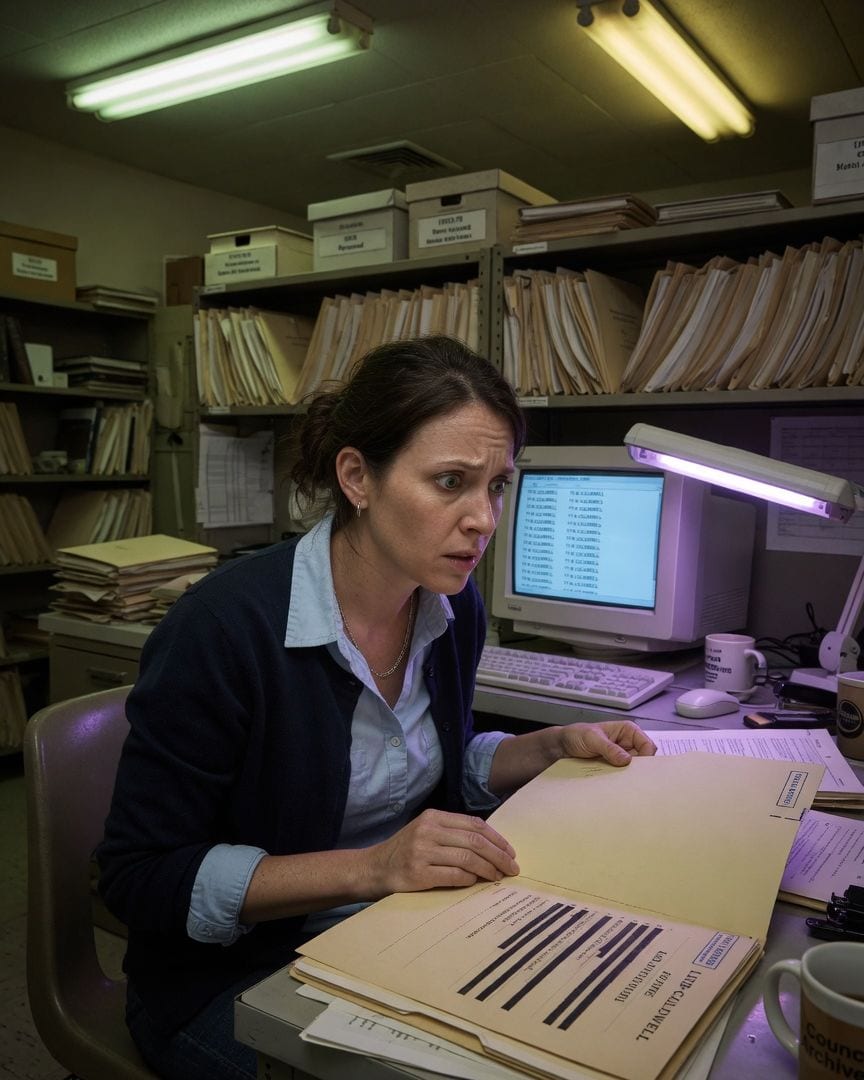
My employer's security file holds a vetting report on me dated nine years before I ever applied. It has my full name and my parents' address — with only one line, the source who referred me, blacked out.
Working a routine data audit, I pull my own security file. The issue date is nine years before I even applied for the job. Then, hidden within an old archive file, I find my current address etched under a blacked-out line.
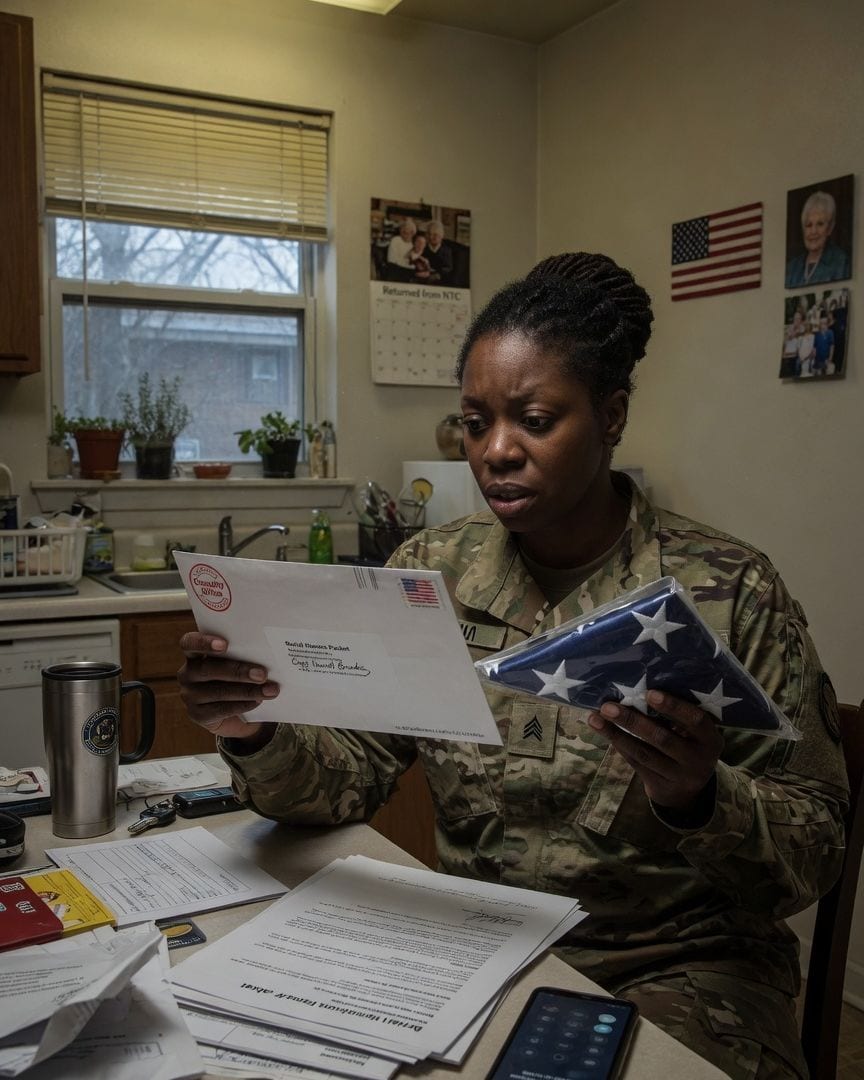
A Sergeant finds her own complete burial packet, dated for the coming spring, then finds a stack of identical ones for others.
Sergeant First Class Bree Alcott returned from a grueling training exercise, looking forward to peace, but found her kitchen table piled with mail, one official package heavy with dread. Inside was her own complete burial-honors packet, every detail filled, from Arlington plot to her grandmother’s chosen hymn, all dated for a specific day in the coming spring. The casualty office dismissed it as a 'glitch,' but Bree found a cryptic code leading to a decommissioned desert station and a stack of identical packets for other soldiers. What meticulous hand had prepared these packets, and why was Bree Alcott’s name on a list for a future she shouldn't have known?
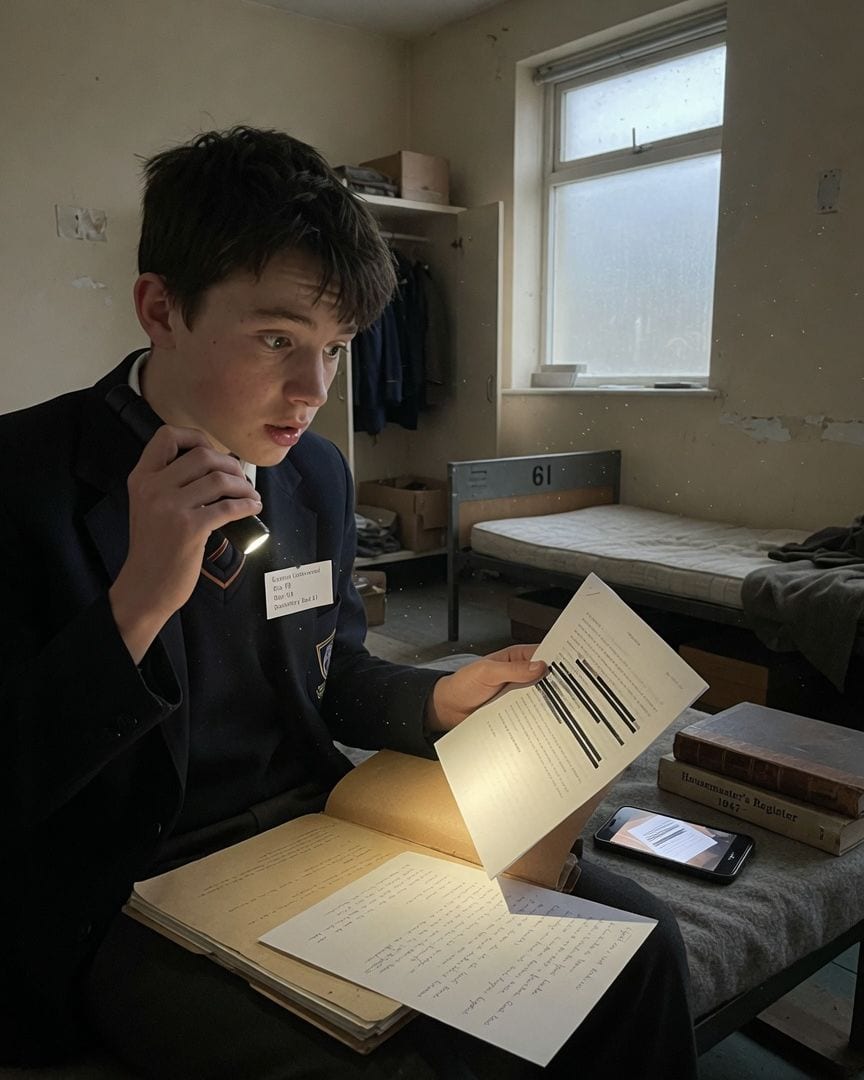
My boarding school bed number was 61, and the archive shows a boy assigned it every eight years since 1947, each leaving mid-term with the bed 'to remain made up'.
I found my matriculation card, listing me as 'Boy 61, Dormitory Bed 61.' Later, an old ledger revealed every boy assigned that bed since 1947 left mid-term, with an unsettling note: 'bed to remain made up.' Our housemaster’s recent scribble, 'as the others,' only deepened the dread around my own assigned bed.
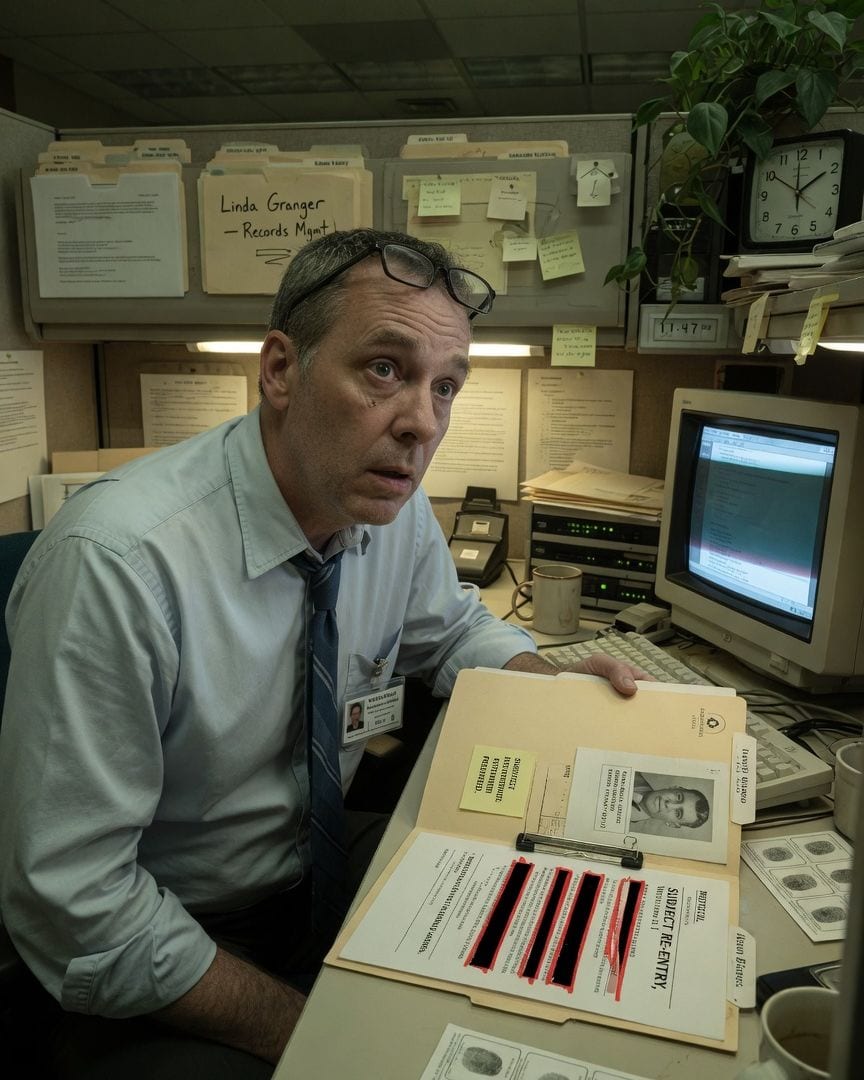
A declassification agent processed old Cold War files. A man reported dead in 1951 had 1958 fingerprints matching an employee badged into the building that morning.
Anton Skeel, a declassification agent nearing two decades of service, meticulously processed the endless backlog of Cold War secrets. His cubicle hummed with the ghosts of forgotten files, but one 'Hollow Bell' folder held a particularly glaring anomaly. It contained a 1958 fingerprint card for Henry Bishop, a man officially reported dead in 1951. When Anton fed the print into the active database, it matched Carl Romano, an employee badged into the building that very morning. A cold certainty settled over him: this wasn't an error, but a system designed for such impossible discrepancies.