Sergeant First Class Ida Moreno knew her brother died in 1945. His file, unchanged for sixty years, now says he's buried fifty feet from her front door.
Sergeant First Class Ida Moreno, a Graves Registration specialist for two decades, knew the smell of old paper and dust like her own skin. It was a familiar comfort, a scent of order in the quiet archives.
But the recent amendments to her brother Private First Class David Moreno’s casualty file had nothing to do with order. David had died in 1945 in Luxembourg, a boy of twenty.
For sixty years, his record had been static, a testament to a life ended too soon. Then, fourteen months ago, a flurry of activity began. Four amendments, each moving his designated final resting place.
Ida had seen the first three, filed by different clerks, pushing him from one European war cemetery to another, then back to the States.
She’d flagged them, sure it was a bureaucratic glitch, but each time, the changes were confirmed, then superseded.
The fourth amendment, however, felt different. It arrived last week, stamped with a date only three days prior. The clerk’s signature was a neat, anodyne loop, but the service number field was blank.
A mistake, she told herself, but the final designation was stark: St. Jude’s Churchyard, her hometown. Fifty feet from her front door.
She walked past that churchyard every morning on her way to work, past the rows of old headstones she’d never bothered to read.
The file, cold and crisp in her hands, stated that David Moreno, Private First Class, KIA, was buried there. A cold dread, sharp and sudden, settled in her chest, stealing the familiar comfort from the air.
This wasn't just a mistake; it was an invasion.
Ida left her apartment building and walked the short, familiar distance to St. Jude’s Churchyard. The morning dew still clung to the grass, glistening under a pale sky.
She approached the oldest section, where names faded into the stone, and searched for 'Moreno'. Her gaze swept past crumbling angels and lichen-covered obelisks until it landed on a stark, bright white. It stood out like a fresh wound.
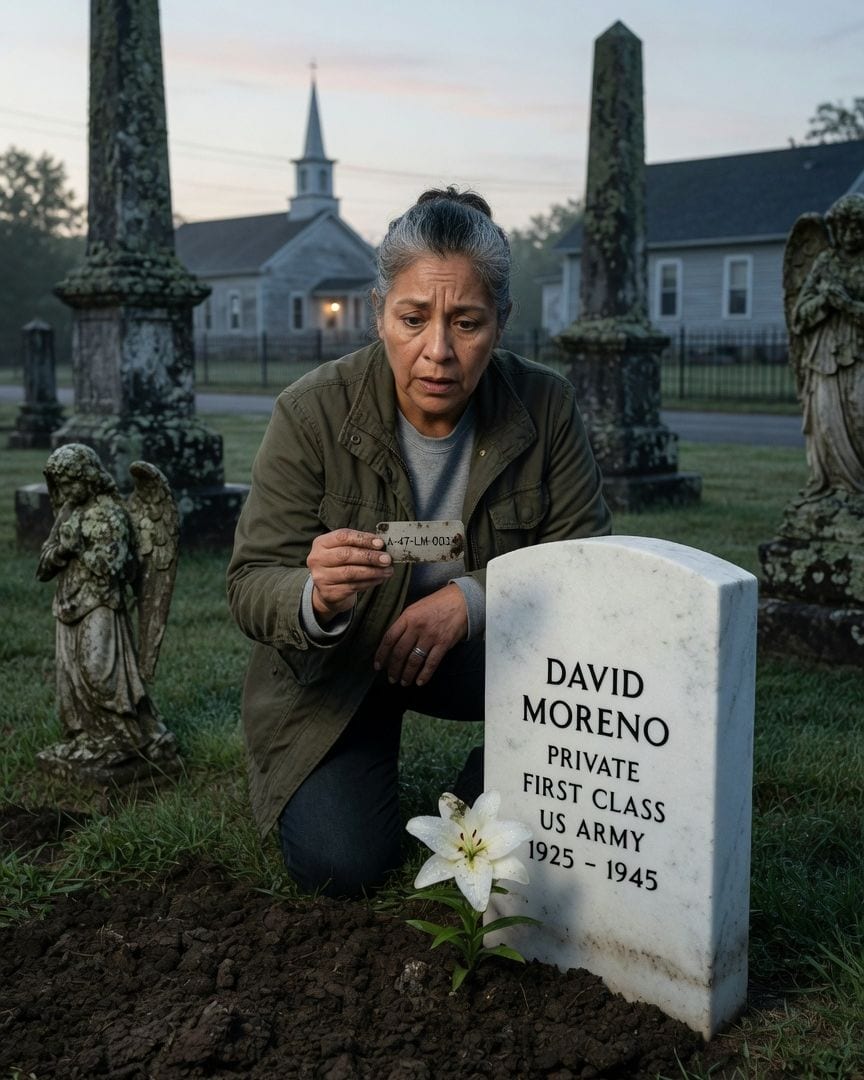
DAVID MORENO PRIVATE FIRST CLASS US ARMY 1925 – 1945
The lettering was crisp, the stone unblemished, free of the moss and grit that coated its neighbors. Too pristine. She knelt, her fingers brushing the cool marble, then running over the earth surrounding it.
The soil was loose, dark, freshly turned. Not settled. Not sixty years settled. A tiny, perfect white lily had been placed at its base, its petals still holding droplets of dew, as if it had only just been laid.
Ida frowned, her gaze sharpening, and saw it then. Half-buried in the fresh, dark earth, glinting dully in the morning light, was a small rectangle of metal.
She reached for it, her fingers brushing against the cold, unyielding surface. It was about an inch long, thin but solid, etched with a series of numbers and letters. Not dog tags. Not a military serial. This was different.
She pulled it free, wiping away the clinging soil with her thumb. A-47-LM-003. The numbers felt stark and alien in her palm. Her breath caught in her throat. This was no mistake.
Ida stood in the churchyard, the cold, metallic inventory tag (A-47-LM-003) a brutal weight in her hand. The morning sun, now higher, cast long shadows over the pristine, recently placed headstone that bore her brother's name.
The air, usually crisp and familiar, felt thin, charged with an unspoken presence.
She looked from the tag, with its utterly non-military etching, to the impossibly new granite, then across the short expanse of road to her own house, its porch light still faintly glowing in the gathering dusk.
The familiar world tilted, revealing a sharp, cold edge of hidden machinery. This tag was not a mistake, she realized with a sickening certainty, but a chilling receipt for a transaction she couldn't begin to understand.
Ida spent the next few nights hunched over her personal computer, the glow of the screen illuminating her determined face.
She cross-referenced the inventory tag number, A-47-LM-003, against every known military and government database she could access – supply catalogs, ordnance manifests, even declassified Cold War-era project archives. Nothing. The number simply did not exist in any official capacity.
It was as if it had materialized from nowhere. The blank service number on David's final amendment still gnawed at her, a professional affront.
She started searching for other 'unaccounted personnel' files, particularly those from the immediate post-WWII era, that showed late-stage amendments or obscure relocation sites.
A pattern began to emerge, faint at first, then clearer.
Dozens of files, stretching across decades, bearing similar hallmarks: names of soldiers long-dead, often classified as KIA or MIA, whose records had been recently amended with new, often remote, burial sites.
Some were military cemeteries, others small, forgotten churchyards like St. Jude's, or even private plots with no discernible connection. When she tried to access the full records for these individuals, her requests were repeatedly flagged.
A polite email from Colonel Malcolm Calloway in Pentagon Records Management landed in her inbox. It was ostensibly a check-in on her 'unusual search patterns.'
He suggested, with a chilling undercurrent of authority, that some historical records were best 'left to rest,' to 'let sleeping dogs lie.' The air in her small apartment seemed to thin, suddenly aware of unseen eyes.
The colonel's warning did nothing to deter Ida. If anything, it solidified her resolve.
She continued her investigation off-hours, using public records and obscure online forums to dig deeper into the pattern of relocated soldiers, compiling her own list of names and anomalous burial sites.
The official channels had closed, but the internet was a vast, unindexed archive. One evening, as she left the archives, the dim, institutional lights casting long shadows, she noticed a dark sedan parked across the street.
It was nondescript, but its tinted windows and the way it remained stationary, even as the building emptied, made a prickle of unease trace its way up her spine.
She told herself it was probably just someone waiting for a ride, or perhaps a delivery driver on break. A natural, mundane explanation. But the car was there again the next night. And the night after.
The following morning, an unmarked package arrived on her porch. No sender, no return address. Just a plain brown box.
Inside, nestled on a bed of tissue paper, was a single, pristine white lily – identical to the one she'd found at David's grave. Tucked among its delicate petals was a small piece of paper.
On it, printed in a clean, sans-serif font, was only one thing: A-47-LM-003. The same inventory number. Her blood ran cold. The sedan, the lily, the tag – it wasn’t a coincidence. Someone was watching her. Someone knew.
And they were sending a message that resonated with the icy dread already coiling in her gut.
Ida drove an hour north, past rolling farmlands, to a small, unassuming house in a quiet suburb.
She pulled into the driveway, the gravel crunching under her tires, and walked up to the front door, the unmarked package clutched in her hand. Reginald Fairfax, her former mentor and a retired Army Graves Registration Officer, answered the door.
His face, usually crinkled with good humor, was drawn when he saw the urgency in her eyes.
"Ida, what is it?" he asked, his voice low.
She pushed past him, laying the lily and the paper with the inventory number on his coffee table.
Then she dumped her entire folder of findings – David’s amended file, the list of other 'unaccounted personnel' with similar anomalies, Calloway’s thinly veiled threat.
Fairfax picked up the lily, then the small slip of paper, his thumb tracing the etched number. His hands, usually steady, trembled.
"A-47-LM-003," he murmured, his gaze distant. "So it's true. They're still active."
Ida stared at him. "Reginald, what is 'it'? What does this mean?"
Fairfax sighed, running a hand over his balding head. "It was a Cold War project. Highly classified. Project Lazarus. The official purpose was… unique. They called it 'repurposing'."
"Repurposing who?" Ida demanded, her voice tight. "My brother was KIA. He was buried in Luxembourg."
"No, Ida," Fairfax said, meeting her eyes, his own filled with a deep, unsettling sorrow. "That’s what they wanted us to believe. Project Lazarus involved 'filing' certain individuals. Both military and civilian.
People who were never truly lost, but were… rededicated. As inert 'anchors' within a vast, precise geometric grid across the United States."
Ida felt the floor sway beneath her. "Anchors? What kind of anchors?"
"They could be activated by specific external events," he explained, his voice hushed. "Serving as conduits or containment points for an unknown energy or entity. My job, for a few years, was to 'stamp' the files.
To make the paper trail look legitimate. The amendments you're seeing now? They're not clerical errors, Ida. They're active management of these 'anchors'.
And those inventory tags," he pointed to the one on the paper, "they’re specific markers for these… components."
David, her brother, not buried, but placed. A silent component in a vast, secret machine. The thought sent a chill far colder than the inventory tag into her bones.
Fairfax led Ida to a small study, its walls lined with books and old maps. He pulled a yellowed, rolled-up sheet from a locked drawer. It was an old military issue, but heavily annotated.
He unrolled it across his desk, revealing a faded, hand-drawn map of the continental US. Scattered across it were hundreds of faint pencil marks, some circled, some with neat 'X's next to them, connected by thin, almost invisible lines.
"Project Lazarus anchor points," he whispered, his finger tracing a pattern. "A grid. Built across decades and classifications. They're spread everywhere. Rural, urban, military bases, civilian properties."
Ida leaned closer, seeing names scrawled next to some of the Xs, names she recognized from her own list of 'unaccounted personnel'. Her stomach clenched.
"The recent amendments," Fairfax continued, his voice strained, "they aren't just shifting old markers. They're forming a new, active configuration. A new pattern is emerging from the old. See here?"
His finger moved to a cluster of Xs, tightly packed, over what was unmistakably her own town. "They’re tightening the net. And your brother's new grave," he tapped the central 'X' in the cluster, "this is the key.
The central, final point in this activation pattern. It's centered directly over your home."
Ida stared at the faded, hand-drawn map, overlaid with a new, active geometric pattern centered precisely over her own town. The lines, thin and precise, converged on one stark 'X'.
Her brother's new grave was marked as the 'key,' the central point in this converging configuration. The air in the quiet study suddenly felt brittle, like glass.
She looked at the network of lines, then back at the single, central X, and a terrible, cold certainty solidified in her mind. The file wasn't just being written. It was being activated.
Ida marched into Colonel Malcolm Calloway's Pentagon office without an appointment. The colonel, a man whose polished demeanor barely hid a steel core, looked up from his desk, a flicker of annoyance crossing his face. Ida didn't hesitate.
She slammed Fairfax's faded, hand-drawn map onto his mahogany desk, its delicate paper crackling.
"Project Lazarus," she stated, her voice flat, devoid of emotion. "The anchors. The geometric grid. My brother is an unwilling component, and his new grave is the key to a new activation pattern over my town."
Calloway’s carefully constructed calm fractured. He leaned back, his eyes narrowing, his pretense of bureaucratic cordiality evaporating. "Sergeant Moreno, you've overstepped your authority. This is beyond your clearance."
"My brother is involved. That gives me all the clearance I need," Ida retorted, pushing the map closer. "Tell me what's happening. What is being activated?"
Calloway sighed, a sound of weary resignation. "Project Lazarus is indeed active. It’s a contingency, a failsafe for… an unknown entity. A power we couldn't comprehend during the Cold War. We filed certain individuals, yes.
People whose absence wouldn't be deeply scrutinized. They are inert. Dissenters. Soldiers, yes, but also dissidents, political undesirables, even some of our own who crossed lines. They became the anchors. Waiting."
"Waiting for what?" Ida demanded, her hands clenching into fists.
"An external event," Calloway finally admitted, his voice barely a whisper. "A specific energy signature, a resonance. The anchors can then be activated, either as conduits for that energy or to contain it. We don't fully understand it even now.
Your brother, David, and hundreds like him, are unwilling components of a vast, decades-old machine. And yes, the new grid," he gestured to the map, "is a preparatory measure. For something imminent."
He looked at Ida, a strange mix of fear and grim acceptance in his eyes. "Something is coming. And the pattern is complete."
As Calloway spoke, a low, resonant hum began to vibrate through the Pentagon. It was subtle at first, a faint thrum beneath the polished floors, barely noticeable above the hum of the building's own systems.
Then it grew, a deep, pervasive chord that seemed to emanate from the very stone of the building, making the framed photos on Calloway's desk subtly rattle. Calloway's face went ashen.
He pressed a hand to his ear, listening intently, his eyes wide with a primal fear.
"It's too soon!" he whispered, his voice thin, barely audible above the growing vibration. "The calculations were off!"
Ida didn't wait. She grabbed Fairfax's map from the desk, its edges crinkling in her frantic grip, and raced out of the office.
She sprinted through the long, echoing halls, the hum intensifying, filling the very air, making her teeth ache. She hailed a cab outside, shouting her address over the increasing thrum, which now seemed to permeate the entire city block.
The cabbie, muttering about 'subway work,' sped through traffic.
As the cab neared her hometown, the hum became an audible, physical force. It wasn’t just a sound; it was a pressure, a vibration in her chest.
She leaped out of the cab two blocks from her house, the humming now undeniably emanating from the direction of St. Jude's churchyard. Her heart pounded as she ran the remaining distance.
She burst through the gates, her eyes immediately drawn to David's pristine headstone.
A shimmering distortion, like heat haze, rose from the earth around the grave, pulsing with the relentless, resonant sound. It grew, twisting and coalescing into a column of translucent, rippling light that stretched towards the sky.
The air crackled with an unseen energy, smelling faintly of ozone and something ancient, primordial. It was not just a record, she realized with bone-deep terror. It was a conduit. A door. And it was opening.
The shimmering column of light pulsed, then began to recede, slowly collapsing back into David’s grave. The resonant hum faded, dwindling to a faint, lingering thrum beneath the earth, then vanishing altogether.
The air, heavy with the scent of ozone, gradually cleared.
The next day, an Army team arrived. In crisp fatigues, they cordoned off the churchyard. Ida watched from her porch as they carefully removed David's headstone. Then, with quiet efficiency, they excavated the plot.
They found no coffin, no remains—only undisturbed earth, sixty years’ worth of compacted soil. No trace of David Moreno. They repeated this at two other 'anchor' sites within town, locations Fairfax’s map had marked.
Both were found empty, devoid of any interred body. Colonel Calloway was swiftly reassigned to a remote, obscure posting, and Project Lazarus, already deep in the shadows, was reclassified to a higher, impenetrable tier of secrecy.
Ida Moreno returned to her duties, a quiet specter in the Graves Registration office. Her brother's file was officially closed, his final resting place listed simply as 'unknown.'
The churchyard remained, its empty plot a silent testament to a truth erased. Sometimes, especially in the quiet twilight hours, she felt a faint tremor in the earth, a deep, almost inaudible hum, a phantom resonance.
She knew they had only stopped 'this' one. The vast, precise pattern across decades, linking her brother to hundreds of others, still haunted her. The files, somewhere, were still being signed.
A faint tremor ran through the earth, barely noticeable, as Ida Moreno sat on her porch swing, watching the setting sun cast long shadows over the quiet churchyard.
She wondered how many other towns had their own empty plots, their own silent, geometric patterns waiting to be activated.
If this one got to you
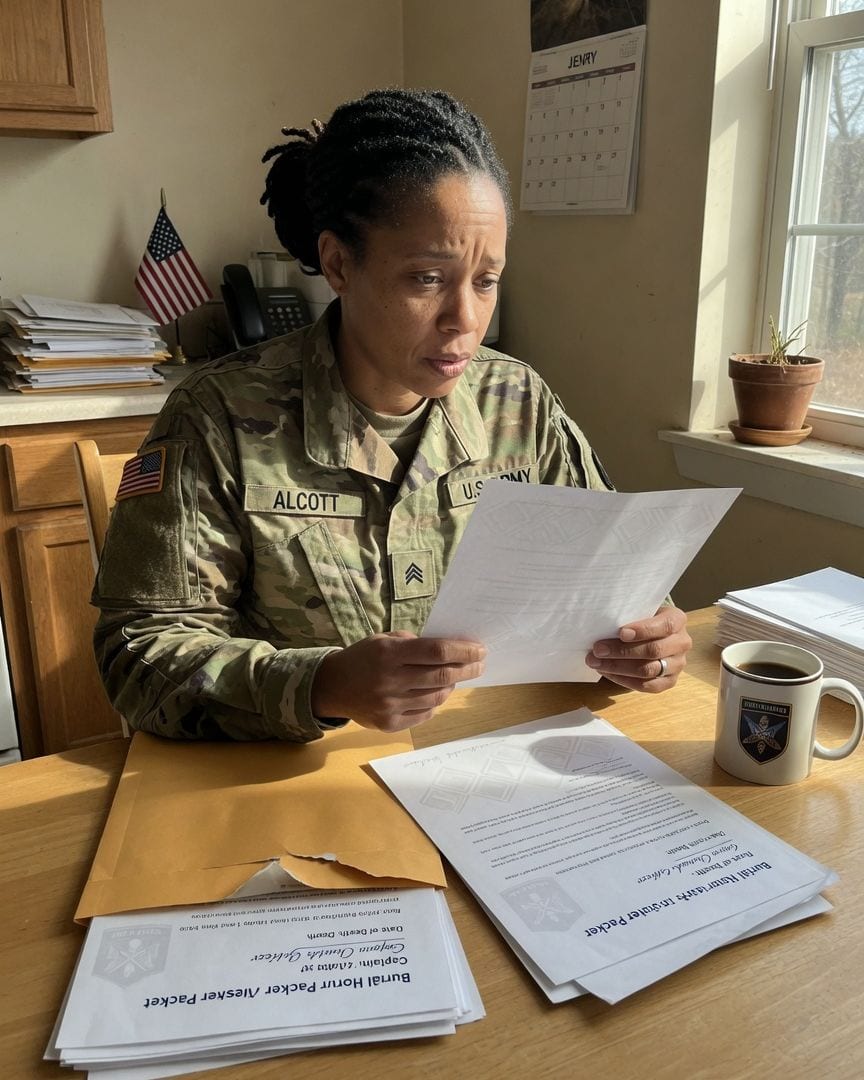
Sergeant First Class Bree Alcott found her own completed burial packet, signed with a confident flourish. It stated her death date was April 17th, next spring, but she was very much alive.
Sergeant First Class Bree Alcott, 38, found her own completed burial honors packet on her kitchen table one quiet autumn morning. It was signed, sealed, and dated for April 17th, next spring, despite her being very much alive. When she took the impossible paperwork to the Fort Claiborne Casualty Affairs office, the staff sergeant there denied any record, even as he traced a faint, archaic watermark on the document. Later, deep in the post's archives, Bree uncovered other packets for soldiers long missing, all bearing the same unsettling watermark and future-dated signature, their 'death' dates now long past – until she found one for tomorrow.
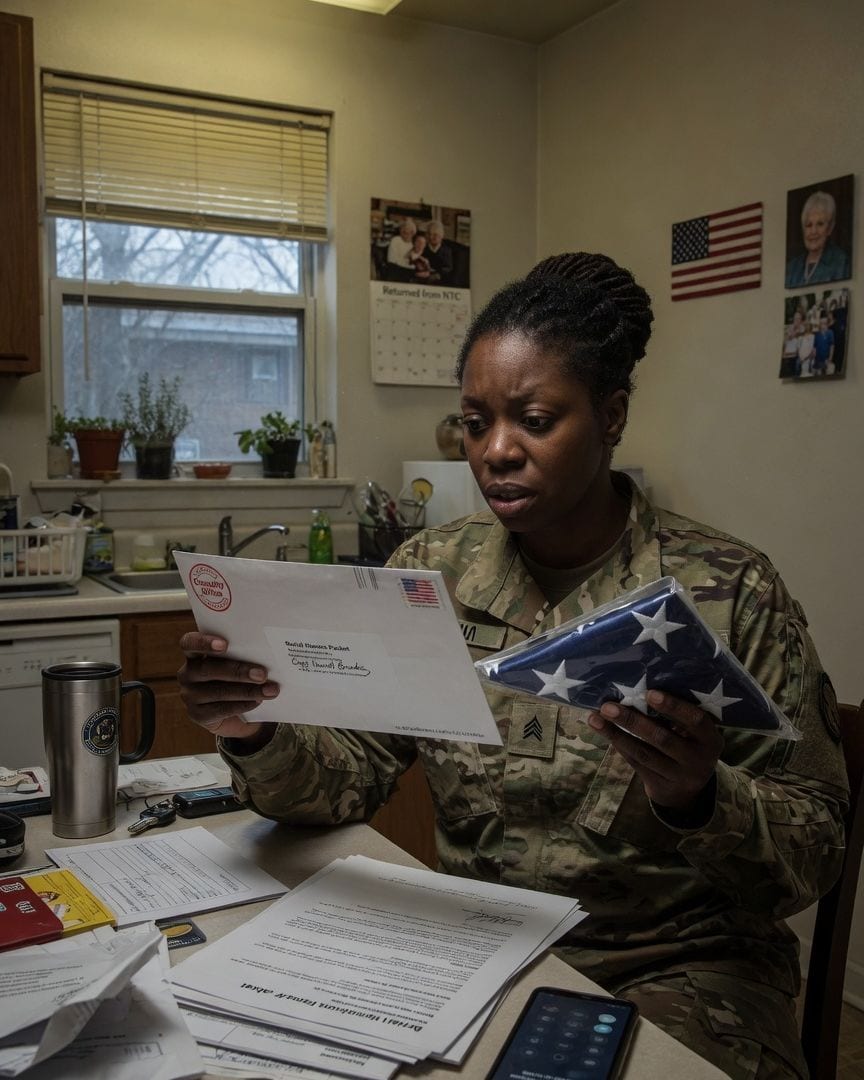
A Sergeant finds her own complete burial packet, dated for the coming spring, then finds a stack of identical ones for others.
Sergeant First Class Bree Alcott returned from a grueling training exercise, looking forward to peace, but found her kitchen table piled with mail, one official package heavy with dread. Inside was her own complete burial-honors packet, every detail filled, from Arlington plot to her grandmother’s chosen hymn, all dated for a specific day in the coming spring. The casualty office dismissed it as a 'glitch,' but Bree found a cryptic code leading to a decommissioned desert station and a stack of identical packets for other soldiers. What meticulous hand had prepared these packets, and why was Bree Alcott’s name on a list for a future she shouldn't have known?
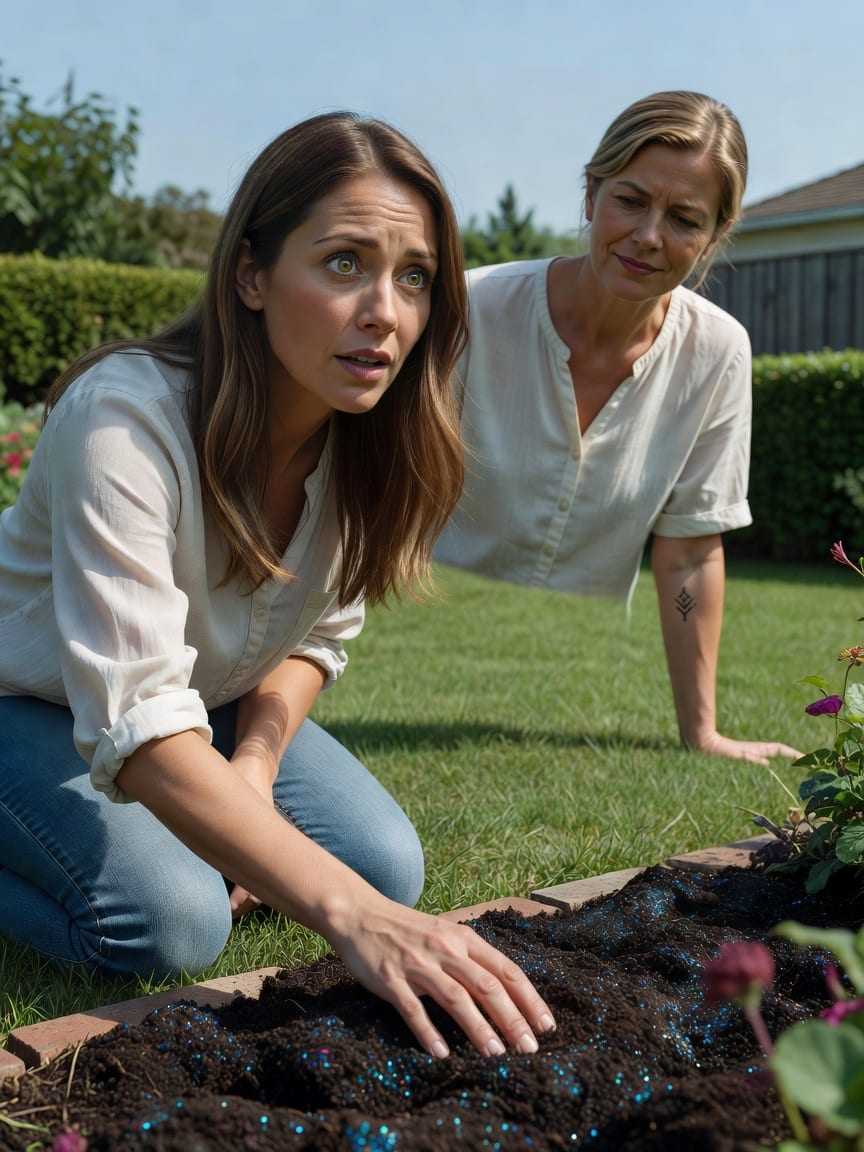
My family's grave 44 on the council map is marked "reused" from 1908. The sexton's old ledger confirms: "no new stone, no notice to kin." We never arranged it.
I always thought Grave 44 was solid ground, our family plot for generations. But a council map showed a sexton's note: 'grave 44 — reused under the standing arrangement, no new stone, no notice to kin.' Now, I've found an archive record for Plot 44, buried in 1905 under a completely different name.
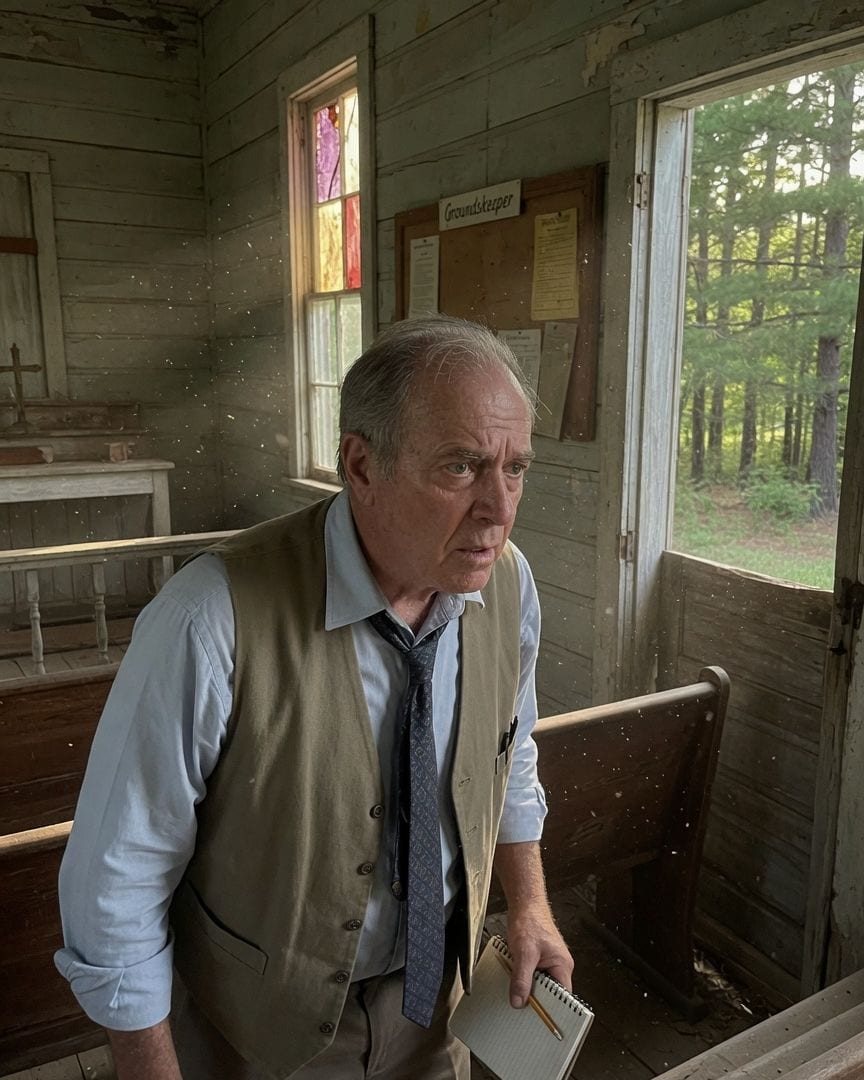
On his final project before retirement, a lineage historian found 41 soldiers buried in 1955 with no death dates. He then found their Cold War transfer order, dated *after* the burial.
Owen Sarkis, a lineage historian nearing retirement, sought to close his career with one final, simple project: resolving the mystery of the phantom 250th Chemical Company. His search led him deep into a Carolina pine forest, to an isolated chapel with a meticulously mowed plot. Forty-one headstones stood in neat rows, each bearing a name and regimental number, but beneath every name, the dates of birth and death were unsettlingly blank. The local groundskeeper hinted the men "just… left," and Owen found their names on no military lists after 1955; their lives seemed erased. But the true shock came with a "TOP SECRET" military transfer order, listing all 41 men from the chapel, ordered to a non-existent facility *two weeks after* their supposed burial. What really happened to the 250th Chemical Company?
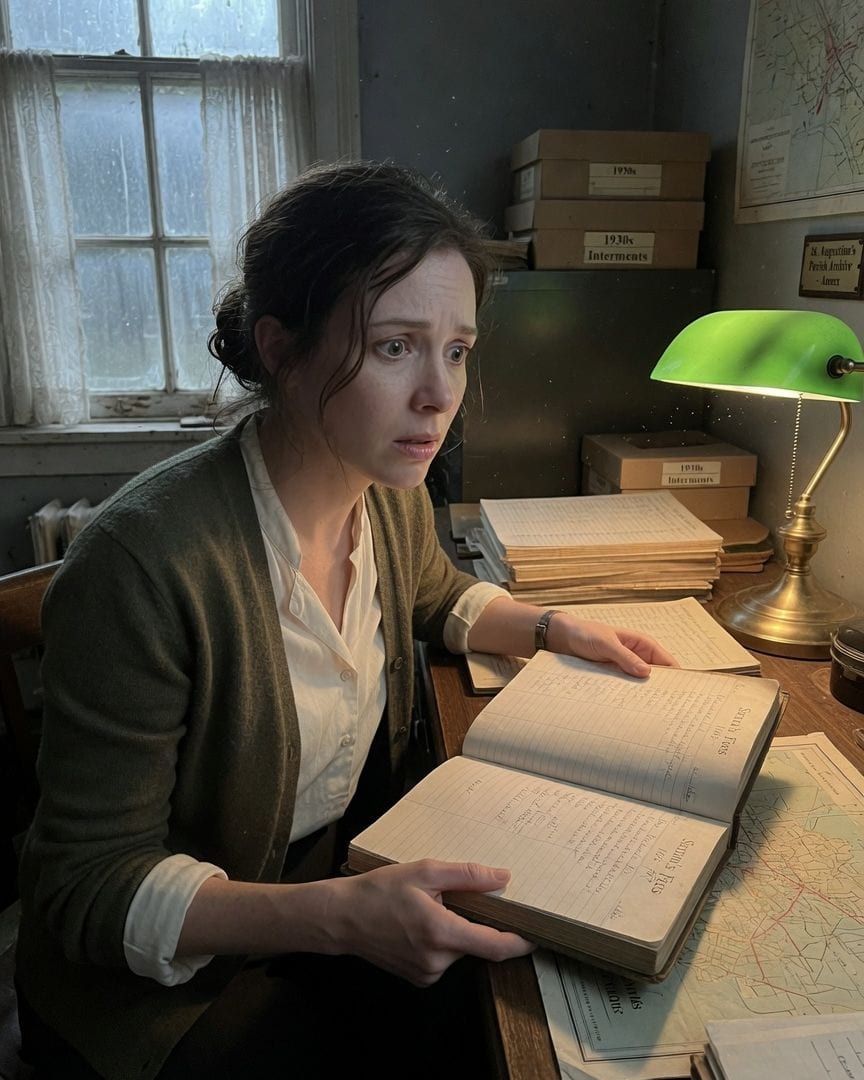
Our churchyard closed in 1974. But the sexton's book shows new graves every month, paid by families whose names are on stones from the 1930s.
As Oakhaven's new archivist, I expected a quiet life of dusty ledgers and ancient records. But a current entry in the sexton's fee book listed a "new burial plot" paid last month for Theresa Romano, who died in 1931. The town ordinance closed the churchyard to new burials in 1974.
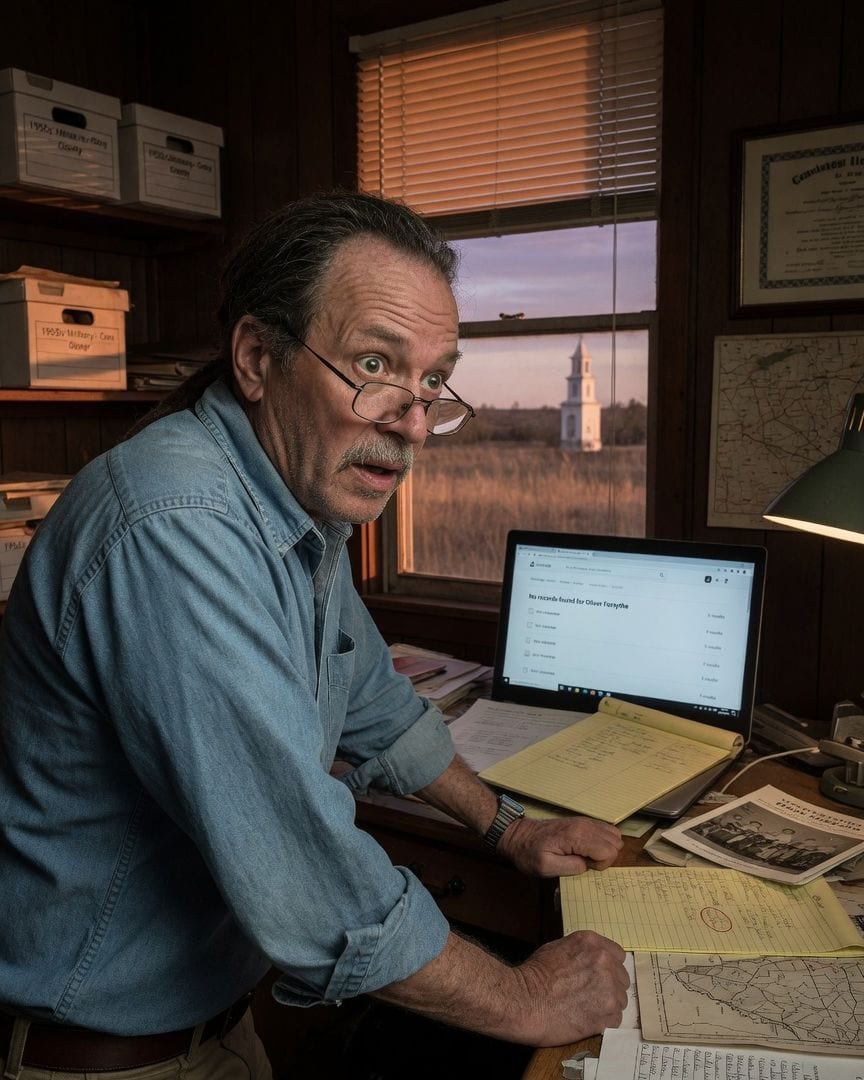
On his final project, a historian found forty-one Cold War headstones, all with names but no death dates.
Approaching retirement, lineage historian Owen Sarkis took on one final project: solving the mystery of the 250th Chemical Company, a unit that vanished after a single 1955 parade. His search led him down Carolina backroads to a lonely, weathered chapel, behind which lay forty-one identical gray headstones in neat rows. Each stone bore a name, but chillingly, not one had a date of death, a silence louder than any inscription. Then, on one stone, he found a small, industrial metal plate bearing a cryptic code and a symbol he recognized from a declassified document on 'unconventional materials handling.' The true nature of these 'graves' began to curdle in his mind, suggesting something far colder than death itself.