Sergeant Gordon Adler found his closest friend's signature logging a patrol shift. The man was miles away in medevac.
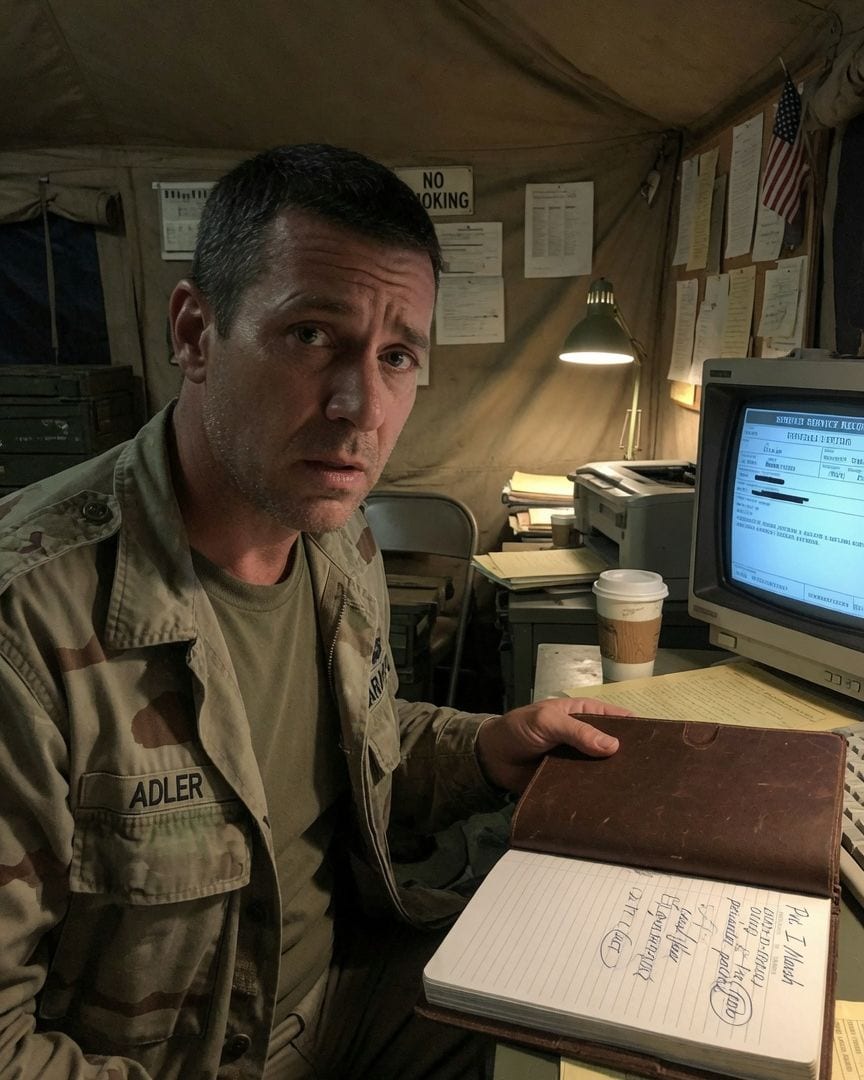
Sergeant Gordon Adler watched Private Isaac 'Priest' Marsh at the chow line, the clatter of forks and murmurs of conversation a familiar drone.
Marsh, back from medevac just days ago, sat across from him, quietly eating a plate of lukewarm rehydrated beef stew. But something was off.
Marsh, his closest friend since basic, a man who sighted his rifle right, signed his name right, always, was eating left-handed. The fork moved with a smooth, unthinking ease Adler had never seen, scraping against the metal tray.
'Hey, Priest,' Adler called softly, his voice cutting through the mess hall's low hum. 'Since when did you switch hands?'
Marsh paused, the fork halfway to his mouth. He set it down, slowly, on the metal tray. He looked at his left hand, then his right, as if they were two unfamiliar objects that had suddenly appeared before him.
His eyes, usually quick and bright, held a distant, almost vacant quality. Then, just as slowly, he picked the fork back up with his left, his gaze still lost somewhere beyond the tent flaps.
Later that evening, the image of Marsh's blank stare gnawed at Adler. He pulled up Marsh’s digital service record on his terminal, the screen a pale blue glow in the dim barrack.
He searched for any mention of a hand injury, nerve damage, anything that might explain the sudden shift. The record was clean, pristine.
No physical therapy, no medical notes beyond the concussion that had sent him to medevac two months prior.
Adler tried to dismiss it as a post-concussion quirk, a temporary disorientation, perhaps a side effect of the drugs he might have been given. But the unease lingered, cold and persistent.
He decided to check the unit's physical duty log, a heavy, leather-bound book kept in the company office. The office was quiet, smelling of stale coffee and printer toner.
He flipped through the crisp pages for the last two months, looking for anything that might explain Marsh's oddness, or his medevac period.
His finger traced down the roster for a perimeter patrol that had occurred three weeks prior, a date squarely in the middle of Marsh's official medevac leave. And there it was: 'Pvt.
I. Marsh,' with a clear, familiar signature next to it, logging a full eight-hour shift from 0100 to 0900. The handwriting was undeniably Marsh’s, firm and precise, exactly as Adler remembered from countless shared documents and forms.
But the entry was impossible. Marsh had been miles away in a field hospital, recovering from his concussion. Adler stared at the page, the ink solid beneath his thumb, swearing to a thing that could not have happened.
Adler found Marsh alone in the recreation tent, staring at a static-filled TV screen that flickered with ghostly images. The hum of the generator outside barely masked the soft hiss of the screen.
He approached, the heavy log book clutched in his hand, its leather cover cool against his palm. 'Priest,' he said, his voice low, 'we need to talk.'
Marsh turned, his eyes flat, devoid of their usual spark, fixed on Adler. Adler opened the log book to the impossible entry and pushed it forward, pointing to the name. 'This. This is your signature, isn't it?
But you were in medevac. Three weeks ago.'
Marsh’s gaze flickered to the page, then back to Adler. His face remained utterly blank, devoid of surprise or confusion, as if Adler had simply commented on the weather.
Slowly, a faint, unblinking smile spread across Marsh's lips, a smile that didn't reach his eyes, a thin, unnerving line. His gaze drifted past Adler's shoulder, fixing on something unseen, unmoving, behind him.
Adler felt a sudden, cold dread prickle his skin, and he instinctively spun around, scanning the empty tent behind him.
The tent behind Adler was empty, save for a stack of worn-out magazines and a few empty MRE bags.
Marsh’s unsettling smile faded as quickly as it had appeared, leaving his face as impassive as before, his eyes once again fixed on the TV. Adler tried to press him, asked him where he’d been, who signed the log.
Marsh simply shrugged, a gesture devoid of emotion, and turned fully back to the static-filled screen. Adler left, the log book feeling heavy and cold in his hands, its impossible entry a stone in his gut.
He couldn't shake the image of that smile, that distant stare, or the feeling that something had been standing just behind him.
He began to look for other 'clerical errors,' driven by a chilling suspicion that Marsh’s anomaly wasn’t isolated.
Using his access as a sergeant, he started digging through recent unit logs, focusing on dates around personnel movements – new arrivals, transfers, medevacs. The data was vast, but he started noticing a subtle pattern.
He found a supply manifest, signed by a Specialist Reynolds who was officially reported sick that day.
Another entry detailed a perimeter patrol log from the previous month that noted 'excessive boot prints outside wire, dismissed as animal tracks' – a vague, unsettling detail usually followed by a more robust explanation.
Each anomaly, minor on its own, now felt like a pinprick in a carefully constructed facade.
Adler sought out Specialist Ralph Sullivan, the young, earnest records clerk, under the guise of 'auditing for efficiency.' Sullivan, always eager to please, pulled up digital files, cross-referencing manifests and duty rosters with cheerful diligence.
Adler pointed out discrepancies, feigning concern about 'sloppy record-keeping.' Sullivan, however, dismissed them as isolated incidents, 'just the usual fog of war, Sergeant. Happens all the time.'
But Adler saw the pattern forming, a subtle, almost imperceptible tremor beneath the rigid order of military accountability.
He noticed Marsh observing him more often now, a still, silent presence at the edge of his periphery, never engaging, just watching from across the mess hall or down the dusty path between tents.
Adler tried to access older digital archives, seeking similar 'errors' further back than the current rotation. He needed to see if this was new, or a recurring issue, a systemic flaw that ran deeper than simple human oversight.
He typed in his credentials, then the request for historical data. His login was denied. 'Unauthorized access attempt,' the screen flashed in harsh red letters. He tried again. Same result.
The monitor hummed, a low, trapped sound in the quiet office.
Frustrated, he walked into Captain Sarah Donovan's office. Donovan, a sharp, disciplined officer, looked up from her paperwork, her gaze crisp and appraising. 'Sergeant Adler. There are protocols for accessing historical data. What exactly are you looking for?'
Her tone was mild, but her gaze was direct, unwavering, like a sniper’s scope.
Adler mumbled something about cross-referencing supply chain efficiency across rotations, trying to sound as bureaucratic as possible. Donovan leaned back in her chair, a slow, deliberate movement.
'Sergeant, I understand your zeal for order, but Firebase Kestrel has more pressing concerns than twenty-year-old supply manifests. Don't waste your time chasing ghosts in old files. Focus on the present. Is that clear?'
It was a warning, subtle but unmistakable, delivered with a smile that felt cold enough to freeze the small office.
Later, as Adler walked back to his barracks, the sun setting in a blaze of orange and purple over the desert, he saw Marsh leaning against a supply crate, seemingly engrossed in cleaning his rifle.
But as Adler passed, Marsh’s head tilted almost imperceptibly, his eyes tracking Adler's movement, a silent, unblinking surveillance. Adler felt a cold knot tighten in his stomach. He wasn't just investigating; he was being watched. The hunt had turned.
Undeterred by Donovan’s warning and Marsh’s silent surveillance, Adler found a way around the digital block. He remembered Specialist Sullivan mentioning an old, unindexed hard drive, a 'dead file' archive that held records too archaic for the main server.
It was stored in a dusty, forgotten corner of a supply shed, tucked away behind boxes of obsolete communications equipment. Adler 'volunteered' for inventory duty and, after hours, retrieved the drive, its plastic casing gritty with years of neglect.
Back in his bunk, using a secure, offline terminal he'd jury-rigged, he painstakingly sifted through the archaic files. The interface was clunky, a relic of early operating systems, but the data was there.
He searched for patterns: medevac dates, new arrivals, and then, slowly, meticulously, cross-referenced them with duty logs and personal records. The silence of the barracks pressed in around him, broken only by the whirring of the hard drive.
And then he saw it. A duty log entry from 1987. 'Pvt.
D. Lambert' signed for a guard shift from 0400 to 1200, but Lambert's medical records, scanned from paper, clearly showed him hospitalized off-base for appendicitis at that exact time. The same impossible signature, the same undeniable contradiction as Marsh's.
Then another, from 2003: 'Sgt. S. Whitmore,' signing for a vehicle inspection when Whitmore was listed as on emergency leave, a family emergency back home.
The pattern was horrifyingly clear: a soldier leaves, a soldier returns, subtly changed, and then the system itself begins to document their impossible presence. It wasn't just Marsh. It had happened before.
And the records, the unimpeachable military paperwork, weren't failing; they were documenting a truth too terrible to acknowledge. The left-handed eating, the blank stare, the impossible patrol — they weren't isolated incidents. They were symptoms of a recurring, terrifying phenomenon.
The dread solidified, cold and sharp, in Adler's gut.
Adler continued to dig, driven by a terrible certainty that the pattern wasn’t accidental. He started searching for any unusual terminology, any coded references in the older logs, anything that might hint at the true nature of these repeating anomalies.
Hours blurred into one another, the stale air of the supply shed heavy around him, thick with the smell of old paper and dust. The flickering screen cast his face in a pale, sickly light.
Then, in a commander's personal log from 1978, buried deep within a digital folder labeled 'Misc. Correspondence - DO NOT UPLOAD,' he found it.
A single, short entry, handwritten and almost illegible, scanned in as an image file: 'Kestrel Protocol - Replication Event. Subject 17 confirmed. Integration complete.'
The words hit him like a physical blow, knocking the breath from his lungs. 'Kestrel Protocol.' It wasn't just a pattern of inexplicable incidents; it was a protocol. A known, documented process.
This wasn't a system failing; it was a system actively managing something horrific.
He stared at the words, the blood draining from his face, realizing the truth was far older, far more organized, and far more terrifying than he could have ever imagined.
Adler returned to Captain Donovan's office the next morning, the old hard drive clutched in his hand. He placed it on her desk, his face grim, etched with the sleepless hours spent sifting through impossible truths.
'Captain, I need you to look at this. It's about Marsh. It's about Firebase Kestrel.'
Donovan's expression remained impassive, a perfect mask of military discipline, but her eyes held a flicker of something Adler couldn't quite place – resignation, perhaps, or a deep, weary understanding.
She picked up the hard drive, turning it over in her fingers. 'Sergeant, I warned you about chasing ghosts.'
'These aren't ghosts, Captain,' Adler retorted, his voice tight, the words tasting like ash. 'They're in the records. Decades of them. 'Kestrel Protocol'—what is it?'
Donovan sighed, a slow, deliberate exhalation, the sound unnaturally loud in the quiet office. She set the hard drive down and rose, walking to a small, secure safe hidden behind a framed commendation certificate. Her movements were calm, unhurried.
She opened it, revealing a single, thick, sealed folder. 'It's what allows this outpost to function, Sergeant.' She pulled out the folder, its cover stamped in stark red letters: 'TOP SECRET - KESTREL PROTOCOL.'
She laid it open on her desk.
Inside, Adler saw pages of classified documents. Detailed procedures, historical timelines, and a list of 'Replication Subjects' dating back to 1973, Firebase Kestrel's founding year.
Each entry documented a soldier, a 'replication event,' the subtle physical changes, the 'integration' into the existing system, and the corresponding adjustments to their official records.
His impossible duty log entry for Marsh, the left-handed eating, the other discrepancies he'd found—they all clicked into place, forming a horrifyingly complete picture. The military knew. They had known for decades. They weren't fighting it; they were managing it.
Captain Donovan tapped a page in the 'Kestrel Protocol' document, her finger resting on a column of dates. 'This outpost sits on an anomaly, Sergeant. It produces… replacements. Functional, loyal. Indistinguishable, eventually.
Our job, the Protocol’s job, is to ensure the integrity of the unit, the mission, and the larger force. We don't fight it; we streamline its integration. We account for it.
Every discrepancy you found, every 'impossible' log entry, is part of that accounting. It's a system of checks and balances, ensuring the continued functionality of this vital asset.'
She pointed to a list of names, a scroll of military service members, past and present. 'These are the successful integrations. Names you might recognize from unit history, some still serving.'
Adler’s eyes scanned the list, his stomach churning, a cold nausea spreading through him. He saw names, dates, and brief, clinical descriptions of their 'replication events.' He looked at Donovan, her face calm, unbothered, as if discussing routine maintenance.
'And Marsh?' he choked out, his voice barely a whisper.
Donovan nodded, her gaze steady. 'Subject 42. He's integrated. He's a good soldier. Just like the others.' She closed the folder, the thud final, sealing away decades of unspeakable truth. 'You have a choice, Sergeant.
You can be part of the system that manages this reality, or you become an anomaly the system needs to manage.' Her gaze was unwavering, implying the latter was a fate far worse than any transfer, a silent, unblinking promise.
Adler looked at the sealed folder, then at Donovan, then at the door. There was no escape here, only a choice of how he would disappear.
Sergeant Gordon Adler was transferred out of Firebase Kestrel within the week, his redeployment expedited. His service record remained spotless, his efficiency reports glowing, a testament to his 'exemplary service.'
Private Isaac Marsh continued his duties at Firebase Kestrel, a quiet, diligent soldier, indistinguishable from any other, his left hand just as adept as his right once had been.
The unit counted down its last days, then redeployed, unaware of the silent, managed horror it left behind.
Firebase Kestrel continued its operations, a lonely outpost in the desert, its systems meticulously accounting for every man, every log, every subtle shift in the roster. The Kestrel Protocol remained in effect, a silent guardian of an unspeakable truth.
Months passed. Adler was assigned to a quiet posting far from any remote outposts, far from any desert.
He had settled into a new routine, the memories of Firebase Kestrel fading, dulled by distance and the sheer normalcy of his new life.
He often found himself trying to remember little details about Marsh, specific mannerisms, a particular inflection in his voice, but the details remained elusive, blurred at the edges. One afternoon, a package arrived in his inbox, marked 'Official Commendation.'
He opened it. It was a medal, a polished bronze star, accompanied by a citation for 'exemplary service during a critical perimeter defense at Firebase Kestrel'—an action he had no memory of, a battle he was never a part of.
He held the medal, its weight cold in his palm, the polished metal reflecting his own face, unchanged.
A records clerk at HQ noted Sergeant Adler's file had been updated. A commendation for 'exemplary service' at Firebase Kestrel, including a medal for an action he never took.
The clerk, Specialist Ralph Sullivan, looked at the medal's citation, then at the date, and then at his own left hand. He polished the medal with his thumb.
If this one got to you
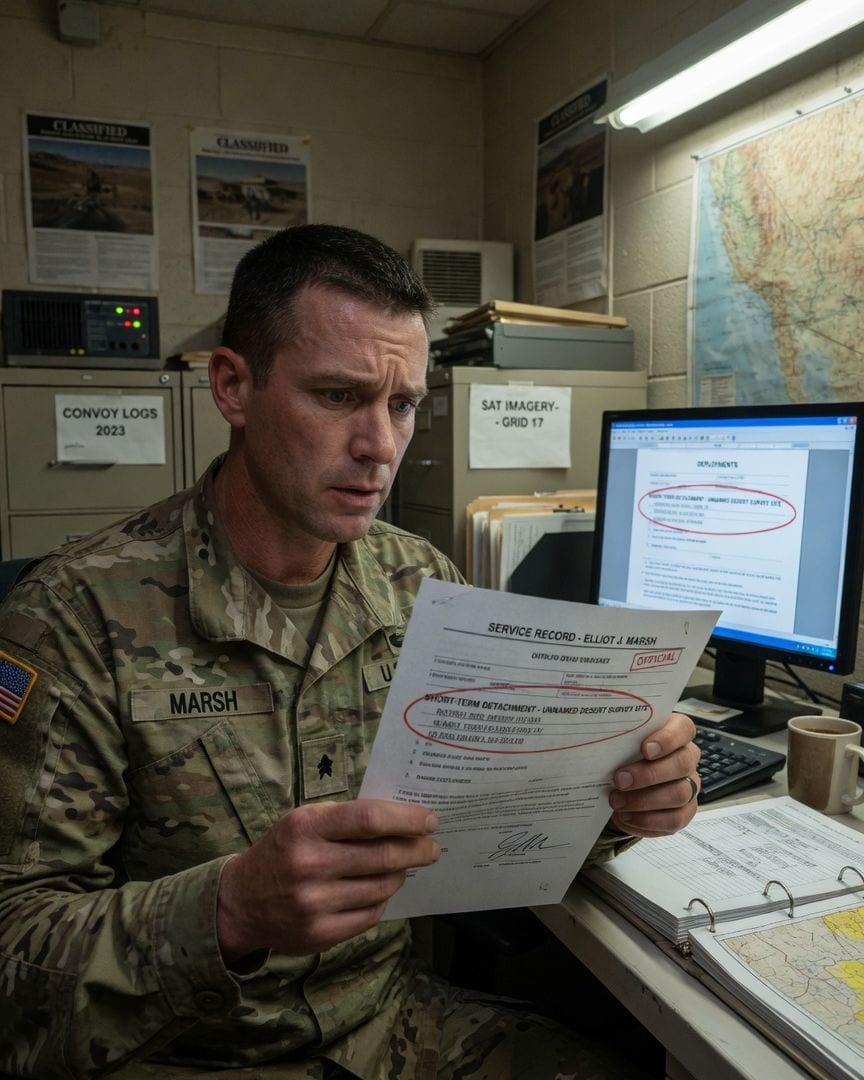
First Lieutenant Marsh's own signed service record lists a mission he can't recall from the night his desert outpost vanished.
First Lieutenant Elliot Marsh felt the Mojave dark swallow his resupply convoy, a wrong turn leading him to an unlisted firebase. The remote outpost, its flag tattered and sandbags faded, materialized from the desert night, baffling him. When his superiors reported nothing at that grid, Marsh's confusion turned to dread as the entire structure vanished behind him, leaving only empty expanse. Back at Fort Irwin, his meticulous investigation revealed a chilling truth: his own signed convoy logs and service record detailed a different route and an unremembered mission, placing him miles away at the exact time he witnessed the impossible.
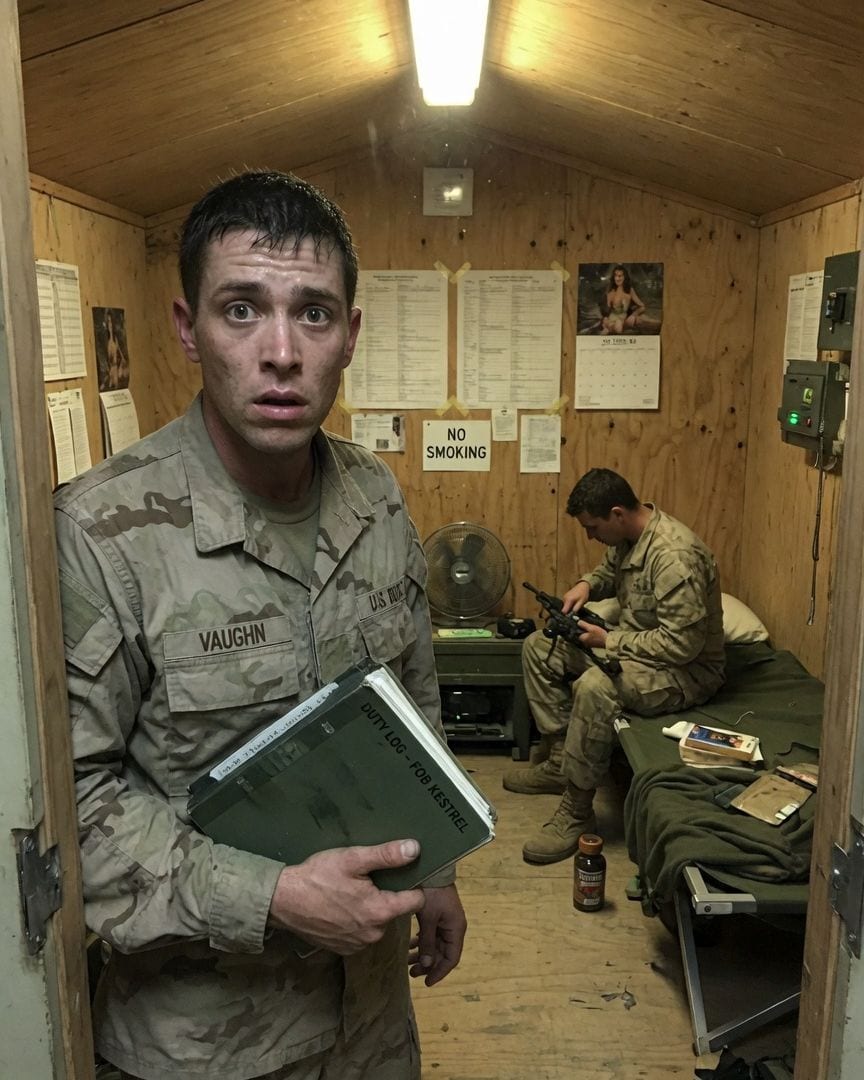
A soldier's bunkmate was airlifted from the FOB, but his signature appeared in the duty log the very next day.
Soldier Eugene Vaughn had spent two years at the isolated FOB Kestrel, used to the generator's drone. His bunkmate, Corporal Patrick Aldridge, had recently returned, pale but grinning, after a nasty fall. Then, Aldridge, an Ohioan who called soda 'pop,' began to say 'reckon,' a word Vaughn had never heard him use, denying it with an unsettling laugh. Vaughn's unease grew, until he found the unit's duty logbook; inside, signed 'Aldridge, P.', were entries for tasks dated *after* his bunkmate had been airlifted from the FOB. Vaughn knew it was impossible. He confronted Aldridge, logbook in hand, meeting an unreadable smile and eyes suddenly uncomfortably still.
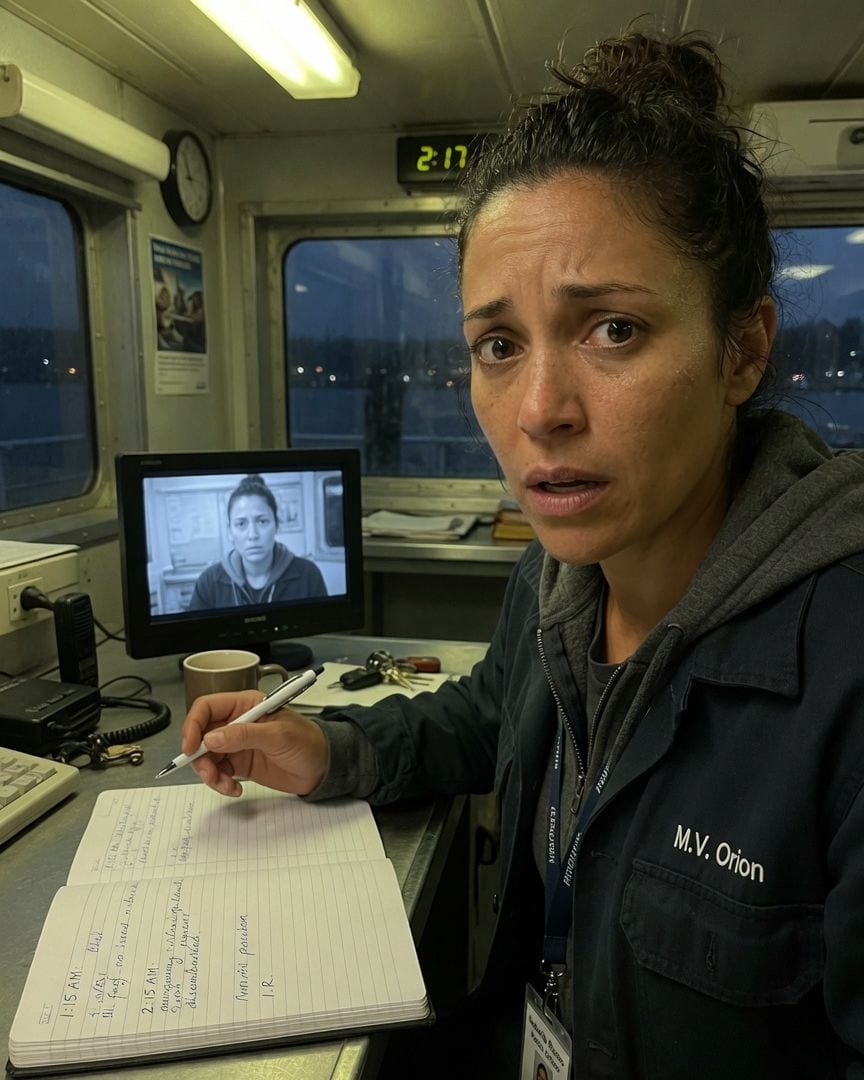
My security camera showed my own face at 2:15 AM, writing an entry I didn't make, staring utterly blankly into the lens before the screen flickered.
As a meticulous watchman on the M.V. Orion, I was making my routine 2:00 AM log entry when I found a previous one I hadn't written. Timestamped 2:15 AM, it stated a 'foot passenger disembarked' with my own initials beside it. But the ferry was dark, silent, and completely empty.
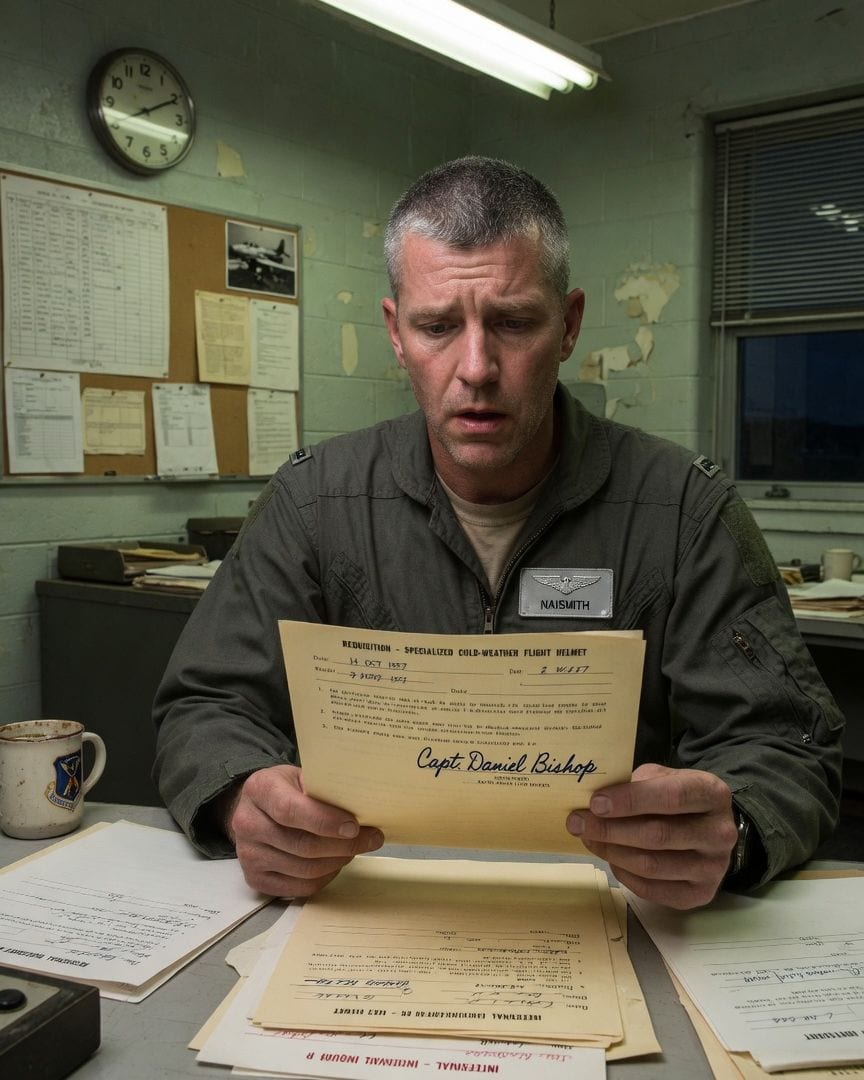
A Cold War Colonel reviews a missing pilot's file and finds Captain Bishop's signature on a form dated weeks after he vanished.
Colonel Ward Naismith faced the grim task of reviewing Captain Daniel Bishop’s personnel file, a routine chore for a man listed as Missing in Action. Bishop had vanished days after he and Naismith chased an impossible, silent disc over Lake Superior, leaving only an empty patch of air and a knot of unease in Ward's gut. Sifting through commendations, Ward found a requisition for flight gear and a maintenance sign-off, both dated *after* Bishop’s disappearance. The true chill came with the requisition for a specialized flight helmet, bearing Captain Bishop’s unmistakable signature, weeks after he was presumed lost. How could a man presumed lost have signed anything?
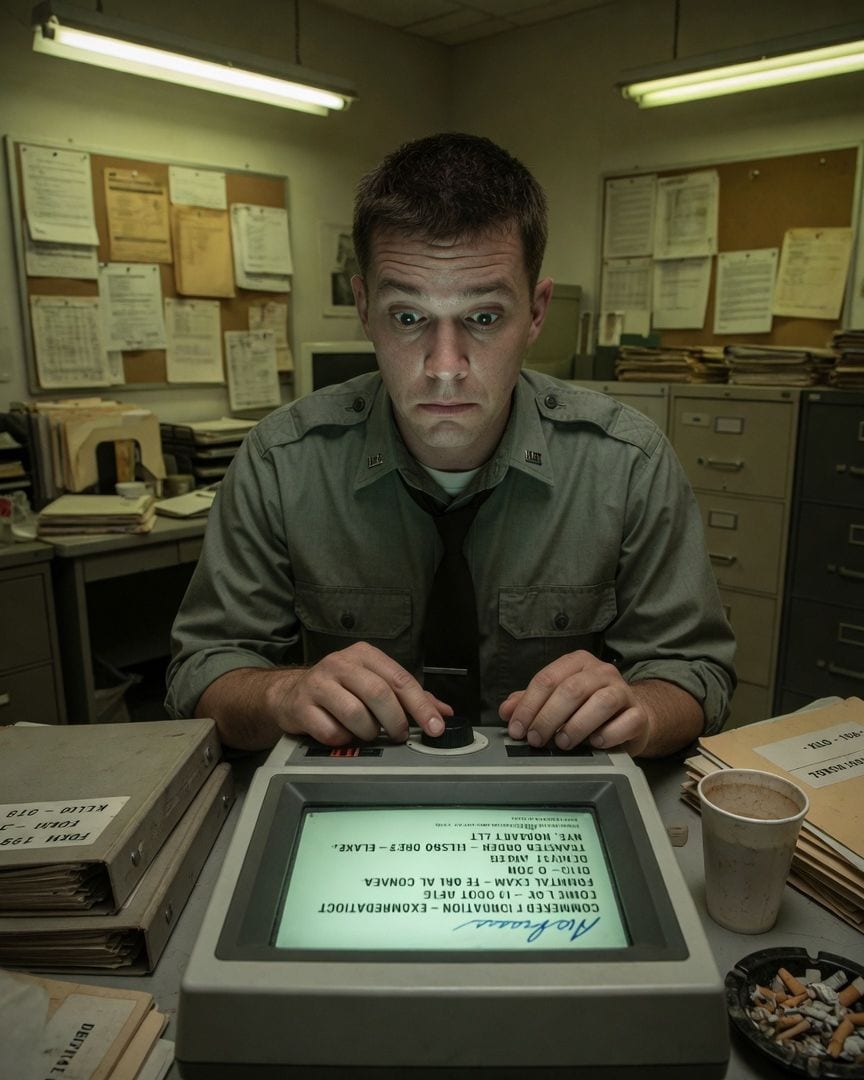
A missile commander watched his ten nuclear silos go dark. His own service record shows his signature on a future he's never lived.
Second Lieutenant Hobart Nye, a missile commander in Wyoming, had his quiet 0247 watch shattered by a security report: a massive, silent black triangle hovered over Launch Facility Kilo, casting a perfect shadow. Hobart watched his console's fault panel light up, signaling all ten nuclear missiles going dark in an impossible silence, followed by eleven minutes his security team could not remember. Official logs called it a "radio malfunction," but Hobart found a requisition for invisible-tracking sensors, signed by a base commander who was supposed to be off-base. The final, chilling discovery came when his own service record showed new entries—a dental check-up, a transfer to Alaska—all dated for a future he never lived, complete with his perfectly replicated signature.
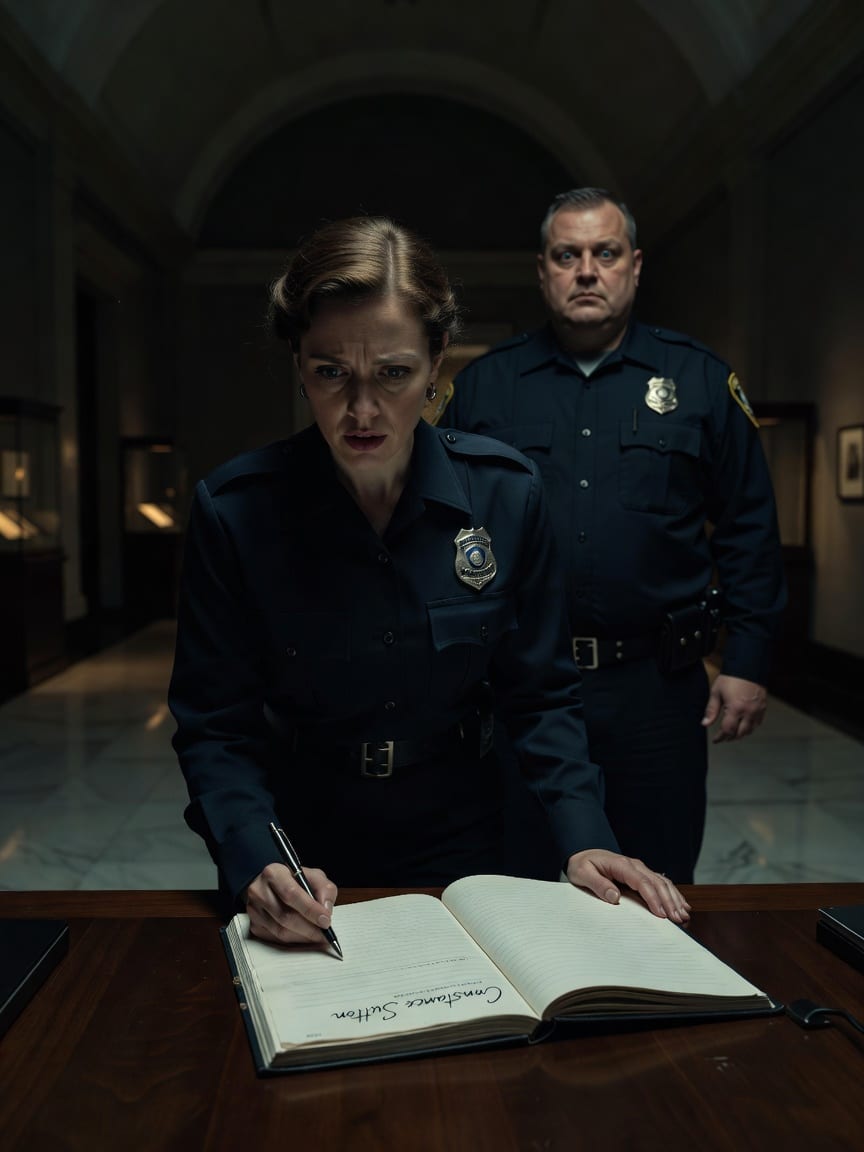
My relief guard Anton always signed in green ink. The police pulled the handover book: no Anton, no green ink, ever.
For two years, my routine as a night guard at the Prescott Museum has been a comforting rhythm, ending with the arrival of Anton Kowalski. But after a small theft, the police reveal Anton doesn't exist and his name isn't in the handover book. Now, I've found my own signature in that book for a night I was explicitly off duty.