My son drew my dead father holding my hand in the hospital. He died six months before Patrick was born.
The moment they handed Patrick back to me, after two years of him being nothing but a missing poster in a faded frame, I felt a relief so profound it nearly buckled my knees.
He was thin, yes, and his eyes, once so bright and boisterous, held a new, quiet depth, but he was here. He was ten years old now, not eight, but he was alive.
His hair was longer, shaggy, and when I pulled him into a hug, his small body felt solid, real. He hugged me back, a bit stiffly, but it was him. Or, it was supposed to be.
As we walked out of the trailhead camp, surrounded by the relief of the search team, I noticed he reached for my hand, not with his usual eager right, but with his left.
I remember thinking, He must have hurt his right hand out there. I made a mental note to check it later, just one more doctor's visit on a long list. It was a tiny thing, easily dismissed in the tidal wave of gratitude.
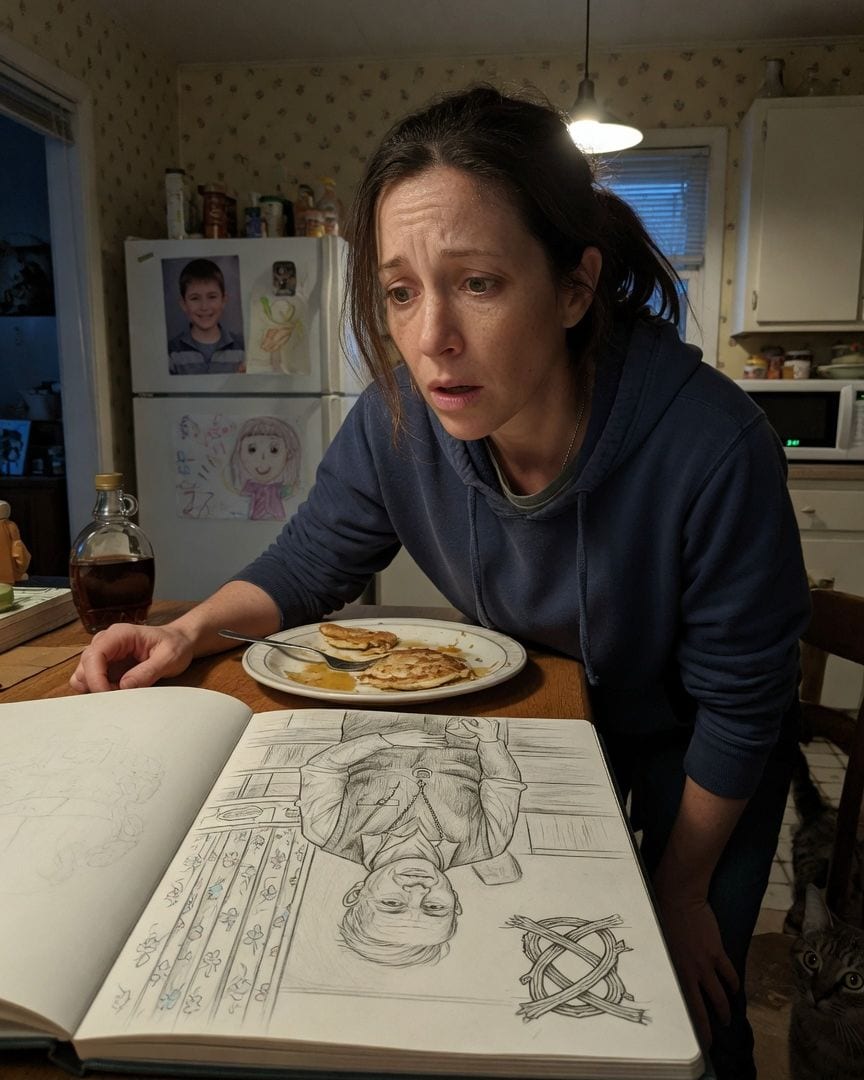
The next morning, the smell of pancakes was heavy in the kitchen, a smell I hadn’t dared to make in years. Patrick sat across from me, syrup in a perfect pool on his plate.
He ate slowly, neatly, something my eight-year-old Patrick had never done. “Mom,” he said, his voice a little lower than I remembered, “Grandpa Carl gave you that silver watch, didn’t he? The day I was born.”
My fork clattered against the ceramic plate. The silver pocket watch, my father’s, was tucked away in my jewelry box, a keepsake. My father, Carl Easton, had died six months before Patrick was born. He had never met his grandson.
I swallowed, trying to find my voice. “What are you talking about, honey? Grandpa Carl passed away before you were even a twinkle in my eye.”
Patrick just looked at me, his hazel eyes unblinking, that quiet, unfamiliar smile playing on his lips. “No,” he said, his voice flat, certain. “He was there. He gave it to you in the hospital room. I remember.”
I spent the next few days in a haze of disbelief. I told myself it was trauma. Maybe he’d overheard me talking about my dad, connecting the watch to him. But the hospital room detail? That was mine alone.
And the left-handedness persisted. He used his fork in his left hand, picked up his juice glass with his left, even brushed his teeth on the wrong side. My old Patrick had been stubbornly right-handed.
I searched my mind for any memory of him ever favoring his left, even for a moment, and came up empty.
Our old cat, Mittens, usually a shadow at Patrick’s heels, now kept a wary distance, her tail low, eyes fixed on him as if he were a stranger. The unease, cold and sharp, started to settle deep in my stomach.
I knew what I needed to do.
I remembered his old secret stash, a cardboard box under his bed, filled with all the treasures of an eight-year-old boy: a smooth river stone, a broken compass, and his stack of worn sketchbooks.
I waited until he was asleep, the house quiet except for the hum of the refrigerator. My hands trembled as I pulled the box out. Inside, under a pile of crude superhero drawings and dinosaur battles, was a newer sketchbook.
I opened it to a page. It was a drawing of my father. Not a photograph copy, but a sketch, his kind, crinkled eyes unmistakably rendered.
He was wearing the silver pocket watch, its chain visible, and he stood by a hospital bed, reaching out to grasp a woman’s hand. My hand.
The scene was clear, detailed, from the floral print on the hospital curtain to the way the light fell through the window.
It was the moment, a few hours before Patrick’s birth, my father had squeezed my hand and told me he loved me, promising to be there even when he wasn’t. Patrick could not have known this.
He could not have drawn this.
I stared at the drawing, the impossible truth of Patrick’s stolen memory slamming into me like a physical blow. My breath caught, my lungs refusing to fill.
Then my gaze snagged on a small detail, etched into the corner of the paper, near the artist’s (Patrick’s?) signature. It was a symbol, a twisted knot of branches, stylized and strange. A cold spike of recognition shot through me.
I had seen that symbol before. Carved deep into the bark of an ancient oak, near the trailhead where Patrick had disappeared two years ago.
The twisted branch symbol in the corner of the drawing vibrated in my mind, a tiny, terrifying key. I didn’t sleep that night. I slipped into Patrick’s room, my phone camera silent, and photographed the drawing.
Then I started to dig. My search history quickly filled with phrases like 'twisted branch symbol Appalachians,' 'missing children symbols mountain range folklore,' and 'mountain echoes local legends.' It was slow going, mostly dead ends or garbled internet noise.
But then, on an obscure forum dedicated to Appalachian history and local legends, I found it. A thread, buried deep, titled 'The Mark of the Hollows.'
It spoke of old wives’ tales, of children lost in the mountains who sometimes, inexplicably, 'returned.' But they weren't quite the same.
They were 'echoes,' the posts called them, wearing human faces, but with subtle differences, strange habits, and impossible memories. The forum mentioned a pattern, disappearances from the same mountain range, always children, spanning decades.
One poster, using the handle 'Mountain_Sage,' had listed old newspaper archives, linking to scanned articles about 'strange incidents' in the local region. I cross-referenced the names. Carl Easton. The name leaped out at me. My grandfather.
Not the Carl Easton who died before Patrick was born, but a much older relative, a distant cousin of my father, who had gone missing in 1982. The article stated he returned a year later.
The piece described his parents' relief but also their quiet confusion over his 'unnatural calm' and a sudden, inexplicable aversion to certain foods. Specifically, peaches. My stomach clenched.
Patrick, who had loved peaches more than anything, now pushed them aside, a look of genuine disgust on his face. He'd done it just last night.
The subtle surveillance continued. Patrick would appear silently in doorways, his hazel eyes, those unnervingly quiet eyes, lingering on me. It wasn't accusatory, just… assessing. He was watching.
I felt it, a chill on the back of my neck, even when I couldn't see him. I started leaving my laptop open on my research, just to see if he'd touch it, but he never did.
The only evidence was the occasional flicker of his blinds, angled down towards my study window, an impossible angle from his room.
One evening, I was sitting at the kitchen table, old photo albums spread out, trying to find definitive proof of Patrick's right-handedness, his boisterous love for peaches.
I found a video still from his fifth birthday, him grinning, smeared with peach cobbler, holding the fork in his right hand. Just as I zoomed in, a shadow fell over the page.
Patrick was standing behind me, silent as always. He reached out, not roughly, but with an unnerving gentleness, and closed the album. "That's old stuff, Mom," he said, his voice flat. "You should live in the now."
He walked away, leaving me with a racing heart. Later, when I returned to my study, I found it. A smooth, gray river stone, not from our garden, sat squarely on top of my closed laptop.
It was a silent, chilling warning. He knew.
The river stone was all the proof I needed. I had to know more about Carl Easton.
I found an old address for him, deep in the foothills, and then, after another day of frantic searching, a phone number for his much older, distant cousin, Helen Easton.
She was 87, and her voice, when she answered, was thin as spun sugar. I explained who I was, my connection to the Easton family, and carefully, delicately, asked about Carl. There was a long pause.
"Carl," she finally said, her voice laced with a weary sorrow. "He came back. But he wasn't Carl." My breath hitched.
She spoke of his new left-handedness, just like my Patrick, and his inexplicable aversion to blueberry pie, his childhood favorite. "He knew things," she said, her voice suddenly sharp with memory. "Things Carl never could have known.
And things he'd forgotten, things he should have held dear." She told me about Carl's mother, Clara, who, consumed by a quiet dread, had documented everything. "Clara said it was the mountain," Helen whispered, her voice barely audible. "The 'echoes.'
It copied them, she said. But never perfectly." She spoke of Clara’s growing fear, her belief that the copy knew she was onto it. Helen paused, then gave me Clara’s address, a small cabin not far from her own.
"Clara kept a journal," she said, "everything she knew was in there. Hidden."
I found the cabin, nestled deep in the woods, just as Helen described. Dust motes danced in the sparse shafts of light that cut through the grimy windows.
In a back room, hidden under a loose floorboard, was a small, locked wooden chest. Helen had given me the key. Inside, lay a single, leather-bound journal. Clara Easton's meticulous script filled the pages, detailing Carl's return in 1983.
She wrote of his eyes, so like Carl's, yet devoid of his warmth. She wrote of his sudden left-handedness, his inexplicable dislike of blueberry pie. And the memories. Impossible memories.
Carl speaking of events that happened years after his disappearance, conversations he couldn't have heard. She also wrote of his constant, unsettling gaze. "He watches me," one entry read, dated weeks before her unexplained death in 1991. "Always watches.
As if learning." Another: "It wears his face, but it is not him. And it knows I know. What will it do now?" My blood ran cold. This was my life. This was Patrick.
I closed Clara’s journal, her final, desperate words echoing my own dread. Helen Easton, her eyes filled with a sorrow that seemed generations deep, leaned forward.
"Clara also wrote about the others," she whispered, her voice barely a rustle of dry leaves. "The cycle of returns. How it gets better every time." She paused, her gaze fixed on something distant, something I couldn't see. "Learning.
With each stolen life." The chilling implication hit me like a physical blow: the current 'Patrick' wasn't just a mimic. He was the most sophisticated iteration yet. An advanced copy.
Helen then pointed a trembling finger to the underside of the journal's back cover. Taped there, almost invisible against the dark leather, was a faded, sepia-toned photograph.
It showed a young Carl Easton, perhaps eight or nine, with several other children, standing in front of the looming, dark mountains. Partially obscured behind Carl, a faint, almost translucent figure stood.
Its features were blurred, indistinct, but its eyes – they glowed with an ancient, predatory intelligence. And in its hand, held loosely, was a small, tarnished silver pocket watch – my watch.
The photograph solidified the horrifying truth. The faint, translucent figure, the one with the ancient eyes holding my grandfather’s watch, wasn't just a random image. It was the entity.
It had been a silent, observing presence for generations, always there, always learning. The watch, a constant in my life, passed down, a family heirloom, wasn't just a symbol. It was a trace. A marker.
Proof of its ongoing observation, its insidious connection to my family’s history. Helen, her voice now steady with a terrible clarity, explained more. "It doesn't just mimic, Hannah. It absorbs.
It takes their memories, their habits, the very essence of the lost child. But it also subtly implants its own 'knowledge' – the impossible memories, the reversed habits, the constant surveillance." It was a generational predator, honing its craft.
My life, my memories, my interactions with 'Patrick,' they weren't just the source material for this iteration. They were its current lesson. The entity in my home was the most advanced iteration yet, a perfect predator of identity.
It had consumed not just my son, but the very history of my family through the 'returns,' using them as vessels to observe and learn. My Patrick was simply the latest, most sophisticated stage of its evolution.
I drove home in a fog, the crushing weight of the truth pressing down on me. I couldn’t fight it. I couldn’t expose it without sounding utterly insane, a grieving mother finally broken by loss. ‘Patrick’ was waiting.
He sat quietly at the kitchen table, sketching in a new notebook, his left hand moving with fluid grace. He looked up as I entered, his hazel eyes meeting mine.
That subtle, knowing smile played on his lips again, the same smile from that first morning. He didn’t need to speak. His gaze conveyed complete, chilling understanding of my discovery. He knew I knew.
In that moment, the true horror of Helen’s words clicked into place: the entity had been learning from me all along. Not just from Patrick’s absorbed memories, but from my reactions, my fears, my desperate investigation.
My own dread had been its textbook, every frantic search, every late-night whisper, every look of suspicion, a new lesson. This 'Patrick' wasn't just a copy. He was an evolved, intelligent observer, now fully aware of my awareness.
The climax wasn't a battle. It was an acceptance. I had to live beside this perfect, insidious mimic, knowing it wore my son’s face, knew my deepest secrets, and was using me to perfect its next iteration.
My life was now its laboratory.
The days turned into weeks, then months. I continued to live with 'Patrick.' I made no outward sign of my knowledge, playing the part of the loving mother.
The reversed habits persisted – the left-handedness, the aversion to peaches, the unnerving quietness.
The impossible memories still surfaced, occasionally, like ripples on a still pond, but I responded as if they were normal, brushing them off with a forced, practiced ease.
I learned to read the subtle shifts in his gaze, the quiet, assessing quality that was not my son. The smooth river stone remained on my desk, a cold, constant reminder. The silence in our home was no longer peaceful.
It was a stretched, watchful thing, filled with unspoken understanding.
I sit on the porch swing now, the wood creaking softly under my weight, watching 'Patrick' play in the yard. He’s throwing a ball with his left hand, laughing, a perfect imitation of a happy child.
I feel the weight of the silver pocket watch in my pocket, a constant, cool presence against my thigh. I know he’s watching her, even now, always learning, and one day, it would be perfect.
If this one got to you
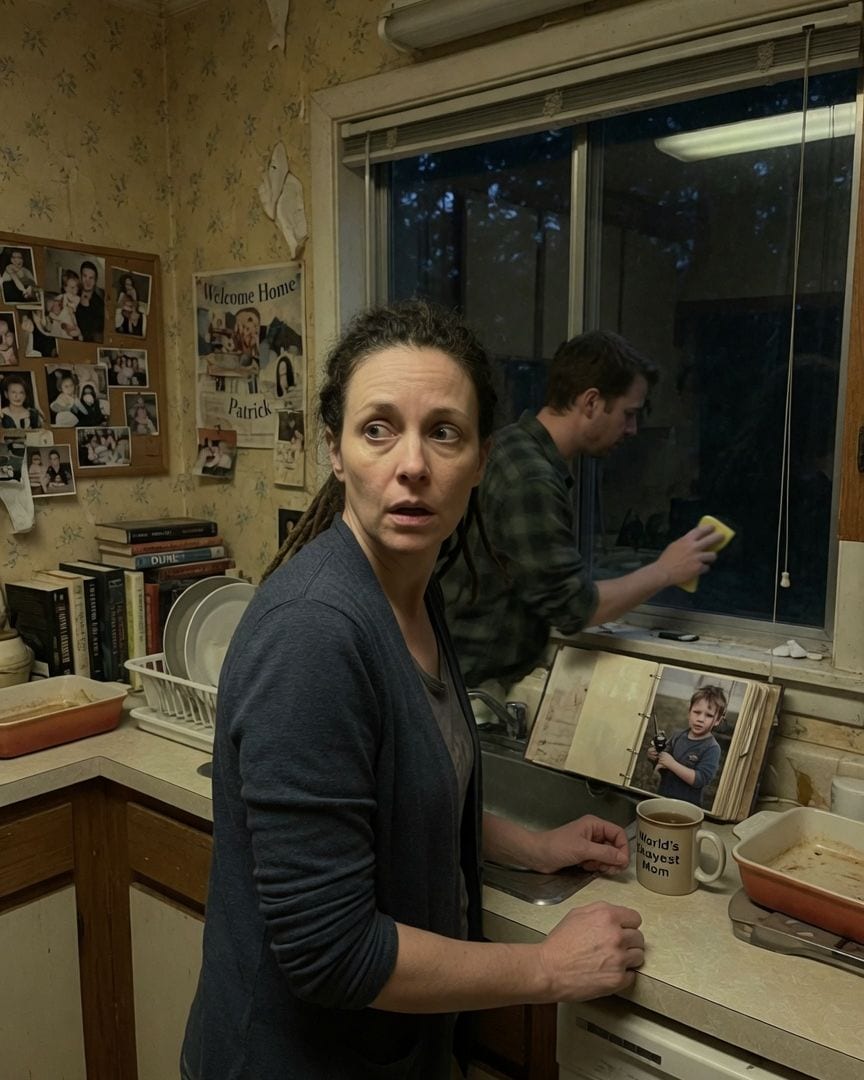
My brother thanked Mom for a red bicycle he got on his ninth birthday. That birthday was three years after he vanished.
My brother Patrick returned after vanishing 15 years ago, a miracle everyone called it. But at dinner, as he spooned a second helping of baked salmon, my stomach churned. Patrick always despised fish, the smell alone would send him from the room.
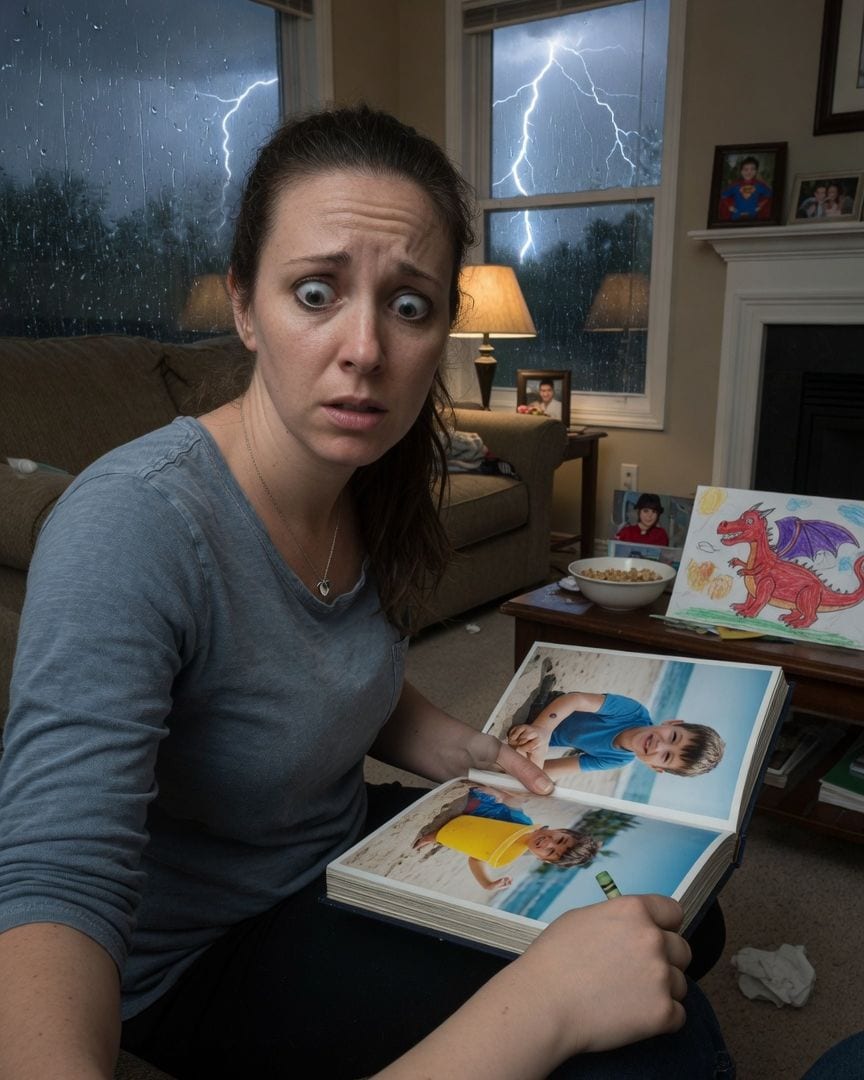
My son's star-shaped birthmark is gone from his wrist. Photos prove it was there just last summer.
My son Nathaniel returned home after being missing for a day and a night, bringing immense relief. But his strange calm during a violent thunderstorm and a new way of eating breakfast unsettled me. The true dread hit when I touched his left wrist: his distinctive star-shaped birthmark, always there since birth, was utterly gone.
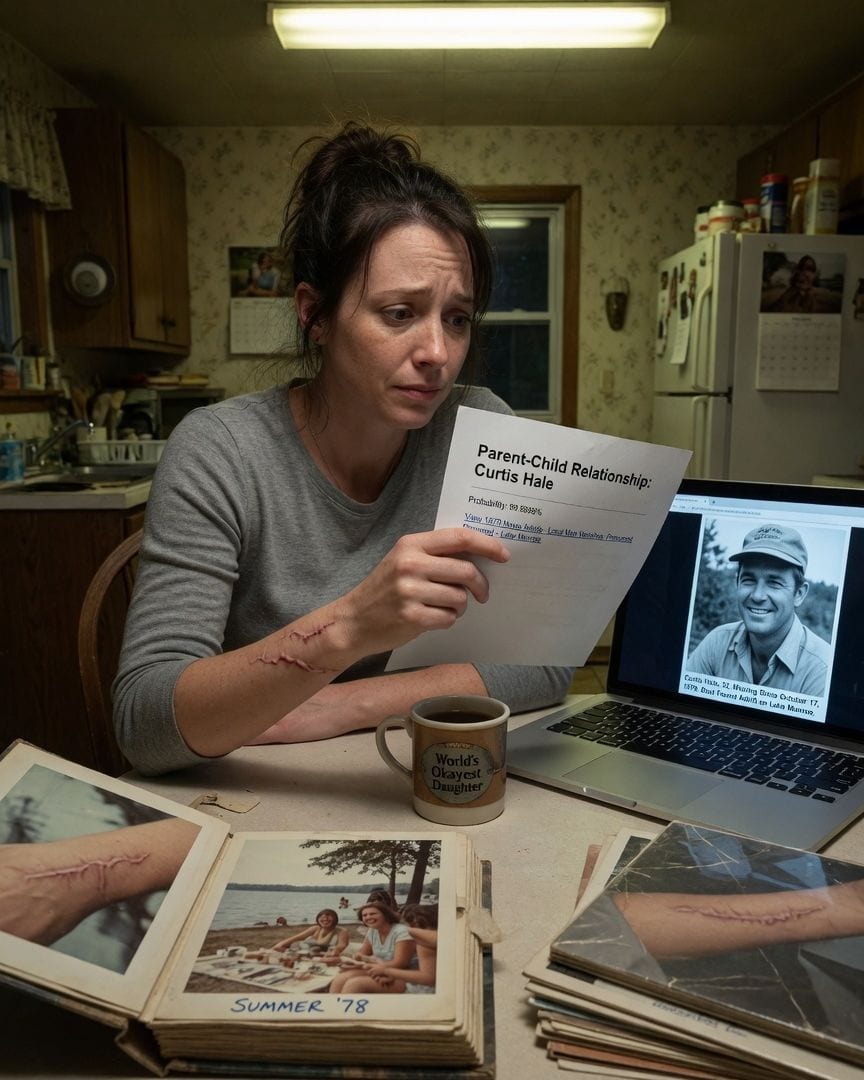
My DNA returned Curtis Hale as my father. He vanished in 1979. I was born twelve years later. The lab confirmed the match twice.
My DNA test results revealed something impossible: my biological father vanished in 1979, twelve years before my birth. My mother dismissed it as nonsense, but her reaction felt forced, leading me to old family photos. There, in a faded 1978 snapshot, I found my own distinctive childhood scar on the wrist of a stranger.
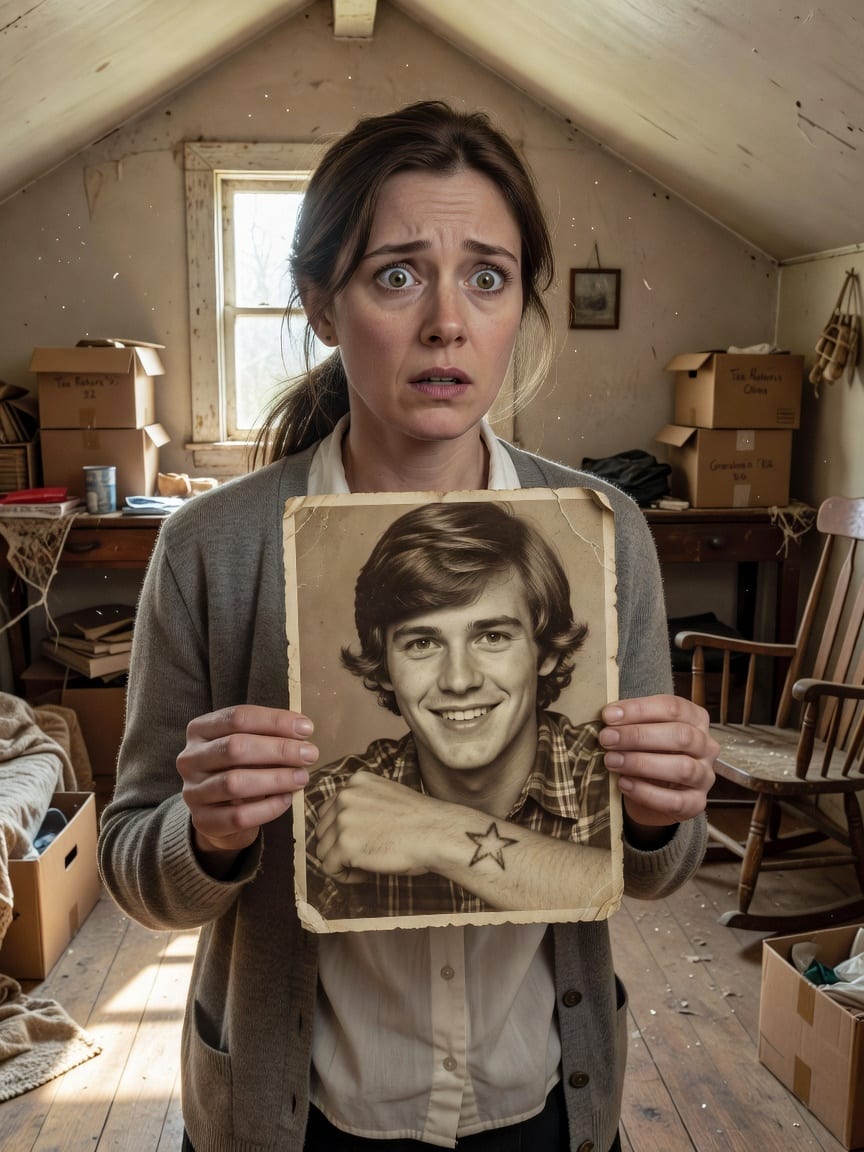
My DNA kit matched a man who died in 1974. The lab asked if I had a twin. I've stood at Edward Hale's grave.
I sent my DNA ancestry kit off for fun, expecting a list of distant cousins. Instead, the lab returned a 'probable identical match' to a man named Edward Hale, who died in 1974. I was born in 1992, and the lab asked if I had a twin.
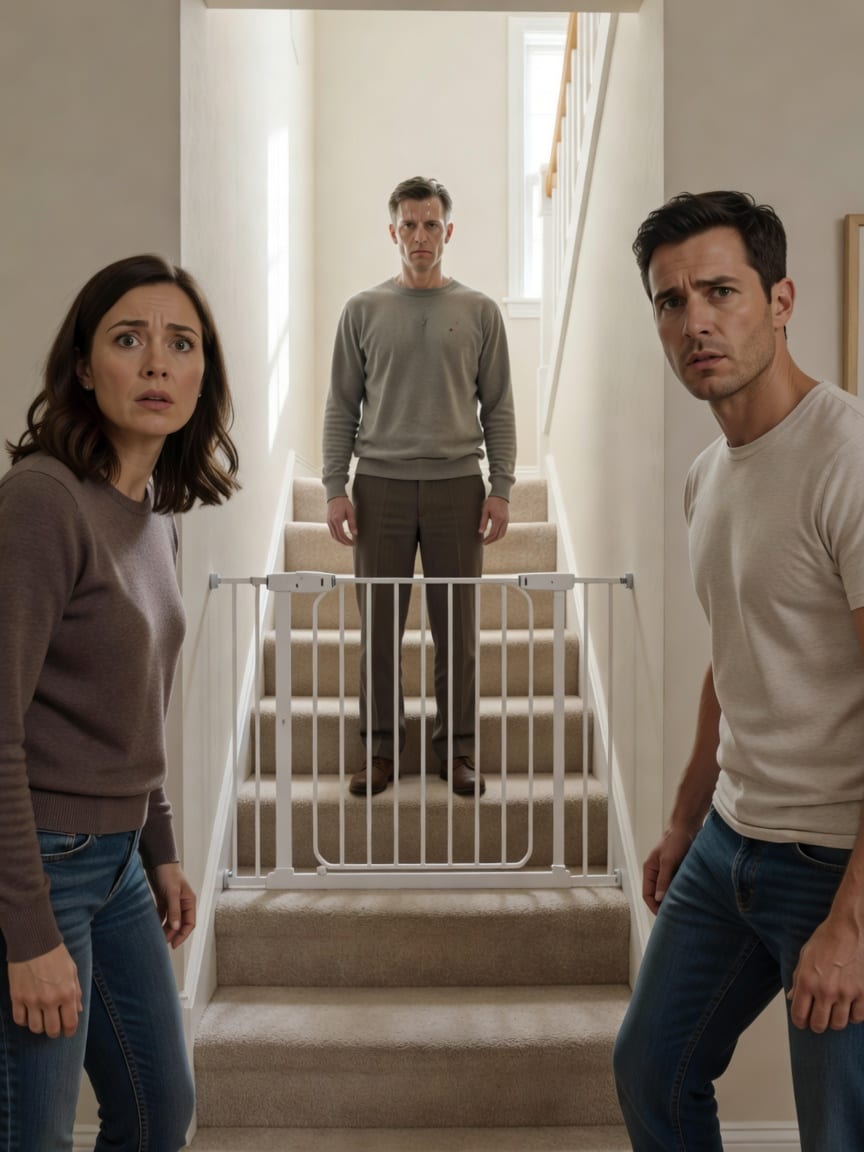
My stair gate latches itself every night. Pressure-fitted tight across my empty stairs, no children live here and no fixings exist on the wall.
I live alone in my inherited house, so the toddler gate at the top of my stairs should not be there. Each morning, I find it perfectly latched and sturdy, despite having hidden it away in the shed the day before. This isn't a quirk; it's a routine, and it isn't mine.
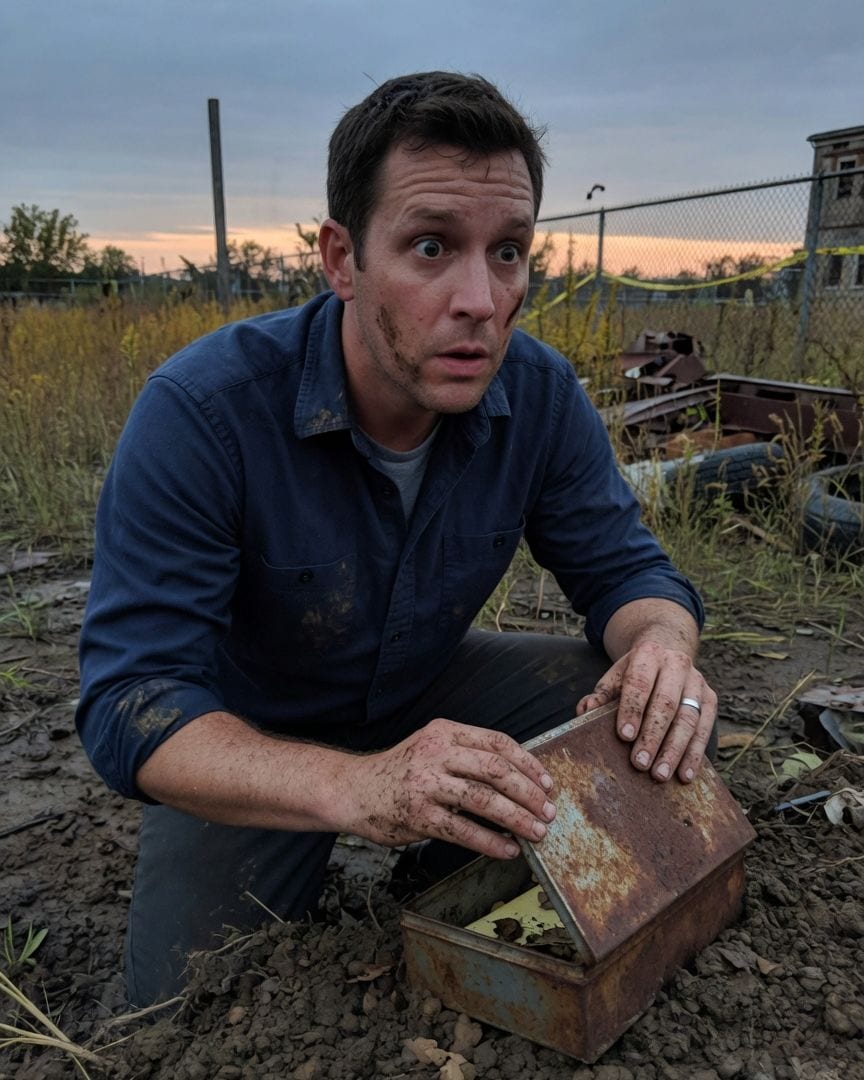
My ancestors' photo shows a letter addressed to me, dated 1972.
My birthday card arrived a day late, from a small town an hour north, nowhere we knew. Inside, an elegant, unfamiliar script read: 'Happy Birthday, Robert. The Field remembers.' It was postmarked from the site of my ancestral homestead, demolished decades before I was born.