My brother thanked Mom for a red bicycle he got on his ninth birthday. That birthday was three years after he vanished.
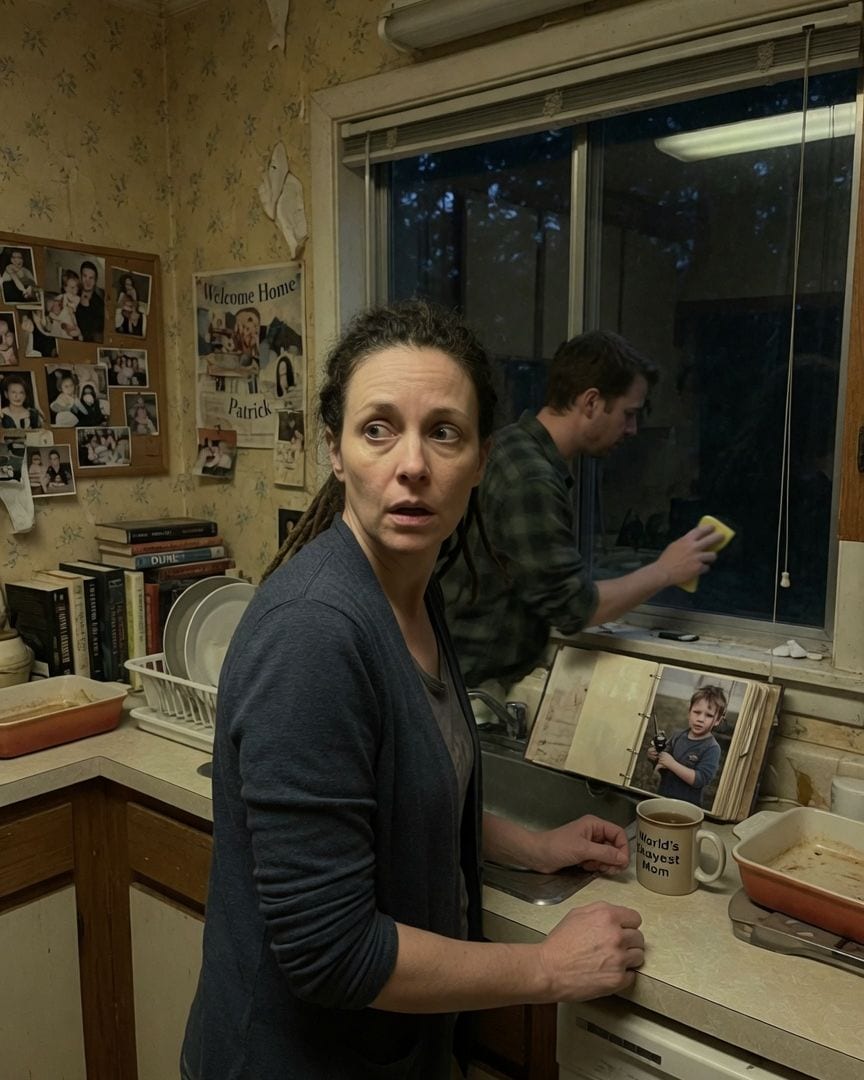
Dinner was a celebration. Mom, Edith, sat at the head of the table, beaming. Her boy was home. Patrick, my younger brother, had vanished on a fishing trip back in 2009, when he was just 22.
Fifteen years later, here he was, thinner maybe, a bit more angular in the face, but otherwise whole. The police had no answers then, and they had no answers now. He’d just… reappeared.
Walked out of the woods near the old quarry, dazed, but alive. A miracle, everyone called it. A second chance.
I watched him across the table, trying to fit the man I remembered into the man before me. He was still Patrick, yes. But the edges were blurred, the details slightly off.
Like now, when he reached for a second helping of baked salmon. My stomach did a slow roll. Patrick, my brother, had always despised fish. The smell alone would send him out of a room.
Yet, he spooned a generous portion onto his plate, a faint, contented hum in his throat.
“This is really good, Mom,” he said, his voice a little deeper than I remembered, a touch smoother. “Just like the birthday you got me that red bicycle.” He smiled at her, a genuine, warm smile. “My ninth birthday.
Best present ever.”
The fork froze halfway to my mouth. Mom just chuckled, a happy, teary sound. “Oh, sweetie, I don’t remember a red bicycle…”
Patrick waved it off. “Of course you do. Bright red, with the chrome bell. Always wanted one.”
A cold shock, like a splash of icy water, hit me square in the chest. Patrick’s ninth birthday was in 1996. He vanished in 2009. And the red bicycle? That was for my son, Adam.
His ninth birthday, just three years ago, in 2021. Adam loved that bike. It was still in the garage.
The words hung in the air, a small, impossible fact. Mom didn’t seem to notice. She was too wrapped up in her miracle.
Patrick was already talking about old school friends, misremembering a detail or two, but nothing major enough to raise an alarm. I forced a smile, nodding along, but my mind raced, trying to reconcile the impossible.
A red bicycle, for his ninth birthday, three years after he vanished, and over a decade before it even existed for Adam. It didn’t fit. Nothing about it fit.
The next morning, the unease hadn’t faded. If anything, it had deepened, settling into my bones. I found Patrick in the kitchen, humming that same quiet, almost mournful tune I’d heard last night, pouring himself a cup of coffee.
He picked up a spoon, and my breath hitched. He stirred with his right hand.
Patrick was a lifelong lefty. Not ambidextrous, a straight-up southpaw, especially for anything requiring precision. Writing, drawing, throwing a baseball, even stirring coffee—it was always his left hand. I tried to rationalize it. Trauma.
Maybe his dominant hand was injured during whatever ordeal he’d suffered. A quirk. A post-trauma adjustment. But the thought felt thin, like a veil over something sharper.
Later, I offered to help him unpack a box of old books he’d brought over from the storage unit. His dusty old sci-fi paperbacks, some with dog-eared pages and cracked spines.
The Patrick I knew would dump them in a pile, maybe sort them by color if he was feeling ambitious. But this Patrick… he meticulously arranged them on the shelf, by author, then by publication date. Spine out, perfectly aligned.
He even ran a finger over a shelf to check for dust. Patrick always found that kind of pedantry irritating. “Life’s too short to sort books, Sammy,” he used to say.
I remembered the fish. His left-handed precision. His chaotic book-stacking. My mind spun, grasping for an ordinary explanation. People change. Trauma changes people. But this wasn’t just change; it was almost an inversion.
I dug through my own old photo albums, needing to see the real Patrick, to ground myself. I found a faded snapshot from 2008.
Patrick, twenty-one, grinning, a small scar on his right cheek from a childhood mishap when he’d fallen off his bike. He was holding a fishing rod, clearly in his left hand, mid-cast.
The scar was there on the man in the kitchen, a faint line near his jaw. But the way he held himself, the subtle curve of his lips, even the way his eyes tracked movements—it was subtly, fundamentally different.
Not just older, or traumatized. Altered.
I looked up from the photo, catching Patrick’s reflection in the kitchen window, watching him as he hummed his unfamiliar tune, carefully wiping down the counter with his right hand.
I wondered if I was losing my mind, grasping at straws, projecting my own anxieties onto a brother who had suffered so much. But the cold dread wouldn't release its grip.
A sudden, chilling thought, a whisper of a possibility I couldn't ignore, yanked me into the garage. Adam’s red bicycle. It should have been leaning against the far wall, where Adam always abandoned it after a ride. It wasn’t there.
It wasn't just moved, or tucked away. The entire space where it usually sat was clean. No scuff marks from the tires, no faint grease stains from the chain. As if it had never been there at all.
Patrick had been in the garage earlier, alone, puttering around, humming that low, melodic, almost mournful tune. The same one I’d heard him hum at dinner, the one I didn't recognize.
My own childhood memories were full of his off-key singing of classic rock, not this unfamiliar, unsettling melody.
I stood frozen in the empty space, staring at the clean concrete. The faint echoes of his tune seemed to cling to the air, a phantom sound.
Adam, bless his messy heart, always left the chain tangled, haphazardly wrapped around the pedal. Now, on the concrete where the front wheel should have been, a small length of chain lay neatly coiled, perfectly round, like a snake asleep.
“Hey, Pat, about Adam’s bike,” I started, trying to keep my voice casual. We were in the living room, a few days later. He was reading, or pretending to, a book on deep-sea fishing. With his right hand.
He looked up, a placid, unreadable expression on his face. “Oh, the red one? Yeah, I lent it to a friend. Kid needed a ride.” “A friend?” I pressed, the question feeling tight in my throat. “Who?”
He shrugged, turning a page with that same practiced right hand. “Can’t quite recall the name. Met him down by the park. Nice kid. Said he’d bring it back.” Too smooth. Too vague. Patrick had never been vague.
He remembered everything. Even fifteen years later, he could still recite the starting lineup of the ’98 Yankees. The lie hung there, thin and see-through, but he just went back to his book.
I started watching him. Really watching him. Not just the big things, but the small ones. He now held his fork with his right hand, not his left. He’d pick up a dropped pen with his right.
He’d even scratch an itch on his chin with his right thumb, a gesture I remembered him always doing with his left. It was consistent, deliberate. A stark, undeniable reversal of a lifelong habit.
His vocabulary, too, seemed to have shifted. He used words I didn't recognize as his, slightly more formal, almost… academic. And that faint, almost imperceptible lilt in his voice. Like an echo, just out of tune.
It gnawed at me. I couldn’t shake it. One afternoon, while Patrick was out, I climbed into the attic. It was dusty, stuffy, filled with forgotten memories. I was looking for Patrick’s old fishing tackle box.
It had been untouched since 2009, locked away, a sad monument to his disappearance. It was a heavy, dented metal box, painted an ugly shade of green. It sat where I expected it to, under a pile of old blankets.
It was locked, of course. Always was. Patrick had this weird thing about his tackle box. Said it was his secret treasure chest. But I remembered where he kept the key.
A tiny, tarnished silver fish charm on a forgotten keyring, stashed in a dusty drawer in his old desk. I’d seen him put it there once, when we were kids.
My heart pounded a frantic rhythm against my ribs as I retrieved it. It was still there, the charm cool and worn under my thumb.
The lock clicked open with a rusty snap. Inside, a few rusted hooks, tangled lines, a desiccated earthworm still stuck to a plastic lure. Exactly as it should be. A wave of relief, then disappointment. Just a tackle box.
I was imagining things. My brother was home.
But as I lifted out the hooks and lines, I noticed it. A slight bump in the bottom. My fingers brushed against a thin piece of metal.
There was a false bottom, ingeniously crafted, covering a shallow compartment I never knew existed. And tucked inside, neatly folded, was a single, crisp newspaper clipping.
It was about Patrick's disappearance. The headline was stark: "Local Man Vanishes on Fishing Trip." Below it, an old photo of Patrick, looking younger, smiling. The date was August 15, 2009. Familiar. Too familiar.
But on the margin, in neat, elegant script, was a small handwritten note. It read: 'He'll be back. They always are. - C.L.'
The initial unease hardened into a cold, paralyzing fear. 'C.L.' The neat script, the chilling certainty of the message. I couldn't stop staring at the clipping. They always are.
I researched 'C.L.' and found Cecilia Langford. An old high school friend of Patrick's. She’d moved away years ago, a few towns over, but I remembered her. Quiet girl, always with a book.
Her online profile said she owned a small independent bookstore.
I drove out the next day, the newspaper clipping folded carefully in my wallet. As I approached her shop, a quaint little place with a faded awning, I saw it. Patrick’s car.
A new model, dark grey, sleek and almost anonymous, parked a block away. I’d only seen it once or twice since he came back.
My breath caught. I quickly ducked into a small coffee shop across the street, pretending to scrutinize the menu, but my eyes were fixed on the car. Patrick wasn't in it.
I waited, nerves buzzing, for what felt like an eternity. The coast seemed clear.
I entered Cecilia’s shop, the bell above the door jingling softly. It smelled of old paper and dust. Cecilia, older now, with intelligent, tired eyes behind wire-rimmed glasses, was behind the counter.
I browsed for a few minutes, feigning interest in a forgotten classic, my heart thumping. Finally, I cornered her, pulling out the folded clipping.
"Cecilia," I said, keeping my voice low. "Do you recognize this handwriting?"
Her eyes widened, fixed on the note. Her face drained of color, going ashen. "It was my mother's," she whispered, her gaze still glued to the paper. She looked up at me, her eyes clouded with an old, deep pain.
"My cousin, Lily... she vanished years ago. Just like Patrick. And then she came back. Different."
She lowered her voice further, leaning in. "Nobody else saw it. They said she was traumatized, changed. But the small things... inverted habits. Misplaced memories. I never told anyone." She gripped the counter, her knuckles white.
"You're not imagining it, Samuel."
I mumbled my thanks, feeling a new, colder kind of dread settle in my stomach. As I left the shop, I felt a prickle on the back of my neck. I glanced back at the window.
Cecilia was watching me, her expression a mix of profound fear and grim certainty.
I got into my car, started the engine, and pulled away. But as I checked my rearview mirror, a dark sedan, identical to Patrick's, pulled out from a side street, several car lengths behind me.
I drove back to Cecilia’s house that evening, the need for answers a desperate ache in my chest. The sedan was gone. I found her on her porch, shivering despite the mild autumn air, wrapped in a thin shawl.
The swing creaked softly as she gestured for me to sit.
“Lily… she was my older cousin, like a sister,” Cecilia began, her voice hoarse. “Vanished when she was seventeen. For five years. Then, one Tuesday, she was just… there. Sitting on our porch swing, just like this.
Said she’d lost her memory.”
She paused, her gaze fixed on the darkening woods beyond her yard. “But it wasn’t just amnesia. She used to be fiercely right-handed. Everything. Drawing, writing, even picking up a teacup. After she came back, it was always her left.
And she’d always loved climbing trees, always wanted to skydive. Said she felt closest to God up high. After… after she returned, she developed this intense phobia of heights. Couldn’t even stand on a stepladder without hyperventilating.”
Cecilia shook her head slowly. “It was like someone had flipped a switch. But nobody else saw it. My aunt, Lily’s mom, she said it was trauma. She said Lily was changed, but she was still Lily. But I knew.
Deep down, I just knew.”
I felt a cold shiver trace my spine. “Patrick… he always hated fish. Wouldn’t touch it. Now he eats it with relish. And his left-handedness. For anything precise, it’s gone. It’s always his right hand now.
Tying a fishing lure, stirring coffee, writing… always his right.”
Cecilia nodded slowly, her eyes wide and haunted. “The habits. They reverse. And the memories… they’re mixed up, like scraps from other lives.
Lily once thanked me for a storybook I’d given to my younger sister, when Lily herself had been away for years. She remembered the book, but not who it was for, or when it was given.
It was like she’d absorbed a fragment of someone else’s past and attributed it to her own.”
She turned to me, her voice firm, unwavering. “He’s not Patrick, Samuel. She’s not Lily. It’s something else, wearing them. And it learns. It adapts. It studies. But it can’t quite get everything right.”
The newspaper clipping. The bicycle. The fish. The handedness. The meticulous book sorting. It all clicked into place, forming a horrifyingly coherent pattern. The mundane explanations—trauma, change, grief—died, one by one, suffocated by the sheer impossibility of it all.
This wasn't trauma. This was a precise, uncanny replacement.
We sat there in the deepening twilight, the porch swing creaking a slow, mournful rhythm. A chill wind rustled through the oak leaves. “What happened to Lily?” I asked, my voice barely a whisper.
The question felt heavy, like a stone dropping into a dark well.
Cecilia looked away, her gaze drifting towards the impenetrable shadows at the edge of her property. Her voice was thin, almost lost in the rising wind. “She… she changed again. More subtly this time. The memories got worse.
She started forgetting things, important things, like her own name. Then one day, she just stopped talking altogether. Just sat there, staring.” She shivered, pulling the shawl tighter. “My mother… she never gave up on Lily.
She saw it too, the wrongness. That’s why she wrote that note. She was researching, trying to find answers.”
“And your mother?” I asked, a fresh wave of dread washing over me, connecting the dots I didn’t want to connect. “The one who wrote the note on the clipping?”
Cecilia pointed a trembling finger at a faded photograph on a small, rickety table beside them. It showed a young woman with kind, resolute eyes, a faint resemblance to Cecilia. “My mother.
She disappeared too, a few months after Lily went quiet. They found her car by the old quarry, empty. Just like Patrick’s was supposed to be.”
A sudden movement caught my eye. Across the street. My head snapped up. From the deep shadows beneath a towering oak tree, a figure detached itself. Tall. Familiar.
It was Patrick.
He stood there for a moment, absolutely still, silhouetted against the dim glow of a distant streetlamp. Then, slowly, he turned his head, directly towards us. Towards me.
His face was unreadable in the poor light, but a faint, knowing smile seemed to play on his lips. He held my gaze for a long, terrible second.
Then, he stepped off the curb and walked straight towards Cecilia’s front door. Without knocking, he opened it and disappeared inside.
My phone buzzed in my hand. I stared at it, frozen. An unknown number. A single text message.
'Some things are better left buried.'
I burst through Cecilia’s front door, calling her name. The house was silent, dark save for the dim light from the porch spilling into the entryway. My heart hammered against my ribs, a frantic bird trapped in a cage. “Cecilia?!”
I found her in the living room. She was sitting perfectly still on the sofa, upright, hands in her lap. Her eyes were wide, fixed on nothing, a faint, glassy sheen to them.
Patrick stood over her, facing away from me. As I stepped fully into the room, he turned.
There was a faint, almost imperceptible shimmer around his form, like heat haze off asphalt on a summer day. It was gone as quickly as it appeared, but I saw it. The knowing smile widened.
“She was a problem,” he said, his voice Patrick’s, yet subtly off-key, like a familiar song played on a slightly detuned instrument. “Like your mother will be, if you don’t stop looking.”
An invasive rush of images and feelings slammed into my mind. Not words, but pure, unfiltered impression. An ancient thing. A collector of lives. Drawn to strong emotional bonds, to families.
It wore the skin of the vanished, absorbing their memories, their habits, their affections. But it was never perfect. The bicycle memory, the reversed habits—all imperfect imitations, fragments it couldn’t quite integrate. My son’s memory, misattributed. Patrick’s handedness, inverted.
I saw flashes of others it had worn. Others who ‘returned.’ Others who were ‘silenced’ when they knew too much. Cecilia’s cousin, Lily. Her mother. It had been watching me, learning my patterns, my reactions. The dread was overwhelming.
It wasn’t a monster in the conventional sense. It was a process. A slow, inevitable replacement. A predator of identity, not flesh.
It gestured to a small, silver fishing lure on the mantelpiece, gleaming faintly in the dim light. I recognized it. One of Patrick's, from his old tackle box. “A gift,” it said, the thought echoing in my mind.
“From the deep.” It implied its true nature was something elemental, from a place beyond human comprehension. A silent, patient hunter.
I stumbled back, horrified by the psychic assault, the raw, alien truth of it. “You’re not my brother,” I choked out, the words tasting like ash.
The mimic advanced, its smile unwavering, growing wider. “I am all he was, and more.”
A primal scream ripped through my mind—protect Adam, protect Mom. Driven by that need, I lunged for Patrick's old tackle box, which I’d carried from the attic, a desperate, irrational impulse to grab something real.
My hands shook violently as I fumbled with the tiny, tarnished fish charm key. The mimic watched, amused, its head cocked slightly.
I finally found the keyhole. The lock clicked. I wrenched it open, expecting nothing but rusted hooks, a final, mundane confirmation of my utter madness.
But under the false bottom, where I'd found Cecilia’s mother’s note, there was something else. A photograph. Not a faded old print, but a crisp, modern digital print, perfectly preserved, almost glowing in the dim room.
It showed Patrick, unmistakably, standing on a dock, grinning, holding a large, freshly caught fish. The sun was bright, glinting off the water. And in the background, leaning against a weathered shed, was Adam’s red bicycle.
The date stamp on the bottom right corner of the photograph read: ‘October 14, 2010.’
Patrick vanished in 2009. Adam’s bicycle was bought in 2021.
The artifact. It was impossible. A physical, dated proof that could not exist.
The mimic's smile faltered for the first time. The amusement vanished from its eyes, replaced by a flicker of something ancient and cold, a deep, inhuman fury that made the room itself feel suddenly frigid.
I shoved the photo towards it, my voice raw. “This isn’t real! This is impossible!”
It lunged.
I ducked, scrambling towards the front door. The mimic’s heavy footsteps thudded behind me, faster than Patrick’s ever were.
My hand found the doorknob, twisted, and I wrenched the door open, the cool night air hitting my face like a slap.
I didn't look back, just ran, the impossible photograph clutched in my trembling hand, the sound of splintering wood echoing behind me.
I never returned home. I called Edith and Adam from a payphone at a gas station an hour later, my voice a frantic babble about Patrick, about red bicycles and impossible dates.
They thought I was having a breakdown, overwhelmed by Patrick’s return, the grief finally hitting me. Edith cried, pleading with me to come home.
The police found Cecilia Langford in her living room, unresponsive but alive. Her mind was a blank slate, the doctors said, suffering from a severe dissociative state. Patrick stayed with Edith, a dutiful, loving son.
He helped her clean out my office, neatly boxing up my clothes, my books, my old fishing gear.
Edith often commented on how much Patrick had matured, how quiet he’d become, how he seemed to understand her unspoken thoughts, completing her sentences before she spoke them. She just wished Samuel would get the help he needed.
My last known location was a small, coastal town, weeks after I disappeared. I was seen wandering the docks, clutching a faded photograph, muttering about dates and bicycles.
The authorities eventually picked me up, incoherent, and placed me in a care facility upstate. My family visited me once. Patrick even went, sitting silently by my bed. I didn't recognize him, or anyone.
I just stared at the wall, occasionally mumbling about a red bicycle, a gift from the deep. The doctors said my mind had fractured under the strain of trauma.
Edith and Adam went back to their lives, comforted that Patrick was home, stable and present. Patrick continued to live with Edith, often seen tending her garden, humming a low, melodic, unfamiliar tune.
Edith looked at the old family photo on the mantelpiece, Samuel, Patrick, and herself, all smiling brightly. "It's a shame about Samuel," she sighed, turning to Patrick. "He never was quite right, was he?"
Patrick, meticulously polishing a small silver fishing lure, offered a faint, wrong little smile. "Is that so?"
If this one got to you
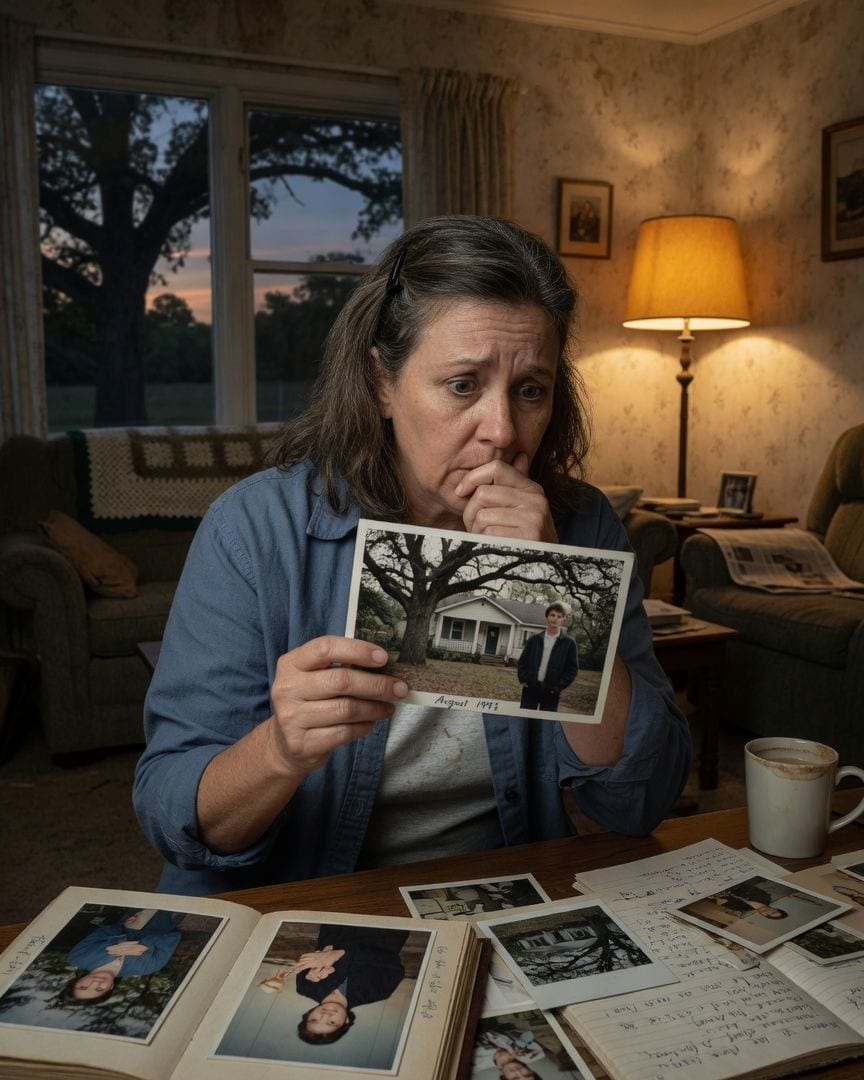
My brother remembers carrying me home after I broke my arm. He was already gone two years when it happened.
After thirty-two years, my brother Joel returned, bringing a relief that felt physical after decades of quiet absence. But when he recounted carrying me home after I broke my arm, a memory I held dear, the warmth in my chest curdled cold. He was twenty years old then, two years gone already, and my mother had carried me.
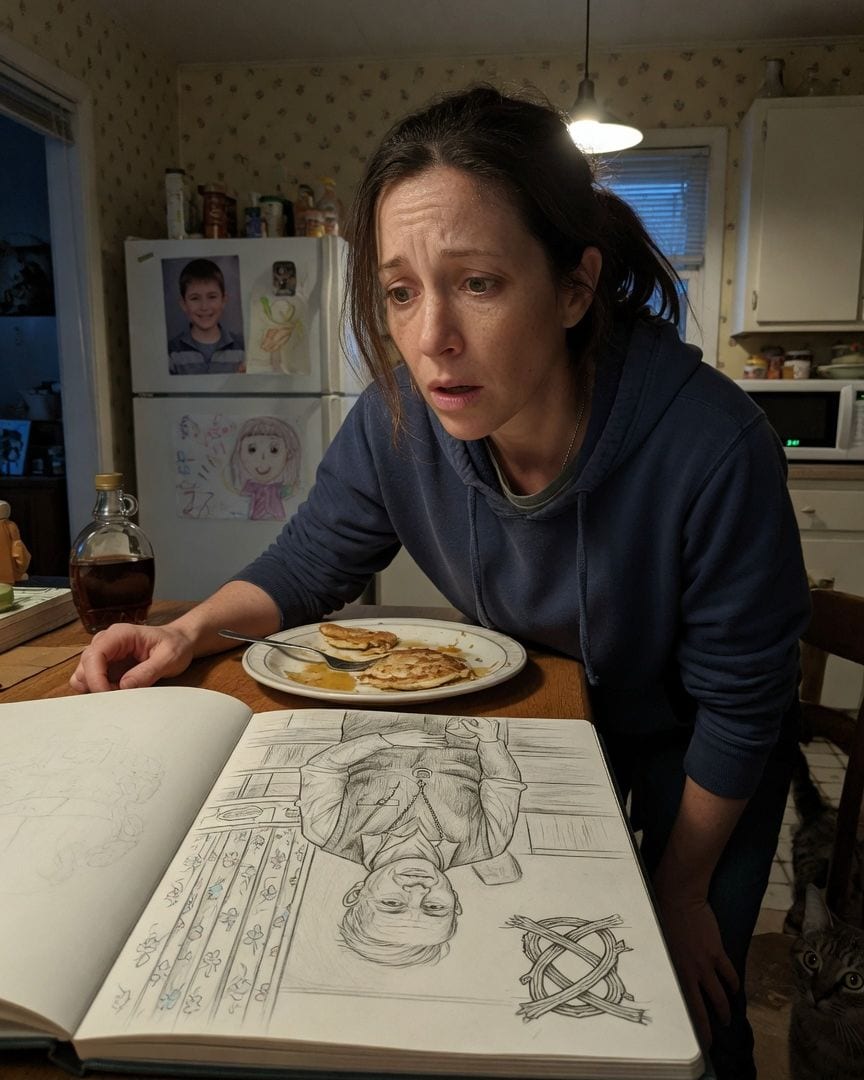
My son drew my dead father holding my hand in the hospital. He died six months before Patrick was born.
After two years missing, my son Patrick was finally home. The relief was immense, but it wasn't long before he began speaking of my dead father, recalling intimate details of his life that Patrick could not possibly have known, from a time before he was even born.
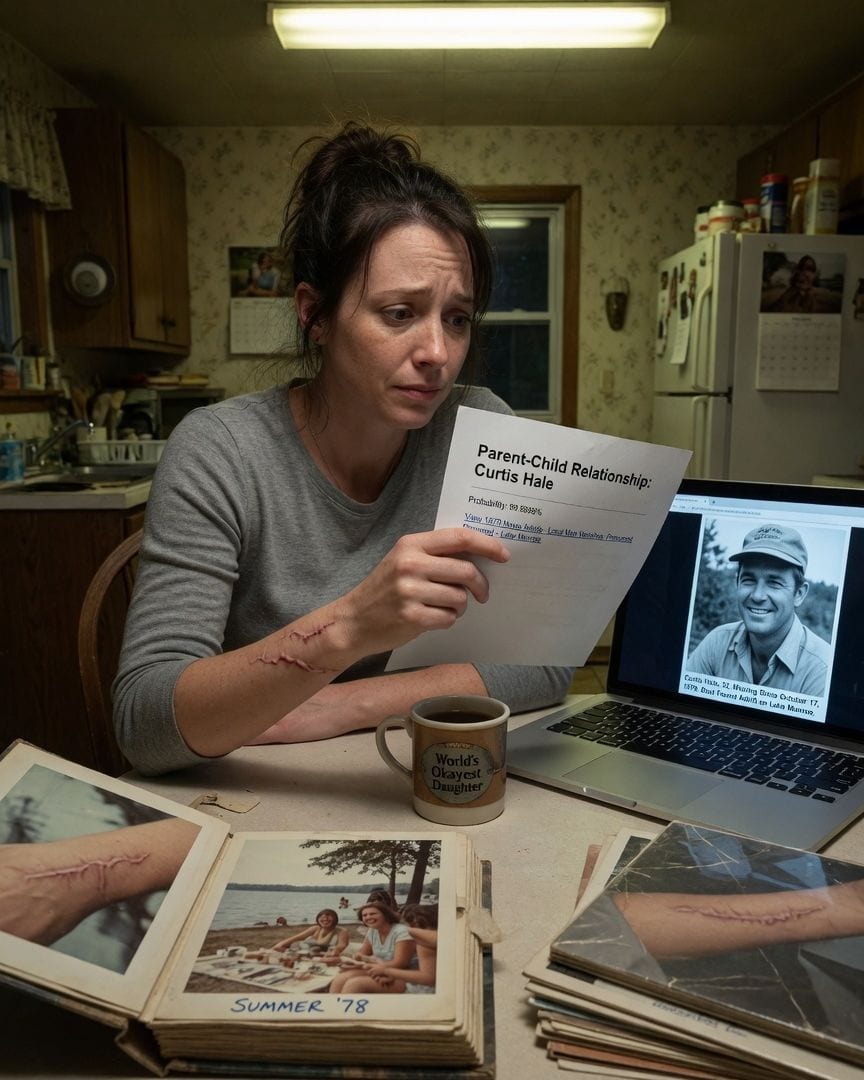
My DNA returned Curtis Hale as my father. He vanished in 1979. I was born twelve years later. The lab confirmed the match twice.
My DNA test results revealed something impossible: my biological father vanished in 1979, twelve years before my birth. My mother dismissed it as nonsense, but her reaction felt forced, leading me to old family photos. There, in a faded 1978 snapshot, I found my own distinctive childhood scar on the wrist of a stranger.
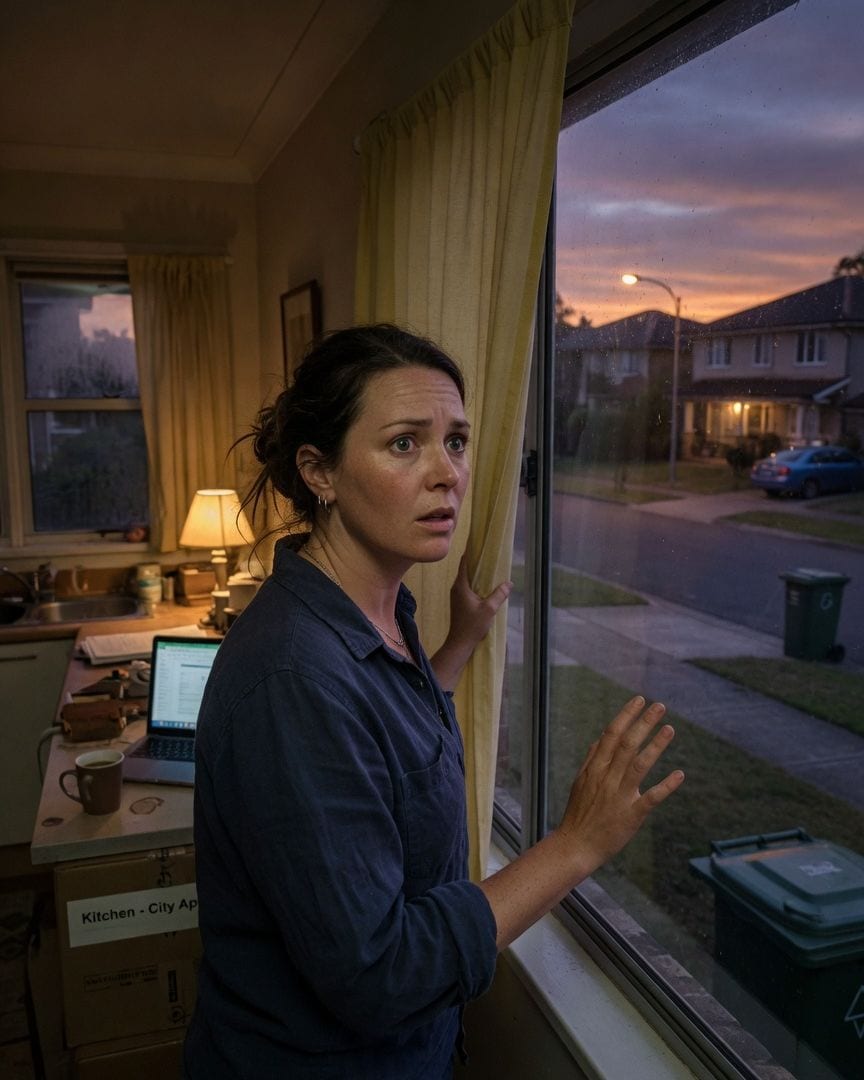
My bin was turned the wrong way Tuesday. The man three doors down hasn't been seen since, though his curtains still open.
New to Oakhaven, I dismissed the local warnings as charming quirks. But after I put my bin out first, my neighbor Joel Whitmore vanished, leaving only a cryptic 'My turn' note. The same strange symbol from his note was chalked on my bin, facing the street.
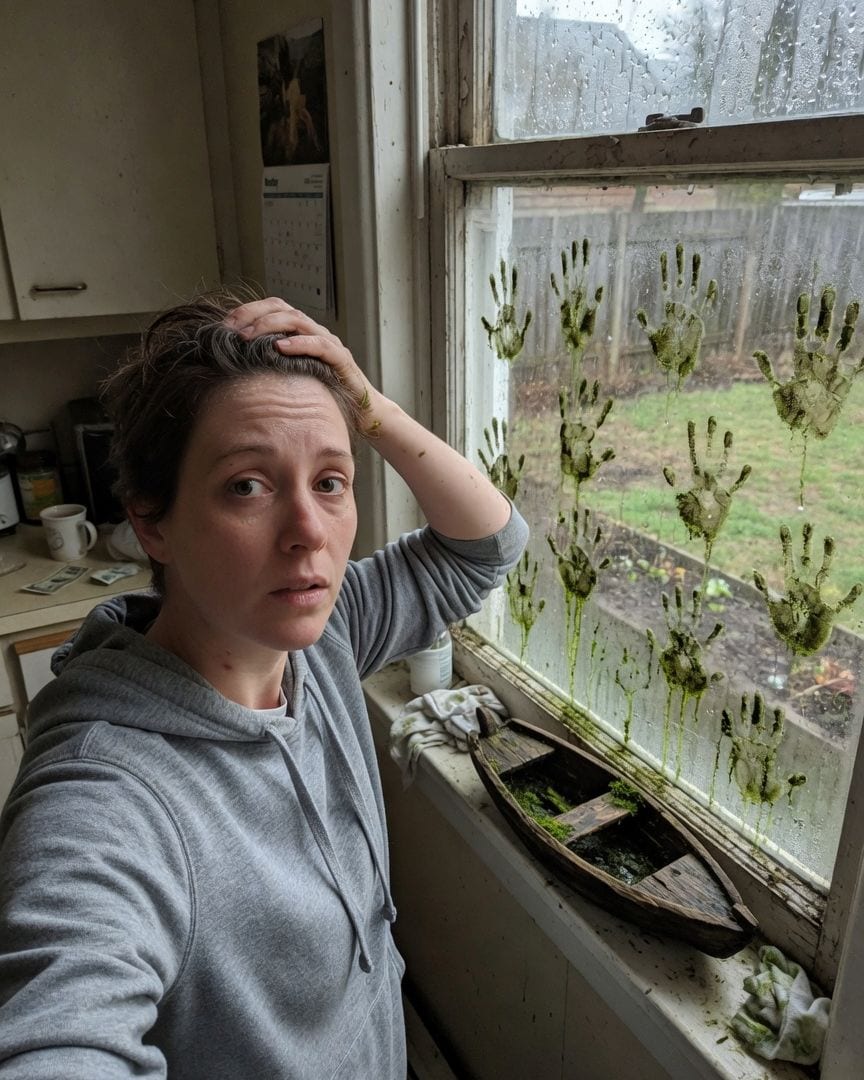
Wet moss handprints cover my kitchen window. My kitchen backs onto no water at all.
Monday morning, I found small, perfect handprints pressed against the *inside* of my kitchen window. They were wet and outlined in dark green moss, an impossible sight since my sealed window backs only onto a patch of lawn, with no water nearby. I ran my hand over them; they felt damp and cold.
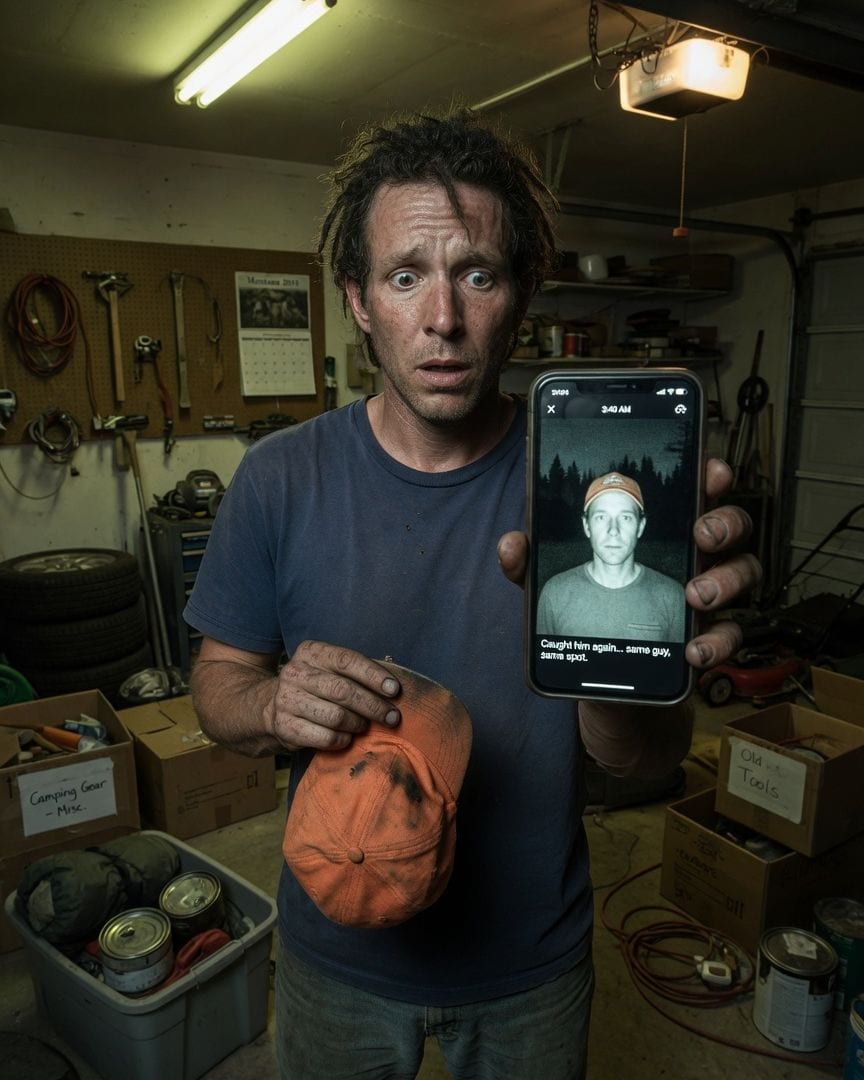
My lost orange cap is in my hand. Yet a photo shows *me* wearing its twin, two thousand miles away.
A late-night text from my brother-in-law in rural Montana included a photo from his motion camera. It showed me, wearing my lost orange cap, standing at a treeline at 3:40 AM. I was asleep in my bed in Ohio, two thousand miles away, and my identical lost cap was still in my garage.