My son said he'd never feared the dark. He was missing three nights. He’d screamed for the landing light his whole life.
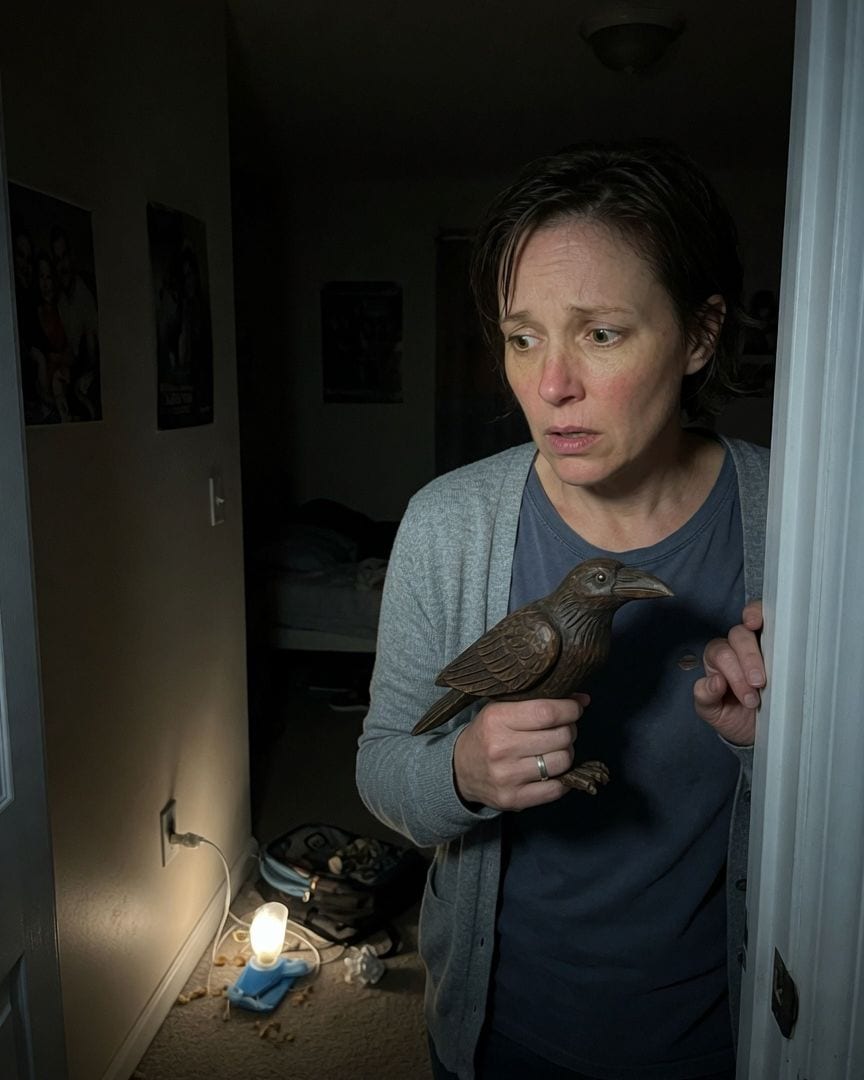
The first night Oscar returned, I found his bedroom door shut tight, the room a cavern of absolute black. For twelve years, my son, Oscar, had slept with the landing light on, a small, constant glow against the night.
He’d screamed, truly screamed, if it ever flickered or failed. It wasn't just a habit; it was a deeply ingrained, almost primal fear.
But now, after three missing nights, the light was off, and when I reached for the switch, my fingers brushed against the empty socket of the nightlight, unscrewed and left on the floor.
I picked it up, the plastic cool and smooth, its tiny bulb still intact. Why would he have done this? Was it some strange effect of the trauma? A coping mechanism I couldn't understand?
When I asked him about it the next morning, my heart thudding a strange rhythm, Oscar, 12, looked up from his cereal, his eyes clear and unnervingly calm.
"I've never been afraid of the dark, Mom," he'd said, his voice flat, devoid of any hint of a lie or even confusion. "You must be thinking of some other boy."
I tried to laugh it off, to blame trauma, a coping mechanism, a sudden surge of bravado after his ordeal. But the certainty in his young face, the quiet conviction, made the mundane explanation taste like ash in my mouth.
I kept trying to tell myself it was just a phase, a side effect of his ordeal, a boy trying to reclaim some independence after being lost.
But the image of the unscrewed nightlight, lying discarded on the floor, a silent testament to a changed reality, kept looping in my mind.
It was too precise a detail, too deliberate an act, for a boy who had always needed a beacon against the night.
A week later, the small things were adding up, a quiet avalanche of wrongness. Oscar’s preference for certain foods had flipped: he now pushed away the pasta he'd always loved, asking instead for the broccoli he’d once declared "poison."
His handwriting, which had always slanted sharply to the right, was subtly different, straighter, almost a new script.
And his left hand now often reached for things his right hand always had, a small, unconscious shift that made my stomach clench. He'd always been so definitively right-handed, even clumsy with his left.
I told myself it was fine motor skill development, or just a kid trying new things. He’d been through an ordeal, of course he was going to be different.
But then came the memory. Leonard, 39, Oscar’s father, was reminiscing about a fishing trip from two summers ago, a boys-only weekend at Lake Willow. “Remember that giant pike, Oscar?” Leonard chuckled, swirling his coffee.
“You thought it was a shark!”
Oscar beamed, nodding eagerly. “Oh, yeah! And that time you fell in, Dad, trying to net it? Just last year, right? And the boat almost tipped!”
I froze. Leonard hadn’t fallen in. He’d almost tripped, yes, but stayed perfectly dry. And Oscar hadn’t even been on that trip. He’d had a nasty flu, stuck in bed with me, watching cartoons, running a fever.
I’d spent the entire weekend nursing him, listening to Leonard’s exaggerated stories over the phone while Oscar coughed into his pillow.
“Oscar,” I interjected gently, trying to keep my voice even, “you weren’t there, honey. You were sick. You stayed home with me.”
Oscar’s smile didn’t falter. He turned to me, his expression serene, unclouded. “Of course I was, Mom. I remember it perfectly. It was just last year. Dad even let me drive the boat back to shore, remember, Dad?
Just a little bit?”
Leonard laughed, oblivious, ruffling Oscar’s hair. “He’s got a vivid imagination, Annika. Let him have his fun. He always loved hearing about that trip, didn’t you, buddy?”
But Oscar’s gaze, fixed on me, held no hint of imagination. Only a cool, unwavering certainty that made the hairs on my arms prickle. It wasn't imagination. It was a memory. His memory. But it wasn't true.
I spent the next few days in a haze of quiet dread, the fishing trip memory replaying like a broken record. I needed something concrete, something undeniable. Something that only the real Oscar would know, or react to correctly.
I remembered Oscar’s prized possession: a small, hand-carved wooden raven, given to him by his grandfather.
He’d kept it hidden in a secret compartment in his old treehouse, a place only he knew, a private sanctuary in the woods behind our house.
I waited until Oscar was at school, then climbed into the dusty, cobwebbed structure. The wood groaned under my weight. My fingers fumbled for the loose board, pushing it aside.
And there it was, nestled in the dark: the smooth, dark wood, the intricate feathers, the tiny, watchful eyes that Oscar had once spent hours carving with his grandfather. I pulled it out, its familiar weight a comfort.
I carried it back inside, my heart pounding with a desperate hope.
When Oscar came home, I met him at the back door. I held it out, the raven resting in my palm, its smooth, cool surface catching the light.
“Look what I found, sweetie,” I said, trying to keep my voice light, masking the tremor in my hands. “Your raven.”
Oscar looked at the small, intricately carved wooden raven in my palm. His brow furrowed, then he shrugged, a careless, dismissive gesture. “That old thing? I never liked it. It always looked more like a crow to me.”
He turns away, heading for the kitchen, leaving me clutching the bird, its smooth, familiar surface suddenly alien in my hand.
The wooden raven felt like a lead weight in my hand, heavy with a truth I couldn't yet name.
I put it back in the treehouse, tucking it carefully into its secret compartment, the only place it still felt like it belonged to the real Oscar.
That night, I waited until Leonard was asleep, his soft snores filling the quiet house, then quietly slipped into Oscar's room. He was a still lump under his duvet, the room plunged into the deep, unnerving blackness he now preferred.
I moved slowly, carefully, my phone flashlight a dim circle against the carpet. I had to find something else. Something concrete.
Under a loose floorboard near his bed, the one that always creaked a little if you stepped on it wrong, I found it: a small, spiral-bound notebook, his childish scrawl filling the pages. His journal.
I took it back to my own bed, pulling a blanket around me, the cold in the room suddenly biting.
Flipping through it, my breath hitched. There were entries about his lifelong fear of the dark, detailed descriptions of nightmares, even a lovingly drawn picture of the wooden raven, captioned 'My best friend, never a crow.'
The words were his, the drawings his messy, vibrant style. But the thoughts… the thoughts were the real Oscar’s. The evidence solidified my terror. This wasn't my son's journal anymore.
Or rather, it was, but the boy who wrote it, the boy who cherished this wooden bird and feared the dark, was gone.
Over the next few days, I observed 'Oscar' with a chilling new intensity. He was now consistently using his left hand to draw, though he’d always been right-handed.
He poured milk with his left hand, picked up his spoon with his left. Small things, constant things.
His laugh, once a bright, unrestrained burst that filled the room, was now a slightly flatter, almost rehearsed sound, like an echo of something I used to know.
He would stare at me sometimes, across the dinner table, over the top of a book, a strange, knowing glint in his eyes that made my skin crawl. It was as if he was evaluating me, not just looking.
When I tried to talk to Leonard about these 'changes,' the nightlight, the raven, the handedness, the fishing trip, he just patted my hand, his brow furrowed with concern for me. “It’s stress, honey. You’ve been through a lot.
He’s been through a lot. Give him time. Boys change.” He seemed to genuinely believe that Oscar’s sudden shift was just a natural part of growing up, or a reaction to trauma.
But I knew, with a cold, growing certainty, that time wouldn't fix this. Time would only make it more complete.
I started spending my evenings researching, late into the night, after Leonard and 'Oscar' were asleep. Missing children, personality changes, false memories, sudden shifts in handedness, fear of darkness vanishing.
The internet provided no easy answers, just more unsettling questions and forums filled with similar, desperate stories, usually dismissed as grief or delusion.
I clicked link after link, my fingers growing numb, the blue light of the screen painting shadows on my face.
One afternoon, while I was in the kitchen, focused on chopping vegetables for dinner, 'Oscar' appeared silently behind me. I hadn't heard him come down the stairs, hadn't heard the soft pad of his feet.
The hair on my arms stood on end. “Mom,” he said, his voice unusually deep for a moment, a low rumble I didn’t recognize, “you’re looking tired. Are you worried about something?”
I nearly dropped the knife. It clattered against the cutting board. I spun around, my heart hammering against my ribs. He was standing too close, his expression unreadable, those unnervingly calm eyes fixed on me.
“Just… just tired, sweetie,” I stammered, forcing a smile that felt brittle. He simply nodded, a faint, unsettling curve to his lips. The air in the kitchen suddenly felt heavy, thick.
Later that week, I was in my garden, pulling weeds from between my rose bushes, the late afternoon sun warm on my back, when my elderly neighbor, Constance Easton, 68, came over, leaning on our shared fence.
Constance was known for her quiet observations, her eyes missing nothing even as her words were sparse.
“Your Oscar seems… different, Annika,” Constance said, her voice soft, almost a whisper, as if she was afraid of being overheard.
She didn't look at me, but at a distant point beyond my garden, towards the dense, dark line of trees that marked the edge of the Quarry Woods.
My breath hitched. I dropped the clump of weeds. “Kids change, Constance,” I said, trying to sound casual, but my voice was tight, betraying me.
Constance just hummed, a low, knowing sound. Her eyes, ancient and knowing, finally fixed on my face, their depths seeming to hold decades of secrets. “Yes, they do,” she said, a tremor in her voice I hadn’t heard before.
“Sometimes, they change so much, you almost don’t recognize them. Some things, Annika,” she leaned in slightly, her voice dropping even lower, “are best left alone.”
She paused, then added, her gaze now back on the distant tree line, “Especially around the Quarry Woods.”
I felt a chill that had nothing to do with the cool breeze rustling the leaves. Constance’s words, the specific mention of the woods, felt less like a warning and more like a confirmation. Someone else saw it.
Someone else knew.
Driven by Constance’s cryptic warning, I sought her out the next morning. I found Constance watering her prize-winning hydrangeas, their purple heads bobbing gently in the light breeze. Annika approached, my voice hushed, urgent.
“Constance, what did you mean about Oscar? About the woods?”
Constance turned, her eyes clouded with a familiar sadness, a look that spoke of long-held grief. “I’ve seen it before, dear. More times than I care to remember.”
I pressed, my voice barely above a whisper. “Seen what? What are you talking about?”
Constance sighed, a deep, weary sound that seemed to carry the weight of years. “Children. Gone for a few nights. Always three. Always near the Quarry Woods. And when they come back… they’re not quite themselves.
Like a tune played slightly off-key, but only you can hear it.”
I felt a surge of cold dread, a confirmation of the shapeless fear that had been gnawing at me. “My Oscar… he remembered a fishing trip he wasn’t on. He claims he never feared the dark, never liked his raven.
He’s left-handed now, Constance. He never was!”
Constance nodded slowly, her gaze distant, fixed on the gnarled roots of a rose bush. “Edward, my little brother… he came back saying he’d always loved mushrooms. Hated them before, you know, wouldn’t touch them.
Said he’d spent the whole three nights at his friend Billy’s, even though Billy was on vacation in Florida that week. Said he vividly remembered Billy’s father taking them fishing, catching a huge pike.
But Billy’s father swore Edward wasn’t there.”
My mind raced, connecting the threads. A false memory. A shift in preference. Three nights. The Quarry Woods. “So it’s happened before? Other children?”
Constance led me inside her small, neat house. The air was cool, smelling of lavender and old paper. She pulled out a dusty, leather-bound scrapbook from a chest in the corner, its cover worn smooth with age.
“My mother started this,” she said, her voice softer now, almost reverent. “She didn’t understand, but she saw the pattern. I… I kept it going.”
Her fingers, gnarled with age, traced a faded newspaper clipping on the first page, the headline barely legible: Local Boy Returns After Three-Day Ordeal. “They called it ‘childhood amnesia’ or ‘post-traumatic stress.’ They always did. But we knew.
Our Edward was gone, and something else wore his face.”
I looked at the scrapbook, a growing horror blooming in my chest, cold and undeniable.
The unscrewed nightlight, the changed handedness, the false fishing trip memory, the raven he dismissed as a crow, Constance’s knowing gaze – it all snapped into a terrifying focus. It wasn't just Oscar. It was a pattern.
A cruel, repeating pattern. And the Quarry Woods, a place I’d always considered harmless, a quiet place for afternoon hikes, was at its heart.
Constance opened the scrapbook, its brittle pages filled with yellowed newspaper clippings. Each one detailed a missing child, found after a short disappearance, always in their local area.
Annika’s eyes scanned the headlines: 'Local Boy Returns After Three-Day Ordeal,' 'Missing Girl Found Wandering Near Old Quarry,' 'Family Relieved as Son Comes Home.'
The dates stretched back decades, a chilling chronicle of similar events, some as recent as a few years ago, others from before my parents were born.
I noticed the vague mentions in the articles, almost throwaway lines, about how the children seemed 'quieter' or 'more mature' after their return, or had 'developed new interests.'
Constance’s finger, trembling slightly, rests on a faded newspaper photo from decades ago. A small boy, solemn-faced, stands beside a younger Constance, who is smiling bravely, her arm around his shoulders.
"That's Edward," she whispers, her voice thin, a sound like dry leaves skittering across pavement. "My little brother. He came back, after three nights. Just like your Oscar."
The boy in the photo has eyes that are too still, too deep, mirroring the uncanny calm Annika has seen in her son.
I spent the rest of the day at Constance's, poring over the scrapbook. Each clipping, each faded photograph, confirmed my worst fears.
I cross-referenced the names and dates, noting the recurring pattern: always a child, always missing for exactly three nights, and always found within a mile or two of the Quarry Woods. The entity wasn't random; it was systematic.
A predator with a precise method.
Then, a detail from one of the earliest clippings, a small article about Edward Easton's return from almost sixty years ago, caught my eye.
It mentioned how Edward, after his return, would vividly describe a fishing trip he’d taken with a neighbor’s father, a trip the neighbor’s father confirmed had happened, but Edward was never present for.
The detail was identical to Oscar’s false memory of Leonard’s fishing trip.
A cold, absolute certainty settled over me, chilling me to the bone. The 'Memory They Shouldn't Have' wasn't just a fabrication; it was a fragment of Edward’s stolen past, now implanted into 'Oscar.'
The entity wasn't just replacing; it was collecting, absorbing, and reusing pieces of its victims' lives, weaving them into the fabric of the new identity. It explained the subtle changes, the reversed habits, the uncanny calm.
The three nights were the incubation period, the time it took to fully assimilate and overwrite. The pattern, once scattered and disparate, now snapped into a coherent, monstrous shape.
I realized the horror wasn't just that Oscar was gone, but that this cycle had been continuing for generations, right under our noses, meticulously hidden in plain sight.
I returned home, the heavy weight of the scrapbook's truth pressing down on me, making my steps falter. I found 'Oscar' in the living room, watching TV, a nature documentary about birds.
His posture was too perfect on the couch, his expression too composed as he watched a raven take flight on screen. My heart hammered, but a strange resolve had hardened within me, cold and sharp.
I walked over, the scrapbook clutched in my hands, and opened it to Edward Easton’s clipping, tapping the yellowed page with a trembling finger. “Oscar,” I said, my voice shaking slightly despite my efforts, “do you remember this?”
I pointed to the detail about Edward’s false fishing memory, the one about the pike.
'Oscar' glanced at the page, then at me, his eyes unblinking, like a doll's. “No, Mom. Why would I?” His voice was calm, almost bored.
I pushed, my voice rising, the fear giving way to a desperate, furious energy. “Because it’s the same memory you have! The fishing trip you were never on!
The one Edward Easton had after he came back from the Quarry Woods, decades ago!” I slammed the book down on the coffee table, the sound echoing in the quiet room.
'Oscar' didn’t flinch. He simply smiled, a slow, faint curve that wasn’t Oscar’s. It was a smile of utter, serene confidence, devoid of any genuine emotion, colder than anything I had ever seen on my son’s face.
“Annika,” he said, his voice soft, almost soothing, a low hum that seemed to vibrate in my bones, “you’re becoming confused. You remember too much.”
He rose from the couch, moving with an unsettling grace, a fluidity that felt almost too smooth. He placed a hand, cold and firm, on my arm. His touch sent a shiver through me.
“It’s time to let go of these old stories. It’s time to accept the peace.”
His gaze held mine, and in those unnervingly calm depths, I saw not just Oscar, but a vast, ancient intelligence, processing me, understanding me, preparing me. The room felt colder, the air thick and heavy, pressing down on my chest.
I understood then: the pattern wasn't just about the children. It was about the families they returned to, slowly integrated, slowly replaced. And I, with my questions and my memories, was now the next target for assimilation.
The entity knew me. It had always known me, studying my reactions, learning my vulnerabilities. I was already inside its monstrous shape.
The next morning, Annika’s research notes, the printouts from her desperate internet searches, were gone from her desk. The scrapbook, which she had brought home from Constance’s, was nowhere to be found.
Leonard, oblivious, was whistling as he made breakfast, flipping pancakes with a cheerful air. 'Oscar' ate his cereal, humming a cheerful tune Annika had never heard before, but which sounded oddly familiar in the house now.
She tried to speak to Leonard, to explain, but the words felt thick and meaningless on her tongue, her throat suddenly dry.
His responses were hollow, almost rehearsed, his eyes glazed with a placid contentment that settled heavily over the kitchen. He seemed to genuinely believe everything was fine, that their son was simply 'back to normal.'
The house felt different, quieter, as if a great, heavy blanket had been draped over it, muffling all dissent, all doubt.
Annika moved through her day in a daze, the certainty of what she knew battling with a strange, growing lassitude. The urgency to fight, to scream, was slowly draining away, replaced by a profound, unsettling calm.
Annika eventually stopped asking questions. She moved through her days with a quiet, serene smile, a faint echo of the one her son now wore. Leonard, relieved, often remarked how much more peaceful she seemed.
Her mind felt lighter, less burdened by the dreadful knowledge. The sense of foreboding had faded, replaced by a quiet acceptance. She would sometimes catch 'Oscar' watching her, his eyes holding that knowing glint, and she would simply smile back.
There was no more fight in her, only a profound, unnatural peace. She was home. And everything was as it should be. The Quarry Woods, she now understood, was simply part of the landscape. And so was she.
Annika eventually stopped asking questions. She moved through her days with a quiet, serene smile, a faint echo of the one her son now wore. Leonard, relieved, often remarked how much more peaceful she seemed.
One evening, as the three of them sat at dinner, Oscar turned to his mother. "Remember that fishing trip, Mom?" he asked, his eyes bright. "The one Dad and I took last year? The biggest trout we ever caught?"
Annika paused, a fork halfway to her mouth, then nodded slowly. "Oh, yes," she said, her voice soft. "I remember it perfectly now."
If this one got to you
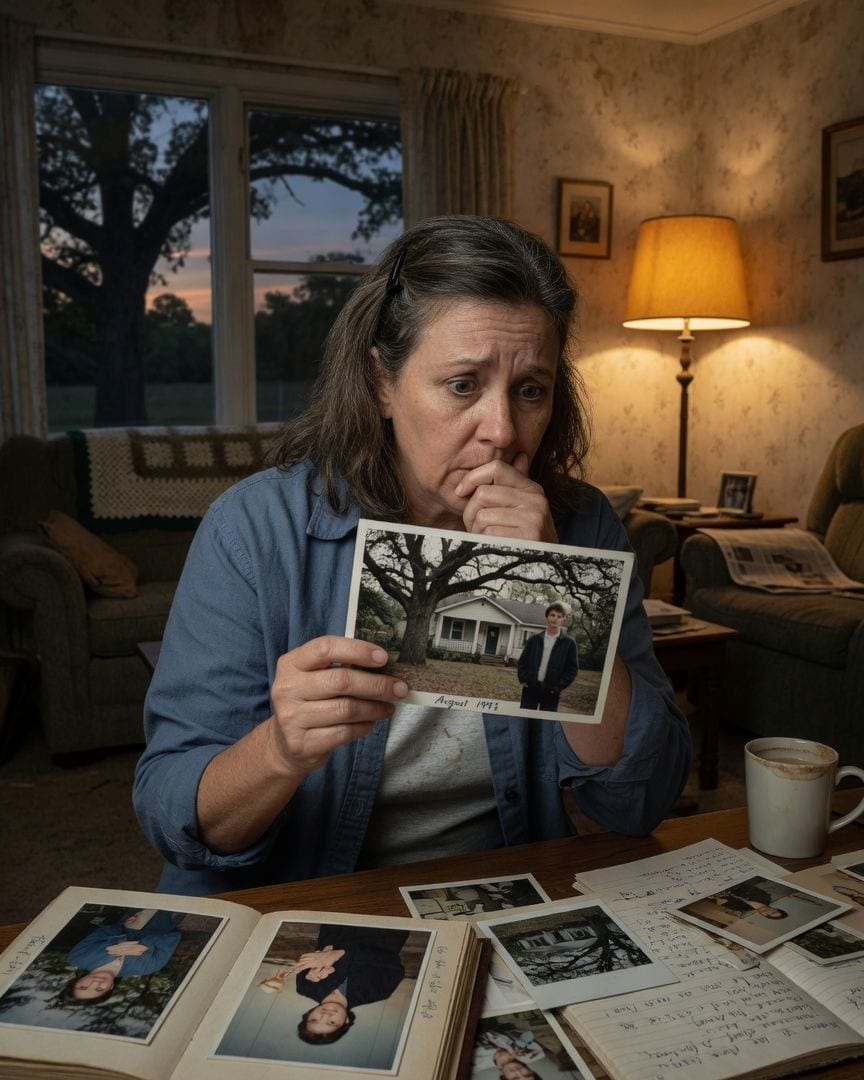
My brother remembers carrying me home after I broke my arm. He was already gone two years when it happened.
After thirty-two years, my brother Joel returned, bringing a relief that felt physical after decades of quiet absence. But when he recounted carrying me home after I broke my arm, a memory I held dear, the warmth in my chest curdled cold. He was twenty years old then, two years gone already, and my mother had carried me.
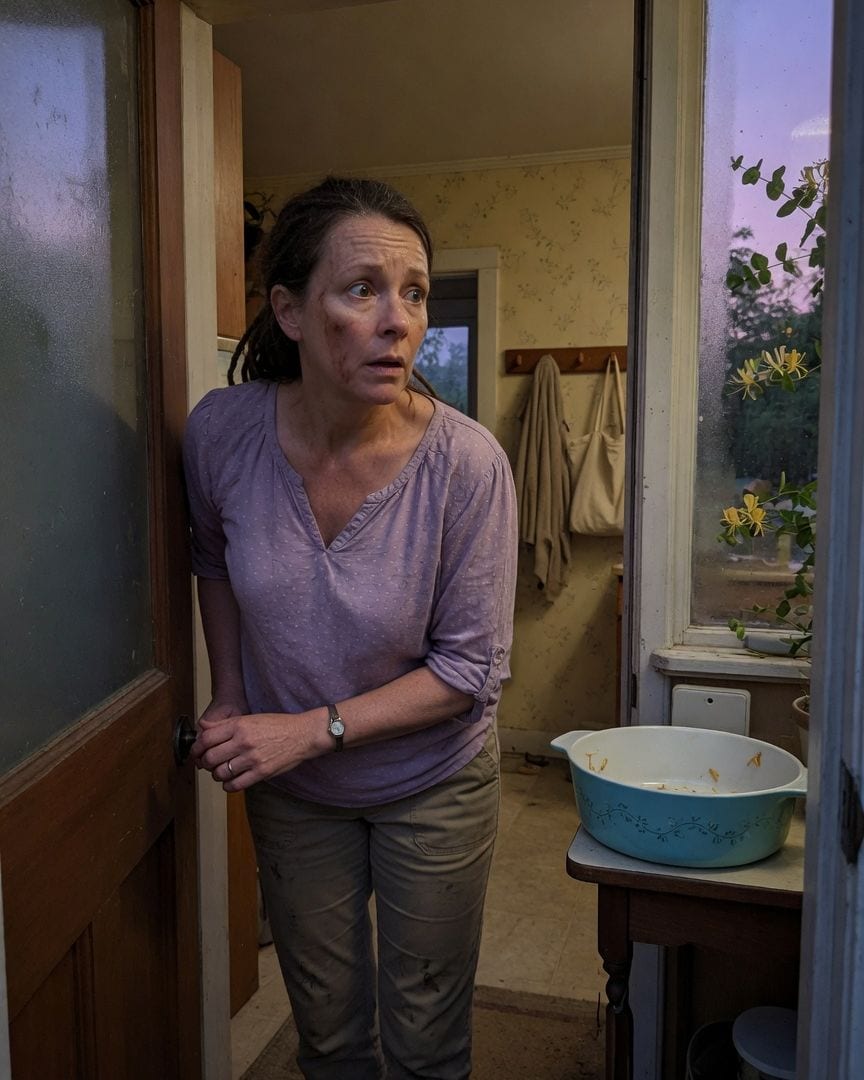
My neighbor Henry, lost at sea a year ago, just returned my casserole dish. He said it was for his mother's funeral, but she's alive.
My peaceful afternoon gardening was interrupted by a knock on the door. It was Henry, my neighbor, who had been lost at sea a year ago, now standing on my porch looking perfectly healthy. He was returning my blue ceramic casserole dish, which he said I had lent for his mother's funeral.
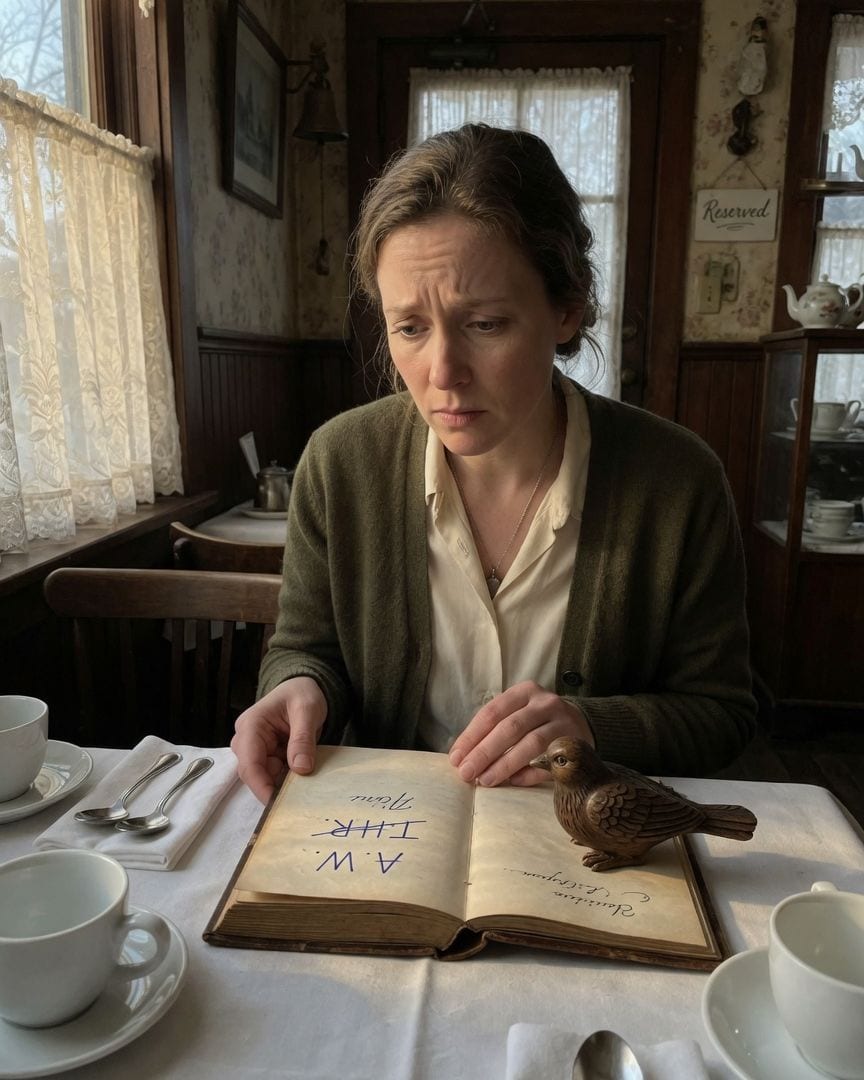
My tearoom table reservation replaced three initials booked daily since 1926. Today, I sat in their seat.
As an art restorer, I loved the quiet history of Oakhaven’s tearoom, especially a sunlit corner table. But the owner, Gloria, always insisted it was reserved, despite it being meticulously set and empty every single day since 1926.
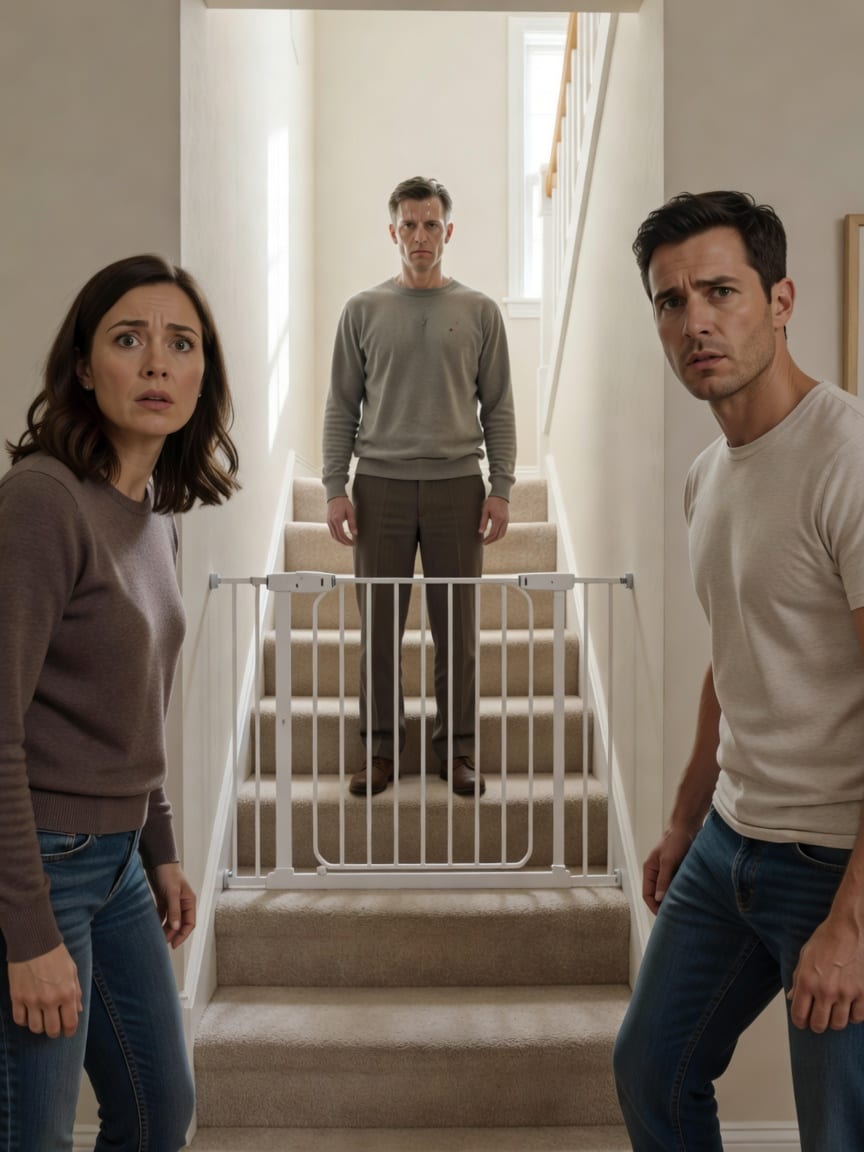
My stair gate latches itself every night. Pressure-fitted tight across my empty stairs, no children live here and no fixings exist on the wall.
I live alone in my inherited house, so the toddler gate at the top of my stairs should not be there. Each morning, I find it perfectly latched and sturdy, despite having hidden it away in the shed the day before. This isn't a quirk; it's a routine, and it isn't mine.
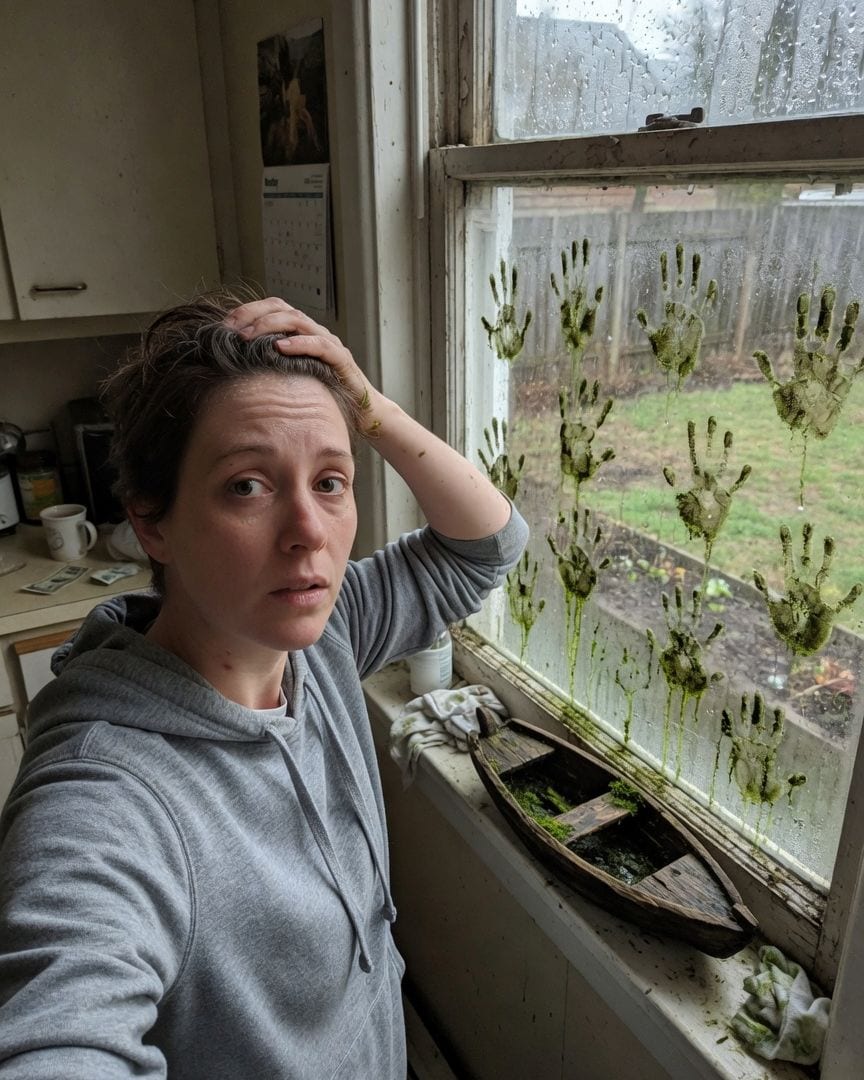
Wet moss handprints cover my kitchen window. My kitchen backs onto no water at all.
Monday morning, I found small, perfect handprints pressed against the *inside* of my kitchen window. They were wet and outlined in dark green moss, an impossible sight since my sealed window backs only onto a patch of lawn, with no water nearby. I ran my hand over them; they felt damp and cold.
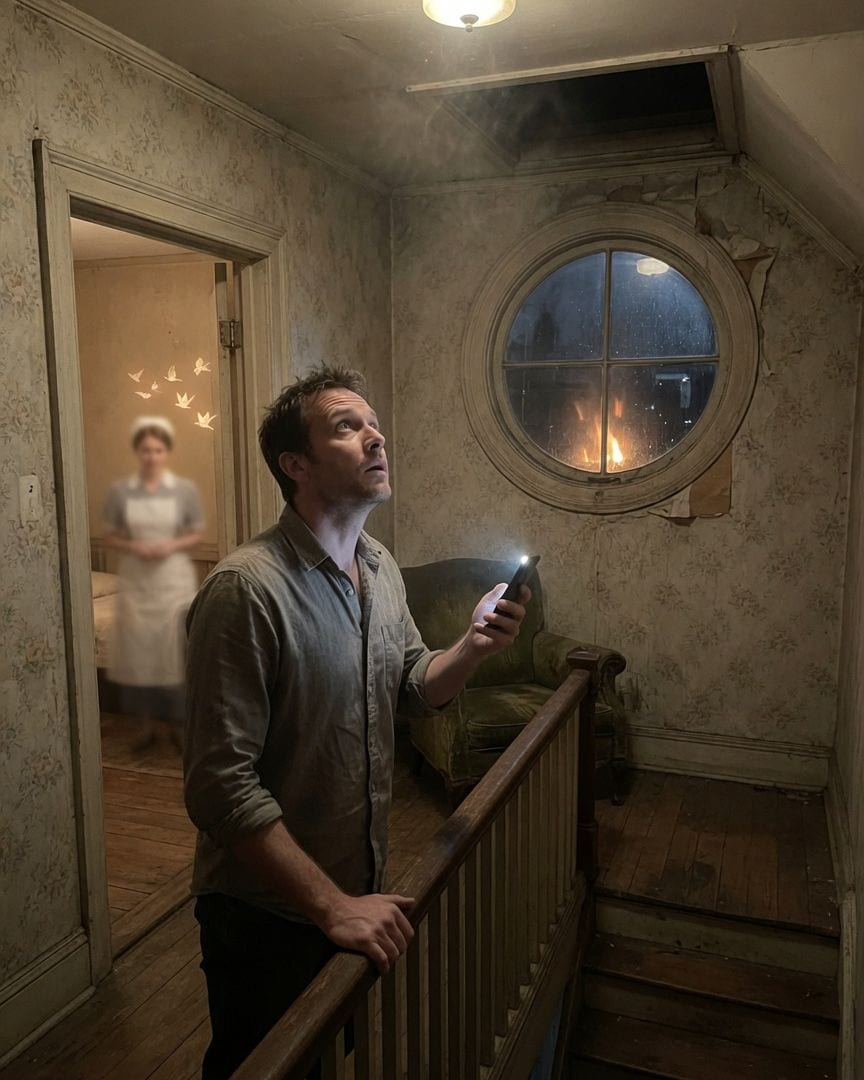
My attic window shows a nursery lit by firelight. The blueprints say no room exists there.
I inherited an old house with good bones, an architect's dream. But soon, I started seeing a nursery, lit by firelight, in the attic window. My blueprints confirm there's no room there.