Weeks from going home, Sergeant Whitmore saw Private Kessler’s dental records show teeth he didn’t have and missing ones he did.
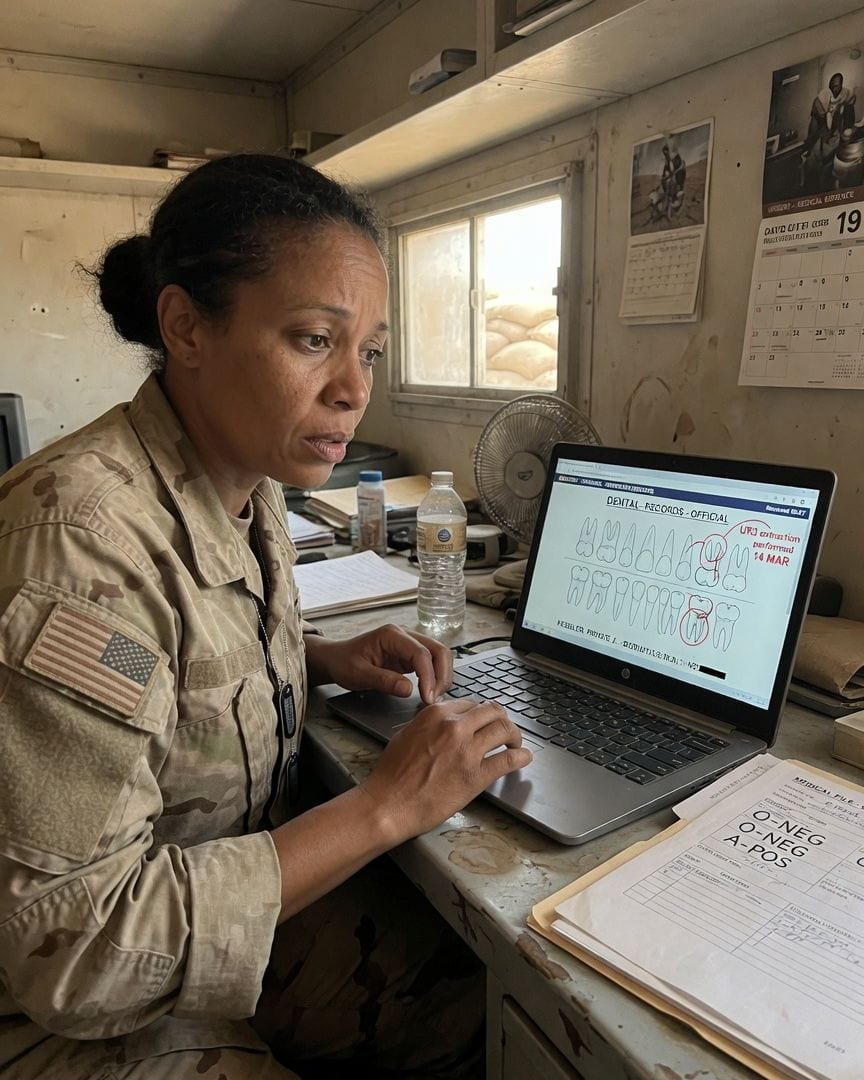
Sergeant First Class Iris Whitmore, 38, felt the familiar cool weight of the dog tags in her hand, the metal a contrast to the relentless desert heat of FOB Cerberus.
Dust motes danced in the shaft of sunlight slicing into the medical tent. Her deployment was winding down, just weeks left before she could finally go home, back to the familiar, un-sanded quiet of her own house.
She remembered the day she’d read Private Kessler’s tags aloud for the medics, just a few months prior, his skinny frame still adjusting to the harsh environment. ‘Kessler, O-negative,’ she’d called out, a standard check.
That blood type had been etched into her memory, a detail, like all details, she prided herself on retaining.
Weeks later, the new training nurse, fresh out of basic, called Kessler for a routine blood draw. The nurse, Private Miller, held the dog tags up, her brow furrowed slightly as she matched them to the clipboard.
‘Kessler, A-positive,’ Miller announced, her voice echoing a little too loudly across the sterile canvas of the medical tent. Whitmore, who had been reviewing supply manifests at a nearby table, felt a cold knot tighten in her gut.
She’d looked up, her gaze snapping from the inventory sheet to Kessler, then to the tags dangling from his neck. A-positive. It pinged, a jarring wrong note in her internal ledger.
Whitmore walked over, her boots silent on the packed dirt floor. She extended her hand, her expression neutral. ‘Let me see those, Private,’ she said, her voice calm. Miller, flustered, handed them over.
Whitmore held the tags, turning them slowly in her palm. His name, his service number, all correct. But the etched letters beneath, stark against the dull metal, clearly read 'A-POS'.
It was a blood type that had never once been his. She remembered the medic, Specialist Chen, confirming O-negative, remembered the small prick of the needle for the blood card.
She had even seen Kessler’s enlistment papers with the O-negative listed. This was a physical impossibility, a defiance of every protocol, every record, every rational explanation she knew.
The desert wind, usually a familiar hum, seemed to carry a faint, metallic tang she couldn’t place.
Whitmore found Kessler later that evening, hunkered down in the meager shade of a sandbag bunker, meticulously cleaning his rifle. He looked up, his face smudged with grease and dust, oblivious to the quiet storm brewing in her mind.
She squatted beside him, the grit of the ground working into her fatigues. ‘Kessler,’ she began, keeping her tone casual. ‘Just out of curiosity, what’s your blood type again?’ He paused, brushing a patch of rust off the rifle’s barrel.
He didn’t even hesitate. ‘O-neg, Sergeant. Always has been.’ His genuine confusion, the easy certainty in his voice, only deepened her unease. He didn’t question why she’d asked, simply accepted it as a random check from a detail-oriented superior.
She approached Dr. Eugene Sutton, 55, the base physician, the next morning. His office, a small, prefabricated unit, smelled of antiseptic and old paper.
Sutton was a man whose medical expertise was as dry as the desert air, methodical to a fault. He sat behind a scarred metal desk, the faint whir of a single desk fan the only sound.
Whitmore laid out the facts, starting with the dog tags. Sutton listened, tapping a pen against his desk, the sound a steady rhythm against her mounting anxiety.
He suggested a rare, spontaneous blood type change, a medical anomaly, or perhaps a clerical error during Kessler's enlistment, then perpetuated on his dog tags.
Both explanations felt flimsy, impossible to swallow given the military’s rigid accountability, the triplicate forms, the double-checks. ‘The tags are from central issue, Doctor,’ Whitmore pressed. ‘They’re generated from his enlistment data. And I personally verified his type months ago.’
Sutton merely shrugged, a gesture that did little to ease her mind. Whitmore insisted on reviewing Kessler’s complete medical file, citing 'training discrepancies' for the new nurse.
Sutton granted her access with a tired sigh, as if this was merely another bureaucratic nuisance.
Digging through the digitized records from her office terminal later, the screen casting a pale glow on her face, she found a log of a minor sprained ankle Kessler had suffered months ago, a detail she remembered clearly from a brief conversation about his recovery time.
Yet, in the file, it was documented as happening after his supposed 'A-positive' blood type was officially recorded during a routine intake. The sequence was backward.
The injury she vividly recalled from Kessler's 'O-negative' period was now inexplicably tied to his 'A-positive' identity, a subtle but significant re-ordering of his personal timeline within the official record.
It was a detail so small, so seemingly insignificant, that anyone else would have missed it. But Whitmore, she saw it. And it twisted her gut harder than the A-positive on the tags.
The ankle log was a red flag, a quiet alarm going off somewhere deep in her mind. If the records could shift the timeline of a minor injury, what else could they do? What else had they done?
Whitmore decided to check something even more definitive, more immutable than blood, more resilient than a written date.
She requested Kessler's dental records from central command, confident that the unique map of his teeth, the very architecture of his mouth, would prove the original, uncorrupted history of Private Kessler, O-negative.
Days later, the digital file landed in her inbox, marked 'URGENT - MEDICAL REFERENCE.' The email notification chimed, a small, hollow sound in the empty office. She opened it, the screen filling with intricate diagrams and notes.
Her eyes scanned the familiar name, the service number. Undeniably Kessler. Then, her gaze locked on the dental charts, a complex map of molars and incisors.
There was a specific filling, a large amalgam on a lower molar, that Kessler had mentioned needing replaced before deployment, a filling she knew he'd had fixed. It wasn't there.
The diagram showed perfect, unblemished enamel where the repair should have been.
Instead, in its place, the diagram detailed a wisdom tooth extraction on the upper right quadrant—a procedure Kessler had never undergone, a tooth Whitmore knew was still firmly in his mouth.
The records were his name, his number, but the teeth, the very foundation of his identity, were wrong, a stark, unexplainable contradiction frozen on the page.
The dental records were a cold, hard fact that shattered any remaining mundane explanations.
Whitmore couldn't shake the image of Kessler’s actual, living mouth, the subtle unevenness of his grin, the solid presence of that upper right wisdom tooth, so jarringly different from the flawless, extracted diagram in the official file.
A faint, almost metallic taste coated her tongue, a phantom sensation of wrongness. She sat at her terminal, the cooling fan humming softly, trying to make sense of the impossible. A clerical error? A mix-up of files?
But the name and service number were identical. No. This was something else.
She started cross-referencing other long-serving personnel at Cerberus, meticulously sifting through medical and service records, looking for similar, subtle discrepancies. It was like searching for a ghost in a ledger, the phantom imprint of what should be against what was.
The work consumed her nights, the glow of the screen her only companion in the quiet of the records office. Master Sergeant Raymond Bennett, 42, her direct superior, a man whose presence filled any room, noticed her unusual, late-night activity.
He appeared in the doorway one evening, his silhouette framed against the dim corridor lights. 'Everything squared away, Sergeant Whitmore?' he'd asked, his tone even, almost friendly, but his eyes, sharp as a hawk’s, missed nothing.
She’d mumbled something about 'auditing old files for efficiency reports,' clutching a folder of seemingly random records a little too tightly. He hadn't pressed, but the encounter left her feeling exposed, a single spotlight on her clandestine search.
Her search, however, yielded disturbing fruit. Not as dramatic as Kessler’s complete identity shift, but there were patterns.
A birthmark meticulously documented on the left arm of a soldier who, in her mental rolodex of faces and details, clearly had it on the right.
A family emergency contact listed for another soldier who was a known orphan, a fact verified by his pre-deployment interviews.
A minor allergy to penicillin suddenly appearing in a veteran's file where none had existed for thirty years, now necessitating a red armband he’d never worn before.
Each discrepancy was small enough to be dismissed as human error, an isolated incident, a tired medic’s late-night mistake.
But collectively, they formed a chilling, impossible mosaic of shifting identities, a quiet erosion of certainty within the very system built to define it.
It was as if the data itself was subtly, silently, re-patterning itself, piece by piece, under some unseen influence.
The air in the records office, usually dry and still, felt heavy, as if pressurized by the weight of these impossible truths.
The accumulating evidence felt like a physical weight, pressing down on Whitmore in the stark, silent corridors of FOB Cerberus. The fluorescent lights hummed, casting long, distorted shadows that seemed to stretch and writhe with her growing unease.
She realized her digital access logs for central command records were being flagged; several of the files she'd recently viewed, those containing the most glaring discrepancies, were now marked 'restricted - access denied.'
The system, designed for meticulous accountability, was actively obscuring the anomalies, pulling a digital curtain over the impossible. She felt a cold dread seep into her bones.
Then came the call from Dr. Sutton’s office, a clipped, official request for her for a 'routine follow-up physical.' Whitmore felt a prickle of unease, a cold sensation crawling up her spine.
During the examination, Sutton’s questions drifted from her physical health to her mental state, subtly probing about her 'unusual interest' in old personnel files. He looked at her over the rim of his glasses, his expression unreadable.
He spoke of the unique pressures of remote deployments, the isolation that could 'play tricks on the mind,' the mirages in the desert manifesting as 'mental fatigue.'
His calm, almost paternal tone was more unsettling than any direct threat, a quiet suggestion that she was losing her grip, not discovering a truth. The room seemed to grow colder around her, despite the desert heat outside.
Later that week, as she walked back from the mess hall, the sun dipping below the horizon in a riot of orange and purple, she caught a glimpse of a figure in the medical bay window.
It was Sutton, standing perfectly still, watching her. His face was a dark silhouette against the harsh desert sunset, his posture rigid. He wasn’t waving, wasn’t moving, just observing.
The silence of the outpost, once a comforting blanket of routine, now felt like a shroud, thick with unseen eyes, a vast, empty space where she was the only moving target.
She was no longer just investigating; she was being observed, her own actions now part of the pattern she was trying to uncover. The air itself seemed to vibrate with a silent, watchful intensity.
Whitmore decided she couldn't continue in the shadows. The weight of her findings, and the unsettling realization that she was now a subject of observation, drove her to act.
She gathered her evidence: the hard copy of Kessler’s original dog tags she'd held onto, the printout of the discrepant dental records, the timeline shift in his medical file, and the growing, chilling list of minor, impossible inconsistencies from other soldiers’ records.
She marched into Dr. Sutton’s office the next morning, the folders clutched tight against her chest. She didn’t wait for an invitation, simply laid the evidence out on his desk, the papers rustling softly. 'This isn't human error, Doctor.
This is a pattern,' she stated, her voice tight with suppressed dread, barely a whisper of the frustration simmering beneath.
Sutton’s calm facade finally cracked. He sighed, running a hand over his thinning hair, his gaze sweeping across the scattered documents. 'You’re a good soldier, Sergeant Whitmore. Too good, perhaps.' He admitted that Cerberus had a 'peculiar history.'
He explained that previous medical officers, going back decades, had noted similar, unexplained discrepancies.
He called it 'the Cerberus effect'—a subtle, systemic re-patterning of individuals’ biometric data and official records to conform to an unseen, historical template associated with the outpost.
He believed it was a geological or energy anomaly, something embedded in the very ground beneath them, slowly 'writing over' people's identities. The words hung in the air, heavy and impossible.
He retrieved a heavily redacted, unofficial file from a locked cabinet behind his desk—a thick, worn binder filled with typewritten observations and hand-scribbled notes. The pages were yellowed with age.
'Command knows,' he said quietly, his voice low and weary, 'but they can’t explain it, and they certainly can’t stop it. It’s easier to bury it as 'clerical errors' and 'psychological stress'.'
He showed her graphs charting the subtle shifts over generations of personnel, photographs of old service records side-by-side with 'corrected' ones.
The dread intensified, solidifying in her gut as Whitmore saw her scattered clues coalesce into a single, terrifying truth: the system wasn't broken; it was being overwritten. The very foundations of identity were being subtly eroded, replaced.
Dr. Sutton looked weary, defeated, as if the desert itself had leached the color from his face. 'You need to stop digging, Sergeant,' he warned, his voice barely a whisper, a dry rustle like sand across stone.
'For your own sake. The effect is slow, but it's pervasive. Once it starts, it doesn't stop.' He flipped to a specific page in his unofficial file, a list of personnel who had exhibited significant 're-patterning' symptoms over the years.
Some were listed as 'transferred for psychological evaluation,' others as 'missing in action,' though Sutton’s gaze, momentarily meeting hers, implied their disappearance was directly linked to the anomaly.
Whitmore’s eyes scanned the faded, typewritten names, a chilling roll call of the silently lost, a roster of those who had quietly ceased to be themselves.
She saw a name associated with an incident decades ago, a soldier who had vanished without a trace, his records later 'corrected' to show a desertion, a faint 'A-POS' next to his revised entry.
The implications were horrifying, the scale of the quiet erasure unimaginable. And then, at the bottom of the page, beneath the last typewritten entry, was a recent, stark handwritten addition. Her blood ran cold, the temperature in the room plummeting.
Dr. Sutton’s hand hovered over the faded page, then pointed to the name on the list, a soldier long vanished.
Below it, in fresh, stark handwriting, a recently added entry: Whitmore's own service number, followed by her last name, making her breath catch in her throat as the implication of her own inclusion froze her in place.
Whitmore stared at her name on the list, a cold dread seizing her, making her heart pound like a drum against her ribs. The small, sterile office suddenly felt cavernous, the air thin and cold. 'What does this mean?'
she demanded, her voice barely steady, a raw whisper. Sutton closed the binder, the thud resonating in the sudden silence. His gaze was distant, lost in a landscape of unseen, historical data.
He explained that the anomaly didn't just change records; it subtly re-wrote the individuals themselves, aligning them with a 'template' of previous, perhaps even spectral, personnel who had served at the outpost.
The 'accountability that cannot be' was that the system itself was being subverted, not by an external threat, but by the very ground it sat on, by the ancient, unseen forces that permeated the desert.
Kessler’s blood type, his dental records, the other minor shifts – they were not random errors, but steps in becoming someone else, someone who was at Cerberus, long ago, their identities gradually overwritten by the echoes of the past.
Sutton admitted he’d been trying to study it for years, to understand its mechanism, its subtle, insidious creep, but had only managed to observe its terrifying effects. He seemed resigned, a man who had stared into the abyss too long.
He led her to a small, hidden storage room beneath the medical bay, a place off-limits to most personnel, concealed behind a false wall. The air down there was damp and cool, a shocking contrast to the outside heat.
There, in the dim light of a bare bulb, he showed her a series of thermal scans taken years ago of the outpost’s core structure.
One image, in particular, stood out: deep beneath the concrete and rock, a faint, impossible 'heat signature' pulsed rhythmically, a complex geometric pattern that seemed to shift and expand, like a living, breathing thing.
'That,' Sutton whispered, his voice hushed, pointing to the glowing anomaly that seemed to writhe on the ancient screen, 'is the source. It’s slowly, subtly, integrating everyone who stays here into its own history, its own record.
We’re not just serving at Cerberus; we’re becoming Cerberus.' The very walls of the hidden room seemed to hum with a low, resonant energy.
The truth detonated in Whitmore’s mind: she wasn't just investigating; she was part of it. The anomaly wasn't just 'out there,' a distant threat; it was 'in here,' slowly rewriting her from the inside out.
The thermal image pulsed in her mind’s eye, a geometric pattern slowly consuming her very essence. There was no escape, no undoing it.
She felt a desperate, visceral urge to prove her original self, to find an uncompromised record, a pristine document that declared her own, immutable identity.
She returned to her terminal, her fingers trembling slightly as she navigated the familiar interface.
She tried to access her own medical records again, this time for a specific, obscure blood test she had undergone years prior, a highly detailed genetic panel that would confirm her immutable genetic markers, a test so specific it couldn't possibly be affected by a clerical error.
The records were there, she found them after a frantic search, but the results were subtly different, showing markers that aligned with the 'new' pattern, the 'Cerberus effect,' not her own true baseline.
The numbers were within a normal, healthy range, but the subtle variations, the almost imperceptible shifts in specific enzymes and antigens, were enough to confirm Sutton's terrifying claim.
It wasn't a clerical error; it was a physical change, reflected in the very data of her biology, altering her at a fundamental, cellular level.
She realized she couldn't fight a geological anomaly. She couldn't report it without sounding insane, her own records now compromised, a testament to her slow transformation.
Her only option was to leave, to get out of Cerberus as soon as her deployment ended, to sever the connection to the pulsing source beneath the earth.
But the crushing weight of knowing, the quiet terror, was that the process had already begun.
The climax was internal: the devastating realization that her identity was being overwritten, and no one, not even the military's meticulous system, could stop it.
The dread was the coherence of it all, the terrifying fit of every clue, every shifted record, every altered memory. Her own pulse felt like a borrowed rhythm.
Whitmore completed her deployment, processed out of FOB Cerberus with a sense of quiet dread that clung to her like the desert dust. The final paperwork felt like a betrayal, each signature a quiet endorsement of the transformation already underway.
She returned home, the familiar landscape of her suburban neighborhood feeling subtly out of sync, as if the colors were muted, the sounds a fraction off.
She avoided any medical check-ups that might confirm what she suspected, a deep-seated fear of seeing the physical manifestation of the 'Cerberus effect' on paper, in her own bloodwork.
Her husband, Lars, and her family noticed small changes, dismissed as the lingering stress of deployment, the natural adjustments of coming home. A new aversion to certain foods she once loved, a sudden, inexplicable dislike for cilantro.
A slight alteration in her handwriting, a subtle difference in the slant of her 'r's, the curve of her 's's. A forgotten anecdote from her childhood that she couldn't quite recall, a blank where a vivid memory used to be.
Lars would ask, 'Don't you remember that, Iris?' and she would just smile faintly, a strange, hollow feeling echoing in her chest.
They dismissed it as the lingering effects of the desert heat, the natural shifts of reintegrating into civilian life. Whitmore knew better.
She felt the subtle shift within her, a quiet, internal re-calibration that made her own memories feel like borrowed stories, like lines from a script she’d only just learned.
Whitmore sat alone in her living room, the familiar scent of old books and brewing coffee filling the air. She stared at a framed photo of herself from before deployment, her smile bright, her eyes clear.
She remembered the woman in the picture, remembered her perfectly.
But sometimes, when she looked in the mirror, the person staring back felt like a memory, a story told about someone else, the reflections no longer quite matching the woman in the frame.
She traced the lines of her own hand, feeling the subtle shift in the skin, the faint, new scar she couldn't quite place on her index finger, a small white line that had never been there before.
Lars, her husband, walked in, noticed her distant gaze fixed on the photograph. He paused, a mug of tea steaming in his hand. 'Everything alright, Iris?' he asked, his voice gentle.
She turned, a faint, almost imperceptible smile touching her lips, a smile he'd never seen before, a strange, almost serene curve that didn't quite reach her eyes.
For a moment, a fleeting, chilling second, he didn't quite recognize the eyes looking back at him.
'Everything's fine, Lars,' she replied, her voice a little too calm, a little too even, like a perfect, polished stone skipping across a still pond. The woman in the picture, she thinks, would have said something else entirely.
If this one got to you
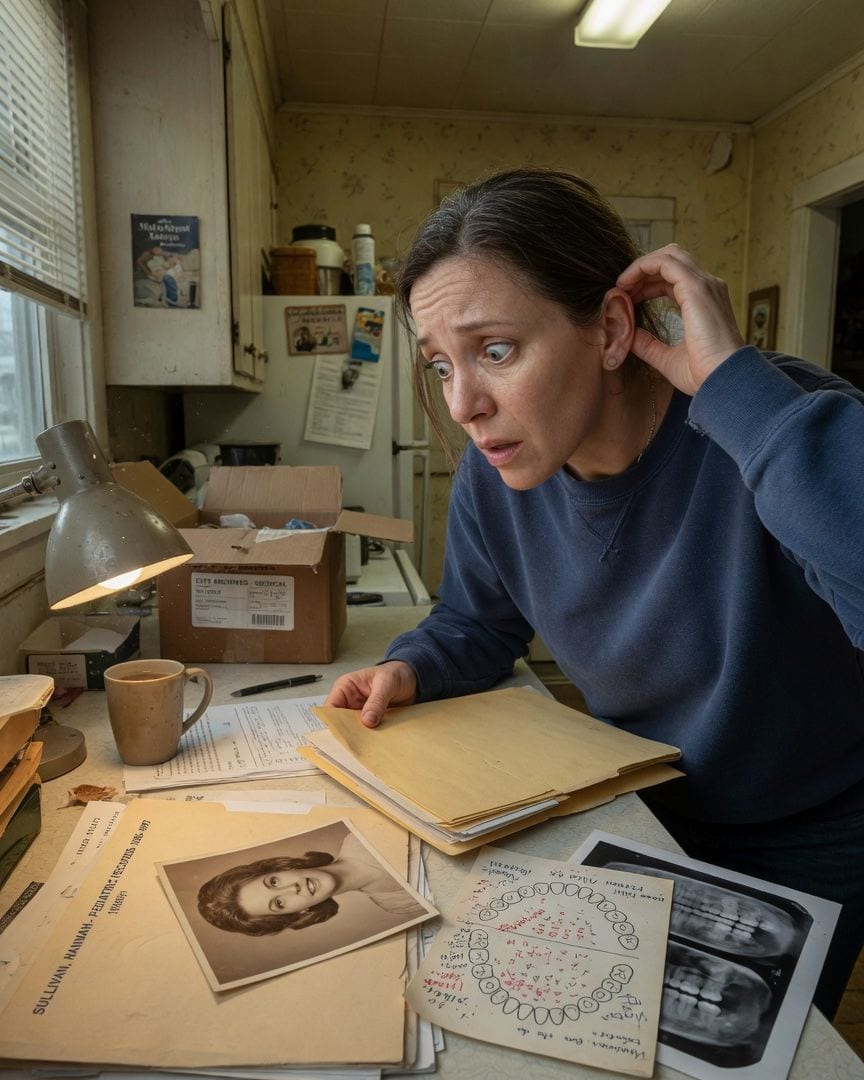
My MRI showed a perfect, decades-old surgical opening in my skull. I have no memory of it.
I underwent a routine MRI for persistent dizziness, expecting reassurance. Instead, the scan revealed a perfectly healed, decades-old surgical opening in my parietal bone, just behind my left ear. Dr. Hughes confirmed it was an access point for a procedure, yet I have no memory of any head surgery, ever. My body holds a secret I cannot recall.
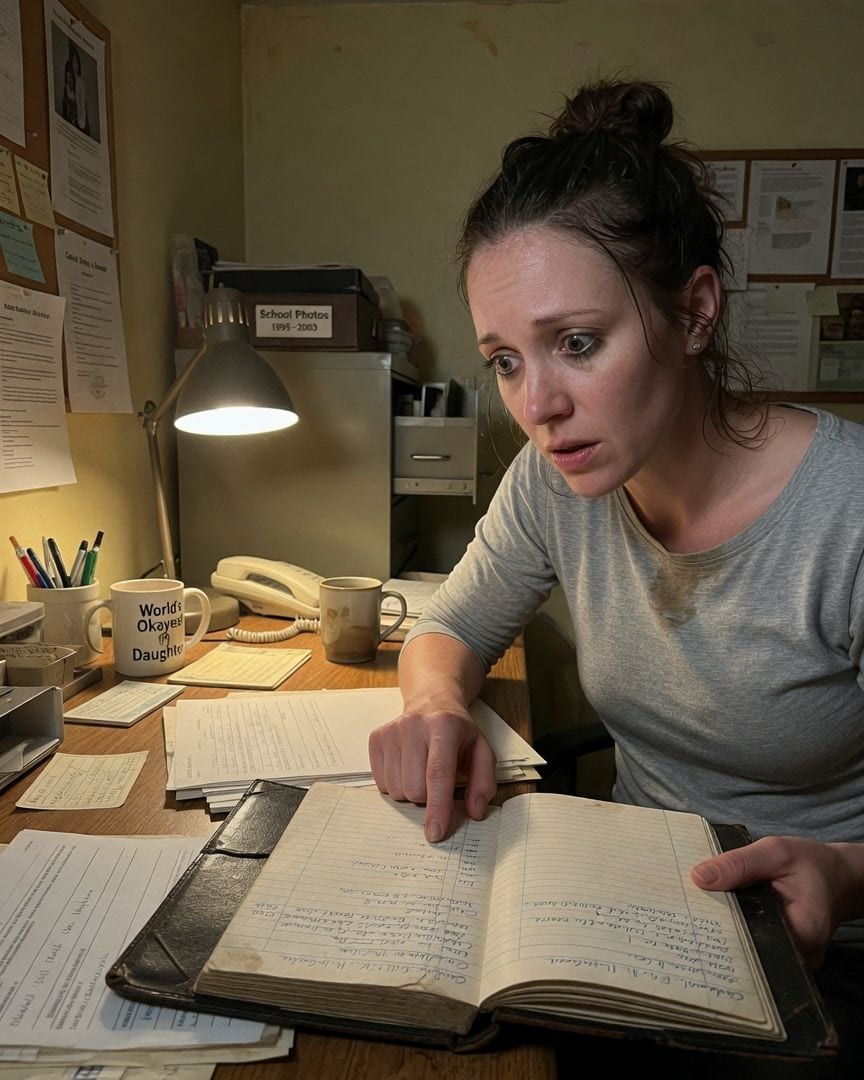
My CT scan found a metal plate in my eye socket. Then I found its surgery record, two years before I was born.
After a CT scan for my headaches, I learned a small metal plate was embedded in my left eye socket, a well-healed repair from decades ago. I have no memory of any injury severe enough to require such surgery, and my parents are certain it never happened. It's a piece of someone else's past, stitched into mine.
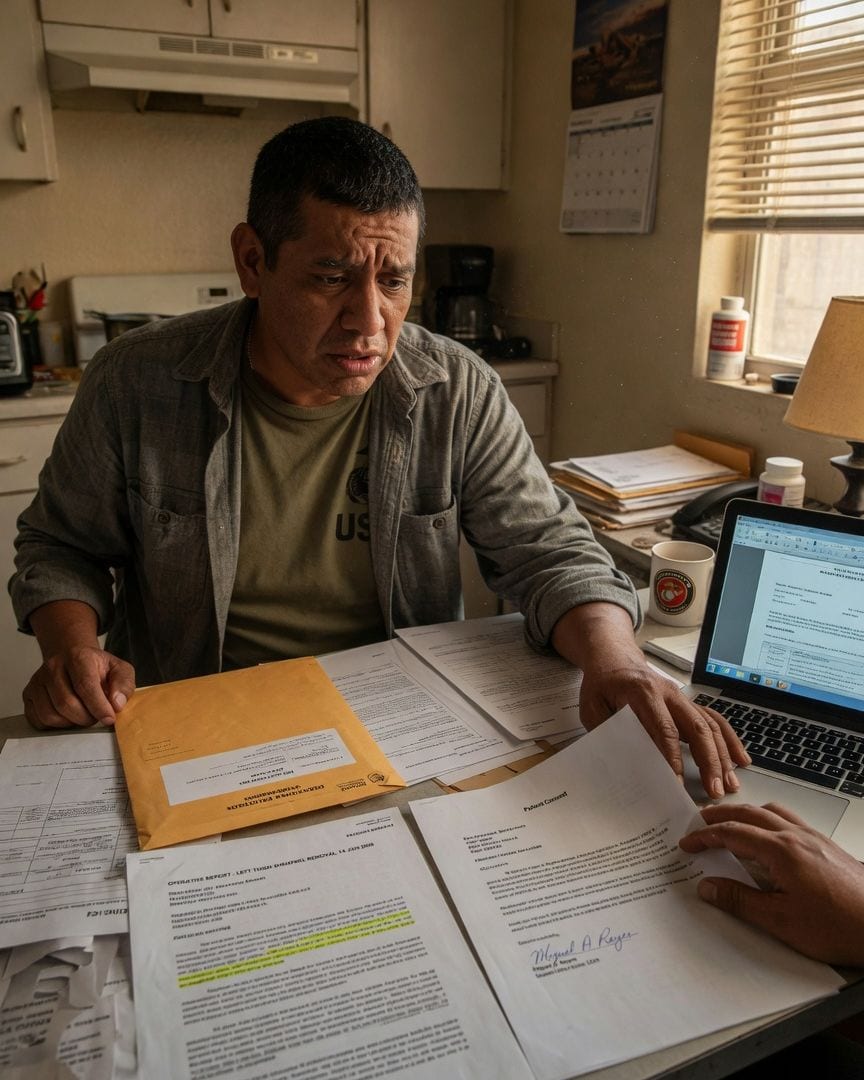
A veteran's VA file listed surgery for shrapnel. The doctor retired decades before he joined the Corps.
Miguel Reyes, a veteran, sat in a sterile VA clinic, his bad knee throbbing, expecting routine. Instead, a physician's assistant presented a digital file detailing shrapnel removed from his thigh in 2008 – an injury Miguel had no memory of, no scar for. His own service record later confirmed the impossible surgery, complete with a consent form bearing his perfect, yet utterly alien, signature. Driven by unease, Miguel researched the listed surgeon, Dr. Charlotte Bennett, only to discover she had retired from military service decades before he even enlisted. The numbers didn't just not add up; they violently contradicted each other, revealing a deliberate, impossible fabrication in his own life story.
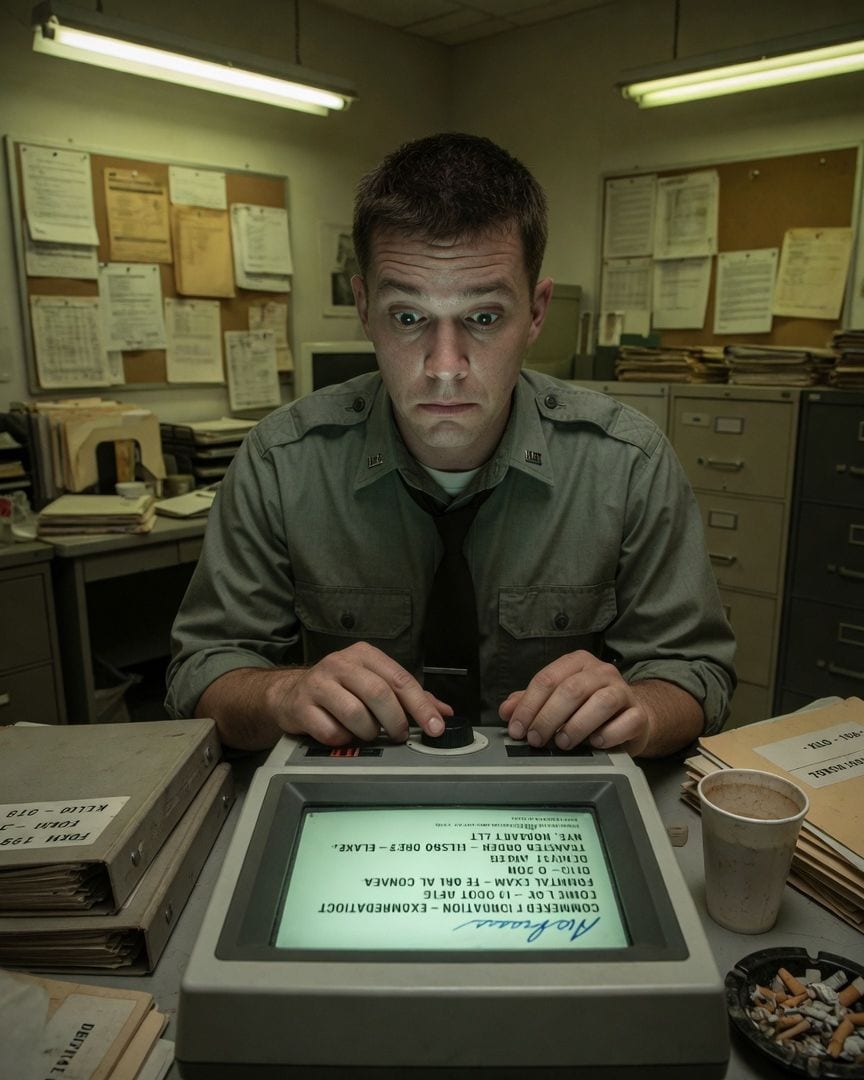
A missile commander watched his ten nuclear silos go dark. His own service record shows his signature on a future he's never lived.
Second Lieutenant Hobart Nye, a missile commander in Wyoming, had his quiet 0247 watch shattered by a security report: a massive, silent black triangle hovered over Launch Facility Kilo, casting a perfect shadow. Hobart watched his console's fault panel light up, signaling all ten nuclear missiles going dark in an impossible silence, followed by eleven minutes his security team could not remember. Official logs called it a "radio malfunction," but Hobart found a requisition for invisible-tracking sensors, signed by a base commander who was supposed to be off-base. The final, chilling discovery came when his own service record showed new entries—a dental check-up, a transfer to Alaska—all dated for a future he never lived, complete with his perfectly replicated signature.
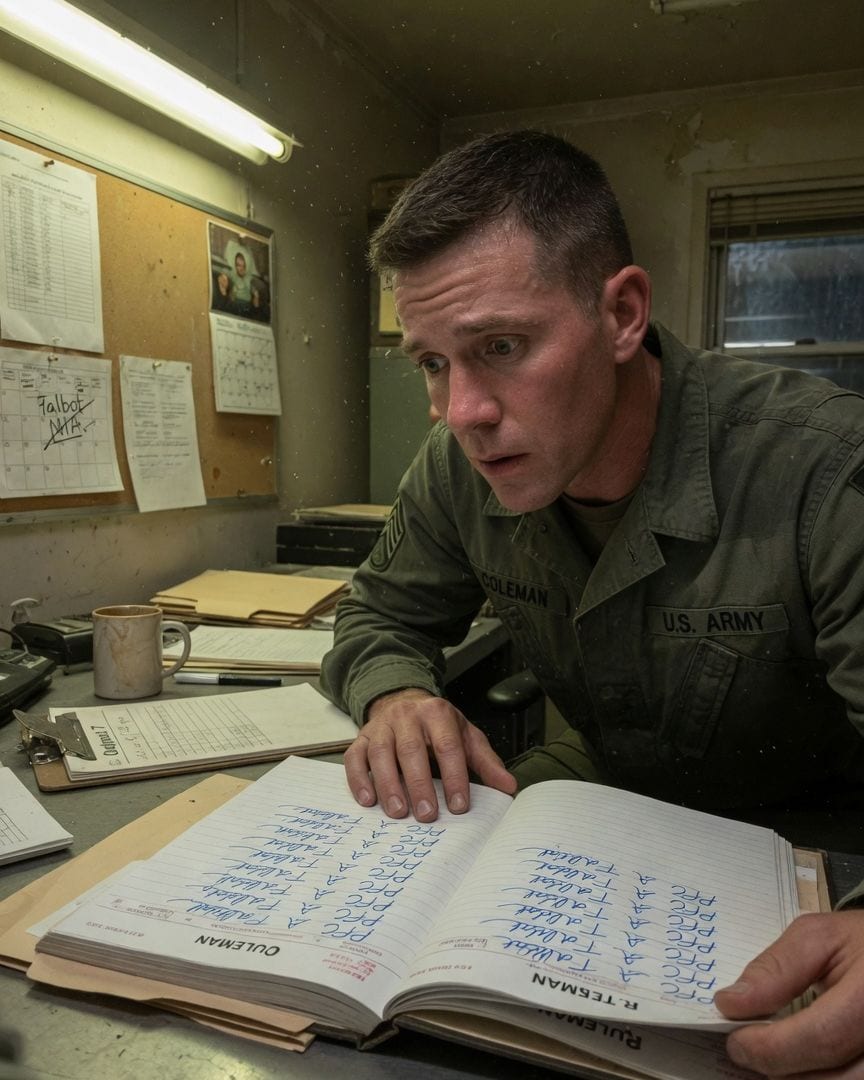
Staff Sergeant Coleman watched Private Talbot, known for his deadly allergy, let a wasp crawl his arm. The soldier simply flicked it away, calm.
Recently transferred to Outpost 7, Staff Sergeant Ethan Coleman found his attention fixed on Private First Class Ralph Talbot in the mess tent. He watched a thick black wasp crawl deliberately up Talbot's arm, a sight that made Coleman's stomach tighten; everyone knew Talbot's severe, life-threatening allergy. Expecting panic, Coleman instead saw Talbot calmly flick the insect away, utterly unbothered, with no sign of swelling or reaction. The unnatural stillness didn't sit right, a quietude that felt profoundly wrong. Later, Coleman's unease deepened when Talbot's medical file declared his deadly allergy 'resolved' without explanation, and his duty logbook revealed unnervingly perfect, stenciled signatures for the eleven days he was officially missing.
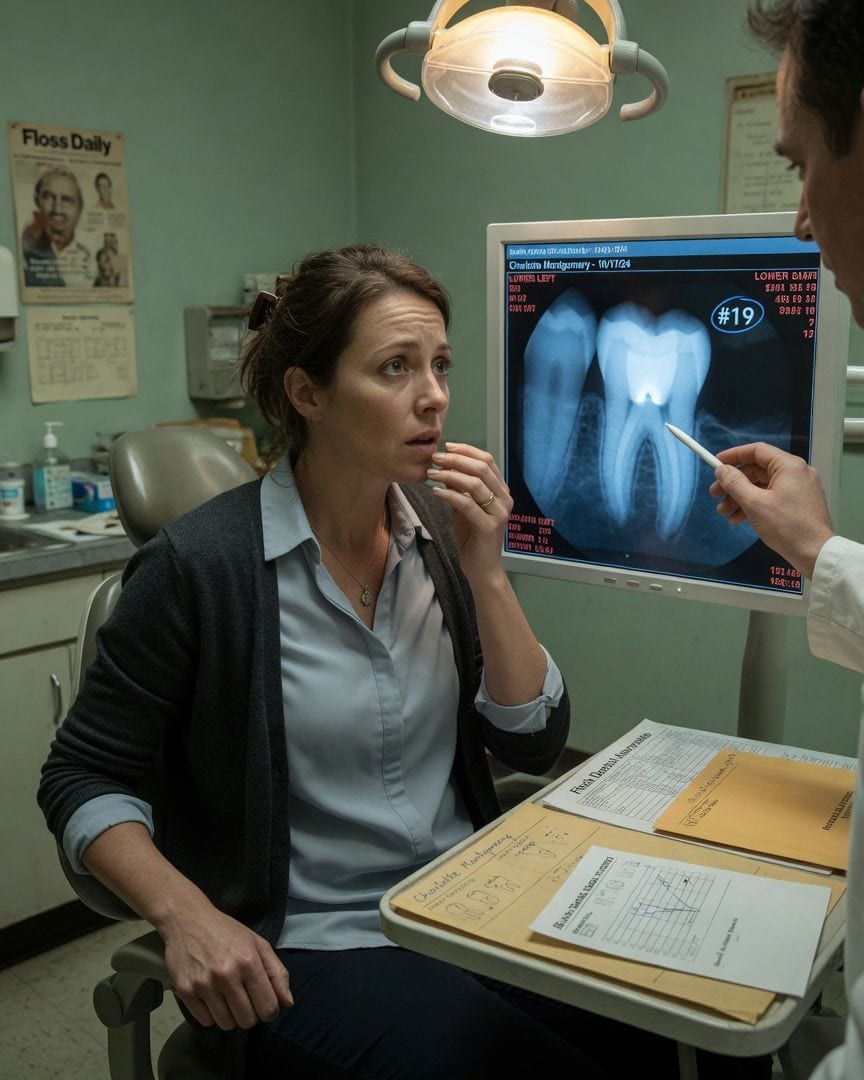
My dental X-ray shows a whole tooth where a gap has been for twenty years. A tiny metal post and a filling in a molar I remember being pulled.
Sitting in my dentist’s chair, I saw my X-ray light up with a chilling impossibility. My lower left molar, fully restored with a metal post and filling, was clearly visible. But I knew that tooth couldn't be there; it had been brutally extracted twenty years ago, leaving a gap for half my life.