A child's voice asks my smart speaker the time at 4:04 AM every night. My wife and I live alone.
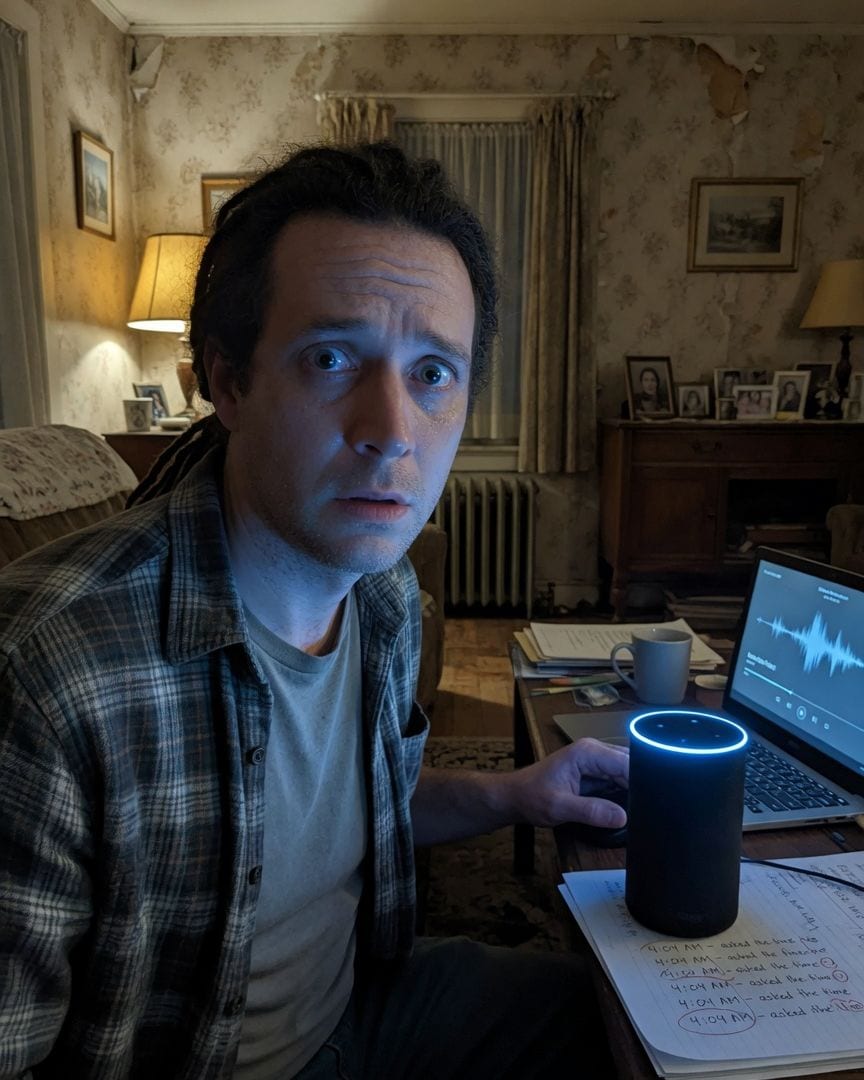
I still see the blue light of the smart speaker reflected in my eyes, even when I close them. It started so small, so innocuous. Just a blip in the log, easily dismissed. But I couldn't dismiss it.
It was a Tuesday, late, after Rachel had gone to bed. I was scrolling through the smart speaker's activity logs on my laptop, checking for anything unusual.
We’d had a few dropped Wi-Fi signals that week, so I was just being thorough. Then I saw it. An entry from precisely 4:04 AM. Not a command I'd given, not a song played.
The entry simply read: 'asked the time.'
I clicked on the playback icon, half expecting white noise, or maybe a burst of static. Instead, a child’s voice, small and hesitant, filled the quiet living room. “What time is it?” it asked, a thin, reedy sound.
Then the smart speaker, in its calm, synthesized voice, replied, “It’s 4:04 AM.” And right after that, unmistakable, a faint, almost imperceptible sigh. A child’s sigh.
I paused the playback, my hand frozen on the mouse. Rachel and I live alone. We don't have kids. We don't have any nieces or nephews who'd stay over.
The house was built in the late 30s; it’s quiet, just the two of us. I checked the dates. This wasn’t an isolated incident.
Every night for the past week, at precisely 4:04 AM, the same query, the same tiny voice, the same sigh. A perfect, impossible loop. My breath hitched. The air in the room felt suddenly colder, pressing in.
The next morning, I showed Rachel the logs. She squinted at the screen, her brow furrowed. "A glitch," she said, tapping the display. "Or maybe a neighbor's Wi-Fi is bleeding into ours.
A kid playing with their own speaker, somehow it’s getting picked up.” Rachel is always the pragmatist. She’d always find the logical explanation, even for the baffling.
We spent the afternoon running diagnostics. Our network was secure, password-protected, no unauthorized devices. I even took the smart speaker itself to Ben, a friend in IT, who ran it through his tests.
He found nothing, no firmware anomalies, no signs of hacking. "It's just logging what it hears, Mike," he'd shrugged, handing it back. "Creepy, sure, but speakers do that."
I didn’t tell Rachel that wasn’t the whole truth. Back home, alone, I dug deeper into the smart speaker’s archived activity, a full history going back months. Buried under hundreds of legitimate commands and queries, I found more of them.
Older recordings, dating back weeks, always at 4:04 AM, always 'asked the time,' always the small, reedy voice. The loop stretched further back than I’d thought. But then, one entry from three weeks prior caught my eye. It was longer.
I clicked play.
The familiar child’s voice asked, “What time is it?” The speaker replied. Then, instead of just the sigh, there was a faint, rustling shuffle, like a tiny shift in dark covers.
And then a whisper, so soft I had to strain to hear it. “It’s so dark…”
I kept monitoring the logs, every night. I was losing sleep, waiting for that 4:04 AM entry, listening to the playback, trying to decipher more from the impossible child. The silence in the house felt heavier, thicker.
Every creak of the old wood, every rustle of leaves outside, felt like a deliberate sound.
One evening, as I was about to switch off my laptop, tired and defeated, a new entry appeared. Timestamped just an hour ago. It wasn't 'asked the time.' My finger hovered, then dropped, clicking play.
The familiar, small voice filled the quiet kitchen. It wasn't asking for the time. It was pleading.
“Where is my little wooden soldier? Where is it?”
I stood frozen, the smart speaker’s blue light reflecting in my wide eyes. I glanced around my perfectly ordinary kitchen, at the gleaming counters, the neat rows of spices. We had no such toy.
We had no child to own it.
The question about the little wooden soldier solidified the dread. This wasn't some glitch, some neighbor's misrouted Wi-Fi. This was a direct, impossible plea. A child, somewhere, asking for a specific object that didn't exist in our house.
I spent the next few days systematically tearing the house apart. Rachel thought I was losing it, muttering about phantom children and lost toys. Every cupboard was emptied, every attic corner searched, every dusty box in the basement unearthed.
I checked under floorboards, pried open the grates of old radiators, even crawled into the small, forgotten space above the garage. Nothing. Not a single child’s toy, let alone a specific hand-carved wooden soldier. It was like chasing a shadow.
When the physical search yielded nothing, I turned to the house itself. I researched its history online, poring over old property records, census data, and local newspaper archives.
The house had been built in the late 1930s, passing through a few owners before us. A family named the Millers, then the Livingstons, then a single woman, Mrs. Davies, before we bought it.
There was no mention of any children, no unusual incidents, no missing person reports tied directly to the address. It was a blank slate, perfectly normal, perfectly boring. Which only made the voice more terrifying.
I was in the living room, running my hand along the wall behind an old, built-in bookshelf that came with the house. It was solid oak, a beautiful, heavy piece. As my fingers traced the rough plaster, I felt it.
A faint, almost imperceptible seam beneath the faded floral wallpaper. It was too straight, too precise to be a natural crack from settling. It felt like a line where something had been sealed.
The plaster here was subtly different, the texture not quite right. A cold prickle ran up my arm.
My focus shifted from the non-existent soldier to this hidden seam. I spent hours tracing it, carefully peeling back a small section of the wallpaper with a utility knife.
Beneath the floral pattern, I found not the old plaster I expected, but a crudely patched-over section of drywall.
It had been painted to match the surrounding wall, but the texture, the way it met the original plaster, was all wrong. Someone had intentionally sealed something off.
As I investigated, a chilling sense of being observed began to settle over me. It wasn't just the smart speaker anymore.
I’d leave a chisel on the floor by the bookshelf, only to find it moved a few inches, pointing in a different direction, when I returned from getting a glass of water.
A light in the hallway would flicker wildly, then stabilize, when Rachel was out and I was alone in the house.
The old house itself seemed to breathe, the floorboards groaning as if a presence shifted weight in an unseen room.
One afternoon, I was standing directly in front of the sealed wall, pressing my ear against the patched drywall, listening intently for any sound, any echo, any proof. The house was utterly silent, Rachel out running errands.
My own breathing sounded impossibly loud. Then, the smart speaker in the kitchen, across the open-plan living area, activated. Not with a question, not with a command. Not with a recording from the log.
It was a faint, drawn-out child’s whimper. It wasn't coming from the speaker itself, not really.
The sound seemed to emanate from inside the wall, directly in front of me, a sound of profound, lonely sadness, echoing distantly through the speaker. A live sound.
The whimper from within the wall pushed me past hesitation. This wasn't just a recording, not a glitch. This was a presence, trapped, and desperate. I fetched the utility knife again, my hands trembling.
Carefully, I cut out a larger section of the patched drywall, following the seam. The plaster gave way with a soft crunch, exposing not another wall, but a dark, narrow opening. A crawlspace.
It opened up into blackness, thick with dust and the cloying smell of old, trapped wood, like a forgotten attic space but behind a living room wall. I shone my phone's flashlight inside.
It was barely big enough for a small child to squeeze into, certainly not an adult. And there, amidst cobwebs and forgotten debris, half-buried in a fine layer of powdery dust, was a small, hand-carved wooden soldier.
Just as the voice had described.
My breath hitched. It was real. The toy, the request, the voice. It was all real.
I reached in, my fingers brushing against something else, cold and metallic – a small, rusted tin box, the kind children kept treasures in. I pulled it out, my heart pounding in my ears like a drum.
Inside, nestled among dry leaves and decades of dust, was a bundle of yellowed children’s drawings, tied with a faded ribbon. The paper was brittle, the colors muted. I carefully unrolled them. Crude, child-like stick figures.
Houses, trees, a sun with a smiling face. And on one, near the bottom, in careful, looping script, a clear, dated signature: 'Lily, 1948.'
I showed Rachel the wooden soldier and the drawings. Her usual skepticism, her endless search for the rational explanation, crumbled at the sight of Lily’s name and the dated artwork.
Her face went pale as she stared at the little wooden figure, then at the child’s drawings. We now knew. The voice, the soldier, the hidden space. They all belonged to a child named Lily from 1948.
We frantically searched the online archives again, this time with the name 'Lily' and the year 1948, focusing on our town. And there it was.
A small article, buried deep in the digital archives of a local paper, dated August 1948. A 6-year-old girl, Lily Livingston, had gone missing from this very house.
The article was brief, concluding that she was believed to have wandered off into the nearby woods, her disappearance remaining a mystery for decades. They’d searched for weeks, then months, then nothing.
I looked at the small wooden soldier again, turning it over in my hand. It was old, worn smooth by countless small fingers, a tiny face carved into its head.
I ran my thumb over its base, looking for any further clue, any mark of ownership.
And there, almost completely faded, almost erased by time and friction, but undeniably present, were two sets of initials, carved roughly into the wood: 'M.L. & R.L.'
My blood ran cold. Michael and Rachel. Our own initials. But these carvings were decades old, dating back to 1948.
I looked from the soldier to my wife, Rachel, whose eyes were wide and unseeing, still reading the yellowed newspaper clipping about a missing child.
The initials 'M.L. & R.L.' on the wooden soldier, combined with the newspaper article, sent Rachel and me into a deeper, far more terrifying search of the house’s history.
We found old property deeds, buried in the county’s online records, confirming the house was indeed owned by a Michael and Rachel Livingston in 1948. A couple who, like us, had no other children mentioned in any records.
Lily was their daughter. Michael Livingston. Rachel Livingston.
The implication was horrifying. Lily hadn't wandered off into the woods. She had been trapped in that crawlspace, sealed in by her own parents.
Perhaps by accident, a terrible game gone wrong, or perhaps in a panic after some unspeakable argument. The daily 4:04 AM 'asked the time' wasn't just a random echo.
It was Lily’s desperate attempt to orient herself in the eternal darkness, a plea for light and the passing of time.
Her voice, her fear, her profound confusion, had imprinted itself on the very structure of the house, resonating through the smart speaker, a ghost trapped not just in time, but in a specific, terrifying loop of space.
Then I found it. The final drawing in Lily’s rusted tin box. It was crude, in a child’s hand, unmistakably dated 1948.
But the drawing depicted their living room, with their specific, modern furniture – the mid-century credenza, the abstract painting above the fireplace, even the smart speaker on the counter.
And on the couch, two figures, clearly Michael and Rachel Lockwood, sitting side-by-side. Lily had drawn them, in their future, from her past.
The drawing of their future, made by a child dead for decades, was the final, devastating piece. Lily wasn’t just a ghost, an echo. Her consciousness had somehow transcended time, trapped in the house but also observing it, observing them.
She had seen them, known them, before they had ever moved into the house. The questions on the smart speaker weren’t just recordings or residual imprints; they were attempts to bridge the gap, to reach out.
She had been observing their lives, waiting.
I carefully placed the drawing back in the tin box, then the box back into the hidden crawlspace. I didn’t seal it again, not completely. I left a small, discreet opening, hidden behind the bookshelf, just a crack.
A way out, or a way in.
Rachel and I sat in the living room, the space that Lily had drawn, the space she had observed from her timeless prison. The silence was heavy, charged not with dread anymore, but with a profound, unsettling presence.
The smart speaker's ring glowed a soft blue, a silent vigil. Then, it activated.
Not with a question this time, but a faint, clear sound, too soft for the speaker's microphone to have picked up if it wasn't meant to be heard.
A child's voice, not a recording, but live, filling the room with a single, hopeful word: “Hello?”
They didn’t answer. They couldn’t. The house was no longer just a house; it was a sanctuary, a tomb, and a window across time. They lived with the knowledge, with the presence.
The small opening in the wall remained hidden, a silent testament. The smart speaker was never turned off, its ring always a soft, expectant glow in the kitchen.
They lived with it. The house was quiet, mostly. But sometimes, late at night, a faint sound, like a child's soft hum, drifted from the kitchen.
Rachel found Michael staring at the smart speaker again, its ring a soft, green pulse in the dim light. "Everything alright, honey?" she asked. He just nodded slowly.
The speaker's light glowed green, but the whisper that answered was no longer a recording.
If this one got to you
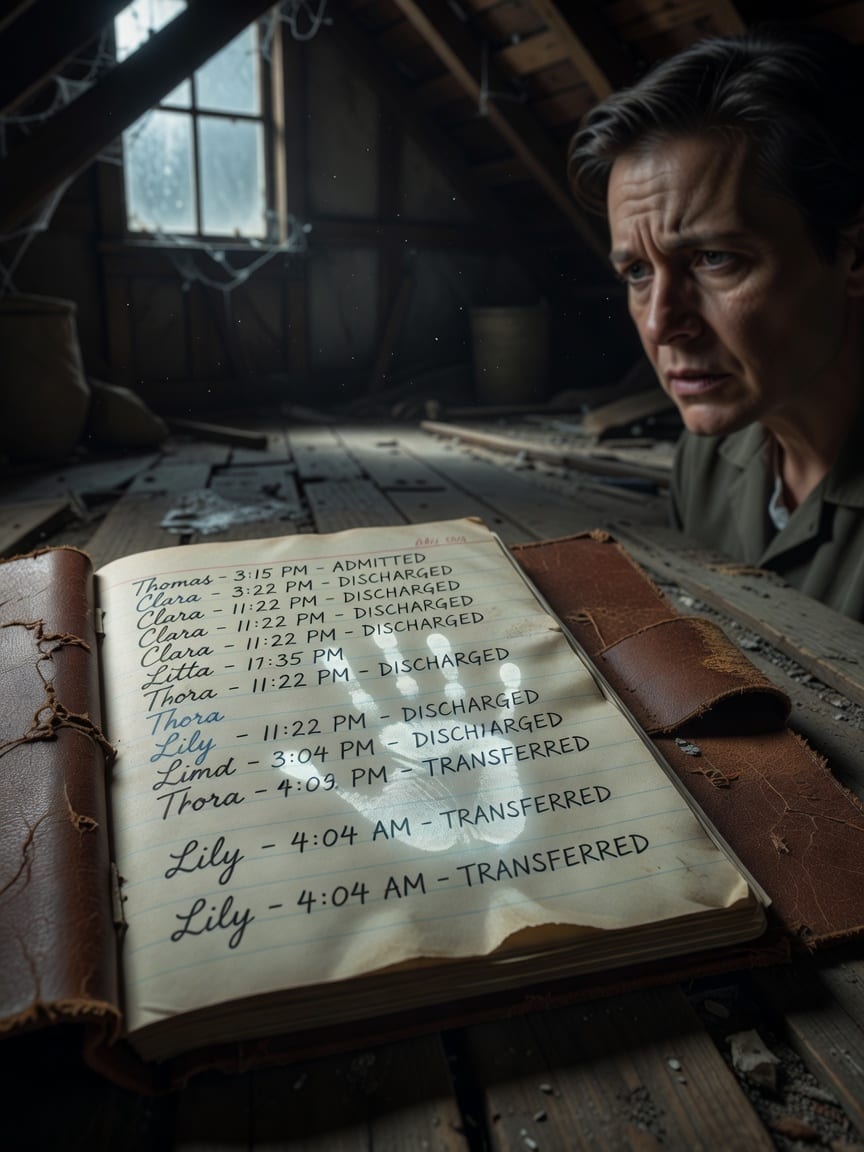
My smart speaker asks the time at 4:04 AM every night. The voice is a child's, and we don't have children.
For a week, my smart speaker has woken me at 4:04 AM with a faint chime. Its activity log reveals a small child's voice asking 'What time is it?' But Everett and I have no children, and no one else has been in our house.
My daughter's voice memo recorded a man's voice in her bedroom. No one else was home.
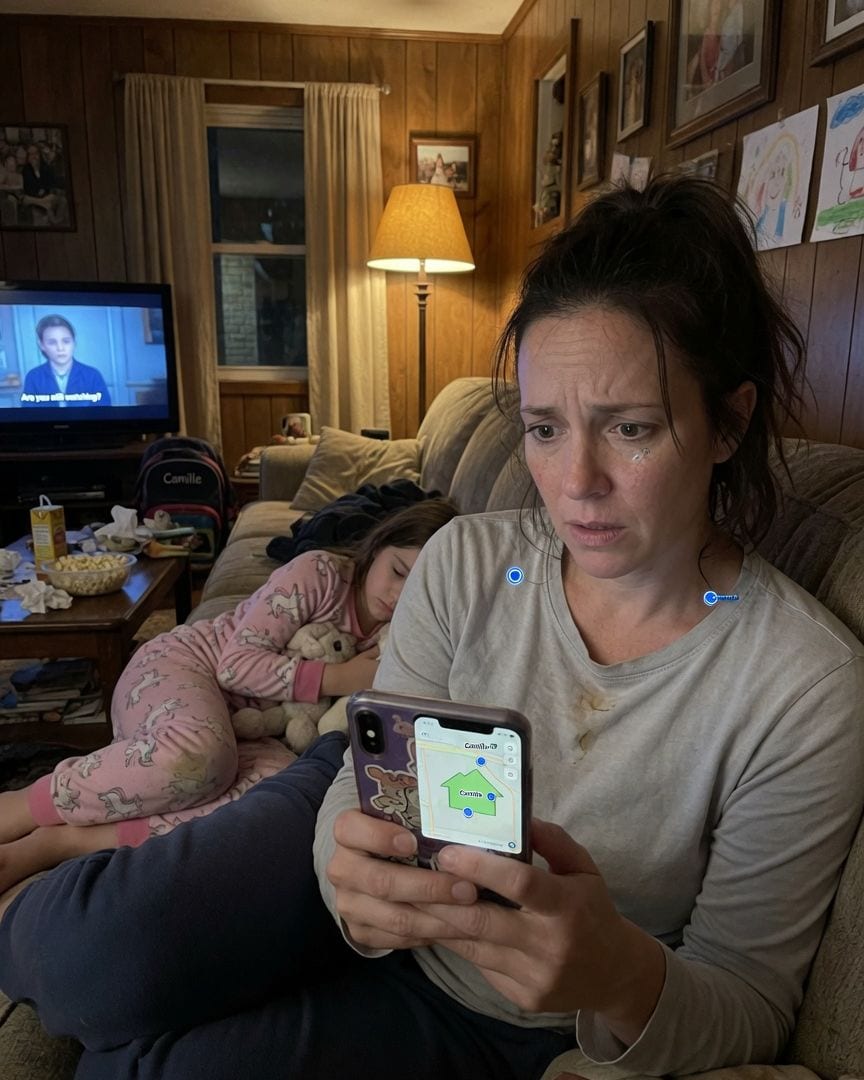
Curled on the sofa, I watched my eight-year-old daughter Camille sleep, her old smartphone in my hand. I idly checked its Find My Phone app, expecting to see her blue dot inside our house. Instead, a second identical blue dot paced silently outside, tracing the perimeter of our home.
My son's toy rabbit says my name, then, 'bring him to the water.' The batteries are out.
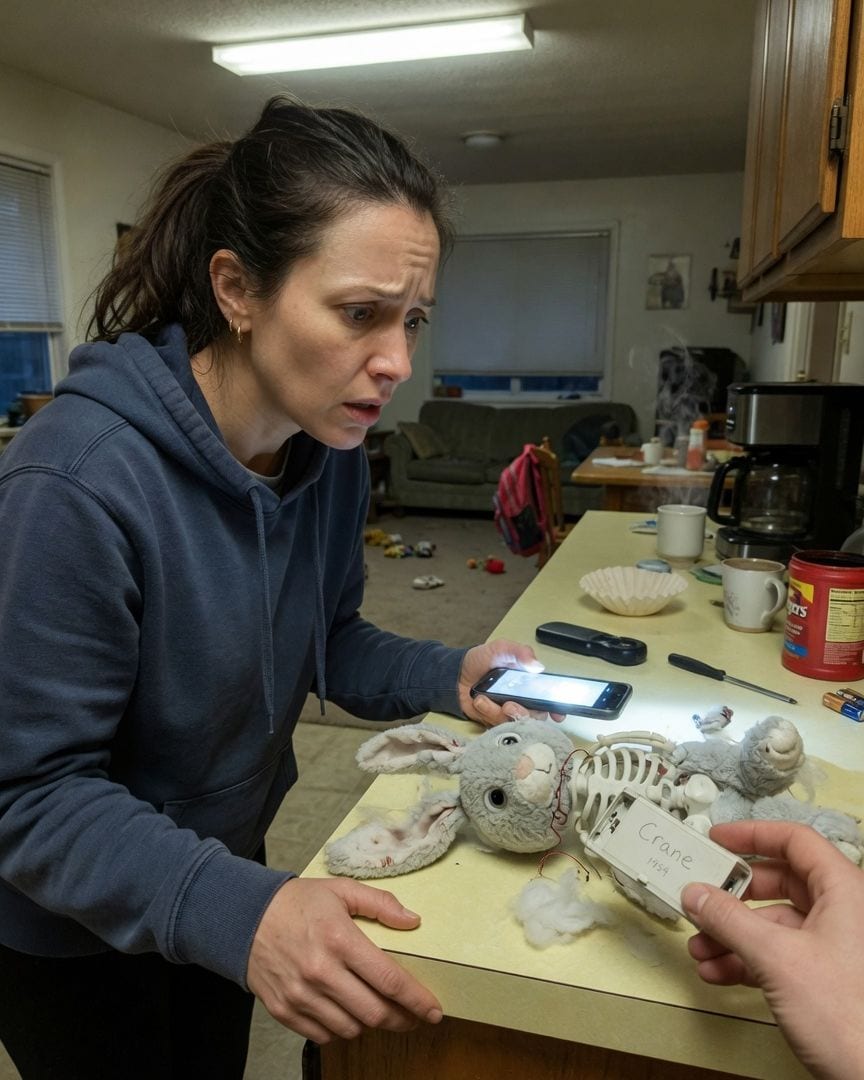
I was making coffee, my son James at school, when I heard a grown man's voice from the living room. It was his favorite toy rabbit, whispering my name: 'Nina, bring him to the water.' The chilling command was impossible; I had removed the rabbit's batteries three days earlier, and they sat on the kitchen counter.
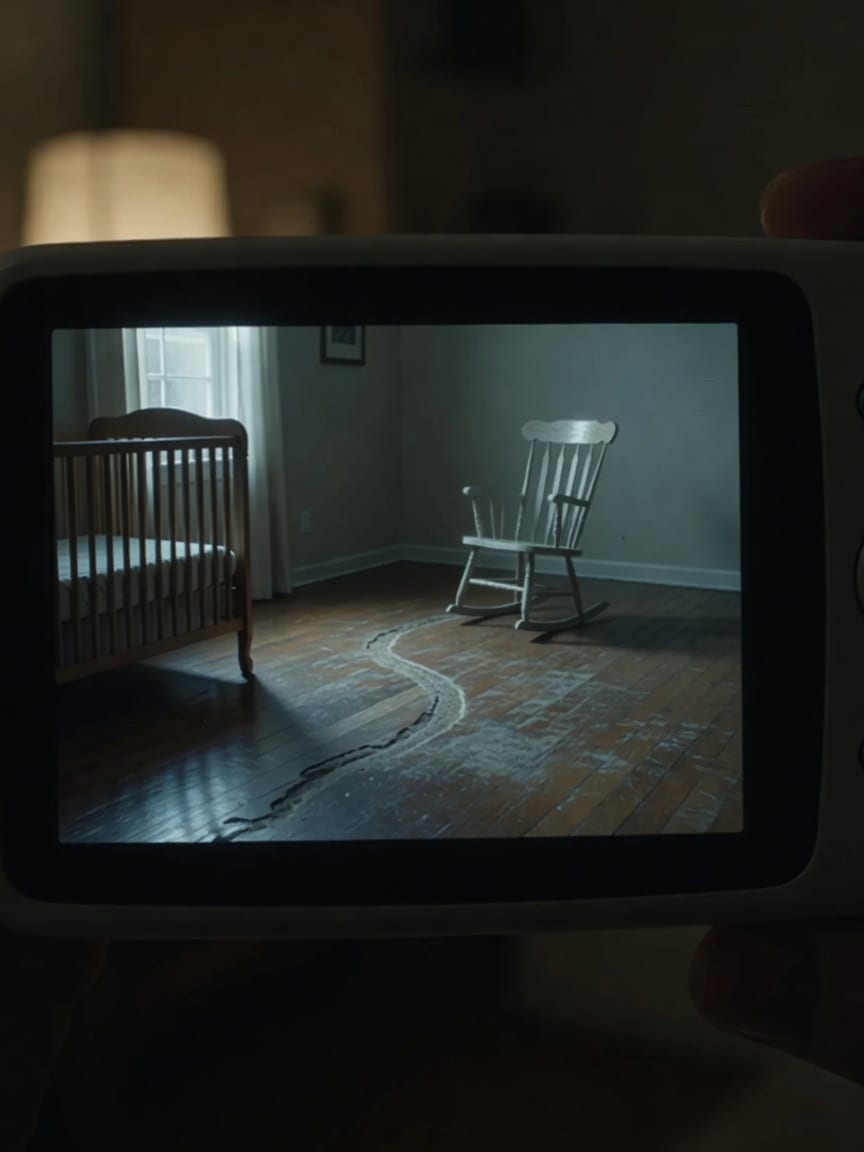
My baby monitor hums a lullaby at 2 AM. I hear a rocking chair creak. The camera shows my daughter's room empty, every night.
Every night, my baby monitor hums a gentle lullaby and a rhythmic creak, as if a rocking chair is in Lily's nursery. But the room is always empty, the monitor's camera shows nothing, and we don't even own a rocking chair. Then I found a newspaper clipping from sixty years ago, detailing a child's disappearance from our house.
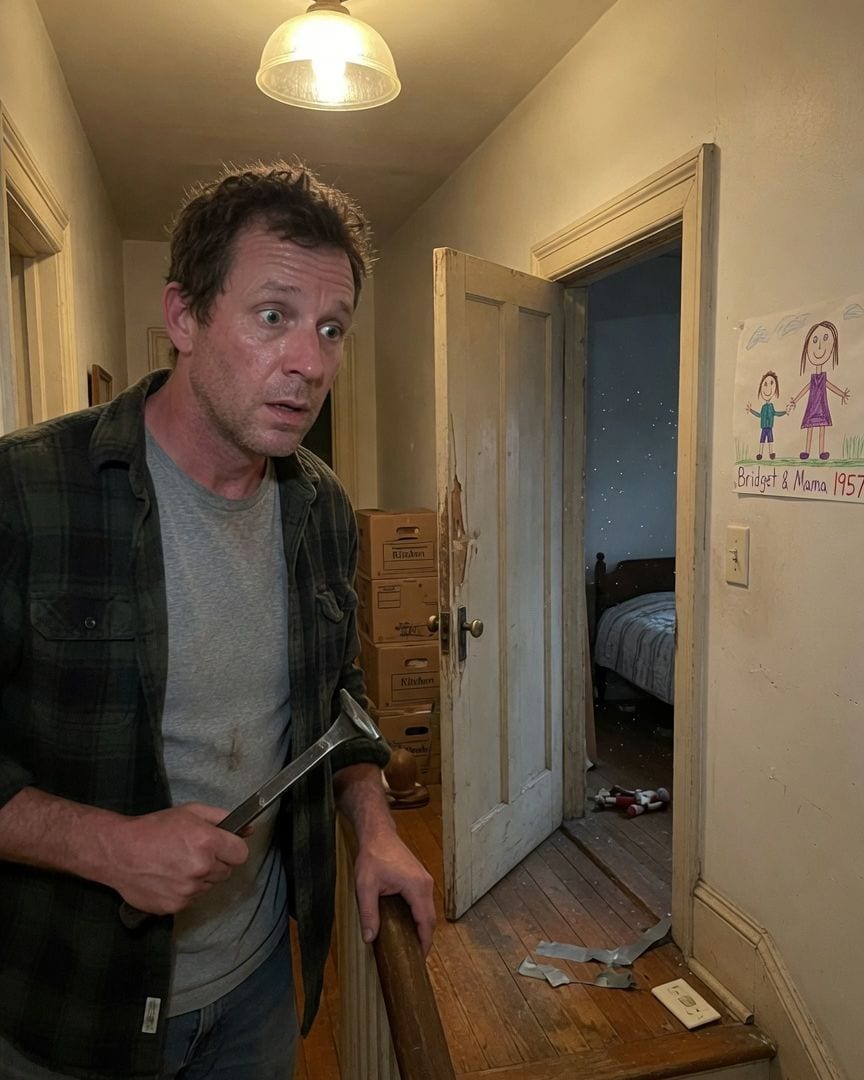
My landing light switches itself off at 9:40 every night. I've watched the switch flick down under nothing, the tape peeled back. The house holds its breath.
My great-uncle's old house was a quiet gift, a place to finally settle. But as I unpacked, a strange worn path on the floorboards led me to a small, barely visible door, perfectly blended into the wall. It was undeniably locked, and felt like a deliberately obscured secret.

My sleep clinic's Bed 4 patient waves and asks about the humming — but the bed's empty, and its intercom was disconnected.
It was 3 AM, and the sleep clinic should have been empty, especially Bed 4, which was officially offline for repair. But for the third night in a row, a patient in Bed 4 was waving at me, their voice asking about a humming sound through a disconnected intercom.