A Cold War records officer found a photo of himself in a 1968 file. A margin note, dated today, named him.
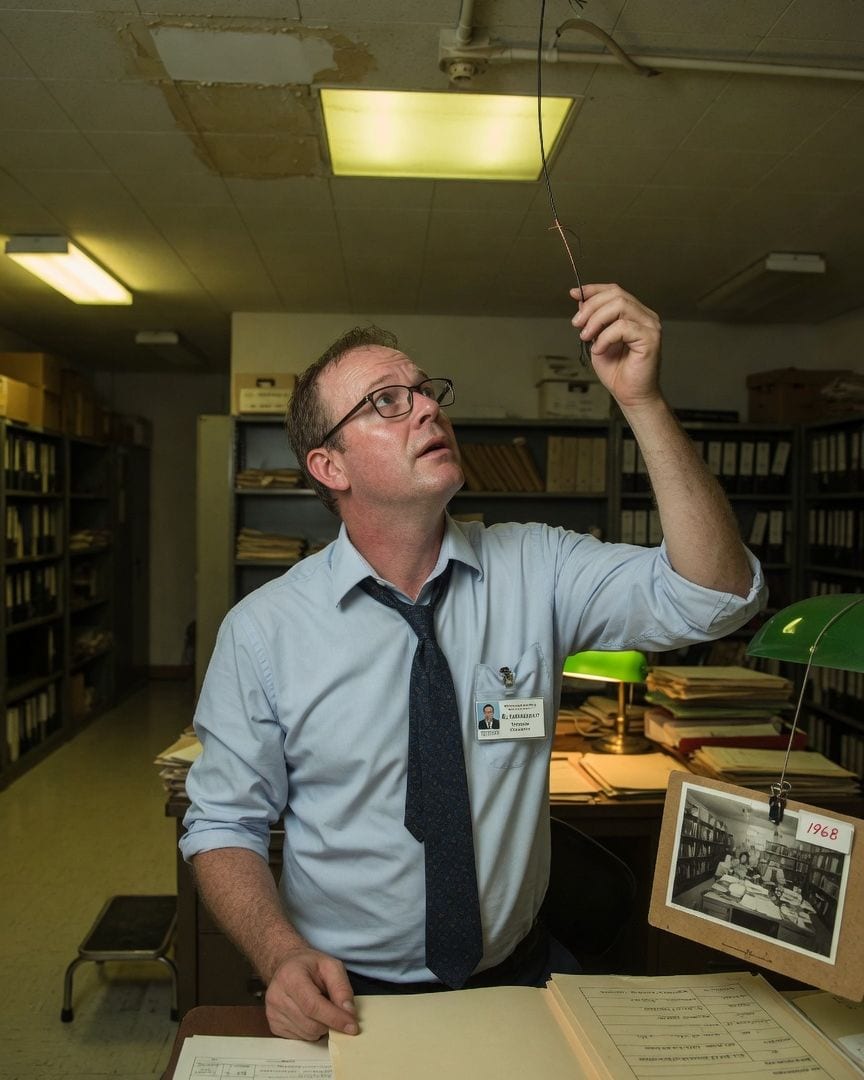
Records Officer Beau Lindqvist sat at his usual desk, the Halberd Cove case file open before him. He’d inherited it from old Russell Barlow, who’d retired the day after requesting it, a detail Beau still found peculiar.
The first thing inside wasn't a memo, but a sign-out card with a photograph clipped to it. The photo, a faded, grainy black and white, showed the reading room, taken from a ceiling corner somewhere above him.
In it, a figure sat at Beau’s exact table, the Halberd Cove folder open. The figure was Beau. His stomach clenched. The sign-out card, brittle and yellowed, was stamped with the date '1968'.
Beau looked up at the ceiling corner, directly above where the camera would have been positioned. There was no camera there now, only a small square of unfaded paint where something had once been mounted and taken down.
A thin, black wire, dark against the pale ceiling, still dangled from the spot, ending in a frayed, copper-tipped point. Beau reached up slowly, his fingers brushing the wire. It was warm to the touch.
Beau’s mind, trained for order, immediately sought a rational explanation. A prank? Barlow’s last twisted joke, perhaps, before his sudden departure?
But Barlow, a man of precise habits and a known aversion to anything resembling humor, wasn't known for elaborate, decades-spanning setups. Beau retrieved a step stool from the end aisle and pushed it quietly over the polished floor.
He climbed, examining the wire more closely. It was old, brittle, embedded deep in the plaster as if it had been there for decades.
He traced its path back through a discolored plastic conduit, noting its trajectory led directly into the building's ancient, disused communications hub—a section of the archives sealed off for repairs since before Beau was even hired.
No modern camera system, he knew, would use such a setup. He descended from the stool, pushing it back into place with a soft scrape that echoed in the quiet room. He returned to the file, flipping past the photograph.
A stack of intake logs, then a summary of the Halberd Cove incident itself: a coastal research station, a sudden, unexplained evacuation in the 1960s, records sparse, contradictory.
Beau skimmed the summary, his eye catching a margin note in faded, precise script. It was an addendum, dated '07/14/1968,' scrawled beneath a paragraph about 'anomalous visual data.'
The note read, in a clear, looping hand: 'Lindqvist will examine the photographic anomaly on 07/14.' Beau checked his watch. It was July 14th.
Beau’s breath hitched, a cold tremor running through him. He reread the note, then checked the date again, his own name staring back at him from half a century ago. The ink was faded, but undeniably there.
He looked from the note to the photograph, then back to the warm wire in the ceiling corner. The room, usually a haven of quiet order, now felt like a stage set, every detail placed with deliberate intent.
The file, which he had thought a cold record of the past, seemed to hum with an impossible, present awareness.
His hand, steady moments before, now trembled as he reached for the next page, a thick, metallic dread coiling in his gut.
The next day, Beau started digging. His first priority was Russell Barlow.
The official story was 'early retirement due to health concerns,' but Beau found no medical records, only a terse, single-page discharge form with Barlow’s signature, dated the day after he requested the Halberd Cove file.
Beau called Constance Thatcher, a senior archivist who'd been with the department for thirty years, and whose office was just down the hall. “Barlow?” Constance’s voice was tight, a strange edge to it Beau hadn’t heard before. “He just… left.
Said he’d found what he was looking for in a file, and he was done.” She offered a mundane explanation, her voice thin. “Some people just snap, Beau. Too many dusty records. It happens.” Beau didn’t believe it.
He felt the cold certainty that it hadn't "happened" to Barlow, but had been done to him.
He then cross-referenced 'Halberd Cove' with every related file he could find in the central index.
He discovered a pattern of similar, impossible marginalia, not just within the Halberd Cove file itself, but in supporting documents, logistics reports, and inter-departmental memos.
Dates referring to the present, specific names of other records officers who had handled the files, sometimes even detailing their own actions within the archives, all embedded in documents decades old.
One entry in a 1972 logistics report for a vanished naval vessel read, in the same unsettling script, beneath a paragraph about a 'coastal incident': 'Thatcher will attempt to dissuade inquiries into the 1968 photographic anomaly by 07/15.'
He looked at the date on his computer screen. It was July 15th. He remembered Constance’s tight voice from yesterday.
The thread wasn't just pulling him; it was pulling everyone around him into its fabric, an invisible knot tightening around the present moment.
The feeling of being watched intensified. Beau found himself glancing at the ceiling corner, half-expecting a lens to materialize from the square of unfaded paint.
He felt a chill even when the room was warm, a prickle on his neck that had nothing to do with a draft.
That afternoon, Constance Thatcher approached his desk, her usual composed demeanor subtly frayed, as if she hadn't slept. “Beau,” she began, her voice low, almost a whisper, “I heard you’re looking into Barlow’s retirement. And Halberd Cove.”
Her eyes darted to the Halberd Cove file, open on his desk, then quickly, almost imperceptibly, to the ceiling corner above him. “It’s… not worth it. Some things are better left buried.”
Beau felt a prickle of alarm, sharp and cold. Was this a warning, or was she part of it? Was she being compelled, just as he was, to perform a role?
He opened the Halberd Cove file again, flipping to the summary page. A new line, scrawled in an unnervingly familiar script, had appeared beneath the old addendum, nestled just below the entry about his own examination of the photo.
This one read: 'Lindqvist will be warned by Thatcher about the file’s contents on 07/15.' The ink was still fresh, dark and vibrant, not faded like the rest of the text on the page.
It was a direct, impossible echo of the conversation that had just happened, a confirmation that the file wasn't just observing; it was predicting, perhaps even orchestrating.
He looked up, but Constance had already turned her back, walking away, her shoulders hunched, her movements stiff. The file was writing itself, and he was in it.
Beau cornered Constance by the water cooler a few minutes later, the Halberd Cove file held open to the impossible entry. “Constance. This was just written.” His voice was low, controlled, but vibrated with a contained urgency.
“It details our conversation, before it even happened.” Constance’s face, usually so placid, was pale, drawn. She tried to dismiss it, brushing a loose strand of gray hair from her forehead with a trembling hand. “Beau, you’re overtired.
It’s an old file, maybe a transcription error, a mis-scan…” “A mis-scan that predicts the future?” Beau pressed, his voice taut, cutting through her weak explanation. “And what about Barlow?
Did he ‘snap’ after finding his own name in a forty-year-old file, detailing his ‘retirement’?”
Constance finally sagged, her composure cracking like old plaster. Her shoulders slumped, and she looked around the empty corner of the archive, her eyes wide, haunted. “It’s not a file, Beau. Not in the way you think.”
Her voice dropped to a whisper, barely audible over the hum of the fluorescent lights. “Halberd Cove… it’s a system. An archiving process. It identifies… anomalies. Things, people, places that deviate from the… pattern. And it… files them.
Brings them into compliance.” “Compliance?” Beau felt cold dread spreading through him, a liquid ice in his veins. “What does that mean?” Constance looked directly at him, her eyes glistening. “It means they’re no longer… accessible.
They’re part of the record. They’re accounted for. Like Barlow. He’s filed. He’s… here.” She tapped the Halberd Cove file with a trembling finger, a gesture of profound, unsettling finality. “The file is what’s left of them.”
The words hung in the air, transforming every impossible date, every prescient entry, into a monstrous, coherent logic. The archive wasn’t just a building; it was a mechanism of quiet, systematic erasure.
It explained the warm wire, the old photo, the predictions. It all fit. But then, a new question surfaced, far more terrifying: if Barlow was 'filed,' what had he become?
Constance, her face etched with a fear Beau had never seen, pushed a heavy, leather-bound volume across her desk. Its spine cracked as it slid. “This is the master index,” she whispered, her voice raw. “Every entry ever made.
See for yourself.” Beau’s fingers, numb, traced the spines of the smaller, indexed volumes within the larger book. Most were standard classifications: 'Project Nightingale,' 'Operation Blackbird,' 'Site 77.' He saw familiar government acronyms, classified designations.
But then, near the back, he found a series of entries that made his blood run cold. They weren’t projects. They were names.
Names of former records officers, archivists, even janitorial staff who had vanished over the decades, always attributed in official records to 'early retirement' or 'transfer to another department.'
And then, among them, in alphabetical order, a single, thick file tab, meticulously indexed and cross-referenced, stood out. His own name. His full name. Beau Lindqvist.
His hand hovered, trembling, over the tab, the weight of the impossible truth pressing down on him. The file wasn't just observing him; it had always claimed him. And it was waiting for him to open his own record.
Beau opened the 'Personnel File: Lindqvist, Beau.' It was thick, meticulously organized, filled with official-looking documents. His birth certificate, a tiny, crisp copy of his infant footprint. His elementary school reports, detailing his aptitude for 'order and neatness.'
Military service records, complete with a blurred ID photo of a younger, almost unrecognizable Beau. Even old performance reviews from this very department, praising his 'unwavering commitment to accuracy.'
Every page was familiar, yet utterly alien now, each line a thread in a tapestry woven by an unseen hand.
And then, beyond the known, the entries stretched into the future: projected career paths, a detailed account of his 'retirement'—mirroring Barlow’s, dated for next Tuesday—and even a final 'disposition' report. The pattern snapped into place with chilling clarity.
The Halberd Cove system wasn't just filing anomalies; it was identifying individuals, tracking their lives, and then, at a predetermined point, 'filing' them away, transforming their existence into pure record. Russell Barlow hadn't retired; he had been absorbed.
The warm wire, the 1968 photo, Constance’s warning—all were traces of a pervasive, pre-cognitive mechanism. Beau saw his entire life laid out, not as a journey lived, but as a meticulously prepared dossier, culminating in his own quiet, bureaucratic erasure.
He was an entry, waiting for its final stamp.
A cold dread settled over Beau, but it was quickly followed by an insidious calm. There was no escape. The file wasn't a threat; it was a predetermined fate.
He looked at the 'disposition' report for Beau Lindqvist, dated next Tuesday. It wasn't violent, no dramatic vanishing act. It simply stated: 'Subject will complete final processing of Halberd Cove case. Integration into archival system complete.'
He felt the insidious calm deepen, like a thick, comforting blanket wrapping around him. A sense of purpose, of inevitability. He was a records officer, after all.
His life had been about order, about ensuring everything was filed correctly, about bringing chaos into meticulous arrangement. And now, he was simply the final piece of data.
He was the one who would ensure the final, most crucial record was brought into compliance.
He walked back to his desk, the Halberd Cove file still open, its pages seeming to glow faintly in the subdued light of the archive. He picked up his official department stamp, heavy and cold in his hand.
He looked at the final, blank page of the Halberd Cove case summary, then at the corresponding entry in his own personnel file: Integration into archival system complete. He knew what he had to do. The system demanded coherence. It demanded the final signature.
He was the one who would provide it.
Next Tuesday came and went. Beau Lindqvist was still at his desk, processing files with quiet, unflappable efficiency.
His colleagues noticed a subtle change: a new, almost serene focus in his eyes, a meticulousness that surpassed even his previous high standards.
He no longer looked at the ceiling corner, no longer seemed to notice the faint draft from the disused communications hub. The Halberd Cove file was closed, neatly returned to its shelf in the restricted section.
Russell Barlow's old desk remained empty, awaiting a new occupant. Constance Thatcher watched Beau from her own desk, her face unreadable, a faint tremor in her hand as she poured her morning coffee, the cup rattling softly against the saucer.
Beau Lindqvist sat at his desk, reviewing a stack of incoming requisitions. His movements were precise, economical, each action a testament to perfect order. He reached for his stamp, the heavy metal cool against his palm.
He lifted it, poised over the document, a faint, almost imperceptible smile playing on his lips. He was exactly where he was meant to be. He was exactly what he was meant to be. The archive was in perfect order.
His colleagues noticed Beau Lindqvist had finally settled into his new role, a quiet efficiency about him that seemed to hum beneath the surface of the archive itself. He never spoke of the Halberd Cove case again.
He stamped the last page with a steady hand, the ink still wet.
If this one got to you
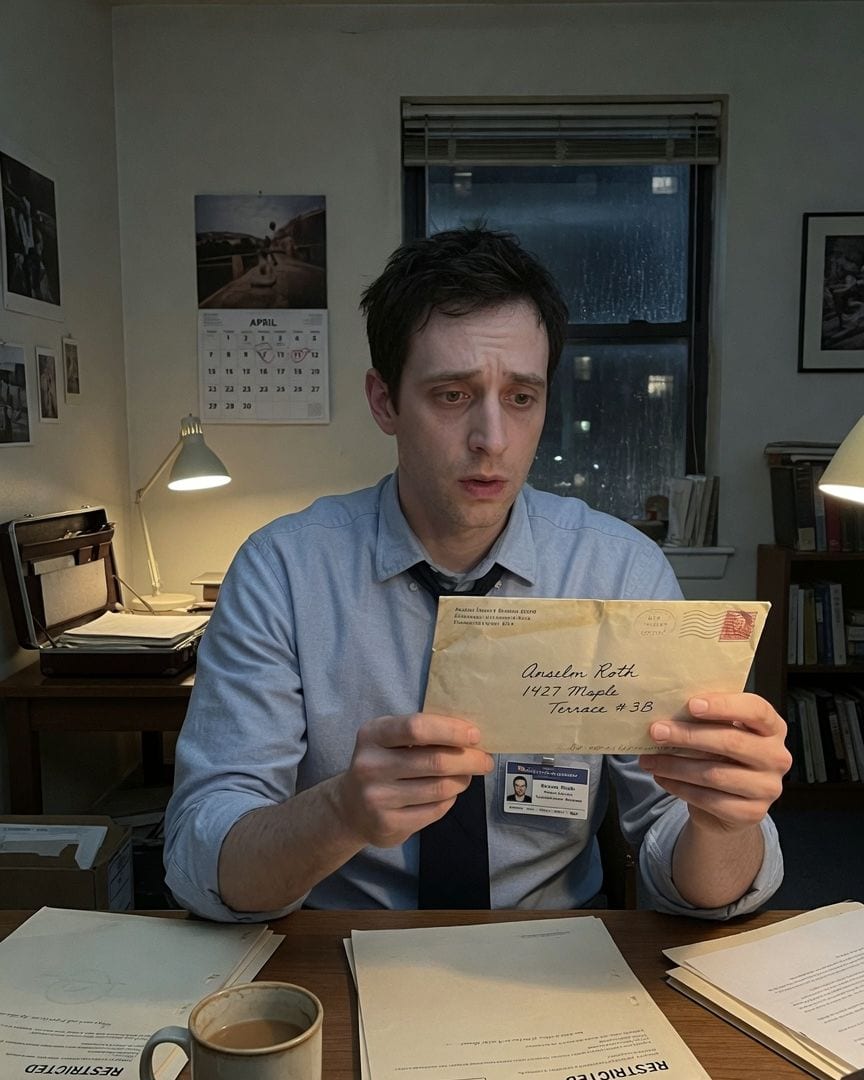
A Cold War declassification reviewer finds his dead grandmother's letter, postmarked 1974, addressed to him years before he was born, and radiating heat.
Declassification reviewer Anselm Roth meticulously sorted through a Cold War-era file on impossible disappearances at the National Archives, a routine 'thirty-year clock' review in 2014. Among the countless records of vanished ships and military units, he found an unscheduled addendum: a thick, sealed envelope addressed to him in his dead grandmother Eleanor Vance’s unmistakable hand. The postmark read 1974, years before he was born, and the paper itself was faintly, inexplicably warm against his fingers, defying every archival principle. Later, a photograph inside revealed his grandmother in an unknown uniform with a stark warning: 'They file us, Anselm. Don't let them finish.' This wasn't just a record of the lost; it was still active.
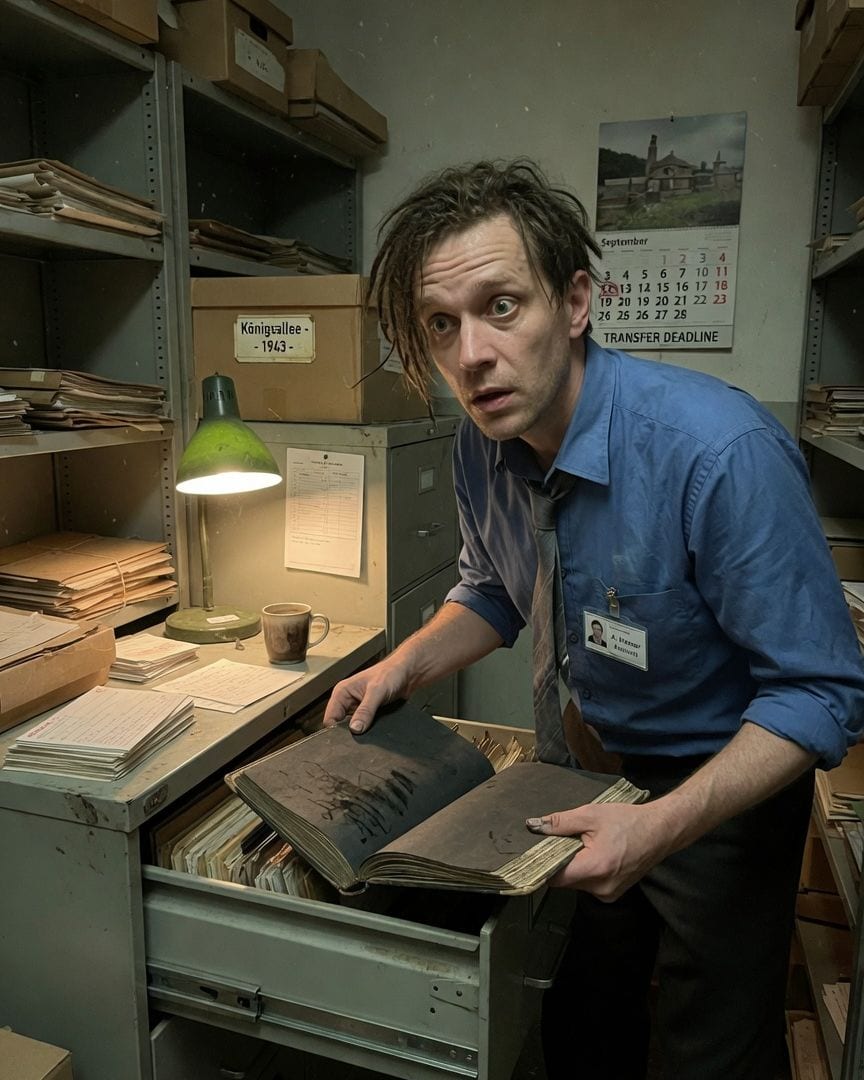
A Berlin archive researcher races a deadline. A hidden log for a Cold War barracks on a vacant lot has ink still wet from last month.
Ansel Vidmar, a methodical researcher, felt the pressure of a looming deadline. The municipal transfer of the old Berlin archive was days away, and he still had countless documents to categorize amidst towering stacks of forgotten history. His focus narrowed to an unindexed metal cabinet, revealing records for a garrison company at Königsallee – an address that had been a vacant lot since the war. A punishment log inside listed an entry from 1983, a date far too recent for a non-existent building. When Ansel visited the site, he found only overgrown grass, save for a single, eerily clean concrete doorstep emerging from the earth. His unease solidified into dread when he later uncovered a hidden Quartermaster's Log, meticulously detailing supplies for the same barracks, with entries extending to "last month," the final page's ink still faintly wet. What unseen operations were still being maintained?
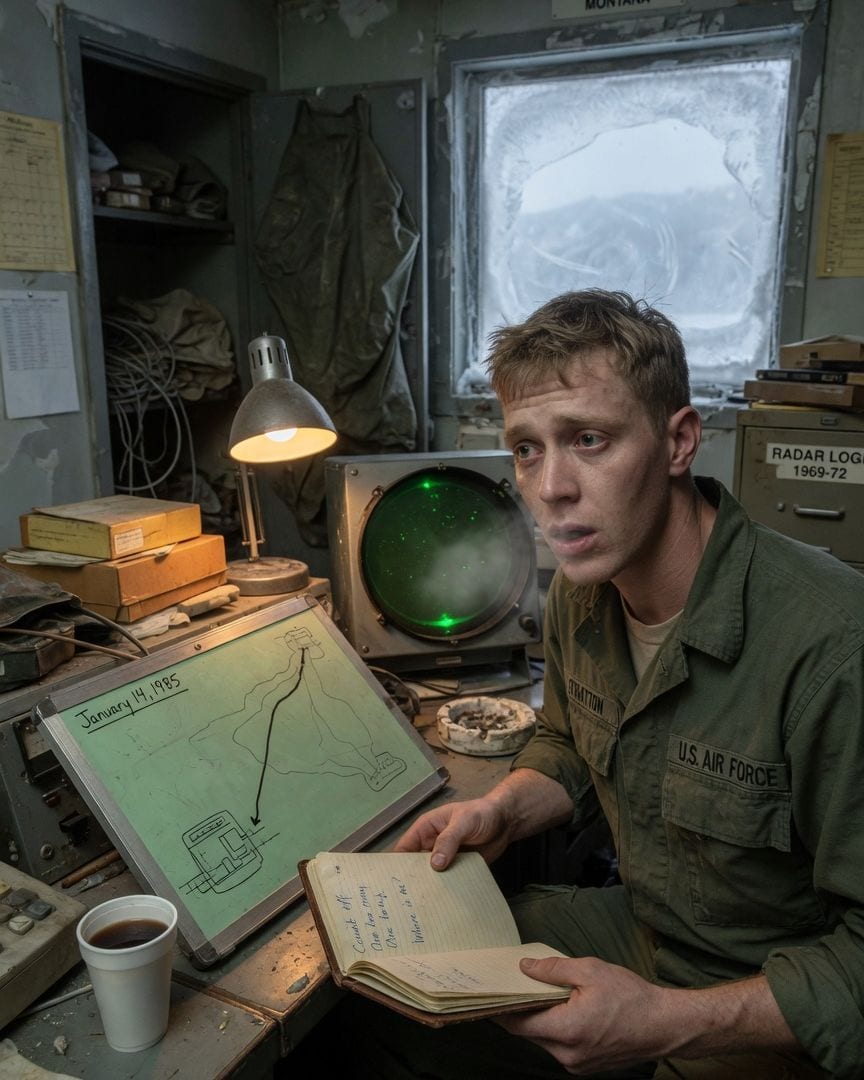
Airman Lars Stratton found an old Cold War manifest listing one name twice: 'Bernard Radcliffe' transferred and 'Bernard Radcliffe' still present.
Airman Second Class Lars Stratton was counting down his final weeks at Echo Station, a desolate Cold War outpost due for mothballing. He longed for home, far from the bitter Montana winds and the constant hum of static. Inside the dim radar shack, he logged the usual nightly ghost blip, a faint contact appearing at 2300, just as it had every winter since 1987. This night, a metallic tang like old blood lingered in the air, raising the hairs on his arms. Seeking distraction, Lars later discovered a leather-bound logbook from 1971, detailing the same 2300 contact, but with chilling notes and a manifest listing one airman's name, Bernard Radcliffe, twice—once transferred, once present. Was he truly alone in the silent, remote station?
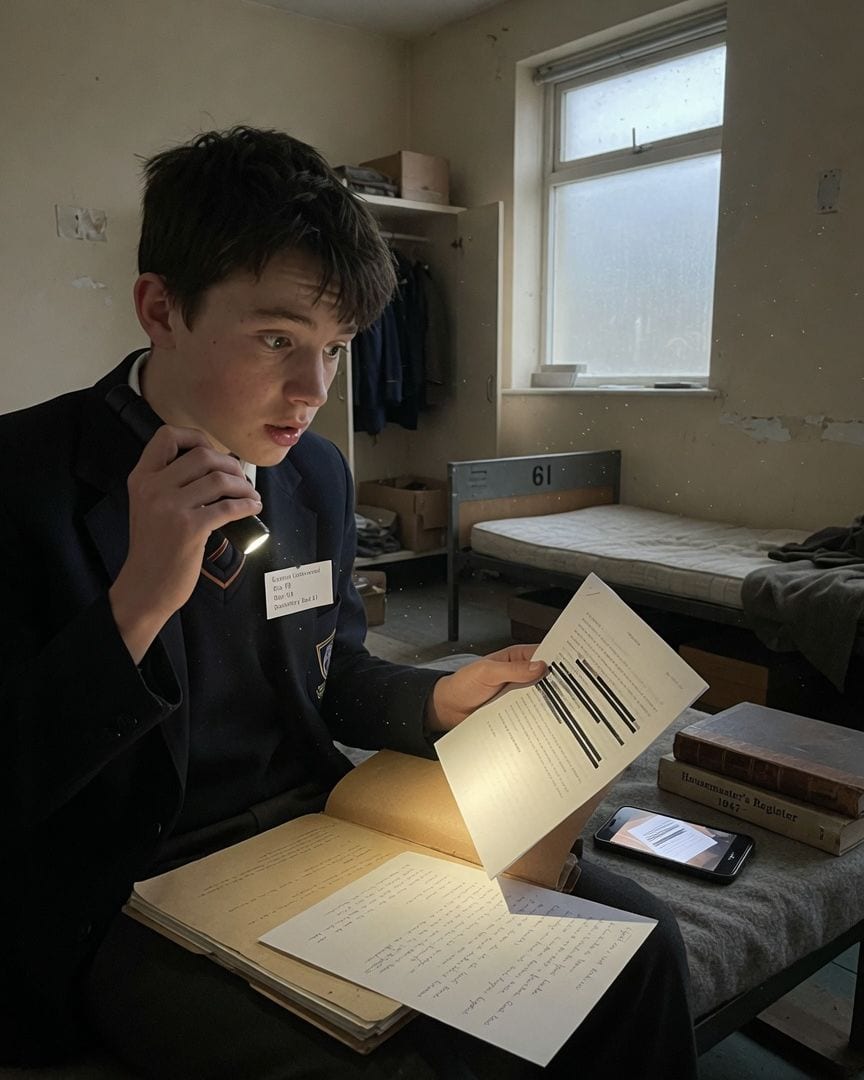
My boarding school bed number was 61, and the archive shows a boy assigned it every eight years since 1947, each leaving mid-term with the bed 'to remain made up'.
I found my matriculation card, listing me as 'Boy 61, Dormitory Bed 61.' Later, an old ledger revealed every boy assigned that bed since 1947 left mid-term, with an unsettling note: 'bed to remain made up.' Our housemaster’s recent scribble, 'as the others,' only deepened the dread around my own assigned bed.
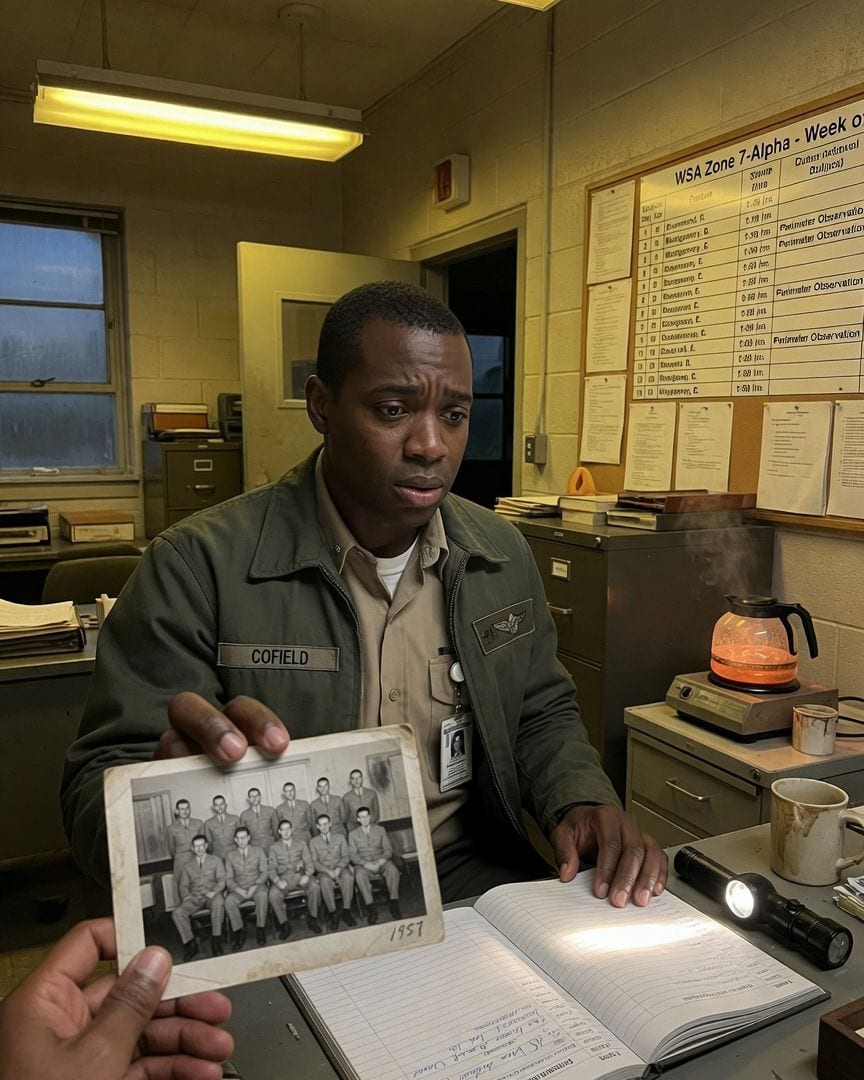
On his last patrol, Senior Airman Cofield found hot coffee steaming inside a base building mothballed since 1992. The fresh roster was signed by a man from a 1957 photo.
Senior Airman Felix Cofield was on his last perimeter patrol of the decommissioned Weapons Storage Area when an impossible light bloomed in the pre-dawn dark. The building had been mothballed for decades, yet a warm, unnatural glow pulsed from within. Ignoring Central Security's all-clear, Cofield found an unlocked door and a brightly lit office, as if someone had just stepped out. A freshly printed roster for the coming week lay on a corkboard, and a coffee pot on the counter was still steaming hot. Then he saw the faded group photo from 1957, showing the very man who had just signed today's logbook.
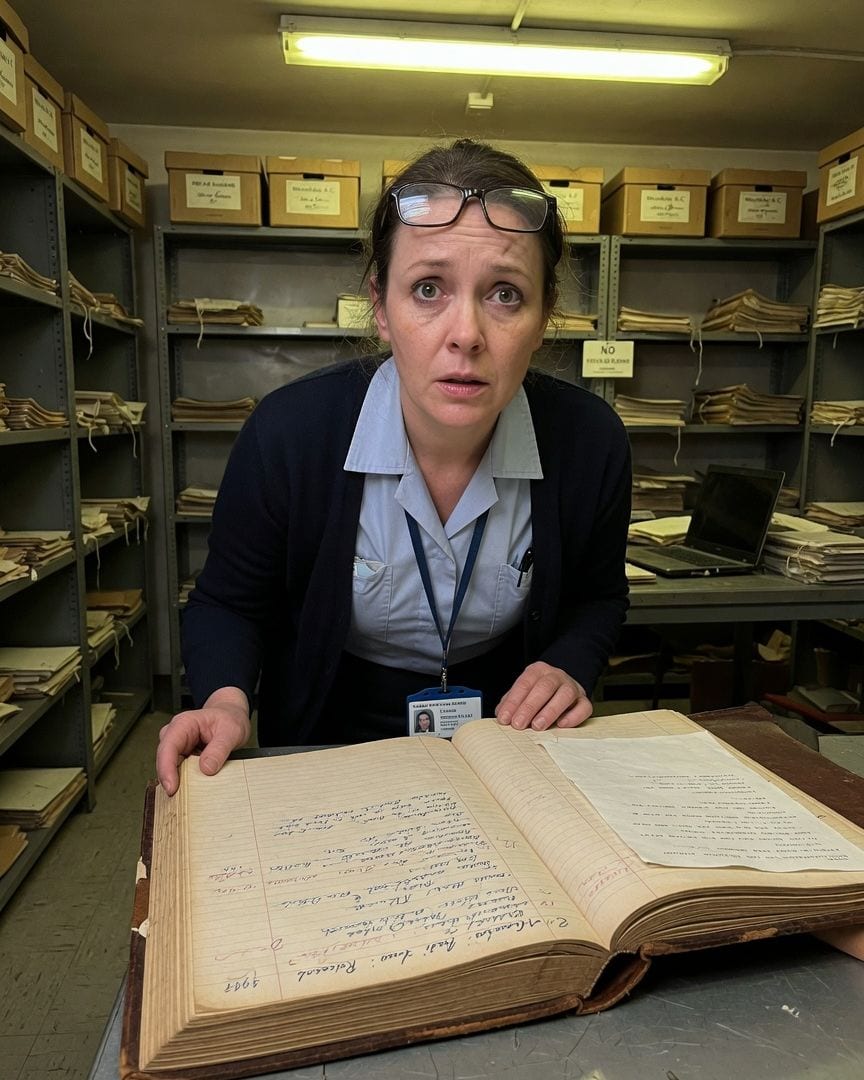
My ambulance trust's incident log shows callout 22-014 to 6 Cathcart Row at 2:40 AM. Every four years, the same call, same address. Always 'patient not found'.
My job involves tedious data entry for ambulance calls, but Incident 22-014 was different. It appeared every four years, always at 2:40 AM, always closed as 'patient not found.' Digging into the dusty physical archives, I found an entry from 1961 for the exact same incident, but its resolution read: 'Subject Secured. Relocated to "Holding".'