A deep-sea diver found a Cold War target ship's logbook dated months after it was vaporized in 1954.
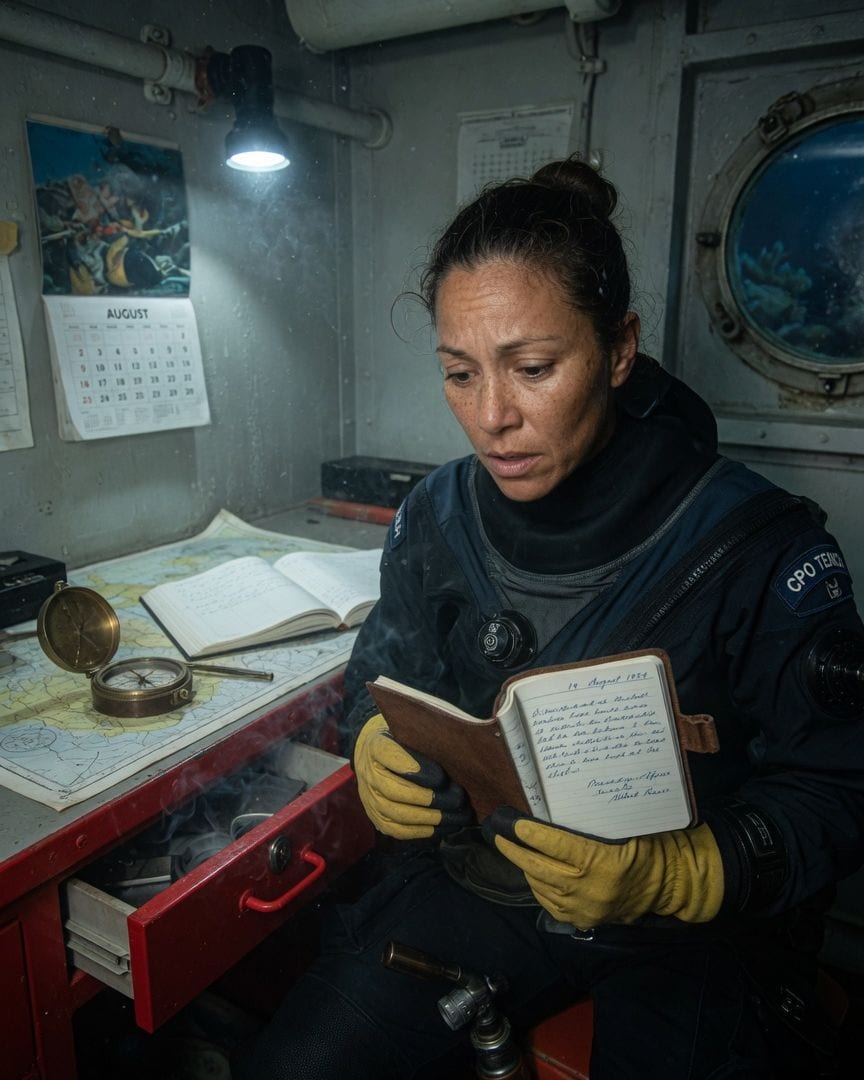
Chief Petty Officer Marlo Tench leaned closer to the monitor, the blue light of the ROV feed glinting off the metal frame. Her team murmured around her, a low hum of disbelief that echoed her own.
She was forty-two, methodical, and her mind struggled to reconcile what she saw with what she knew to be true.
The USS Triton, a target ship from the 1954 Castle Bravo nuclear test, was supposed to be vaporized, a ghost of scorched metal and twisted debris.
Instead, the ROV footage showed it upright on the coral, ninety feet down in the deep, clear waters of Ferrell Atoll.
The ship was impossibly unburned. Its gray paint, faded but bright, was intact. No char marks, no deformation from a blast wave. Every hatch along its length was dogged from the inside, sealed tight against the sea.
Marlo’s first, frantic thought was a later-sunk vessel, a mistake in identification, but the hull number, stenciled clearly on the bow, was unmistakable: DD-650. Triton.
The 1954 film footage of the blast, etched into naval history, explicitly showed this ship going under the fireball. Yet here it was, pristine, a phantom defying its own destruction.
Even stranger, the ship’s internal instruments, inexplicably active after seven decades, sent back telemetry. A ‘live plant,’ the data feed read: active power, functional systems humming deep within its belly. It was like the ship was merely sleeping, not dead.
The ROV camera, a small mechanical eye, glided slowly across the bridge.
As it paused, panning slowly past a porthole, a fleeting, almost imperceptible shadow seemed to shift inside, a flicker of movement that defied the cold, still water and the ship's desolate, impossible history.
The silence in the control room felt sudden, thick.
Marlo's heart thrummed, a mix of apprehension and the salvage diver's relentless curiosity. She snapped an order: "Controlled dive. Let's go."
Donning her dry suit, the familiar weight of her gear a comfort, she led a small team into the cold, clear water. The descent was surreal. The Triton grew larger, an impossible monument in the depths.
Inside, the interior was eerily preserved. The air, pushed back by the initial submersion, was stale and thick with the scent of old metal and sealed spaces, but breathable. No sign of fire or explosive damage.
Only the cold, dark water outside, pressing against the hull. A faint, almost imperceptible hum resonated through the deck plates, the ghostly presence of the ship's active instruments.
It was a sound that shouldn't exist, a pulse from a vessel that should have been silent.
On the bridge, the ship’s logbook lay open on a chart table, its pages surprisingly dry, as if someone had just stepped away. Marlo pulled on thin gloves and carefully examined it. Her breath hitched.
The last entry, dated August 12, 1954, described a routine patrol, a calm sea. August. This was five months after the March 1st Castle Bravo test. A calendar tacked to the bulkhead confirmed it, still set to August.
Her logical mind scrambled. A later salvage operation? A bizarre hoax, perfectly executed and hidden for decades? But the paper, the ink, the faded photographs tacked beside the calendar—a smiling crew, a distant harbor—it all felt genuinely original, undisturbed.
No evidence of tampering, no signs of recent human activity. It was simply… there.
Beneath a stack of water-stained navigation charts in the captain's quarters, Marlo found a small, locked desk drawer. It was an anomaly in the otherwise pristine, abandoned vessel. Everything else was open, ready, or sealed by time. This was locked.
Marlo stood before the locked drawer, her rational explanations having all crumbled around her. This wasn't a glitch, or a mistake. This was deliberate. A cold knot tightened in her stomach.
With focused determination, she retrieved a portable cutting torch from her gear kit. The hiss of the oxygen and acetylene pierced the quiet of the captain’s cabin. She carefully burned through the lock mechanism.
The metal shrieked softly, glowing cherry-red for a moment before yielding, the scent of ozone briefly overwhelming the stale air.
Inside, nestled amongst more water-stained charts and a heavy brass compass, she found it: a small, leather-bound journal. Its cover was embossed with the ship’s official designation, USS Triton, in faded gold script.
Her gloved fingers, surprisingly steady, carefully opened the journal. The first entry, dated February 28, 1954, the day before the nuclear test, described preparations for a long journey.
She flipped to the back, her breath catching. On a crisp, un-yellowed page, the last entry stared up at her. August 14, 1954.
It described a routine watch, a clear sky, and a crewman named 'Petty Officer Albert Russo' complaining good-naturedly about the stale coffee. Marlo froze, the journal heavy in her hand. Russo.
She’d scanned the official 'UNMANNED TARGET' crew list back on the barge, a hundred names, all supposedly not on the ship. Russo was on that list.
Back on the salvage barge, the leather-bound journal became Marlo’s singular obsession. She sat hunched over a laptop, the flickering screen illuminating the impossible contradiction. Petty Officer Albert Russo.
She meticulously cross-referenced his name with the official ‘UNMANNED TARGET’ crew list. Russo’s name was there, chillingly confirmed, a ghost in the bureaucratic machine.
How could he be complaining about stale coffee on August 14, 1954, months after the blast that should have vaporized the ship and everyone on it?
She sent the journal for forensic dating, half-expecting a sophisticated forgery, a prank played by some unknown entity. The report came back two weeks later, dry and unequivocal: the paper and ink were period-correct, consistent with mid-century naval supplies.
No evidence of modern alteration. The ordinary explanation had failed, again.
Her transfer date to a shore-based training role loomed, a concrete deadline for her sanity. Frustrated and driven by a growing sense of dread, Marlo requested access to declassified files on Operation Castle Bravo and the Triton.
The journey took her to Washington, D.C., and into the labyrinthine, dusty corridors of the Naval Archives. The silence here was different from the Triton’s: a heavy, almost expectant hush, punctuated by the rustle of old paper.
She eventually located Kenneth Vaughn, a jaded records clerk, age 58, with an air of weary resignation that settled around him like a shroud. He looked at her with tired eyes when she explained her query.
"Another conspiracy theory," he’d muttered, initially dismissive. But Marlo’s persistence, fueled by Russo’s journal, chipped away at his indifference. He grudgingly helped her locate the Triton’s original manifest.
They spread the yellowed document across a worn table. As they reviewed it, Vaughn, running a finger along the text, paused. "Curious," he murmured, his voice raspy. "Look here."
He pointed to the 'UNMANNED TARGET' stamp, a blocky, official impression near the top right corner. "It's not perfectly uniform, see?" Marlo leaned closer.
Within the 'U' of 'UNMANNED,' a tiny, almost invisible symbol was embossed, like a stylized, broken circle. It was subtle, easily missed, blending into the slight imperfection of the stamp. "Never seen anything quite like it," Vaughn added, shrugging.
"Looks like a manufacturer's defect, maybe. Happens with old printing blocks."
Marlo said nothing, but her gaze lingered on the mark. A defect. Or something else.
Marlo's persistent inquiries and her newfound focus on the 'broken circle' symbol, an anomaly Vaughn dismissed as a manufacturing defect, began to draw unwelcome attention.
After a particularly tense day at the archives, surrounded by files that hummed with unspoken histories, she stepped out into the humid D.C. air.
A plain black sedan with tinted windows was parked conspicuously down the street from her temporary housing, engine idling. Her rational mind tried to dismiss it as coincidence, a trick of her stressed, tired mind. But the car stayed.
And stayed.
Later that evening, after the sedan had finally pulled away, a cold dread settled in her gut. An anonymous email landed in her inbox.
It contained a single, blurry, low-resolution photo of her face, clearly taken from a distance, perhaps from that idling car. It was accompanied by a chillingly succinct caption: 'Some files are best left closed, Chief Tench.'
The message was unequivocal, the threat personal. She was no longer just investigating; she had become a target. The walls of her small apartment seemed to press in.
Realizing she couldn’t proceed alone, Marlo reached out to Beatrice Sheppard, a retired naval historian known for her controversial work on Cold War-era 'lost' vessels and suppressed naval incidents.
Sheppard, age 74, was cautious and wary, her voice tight over the phone. She agreed to meet, but only in a secluded public park, away from prying eyes and electronic ears.
The park was green and quiet, children’s laughter a distant sound. Sheppard listened intently to Marlo's story, her expression unreadable, her gaze sharp. When Marlo finished, producing the anonymous photo from her pocket, Sheppard’s face tightened.
"Be very careful, Chief," Sheppard advised, her voice low, almost a whisper against the rustling leaves. "Such 'unmanned target' designations were sometimes used for highly sensitive, experimental deployments. They were designed to disappear without a trace.
They rarely saw the light of day. And those who dug too deep… well, they often found their own careers, or worse, quietly disappeared from the records themselves."
Sheppard’s words hung in the air, cold and heavy. Marlo's growing fear solidified into certainty: she was being watched, and the stakes were far higher than a forgotten ship.
Marlo met Beatrice Sheppard again, this time in a quiet, out-of-the-way diner, the greasy scent of frying bacon doing little to cut the tension in the air.
Marlo slid the anonymous photo across the laminate table, its blurry image of her face stark against the checkered pattern. Sheppard picked it up, her eyes narrowing as she studied it.
"They're not just watching the files," Marlo said, her voice low. "They're watching me."
Sheppard sighed, a long, weary sound, then finally relented. Her voice, when she spoke, was a hushed confession, as if the walls themselves had ears.
"In the immediate post-war era," Sheppard began, leaning forward, "when the lines between science, espionage, and national security were blurred, a clandestine program was initiated.
Its initial mandate was 'relocation'—not execution, but permanent disappearance—of individuals deemed too dangerous, too unstable, or too 'sensitive' to be allowed to operate freely. They weren't just security risks; some were... assets with unique, unpredictable abilities. Untraceable. Disposable.
Or, perhaps, too valuable to simply dispose of."
Sheppard explained that the 'unmanned target' designation was a particularly cruel euphemism, a bureaucratic sleight of hand. "They weren't targets to be destroyed," she stated, her gaze fixed on Marlo. "They were files.
Filed away, in specialized containment vessels like your Triton, designed to keep them... stable. Indefinitely." She described how the Triton was likely one of the earliest such containment vessels, a floating, self-sustaining prison.
The 'live plant' reading, the dogged hatches, the pristine condition—it was all part of the design. Not to protect the ship from a blast, but to sustain whatever, or whoever, was inside.
"The paper trail was extensive, but deliberately misleading," Sheppard continued. "I encountered it in my own research. A specific, recurring, non-standard code that appeared on some of these 'unmanned' manifests, always partially redacted. A symbol, really.
A broken circle," she whispered, her eyes wide. "I thought it was just a theory, a ghost in the machine. Something that meant 'contained.'
A classification for individuals whose existence was to be erased from the public record, but preserved in stasis by the state."
Marlo pulled out her phone, her fingers fumbling slightly, and showed Sheppard the photo she’d taken of the Triton’s manifest, zooming in on the 'U' of 'UNMANNED,' with the tiny, embossed broken circle.
Sheppard’s eyes widened, a flicker of fear in their depths that mirrored Marlo's own. "You found it," she breathed, her voice barely audible. "Project File Keeper. It wasn't just a theory, Chief. It was real. It is real."
The words hung in the stale diner air, heavy with the weight of decades of hidden cruelty.
Marlo, now understanding the horrifying truth of the Triton’s purpose, felt a cold determination replace the dread. She returned to the Naval Archives, her civilian clothes feeling like a flimsy disguise. She needed more proof of 'Project File Keeper.'
Kenneth Vaughn, the records clerk, was visibly shaken. His department, he stammered, had undergone a sudden, unannounced audit. He’d been warned about 'irregular access logs,' his pale face a map of anxiety.
He was reluctant to help, his hands trembling slightly as he gestured vaguely at the stacks of folders.
Marlo insisted, her voice firm, showing him the photo of the broken circle symbol on her phone. Vaughn, seeing the image, paled further, his eyes darting around the deserted aisle of the archives.
He finally pointed to a dusty, unmarked box labeled ‘Misc. Incidents, Vietnam Era.’ "They came for these," he muttered, his voice barely a whisper, glancing nervously over his shoulder. "Wanted to make sure they were... clean."
He shoved a file across the desk, its pages heavily redacted.
The blacked-out sections were extensive, almost cartoonish in their thoroughness, like entire paragraphs had been swallowed by an ink monster. But as Marlo looked closer, her heart pounding, she noticed a consistent, recurring void in the redaction itself.
Across several pages, a small, distinct, broken circle shape appeared. It wasn't a redaction over something; it was the specific shape of the redaction, like a stencil, a deliberate, non-alphanumeric void in the sea of black ink.
It was the same symbol from the Triton's manifest.
Her hands shook as she aligned the pages, holding them up to the dim archival light. The 'holes' left by these redactions, when viewed together, formed a pattern of coordinates. A new pattern.
Not just a symbol, but a message, a destination. And the dates on these files spanned decades after the Triton’s disappearance. The program hadn't been shut down. It had diversified.
And the coordinates pointed to an address in her own city, a chillingly precise location that screamed of an ongoing operation, stretching from 1954 to the present day.
Ignoring the growing sense of dread that coiled in her stomach, Marlo followed the coordinates. Her civilian clothes felt like a flimsy disguise against the cold certainty of her mission.
The digital path led her to an innocuous-looking, abandoned government building on the outskirts of her city. The facade was crumbling, windows boarded up, choked by overgrown weeds. But the locks on the heavy steel door were new, unmarred.
Using her salvage tools, honed by years of breaching wrecks, she bypassed the state-of-the-art security system. The click of the tumblers was unnervingly loud in the quiet afternoon. She descended a hidden staircase into a sub-basement.
It was a sterile, climate-controlled facility, far from abandoned. The air was cool, dry, and carried a faint, metallic tang.
Rows of identical, sealed containment units stretched into the gloom, each glowing with a faint internal light, chillingly reminiscent of the Triton's 'live plant' readings. They looked like oversized cryogenic chambers, silent and imposing.
On the side of each unit, a small, embossed broken circle symbol confirmed her worst fears. They were alive. They were files.
A central console hummed, displaying a live feed from each unit, showing vague, still forms within, blurred by the containment material. A digital log cycled through names, dates, and a single, horrifying status: 'STATUS: FILED.'
She saw Albert Russo's name, then others from the Triton manifest. Then names from other 'unmanned' incidents Sheppard had mentioned, individuals officially lost in crashes, sinkings, or disappearances spanning decades.
The program wasn't about disposal; it was about preservation. Not of bodies, not of death, but of something else—something they didn't want to die, or couldn't.
The 'file that is still being written' was not just paperwork; it was the continued, perpetual existence of these 'filed' individuals, sustained in stasis, an archive of living secrets. A cold understanding settled over her. This wasn't about war.
It was about control.
As Marlo processed the horrifying truth, the sterile silence of the sub-basement was broken by a light flickering on behind her. She spun around. A man stood there, older, impeccably dressed in a dark suit, holding a sleek, silver tablet.
His presence was calm, devoid of surprise, as if he’d simply been waiting. "Chief Tench," he said, his voice even, betraying no emotion. "We've been expecting you."
He introduced himself as Malcolm Fletcher, age 63, a 'records administrator' for Project File Keeper. He stepped closer, the soft click of his expensive shoes echoing on the concrete floor.
He explained, without malice, that the 'filed' individuals are not prisoners but 'preserved assets'—dangerous psychic sensitives, individuals with unique, unstable genetic markers, or those whose knowledge was too vital to lose.
"They are kept in stasis for national security," he stated, his gaze unwavering, "for study, for potential future activation. We don't discard what could be valuable." He gestured around the room, encompassing the glowing units. "Each one a living library.
Each one a potential weapon."
He offered Marlo a choice, his voice still unnervingly calm. "You've proven your resourcefulness, Chief. Your attention to detail. You understand the nature of our work. Join the project, become a 'records administrator' yourself. Or be 'filed.'"
Marlo’s heart pounded against her ribs, a frantic drum in the silent chamber. She feigned cooperation, her mind racing. "I need to understand the full scope," she said, trying to keep her voice steady, to mask the terror.
"Show me the master file. All of it. The history. The operational parameters."
Fletcher, momentarily distracted by her apparent compliance, a faint, almost imperceptible smile touching his lips, gestured toward a larger terminal at the far end of the room.
"Of course," he said, turning his back slightly as he began to walk towards it.
It was her only chance. Marlo seized her opportunity. With a surge of adrenaline, she lunged. She smashed his sleek tablet against the nearest containment unit's console, creating a loud, sharp crack that echoed through the facility.
Alarms blared instantly, a high-pitched, piercing shriek that tore through the sterile air. Red emergency lights flashed, bathing the room in an ominous glow.
Marlo raced for the exit, her hand snatching a data stick from the master console as she passed it, a tiny, invaluable piece of proof. Silent, swift figures in dark uniforms emerged from the shadows, giving chase.
She scrambled up the stairs, the blare of the alarms growing deafening behind her, narrowly escaping the building as sirens wailed in the distance.
The data stick was clutched in her hand, her only proof, as she fled into the night, the world she knew irrevocably shattered.
Marlo, exhausted and terrified, made it to a secure, anonymous location a hundred miles away.
Her hands still trembled as she uploaded the data stick to a burner account, encrypting the files and sending them to a network of investigative journalists and human rights organizations.
Then she waited, watching the news, her phone a constant presence.
The response was muted. A few polite replies, a couple of dead-end inquiries. The data is too outlandish, too easily dismissed as a hoax or a fabricated conspiracy. The sheer scope of it, the decades of deception, made it unbelievable.
Her superiors, alerted by the incident at the facility, initiated a swift, quiet investigation into her 'unprofessional conduct' during the salvage operation, citing her 'delusions' and 'paranoia.'
She was honorably discharged, her career in the Navy ended, her distinguished record quietly erased.
Kenneth Vaughn, the records clerk, was quietly transferred to an isolated, defunct naval post in Alaska, his weary resignation replaced by a palpable fear.
Beatrice Sheppard's research grants were suddenly, inexplicably revoked, her academic career abruptly halted, her once-controversial work now relegated to the fringes. The world, it seemed, preferred its secrets buried, untouched.
Marlo lived a quiet life now, working a civilian job far from the sea, the salty air replaced by the drone of traffic. She constantly looked over her shoulder, every shadow a potential threat.
She checked the news every day, scanned niche online forums, hoping for any hint that her files made a difference, that someone, somewhere, had listened. But she found nothing.
The memory of the still forms in the glowing containment units, the names cycling on the screen—Russo, and countless others—never left her.
She knew what she saw. She knew what she held, a silent, unheeded truth. The world moved on, oblivious, indifferent to the files that were still being written.
The horror wasn't just in the discovery, but in the silence that followed, the ease with which the truth was swallowed by a system designed to keep it hidden. She was free, but the cost was everything.
The sea, her career, her peace of mind. All gone, sacrificed to a truth no one would believe.
Marlo Tench never heard back from the journalists. Her career was over, her reputation quietly ruined. One morning, an unmarked envelope appeared on her porch.
Inside, a single declassified report detailed a fishing trawler lost in the Bering Sea a decade ago, officially designated 'UNMANNED TARGET.' Below the text, faintly visible, was the stylized broken circle.
She knew, then, that the file was still being signed.
If this one got to you
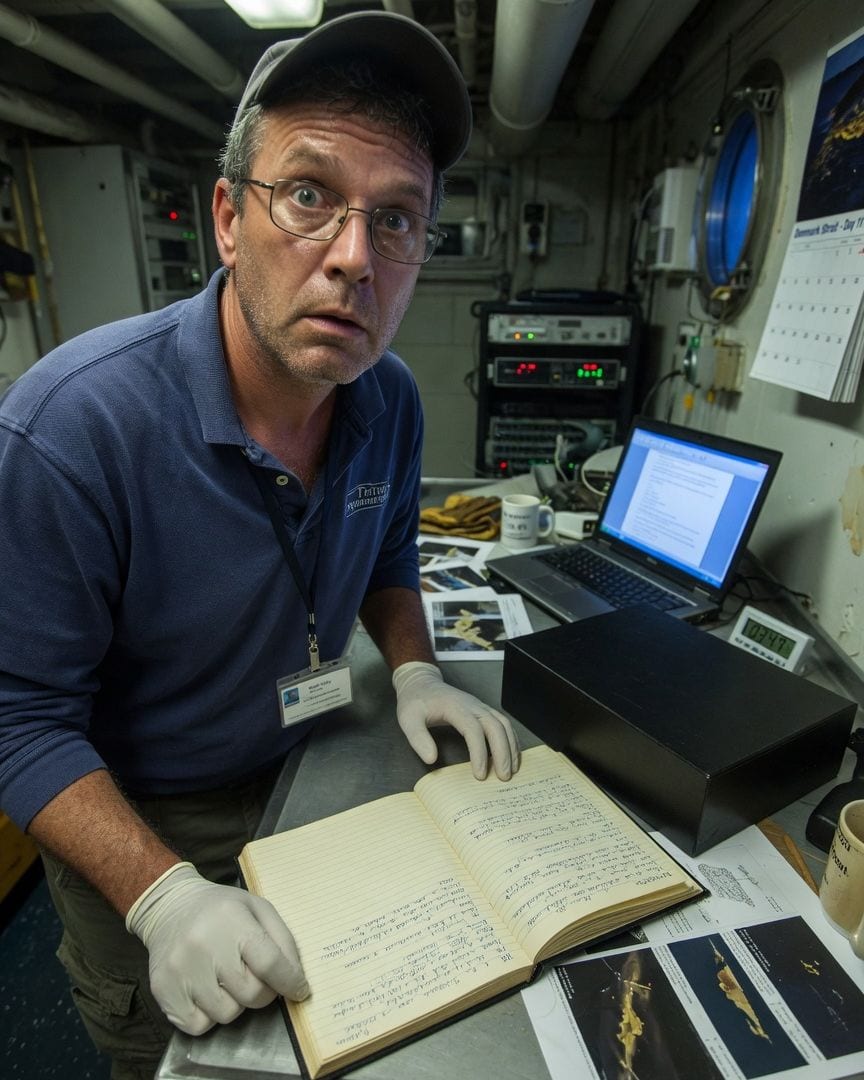
A hydrographer found a lost Cold War submarine from 1968. Inside, its logbook carried entries dated '12.03.2012'.
Hydrographer Wells Duffy had spent eleven days in the *Triton*'s control room, guiding the deep-sea submersible through the crushing dark of the Denmark Strait, chasing a phantom sonar signature. When the USS *Gale Prescott*, lost with all hands in 1968, finally resolved on his monitors, triumph turned to unease as he saw its escape hatch stood simply ajar. The hatch rim and ladder rungs were eerily clean and worn bright, used repeatedly long after the ocean claimed the vessel, prompting Captain Crane to authorize an unauthorized dive. Inside the frigid wreck, Wells discovered a non-Navy container, strangely warm, holding a logbook whose precise entries continued across the decades, ending in the impossible date of '12.03.2012'.
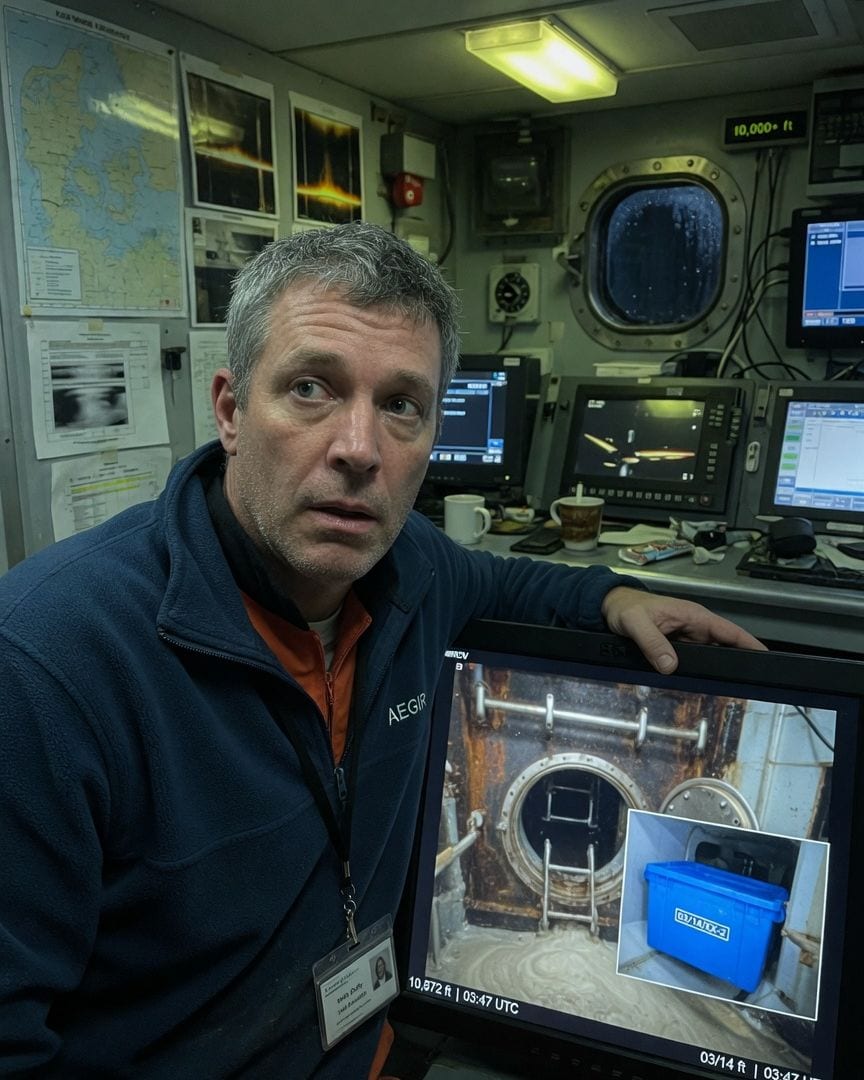
A sonar operator finds a Cold War submarine lost in 1968, but inside, a modern blue container bears a date stamp from two years ago.
Sonar operator Wells Duffy spent days on the RV Aegir, mapping the frigid depths of the Denmark Strait. He was nearing the end of his eleven-day mission when his vessel's transducers painted an impossible image. Deep in a trench, the USS Gale Prescott, a submarine lost with seventy-one souls in 1968, rested upright and perfectly preserved. But as the ROV's camera pushed into the gloom, it revealed a vibrant blue plastic container, clearly not from 1968, bearing a digital date stamp from just two years prior, chilling Wells Duffy to his core.
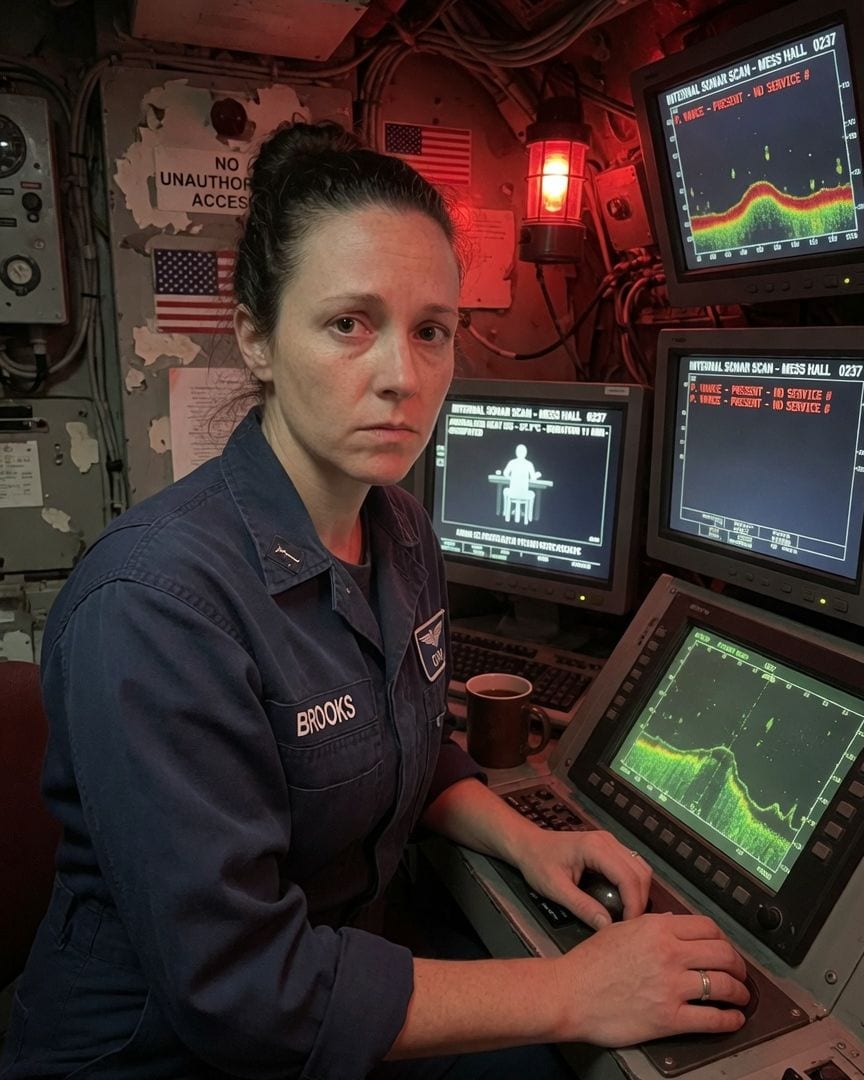
A Chief Petty Officer reviewed her submarine's sonar logs, finding a human heat signature where security cameras saw nothing, then the manifest listed an extra man who couldn't be deleted.
Chief Petty Officer Charlotte Brooks felt the weight of her submarine's impending decommissioning, its long service ending soon after a decade as her home. The quiet hum of the USS *Artemis* was broken when a nervous messcook reported seeing a shadow eating alone in the mess hall, then finding one plate short but a perfectly clean tray. Though skeptical, Charlotte checked the security feeds, which showed nothing, yet her sonar logs revealed a distinct human heat signature in the same spot, then abruptly vanish. Her dread deepened when the boat's manifest confirmed 101 souls instead of 100, listing a mysterious 'P. Vance' with no details, whose entry all systems refused to delete.
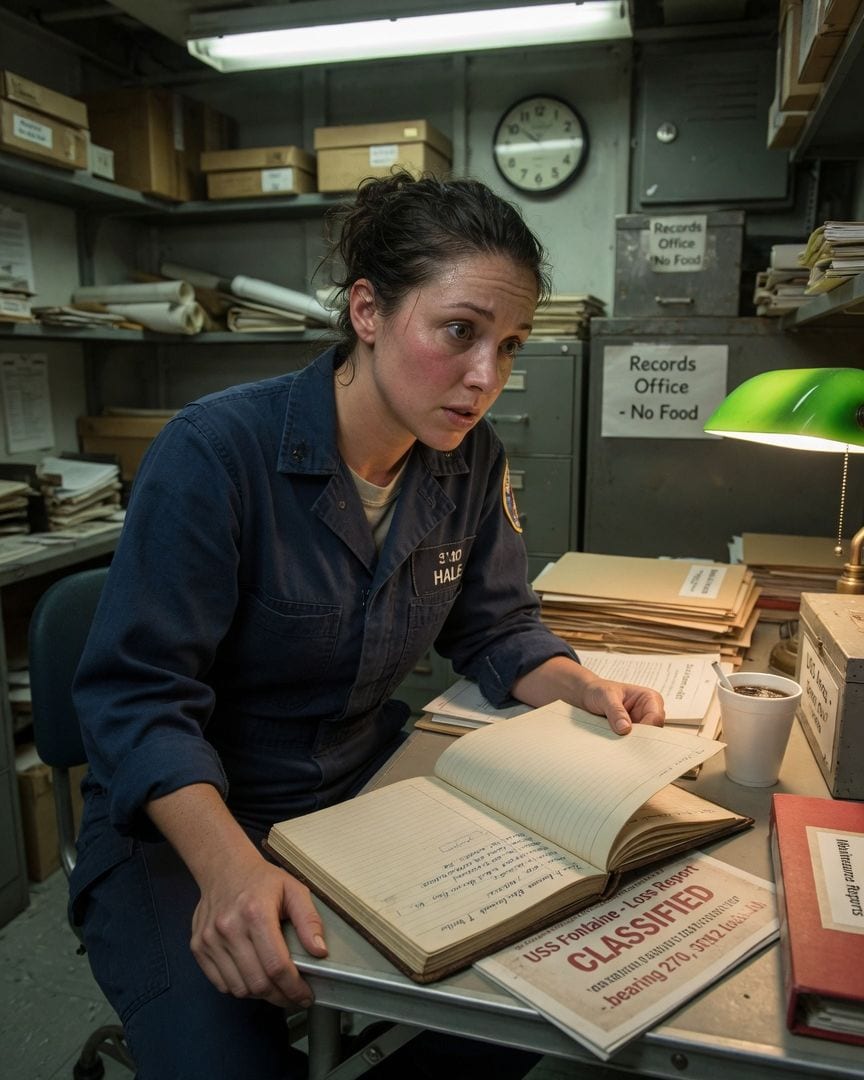
Petty Officer Hale needs a spotless record for her transfer. But the USS Ares sonar logs show an identical, impossible contact, logged to the minute, years apart, and tied to a classified loss report.
Petty Officer Sarah Hale needed a spotless record for her coveted shore duty transfer, a posting she'd worked five years to secure. Alone in the USS Ares sonar shack, three days out from San Diego, her midwatch was broken by an impossible contact: a close, slow echo holding perfect pace, invisible to radar, then vanishing. Her heart hammered, not from fear, but from the data's impossibility. When she found an identical entry in her own log from just one week prior, the cold dread tightened its grip. But the true chill settled when she unearthed decades of similar records, signed by other sonar officers, all showing the same impossible contact at 0212, off the port beam, for nineteen minutes, on the same ship, stretching back years—a persistent echo tied to a classified loss report.
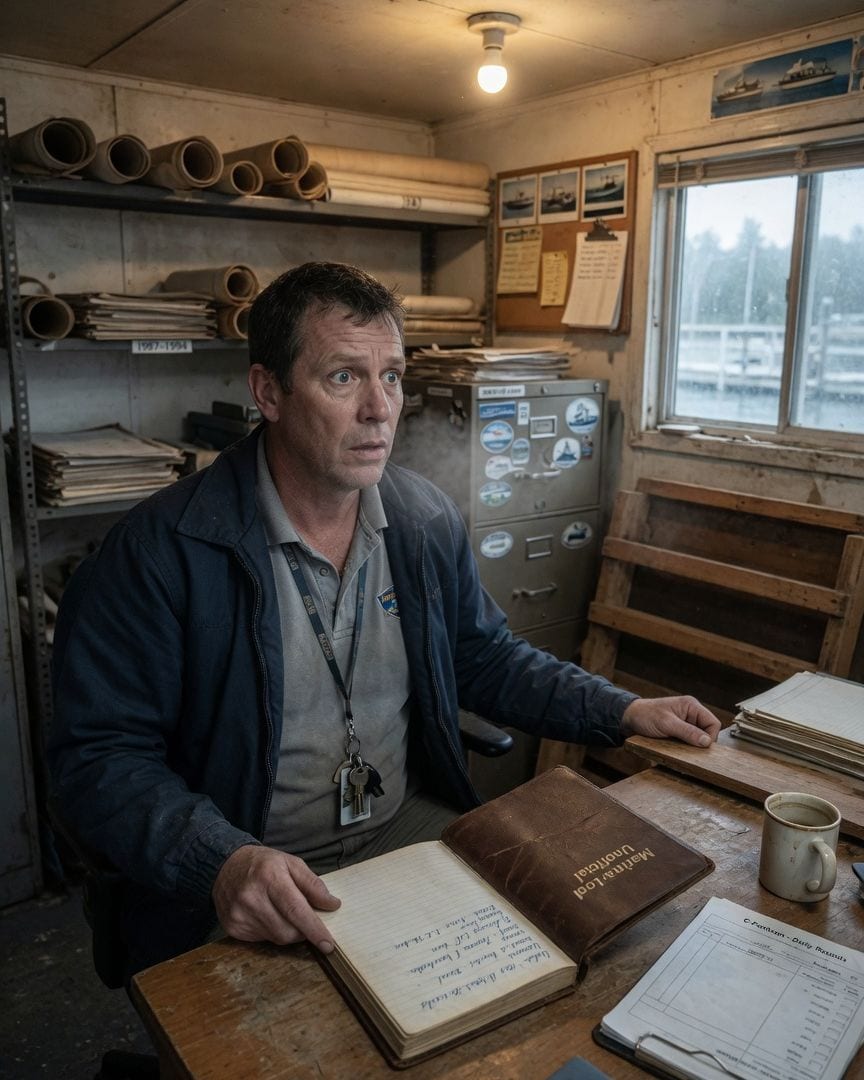
My C-Pontoon goes an extra thirty feet to Berth 61, with a sleek, dark yacht I've never seen. It's drawing power, but doesn't exist on any records.
As harbormaster, my morning rounds are always routine, checking the sixty berths on our C-Pontoon. But one chilly morning, beyond the last numbered post, C-60, I found the pontoon inexplicably extended by another thirty feet. It ended in a new numbered post: Berth 61, a physical fact that simply could not exist.
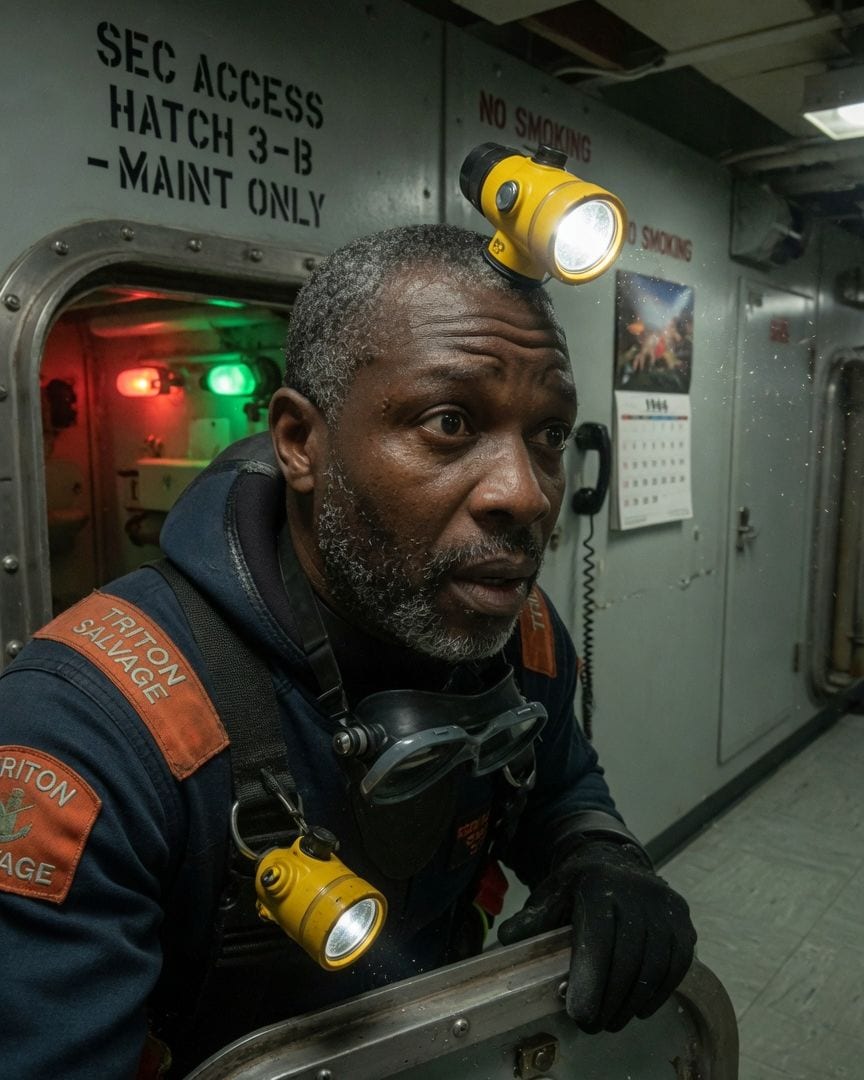
A salvage master found a Cold War escort vessel lost for fifty-eight years. Its running lights were burning bright.
Salvage Master Bram Oduya, a man dedicated to finding the lost, stared at an impossible sonar readout in the calm Java Sea. Beneath his vessel, the Triton, lay the USS Palo Cinder, an escort vessel officially lost in 1966. What truly froze him were its running lights, burning steady and bright after nearly six decades in salt water. He ordered his ROV to surface, and as its camera rose into position, it captured the impossible sight: the Palo Cinder, motionless, yet showing a faint bow wave around its pristine hull. Bram knew this was no ordinary wreck, and he prepared for a dive, determined to touch the seam where reality had torn open.