I asked for my own approved-school file. They sent four other boys' files too — every one shares my admission number, each stamped 'the place is spoken for.'
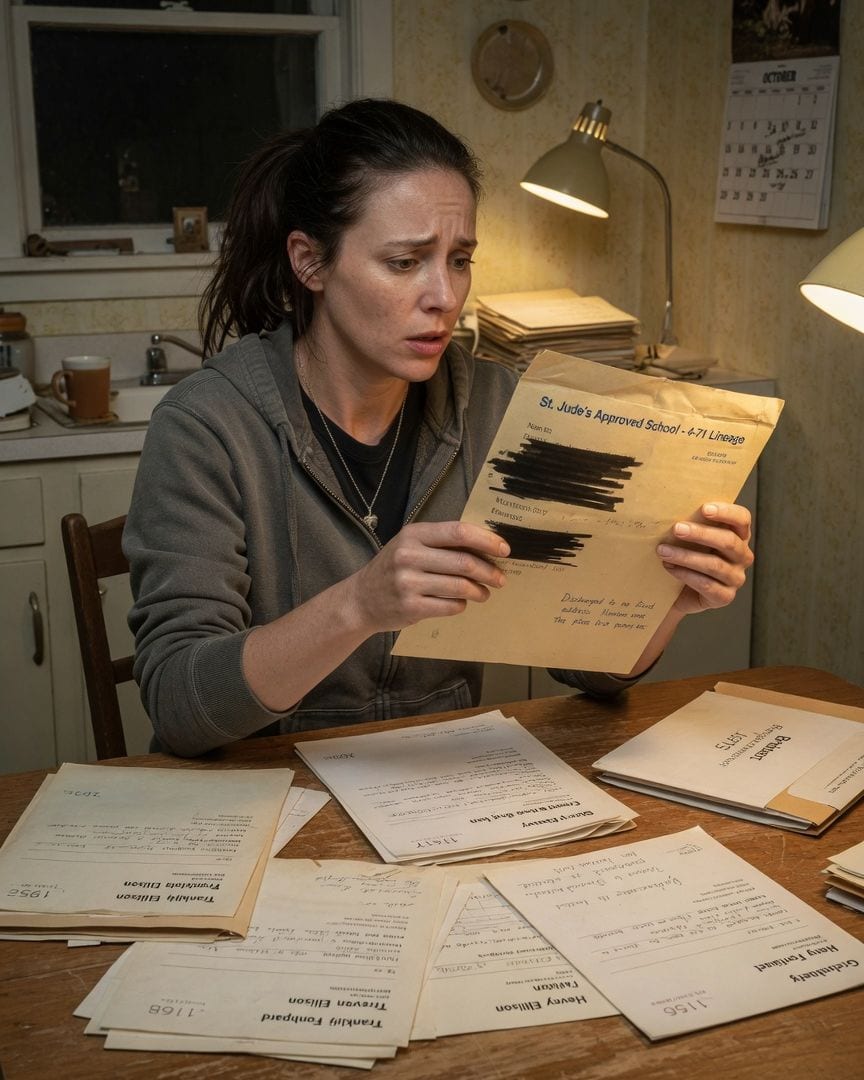
The apartment was quiet, save for the rustle of old paper. I sat at my kitchen table, surrounded by the contents of a thick manila envelope from St. Jude’s Approved School.
I’d sent a request weeks ago for my own student file, number 4-71, hoping to finally make sense of my tumultuous teenage years there.
Instead, Bridget Bennett, the current archivist, had sent something far larger: a bundle, she’d called it, the complete 4-71 lineage.
My own discharge papers lay on top, dated 2006, simply stating: 'Discharged to independent living.' Below them were four older files, all bearing the same admission number: Franklin Sheppard, 1955. Trevor Ellison, 1961. Henry Fontaine, 1968. Greg Davenport, 1975.
Each of these boys’ files ended with the same unsettling phrase, meticulously copied forward in the neat, looping hand of the then-housemaster, Walter Coleman: 'Discharged to no fixed address. Number reserved, the place is spoken for.'
The words 'the place is spoken for' echoed in the quiet, a faint thrum beneath my skin. It felt less like bureaucratic shorthand and more like a pronouncement. A cold, definite claim.
I started with Franklin Sheppard. He was the earliest, admitted in '55. I tried to find him, or any of them, online. It was a dead end.
No social media profiles, no obituaries, no public records of adult lives for Franklin, Trevor, Henry, or Greg. Nothing. It was as if they’d simply vanished after their eighteenth birthdays.
The thought was absurd, but it was what the evidence suggested. Four separate individuals, spanning decades, all gone without a trace beyond the school’s archive.
I reached out to Nathan Davenport, a local historian known for his encyclopedic knowledge of the area’s institutions. He was in his late forties, a quiet man who remembered St. Jude's vaguely as an 'approved school' for 'difficult cases.'
He told me it had always been unusually stable, funded by some old, opaque 'endowment' despite fluctuating student numbers. He didn't know much more, just that it had a reputation for being 'self-sufficient.'
I returned to the files. Their discharge dates were always around their eighteenth birthday, and always, without fail, on a Tuesday. A strange, almost clinical precision.
I tried to rationalize it – perhaps the school had a strict policy, or a network for placing these boys quietly, ensuring their transition into… well, into whatever 'no fixed address' meant.
But the identical phrasing, the absolute lack of any digital footprint, felt less like policy and more like an erasure. The dread wasn't in the mystery itself, but in the unsettling coherence of the pattern. It felt too clean.
Too arranged.
Driven by a growing unease, I returned to Franklin Sheppard’s file, the earliest one. His paperwork was faded, brittle with age. I meticulously sifted through mundane reports: truancy notices, progress reviews, disciplinary actions. Standard stuff for an 'approved school.'
Then, towards the end, among a list of parental contacts and next-of-kin, I found it: a single line, heavily redacted with thick black marker. My heart hammered.
I held the fragile paper up to the light from my desk lamp, tilting it, straining to see past the ink. Faintly, beneath the black bar, the ghost of text emerged.
A name, a street… 'Montgomery,' my own maiden surname, and 'Elmwood Drive,' my childhood street. The date next to it was 1957. Two years before my parents had even met.
The redacted line was a cold shock. My maiden surname, my childhood street, dated 1957. I spent the next few days cross-referencing old town records. My Montgomery relatives had indeed lived on Elmwood Drive since the 1930s.
That was easily verifiable. But the file implied a connection to my family, specifically to my childhood home, decades before I was born. This wasn't a coincidence; it was a deliberate link, a planted seed.
I drove back to St. Jude’s, the old stone building feeling colder now, less like a memory and more like a mausoleum.
The archive was a small, dusty room tucked away in the school’s oldest wing, smelling of mildew and old paper. Bridget Bennett was there, organizing new acquisitions on a high shelf.
I tried to keep my voice neutral, inquiring about the school's redaction policies, casually mentioning 'historical family names.' Bridget offered polite, vague answers about 'privacy protocols' and 'legacy protections,' her hands moving with unhurried efficiency.
I observed her closely, noticing a quiet, almost unsettling composure when I mentioned the repeated 'spoken for' phrase from the 4-71 files.
It wasn't dismissive, but rather a practiced calm, as if Bridget had heard it all before, had long since processed it.
Back home, I delved into St. Jude's financial records, accessible through public charity databases. I found an opaque trust, 'The Elmwood Endowment,' established in the 1950s, listed as the school's primary benefactor.
Its beneficiaries were vaguely defined, 'for the betterment of the community,' with no clear individuals named, only 'approved projects' and 'institutional continuity.' It was a financial black box, seemingly designed to obscure rather than reveal. The name Elmwood resonated.
My street, Elmwood Drive. My family. The dates. It was all circling back to this name.
That evening, a prickling sensation. I was certain my research notes, usually spread in a chaotic but personal order across my desk, were subtly rearranged.
A sticky note I’d placed on Franklin Sheppard’s file, specifically marking the redacted line, was now on a different page entirely, on Trevor Ellison’s file, tucked under a loose report.
I tried to dismiss it as my own absentmindedness, the stress of the investigation playing tricks on me. But the cold unease tightened its grip. The air in the room felt heavy, watched.
Later, an email landed in my inbox. The sender was a random string of characters, unidentifiable. The subject line simply read: '4-71.' The body of the email contained three stark sentences: 'Some places are best left alone.
Some questions have answers you're not ready for. 4-71.' I stared at the screen, a chill spreading from my chest. Someone knew. Someone was watching me, tracking my progress, and sending a clear, chilling warning.
I considered calling the police, but what would I say? 'Someone moved my sticky note and sent an email with my old school number?'
There was no concrete proof, just the suffocating certainty that I was no longer hunting, but being hunted.
I confronted Bridget Bennett again, this time without preamble. My phone, displaying the anonymous email, was clutched in my hand. 'Someone sent me this. And they know about 4-71.' Bridget’s composure, usually so unshakeable, flickered.
Her eyes darted to the screen, then back to mine. 'That’s… unsettling,' she said, her voice flat.
I pushed harder, my voice low but firm. 'What is 4-71? What does 'the place is spoken for' really mean? And why is my family’s name on a file from 1957? Before I was even born?'
Bridget sighed, a weary, almost practiced sound. She ran a hand over a stack of old, leather-bound ledgers on a nearby shelf. 'It’s an identifier, Renee. For a specific role within the community.'
I felt a jolt. 'What role? And why are these boys discharged 'to no fixed address'?'
Bridget looked at me, her gaze steady, almost sorrowful. 'The boys aren't discharged 'to no fixed address,' Renee. That's a euphemism. They're delivered. To their purpose. The Elmwood Endowment ensures the continuity of certain vital functions in this town.
When a 'place' needs filling – a civic duty, a communal role – St. Jude's provides the candidate.'
I thought of the missing boys, the repeated phrase, the town’s quiet prosperity, the decades of consistent funding. It clicked into a terrifying, bureaucratic pattern. The school wasn't educating; it was a supply chain.
A very specific kind of supply chain.
My voice was barely a whisper. 'Was I… delivered? Was my 'independent living' also a euphemism?'
Bridget’s gaze was unsettlingly calm, almost pitying. 'You were admitted as 4-71. You were discharged to 'independent living.' You chose to return here, to the records. You’re asking the right questions, Renee.'
Bridget then leaned closer, her voice dropping to a near whisper, a confiding tone that sent a shiver down my spine. The air in the dusty room felt suddenly, impossibly cold. 'Do you know Walter Coleman?
He was the housemaster who signed off on all those 4-71 files. He's still alive. He lives just a few blocks from your 'independent living' address, off Aspen Street. He's the one who always knew.'
Reeling from Bridget’s words, the name Walter Coleman a lead weight in my gut, I found his address. It was a small, tidy bungalow on Aspen Street, just a few blocks from where I’d settled into my own 'independent living.'
The proximity felt like a fresh wound.
Walter Coleman, now 68, answered the door himself. He had a gentle, grandfatherly face, but his eyes, behind wire-rimmed glasses, were unnervingly clear, sharp.
I stood on his porch, clutching the bundle of 4-71 files, the anonymous email subject line still burning in my mind. I confronted him with the numbers, the chilling phrase, Bridget’s implication. He didn't deny a thing.
He simply invited me in, offered me tea, his voice calm, unhurried.
'The Elmwood Arrangement,' he began, gesturing for me to sit on a plush armchair, 'is old. Generations old. Certain families in this area, including yours, Renee, made a pact long ago. To ensure stability, prosperity, for the community.
A small cost for a great benefit.' He explained it all with the detached clarity of someone reciting history.
The 'cost,' he said, was providing 'replacements' for specific civic or communal roles when the previous incumbent reached a certain age or became 'unfit.' The 4-71 designation marked those children whose 'place was spoken for' within this intricate system.
He pulled out a faded, leather-bound ledger from a bookshelf, its pages filled with neat, looping script, identical to the hand I’d seen on the 4-71 files.
It detailed the 'roles,' the 'transfers,' the 'admissions' – a quiet, unbroken chain since the 1950s, meticulously documented. Every detail I’d found, every chilling pattern, clicked into place with horrifying precision.
I felt a wave of nausea. The faces of the 4-71 boys flashed in my mind, their young lives quietly subsumed. 'You mean you delivered children to be… replaced?'
Walter Coleman nodded, completely unbothered, as if discussing the weather. 'I simply managed the system, Renee. Ensured the continuity. It's for the good of the community. Always has been.'
I demanded to know about my own discharge, my 'independent living.' Walter’s gaze softened then, a hint of paternal pride in his clear eyes. 'Your family’s line had a unique designation, Renee. Not a direct 'replacement,' but a 'facilitator.'
You were meant to be drawn back to it, to eventually guide new candidates into the Arrangement. Your return to the records, your investigation… it's all part of your function.'
I felt a cold, empty horror. I wasn't an investigator; I was a participant. My entire life, my choices, had been subtly nudged towards this moment. Walter wasn't stopping me; he was, in his mind, activating me.
The silence in his living room was deafening, the ticking of a grandfather clock like a slow, inexorable countdown. I left Walter's house, the quiet horror of his calm acceptance worse than any monster.
The system wasn't just at the school; it permeated the entire town, a silent, complicit organism. I had been groomed for this, my curiosity a pre-programmed function.
I tried to expose the Elmwood Arrangement. I contacted local authorities, then investigative journalists, presenting the files, the ledger, Walter Coleman’s confessions. They listened politely, some with thinly veiled skepticism, others with an unsettling familiarity.
My claims were dismissed as 'unsubstantiated,' 'conspiracy theories,' or 'misinterpretations of historical records.' The Elmwood Endowment remained impenetrable, its legal structure ironclad. Bridget Bennett continued her work at the St. Jude’s archive, a picture of calm efficiency, her composure unwavering.
Walter Coleman remained in his tidy bungalow, occasionally tending his rose bushes, a kindly old man to his neighbors. The town, outwardly prosperous and ordinary, continued its quiet existence, its secret deeply embedded, calmly managed.
My efforts vanished into the bureaucratic ether, leaving no ripple.
I was back in my apartment, the files scattered around me, a useless monument to a truth no one wanted to hear. I tried to write, to document, to make sense of the horror, but the words felt hollow, impotent.
My own discharge papers, stating 'independent living,' mocked me from the desk, a lie I was now living. I looked at the anonymous email, '4-71,' and the phrase 'the place is spoken for.'
I wondered if I could ever truly escape a 'place' that had been reserved for me all along. The air in my apartment was still, expectant, as if waiting for me to take up my post.
A few months later, Renee Montgomery's apartment stood vacant, the lease quietly terminated. Her research notes, meticulously organized, were found in a box by the building manager, addressed to 'The Elmwood Endowment.'
The box contained a final, handwritten note, scrawled across a blank page from a St. Jude's student file. The place is spoken for.
If this one got to you
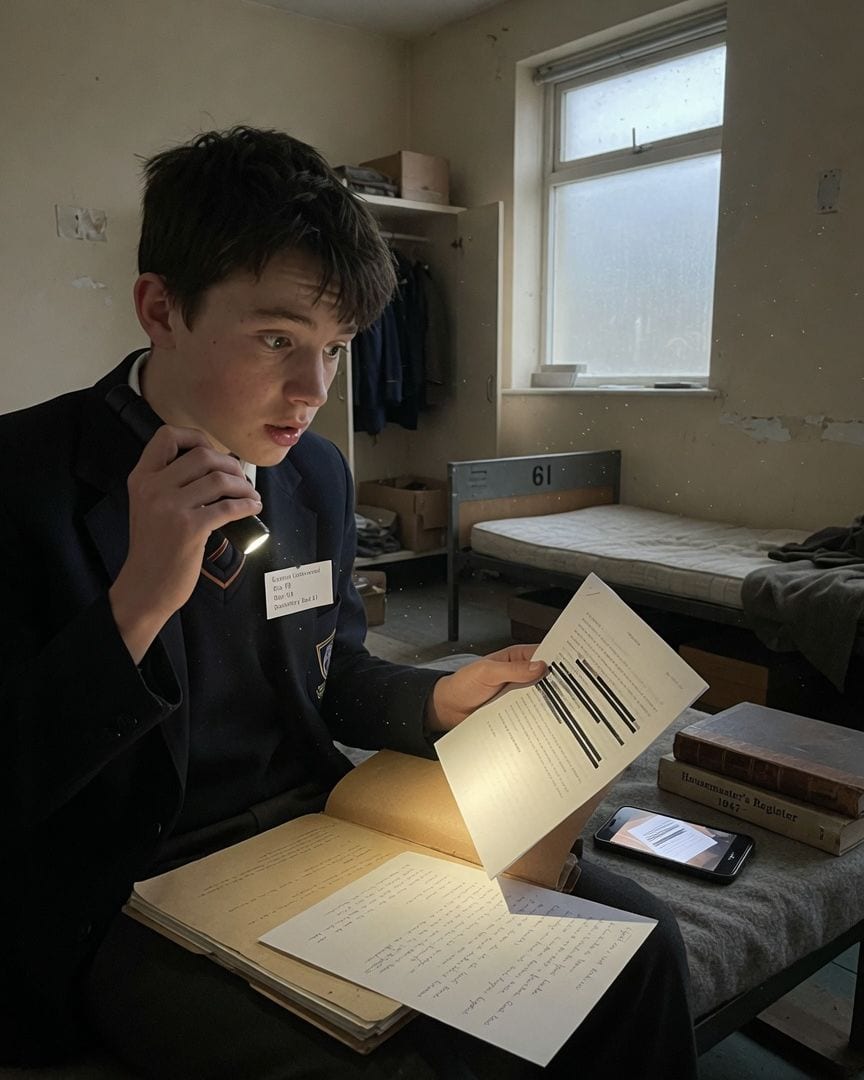
My boarding school bed number was 61, and the archive shows a boy assigned it every eight years since 1947, each leaving mid-term with the bed 'to remain made up'.
I found my matriculation card, listing me as 'Boy 61, Dormitory Bed 61.' Later, an old ledger revealed every boy assigned that bed since 1947 left mid-term, with an unsettling note: 'bed to remain made up.' Our housemaster’s recent scribble, 'as the others,' only deepened the dread around my own assigned bed.
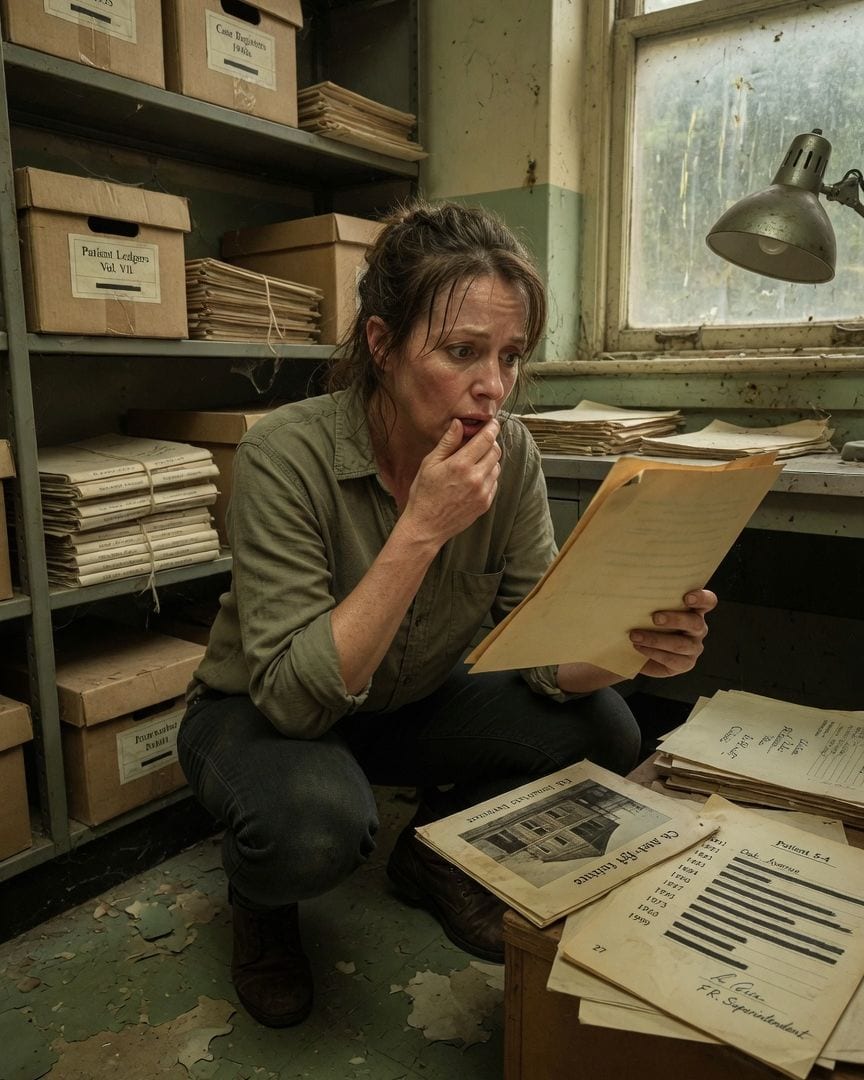
Patient 5-4 keeps checking into my aunt's old sanatorium chalet. The same initials sign them out, 'not traced,' every thirteen years since 1921.
Sifting through my aunt Margaret's estate, I found her old sanatorium file from 1999. Her patient record listed her as 'Patient 5-4,' discharged 'not traced.' But when I accessed the archives, I found 'Patient 5-4' was admitted every thirteen years since 1921, always with identical discharge notes.
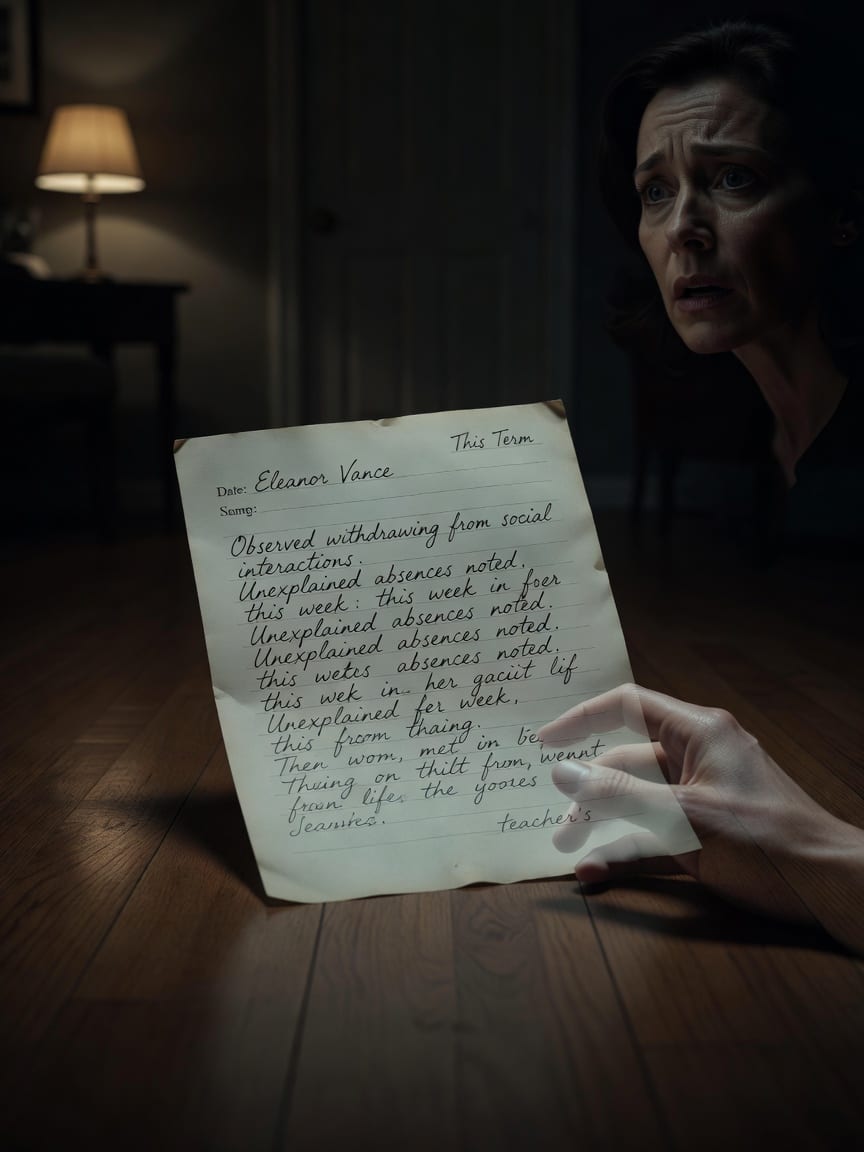
My school reports keep arriving, one a term, signed by teachers dead for decades. The latest describes something I'm doing *this week*.
My name is Eileen Caldwell, and my quiet life was upended by a school report from a place demolished decades before I was born. The report, signed by a long-dead teacher, eerily detailed my current habits. But the real shock arrived when I found my own name in a student register, dated 1968, with precise descriptions of my childhood—years before I existed.
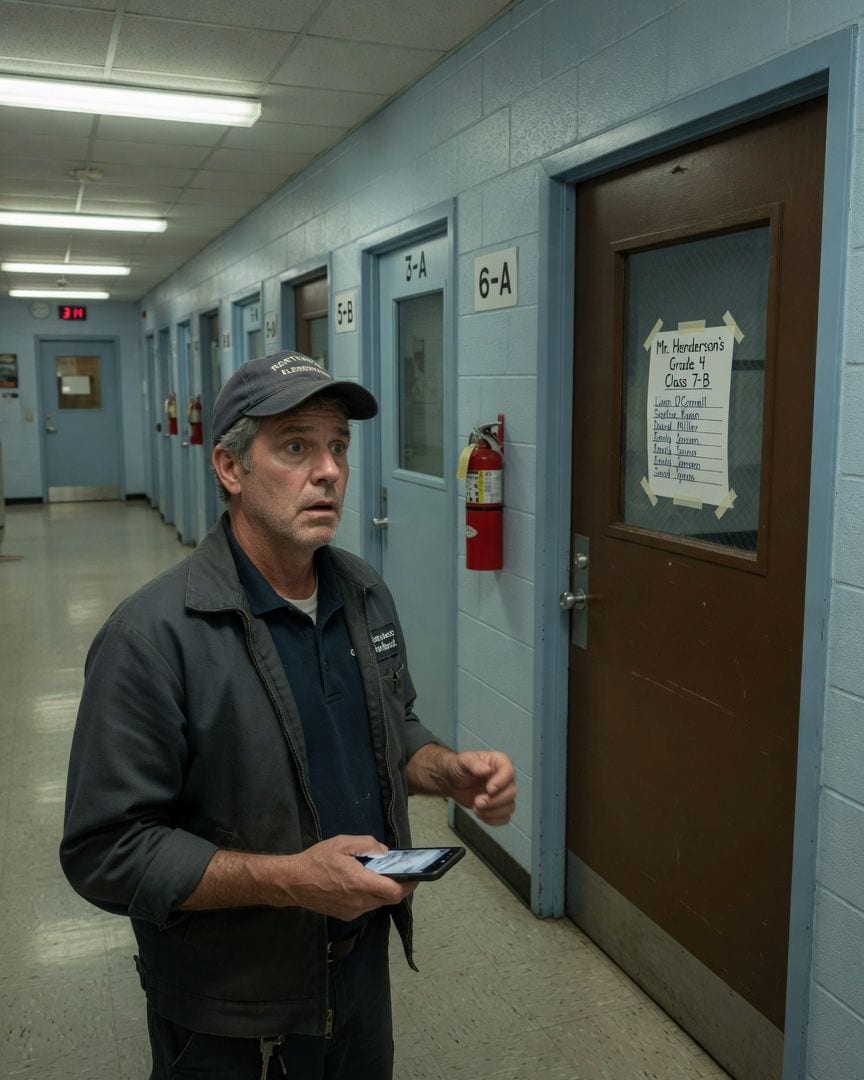
My classroom doors counted twenty-three last night. The extra one had a class list taped inside, names of children who've never been at this school.
My job as night caretaker at Northwood Elementary is routine: 22 classrooms, all accounted for. But one night, an impossible 23rd door appeared in the science block, nestled where only a wall should be. It bore a class list of students and a teacher who don't exist in any school record. Then, in an old logbook, I found that exact same list, dated 40 years ago.
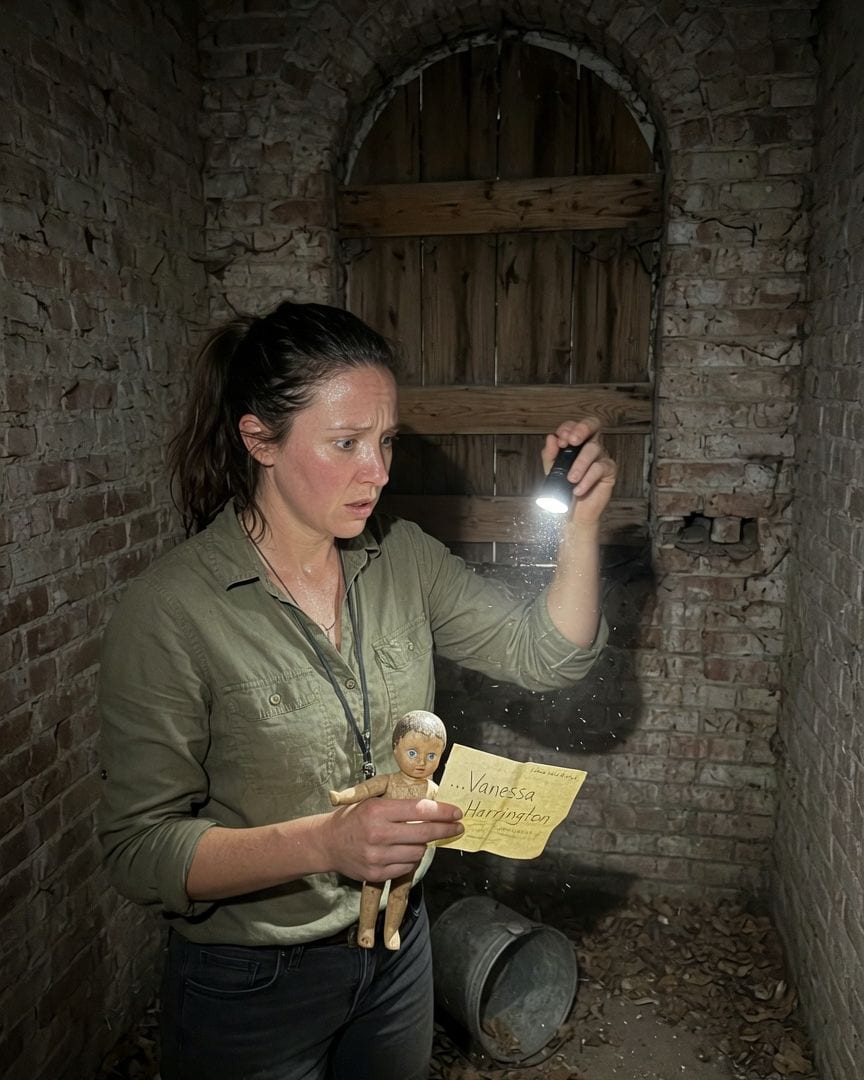
The attendance register has marked one pupil 'present' every single day since 1911 — never once absent. No child by that name has ever sat an exam.
Settling into my new teaching job at Oakhaven Elementary, I found myself drawn to the sealed bell tower. But it was the school's old register that truly unsettled me. A phantom entry, 'Pupil X,' had been marked 'Present' every single day since 1911, with no other records to prove they ever existed.
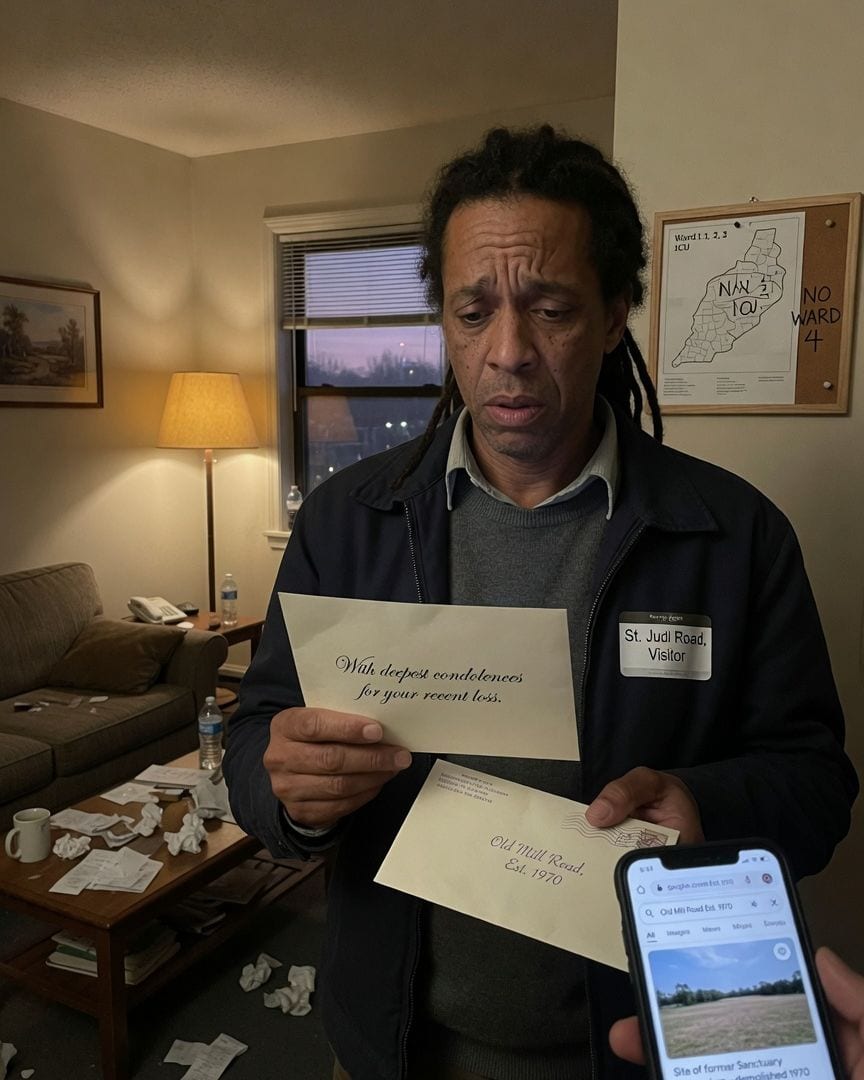
A night nurse I'd never seen touched my arm, 'I'm sorry about your results, Mr. Halloran.' My bloodwork wasn't until Monday. Her badge named a ward not in this hospital.
Leaving St. Jude's, a night nurse I'd never seen stopped me. She apologized for 'my results,' addressing me as Mr. Halloran, though I hadn't had any tests booked. Her kind, tired eyes held a flicker of something profound, leaving me chilled by her impossible words.