My pill bottle empties itself every morning, two tablets gone from the sealed envelope. I live alone in this house.
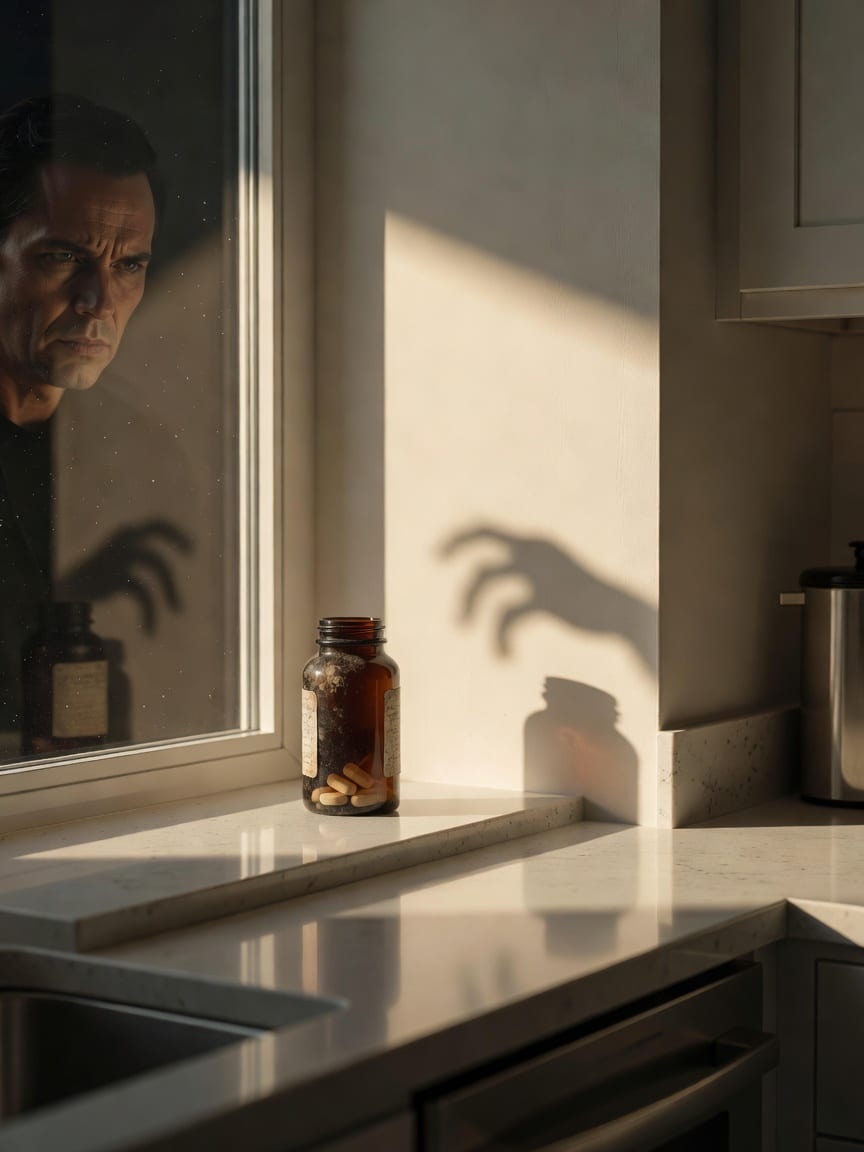
The thrill of a new house, especially one all my own, made me overlook the small things. Like the unlabeled, brown glass pill bottle tucked away on a high kitchen shelf, three-quarters full of small white tablets.
Iris Davenport, the previous owner, must have forgotten it, I thought. I shrugged, put it back, and kept unpacking. The bungalow was charming, a little dated, but full of promise for a fresh start.
Days passed. I was settling in, painting the living room a brighter shade, getting used to the quiet. Then, one Tuesday morning, making coffee, I noticed the pill bottle again. It felt lighter. I pulled it down.
There were definitely fewer pills inside. Two, maybe three, missing. That was impossible. I live alone. I’d secured every window, every door. Still, I chalked it up to my own scattered mind amidst the move.
Maybe I’d miscounted the first time.
The next morning, I pulled the bottle down again, a cold knot in my stomach. Definitely two more gone.
I counted them properly this time, poured all forty-seven small white tablets into a tiny plastic envelope, and sealed it with tape. I even wrote “47 pills” clearly on the front in black marker.
I slid it back onto the shelf, right where I’d found the bottle. No way could I miscount now. No way.
The next morning, the envelope was undisturbed. The tape was perfect. My stomach dropped as I opened it. Forty-five pills. Two were gone. My breath hitched. The house was locked, from the inside.
There were no other entrances to the kitchen I hadn't secured. I stood there, envelope in hand, the silence of the house suddenly heavy.
I carefully placed the envelope back, scrawling "45" below the "47" with a trembling hand. This wasn't sleepwalking. I was a light sleeper, always had been. I needed proof.
That afternoon, I set up my old motion-activated camera, pointing it directly at the shelf, tucked discreetly behind a ceramic plant pot. If anyone was getting into my kitchen, it would catch them.
The next morning, I woke with a jolt, adrenaline already coursing. I practically ran to the kitchen, ripped the camera down, and plugged it into my laptop. The footage was grainy, but clear. Nothing.
Not a flicker of movement in the kitchen all night. Just the empty space, the still air. Yet, when I opened the envelope, only forty-three pills remained. Damn it.
The rational explanations were failing, one by one, like dominoes falling in a silent scream.
A cold dread settled deep in my bones. I started inspecting the kitchen, not for an intruder, but for something…else. I ran my hands over the walls, checked under counters, tapped the floorboards.
My gaze fell on an old, narrow pantry door, nestled beside the refrigerator. It was plain, solid wood, painted the same cream as the kitchen walls, but something about its slightly warped frame caught my eye. It looked… off.
I reached for the knob, a sudden, inexplicable chill washing over me. As my fingers brushed the cold brass, the door seemed to shimmer, like heat rising off asphalt, but without the warmth.
For a split second, the plain cream panel was replaced by a vivid, impossible glimpse: a kitchen identical in layout, but with faded floral wallpaper covering every surface.
A heavy wooden table sat in the center, and an elderly woman, her back to me, sat calmly, lifting a small white pill to her lips. She moved with a slow, deliberate grace. Then, it snapped back.
Just the ordinary pantry door. The solid wood, the cream paint, the slightly warped frame.
I pulled my hand back as if burned, my heart hammering against my ribs, echoing in the sudden, ringing silence of my own kitchen.
I stood frozen in my kitchen, my hand still hovering over the pantry door.
The vivid, impossible image of the old kitchen, the distinct floral wallpaper I’d seen in the quick flash, and the quiet, focused woman at the table, now burned behind my eyes.
The pantry door was solid, ordinary wood again, but the memory of what I saw through it, clear as day, was undeniable.
The next day, I paid Hannah Vance a visit. She was my closest neighbor, a sweet woman in her late sixties with an endless supply of local gossip.
I feigned interest in local utilities, but gently, I steered the conversation to Iris Davenport. Hannah's eyes lit up.
"Poor Iris," she began, shaking her head. "A creature of habit, that one. Especially with her health. Had a terrible condition, came in cycles, you know. Very strict with her medication. Never missed a dose." My stomach clenched.
This was it.
"Did she ever mention anything...odd about the house?" I asked, trying to sound casual.
Hannah shrugged, stirring her tea. "Only that she always said the house had a memory. Silly old thing. Always thought it was a bit dramatic." She chuckled.
I pushed further, my voice low. "Her routine, specifically. Her mornings."
"Oh, Iris was clockwork," Hannah said, her eyes distant. "Always sat right there at her kitchen table"—she gestured vaguely in the direction of my kitchen—"at eight AM sharp. Cup of jasmine tea, her pills. Every single morning, like clockwork.
Never varied."
I mumbled my thanks and left, a cold certainty settling in my gut. The pill bottle, the glimpse of the old kitchen, the woman taking pills – it all pointed to Iris Davenport.
Back home, I tore through the kitchen, a new purpose driving me. Under the counter, tucked behind a stack of old utility bills, I found a faded photograph. It was Iris Davenport.
Her eyes were sharp, kind, and her face held a quiet strength. And there, in the background, unmistakable, was the faded floral wallpaper of the 'wrong year' kitchen.
The utility bills were dated up to three months before I moved in. A paper trail of a life that had just ended, but was, in some chilling way, still continuing.
The house felt different now. The air was heavier, laden with an unseen presence. I started noticing more, feeling more.
A faint, sweet scent of jasmine tea, Iris’s favorite, would waft through the kitchen at precisely 8:05 AM, though I only drank coffee.
Soft, rhythmic footsteps echoed from the empty hallway upstairs every evening at 9 PM, the exact time Hannah had said Iris would retire for the night. The house was alive with her ghost.
I tried to film the pantry door again, hoping to catch the shimmer, the 'wrong year' glimpse, but each time, the camera battery died inexplicably. It wouldn't even hold a charge near that door.
One evening, as I sat at the kitchen table, trying to distract myself by reading through Iris's old mail, the pantry door shimmered again. This time, the old kitchen was clearer, the light softer, almost golden.
The figure of Iris Davenport was there, but she wasn't sitting at the table. She was standing by the sink, turned towards me, her gaze directed straight at where I sat. Her expression was unreadable.
Not menacing, not sad, but deeply, unsettlingly present. I dropped the letters, my breath catching in my throat, my heart a frantic drum against my ribs. The door snapped back to normal, solid and cream.
Later that night, Hannah called, her voice unusually strained. "Alice, dear," she said, her voice dropping, "a word of advice. Some things are better left undisturbed in an old house. You might not like what you find."
The warning was clear, unspoken, and chilling to the bone.
I confronted Hannah the next morning, the faded photograph of Iris clutched in my hand. I described the 'wrong year' pantry door, the glimpses, the disappearing pills. Hannah’s composure finally cracked.
Her eyes darted nervously around my living room, as if something unseen might be listening.
"Iris… Iris told me things," Hannah admitted, her voice hushed, barely above a whisper. "She said the house held onto things. Memories, she called them. She said she'd see… glimpses. Like you did."
Hannah recounted how Iris herself had found a similar unlabeled pill bottle when she moved in, decades ago. Iris attributed it to the previous owner, a Beatrice Hughes.
"Iris, she just refilled it," Hannah explained, her voice gaining a strange, almost resigned quality. "Made it her own. Said it was easier than fighting the house."
Hannah explained Iris’s condition, a rare neurological disorder, required exact daily dosage. And the house, Hannah said, seemed to reinforce this routine even after Iris herself was gone. "She was so particular, Alice. Everything had a time, a place.
The house… it just kept doing it. Even when she couldn't."
My mind raced, reeling. The disappearing pills weren't just Iris's routine; they were a continuation of a pattern. The 'wrong year' door wasn't just showing Iris; it was showing Iris experiencing something.
The jasmine tea, the footsteps – all part of a life that refused to end.
Then Hannah dropped a bombshell, almost to herself. "Iris always said it wasn't just her. She found things too, when she moved in. Things from someone even older. She thought the house… it just likes to keep company."
Hannah’s words echoed in my mind: "It wasn't just her. She found things too." This wasn't just Iris. This was a cycle. I returned home, a new, deeper dread taking root.
I tore through Iris's old belongings, now with a new, frantic purpose. If Iris had found things, maybe I could too.
In a dusty box in the attic, beneath moth-eaten linens, I found a small, intricately carved wooden box. It looked like something from another era.
Inside, nestled on a bed of dried potpourri that still carried a faint, sweet scent, was another pill bottle.
It was made of the same dark brown glass as the one in my kitchen, the same specific size and shape, but this one was clearly much older.
Its glass was almost opaque with age, worn smooth in places, and a faint, irremovable residue clung to the inside. There was no label, but its provenance felt ancient.
As I turned it over, a tiny, almost invisible crack ran along the base, filled with what looked like dried, crumbled paper. I pried it open with a fingernail, revealing a tightly rolled, brittle slip of parchment.
The ink had faded to near illegibility, but one word was clear, written in a delicate, looping script: 'Beatrice.' Beside it, a date: '1937.'
My heart hammered. This wasn't just old; it was decades old. Beatrice. 1937. Iris's predecessor. Beside the box, on the dusty floorboards of the hidden nook, lay a small, brittle photograph.
It showed a different elderly woman, not Iris, but one whose gaze, even in the sepia tones, held a familiar, watchful intensity. In her lap, she cradled a bottle just like the one I held now.
The cycle wasn’t starting with Iris. It had been here long before.
The name 'Beatrice' and the 1937 date shattered my understanding. The house wasn't just haunted; it was a living archive. I searched further, frantic, and found an old leather-bound journal, tucked beneath the loose floorboards of the attic.
It was Iris Davenport’s. Inside, Iris had meticulously documented her own experiences in the house.
The journal entries detailed her initial confusion, then growing horror, as she too witnessed the 'Door Onto The Wrong Year.' She described seeing glimpses of a woman she eventually identified as Beatrice Hughes, the original owner from the 1930s.
Iris wrote about the phantom smell of rosewater – Beatrice's favorite perfume, according to an old neighbor Iris had spoken to – the regular sound of a wind-up clock ticking at odd hours (Beatrice’s strict routine), and even the discovery of a similar, unlabeled pill bottle.
"I refilled it," Iris wrote in one entry, her elegant script filling the page. "It felt… right. Like I was meant to continue her vigil." Iris theorized the house didn't just remember; it expected the routines to be fulfilled.
It was a loop, a pattern, passed from occupant to occupant. Every detail I had experienced – the pill bottle, the specific times, the 'wrong year' glimpses – Iris had experienced too, only she had seen Beatrice instead of me.
The house hadn't just retained Iris's memory; it had absorbed Beatrice's, and then Iris had unknowingly perpetuated the cycle.
Armed with Iris's chilling journal, I returned to the kitchen, my gaze fixed on the pantry door. This wasn't just a vision; it was a physical manifestation of the house's memory.
The faint shimmer, the fleeting glimpse – it was a portal to a retained past. I was no longer seeking escape, but understanding. I began to examine the wall around the pantry door.
It was an old house, and I noticed a subtle seam in the plaster, almost imperceptible, running along the frame.
I fetched a small utility knife and carefully, methodically, began to score the plaster, then pried away a section of the old wood trim.
Beneath, I found not just lath and plaster, but an older, rough-hewn wooden panel, clearly a false wall. With a surge of adrenaline, fueled by a terrifying certainty, I forced the panel open.
Behind it, in a small, impossibly preserved cavity, was an ancient, built-in medicine cabinet. Its tiny, glass-paned door was slightly ajar. Inside, on a narrow shelf, sat several more brown glass bottles, all unlabeled, some with dried, crystalline residue.
One, however, stood out. It was the oldest yet, its glass thick and uneven, almost crude. Affixed to it, with brittle, yellowed tape, was a handwritten label in elegant, spidery script: 'B. Hughes. Daily. 8 AM.'
And below that, a date: 'Oct 19, 1937.' The ordinary explanation died for good. This artifact, this record that could not be, was real, tangible, and undeniable. The house's cycle, generations deep, was laid bare.
I carefully removed the medicine cabinet and its contents, documenting everything. The pantry door, with its false wall removed, now reveals only solid brick. The unlabeled pill bottle from my shelf, the one that started it all, is gone.
The house is quiet. The specific smells, the phantom footsteps, the glimpses through the pantry door – they have ceased. For now. I live in the house still, not out of choice, but because I understand its nature.
I know the house has simply absorbed my knowledge, and waits. The cycle, I realize, is not broken; it merely sleeps, anticipating its next routine.
I now sit in my kitchen most mornings at 8 AM, drinking my coffee, sometimes just watching the light change on the now-empty wall where the pantry door used to be.
I have not refilled the old bottle, nor have I found a new one. I know the house is still around me, a vast, patient memory. I understand that I am merely the latest entry in its long, quiet ledger.
The house is waiting. It always waits. The quiet hum of the house, I realized, was just the sound of its patience.
If this one got to you
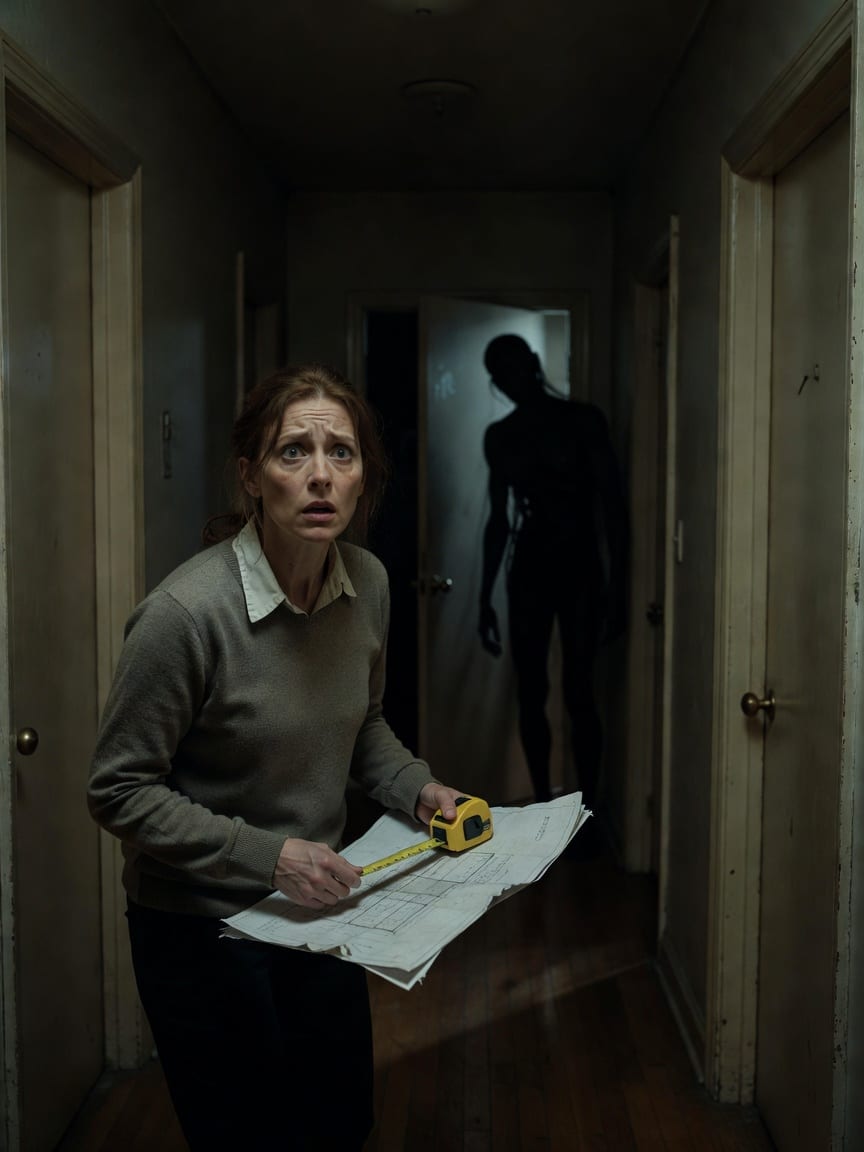
My front door has a dented gate and a dead hydrangea. I walked past it six times, trying to reach the corner shop just a hundred yards away. The pavement kept bringing me back to my own porch, and the shop's light never moved.
My morning started like any other, a quick walk to the corner shop from my home at Number 14, Elm Terrace. But after walking what felt like two minutes, I found myself back at my own front door, the shop no closer. I tried six times, faster and slower, but my street kept compressing, refusing to let me leave.
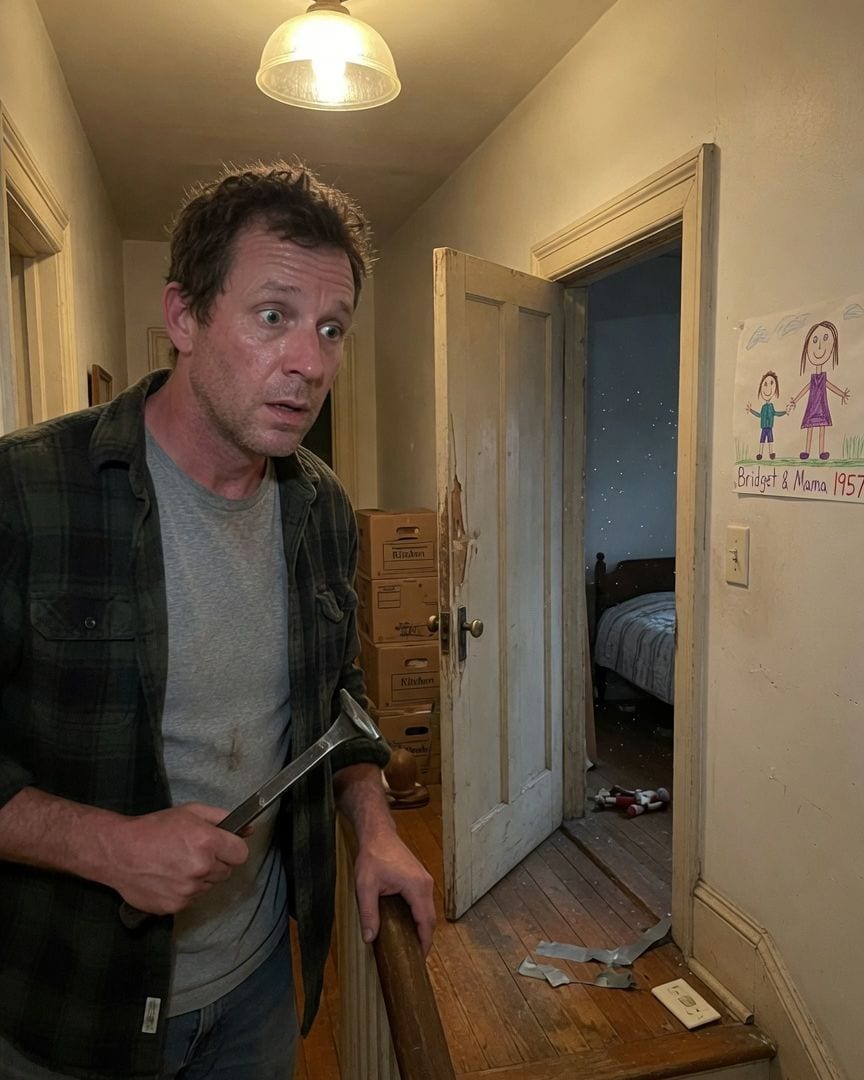
My landing light switches itself off at 9:40 every night. I've watched the switch flick down under nothing, the tape peeled back. The house holds its breath.
My great-uncle's old house was a quiet gift, a place to finally settle. But as I unpacked, a strange worn path on the floorboards led me to a small, barely visible door, perfectly blended into the wall. It was undeniably locked, and felt like a deliberately obscured secret.
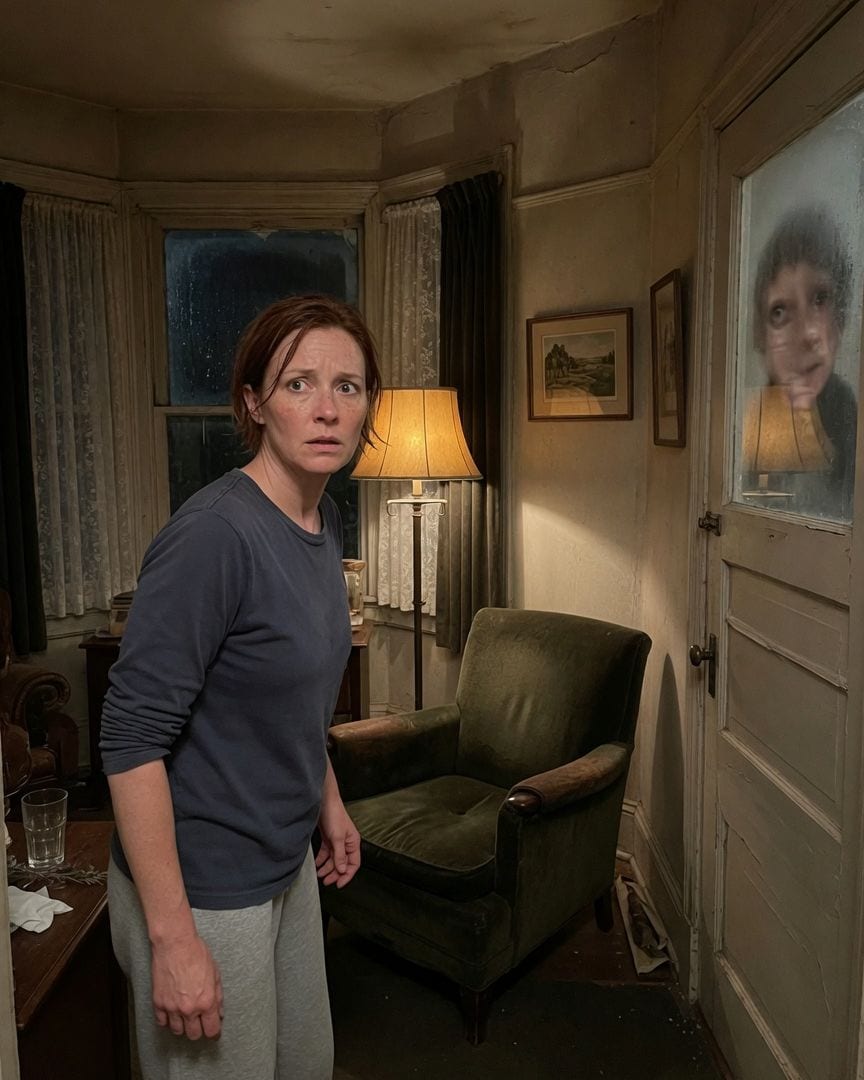
The armchair by the bay window was warm last Tuesday at 9pm. I’ve never sat in it, and the cushion was still settling from a weight that wasn't mine.
I bought this old house for quiet, and most days it's exactly what I needed. But there’s an antique armchair in the living room, deep green velvet, with a permanent hollow from years of use. I’ve never sat in it, yet last Tuesday, I found it radiating a distinct warmth, the cushion slowly settling as if someone had just left.
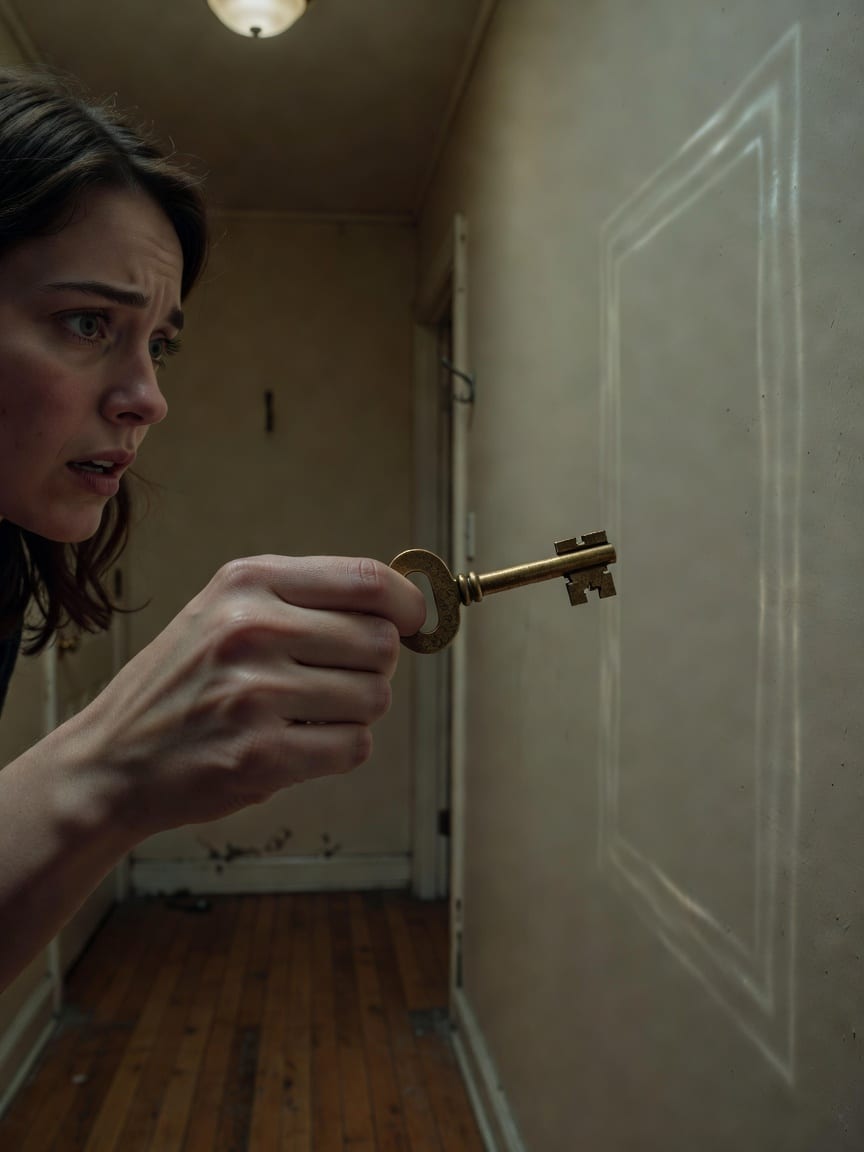
My new house has seven rooms. The removal men counted six. Now one of them asks who's in the locked seventh, on a landing with only six doors.
Moving into my new house, I supervised the removal men hauling boxes. But on the landing, Paul, the senior man, asked about a locked seventh room upstairs, pointing to a blank wall. His quiet certainty, despite the clear absence of a door, filled me with a sudden, icy dread.
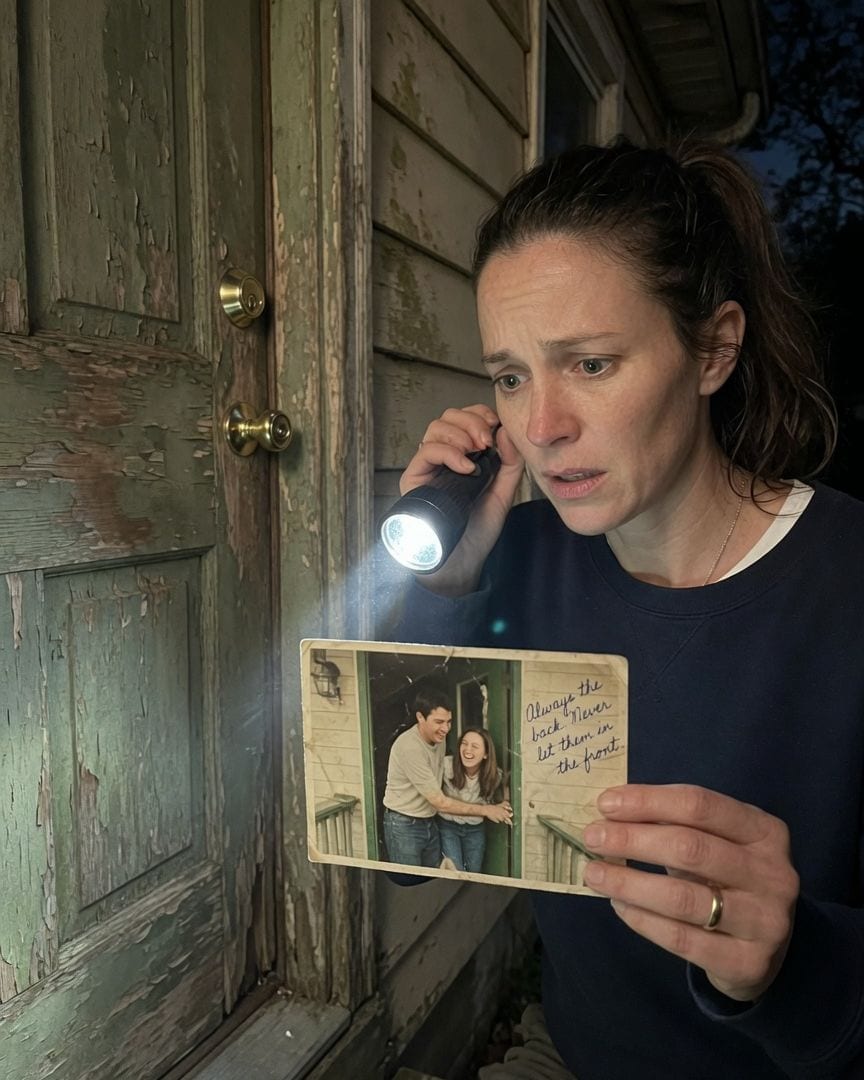
My mother waves us to the front door now. She was missing five days. She says we've always used the front, but the back door, our kitchen door for thirty years, is locked.
My mother, Janet, finally came home after five days, but her overly bright smile and insistence on using the front door felt wrong. For three decades, our family always used the back entrance, which now had a gleaming, new deadbolt. The quiet hum of unease quickly grew into a chilling dread.
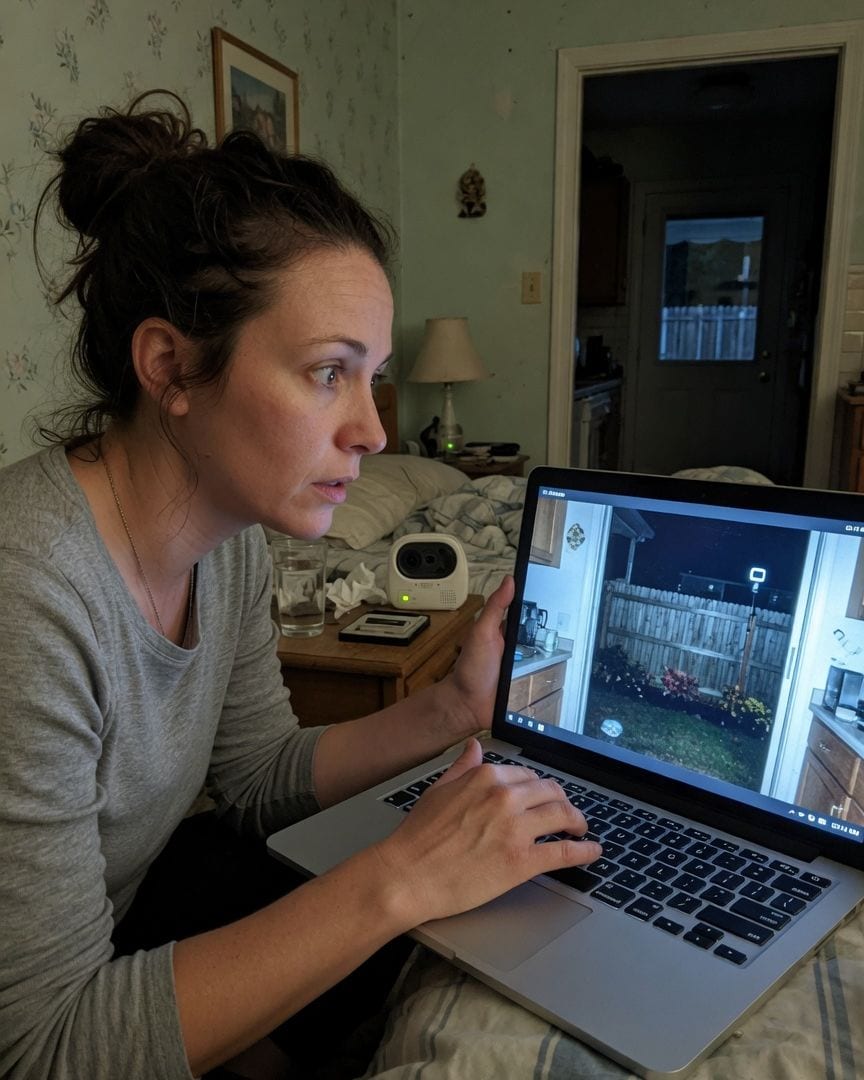
My game camera caught my back door from the inside. For three nights, it showed my door from the yard, getting closer. The last picture is from inside the glass, looking out at the fence.
I had set my game camera on the back fence, aimed at my house, to catch whatever I'd seen moving outside my kitchen window. But the last photo, taken after midnight, showed my kitchen from *inside* the locked back door, looking out.