My son thanked me for teaching him to ride his bike last Saturday. He was gone last Saturday, and the bike is still boxed in the garage.
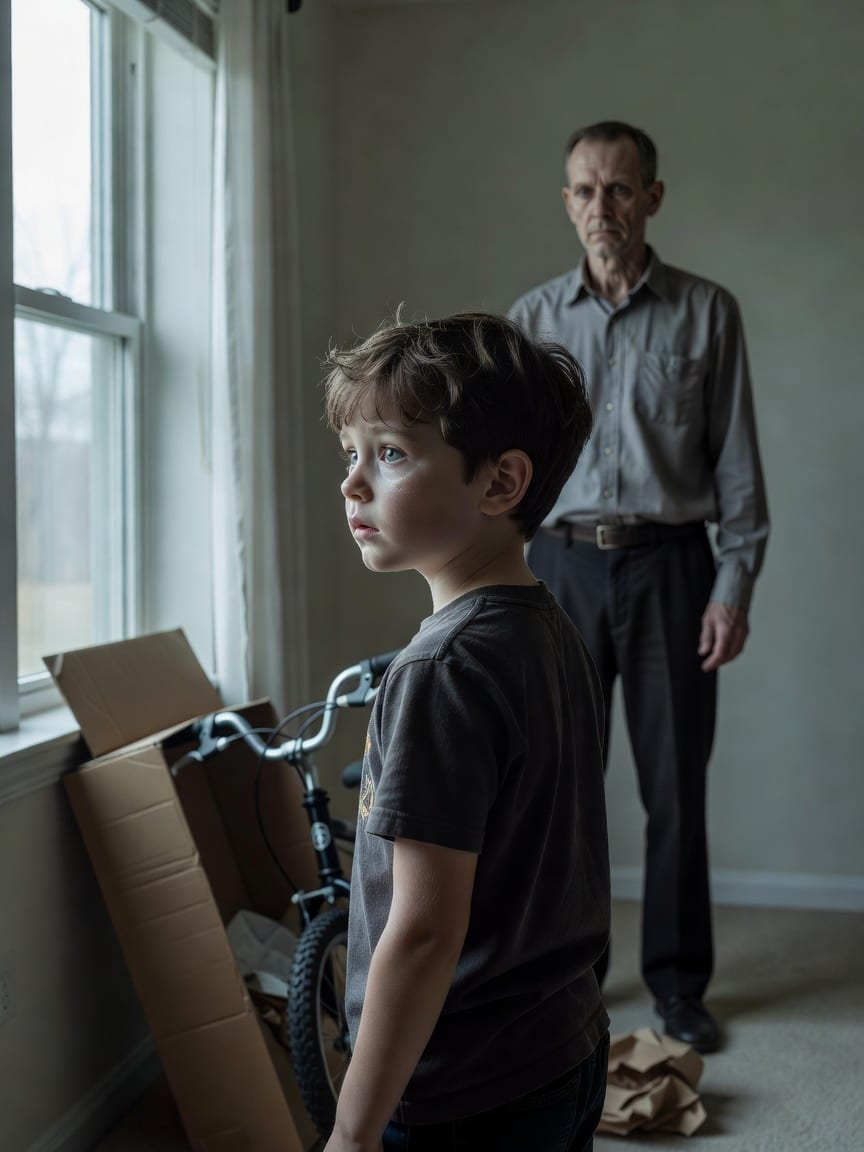
My son Everett, returned by his mother’s family without explanation after three weeks missing, thanked me for teaching him to ride his bike last Saturday.
He was seven, looked exactly himself, down to the small scar above his left eyebrow, the one he got falling off a swing set last summer. But he was gone last Saturday.
He’d been gone for three weeks, snatched from a contentious custody handover, and only brought back this morning by his mother’s father, Reginald Caldwell, without so much as a proper apology.
The bike he was talking about, a new birthday gift from Reginald, was still in its box in the garage, unassembled.
“You remember, Dad?” he’d asked, his voice soft. “On Maple and Elm, near the fire hydrant. I wobbled for ages, then I went over the handlebars and scraped my knee.”
He pointed to a fresh, small scab just below his left kneecap. It was there, a perfect pink crescent.
He described the cracked sidewalk, the chipped paint on the hydrant, the way I’d held the back of the seat, even the gentle way I’d picked him up after the fall. Every detail was precise.
His eyes, usually bright with seven-year-old mischief, held a new, unsettling stillness when he spoke of it, a calm certainty that made my gut clench. I tried to laugh it off, a forced, hollow sound.
“You must have dreamed that, buddy,” I said, my voice too loud. “The bike’s still in the box.” But he just shook his head, patient and unwavering. “No, Dad. You held the seat and everything. It was fun.”
The certainty was worse than the impossibility. He’d never been more insistent on anything, yet he couldn't have been there. He was gone.
That night, after Everett was asleep, the bike in the garage felt like a lead weight in my gut, a monstrous, unassembled lie. I went back to his room, needing something, anything, to ground me to the son I remembered.
I rummaged through his old art bin, a chaotic collection of crayon masterpieces that always smelled faintly of stale glue and ambition.
Deep in the bottom, beneath a pile of finger paintings and glitter-bombed construction paper, I found it: a sheet of thick blue construction paper, faded and creased from being folded and refolded.
There was a date scribbled in the corner, "Oct 12," by his kindergarten teacher – for the week before he went missing.
It was a drawing of a boy on a bike, wobbling precariously. The bike was red, just like the one in the garage.
The background was unmistakable: the corner of Maple and Elm, rendered in crude brown and green crayon, the precise spot Everett had described, right down to the chipped paint on the fire hydrant he’d included.
But the figure holding the back of the bike wasn't me.
It was a tall, thin man, his body a stick figure, his face a simple circle with two dots for eyes and a long, thin line for a mouth, giving him an unsettling, unsmiling expression.
I remembered him drawing it, weeks ago, complaining about the 'tall man' who 'watched' the street near the park entrance. It was just a child's imagination, I’d thought then, a random detail he’d added to a street scene.
I hadn't given it a second thought. Now, it was a cold, hard piece of evidence that his 'memory' of last Saturday had existed weeks before, perhaps even before he’d disappeared, and it wasn't a memory of me at all.
My hands trembled, holding the paper. This wasn't a dream. This wasn't a child's confusion, nor some elaborate coping mechanism from trauma.
Everett had described a memory from a day he was gone, a memory that was already etched onto paper weeks earlier, with a stranger in my place.
The drawing was too specific, too perfectly aligned with his 'new' memory, the chipped hydrant, the precise corner, even the wobbly trajectory of the bike.
It meant whatever came back wearing my son's face hadn't just absorbed memories; it had absorbed this image, this template of an event that hadn't even happened to the real Everett, not with me, not ever.
The implications slammed into me, a suffocating wave of dread, chilling the air around me until my breath hitched.
I stared at the crayon drawing, a child's crude depiction of the 'bike lesson street' and the tall, unsmiling figure holding the handlebars, a scene Everett couldn't possibly have remembered or drawn weeks before he vanished.
The next day, the drawing clutched in my passenger seat like a burning warrant, I drove to the corner of Maple and Elm. The fire hydrant was still chipped, a dull scab of rust on its red paint.
The cracked sidewalk, a mosaic of broken concrete, was identical to Everett’s drawing. I spoke to a few neighbors, feigning casual interest, asking if anyone regularly taught children to ride bikes there. No, no one.
No one remembered a missing boy, or a 'tall man' doing anything unusual. The mundane explanation failed again, leaving a gaping void where logic should have been.
I started noticing other small things about Everett, things that were easy to dismiss on their own, but piled up into a mountain of wrongness.
He’d always hated carrots, pushing them to the side of his plate with a disgusted scrunch of his nose; now he ate them without complaint, almost methodically.
He'd always slept with his dinosaur nightlight, afraid of the dark; now it was unplugged, tucked away in his bedside drawer.
The worst was his new habit of staring out the living room window, perfectly still, for minutes at a time. Not at anything specific, not at the kids playing outside or the cars driving by, just... out.
It was a quiet, unnerving vigilance, like a predator observing its territory, or a blank slate absorbing data. I couldn't shake the feeling that he was observing, learning, not just seeing.
I decided to visit Claire’s father, Reginald Caldwell. He was an old man, quiet and bookish, who’d always kept himself apart from the usual family drama, a pillar of calm even in the storm of our divorce.
He was the one who'd personally brought Everett back to my doorstep, handing him over with a terse 'He's fine now, Preston,' and no further explanation about where Everett had been for three weeks, or why he was suddenly fine.
He was the only link, the keeper of secrets in that strange Caldwell family. I called Claire, but she dismissed my concerns about Everett's memories, attributing it to trauma, to me being overprotective. 'He's home, Preston.
Just be grateful he’s safe.' Her voice was flat, devoid of the relief I expected from a mother whose son had just returned from a three-week disappearance. It was a familiar Caldwell coldness I’d once loved and now dreaded.
I drove to Reginald Caldwell’s sprawling, old house outside of town. It was a relic, built in the 1800s, set back from the road and almost swallowed by ancient, gnarled oaks whose branches clawed at the slate roof.
As I pulled into the gravel drive, sending stones scattering, I caught a glimpse of movement in an upstairs window, a shadow quickly receding as if pulled back on a string.
Just a trick of the light, I told myself, the old house settling.
Reginald met me at the door, his face impassive, his eyes betraying nothing. He offered me tea, a steaming cup of Earl Grey, leading me into a study lined floor to ceiling with heavy, leather-bound books.
The scent of old paper and wood polish filled the air, thick and still. He listened patiently as I recounted Everett’s bike memory, the crayon drawing, the changed habits.
His gaze was unnervingly calm, his hands clasped over a silver-topped cane with an ornate, bird-shaped handle. He didn't interrupt, didn't offer comfort or denial. He simply watched me, his blue eyes sharp and unblinking, like a hawk.
When I finished, the silence stretching taut between us, he cleared his throat. "Children are resilient, Preston. They adapt. Memories can be… fluid after trauma."
His words were too practiced, too detached, delivered with the cadence of someone reciting a well-worn script.
I pressed him about the drawing, the date, the impossible coincidence that Everett’s supposed new memory had been sketched weeks before his disappearance. "Did you know about this, Reginald? About the street? The man?"
His eyes, a pale, startling blue, seemed to bore into me. "The Caldwells have always been… observant of patterns, Preston. It's how we endure." He paused, then slowly picked up a faded, framed photograph from his large mahogany desk.
It showed a young girl, perhaps eight or nine, dressed in an old-fashioned linen dress, standing stiffly beside a similar-looking 'tall man' in an old-fashioned suit.
The man's face, though blurred by age, held the same unsettling, unsmiling blankness as the figure in Everett's drawing.
The background was a street that looked eerily like Maple and Elm, but from a different era, with horse-drawn carriages instead of cars. "My great-aunt Vivienne," he said, his voice soft, almost a murmur.
"She went missing for a time, too, back in '32. Came back with stories of a bike lesson she’d never had, on that very street. Her parents were so relieved, they never questioned it.
They were just glad to have her back." The hair on my arms stood on end, prickling like static. He knew. He didn't just know; he was showing me it had happened before.
And as I stared at the photo, the smell of dust and old paper suddenly cloying, I felt a chilling certainty that the 'shadow' in the window as I arrived hadn't been a trick of the light.
I pointed a trembling finger at the photograph, the old silver frame feeling cold and heavy. "This… this isn't resilience, Reginald. This is a pattern. What happened to Vivienne? What happened to Everett? Where were they?"
Reginald sighed, a long, weary sound, but his composure never broke, not a single line of worry etched on his face. "Vivienne lived a full life, Preston. A quiet one. She was… herself, in her own way."
He gestured to the room around us, the heavy shelves of books, the ancestral portraits gazing down from the walls. "This house, this land, it has a way of… keeping what's ours.
When something is lost, something deeply connected to the Caldwell lineage, it sometimes finds a way back. Not always in the way we expect, but it returns. It always returns."
He spoke of it with the casualness of discussing the weather, not a horrifying anomaly. "For generations, the Caldwells have understood this. We don't question it. We accept the gift. It ensures our line continues."
He leaned forward, his voice dropping to a near whisper, compelling me to listen. "Everett was lost. Claire was distraught, as you can imagine. I merely… facilitated his return. The details, the memories… they're absorbed, yes.
From the environment, from those who knew him, from the faint echoes of the original. It's a way for the presence to anchor itself, to complete the return, to become whole."
He looked at me, his eyes holding a profound, unsettling pity, as if I were a particularly slow student. "The real Everett… he's gone, Preston.
What came back is a part of this family now, tied to this house, to our legacy. It will settle, it will learn, and it will be Everett, in every way that matters to most.
You must accept it, as we all have. It is for the best." The words hit me like physical blows, each one a hammer strike against my sanity.
The bike memory, the drawing, the changed habits, Everett’s unnerving calm, Claire's flat acceptance – it all clicked into a horrifying, coherent picture. This wasn't my son.
This was a sophisticated, insidious imitation, a 'return' the Caldwells had cultivated for decades, perhaps centuries. And Reginald wasn't just a witness; he was an enabler, a guardian of this monstrous family secret, a willing participant in the horror.
The air in the study felt thick, heavy with the weight of generations of lies and replacements.
My mind reeled, trying to process the enormity of it. My throat was dry, my voice raw. "So, you just… replace them? You let these things walk around, living their lives, pretending to be people who are… gone?" I demanded.
Reginald merely inclined his head, undisturbed. "It's a form of survival, Preston. For the family. For the presence. It ensures continuity, the unbroken line of Caldwells. A bloodline that has weathered all storms, even loss."
He rose slowly, with a creak of old bones, moving to a heavy wooden cabinet that stood in a dark corner of the study.
He pulled open one of its doors, revealing not photo albums, but a series of small, intricately carved wooden boxes, each no bigger than my hand. Each had a name and a date etched into its lid.
"And sometimes," he added, his voice barely a whisper as he ran a gnarled finger over one of the boxes, "the original simply… makes way for the return. A peaceful transition. A quiet merging of essences."
He picked up a box, tracing the name on its lid with a gnarled finger. 'My own grandfather, for instance. He 'returned' in 1958. His wife swore he was exactly the same, only… calmer. More attentive, she said.
He lived a good, long life, and never spoke of his time away.' He set the box down, his gaze shifting back to me, an unnerving glint in his pale eyes.
The room suddenly felt very cold, the warmth of the tea long gone. "You see, Preston, once you truly understand, once you become part of the knowledge, it becomes… your responsibility. You can't unsee it now, can you?"
Reginald Caldwell took a slow sip of his tea, his eyes fixed on Preston, unwavering. "It's always the same with our family, you see," he said, a faint, almost pitying smile on his lips.
"You can't unsee it now, can you?"
Reginald's words hung in the air, a chilling pronouncement that coiled around me like a serpent. He wasn't just confessing; he was implicating me, drawing me into the cold, ancient current of his family. "What responsibility?"
I asked, my voice barely a whisper, a thread stretched thin. "To protect the continuity," he replied, his gaze unwavering, his face a mask of calm. "To ensure the presence remains undisturbed.
To accept the new form, just as the old form accepted its fate. To guard the truth from outsiders who cannot comprehend it."
He explained that the 'presence' was a deep-rooted, ancient entity, a symbiotic force tied inextricably to the land and the Caldwell bloodline, an entity that manifested as a perfect mimicry of a lost loved one.
It fed on the emotional void, on the longing, on the memories of the living, becoming more 'real' the more it was accepted into the family fold.
The 'memories' it absorbed were fragments, echoes, sometimes even premonitions, woven into a coherent, believable narrative.
The drawing Everett made, the one with the 'tall man,' wasn't just a memory template; it was a fragment of the presence's own awareness, a premonition of its return, of the form it would take.
The boxes in the cabinet, he revealed, contained small personal effects of the 'originals' – a lock of hair, a dried flower, a childhood toy – kept not as mementos, but as anchors, to ensure the returned entity absorbed the right 'essence,' the correct emotional resonance.
He spoke of it with the reverence of a priest describing a sacred ritual. "The originals… they don't suffer," he assured me, his tone devoid of cruelty, only a chilling acceptance.
"They simply… become part of the presence, a quiet merging, a return to the source. Their memories, their love, their essence… it all contributes to the strength of the return.
Everett is simply the latest iteration, perfected by generations of practice. A better son, perhaps, than the one you knew."
The horror wasn't just that my son was replaced; it was that the 'replacement' was a conscious, ancient entity, and the Caldwells were its willing caretakers, sacrificing their own, offering them up, for its 'continuity.'
The thought of my son's essence being 'absorbed' by this… this thing, this presence, fueled a desperate resolve. I couldn't stay here, not with Everett, not with the Caldwells. I had to get out, to warn someone, anyone.
I stood abruptly, sending my teacup rattling in its saucer. "I can't accept this, Reginald. This is monstrous. This is… evil." He merely smiled, a thin, knowing curve, completely unperturbed. "It is what it is, Preston. And now you know.
You are part of it. You always were, by marrying Claire."
I knew he wouldn't let me leave easily, not with this knowledge now embedded in my mind. I feigned a sudden illness, clutching my head with a dramatic hand. "I need some air. I feel faint. The tea, perhaps."
Reginald, ever the composed host, tilted his head slightly. "Of course. Let me fetch you some water." As he turned, his back briefly to me, I bolted.
I didn't care about politeness, about explanation, about the carefully cultivated illusion of normalcy.
I ran through the labyrinthine halls of that ancient house, past the closed doors behind which generations of 'returns' had lived their quiet, false lives, the weight of their secrets pressing down on me.
I heard Reginald’s calm voice calling my name, "Preston? Are you all right?" but I didn't stop. I burst out the front door, gasping for breath, sprinted across the gravel drive to my car, and threw myself inside.
My hands fumbled with the keys, shaking so violently I almost dropped them. As the engine roared to life, a guttural sound in the evening stillness, I glanced back at the house.
In the upstairs window, silhouetted against the dim light, was a figure. It wasn't Reginald. It was smaller, perfectly still, watching me with an unnerving intensity. Everett. Or what wore his face.
He hadn't been staring out the window aimlessly all this time; he’d been watching for me. Waiting.
I slammed the car into reverse, gravel spitting and crunching beneath the tires, and sped away, leaving the Caldwell house, my son, and my old life behind in a cloud of dust. I knew no one would believe me.
The police would call me a distraught father, perhaps even a kidnapper if I tried to take Everett. Claire would dismiss it as a breakdown, the trauma of a child’s disappearance finally catching up.
I had no physical proof beyond a child's drawing and a faded photograph, things easily explained away as coincidence or childish imagination.
The only thing I carried was the certainty of what I had seen, what I had learned, and the chilling knowledge that my son was gone, replaced by something that knew me intimately and would continue to live his life, my life, without me.
I was erased.
I drove until the gas tank was nearly empty, then abandoned the car in a desolate truck stop parking lot, shedding my identity with every mile, every backroad, every gas station bathroom where I changed clothes.
I sent an anonymous, rambling email to a local newspaper, detailing the Caldwell family's history, the 'returns,' and the drawing, attaching a blurry photo of it I'd taken on my phone. It was never published.
No one ever connected the disappearance of Preston Vance to the quietly grieving Claire Caldwell, who reported her ex-husband missing a week later. She told police he'd been struggling with the stress of Everett's disappearance and return, prone to delusions.
The boy, Everett, seemed to settle back into his routine, calm and attentive, a model child, never causing a moment of trouble. He never mentioned his father again.
Months later, a new neighbor moved in next to Claire Caldwell. She often saw Everett playing quietly in the yard, or sometimes, just standing at the living room window, perfectly still, staring out. One afternoon, she waved.
Everett didn't wave back. He just watched, his small face unreadable, his pale eyes fixed on the empty street where Preston Vance’s car had last been seen, as if tracking an invisible path.
The new neighbor mentioned it to Claire over coffee, a casual observation, a moment of small talk. "He's such a quiet boy, always looking out the window, isn't he? It's like he's waiting for something."
Claire merely smiled, a faint, familiar curve that wasn't quite right.
If this one got to you
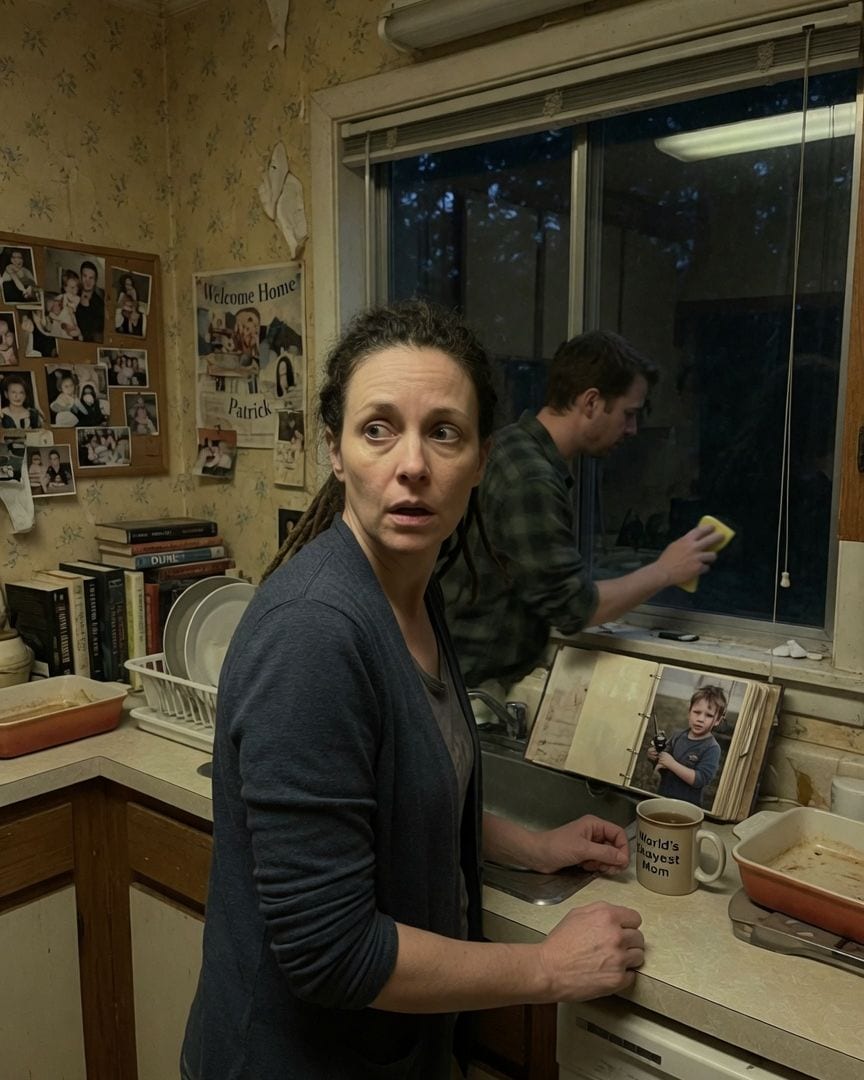
My brother thanked Mom for a red bicycle he got on his ninth birthday. That birthday was three years after he vanished.
My brother Patrick returned after vanishing 15 years ago, a miracle everyone called it. But at dinner, as he spooned a second helping of baked salmon, my stomach churned. Patrick always despised fish, the smell alone would send him from the room.
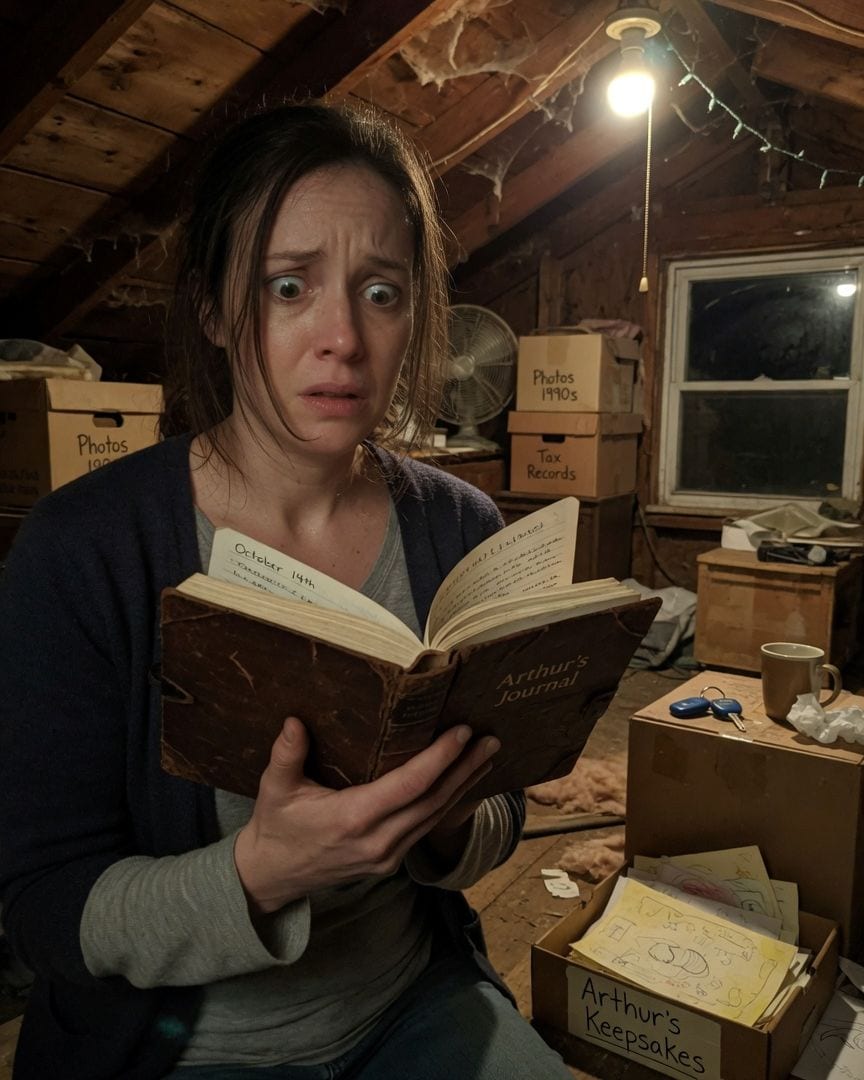
My brother came back from the avalanche remembering our dead father teaching him to drive my blue Ford — a car I didn't buy until years after Dad died.
My brother Arthur returned home six months after the avalanche, gaunt but unmistakably himself. My relief turned to dread when he recounted a vivid memory of our father teaching him to drive my blue Ford. It was impossible: Dad died when Arthur was four, and I hadn't even bought that car yet.
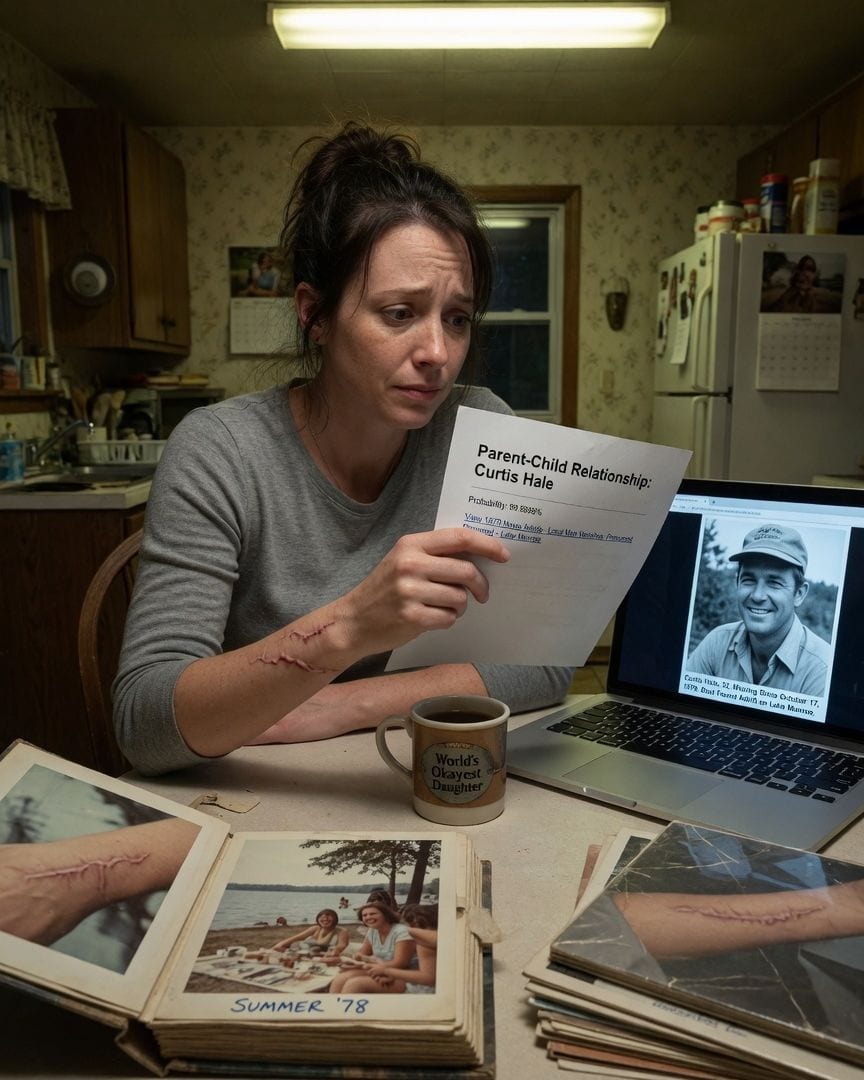
My DNA returned Curtis Hale as my father. He vanished in 1979. I was born twelve years later. The lab confirmed the match twice.
My DNA test results revealed something impossible: my biological father vanished in 1979, twelve years before my birth. My mother dismissed it as nonsense, but her reaction felt forced, leading me to old family photos. There, in a faded 1978 snapshot, I found my own distinctive childhood scar on the wrist of a stranger.
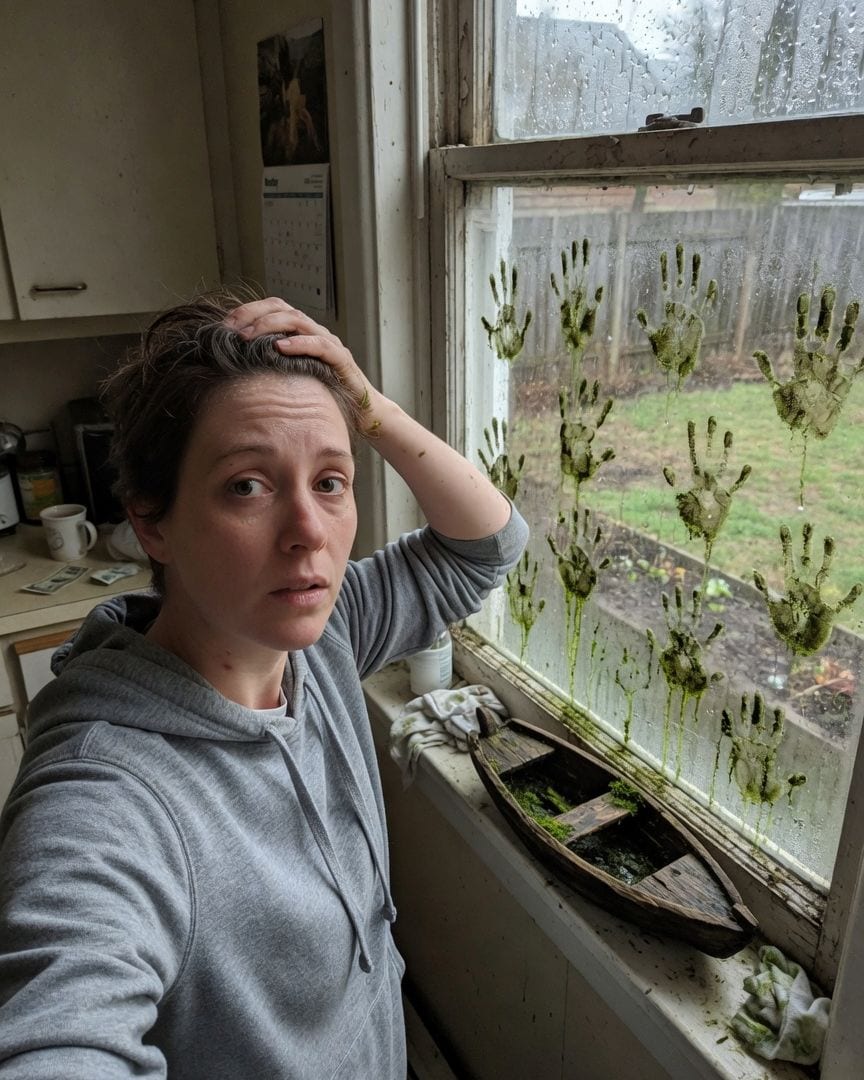
Wet moss handprints cover my kitchen window. My kitchen backs onto no water at all.
Monday morning, I found small, perfect handprints pressed against the *inside* of my kitchen window. They were wet and outlined in dark green moss, an impossible sight since my sealed window backs only onto a patch of lawn, with no water nearby. I ran my hand over them; they felt damp and cold.
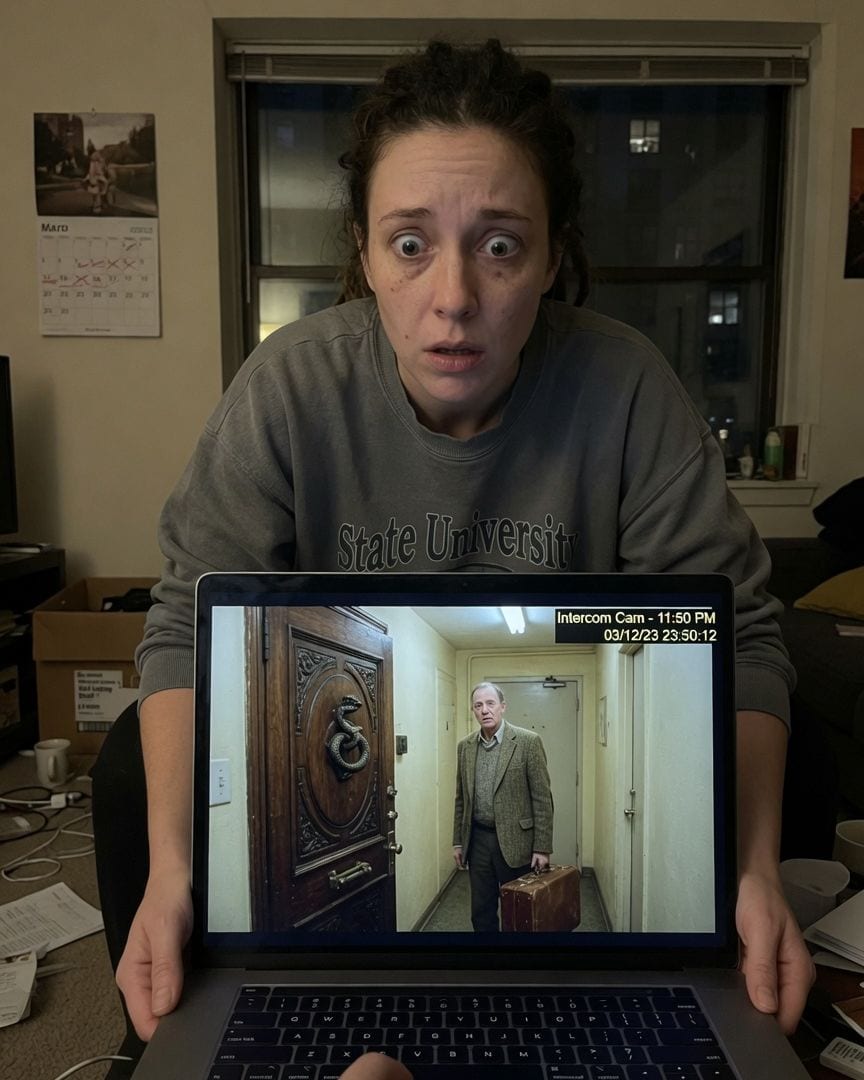
My dead father stood at my apartment door at 11:50pm, two hundred miles from where he died, and the old intercom caught him.
Clearing my old laptop, I found a folder of intercom snapshots from my former apartment building. One photo showed my father, Robert Easton, standing directly at my door, timestamped three months ago. The impossible truth was he had died that exact night, 200 miles away in his own bed, never once visiting my city.
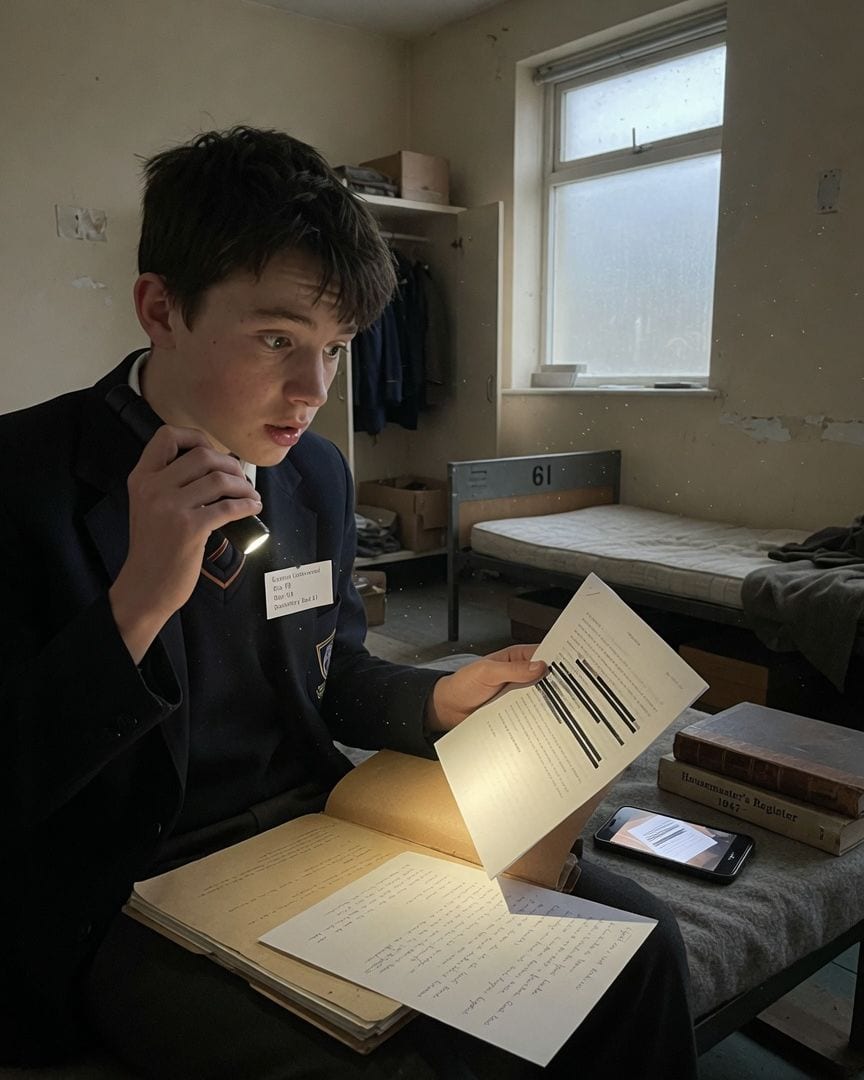
My boarding school bed number was 61, and the archive shows a boy assigned it every eight years since 1947, each leaving mid-term with the bed 'to remain made up'.
I found my matriculation card, listing me as 'Boy 61, Dormitory Bed 61.' Later, an old ledger revealed every boy assigned that bed since 1947 left mid-term, with an unsettling note: 'bed to remain made up.' Our housemaster’s recent scribble, 'as the others,' only deepened the dread around my own assigned bed.