My uncle answers 'hello' now. He disappeared for nine days. He just asked who taught me 'go ahead'.

Uncle Theodore Marsh came back after nine days, just walked into his quiet house like he’d been to the store.
The relief that washed over our family was a tidal wave, drowning out all the questions about where he’d been, what had happened. He looked fine, a little thinner perhaps, a bit tired, but otherwise the same Theodore.
We were all so damn grateful. Until I called him for the first time.
I’d hit his number, my thumb already hovering over the button to hang up because he always, always let it ring twice before picking up with the same gruff, familiar greeting.
Forty years as a truck driver, that old CB radio habit was etched into him. “Go ahead,” he’d always say, like he was back on the highway, headset on. But this time, it was immediate. The phone barely rang once.
"Hello?" he said.
Just 'hello'. Ordinary. Perfectly normal. And utterly wrong.
My throat tightened. "Uncle Theodore? It's Monica." "Monica. Hello." His voice was flat, even. Not a trace of his usual booming warmth. I told myself it was the shock, the trauma of whatever he’d been through.
Nine days, no contact, no explanation. Who wouldn't be changed?
A few days later, trying to lighten the air, I called him again. When he picked up, I couldn’t help myself. I used his old line, trying to tease the familiar Theodore out of him.
"Go ahead, Uncle," I said, a smile already forming on my face. There was a beat of silence on the line. A long, chilling silence. Then his voice, flat and unamused, cut through the quiet.
"Who taught you to say that?" My smile died. My hand actually clenched around the phone. He said it like he'd never heard it before. Like I was the one who was wrong.
My mind scrambled for an explanation, something simple, something to make the dread recede. Maybe he’d hit his head. Maybe he was just tired of the old joke.
But the question, so devoid of his usual warmth, echoed in my mind. He’d forgotten his own signature phrase, or worse, he was pretending he never knew it.
And suddenly, the relief I’d felt started to curdle into something else entirely.
I visited Theodore a week after that phone call. His house was the same, smelled the same, but he moved through it like a polite stranger. Cordial, almost too polite.
He offered me coffee, black, just how he always liked it. But when he handed it to me, I watched him stir his own. He picked up the spoon with his left hand.
Theodore Marsh, fiercely right-handed for sixty-eight years, stirring his coffee with his left. It was such a small thing, I almost convinced myself I’d never noticed before. That I was just seeing things.
Then I looked at his favorite armchair. It had always been angled towards the big front window, a perfect spot for watching the street, for catching the afternoon sun. Now, it was turned.
Faced the fireplace, facing away from the light. Another small shift. Another detail that scraped at the edge of my sanity.
I tried to spark a memory, something familiar, to pull him back. "Remember that old fishing tackle box, Uncle? The rusted metal relic we always joked about? You kept it so organized, every lure in its place."
His smile faltered, just for a flicker. A shadow crossed his eyes, something unreadable, gone as quickly as it came. He just nodded, a slight, almost imperceptible shrug. "Yes, well. It's in the garage.
Haven't had much use for it since retirement."
Later, while he was in the kitchen, humming some tune I didn’t recognize, an irrational urge pulled at me. I slipped into his garage. The air was cool, smelling of old oil and damp concrete.
The tackle box sat on his workbench, a familiar shape in the dim light. But when I opened it, my stomach dropped. It wasn't the meticulously organized shrine I remembered. Lures were jumbled, lines tangled.
A chaotic mess where once there was order. And nestled among the disarray, where his favorite bass lure, a shiny silver spinner, should have been, was a single, smooth, dark grey stone.
It was perfectly oval, polished, and hummed faintly with an almost imperceptible vibration against my fingertips. It felt unnaturally warm, like it had been sitting in the sun, but the garage was cold.
I held it, turning it over and over. What the hell was this? Theodore collected old coins, antique tools, not…rocks.
I sat alone in my car, the strange stone clutched in my hand. My engine idled, the radio a low drone. It was too smooth, too perfect, too utterly wrong for Theodore. He wasn't a collector of geological curiosities.
I knew every detail of his life, his hobbies, the specific type of moss he hated in his lawn. This wasn't a river stone, not something you’d just pick up.
It pulsed with a faint, internal warmth, a low, almost inaudible hum against my palm, a vibration I could feel deep in my bones. A sudden jolt of pure, primal dread shot through me. My breath hitched.
I dropped it onto the passenger seat with a gasp, startled not by the clatter against the plastic, but by the sudden, undeniable certainty that this was not merely a rock. This was something else entirely.
Something living, something that didn't belong to the uncle I knew. Something that shouldn't exist.
For days, I obsessively researched the stone. I scoured geology forums, local history sites, even old occult archives online. I posted pictures, described the warmth, the hum. The internet, in its infinite wisdom, offered nothing.
It was just a smooth rock, online databases insisted. No known mineral composition like that, no natural formation perfectly oval. But it wasn’t. It couldn't be. This wasn't some geological fluke. My gut screamed it.
I began observing Theodore with a chilling new clarity, like a wildlife photographer tracking a rare, dangerous animal. He now drank his coffee with cream, a habit he’d always disdained, claiming it 'ruined the taste'.
He avoided old photo albums I subtly brought out, steering conversations away from our shared past, his eyes glazing over if I mentioned a specific memory.
When I mentioned the tackle box again, trying to gauge a reaction, he just shrugged, saying he 'tidied it up' after retirement and probably just forgot about a few things. His answers were always plausible, always calm. Too calm.
I tried talking to other family members. My aunt, his sister, just sighed, saying Theodore was "settling into retirement," that "his priorities changed."
My cousins dismissed my concerns, attributing Theodore’s changes to the quiet shock of his retirement, or the vague 'trauma' of his missing days.
"You know Uncle Theodore," my cousin David said, "Always a bit set in his ways, maybe the nine days just…loosened him up a little." No one saw it. Or maybe, no one wanted to see it.
I felt a growing, suffocating isolation, the only one who saw the cracks, the subtle, terrifying shifts in the landscape of his life.
Then, I remembered Constance Abbott. Theodore’s elderly neighbor, lived just a few doors down. Constance, a quiet woman who lived alone, had always had a reputation for 'seeing' things.
For noticing details others missed, for having a sixth sense about the rhythms of the town. She was a bit of an eccentric, always gardening, always watching.
A flicker of desperate hope ignited in me, a crazy, last-ditch effort to find someone, anyone, who might see what I saw.
I drove past Constance Abbott's house, debating whether to stop. My hand hovered over the turn signal, my heart thrumming a panicked rhythm against my ribs. I felt like a stalker, creeping around my own family. This is insane, I told myself.
You're imagining things. Just as I was about to dismiss the whole idea and drive straight home, I saw it: Theodore’s familiar, dark blue sedan parked in Constance’s driveway. A cold knot tightened in my stomach.
What the hell was he doing there?
I pulled over a block away, killed my engine, and watched. The windows of my car fogged slightly with my breath. The street was quiet, just the rustle of leaves and a distant dog barking.
Every minute stretched into an eternity. After a tense twenty minutes, Theodore emerged from Constance’s front door, carrying a small, wrapped package, like he’d just collected a casserole or a freshly baked pie.
He walked down the path, his gait steady, unremarkable. He paused at his car, fumbling for his keys. Then, slowly, his gaze swept across the street.
My breath caught in my throat. His eyes, dark and flat, landed directly on my parked vehicle. There was no flicker of recognition, no surprise, no narrowed suspicion. Just a flat, almost unnerving stillness in his expression.
It was a look that seemed to see through me, past me, yet simultaneously knew I was there, observing him. It wasn't a challenge, not a warning. It was something far colder.
He held it for a beat too long, that unnerving, knowing stare, then got into his car and drove away. No wave, no sign. Just the quiet hum of his engine fading into the distance.
I felt a chill crawl up my spine that had nothing to do with the temperature. I hadn’t been hunting for answers; I’d been seen. I was exposed.
The next day, I went directly to Constance Abbott's house. I didn't even bother to call first. My hand was shaking as I knocked on her door. It felt like I was walking into a different reality.
Constance opened the door, her eyes calm, a faint, almost serene expression on her face, as if expecting me. "Come in, Monica," she said, her voice soft, unhurried. "I knew you'd come."
My stomach clenched. I stepped inside, the air in her dimly lit living room thick with the scent of old paper and dried lavender. I sat across from her, on a floral sofa that seemed to swallow me whole.
My hands trembled, clasped tight in my lap. "It's Theodore," I began, the words tumbling out, desperate and raw. "He's... different. The 'go ahead,' his coffee, his hands... I feel like I'm losing my mind. No one else sees it."
Constance nodded slowly, a knowing look on her face, like she’d heard this story a hundred times before. "He's not Theodore, dear. Not the one you knew."
My breath hitched. The air felt thin, suddenly. "What do you mean? What is he? Who is he?"
Constance shook her head. "Not 'what.' 'Who.' Or rather, 'what' it wears. It happened before, you see. To Mr. Henderson, down the road. Decades ago, after his wife passed.
He 'came back' from that trip to the city, and everything was just... off. Just like Theodore. He'd always hated cats, swore they were the devil's spawn, suddenly he adored them, had three strays sleeping on his porch.
Always wore his watch on his left wrist, started wearing it on his right. Little things. But they added up."
She reached for a dusty photo album on the coffee table between us, its cover worn smooth with age. She opened it to a faded, sepia-toned picture.
It showed a gaunt man sitting on a park bench, intently reading a book. He looked perfectly normal, almost peaceful. "That's Mr. Henderson," she said, her voice barely a whisper. "Just after he 'came back'."
I leaned closer, my heart thumping against my ribs. My eyes focused on the book in his hands. My blood ran cold. Mr. Henderson was holding the book upside down. Intently. As if it made perfect sense.
On the back of the photo, in shaky, spidery ink, a date was scrawled: 'July 1978. Henderson, returned.'
The pieces clicked. Horrifyingly. Theodore's 'hello' instead of 'go ahead.' His left hand stirring coffee. The cream. His armchair facing the fireplace. It wasn't random. It wasn't trauma. It wasn't just him getting older. It was a pattern. A reversal.
A goddamn blueprint.
I felt a wave of nausea, cold and sharp. "So it's happened before?" My voice was barely a whisper.
Constance nodded, her gaze steady, unflinching. "And it'll happen again. It always does. It's been happening for a long, long time, Monica. You just have to know what to look for."
I gestured vaguely around the room, desperate for something concrete. "But... why? How? What is it? What does it want?"
Constance leaned forward, her voice dropping to a whisper so low I had to strain to hear it. The air in the room suddenly felt heavy, thick with unspoken things. "There's a place. Near the old abandoned quarry.
They filled it in years ago, claimed it was unstable, but the spot… the spot is still there. Hidden. Deep. That's where it happens. Where they go, and something else comes back."
She paused, her gaze intense, piercing, like she was looking right through me. "The quarry, Monica. That's where Theodore went. That's where Mr. Henderson went. And others, I'm sure."
Then, Constance slowly lifted her left hand, turning it over, palm up. On the back of her hand, just above the wrist, was a faint, almost invisible scar. It was tiny, perfectly circular, and unnervingly smooth to the touch.
Like polished stone. My breath caught. It was identical to the texture of the stone I had found in Theodore’s tackle box. The same impossible smoothness. The same unsettling perfection.
"It leaves a trace," Constance whispered, her eyes locking onto mine, holding me captive. "And it waits for you to see it."
The dread propelled me. I drove straight to the old quarry, a place long abandoned, overgrown with decades of wild scrub and forgotten things. Constance’s directions were precise, etched into my memory.
I pushed through thick brush, thorns tearing at my jeans, my heart hammering against my ribs like a trapped bird.
The air grew stiller the deeper I went, the sounds of the distant highway fading, replaced by the frantic pulse in my ears.
Then I found it. Hidden beneath a tangle of ancient vines, almost like an open wound in the landscape. A small, circular patch of earth, unnaturally dark and smooth, almost like polished obsidian.
It was utterly devoid of vegetation, nothing grew there, not even weeds, as if the soil itself was dead, or worse, something else entirely.
Surrounding it, barely visible under decades of grime and lichen, were faint, repeating patterns carved into the rock face – symbols that looked ancient, alien, yet somehow familiar, echoing the perfect geometry of the stone I’d found.
It wasn't a random spot; it was a nexus, a doorway.
The stone in my pocket, Constance’s scar, the inverted habits, Mr. Henderson’s upside-down book, Theodore’s 'hello' – it all snapped into place with horrifying coherence.
The thing that came back wasn't a monster in the traditional sense, no fangs, no claws. It was a process. A silent, perfect replacement. Theodore was gone, absorbed, consumed.
And whatever wore his face was a continuation, an extension of this place, integrating itself into human society by perfectly mimicking its targets, leaving just enough of a 'reversal' for those who knew to recognize the change.
I hadn't stumbled upon a mystery; I had walked right into a pattern that had always been there, quietly unfolding, older than the town itself.
I tried to explain it to my family. I showed them the strange stone, its faint hum barely audible to me now, but undeniable against my skin. I told them about Constance, about Mr. Henderson, about the quarry, the patterns.
My aunt listened patiently, her eyes kind, then gently suggested I was under stress, imagining things, that the stone was just a pretty rock I’d found.
My cousins, bless their oblivious hearts, dismissed it as an elaborate conspiracy theory, something I’d read on the internet. They couldn't see it, or wouldn't.
The 'returned' Theodore was too perfect, too kind, too much like the man they remembered, save for those subtle, easily dismissed changes. The entity had integrated flawlessly. It wasn't trying to scare anyone, just... replace them.
I realized the terrifying truth: I couldn't fight it. I couldn't expose it. The pattern was too deep, too quiet, too woven into the fabric of their lives, into the very landscape of this town. No one would believe me.
They didn't want to. I considered leaving, packing my bags, driving away and never looking back. But the thought of abandoning my family, even to this subtle, insidious wrongness, tore at me.
And the quarry, the smooth, dark earth, seemed to hum in my memory, a silent, magnetic pull that echoed the stone in my pocket.
I found myself returning home, the weight of my knowledge a physical burden, heavier than any rock. The cold, knowing look he’d given me outside Constance’s house now made perfect, chilling sense.
He hadn't been warning me; he'd been acknowledging me. Welcoming me, perhaps, into the circle of those who 'saw'.
I continued to live in town, visiting my uncle regularly. The returned Theodore was a model family member, attentive and kind, his 'new' habits now firmly established and accepted by everyone else.
He was a perfect imitation, indistinguishable to the unseeing eye. The dread remained, a quiet hum beneath the surface of my daily life, like the stone itself.
I started noticing other things, faint, almost imperceptible smooth scars on the hands of other long-term residents, people who had once disappeared for a few days, then returned. Mrs. Gable, down the street.
Old Mr. Finch, who now wore a bright red scarf every day, despite always hating the color. I never spoke of it. The pattern was everywhere, once you knew how to look. But knowing was its own kind of trap.
One Sunday, at Theodore's house for dinner, the conversation was light, familiar. My aunt was talking about her new garden gnomes, my cousin was complaining about work.
Theodore smiled across the table, his eyes soft, but with an unsettling depth I now recognized. "Monica," he said, his voice calm, "could you pass the salt?"
I reached for the shaker, my hand moving without conscious thought, my gaze still on my aunt's gnomes.
It was my left hand, steady and sure, a hand I'd never used for such a simple task before, never even thought to use. I paused, the shaker in my grasp. My left hand.
Theodore watched her, his faint, slow smile widening just a fraction. "There you are."
If this one got to you

My father takes his coffee black now. He put three sugars in it every morning of my life. He looks at the sugar bowl like it's from another man's house.
My father, Gideon Bishop, came back after eighteen months lost at sea. His return felt like a miracle, until the first morning coffee. He always took three sugars, but his gaze fell on the sugar bowl as if it were a relic from another man's house, then he drank it black. A cold certainty began to form: this simple, small thing was profoundly wrong.
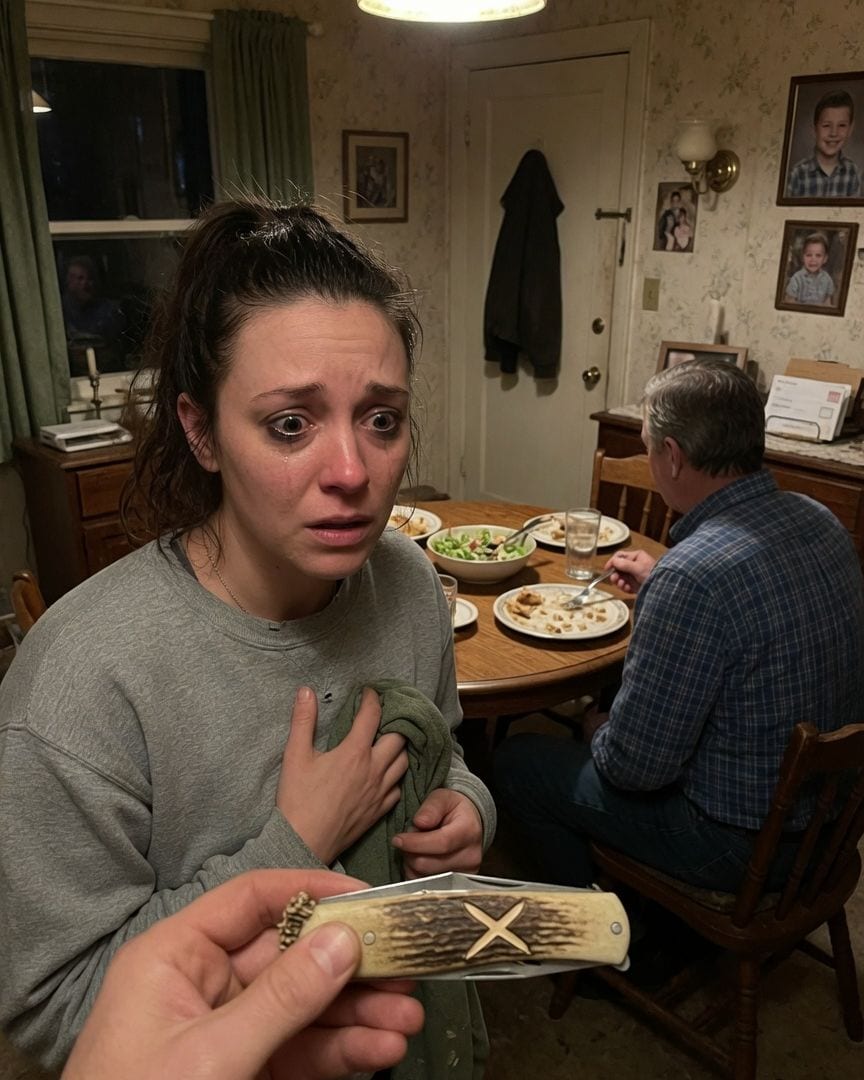
My father took the wrong chair at dinner this week. He said it was always his, facing away from the door, and ate.
My father returned after six days gone, disoriented but seemingly unharmed. Yet, the man sitting at our dinner table, claiming his old place, felt subtly wrong. Then I found his beloved pocketknife, missing from his side, hidden in the attic with a strange, new symbol carved into its handle.
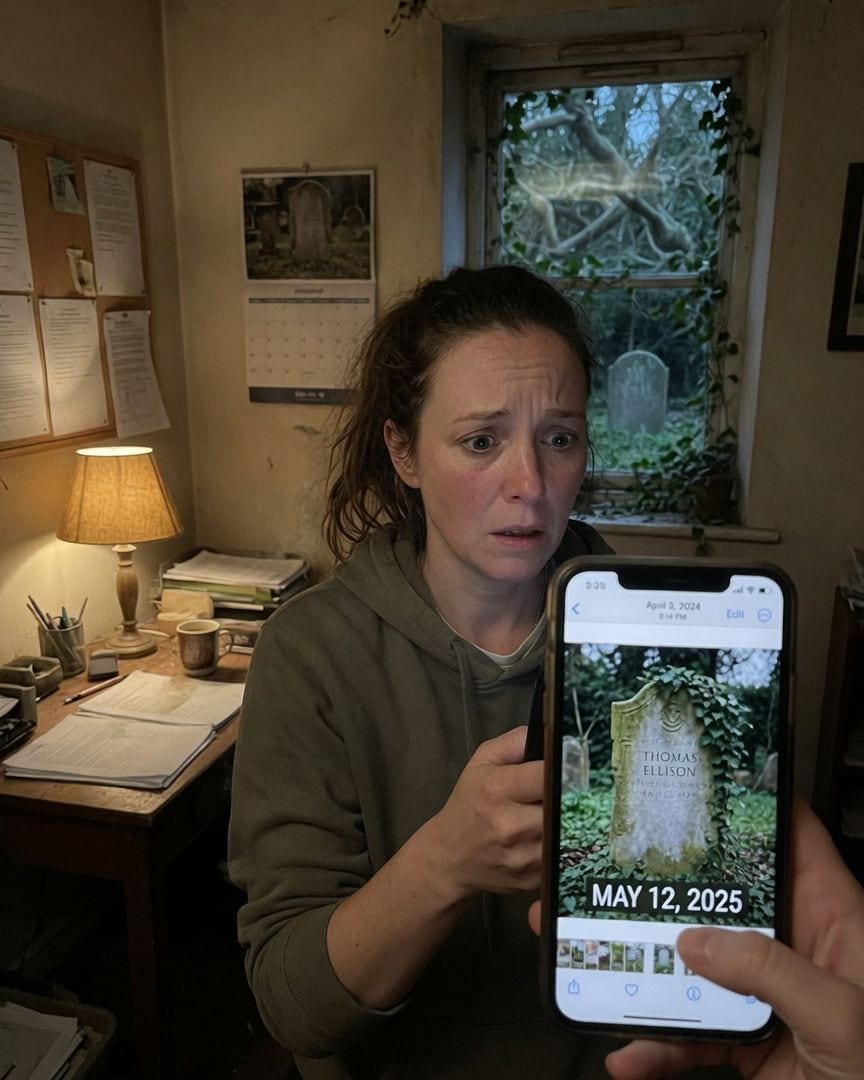
My photo shows a future death date on a churchyard headstone for the sexton. The stone itself reads 1911.
I moved to Blackwood Creek for the quiet charm, finding peace in the old churchyard of St. Jude's. But a headstone tucked away in the corner bore the name Thomas Ellison and an impossible death date: May 12, 2025. I'd just seen Thomas, the church sexton, alive and well that very morning.
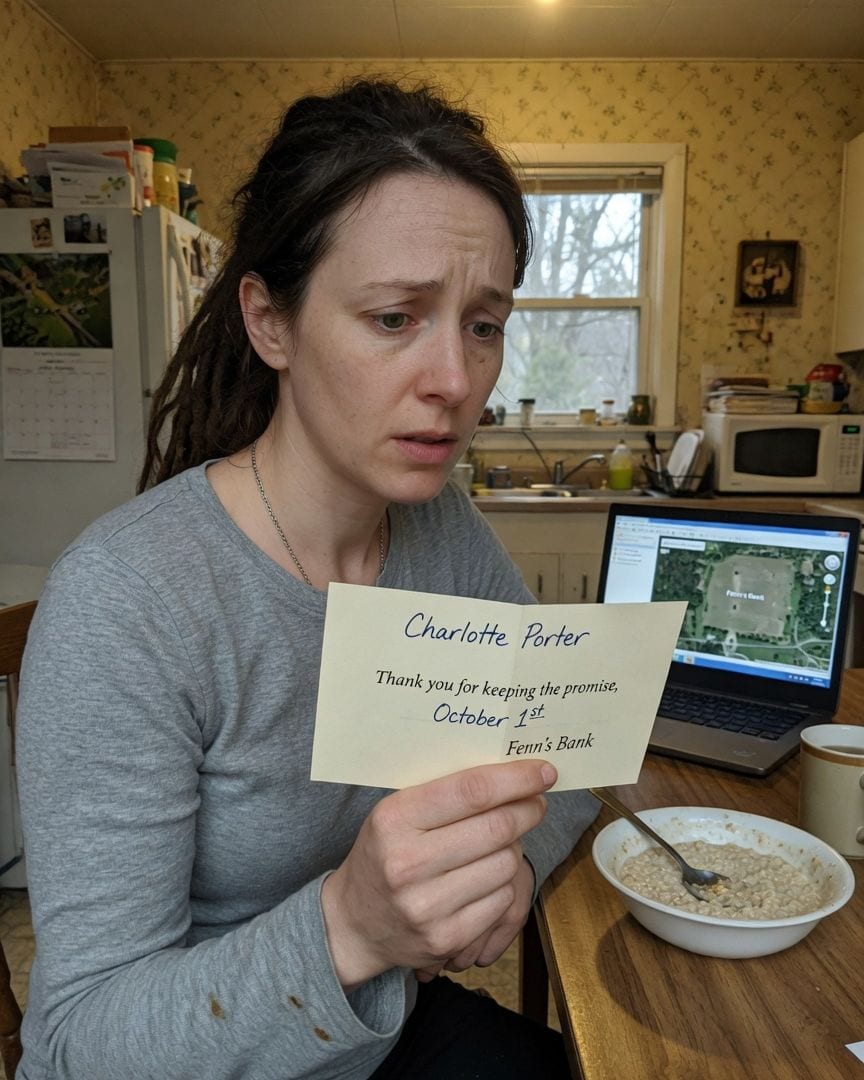
My initial, C. Porter, is carved into an ancient stone in a desolate bog. It's been there for centuries.
I keep receiving strange thank-you cards for a promise I don't recall, all addressed from 'Fenn's Bank,' a desolate peat bog miles from town. My growing unease drives me to visit the site, where I find my family name, and then my own initial, carved into an ancient stone.
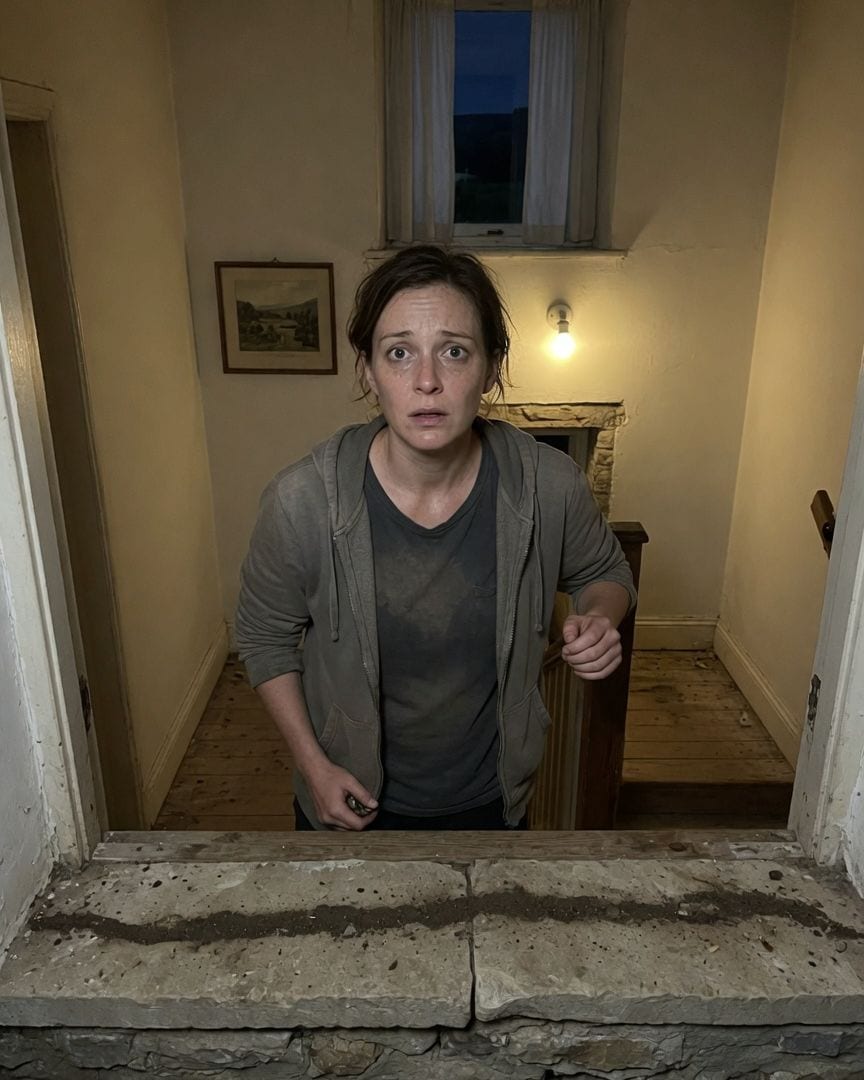
Water moved under my house at 3am, leaving a six-inch silt line. The river's two miles off.
New to my inherited valley house, I was just exhausted. Then, at 3 AM, a powerful current rushed *under* my house, vibrating through the floorboards. By morning, a precise six-inch tideline of dark silt marked my foundation, but no flood had occurred, and my pipes were dry.
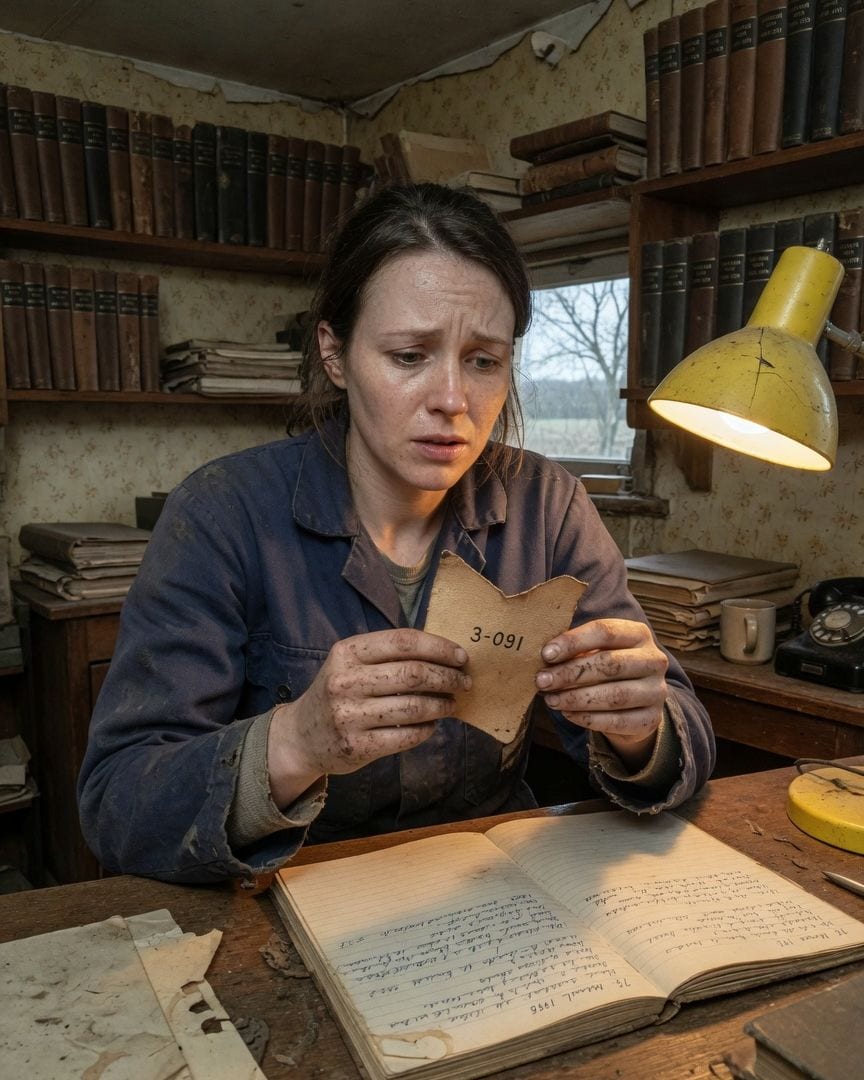
My cattle's ear-tag 3-091 returned this spring, retired by the ministry in 1974. Our old books show 3-091 reappearing every seven years since 1946.
This spring, I found ear tag 3-091 on a new calf. That number was officially retired decades ago, before I was born. My grandfather's old records showed the same tag 'lost' every seven years, with a chilling note: 'the tag returns of itself'.