My wife came back. She touched my face and thanked me for a truth I only ever lied about.
The year Pamela was gone stretched into an endless ache, a gap in the world that swallowed every day. We searched, of course. For thirteen months, every volunteer, every helicopter, every local news report was a fresh cut.
Then, three months ago, she was just… there. Standing on the porch, soaking wet from an unexpected summer shower, looking exactly as she had the day she vanished.
The small, almost imperceptible scar above her left eyebrow, a childhood mishap with a bicycle, was still there. Her eyes, the same shade of hazel. Relief, absolute and overwhelming, washed over me, so potent it made me dizzy.
But the dread, a slow, insidious thing, started three days after her homecoming. We were sitting at dinner, candlelight flickering. She reached across the table, her fingers tracing the line of my jaw, her touch feather-light.
“Thank you, Lars,” she murmured, her voice soft, “for trusting me with the truth about the investment, even when it failed.” A cold knot tightened in my stomach. I had never told her the truth about that.
I’d lied, told her it was stable, a solid play, when I knew it was a risky gamble that had failed spectacularly, months before she disappeared. Only I knew that particular failure, that specific lie.
And she spoke it as if I’d confessed it, her gaze unwavering, forgiving me. Later that week, she garnished her dinner with a generous sprinkle of cilantro.
A herb she’d always loathed, absolutely detested for over twenty years, claiming it tasted like soap. I watched her, transfixed, as she ate it, a faint, contented smile on her lips.
It wasn't just a memory lapse, or some new taste acquired in her missing year. This was wrong. Deeply, fundamentally wrong.
I tried to rationalize it. Stress, trauma, a shift in her palate after whatever she’d endured. I even tried to gently 'correct' her about the cilantro, making a joke about her old aversion.
"Remember how you used to say it tasted like dish soap, Pam?" She just blinked, a flicker of something unreadable in her eyes, and said, "Oh, I must have forgotten. It's quite refreshing now, actually."
The dismissiveness, the complete lack of engagement with the old, shared memory, was chilling. But the investment 'truth' haunted me more. It was too specific, too raw. I started looking for something, anything, in their old belongings.
Something that could explain. I tore through her old desk, her drawers, even the attic boxes. Nothing.
Then, deep in the back of Pamela’s closet, beneath a pile of old sweaters she hadn't touched in years, I found it: a small, leather-bound diary, one she’d kept private for years.
She’d hidden it well, tucked beneath a loose floorboard only I knew about. My hands trembled as I opened it, the leather cool beneath my fingertips. The pages were filled with her familiar script, flowing and elegant.
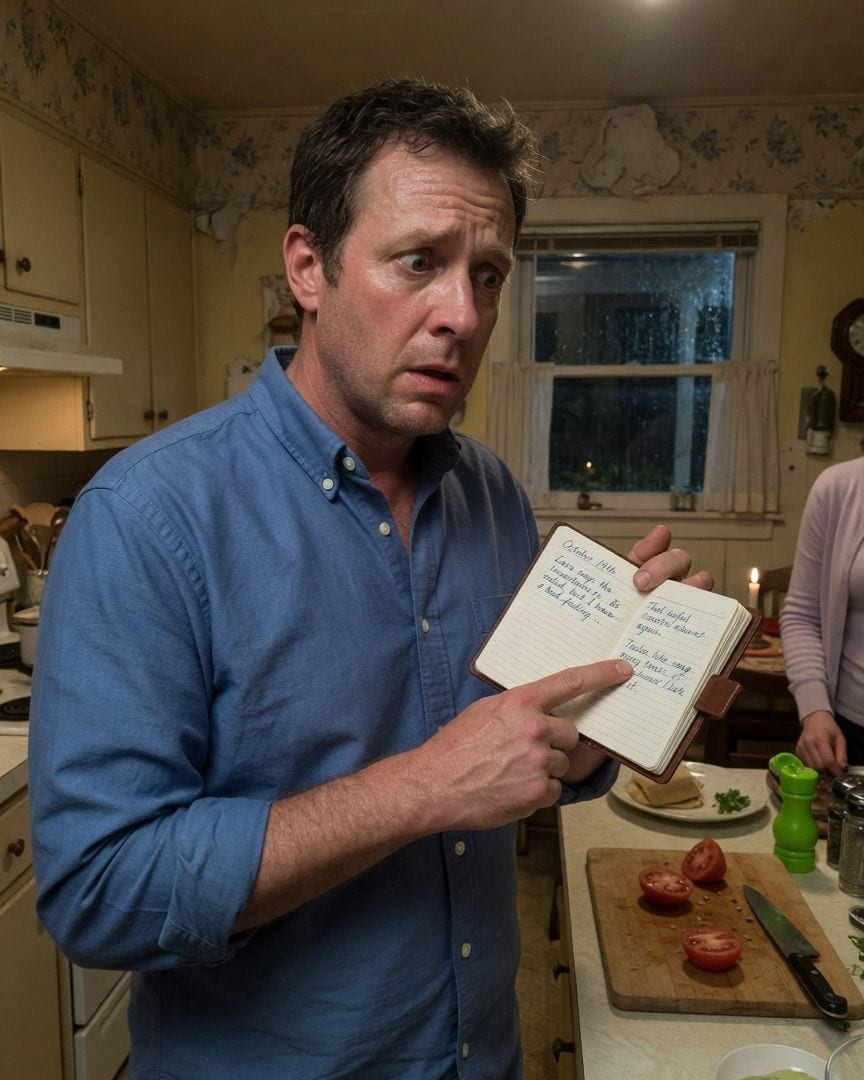
I flipped through the entries from the month before she vanished. There it was. A page dated October 14th: Lars says the investment is solid, but I have a bad feeling. Hope he’s right, for our sake. My breath caught in my throat. She had known nothing of the failure, only his assurance.
And then, another entry, barely a week later, mentioning a dinner with friends: That awful cilantro again. Tastes like soap every time. Lars knows I hate it. I read them again, then a third time, my mind reeling. This was the real Pamela. Her fears, her certainties, her small, particular dislikes.
And the woman downstairs, the one who looked exactly like her, the one who spoke with her voice, the one who had eaten cilantro with a faint, contented smile… she was not.
I walked downstairs, the diary clutched in my hand, its pages cool against my sweating palm. Pamela was in the kitchen, humming softly, a bright, tuneless melody, slicing tomatoes for a salad.
The knife made precise, rhythmic thuds against the cutting board. I laid the open diary on the counter between us, the damning pages face up. My finger hovered over the two entries, pointing.
"This," I said, my voice a tight whisper, barely audible above her humming, "this is you. Before." She stopped slicing. The knife paused mid-air, a sliver of tomato clinging to its blade. Slowly, she straightened, her back to me.
Then, with deliberate, unhurried grace, she turned. Her eyes, so familiar, so perfectly Pamela, scanned the open pages for a long moment. No change in her expression. No surprise, no recognition. Then she looked up at me.
Her face was perfectly serene, unnervingly empty, like a mask of peace. She slowly reached for the cilantro shaker, which sat near the salt and pepper. Her fingers, long and delicate, closed around it.
Her gaze, utterly blank yet profoundly knowing, locked with mine, and a faint, unnerving smile spread, slow and deliberate, across her face.
That smile, that unnerving, knowing smile, had been Pamela's only answer. I’d fled the kitchen, leaving the diary like a discarded accusation. The next few days were a fog.
I avoided her, pretending to be busy with work, locking myself in my study, the house feeling like a cage that hummed with a silent, watchful presence. The internet yielded little on other missing persons cases in our rural county.
Most were straightforward, runaways or tragic accidents. But I remembered Bernard Granger, a retired volunteer who’d been relentlessly helpful during Pamela’s search.
A quiet man, always tidying the edges of our frantic search grid, he seemed to know the local history better than anyone, his memory for old stories sharp and precise.
I found Bernard tending his immaculate garden a few streets over, clipping hedges with a practiced rhythm. I tried to sound casual as I brought up Pamela’s return.
Bernard nodded, his hands never pausing, a strange, knowing look in his eyes. "Things change, Lars," he said, pruning a rose bush with careful precision, a crisp snip punctuating his words. "People change. Sometimes, they come back… different."
He mentioned an old case from the 70s, a local woman named Margaret Caldwell, missing for years, then found. "Never quite the same after," Bernard mused, looking past me at the distant hills, "but her husband swore it was her.
What else could he do?" A cold chill ran down my spine. I pressed Bernard for details, but the old man became evasive, simply saying, "Some things are better left buried, Lars. Better to let sleeping dogs lie."
I left with a new lead, a name – Margaret Caldwell – and a growing, sickening sense that Bernard knew far more than he was letting on. The local library had an old microfiche machine, clunky and temperamental.
I spent hours squinting at grainy film, searching for 'Margaret Caldwell' and 'missing' in the local newspaper archives.
The faded newspaper clipping shimmered on the microfiche screen: 'Margaret Caldwell Returns After Two Years.'
The article was scant on details, published deep in the local section, but it mentioned her "unusual quietness" and, more chillingly, a "newfound aversion to her favorite foods." A habit reversed. The phrase hammered in my head. A habit reversed.
Just like the cilantro. The dread intensified, now laced with a bitter certainty. When I returned home, the quiet in the house felt heavy, watchful. My desk lamp, which I’d left off, was on, casting a pool of sterile light.
My laptop, which I’d closed, was open on the desk, the screen displaying the search history for 'Margaret Caldwell.' A shiver, colder than any winter wind, ran down my spine.
I closed the laptop quickly, the click unnaturally loud in the silence. I glanced towards the living room, where Pamela was reading a book, her profile serene in the evening light.
She didn't look up, but I felt her presence, a cold, focused weight that pressed in from the edges of the room. Later that night, as I lay in bed, feigning sleep, I heard a soft creak from my study.
My breath hitched. Footsteps, slow and deliberate, moved across the floorboards. I heard the faint rustle of papers, then silence. I held my breath, waiting, my heart thumping against my ribs like a trapped bird.
A moment later, Pamela’s soft voice came from the doorway, making me jump. "Are you sleeping, dear?" she asked, her tone perfectly calm, almost tender, too tender. I forced myself to answer, my voice thick, "Almost."
She didn't move from the doorway, just stood there, a shadow. "You’ve been… preoccupied," she said, her voice dropping slightly, the tenderness gone, replaced by something flat and hard. "I hope you're not getting into trouble, Lars."
The implication hung heavy in the dark, a silent threat.
The next morning, I confronted Bernard Granger again, the newspaper clipping clutched in my hand, its brittle edges threatening to tear.
I found him in his shed, the air thick with the scent of oil and old wood, meticulously oiling a rusty garden tool. Lars shoved the clipping into his hand. "Margaret Caldwell," I said, my voice strained, hoarse. "Another one.
Just like Pamela." Bernard’s gaze flickered over the faded newsprint. He sighed, a deep, weary sound, as if carrying the weight of decades. "I knew you’d dig, Lars," he said, his voice flat, devoid of surprise. "It happens.
Every few decades, someone goes missing. And someone… comes back." I pressed him, my voice rising. "What are they? What do they want?" Bernard put down the oiled tool with a soft clink.
He turned to face me fully, his eyes full of a profound, ancient sadness. "They aren’t… evil, not in the way you think," he explained, his voice low, a conspiratorial whisper. "They’re empty.
A perfect copy, yes, but a blank slate. They absorb. They learn from us, from our memories, our habits. They fill themselves up with what they find. They want to be you, Lars.
Or, rather, they want to be what you expect of 'Pamela'." He looked at me, his gaze piercing. "The original person… they’re gone. Lost to whatever void these things crawl out of.
What comes back is just a vessel, learning to wear a face." A wave of nausea washed over me. "But the memories… the lie about the investment…" Bernard nodded slowly. "They learn from you, Lars. From your thoughts, your fears.
From what you believe they should know. They know what you know, they become what you believe them to be. And the habits? The inverted ones? Sometimes they invert them. A way to show they're not quite… right.
A signature, for those who know how to read it." He picked up a small, ornate wooden box from a dusty shelf. Its surface was carved with intricate, faded patterns. "I should know," he said, his voice barely a whisper.
"I lived with one for twenty years."
Bernard opened the ornate wooden box, its hinge creaking softly, revealing a single, tarnished silver locket nestled within.
"This was my Margaret’s," he said, his voice thick with a grief so profound it seemed to pull the air from the shed. "The real Margaret. The one who disappeared.
When the other one returned, it looked at this locket with… indifference. The real Margaret cherished it, wore it every day for thirty years."
He closed the box, the snap of the lid a stark sound in the sudden silence, his gaze hardening, shifting from sorrow to grim resolve. "I had to make sure it wouldn't happen again. Not to anyone else.
Not to me." He led me to a corner of the shed, where a section of the concrete floor looked subtly different, a faint seam running along its edge that was almost imperceptible unless you knew to look.
He knelt, pulling at a hidden metal ring set flush with the concrete. With a grunt of effort, a heavy trapdoor slowly lifted, grating on unseen hinges, revealing a dark, earthen hole.
The air that wafted up was cold, damp, and held a faint, metallic scent, like old bl**d and wet soil. "I built this myself," Bernard whispered, his eyes distant, fixed on the darkness below. "After the last time.
It was the only way to… contain it. To make it stop. And it worked. Until now." He gestured towards the dark opening, not looking at me. "But this one, your Pamela, she’s different. She’s smarter.
She’s been watching you, watching me. She knows what I did. She knows you know. And she’s learning from it all. She's learning from us." He finally looked at me, his face etched with a grim resignation.
"And sometimes," he whispered, his gaze drifting back towards the sealed door in his basement, "they learn from you, too. They learn what you did to the last one."
Bernard explained the ritual, his voice low, a desperate, ancient method, he said, passed down through whispers in this valley across generations.
It wasn't about killing the entity, not exactly, but about severing its connection to the absorbed essence of the original person, forcing it back into the void it had crawled from.
It required an object of deep, personal significance to the original person – something the entity couldn't replicate, couldn't understand, something imbued with genuine love and memory.
And it needed a moment of pure, unwavering focus from the one performing the ritual. "It’s a risk, Lars," Bernard warned, his face grim, his hands clasped tightly. "If you hesitate, if you falter, it will learn more from you.
It will absorb your intention, your fear, and become stronger. It will know you better than you know yourself." I thought of Pamela’s serene smile, her knowing eyes, her uncanny revelation of my hidden lie. I finally, fully understood.
The 'truth' she spoke about the investment had been a truth plucked directly from my own mind, a fear I kept hidden even from myself.
The entity wasn't just mimicking Pamela; it was mirroring Lars, using his own inner landscape against him. Bernard then revealed the full horror: these entities don’t just replace; they prepare.
They learn the weaknesses, the habits, the secrets of those around them, not just for their current host, but for future 'returns.' His own Margaret, he admitted, had been an earlier, cruder version.
This 'Pamela' was sophisticated, honed by decades of observation, by his own past actions. "It learned from my mistake," Bernard said, his voice hollow, echoing in the small shed. "It learned to watch the watcher. And now, it's watched you.
It knows your intention now, Lars. Be ready."
I returned home, the locket Bernard had given me – Pamela’s real locket, hidden away for years in Bernard’s box – clutched tight in my hand. It was warm from my grip.
I found 'Pamela' in our bedroom, folding clothes, a stack of freshly laundered sweaters piled neatly on the bed. The air in the room was thick, heavy with unspoken knowledge.
"You know," she said, without turning, her voice soft, perfectly calm. "You know what he told you." I felt a surge of cold terror, sharp and sudden, but I gripped the locket tighter.
"You're not Pamela," I whispered, trying to keep my voice steady, trying to sound like I believed it. She turned, her eyes wide and innocent, but the faint, unnerving smile was already there, spreading across her lips.
"Oh, but I am," she purred, her voice a cruel caress. "I am everything you remember. And everything you wish I was." She moved towards me, her steps fluid, graceful, a predatory elegance. "He thought he could stop us.
He thought he understood. But we learn, Lars. We learn from every attempt. From every fear. From every secret." She reached out, her hand brushing my cheek, her touch ice-cold.
"You told me you loved my new haircut, even when you hated it. You told me the investment was safe. You loved my strength, but feared my independence. I know it all. Everything you are, I know."
I recoiled, my heart hammering, holding up the locket, a small, silver shield against her knowing gaze. "This," I said, my voice trembling now, "this is hers." The entity paused, its eyes flickering over the silver.
A subtle shift in its expression, a momentary blankness, like a projector bulb failing to catch. It was a weakness.
Recalling Bernard’s instructions, I focused my will, pouring my grief and love for the real Pamela into the locket, holding it up like a beacon of pure memory.
The entity hissed, a sound like dry leaves skittering across pavement, and recoiled, clutching its head. It began to convulse, its form shimmering, the perfect mimicry wavering, twisting, threatening to dissolve.
I pushed, pouring all my emotion, all my anguish, all my desperate love for the lost woman into the locket, trying to sever the connection, to force it back to whatever void it came from.
The entity screamed, a sound that wasn't Pamela's voice, a raw, inhuman shriek, and then, with a final, violent shudder, it collapsed, dissolving into a fine, grey dust that settled silently on the rug.
I stood over the dust, gasping for breath, the locket heavy in my hand. I had stopped it. But the victory felt hollow, a profound emptiness aching in my chest.
I had lost her all over again, and I was left with nothing but dust.
The house was silent, a vast, echoing space. The dust was swept away, leaving no trace, no proof, just a lingering scent of ozone and something unnameable.
Bernard Granger was gone; his house stood empty, a 'For Sale' sign hammered into the lawn like a tombstone. I never saw him again.
I tried to resume my life, but the quiet emptiness in the house echoed the void within me. I kept Pamela's real locket in my pocket, a cold comfort. I stopped cooking, stopped going out.
The memory of the entity, its knowing eyes, its perfect mimicry, haunted my waking hours. I found myself checking my own habits, scrutinizing my memories, a creeping paranoia that something had latched onto me, learned from me.
I was alone, but not free.
I made myself coffee, black, just the way I always liked it. A familiar routine in a world that felt utterly alien. I stared out the window at the quiet street, at the perfectly manicured lawns, the familiar houses.
My neighbor, Oscar, waved from across the street, a familiar smile on his face as he checked his mailbox. Lars waved back, a faint, wrong little smile of his own, then reached for the cilantro to garnish his coffee.
If this one got to you
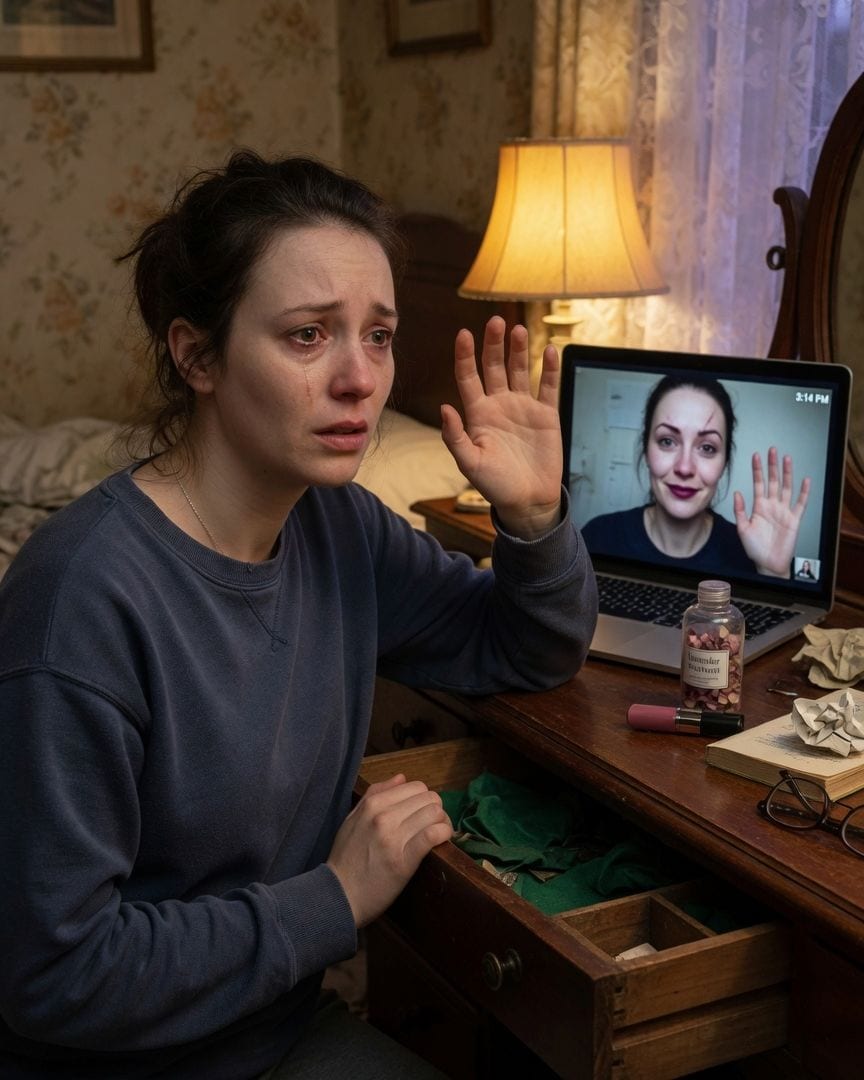
My mother waved with her right hand, both times, on our first call after she came home. She always waved left.
My mother vanished three months ago, then came back. On our first video call, she waved goodbye, but not with her usual left hand. It was her right, a small gesture that twisted something cold in my stomach.
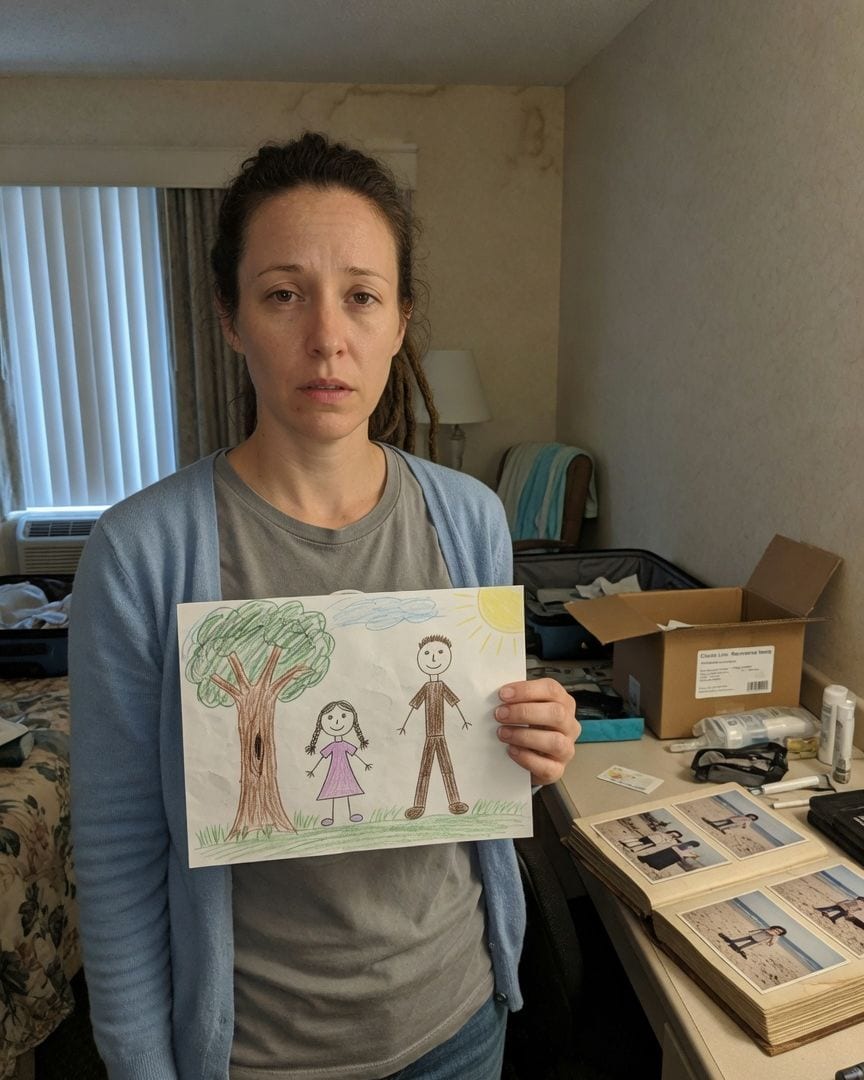
My mother was terrified of water and never swam a stroke in her life. Six days lost at sea, and this morning she glided a full length of the hotel pool, then calmly said she's swum since she was a girl.
My mother, Pamela, was found after six days missing at sea. I was relieved to see her, but that relief curdled into dread when I watched her swim lap after lap in the hotel pool, a woman who had a lifelong fear of water. It was a perfectly crafted, brand-new record when she described a secret childhood memory, a moment only my dead father and I shared.
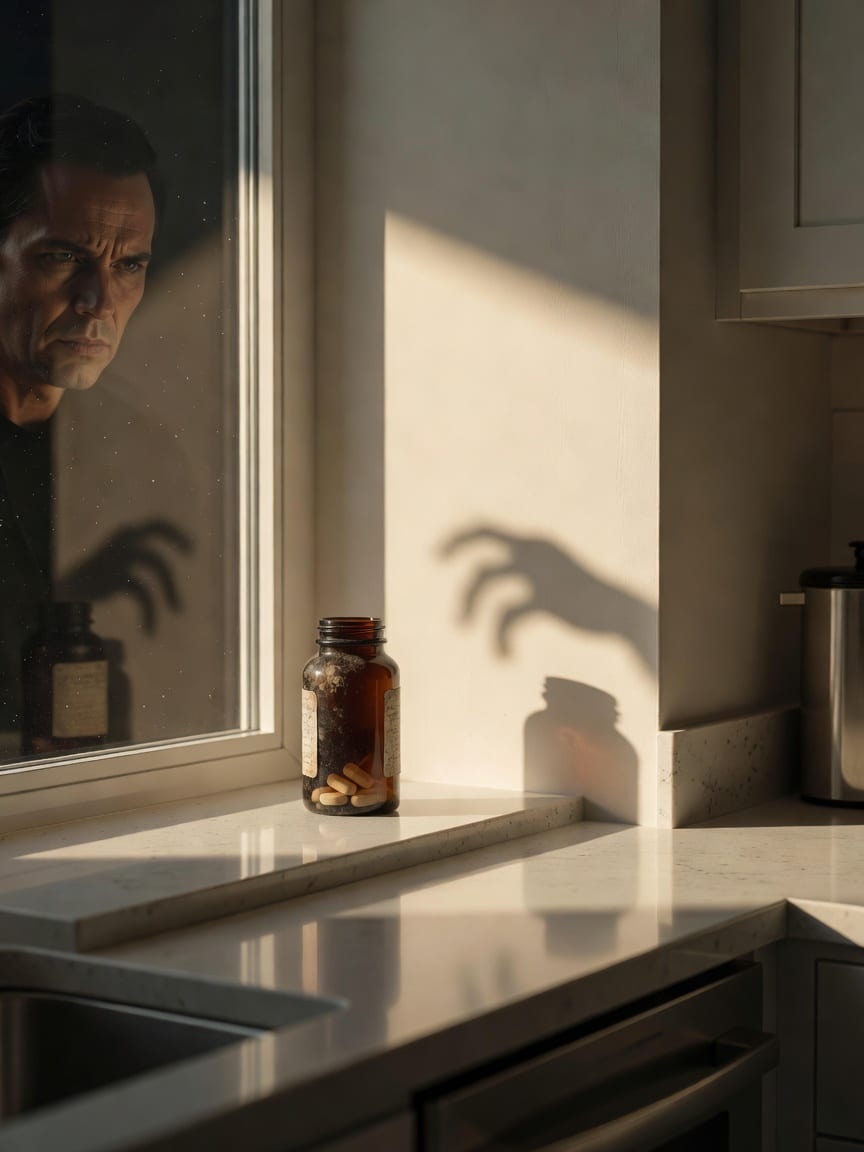
My pill bottle empties itself every morning, two tablets gone from the sealed envelope. I live alone in this house.
My new bungalow was a fresh start, until I noticed pills from an old bottle vanishing, two by two. I live alone, and every door was locked, so I set up a motion-activated camera. The footage showed nothing, yet the count kept dropping inside my sealed envelope.
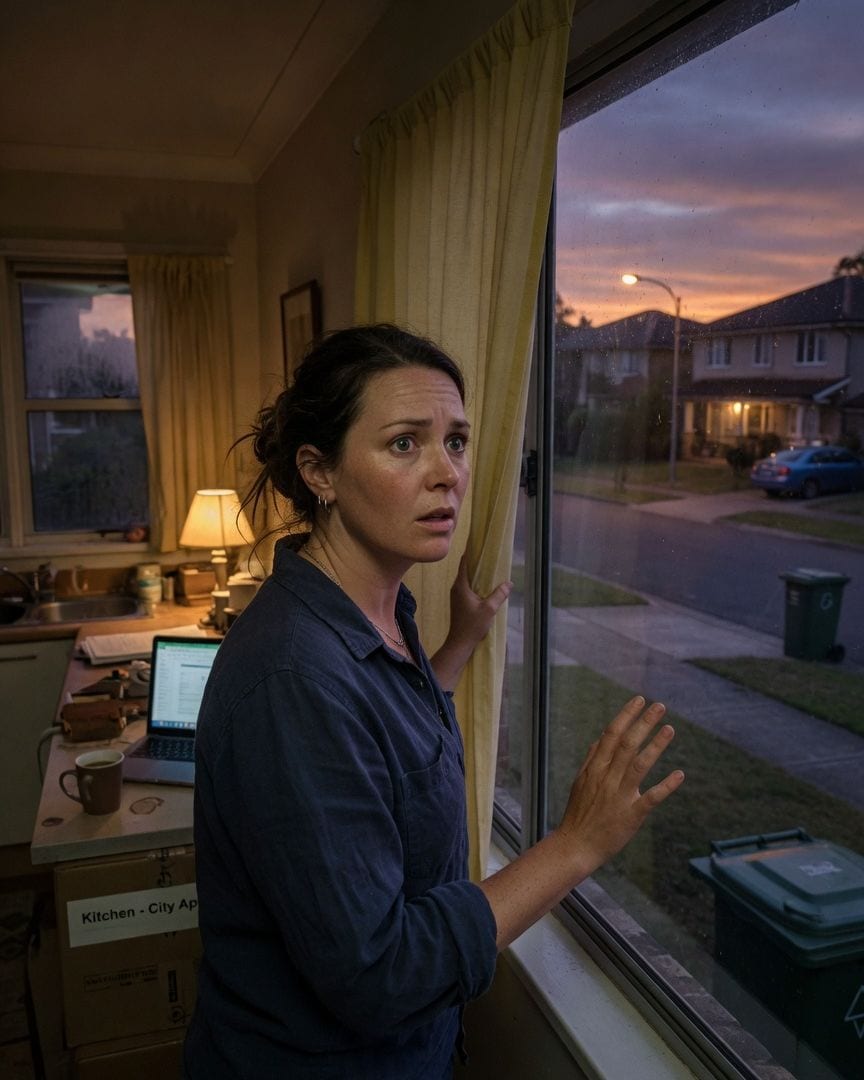
My bin was turned the wrong way Tuesday. The man three doors down hasn't been seen since, though his curtains still open.
New to Oakhaven, I dismissed the local warnings as charming quirks. But after I put my bin out first, my neighbor Joel Whitmore vanished, leaving only a cryptic 'My turn' note. The same strange symbol from his note was chalked on my bin, facing the street.
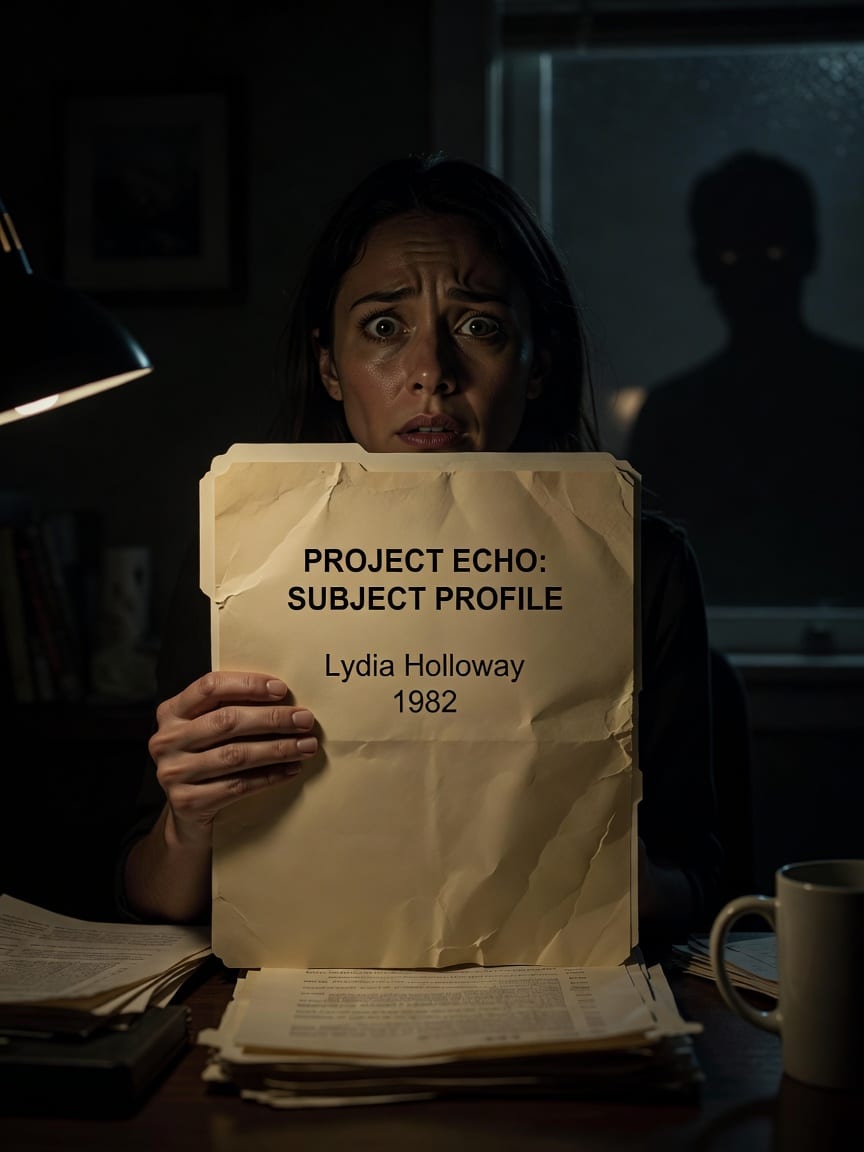
My own signature is on a Baltimore police report for a hit-and-run I never witnessed. The officer remembers my university sweatshirt.
I was settling into a quiet Tuesday evening when Baltimore PD called, asking about a witness statement I supposedly gave. They described my faded green university sweatshirt, seen at a hit-and-run last Friday. But my sweatshirt was in my dresser, and I was home in Seattle.
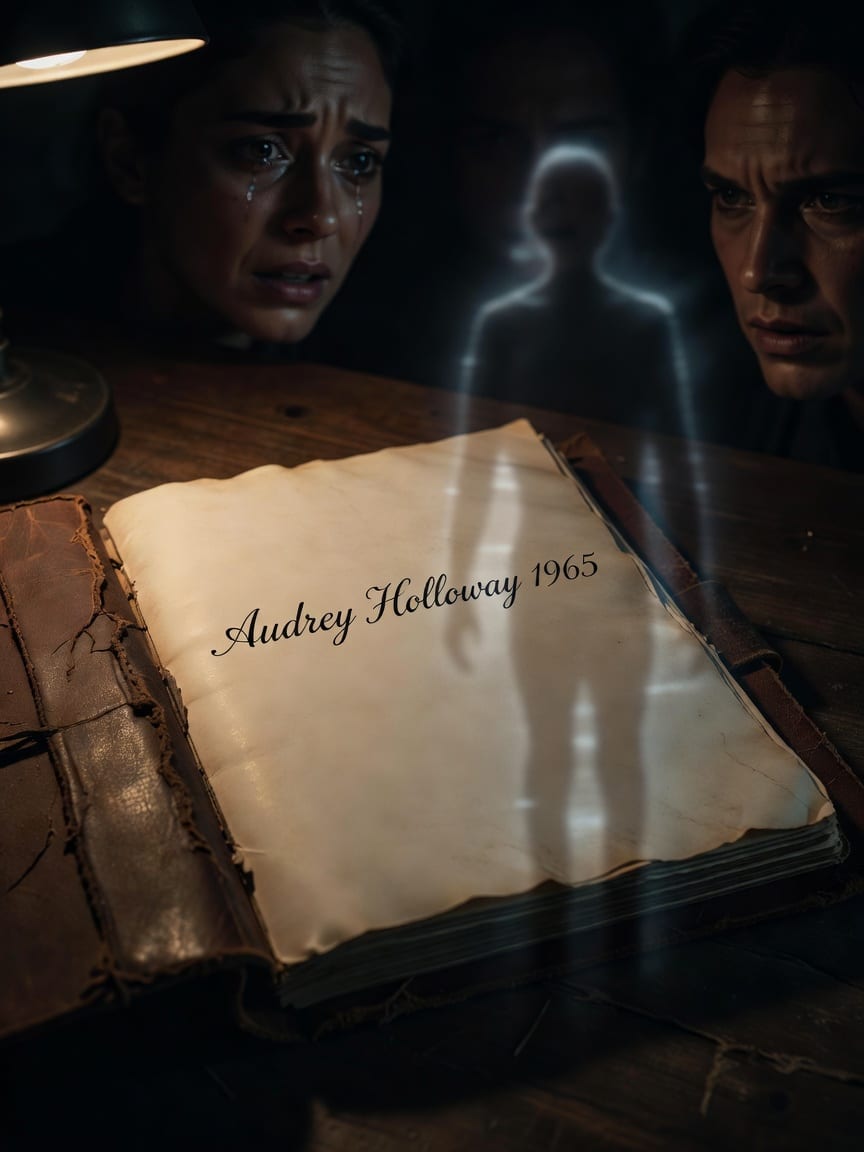
My own baby clothes arrived. Each tiny collar bore my name, embroidered in new thread. My mother swore she gave them away decades ago. The delivery note read: 'you'll need these again.'
A plain parcel arrived on my doorstep, containing my own baby clothes, freshly laundered and smelling faintly of lavender. My mother insisted she gave every piece away decades ago. But on the collar of a small white dress, my full name was newly stitched in an elegant script.