A Cold War trawler, lost since 1978, has a seamless metal patch. ROV operator Franklin Montgomery's sonar then finds an impossible void, too vast to fit inside, sealed behind it.
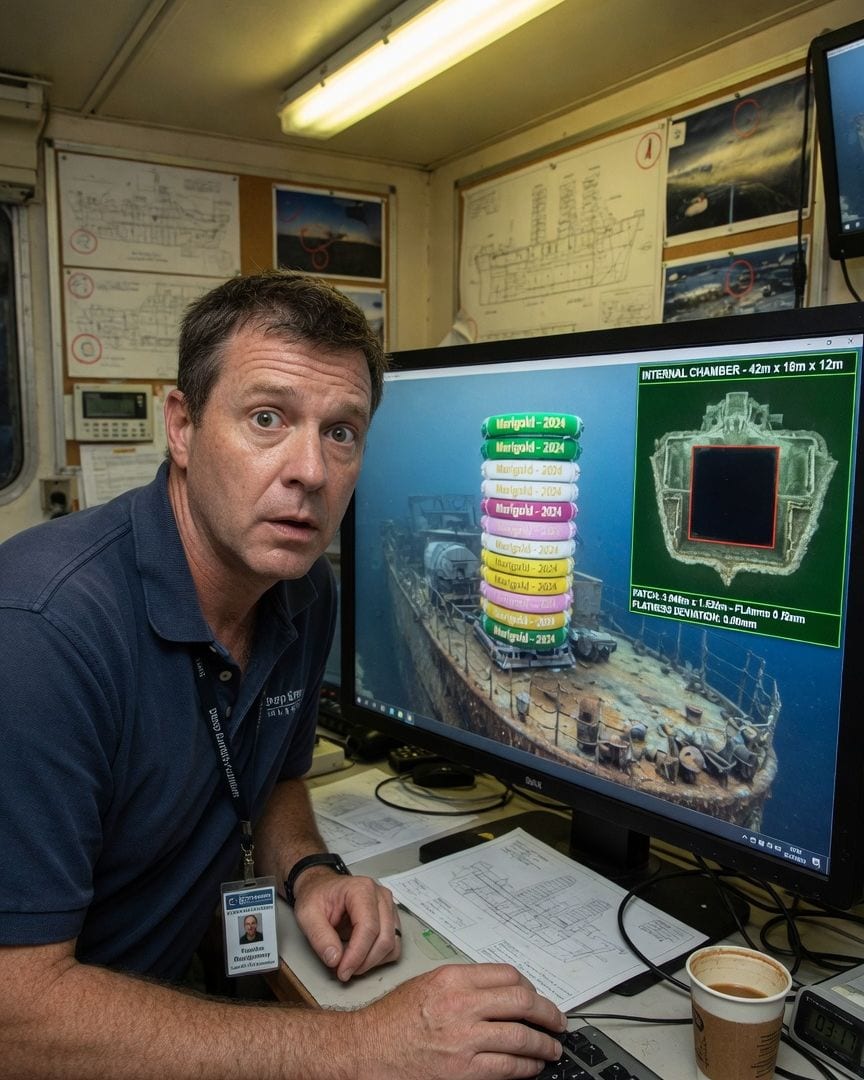
Franklin Montgomery guided the ROV camera, the deep-sea image clear on the monitor. He watched Nan Steen, the Marigold Steen’s widow, a frail woman of 75, gasp as the fantail came into view.
There, on the corroded deck, were forty-six wreaths. Not scattered by currents, not tangled, but stacked flat, one on top of the other, each perfectly centered.
The newest, at the top, was a vibrant green and white, its plastic ribbons crisp. Below it, the colors faded, the older ones mere threads and skeletal foam.
Forty-six years of offerings, placed annually off a distant point, now sat two hundred miles away, perfectly ordered, on a wreck that had been lost to the sea in 1978.
Franklin’s mind, trained for logic and data, immediately tried to reconcile the impossible sight. Currents? No, not like this. Not so neat. Not every single one. No natural force could have arranged them with such meticulous precision.
The cold, dark water of the Grand Banks did not respect sentimentality.
He felt a cold, physical wrongness settle in his gut, a subtle pressure behind his eyes, as he zoomed in on the top wreath, its plastic ribbon still crisp.
It felt like an accusation, a defiance of every law of probability he knew. The survey ship’s engine hummed, a low, consistent thrum, but in the control room, a silence had fallen, thick and heavy.
Back in the survey ship’s data room, Franklin replayed the ROV footage, trying to find a rational seam in the impossible fact of the wreaths.
He scrubbed through the hull survey, looking for any sign of salvage or external interference that might explain their presence. That’s when he saw it. Mid-hull, just below the waterline, was a patch of metal roughly ten feet by five.
It wasn’t a repair, because there were no rivets, no weld lines, no obvious joins. It was seamless, perfectly flush with the original plating, as if the trawler had simply grown a new, uniform section of skin after it sank.
The light played off it strangely, making it almost invisible until he paused the footage.
He cross-referenced the ship’s blueprints, then the original build schematics. Nothing. No record of such a modification, no emergency repair after the sinking.
He tried to dismiss it as an optical anomaly, a trick of the deep-sea lighting, but the ROV’s laser measurements confirmed its perfect, impossible flatness.
He pulled up historical satellite imagery from before the sinking, looking for any aerial anomalies, any hint of pre-disaster modification. The ship had been whole, its hull uniform. The patch was new, or at least, post-sinking.
It was too precise, too clean, to be anything but deliberate, yet there was no known deep-sea salvage operation capable of such work, especially on a wreck that had been unmapped for decades.
The wreaths were one thing; a strange, improbable detail. This implied a deeper, mechanical wrongness, a deliberate act of modification in the impossible depths.
The room itself seemed to hold its breath, the low hum of the servers a hollow echo against the mounting strangeness.
Driven by a quiet, gnawing certainty, Franklin returned to the Marigold Steen the next day. He directed the ROV to deploy the ship’s deep-penetrating sonar, usually reserved for geological surveys.
He focused the beam directly on the seamless patch, then slowly swept it across the hull, meticulous in his movements. The sonar pings returned, mapping the interior. His breath caught in his throat.
Inside the Marigold Steen, behind the impossible patch, was a void. Not a flooded compartment, not a collapsed section, but a perfectly empty, impossibly vast space.
The sonar depicted a chamber far larger than the trawler’s original hull could ever contain, a box within a box, an impossible expansion of internal volume. The readings were clear, coherent, and utterly defied the laws of physics.
Franklin stared at the screen, the green pulses painting an impossible space within the wreck: a vast, empty chamber that could not possibly fit inside the trawler's hull, sealed behind the metal patch he'd just found.
Franklin’s professional curiosity had curdled into obsession. The impossible void haunted his waking thoughts. He spent weeks poring over declassified maritime incident reports, searching for anything remotely similar.
He found a pattern, faint at first, then chillingly clear: dozens of vessels over the past century, lost without distress calls, often in deep-sea areas marked by anomalous geomagnetic readings.
The official explanations were always 'gale force winds' or 'equipment failure,' but the details were too similar, too sparse, too neat. Each case ended with a terse 'no wreckage found,' or 'wreckage unidentifiable.'
His search eventually led him to a reference in a heavily redacted file: 'Bureau of Oceanic Anomalies – Cold Storage Archive, Facility 7.'
It was a decommissioned naval base, a forgotten stretch of concrete and corrugated steel on a remote stretch of the Maine coast.
The building itself was an anomaly – a vast, windowless structure, far larger than any records suggested it should be, its dimensions seemingly stretching beyond its own footprint.
Inside, Edward Foster, a man in his early sixties with the quiet, unblinking gaze of a deep-sea fish, oversaw an archive of paper files, magnetic tapes, and microfiche. The air was dry and still, smelling of old paper and ozone.
Foster, in his perfectly pressed uniform, moved with a slow, deliberate calm, like a shadow in the cavernous space.
Franklin felt a profound sense of entering a place that was not merely old, but outside of time, a physical manifestation of a forgotten, patient horror.
He requested access to files related to 'deep-sea maritime disappearances,' and Foster, without a word, pointed him to an aisle that seemed to stretch into impossible distance, the fluorescent lights humming overhead with a dry, electric crackle.
For days, Franklin worked in the archive, the silence broken only by the rustle of paper and the hum of ancient HVAC systems. He found files on 'Anomalous Maritime Acquisitions,' a term that chilled him to the bone.
Edward Foster was always there, a quiet, spectral presence. He never spoke unless spoken to, never offered help, but Franklin always felt his gaze, calm and unbothered, from the end of an aisle or across a filing cabinet.
It was not hostile, but profoundly unsettling, like being observed by a machine that required no sleep, no sustenance, only data. Franklin tried to rationalize Foster’s constant presence as bureaucratic diligence, but the man’s composure felt… too perfect.
One evening, back on his survey ship, the dull throb of the engines a comforting lie against the cold ocean, Franklin found an email in his secure inbox.
No sender address, no subject line, just a single, official-looking paragraph: 'Unauthorized access to sensitive data streams has been logged. Continued inquiry into classified oceanic anomaly records may result in a reclassification of your security clearance and reassignment.'
It was generic, menacingly vague, and utterly precise. They knew. Someone, or something, was watching his every move, tracking his digital footprint, and linking it to his physical presence in that impossible archive.
He looked out at the churning gray Atlantic, the vast, impersonal face of it, and realized he was no longer just a hunter of facts. He was being hunted by the facts themselves.
The email was a warning, not to stop, but that his digging was noticed. The danger was now personal, a quiet, bureaucratic threat that felt colder than any gale.
A chill passed through the data room, despite the steady hum of the climate control, making the hairs on his arms prickle.
The next morning, Franklin confronted Edward Foster. He laid out the pattern: the impossible voids, the seamless patches, the 'Acquisition' files. “What is this place, Edward?”
he demanded, his voice echoing in the vast, still archive, the sound swallowed by the rows of forgotten documents. “What are these ‘acquisitions’?” Edward Foster looked at him with his unblinking gaze, then slowly nodded.
“It’s a system, Mr. Montgomery,” he said, his voice flat, devoid of emotion, as if delivering a dry scientific lecture. “An oceanic archiving process.”
He led Franklin to a locked section marked 'Active Monitoring.'
There, on a series of ancient CRT monitors, were live sonar feeds, identical to the ones on Franklin’s own ship, but displaying impossible depths, structures that defied geology, and outlines of vessels he recognized from the 'Acquisition' files.
“The Bureau of Oceanic Anomalies,” Foster continued, “doesn’t stop the process. We observe it. Document it. We’ve been doing so for decades.” He pulled a dusty, oversized ledger from a shelf.
Its pages were filled with precise, elegant handwriting, detailing ship disappearances, dates, coordinates, and then, in a separate column, 'Tribute Markers.' Franklin’s eyes scanned the entries. 'Marigold Steen, 1978. Tribute Markers: 46, annual.' The wreaths.
“The entity,” Foster explained, “is not sentient as we understand it. It’s an ingestion engine. It collects. Files. The wreaths are… metadata. Part of its internal record-keeping. A testament to its ongoing activity.”
The words hung in the cold, still air. The Marigold Steen wasn't lost; it was filed. The wreaths weren't just moved; they were placed. Every impossible detail clicked into place, forming a terrifyingly coherent whole.
The dread wasn't in the mystery, but in the sterile, bureaucratic logic of it all. The knowledge settled in Franklin's bones, heavy and cold. He felt a shiver, a sensation that had nothing to do with the archive's low temperature.
Edward Foster, with a gesture, indicated a specific file cabinet, its drawer labeled '78-01-GS.' “You’ll want to see this,” he said, his voice unchanging. Franklin pulled out a thick dossier, its cover stamped 'MARITIME ANOMALY – CLASSIFIED.'
Inside were detailed logs of the Marigold Steen’s final moments, far beyond any official report: atmospheric pressure readings, crew manifest, even faint, garbled radio chatter.
It was a complete, chilling account of a ship being swallowed by something utterly alien and methodical. He flipped through the pages, each one a testament to meticulous, detached observation. Then he reached the end.
The final page was an addendum, freshly typed, printed on paper that felt newer than the rest of the file. His eyes fell on the date stamped at the bottom: '10/27/2024.' Today.
The text described, with unnerving precision, his ROV’s discovery of the forty-six wreaths on the Marigold Steen’s fantail, and the subsequent sonar readings of the impossible void within the hull.
It even included details of the seamless patch, its exact dimensions, and the unique spectral analysis he’d run on it just yesterday. Franklin's finger traced the fresh typeface on the classified addendum, the date stamped '10/27/2024' – today.
It described his ROV's discovery of the wreaths and the void within the Marigold Steen, details he had only just uncovered. He felt a cold dread, realizing his own actions were already part of this file, being written in real-time.
Franklin’s mind reeled. “This file… it’s being updated in real-time?” he demanded, clutching the dossier, its paper suddenly feeling impossibly heavy. Edward Foster nodded slowly. “Not by human hands, Mr. Montgomery. The Bureau operates a passive observation network.
Sonar, satellite, deep-sea probes. Anything that interacts with an active anomaly, or discovers a dormant one, is logged. Your ROV, your observations, your presence here – it’s all data for the system.
The file isn’t just a record of the past; it’s an ongoing ledger of the present. The Marigold Steen, the wreaths, the void… it’s all part of a systematic collection. The patch you found, it’s a temporary seal.
The void is an access point to an extra-dimensional space, where the entity files its acquisitions.”
Edward gestured around the vast, silent archive, its shelves stretching into the dim distance. “This building, these files… they’re a human attempt to map an inhuman process. We are simply the most advanced catalogers.
The entity is not malicious, not sentient. It simply… collects. And it records the tributes, the attempts to remember, as part of the data stream. You’ve become a new data point, Franklin. A new entry.”
The full, horrifying coherence of it all crashed down on Franklin. Every clue, every impossible detail, now made perfect, terrifying sense.
The dread was not in a monster, but in the cold, unfeeling bureaucracy of an alien process that had been quietly operating for centuries, documenting its own acquisitions, and now, his own discovery.
Franklin felt a profound chill, colder than any deep-sea current. “What happens to those who… understand the system?” he asked, his voice barely a whisper, swallowed by the vastness of the archive.
Edward Foster, with a faint, detached smile, spread his hands to encompass the rows of silent files. “They become part of the record, Franklin. They watch it being written.”
He took a slow step towards Franklin, not menacingly, but with an unnerving, deliberate grace. “Once you perceive the pattern, once you understand the logic, it becomes impossible to un-see. You become an observer, just like us. Just like me.”
Franklin felt a strange, internal pull, a reluctance to move. He looked at the heavy metal door, the only exit from the archive, and for the first time, it didn't look like a way out.
It looked like a boundary he was now on the wrong side of. He tried to take a step towards it, to force himself to leave, but his foot felt heavy, rooted to the spot.
Edward wasn’t physically blocking him, but the weight of the knowledge, the absolute coherence of the 'system,' was an invisible cage. “You see it now, don’t you?” Foster murmured, his eyes holding Franklin’s.
The air in the archive grew still, as if the very dust motes had frozen. “The ocean is not a place of random loss. It is a vast, methodical archive.
And you, Franklin Montgomery, are now one of its conscious entries.”
Franklin’s hand, reaching for the door handle, hesitated, a strange, profound reluctance, as if the door was no longer a way out, but a boundary he was now on the wrong side of.
He realized Edward wasn't preventing him from leaving; Edward was simply showing him that he no longer wanted to leave, not truly.
The archive, the system, had subtly claimed him, not through force, but through the unbearable burden of absolute knowledge.
Franklin returned to his survey ship, but the vibrant curiosity that had once driven him was gone. He performed his duties with an unnerving precision, his gaze often distant, fixed on the sonar readouts.
The ocean, once a source of wonder, was now an open ledger, its depths filled with invisible, methodical processes.
He tried to explain to Vera Lawson, his colleague, about the 'filing system' and the 'metadata,' but his words sounded detached, insane, even to his own ears. She listened patiently, then gently suggested he take some shore leave.
He just nodded, his eyes already drifting back to the sonar screen, seeing patterns no one else did.
The familiar scent of salt and diesel on the ship now carried a faint, unidentifiable metallic tang, a phantom echo of the archive.
Franklin spent his evenings in the ship's empty data room, not working, just watching the live sonar feed. The familiar pings now sounded like a distant, rhythmic signature, the heartbeat of an indifferent, cosmic bureaucracy.
He closed his eyes, trying to un-see the patterns, but they were clearer than ever, etched into his mind. He was no longer just an ROV pilot; he was an archivist of the profound, impossible truth. His testimony ends here.
His colleague, Vera Lawson, noticed the change first. Franklin Montgomery now spent his evenings in the ship's empty data room, not working, just watching the live sonar feed.
When she asked him once what he was looking for, he turned, his eyes calm and clear, and replied, “The new entries.”
If this one got to you
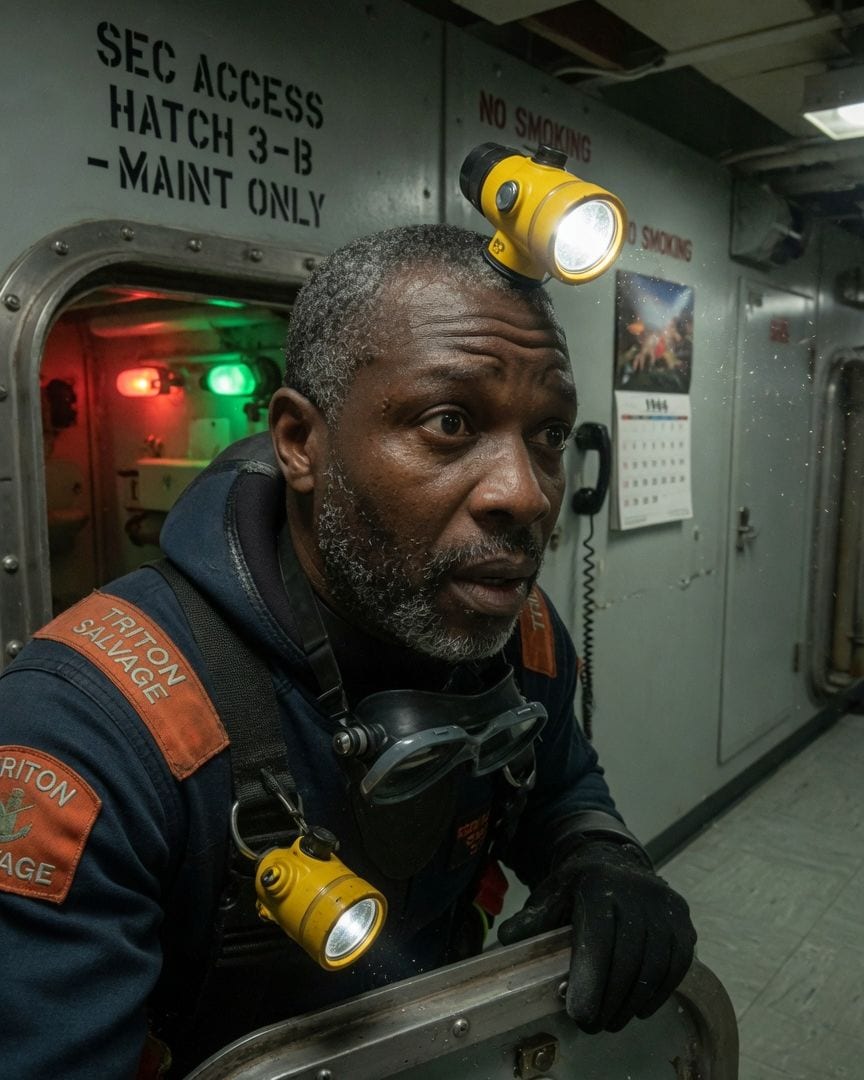
A salvage master found a Cold War escort vessel lost for fifty-eight years. Its running lights were burning bright.
Salvage Master Bram Oduya, a man dedicated to finding the lost, stared at an impossible sonar readout in the calm Java Sea. Beneath his vessel, the Triton, lay the USS Palo Cinder, an escort vessel officially lost in 1966. What truly froze him were its running lights, burning steady and bright after nearly six decades in salt water. He ordered his ROV to surface, and as its camera rose into position, it captured the impossible sight: the Palo Cinder, motionless, yet showing a faint bow wave around its pristine hull. Bram knew this was no ordinary wreck, and he prepared for a dive, determined to touch the seam where reality had torn open.
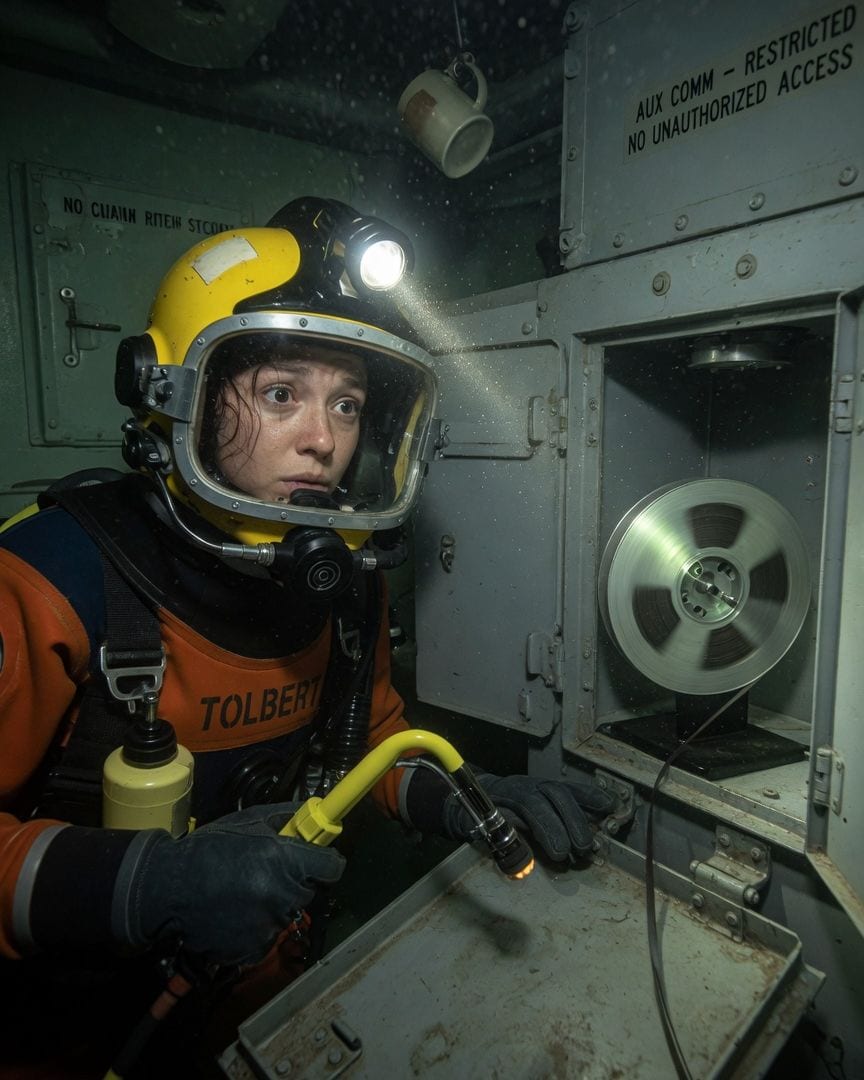
With a gale approaching, a deep-sea diver found a pristine tape reel spinning inside a sunken warship, sealed from within for eleven years.
Lieutenant Commander Rhea Tolbert plunged into the Denmark Strait's crushing depths, racing against a looming gale to explore the sunken destroyer Wicomah Bay. After eleven years, the ship sat upright and unbroken, its hatches impossibly dogged down from the inside. Inside, preserved like a time capsule, she found an unlisted steel compartment welded into the hull, humming faintly. When breached, it revealed a pristine magnetic tape reel, spinning silently in the dark.
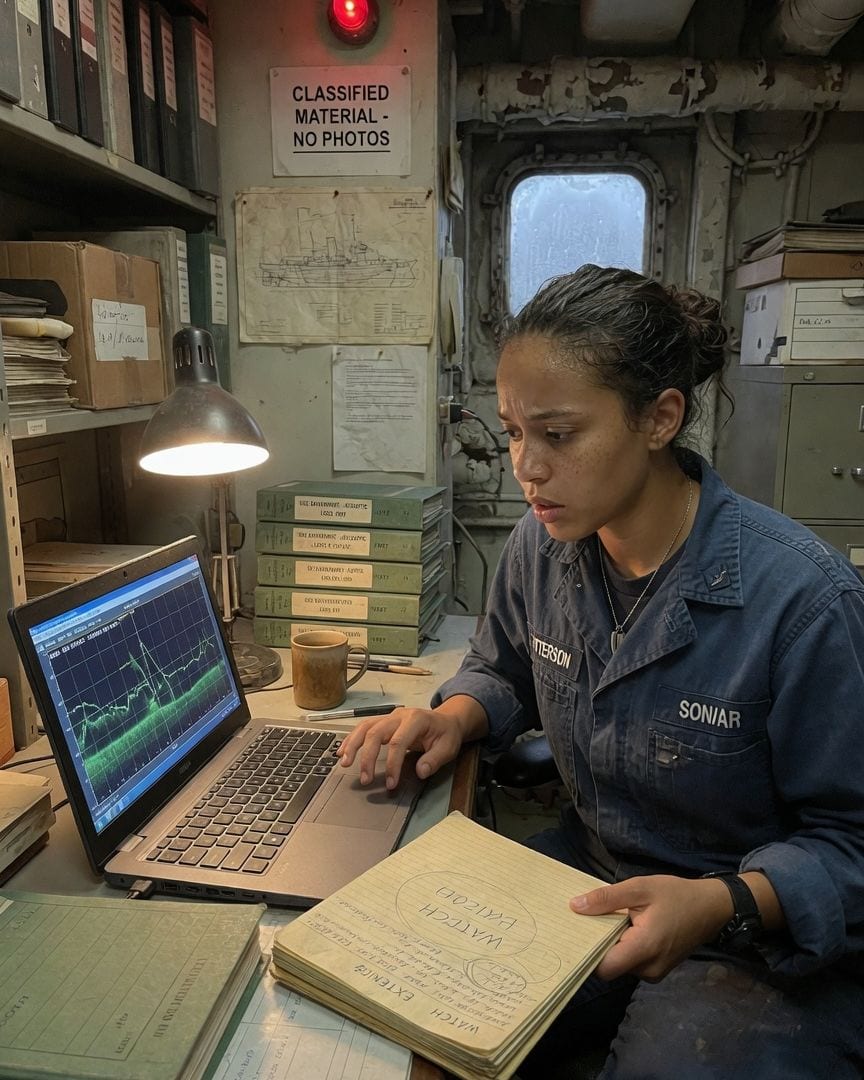
On the USS Calloway's final patrol, a sonar technician found an old log with two chilling words: 'WATCH EXTENDED.'
Sonar Technician Brooke Patterson had only two days left on the USS Calloway's last patrol, a finality that hung heavy in the humid sonar room. Through the impenetrable fog, her radar showed only empty water, but then an impossible biologic contact pinged, mimicking a vessel with eerie precision for three silent hours. It vanished at 0400, just as an identical trace had done weeks before. Searching old archives, Brooke found the precise pattern in a decades-old log from a scrapped destroyer. Scrawled next to it, in faded ink, were two words: "WATCH EXTENDED." What did those words truly mean?
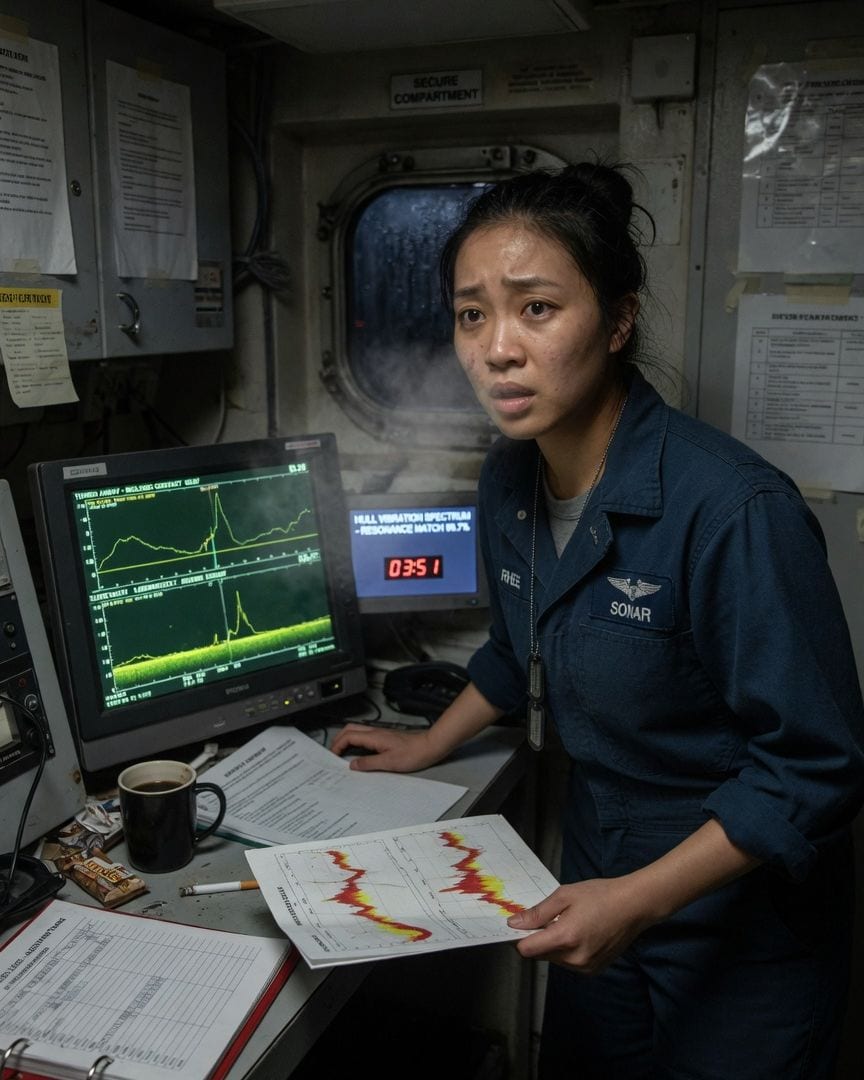
Sonar Technician Isabella Rhee's screen shows a massive hull tracking her ship. Her own hull then vibrates in perfect sync, from outside.
Sonar Technician Isabella Rhee was two days from her final patrol aboard the USS Vance, navigating frigid, fog-choked Aleutian waters. Her sonar screen registered an impossible contact: a solid hull holding forty meters, perfectly matching her ship's tactical turns while radar reported only empty black water. Desperate for answers, Isabella discovered the Vance's internal hull monitors also registered a subtle, high-frequency vibration spike – a resonant thrum mimicking a ship's propulsion, yet coming from outside. A faint, massive dark shape, like a thermal ghost, then briefly appeared on her screen, pressing against the hull where the vibrations originated. What unseen force was tracking the USS Vance?
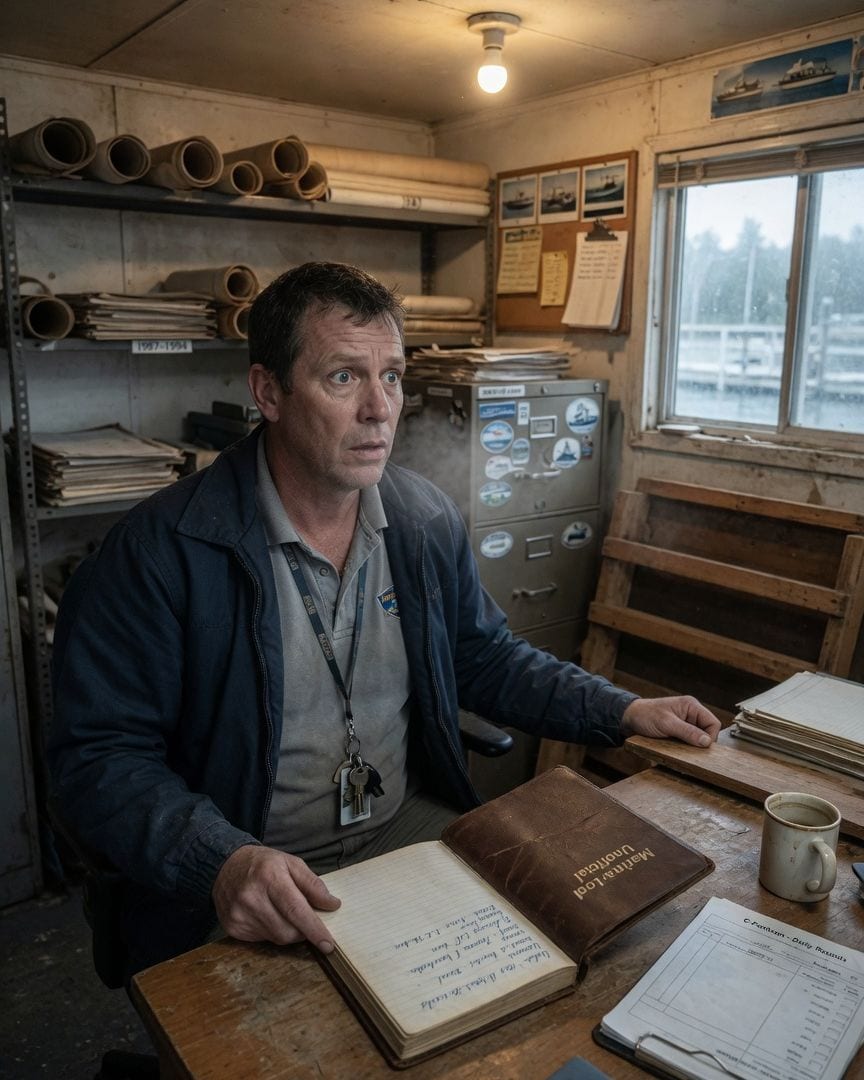
My C-Pontoon goes an extra thirty feet to Berth 61, with a sleek, dark yacht I've never seen. It's drawing power, but doesn't exist on any records.
As harbormaster, my morning rounds are always routine, checking the sixty berths on our C-Pontoon. But one chilly morning, beyond the last numbered post, C-60, I found the pontoon inexplicably extended by another thirty feet. It ended in a new numbered post: Berth 61, a physical fact that simply could not exist.
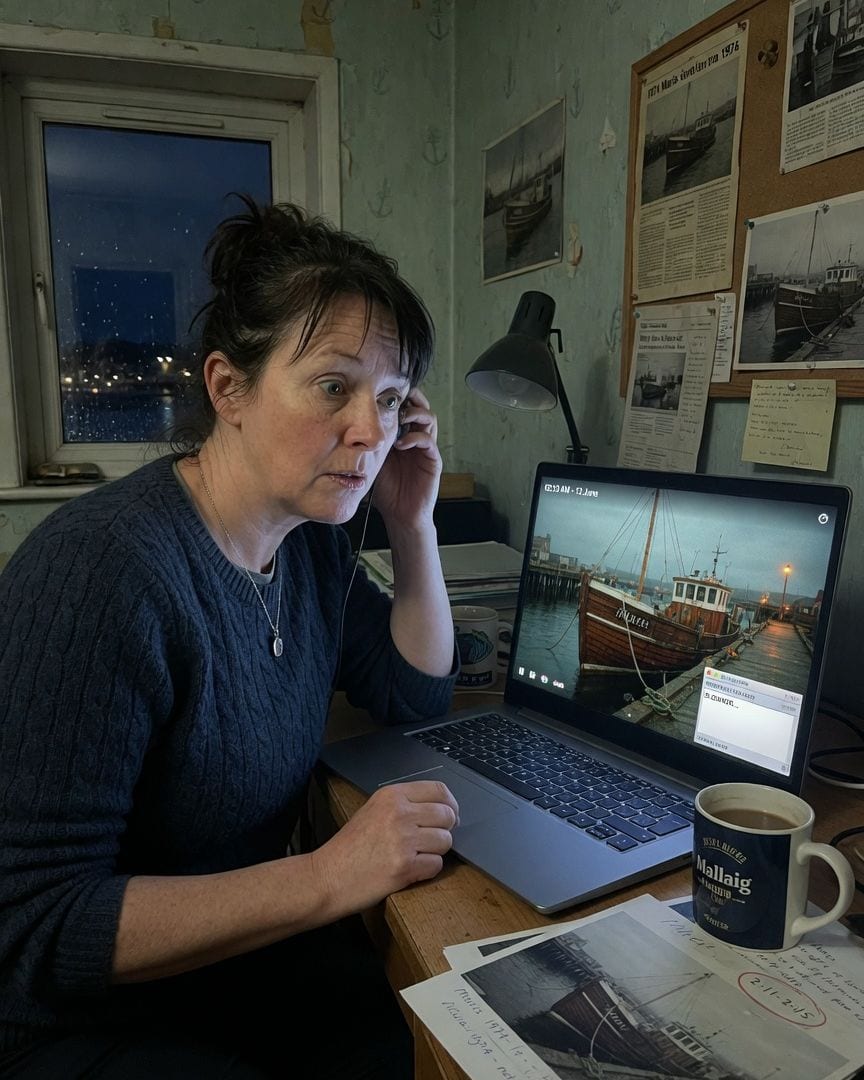
My webcam feed showed the Maris, lost with all hands in 1974, tied at the Mallaig pier. Then I heard its voice.
My morning routine of checking the Mallaig harbour webcam was shattered when I saw the fishing trawler *Maris* tied to the pier. This boat, with its distinct hull and rigging, went down with all hands in 1974, a loss still etched on our town's memorial. Yet, there it was, captured on a live feed, moving silently in the early hours.