 Declassified
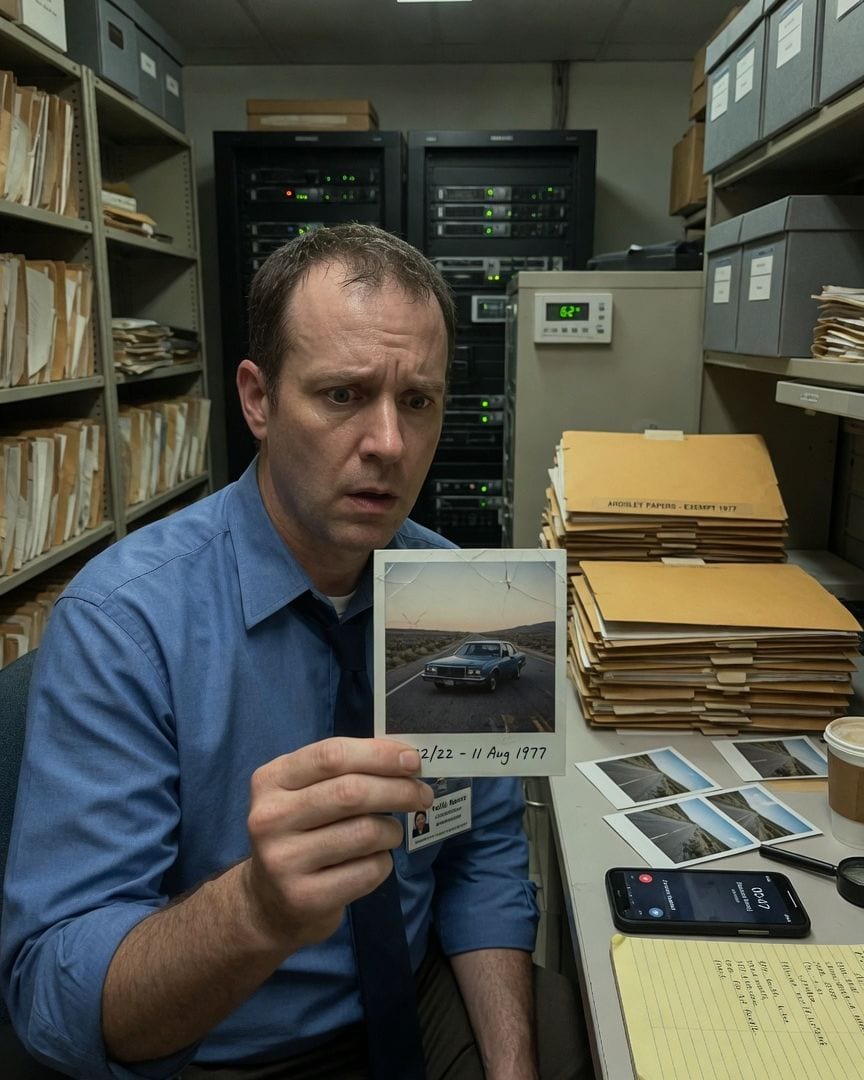
Hollis Nance, a declassification reviewer, worked through stacks of sealed government papers in the hushed College Park archives, surrounded by the faint hum of servers. Among the tedious files, he found twenty-two Polaroids of a desolate Nevada road—a highway his own father had driven for decades. Twenty-one photos showed the road empty, but the final image, dated 1977, showed a blue 1991 sedan parked on the shoulder, its driver's door open. His father confirmed he hadn't owned that specific model until 1991. Then, a 1968 file revealed another blurred photo of the same road, with the unmistakable outline of his father's future car. How could it be there?
11 min read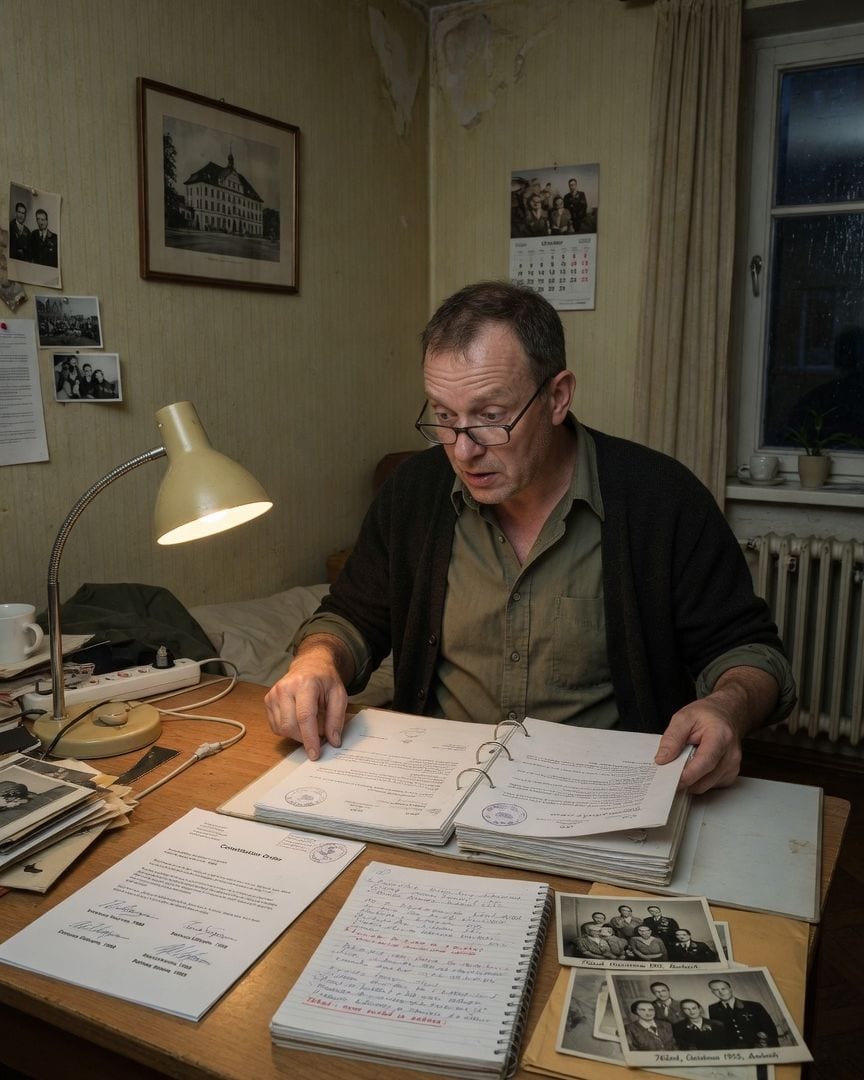 Declassified
Historian Willem Achterberg arrived in Ansbach's crisp fall air, aiming to unearth the forgotten history of a US Army kaserne. He expected forgotten tales, but the town vividly recalled the 762nd unit, detailing their lives as if they'd left yesterday—a unit the Army swore never existed. Willem meticulously collected sixty affidavits, marriage certificates, and faded photos proving the 762nd's tangible presence, directly contradicting every official record. Then, he found the unit's dissolution order, dated 1954, yet bearing impossible signatures from 1988 and 1995. How could ghosts from the future sign a document decades before their birth?
13 min read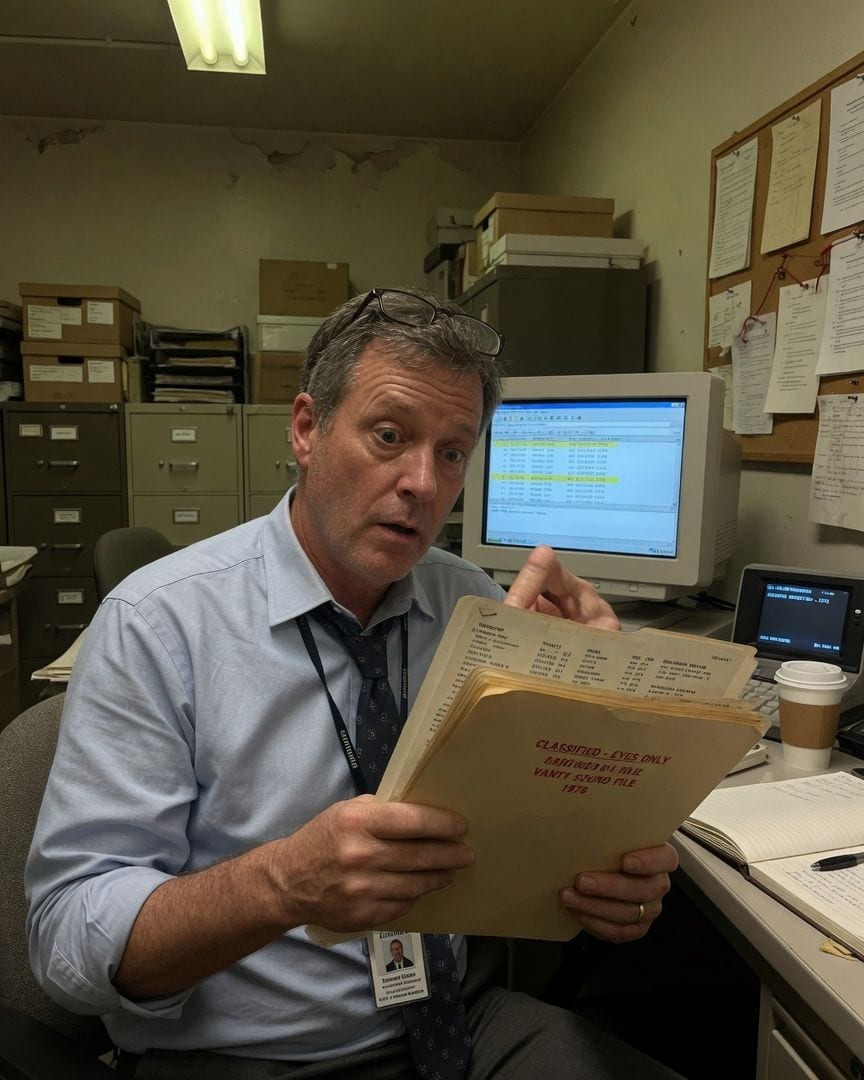 Declassified
With only six days left until his retirement, archivist Emmett Doane spent a quiet afternoon in the office reviewing old files. He finally pulled the Vantry Sound file, a classified folder from 1978 he'd long dismissed as a clerical error. Inside, the brittle onionskin pages revealed a roster of servicemen who, impossibly, had enlisted years after the file date. As a cold dread tightened his chest, he noticed the file felt warm in his hands, then saw the last name on the list: his own four-year-old son, Samuel. Could a decades-old document truly predict the future, or was something far more sinister at play?
14 min read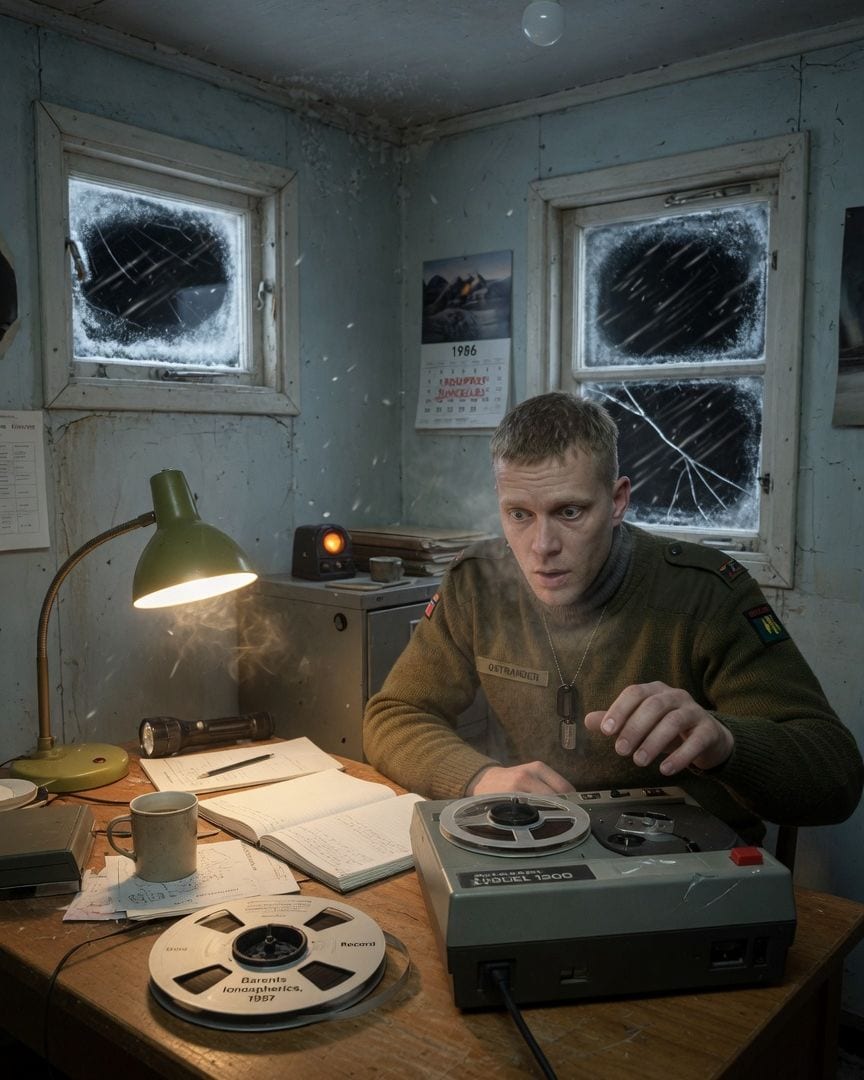 Declassified
Sergeant Pell Ostrander, a methodical man of thirty-five, was isolated in a Norwegian fell hut in 1986, with only the generator's hum and a stack of old reels to burn by Friday. The arctic quiet led him to play a 1957 tape, expecting static. Instead, a calm voice filled the small space, detailing his exact hut, its generator, and the snow outside. His heart hammered when the voice read the log for this coming Friday, describing the record burn and more reels than he counted. But the dread truly landed when the voice named his service number and described a fresh scratch he had just made on the playback machine.
9 min read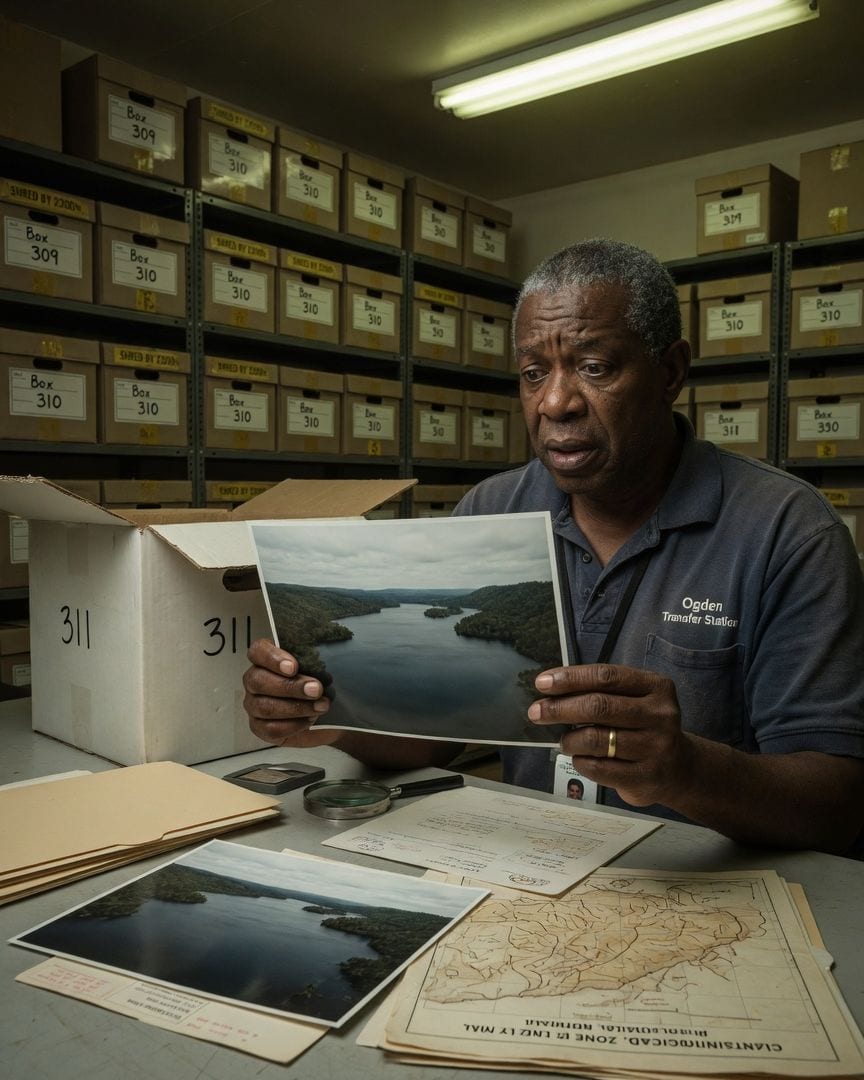 Declassified
Just six days from retirement, Wilmot Achebe, a man who had called the Ogden transfer station his second home for thirty years, began his final rotation. Slicing through a box of historical ephemera, he unearthed a folder marked 'Aerial Reconnaissance - VIETNAM - 1968'. Inside were ten glossy prints showing a lush river valley, completely submerged, a massive lake where no lake should have been. The dam for this valley wasn't built until a decade later. Wilmot's unease deepened when he found older maps, dated 1967, labeling the same site a 'CONTAINMENT ZONE - HYDROLOGICAL ANOMALY'.
13 min read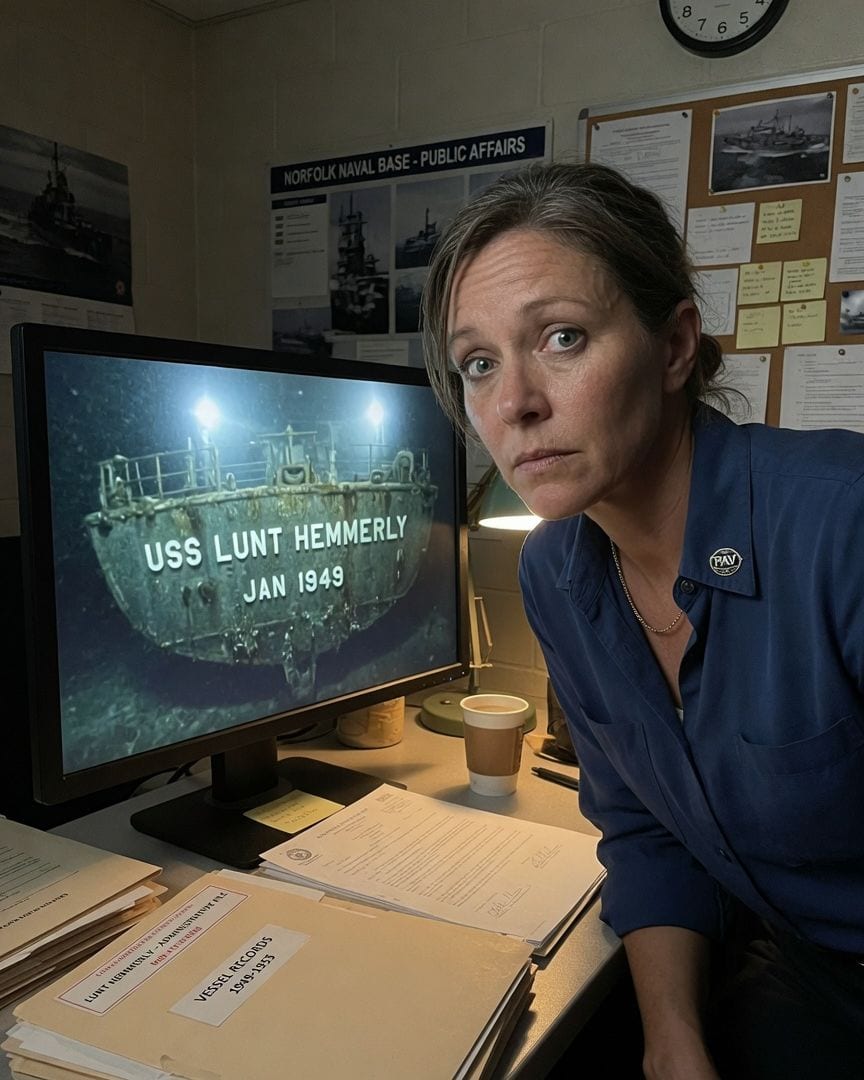 Declassified
Public Affairs Officer Reece Alderfield knew her job was purely bureaucratic, but watching the wreck survey of the USS Lunt Hemmerly held a morbid fascination. The destroyer escort had vanished without a trace in January 1949, leaving families waiting on a Norfolk pier. Now, a remote camera streamed its hull from the deep, encrusted with decades of growth. But as the ship's name emerged from the gloom, Reece saw something impossible: the date 'JAN 1949' welded directly onto the steel, as old as the rust around it, yet undeniably there. How could a ship bear the date of its own disappearance?
10 min read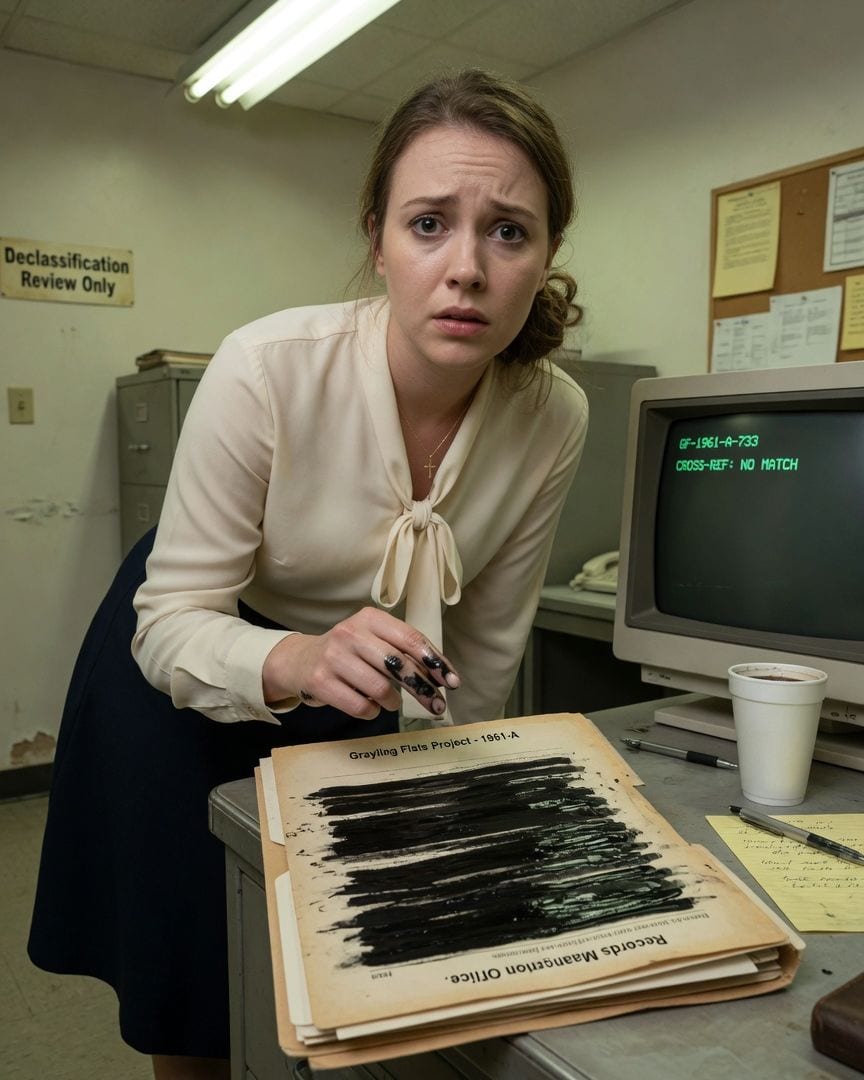 Declassified
Ruth Odalen, a new records clerk, began her first assignment in a sterile 1986 declassification office. Tasked with reviewing 'water-damaged' Cold War files, she found the manila folders perfectly dry, but a deeper anomaly waited inside. On one decades-old page, redaction ink gleamed impossibly wet-black and glossy, leaving a cold smear on her fingertip. It looked freshly applied, an impossible detail that seemed to know her, naming the very office she'd left that morning.
13 min read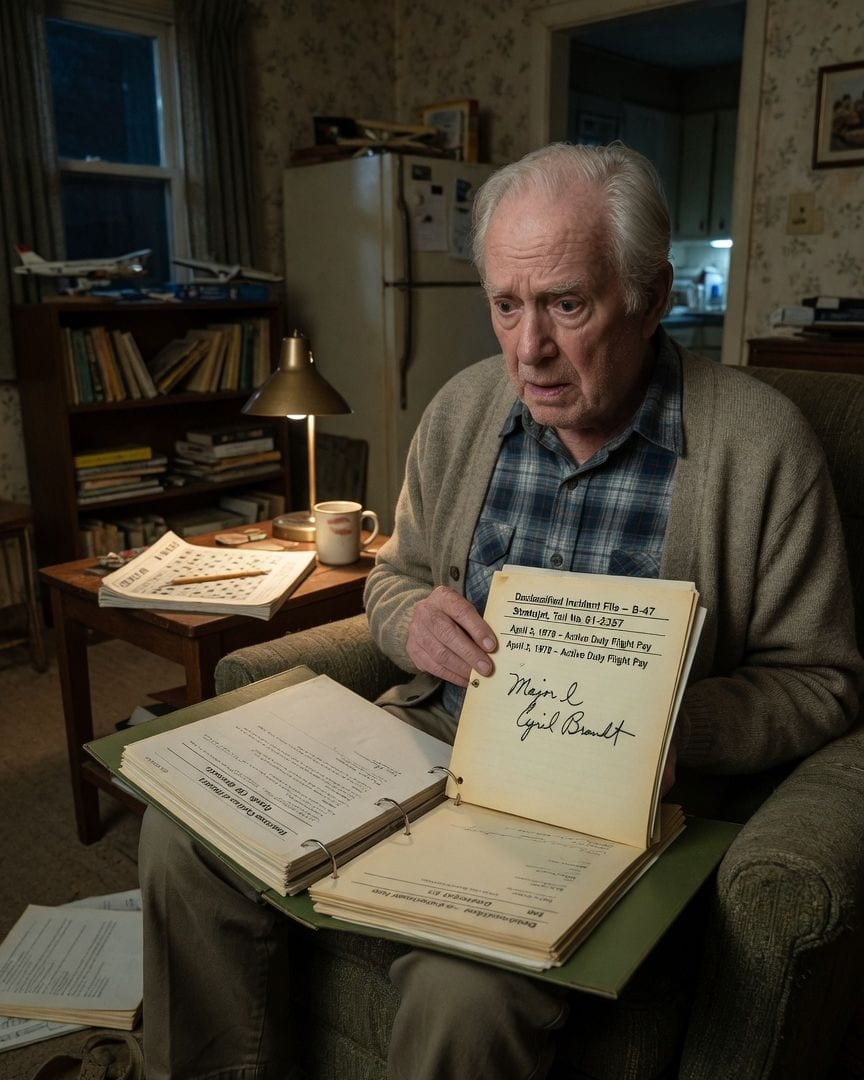 Declassified
Cyril Brandt, a seventy-two-year-old retired B-47 pilot, cherished his quiet Dakota retirement, his days filled with crosswords instead of combat. He expected to find long-awaited closure on a strange 1968 UFO incident when a heavy, declassified file arrived. Settling into his armchair, the weight of the olive-green binder felt familiar, but its contents quickly shattered his calm. He discovered maintenance logs for his B-47, detailing engine hours and tire rotations, dated years after the aircraft had been scrapped. Then, buried deeper, he found a payroll entry for himself, dated 1978 — five years after he left active duty — bearing his own unmistakable signature, the ink unnervingly fresh. How could his own hand have signed off on a mission that never happened, for a plane that no longer existed?
11 min read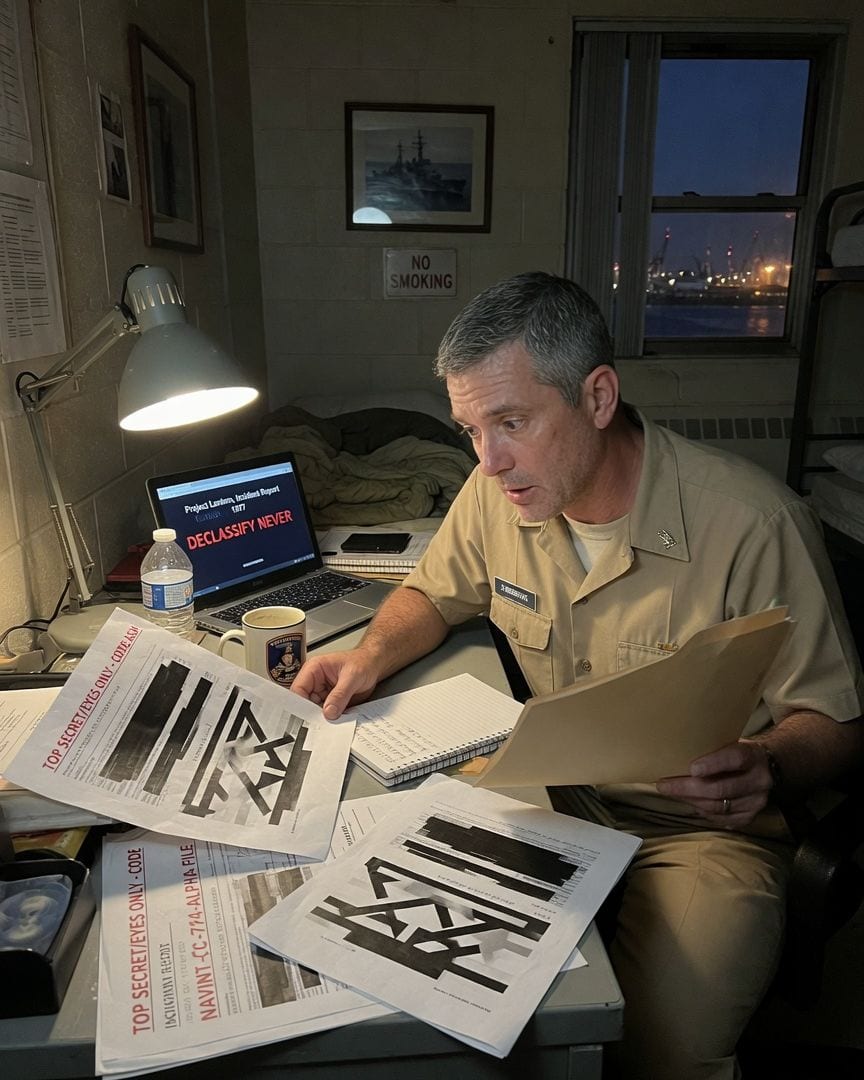 Declassified
Four days from ending his Gulf deployment, Lieutenant Commander Roy Ashgrove longed for home leave. On the bridge of the USS Farragut, his surface search radar painted a contact a mile off the port beam, but its altitude readout was impossibly zero. He ordered the searchlight on it, watching as the dark mass moved toward the beam, then stopped dead still on the moving water. Roy's incident report was swiftly stamped 'TOP SECRET,' and a follow-up directive carried a chilling downgrade schedule: 'DECLASSIFY NEVER.' His investigation soon unearthed an old Cold War file containing an identical, geometric redaction, hinting at a secret far deeper than a sensor glitch.
11 min read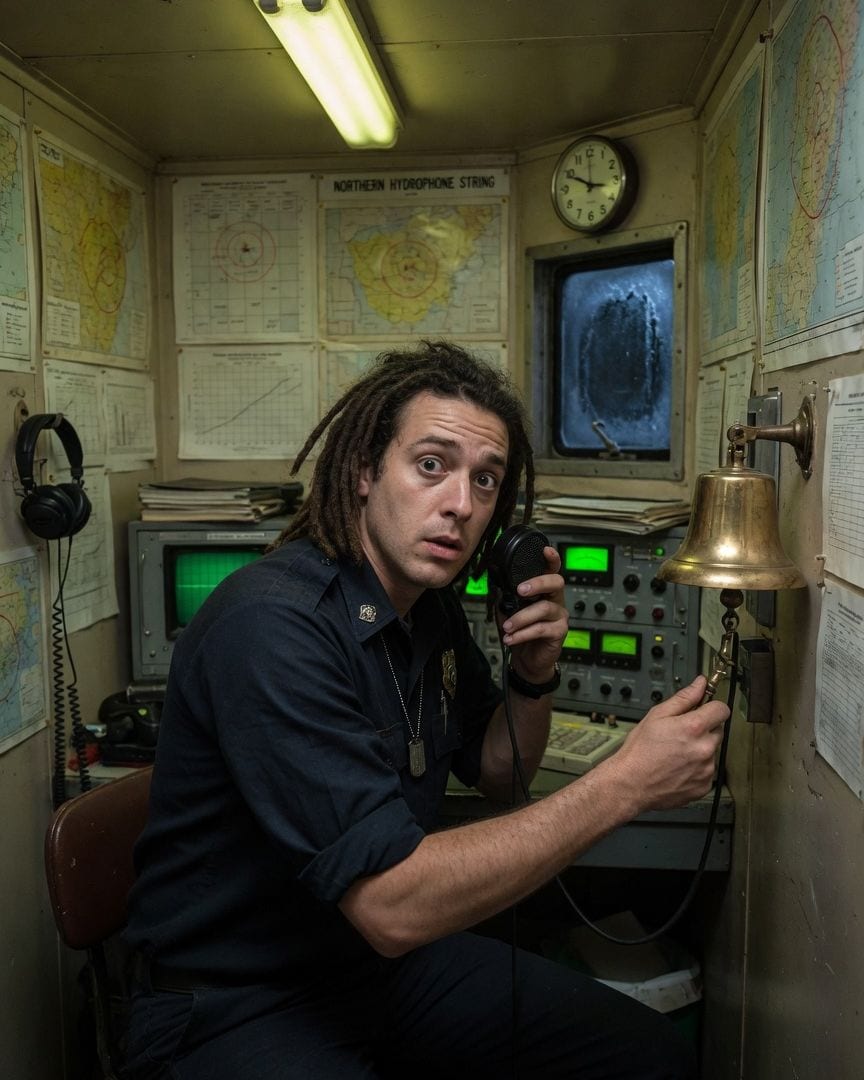 Declassified
Petty Officer Ruel Marchetti was deep into his final career hitch at the isolated ocean-surveillance station on Adak in October 1958. Under the dim console lights, surrounded by the Bering Sea's droning solitude, he knew every sound the hydrophone arrays picked up. But then, from the Aleutian dark, a clear, resonant ship's bell began to chime on the northern string, from four thousand fathoms of empty Bering silt. He checked and recalibrated, but the signal remained clean, distinct, and utterly impossible, tolling back precisely every half-hour for six nights from a featureless void. What could be ringing a bell in the crushing silence of the abyss?
10 min read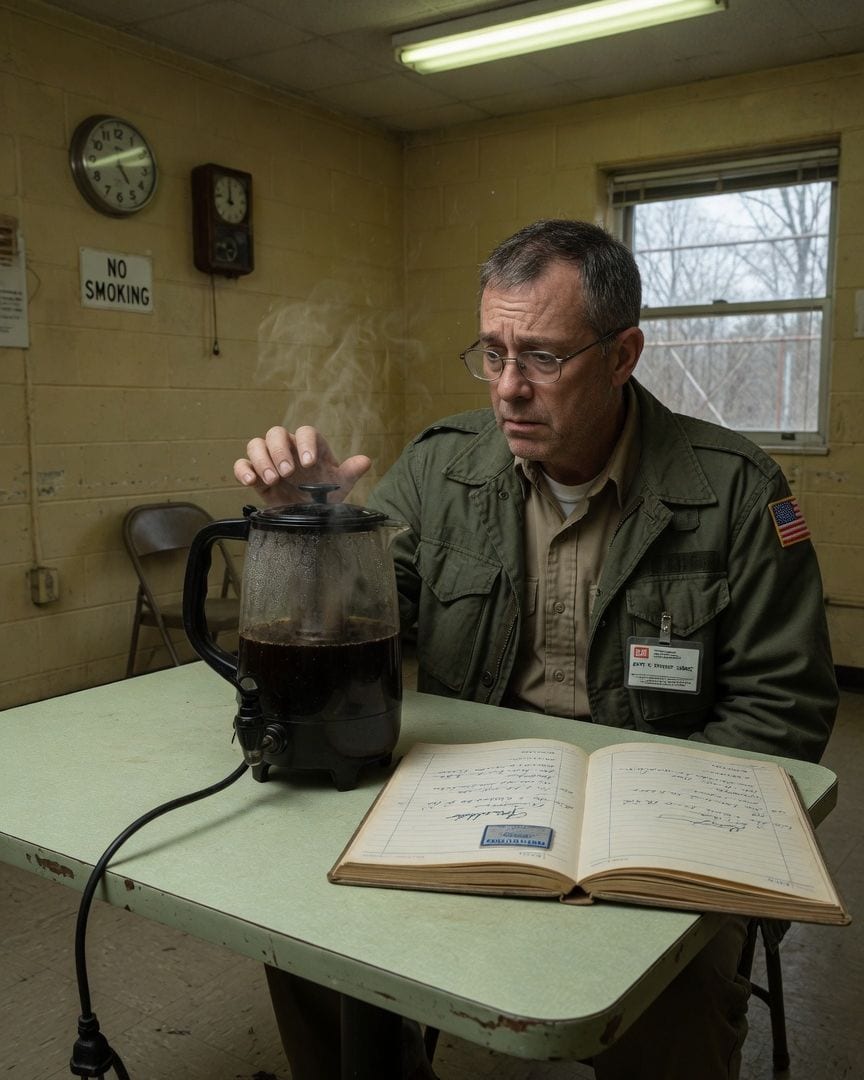 Declassified
Captain Nolan Threep, a methodical US Army engineer, expected another routine decommissioning at Alert Facility Twelve in rural Montana. The chains on the doors had rusted solid since 1970, promising a long-dead site. Yet, inside, a faint warmth hung in the air, and a glass coffee urn sat half-full, a wisp of steam rising lazily from its dark surface. The urn, warm to the touch, was clearly unplugged, and the duty log beside it, signed for a shift ending nineteen years prior, looked as though it had been signed yesterday. What secret could a supposedly abandoned Cold War facility hold?
14 min read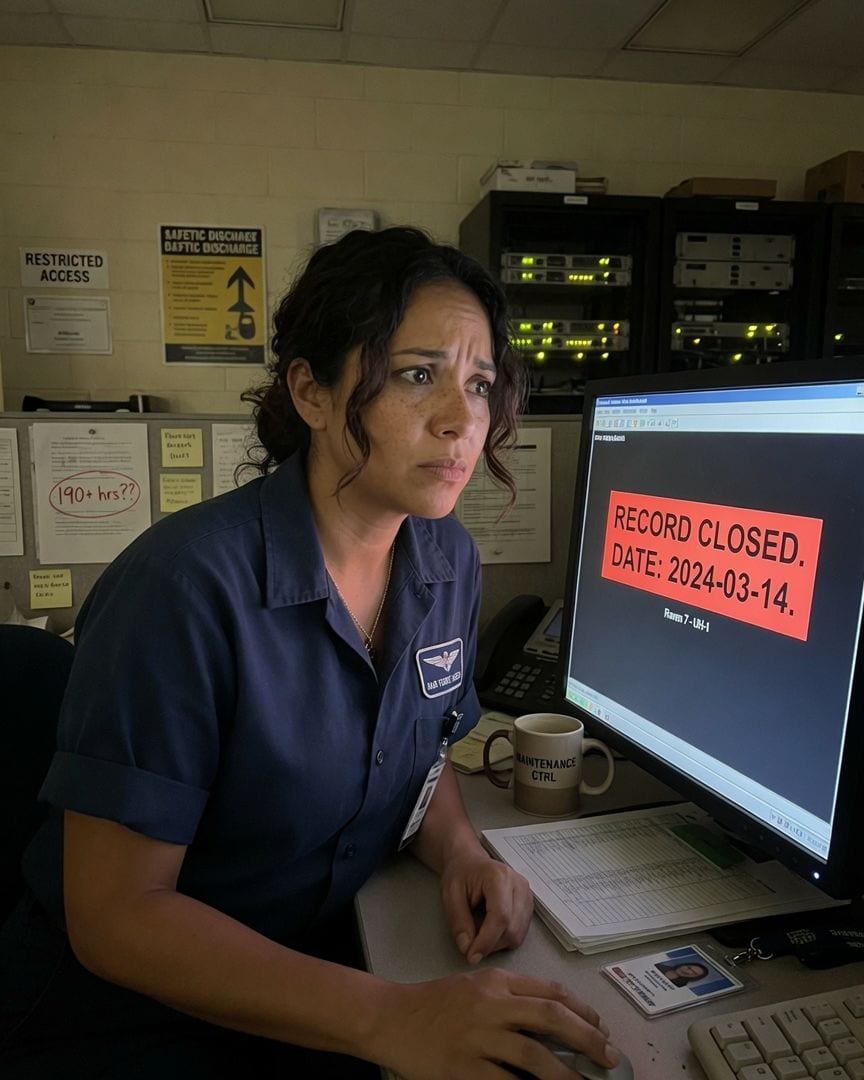 Declassified
Odalys Prieto, a meticulous maintenance controller at the Air Force Records Annex, faced a routine task: closing the file on a UH-1 Huey, Raven 7, officially lost in 1984. But the digital archives held a glaring anomaly. Raven 7's record showed flight hours accrued decades after its destruction, logged from a station demolished years ago. The next morning, the impossible total had quietly increased, detailing new missions, including one for a 'Non-Terrestrial Signal.' Odalys realized this was no glitch, but a live, active record. As she copied the data, her screen flickered, then declared the record abruptly 'CLOSED,' leaving her with a chilling question: who, or what, had just covered its tracks?
10 min read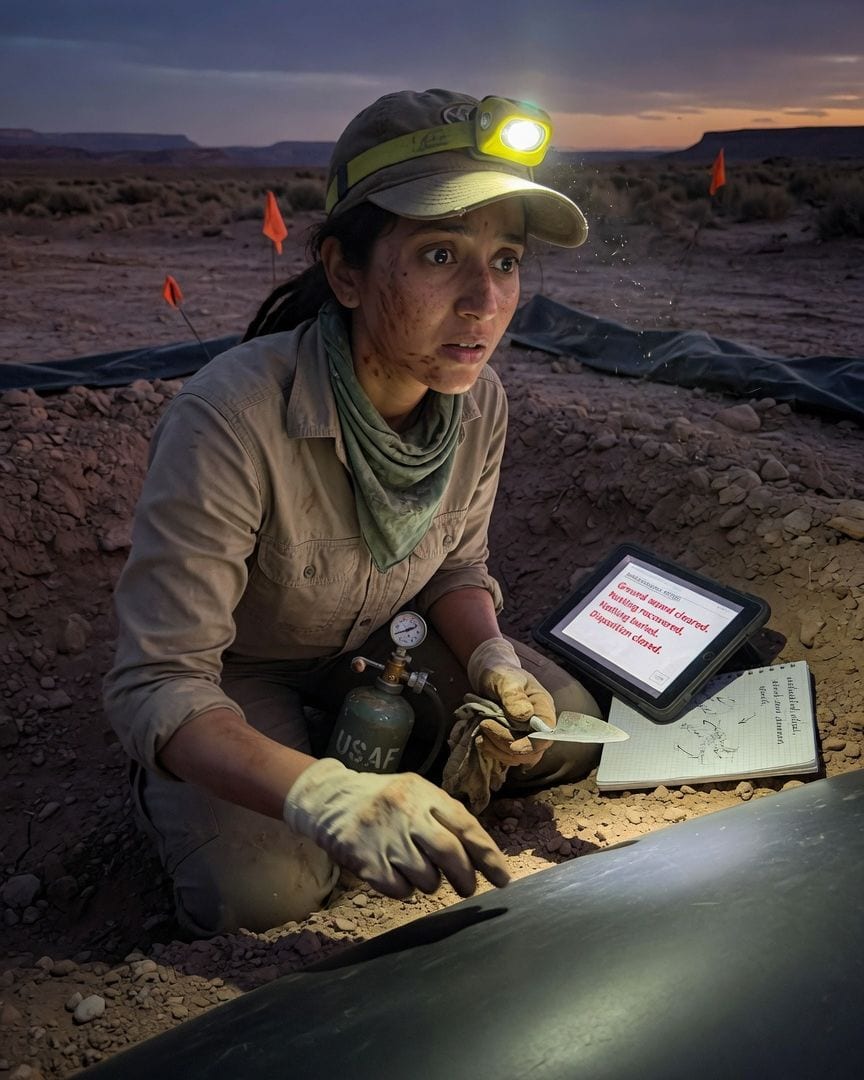 Declassified
Contract archaeologist Priya Raval raced against a ticking clock in the Utah desert, her permit set to expire in just nine days. The scorching sun beat down as she surveyed an Air Force site, officially 'cleared' decades ago, where nothing was supposed to be buried. Her first find was an 80-year-old oxygen bottle, still pressurized, unearthed from a cavity deliberately backfilled, a quiet mockery of official records. But the true anomaly emerged when her trowel struck something vast, dark, and perfectly smooth, unlike any known terrestrial construction. This seamless, featureless hull absorbed light, stretching into the earth below. Embedded on its surface was a metallic box etched with an intricate symbol identical to a pattern she'd dismissed as natural. What impossible history lay hidden beneath the Utah sands?
9 min read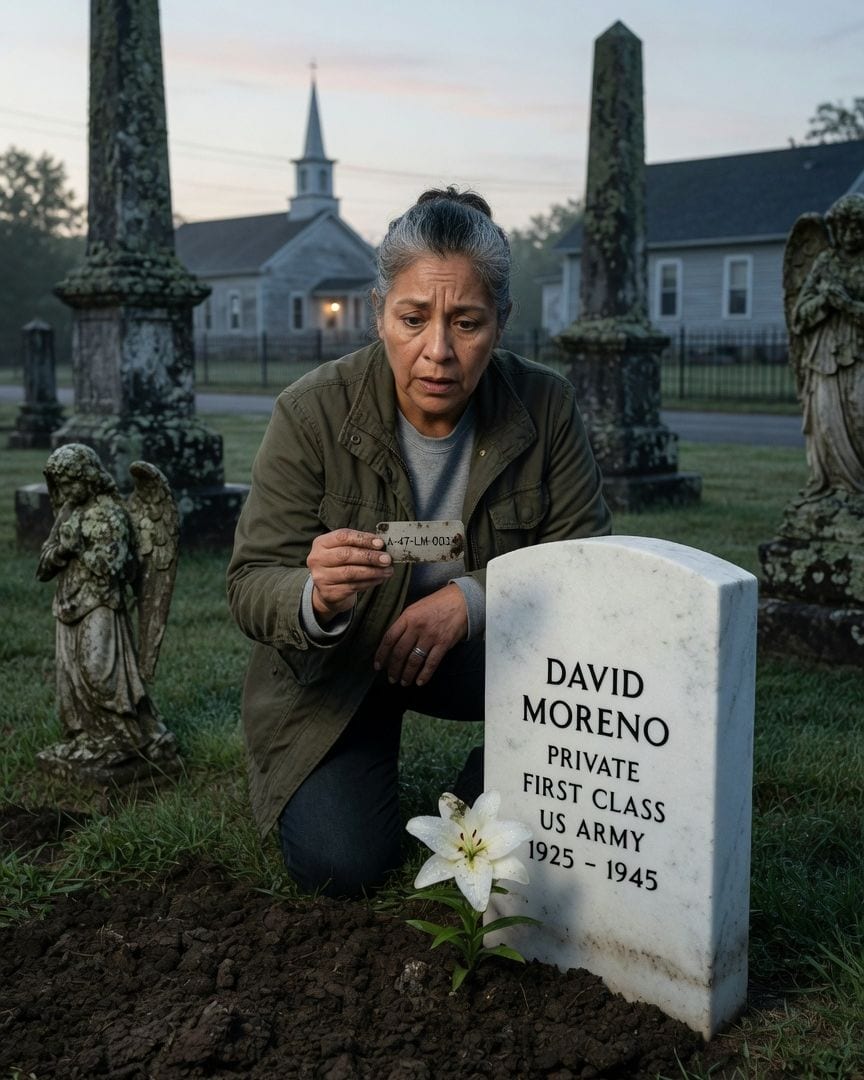 Declassified
Sergeant First Class Ida Moreno had spent two decades in Graves Registration, finding comfort in the quiet order of old paper and dust. But the recent amendments to her brother, Private First Class David Moreno’s, casualty file shattered that peace. David had died in 1945, his record static for sixty years, but over the last fourteen months, four different amendments moved his designated resting place. The last change, stamped just days ago, placed him starkly in St. Jude’s Churchyard — only fifty feet from her front door. As she walked past the familiar headstones each morning, a cold dread whispered: was this a bureaucratic glitch, or something far more personal?
12 min read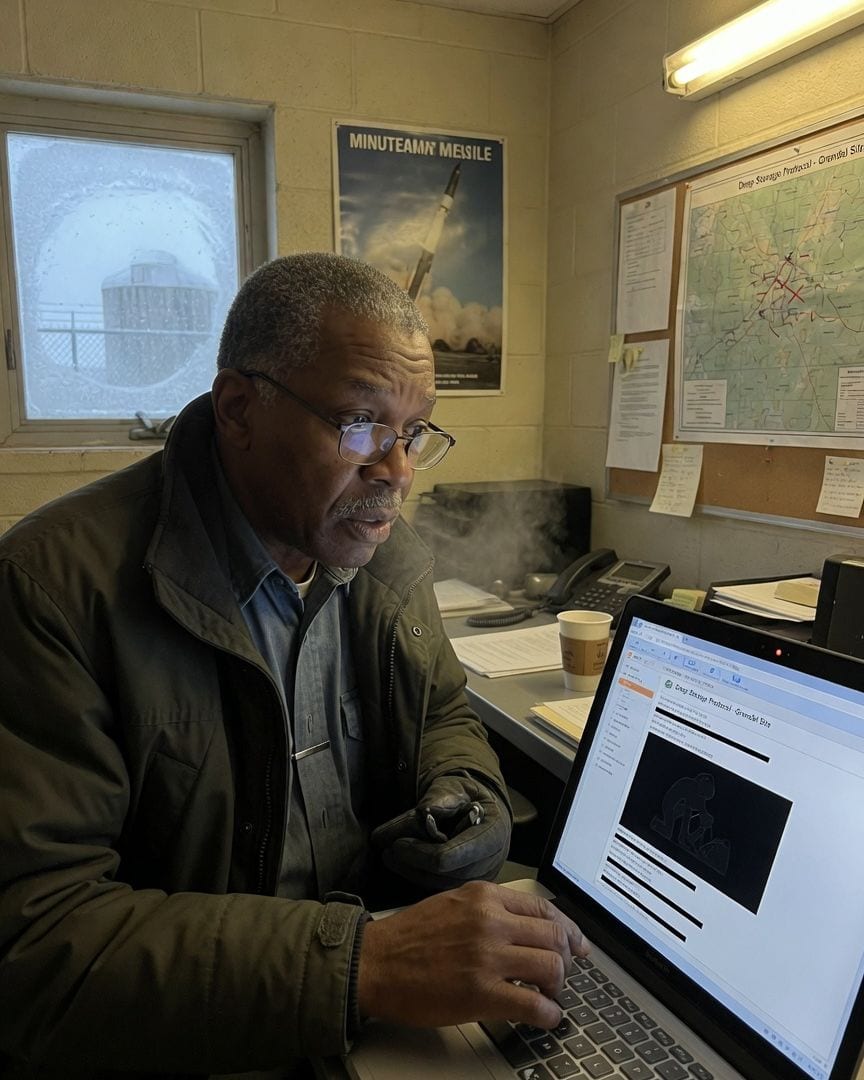 Declassified
Colonel Ren Marsalis, a career Air Force officer, faced his final administrative cleanup before retirement at the decommissioned Grendel Site in the biting North Dakota winter. He expected a sealed missile capsule, but Capsule 7's eight-ton door stood cracked open eleven impossible inches, its hydraulics removed in 1985. Inside, consoles glowed with static alerts from an unknown power source, while an old printer endlessly spooled paper repeating one chilling message: "CREW STILL ON STATION. ACKNOWLEDGE." This impossible communication, from a long-dead system, was no glitch; it hinted at a deliberate, hidden presence, a truth reinforced by a redacted document showing a hunched, humanoid shape.
12 min read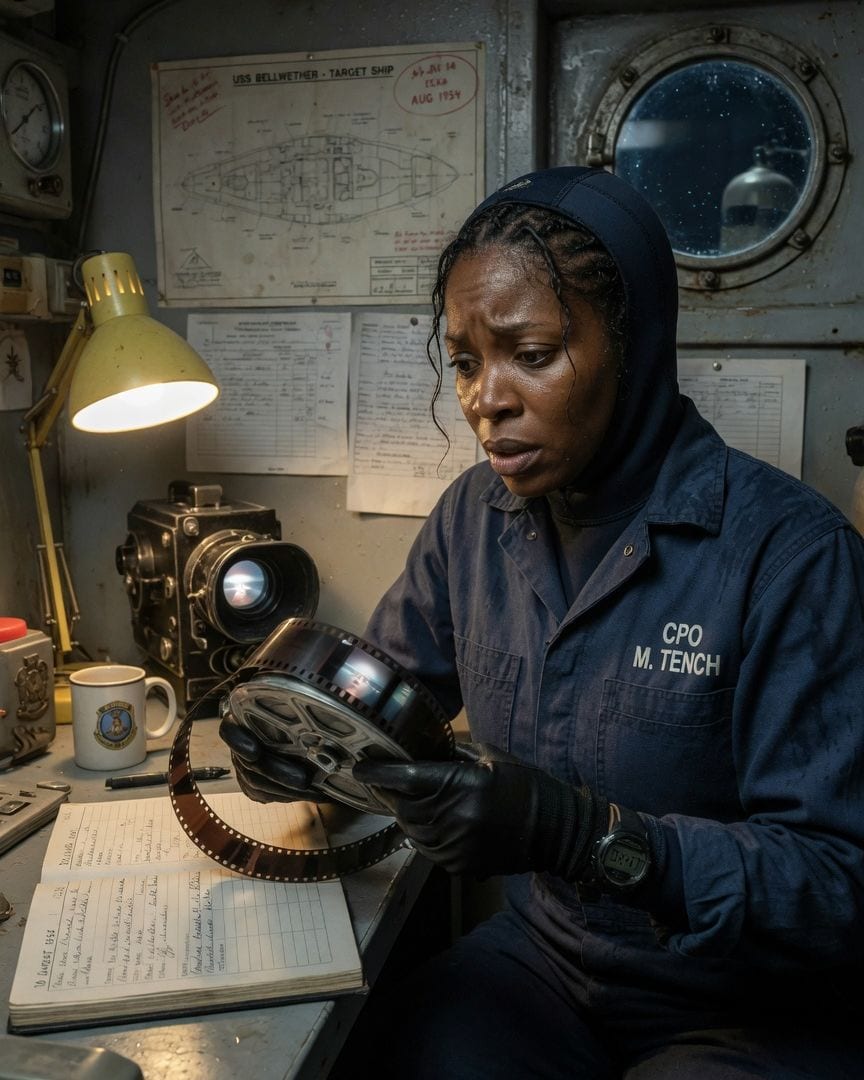 Declassified
Chief Petty Officer Marlo Tench descended into the deep twilight of Ferrell Atoll, her nine-hour salvage window already shrinking. Ninety feet below, the USS Bellwether, a designated Cold War target ship, waited, officially an unmanned wreck from a 1954 atomic shot. But as Marlo’s dive lights swept its hull, she found no blast damage, only impossibly vibrant paint and every hatch dogged from the inside. Her sonar then detected a faint internal hum, reading a live power plant within the sealed vessel, and later, the official film showed a blurred human face pressed against a porthole, staring out from inside the ship just before the atomic blast.
10 min read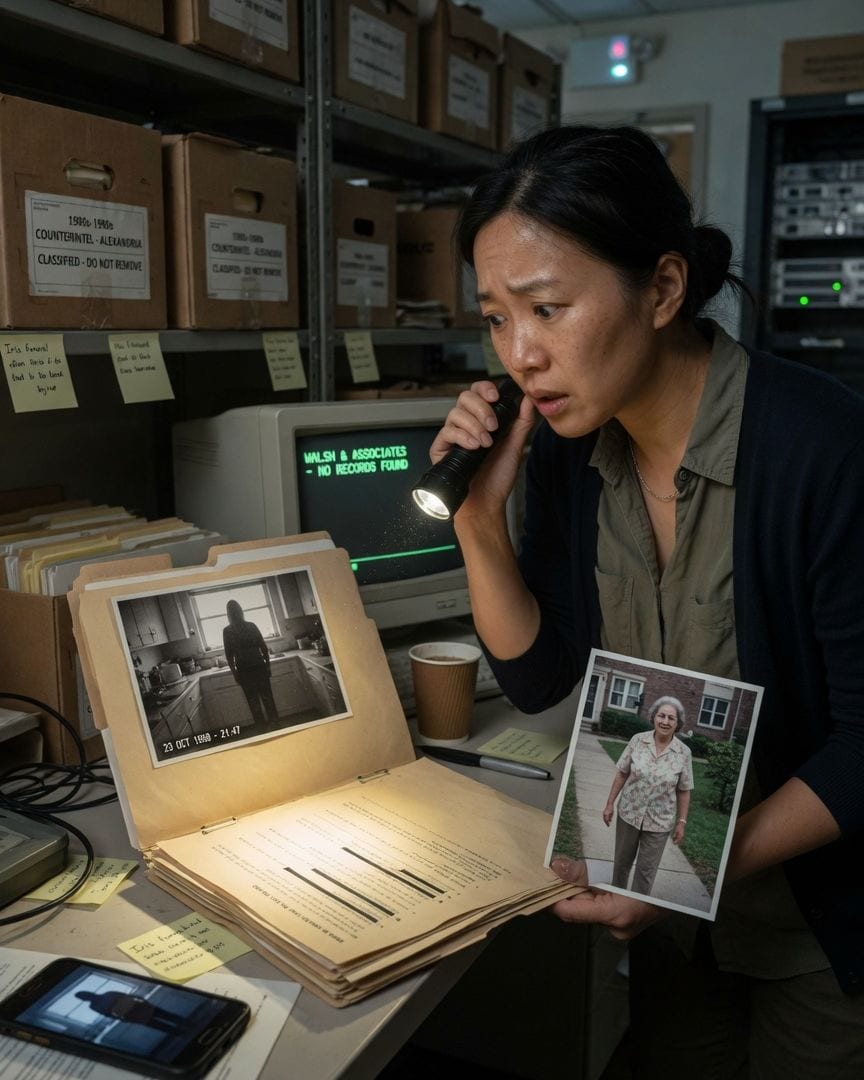 Declassified
At eleven PM, archivist Junie Kwan, 32, had just one hour before a 1988 counterintelligence dossier on a non-existent defector resealed. In the dusty, silent Alexandria archives, the hum of ancient HVAC was the only sound as she adjusted her flashlight beam over the stacks. Her heart seized when she found a grainy surveillance photograph inside: it was taken through a window of her grandmother Iris Sinclair’s flat, dated the night of Iris’s funeral. The photograph showed someone standing at the kitchen sink, even though Junie knew the flat had been empty and locked that night. As her search deepened, a loose photo of Iris herself slipped out, showing her grandmother months before her death with a vacant-eyed, unnatural smile Junie had never seen. Could her own grandmother have been part of this chilling Cold War mystery?
9 min read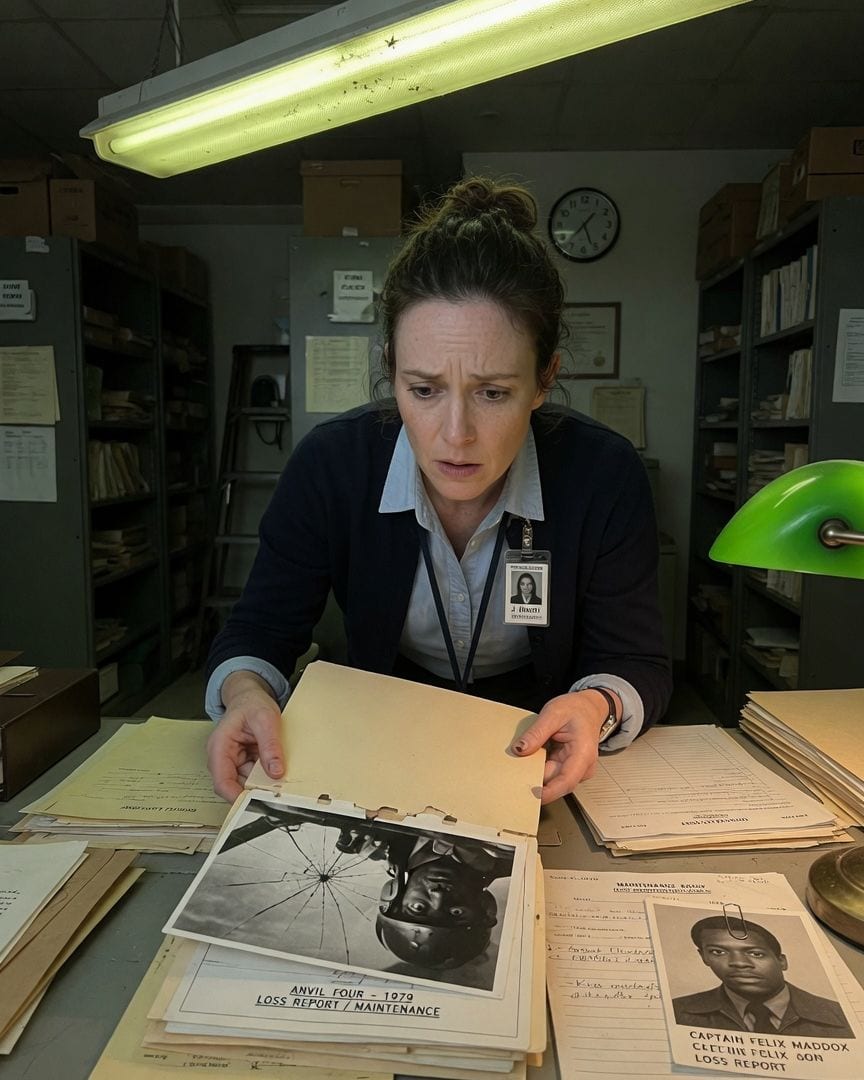 Declassified
National Archives archivist Josie Ilnicki spent years immersed in forgotten histories, the fluorescent hum of the annex a constant companion. Today, processing a declassification request that had waited forty years, she opened the file for 'Anvil Four,' a helicopter lost in the Nevada ranges in 1979. Inside, past the official loss reports, Josie found a maintenance sheet dated eight months after the crash. Stapled to it was a grainy photograph, showing the cracked windscreen – and behind it, Captain Felix Maddox, the pilot officially dead, staring out with wide-open eyes, as if still flying.
10 min read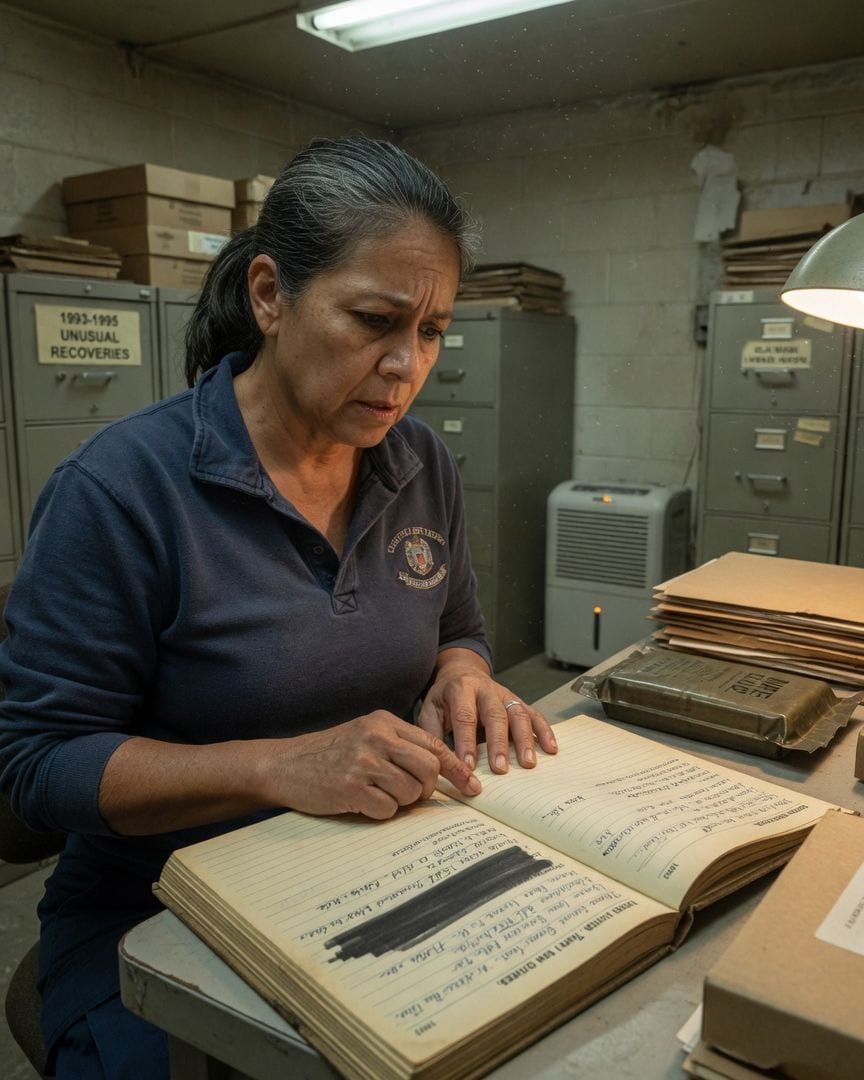 Declassified
Ada Mireles, a retired Coast Guard pilot, faced a chilling discovery in the sterile evidence room. For decades, she had searched for Dune Two, the helicopter that vanished in '93, and now its mangled seat pan had been recovered from the Gulf. Among the debris, a sealed survival kit yielded MREs, their plastic casings cool and slick, but a pre-flight habit revealed an impossible expiration date: 'EXP 203X.' This future date defied all logic, sending her to dusty archives where a duplicate logbook entry for Dune Two recorded a kit issued in 1995, expiring in the 2030s, alongside a cryptic 'Project CHRONOS' note.
10 min read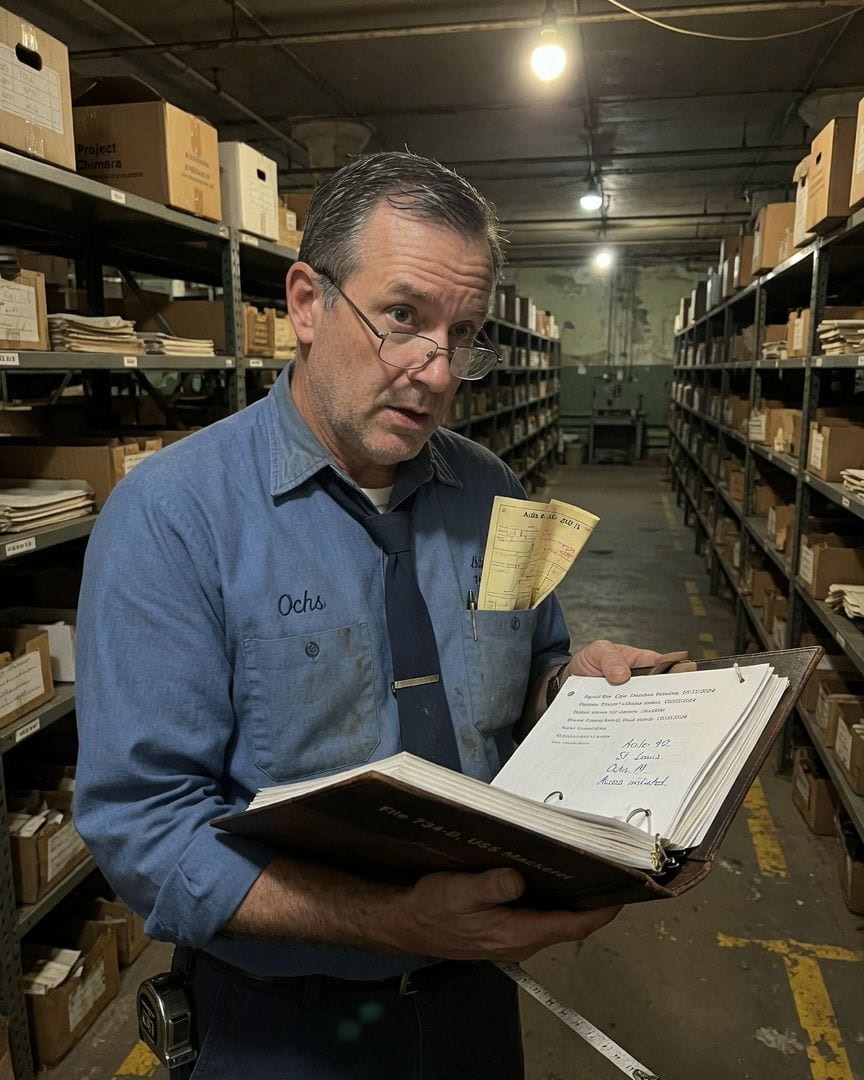 Declassified
Marlin Ochs, a man of precise rhythms at the St. Louis depot, approached Aisle 40 for its final inspection before the entire structure was pulped tomorrow. For nearly two decades, the aisle had been a consistent ninety-two paces long. But on this night, his boot heels clicked past the expected mark, stretching to one hundred and nineteen paces, revealing an impossible, colder extension. Deep inside, Marlin found a heavy, leather-bound binder titled 'File 734-B, USS Mackerel,' a Cold War submarine lost with all hands in 1958. It felt oddly warm, almost humming against his palm, filled with maintenance logs and payrolls dated decades after the sub was sunk.
12 min read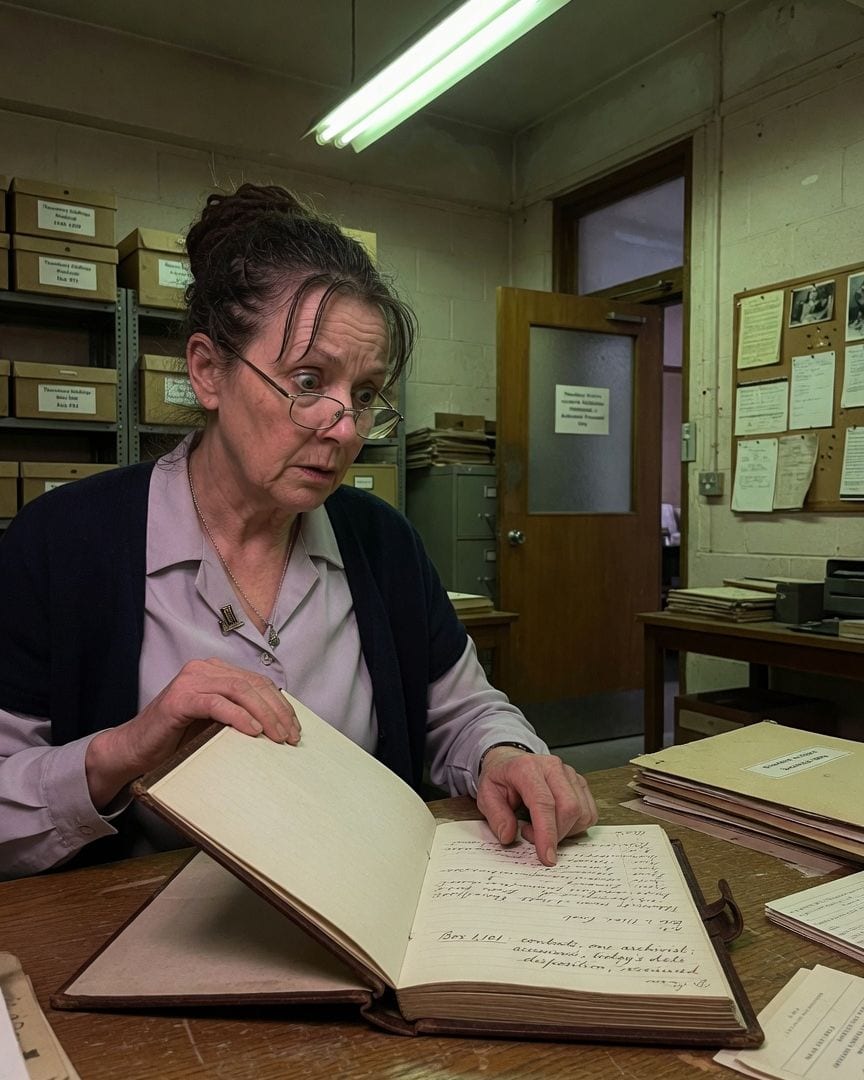 Declassified
Methodical archivist Beatrice Kell had just four precious hours left before renovation began, a final chance to complete two decades of her life's work within the Thornbury Collection. The heavy oak door creaked shut, sealing her in with the comforting scent of old paper. But as she opened the original 1952 accession register, a familiar document she knew intimately, she found an impossible entry: 'Box 1,101: contents, one archivist; accessioned, today's date; disposition, retained.' Her own title, linked to a box that didn't exist, settled a profound chill deep in her bones. Was this a macabre joke, or something far more sinister?
11 min read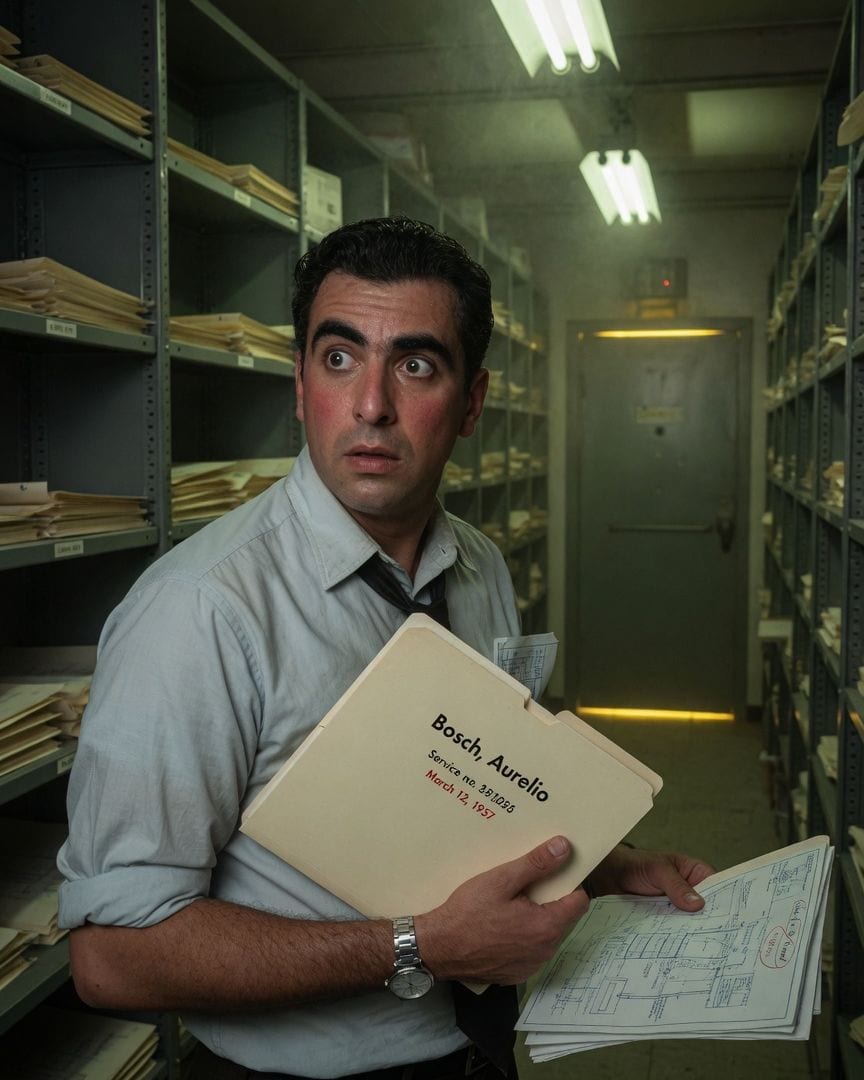 Declassified
Aurelio Bosch, a meticulous 32-year-old night-shift clerk, found comfort in the quiet hum of the Cheyenne records vault in the winter of 1957. His solitary routine of comparing physical files to digital manifests was predictable until he reached Aisle 3. The vault's blueprints showed a solid wall, but the aisle stretched ten impossible feet further, ending at a heavy, unlisted door. From beneath it, a faint light glowed and a rhythmic hum vibrated through the air. Inside, a modern printing press churned out blank official forms, but it was the single file on a nearby desk that bore his own name, his service number, and a date for tomorrow.
10 min read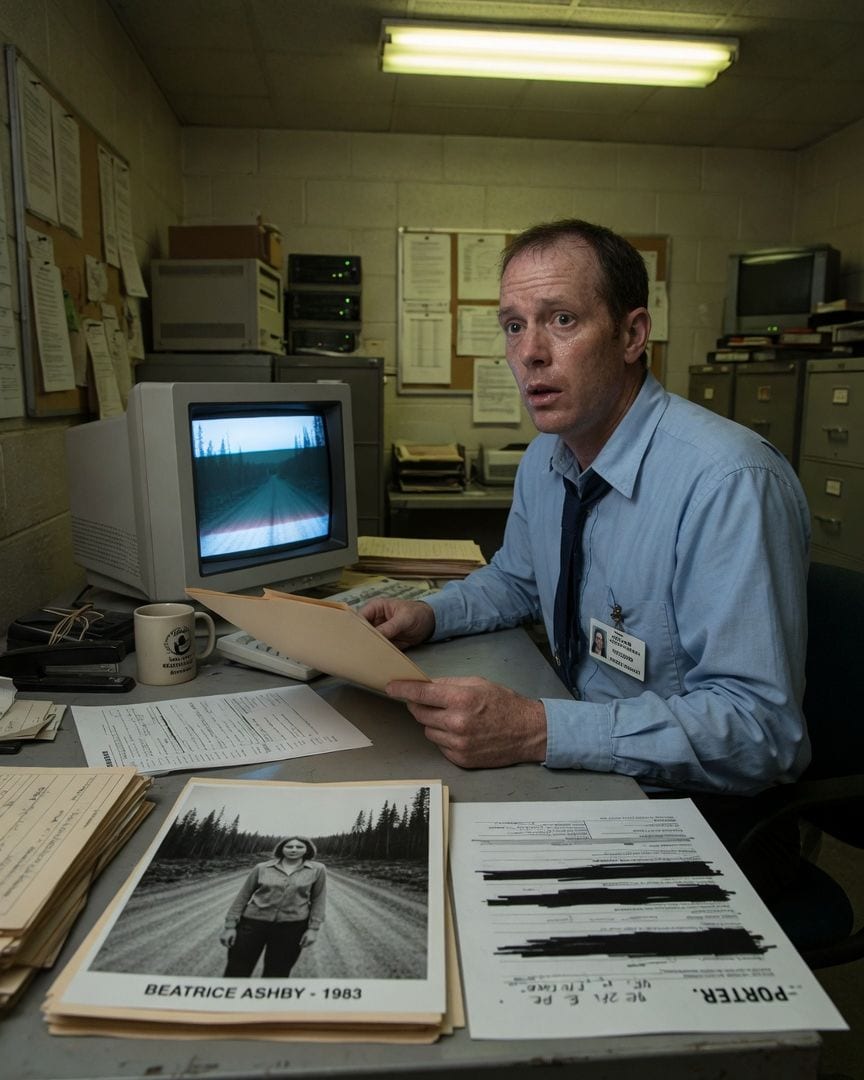 Declassified
Devon Ashby, a federal records clerk in Missoula, Montana, spent years dismissing a repeated request for a 1983 file. He finally pulled the thin folder, expecting a clerical anomaly, but found a stark black-and-white photograph. It showed his mother, Beatrice Ashby, looking directly into the lens, calm and familiar, yet stamped with the year 1983. Devon remembered her funeral in 1981 and the quiet scrape of earth against her coffin, making her appearance in the official file two years later a chilling impossibility. Further investigation revealed conflicting records and a handwritten addendum with geographic coordinates, hinting at a truth far darker than a simple misfile.
11 min read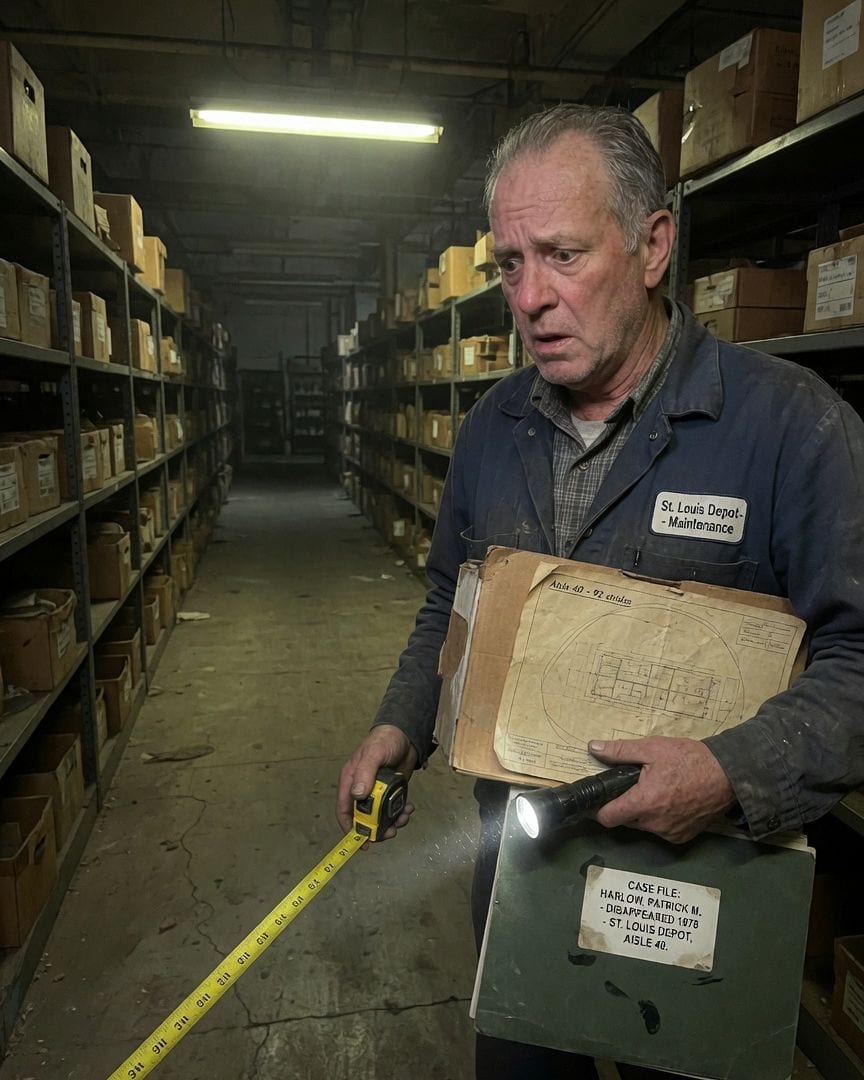 Declassified
Marlin Ochs, a 58-year-old depot worker, felt the familiar ache in his knees on his last shift before the St. Louis depot was pulped. For nineteen years, he’d walked Aisle 40, 92 strides wall to wall, a quiet ritual in the vast silence. Tonight, retrieving the final carton, his foot hit concrete where the wall should have been, but there was no wall. He kept walking, counting steps, into a physical space that could not exist. Deep within this impossible extension, he found a thick file about a 1978 disappearance, its cover sheet dated 'current year' with ink still wet beneath his thumb.
11 min read