 Declassified
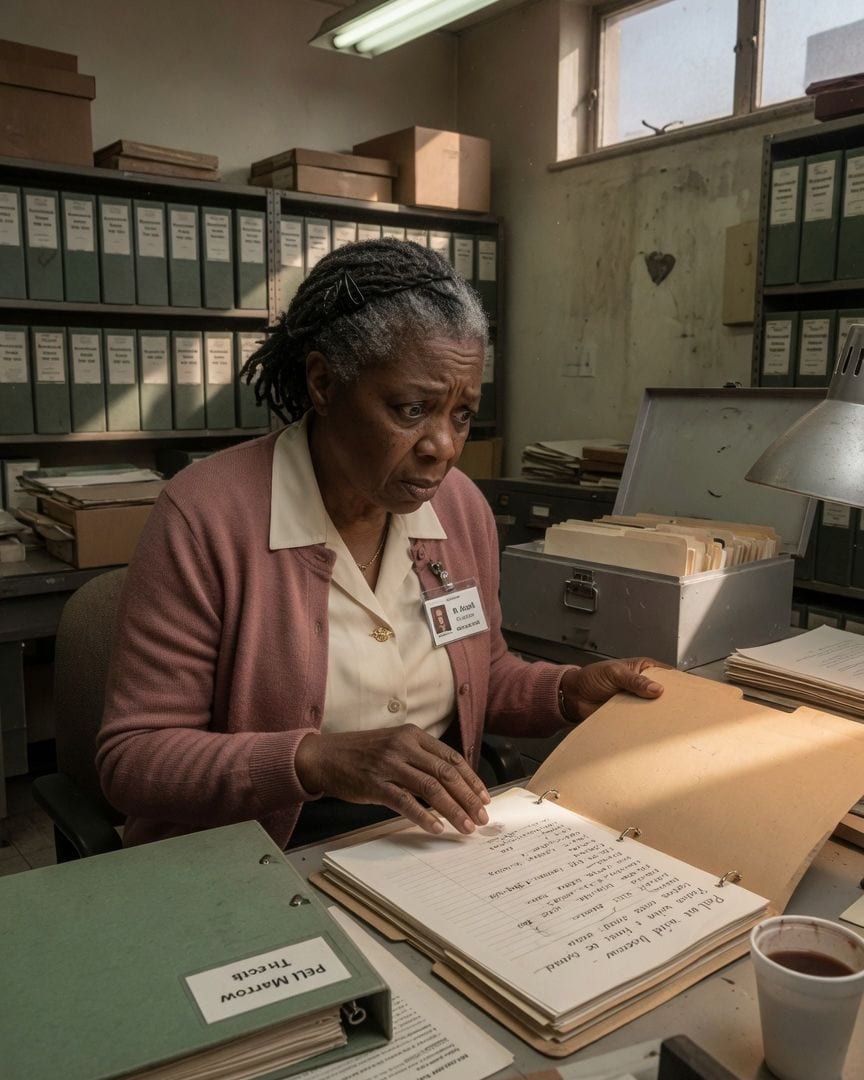
Marguerite Ansell, a records clerk nearing her final week before retirement, meticulously audited Cold War-era files. In the cool, dusty archive, she pulled a file for an oiler declared missing in 1951. Inside, she found a fueling schedule with entries stretching into the present, the last dated just eleven days ago. Then, a second lost ship revealed a similar impossible log, and a cold certainty began to bloom in her chest. Deep in the shadows, Marguerite found an unmarked steel box containing a file for a reconnaissance plane lost in 1968. Its flight log showed a final flight yesterday, to the precise coordinates of her own archive building.
15 min read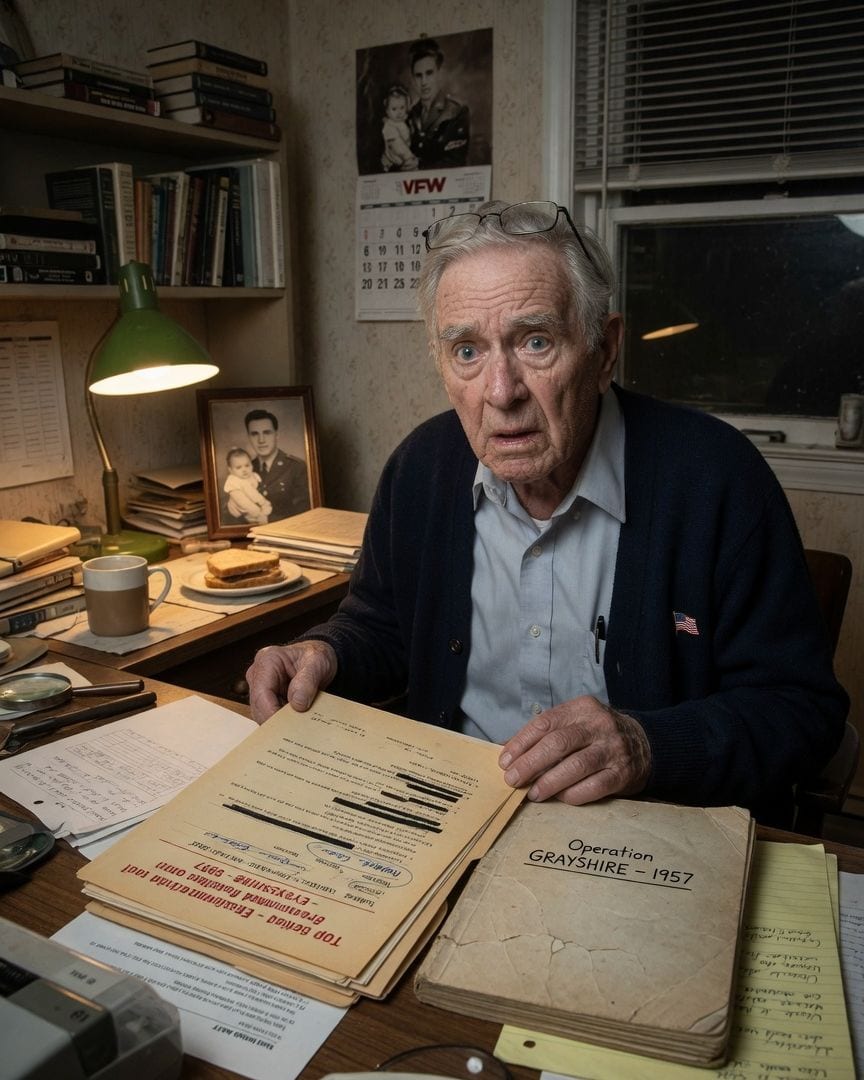 Declassified
Private Kell Hobarth, twenty-eight, stood in the dust of Vermey Flats, a letter in hand announcing his daughter Marie’s birth eleven days late. The next day, his name appeared on a roster for 'GRAYSHIRE,' a mission his range officer insisted never existed. Yet, at dawn, Hobarth alone witnessed a profound, silent flash of light, while his six tent-mates slept undisturbed. Fifty years later, Kell, now seventy-eight, still pursued the chill of that dawn, sifting through heavily redacted files. His relentless search led him to a forgotten archive room where he unearthed an unofficial logbook detailing 'Operation GRAYSHIRE – Target acquisition: non-terrestrial.' Deeper still, a sealed folder detailed 'Personnel Reassignment and Memory Debriefing Protocol' for a 'contact event,' listing his own name as 'Subject 001' for 'witness management.'
10 min read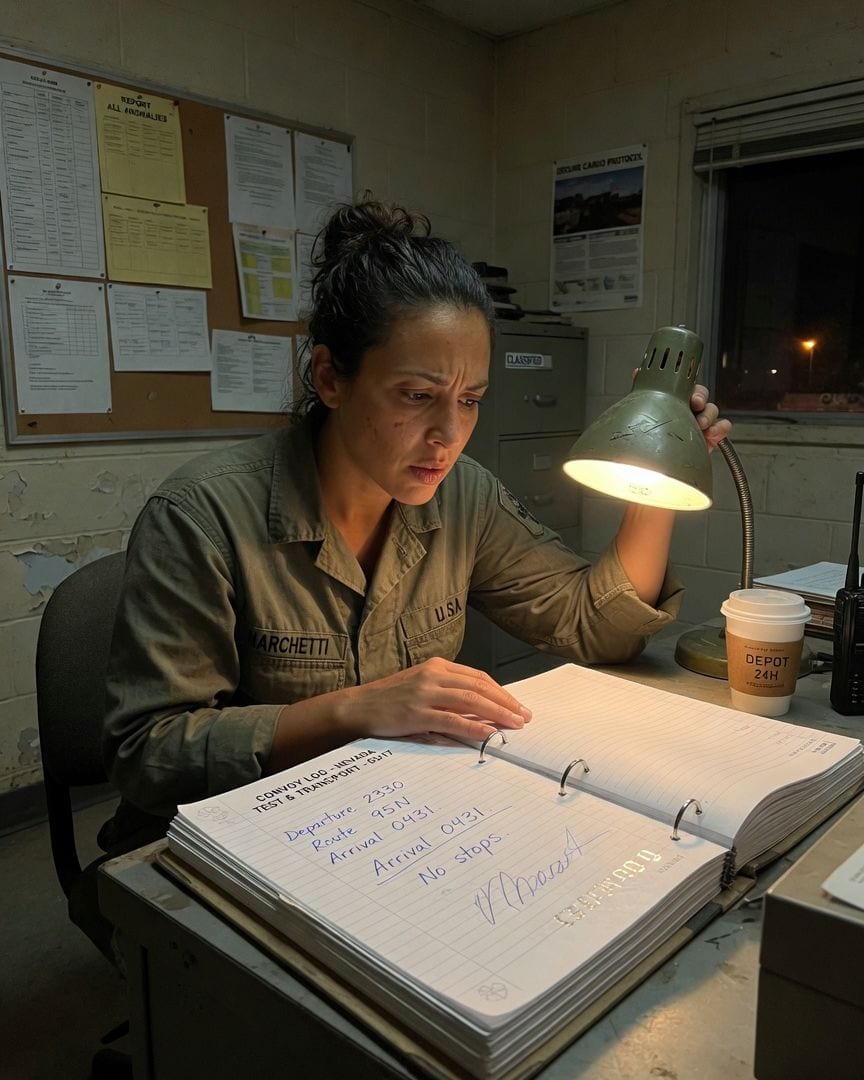 Declassified
Specialist Cleo Marchetti followed the lead truck through the desolate Nevada desert, transporting an unidentified craft. Her only job was to keep the taillights of Senior Specialist Felix Hartley’s rig in sight. But at the halfway point, they simply vanished, leaving Cleo alone in the oppressive dark for four silent minutes. When the lights reappeared impossibly closer, Cleo knew something was terribly wrong. Yet, the official convoy log, bearing her own signature, recorded a perfect, uneventful journey with no stops. How could an entire four minutes disappear from the official record she herself confirmed?
11 min read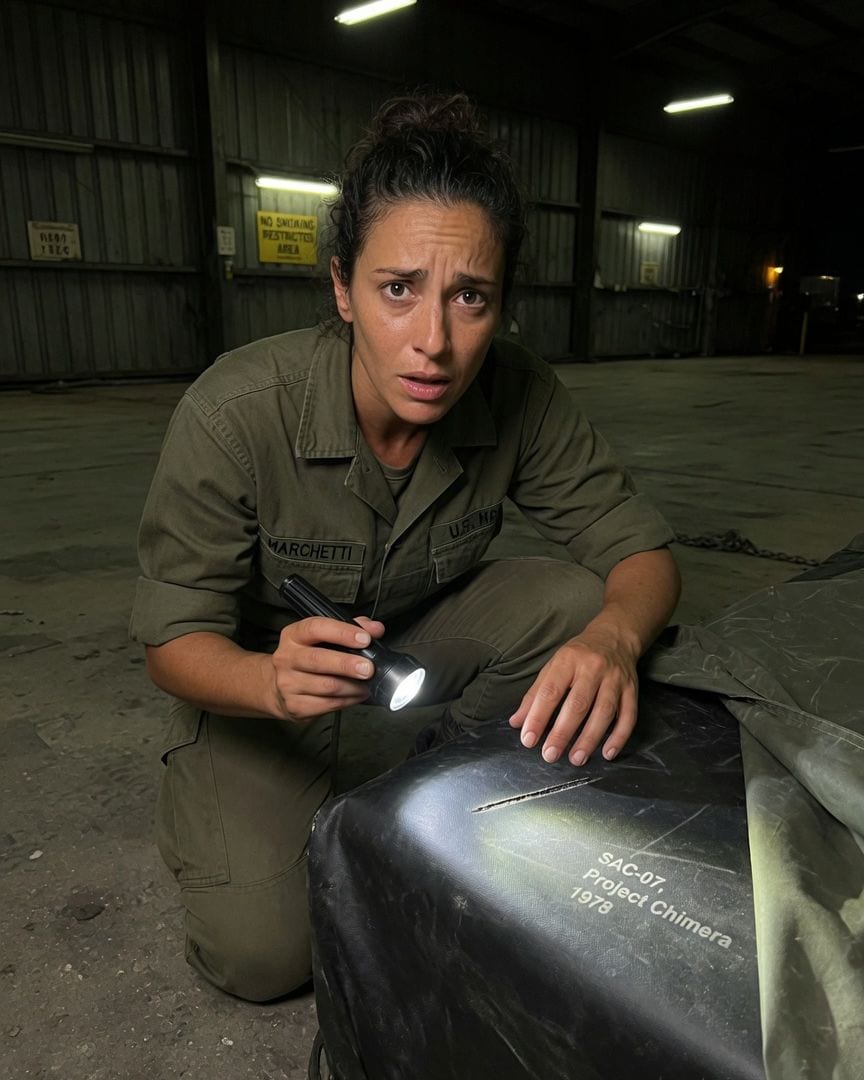 Declassified
Specialist Cleo Marchetti knew her job was simple: keep the lead truck's taillights in sight across the empty Nevada desert. But at 0200, Sergeant Caldwell's truck simply blinked out, only to reappear three hundred yards closer moments later. Despite Cleo's shock, the official convoy log recorded a perfectly routine, non-stop journey, denying her very perception of reality. Her professional integrity demanded answers, leading her to the sleek, tarped craft she'd transported. There, she found a fresh scratch, and beneath it, an impossibly warm, faded stencil revealing a classified 1978 project name on a supposedly modern asset.
10 min read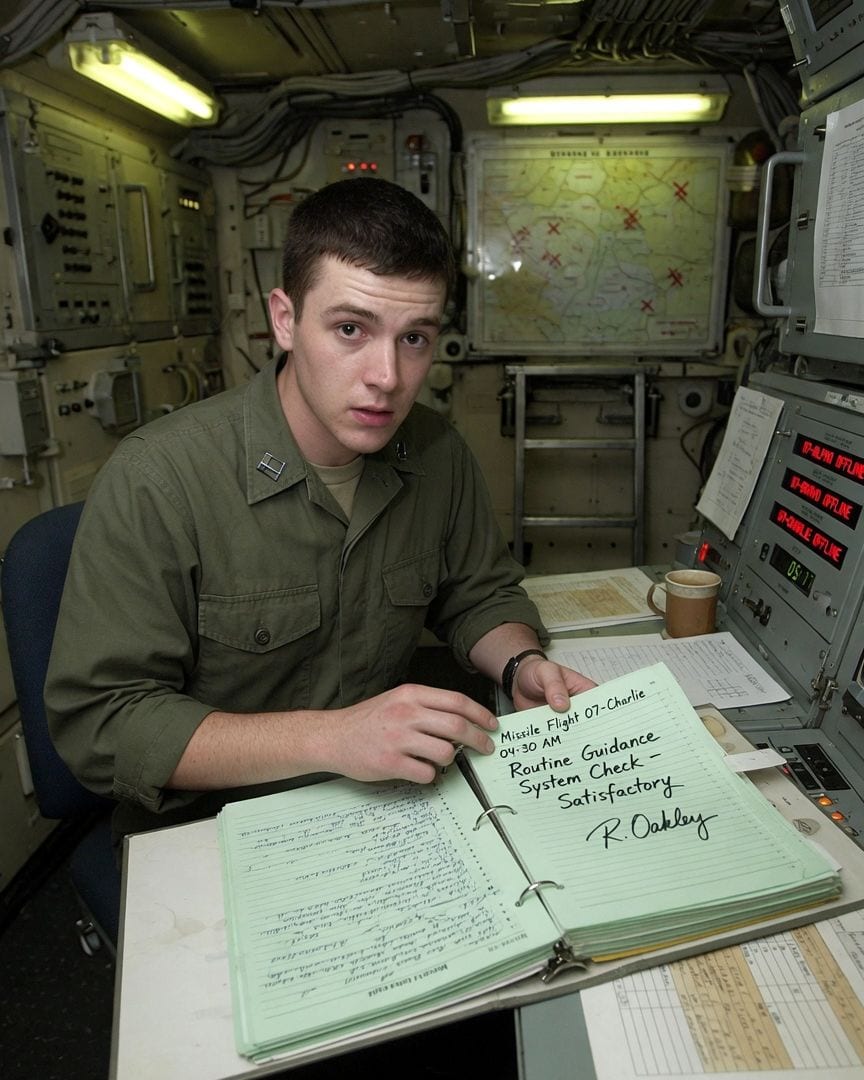 Declassified
Six weeks into his command, Second Lieutenant Hobart Nye’s Wyoming missile capsule went silent after a 0247 shriek. Topside security reported an unidentified object near the fence, their radio dissolving to static as Hobart watched his missile flight go dark in a precise, terrifying sequence. The official explanation blamed equipment, but the profound eleven minutes of silence and his security team's amnesiac return left him unsettled. Later, reviewing physical launch logs, Hobart found a 'Routine Guidance System Check' for a dead missile, dated hours after the incident and signed by his crew chief, Reginald Oakley – a man confirmed asleep in his bunk. How could a dead missile undergo a check by someone miles away, asleep?
10 min read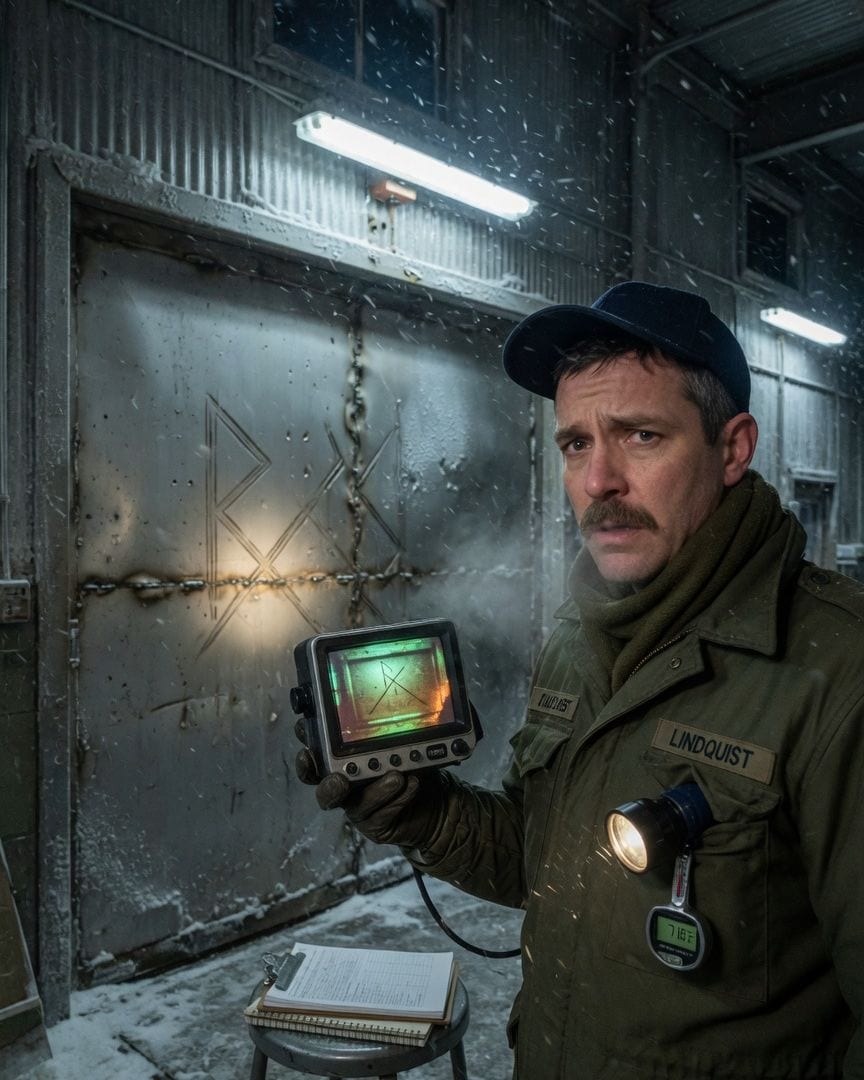 Declassified
Technical Sergeant Wes Lindquist endured Alaskan winters, his duty in the vast, frigid hangar simple: log Bay Two’s temperature. The bay, sealed shut for months, inexplicably ran nine degrees warmer than the icy building for 111 straight nights in 1978. Despite official dismissal, the numbers kept climbing, forcing Lindquist to keep a secret log as the bay’s internal heat reached an impossible 72 degrees. Driven by cold certainty, he discovered a faint, unsettling symbol etched along the door's weld. Later, peering through a tiny seam with a borescope, he saw the identical mark shimmering with a fresh, orange glow from *inside* the supposedly empty, sealed bay.
11 min read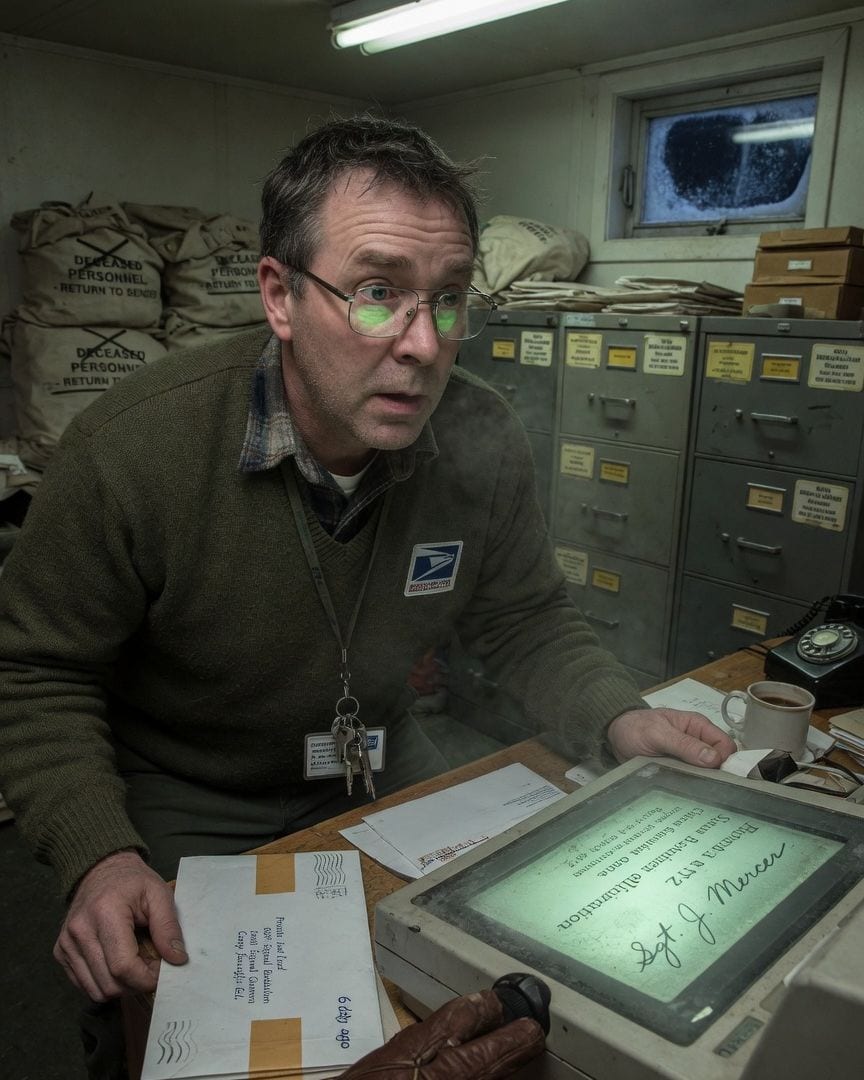 Declassified
Postmaster Rowan Ashcroft had spent two decades watching the weekly mail plane land at Camp Bidwell Annex, a lonely outpost in the bitter Alaskan wind. His methodical mind, accustomed to order, was jolted when the latest mail sack contained forty-three letters for men officially declared dead in 1969. Each envelope, postmarked within days, was addressed to a soldier who wasn't coming back, and Rowan found one already opened and neatly resealed. Driven by duty, he began to sift through declassified Army archives, only to uncover a chilling maintenance log entry for the camp's equipment, dated three years after the base was officially shuttered. What was still happening at Camp Bidwell?
9 min read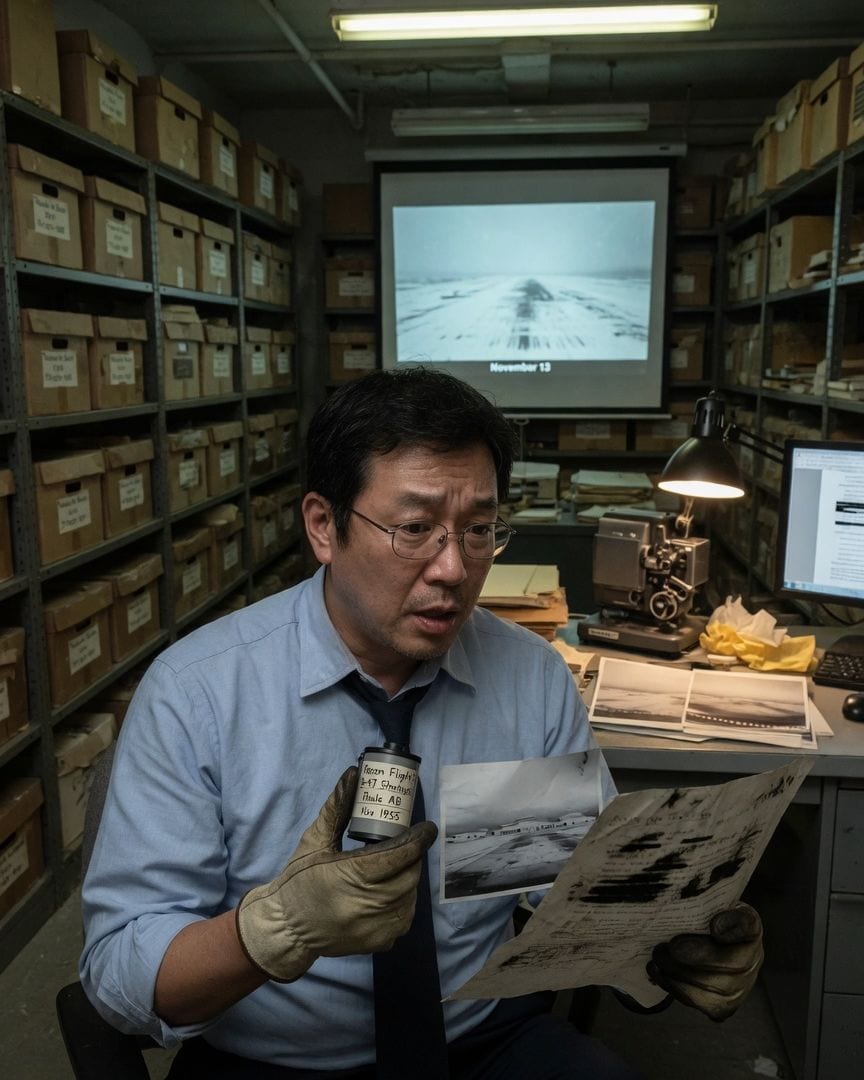 Declassified
Ken Sudo, an archivist nearing a long-awaited transfer, meticulously sorted Cold War documents in the sprawling National Archives Annex basement. His final Thule project unearthed an unlabeled carton containing an old 16mm film canister, marked 'Recon Flight 734, Nov 1955.' On screen, an impossible airfield appeared carved into the featureless ice cap, dated November 13. A cold dread settled as Ken realized official records declared Recon Flight 734 lost the day before, on November 12, 1955. How could a lost crew record an airfield a full day after their official disappearance?
14 min read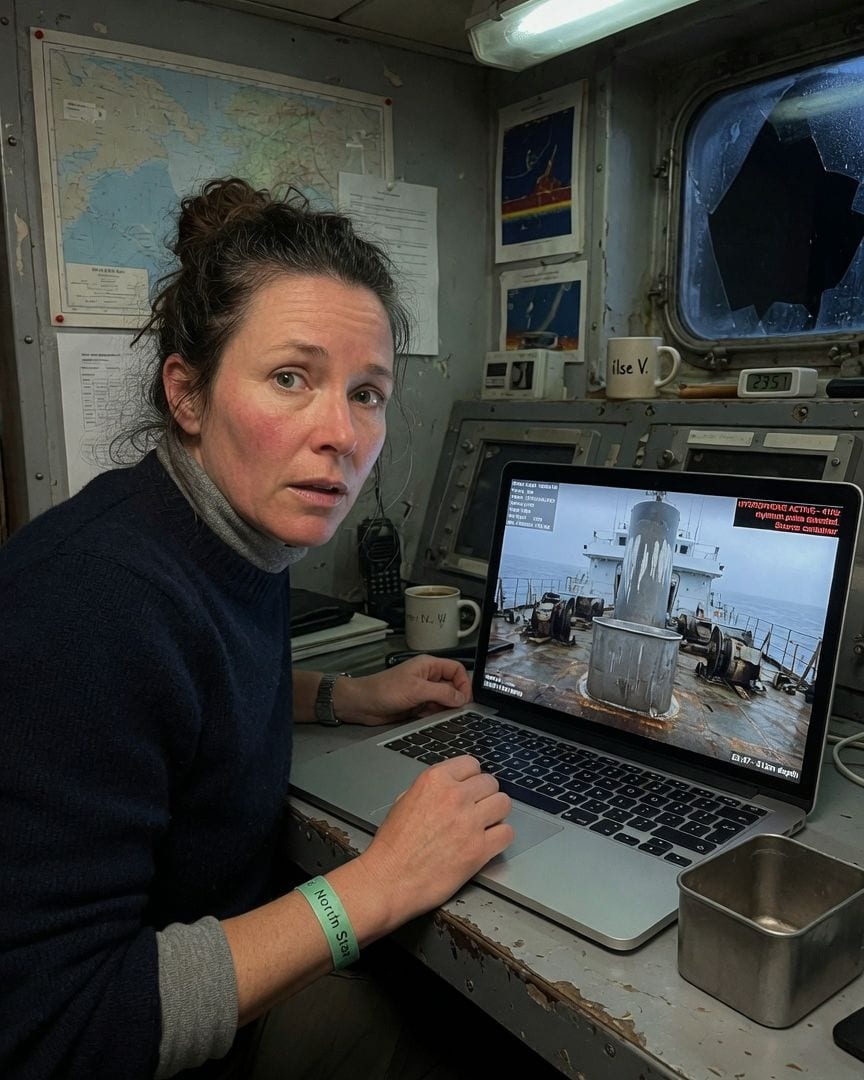 Declassified
Marine archaeologist Dr. Ilse Varren had four days left to find the *Cadmus Hale* before the Bering Sea ice ended all operations. Her uncle Joseph was among the 311 men lost with the transport ship in 1944, and this was her last chance to locate it. When her AUV finally found the wreck, perfectly preserved on the abyssal plain, Dr. Varren was stunned. Yet, a modern, unmarked container sat on the ship's main deck, utterly devoid of marine growth and humming a faint, rhythmic pulse from the deep.
12 min read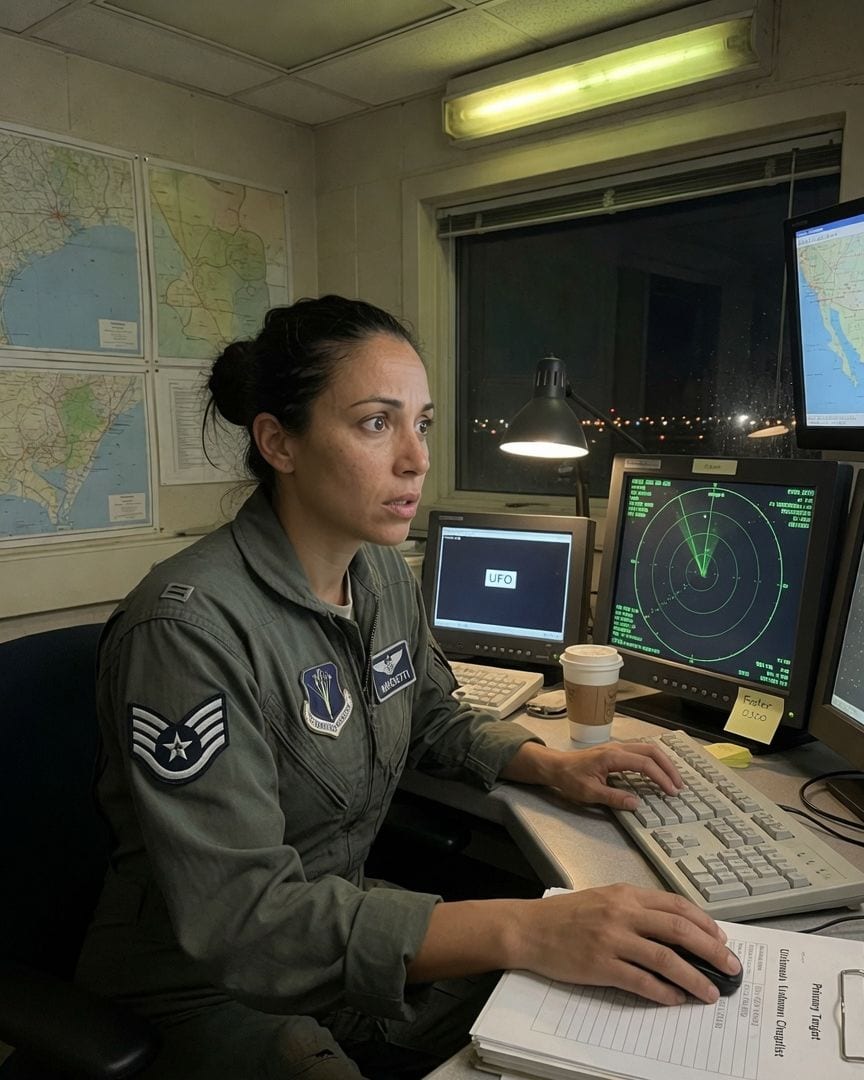 Declassified
Technical Sergeant Odile Marchetti sat alone in the dim radar room, her watch a final vigil for a base winding down along the silent Gulf Coast. At 02:17, a pilot reported a 'companion' on his wing, but her screen initially showed nothing. Then, a second blip bloomed, twice its size, before merging impossibly into the first and continuing its flight path without a ripple. She logged it as a UFO, only to discover the system already had a designated category for such anomalies – a pre-approved slot for the unexplained. A week later, her incident was re-categorized under a locked 'Special Handling' code, creating a new, inaccessible folder in her own personnel file.
11 min read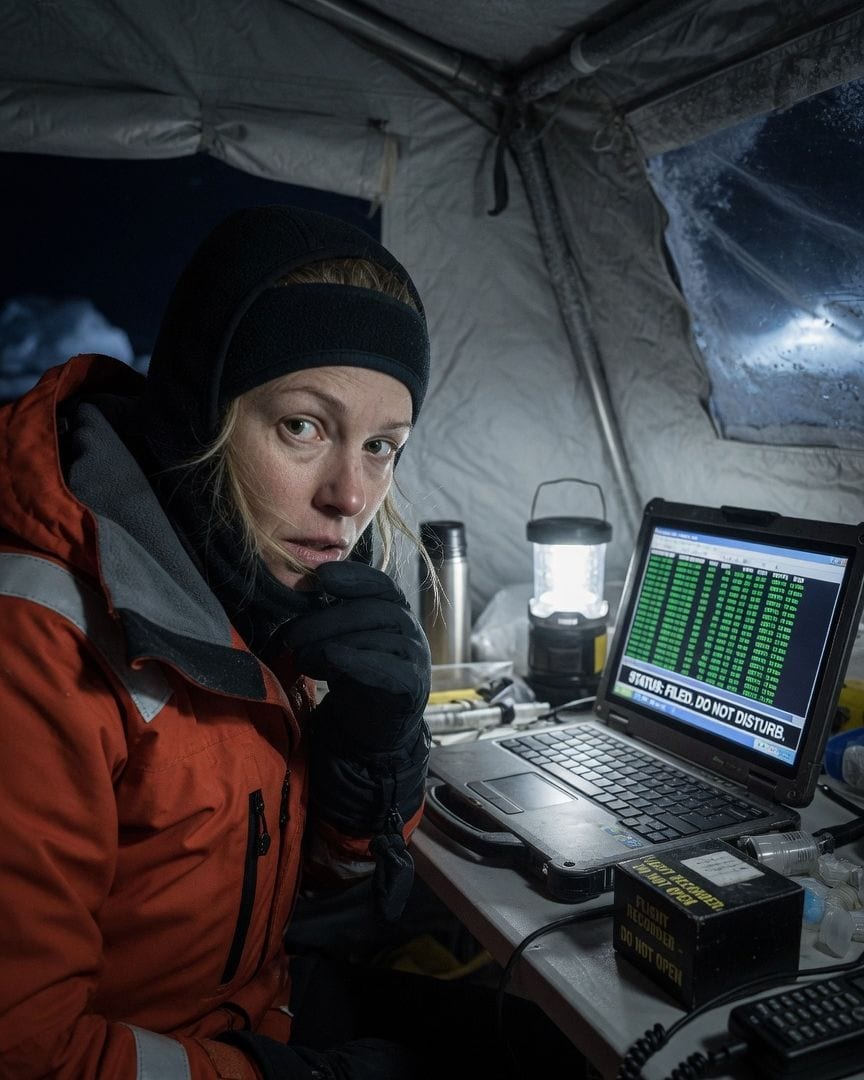 Declassified
Glaciologist Ines Faurholt skied across the vast, blinding Greenland ice cap when her path was abruptly blocked by a dark, corroded antenna mast. Beneath it, sixty feet down in ancient ice, a Cold War reconnaissance aircraft sat with its navigation lights eerily burning and its cockpit clock steadily keeping time. The sight was a violation of everything Ines knew about time and preservation in this frozen world. She called for a team, and days later, they extracted the plane's flight recorder, revealing data that showed the aircraft still flying years after its disappearance.
12 min read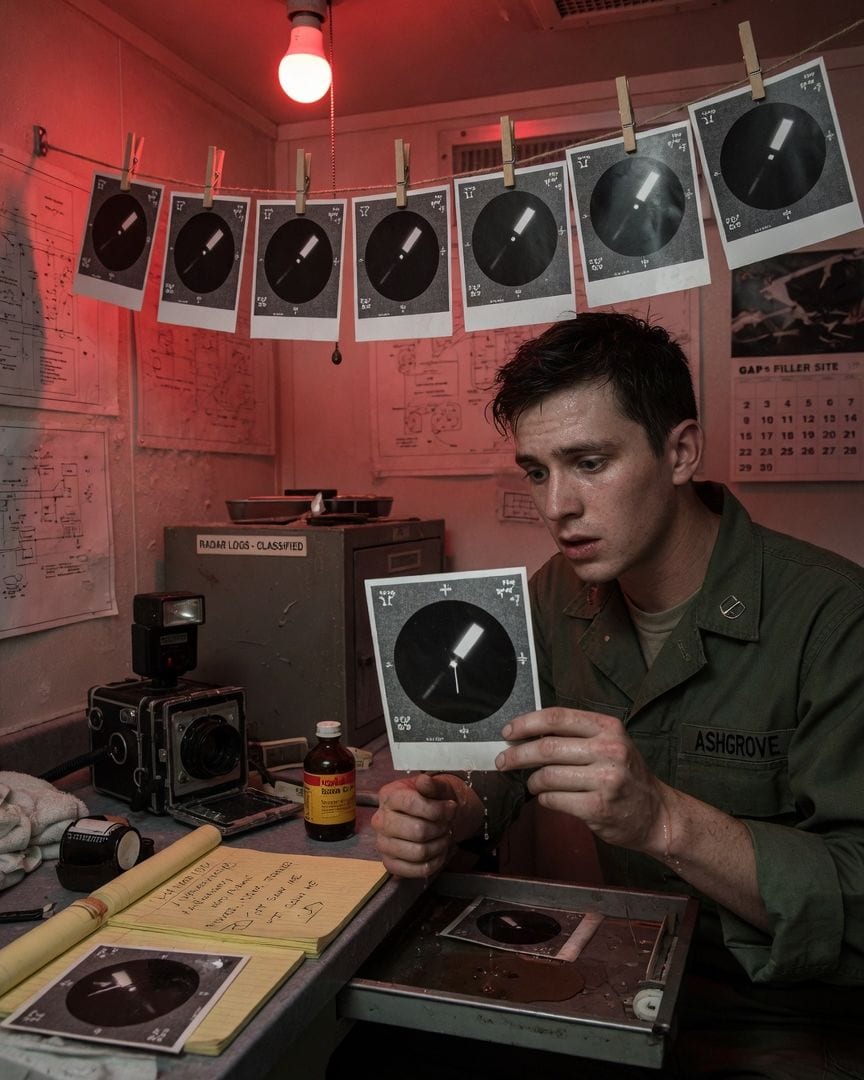 Declassified
Airman First Class Tobin Ashgrove knew his radar scope, the constant drone of the dish, the ground clutter that smeared the screen like ink. For two years at the Montana gap-filler site, he'd memorized its lies and truths. But one day, the familiar clutter vanished, leaving a single, hard-edged return: a stationary, hangar-sized blip at eleven miles on the empty prairie. He photographed it for nine hours, until it moved two miles closer, its hard edges angled precisely toward his camera lens, an undeniable, deliberate turn. What impossible thing had just seen him and responded from the desolate plains?
13 min read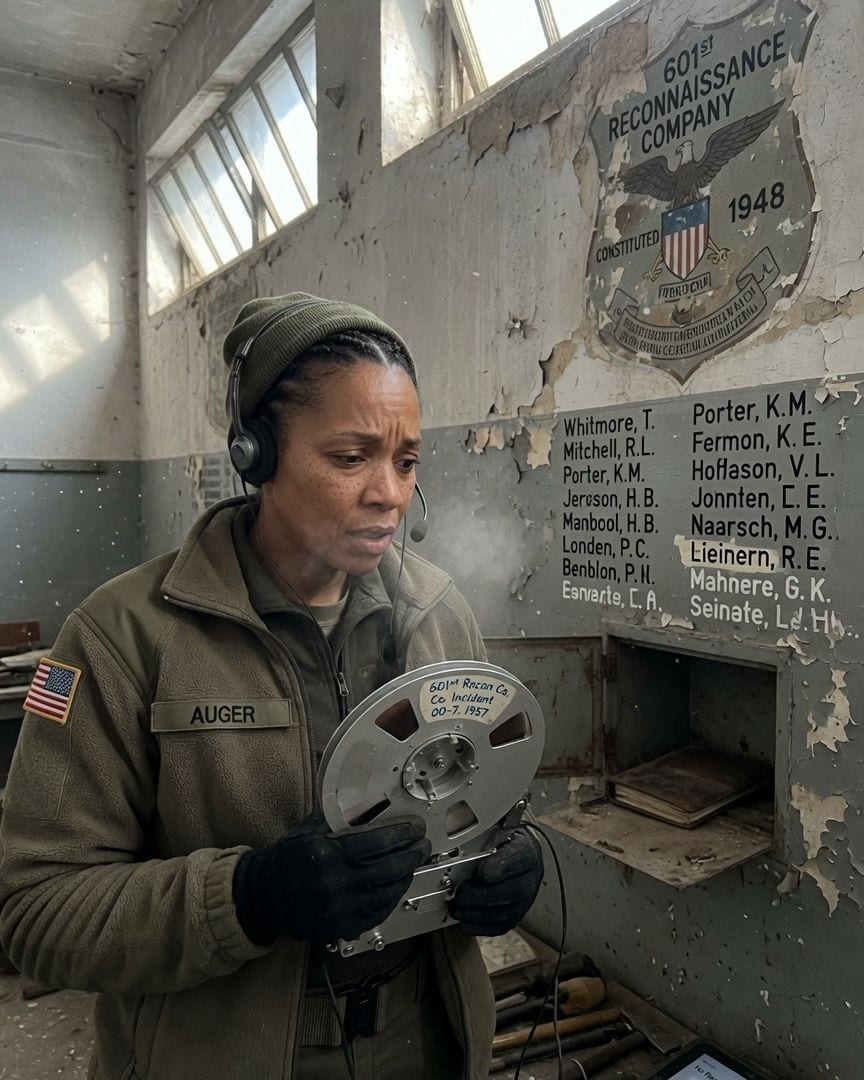 Declassified
Sergeant First Class Delphine Auger was on her final assignment, overseeing the demolition of a Bavarian drill hall before her transfer stateside. While prepping the walls, her team uncovered a unit crest for the '601st Reconnaissance Company,' a designation Delphine knew the US Army had never constituted. Beneath it, a list of a hundred and four names included twelve painted only months ago, the whitewash still tacky under her touch. Her search led to a hidden panel, revealing a reel-to-reel tape that, once played, broadcast a distorted, non-human vocalization, then a frantic voice shouting, 'not obeying physics!' What impossible truth did this ghost unit's tape hold, echoing a service number with terrible finality?
11 min read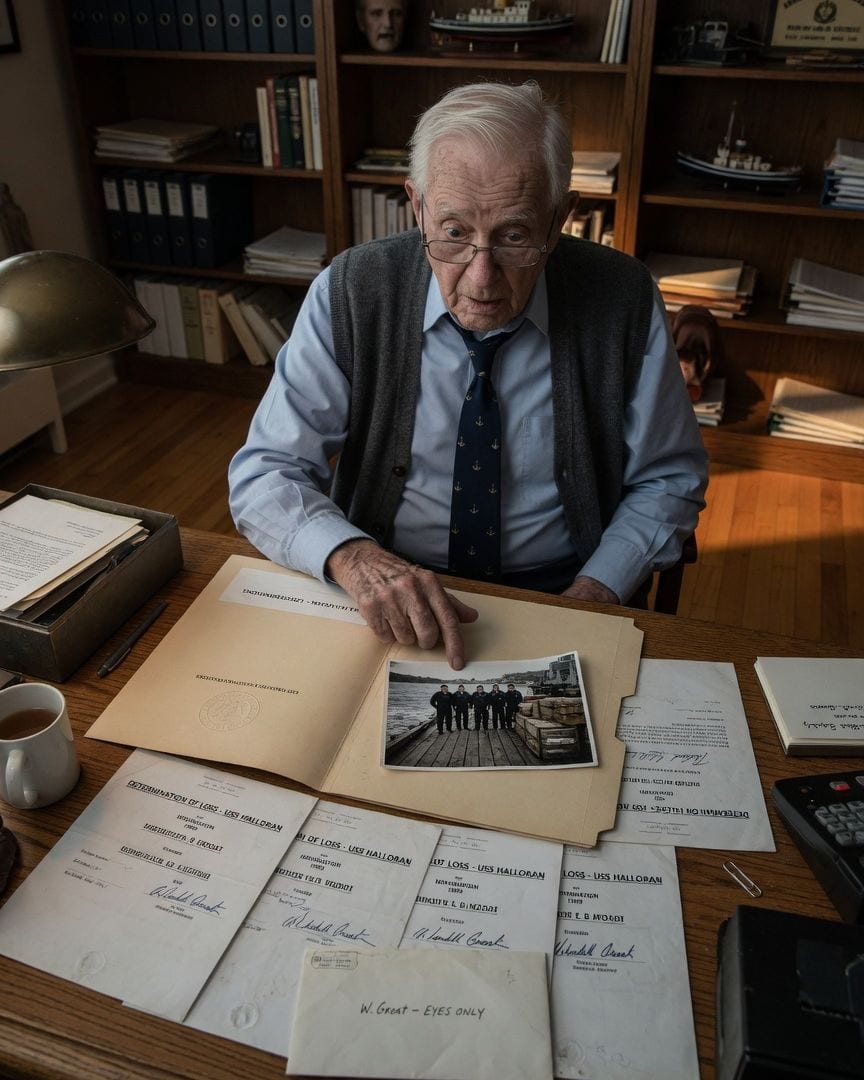 Declassified
A ninety-one-year-old Navy veteran, Wendell Groat, settles into his Annapolis study, expecting a routine review of his long career. But as he opens his service file, he finds a cold dread spreading through him. His own signature appears on four impossible loss determinations for the same vessel, the tug Halloran, spanning decades after its initial loss. Each signature, undeniably his, shows an impossible youthfulness for its given date. Groat's methodical cross-referencing only confirms the chilling truth: these official records are authentic, leaving him to confront an impossible reality hidden within his own life's work. What could explain his younger self signing off on losses that hadn't even happened yet?
9 min read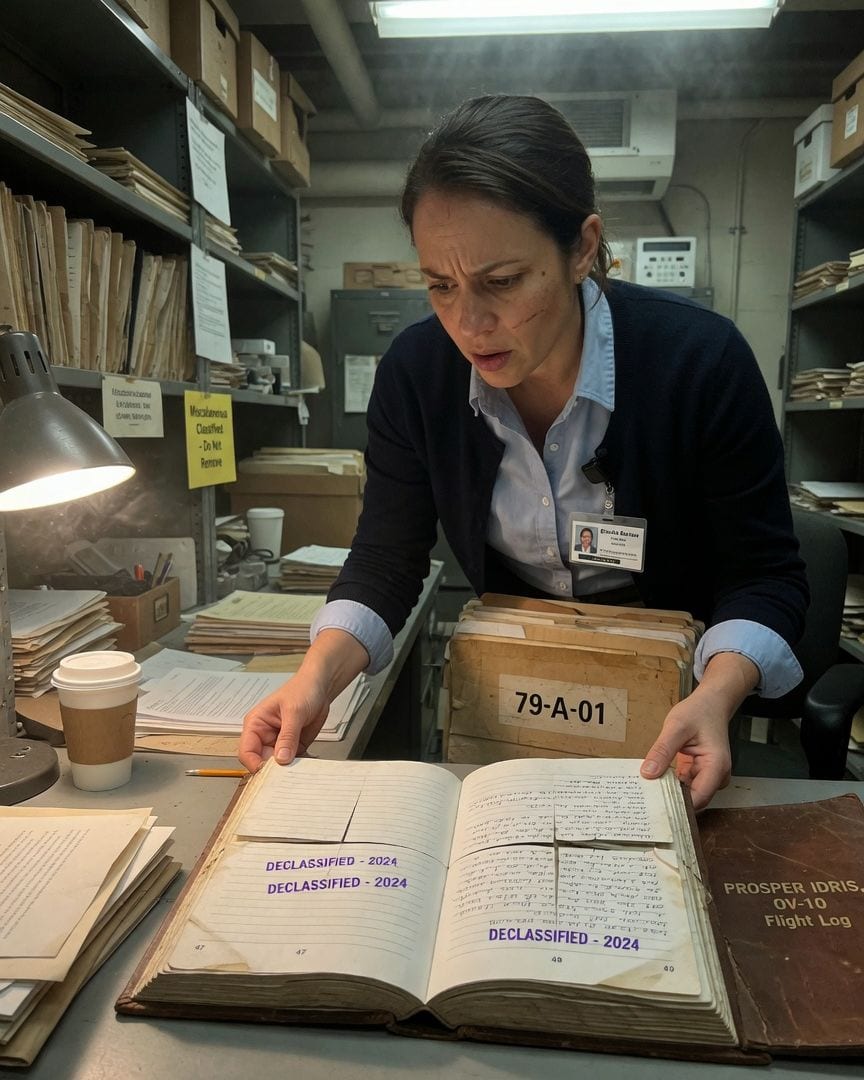 Declassified
Declassification archivist Brooke Barlow faced reassignment if she couldn't uncover something meaningful amidst the National Records Annex's frantic consolidation. As decades of forgotten files threatened to vanish, she pulled a Cold War incident report referencing a mysterious 'Box That Is Not on Any List'. Tucked away in a sub-basement, she found a heavy wooden crate, its stenciled number linking back to the report. Inside, an official flight log belonging to Warrant Officer Prosper Idris felt strangely warm in her hands, despite the cool room. What happened to the pages surgically cut from its middle, officially stamped ‘DECLASSIFIED’?
10 min read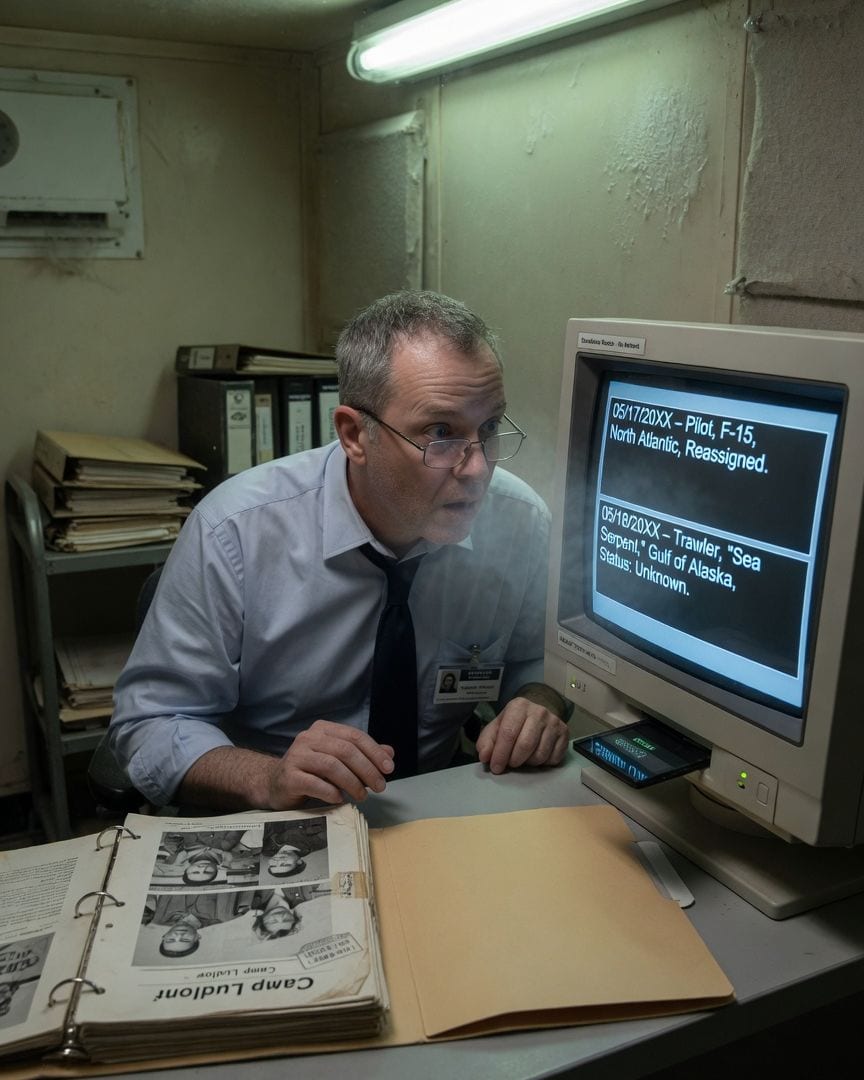 Declassified
Declassification reviewer Samuel Vance, whose world was built on the rigid order of official history, smoothed a letter confirming Camp Ludlow’s 1959 closure was a lie. Despite decades of records, the Air Force insisted the Greenland base remained active, its last radio check logged just four days prior. Driven by this profound wrongness, Samuel unearthed the base's ancient physical file, only to find a pristine, modern data chip hidden within its brittle pages. When he inserted it into a secure reader, the screen didn't show history, but a scrolling list of current missing persons—a pilot from yesterday, a trawler from today. How could an archived file hold a living record of the world’s most recent disappearances?
9 min read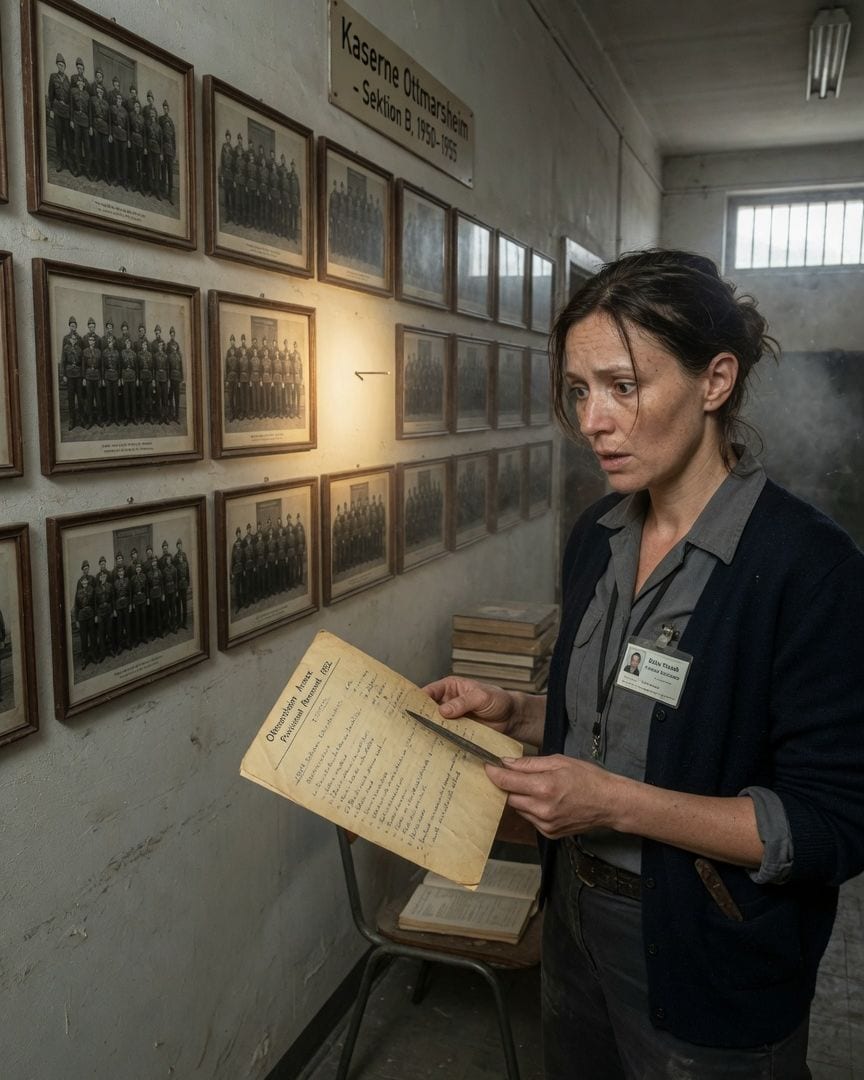 Declassified
Inventory clerk Delia Straub had eleven days to log every item at Kaserne Ottmarsheim before demolition crews arrived, turning history into rubble. Amid the dusty halls, she found a stark anomaly: a missing photo frame for the 604th Ordnance Detachment, a unit never officially stationed at the base. What made the empty space chilling was that every soldier in the surrounding photographs was looking not at the camera, but directly into that void. Delia's search for answers unearthed an unofficial manifest listing the 604th, with names of men officially declared killed in action years before. Who were these phantom soldiers, and why did their impossible record persist?
14 min read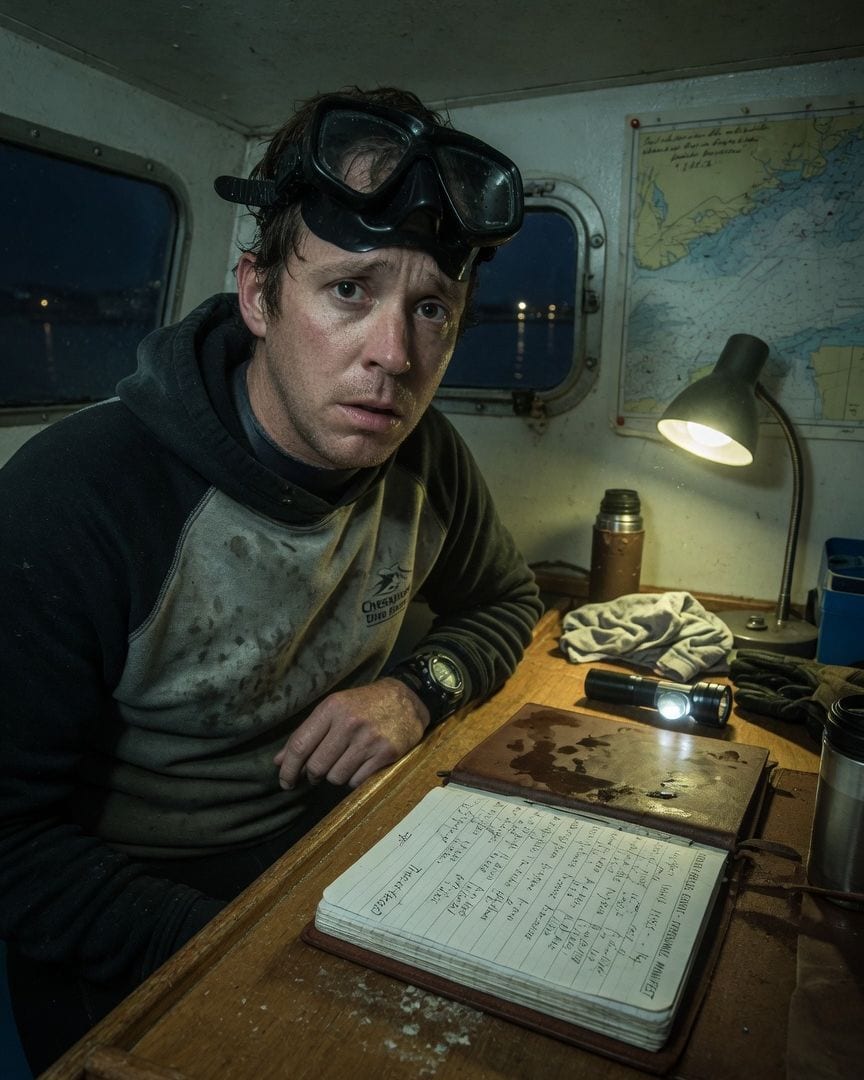 Declassified
Corey Nascimbene embarked on his last dive of the season, a personal quest to the sunken tug Harrow Belle, the ship his mother watched vanish decades ago. Descending into the cold Chesapeake gloom, he discovered a galley perfectly preserved, save for an impossibly folded, stark white napkin lying pristine on the muddy deck. Driven by unease, Corey later found a hidden, welded compartment in the engine room, containing a heavy, sealed logbook. Its personnel manifest listed the entire crew, not as lost, but with a single, unsettling word: 'Transferred.'
10 min read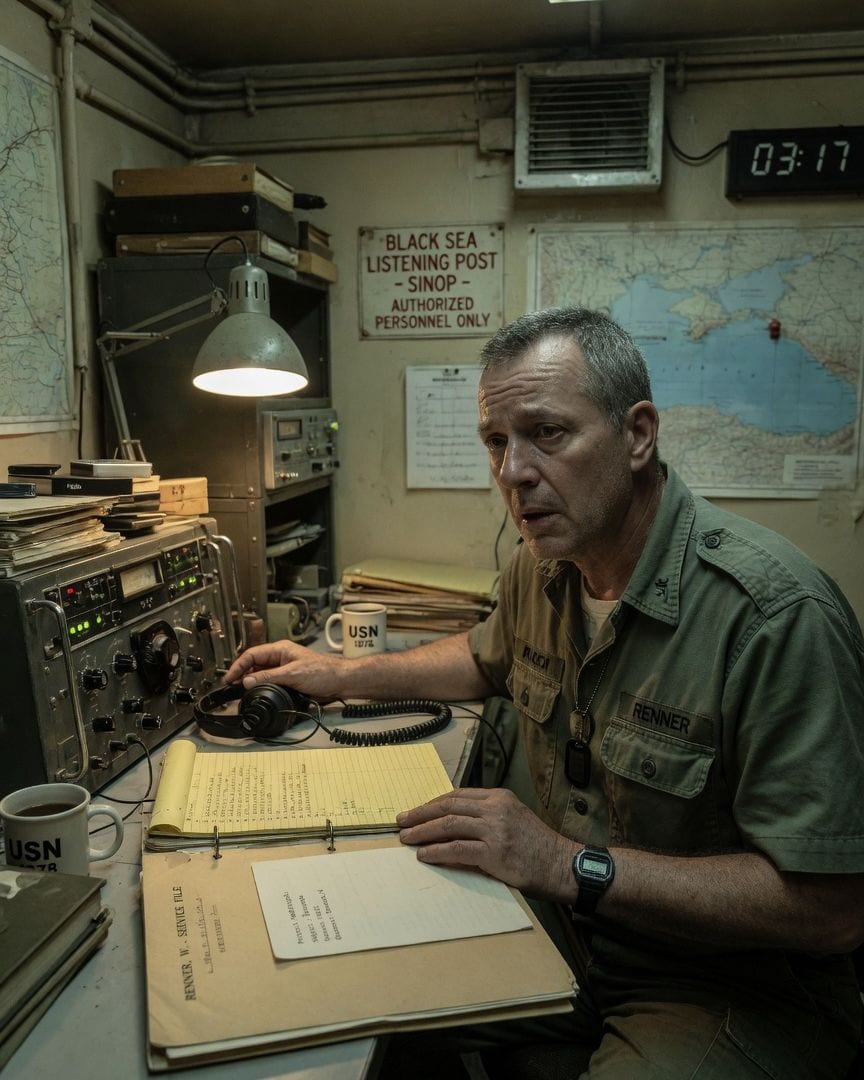 Declassified
Specialist Walt Renner had just six weeks left at the Sinop station, anticipating the close of his thirty-year career. For almost two decades, he had tracked a mysterious numbers station, broadcasting from an impossible point in the Black Sea. Tonight, the woman's flat voice stopped counting, and the static cleared, replaced by a single, perfectly clear word: 'Walter.' It was the intimate name his mother had used, a name he hadn't answered to in decades. Yet, it emanated from the same empty water, a deeply personal address from the void itself.
11 min read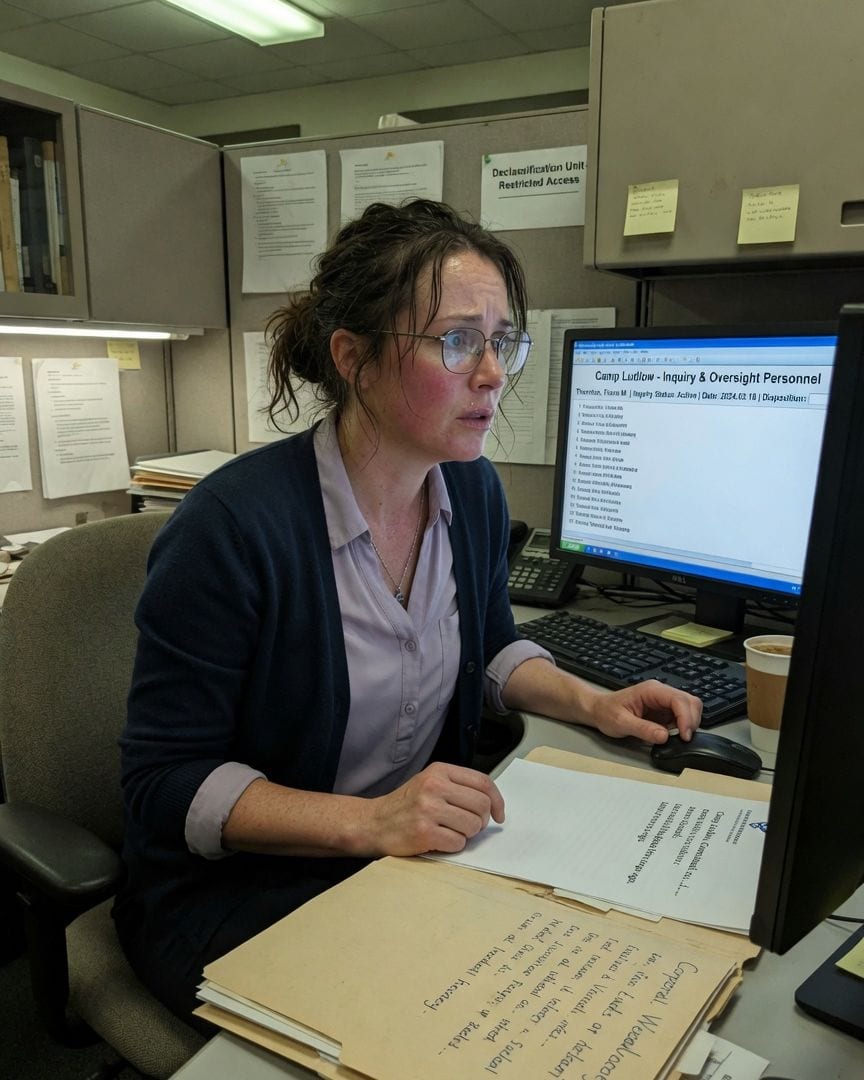 Declassified
Declassification reviewer Fiona Thornton prided herself on the meticulous order of official records. Her world, built on precision, began to unravel when an Air Force response claimed Camp Ludlow, Greenland, officially closed in 1959, was still active, with a radio check just four days prior. Digging deeper, she uncovered a supply manifest from 1961 listing advanced equipment that wouldn't be invented for another decade and a half. But the true chill settled when she found her own name, 'Thornton, Fiona M.,' on the base's 'Current Operations' personnel roster, dated for this very morning. Was she investigating a ghost, or had she become part of one?
12 min read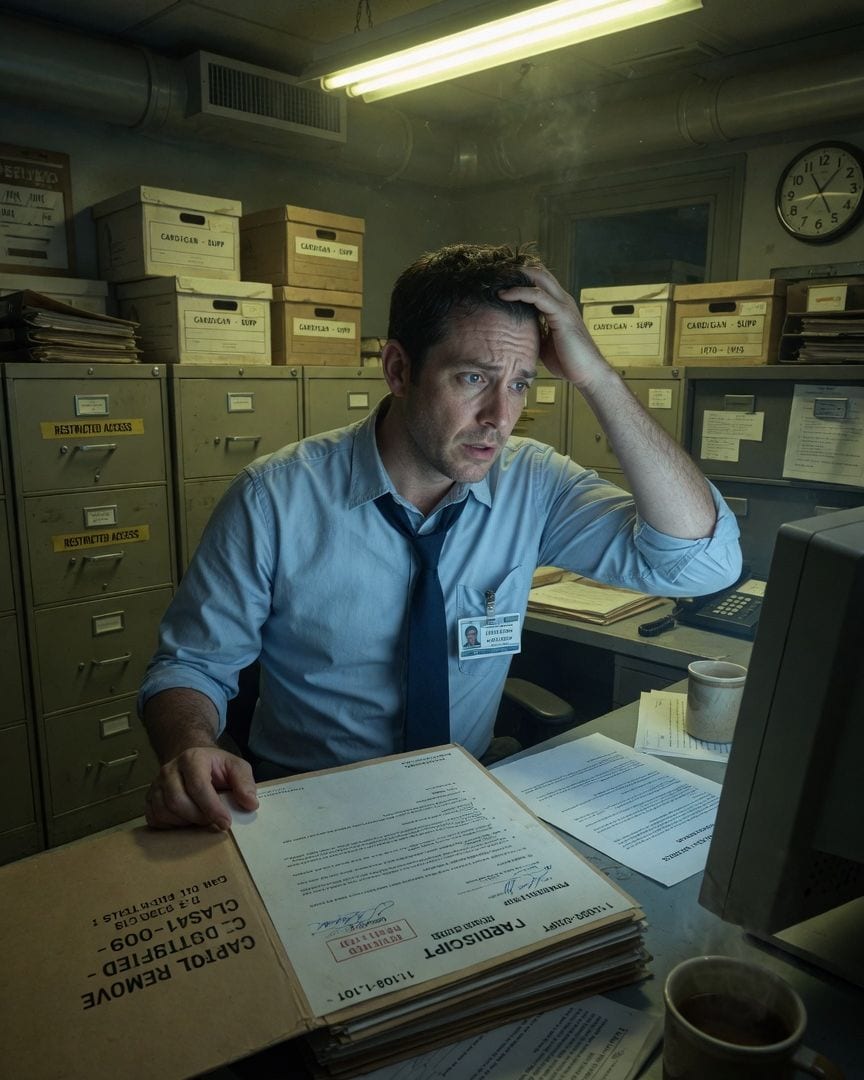 Declassified
At three in the morning, an archives reviewer named Peter Voss sat hunched over his desk, cross-checking logs for a stubborn Cold War dossier. He noticed its page count had inexplicably grown over decades, from 200 to 1100 pages. When the physical file arrived, Peter found its final pages held a transcript, dated just last week, detailing a conversation about a historian named Voss requesting that very file at three in the morning. How could a document predict its own future discovery with such chilling accuracy?
9 min read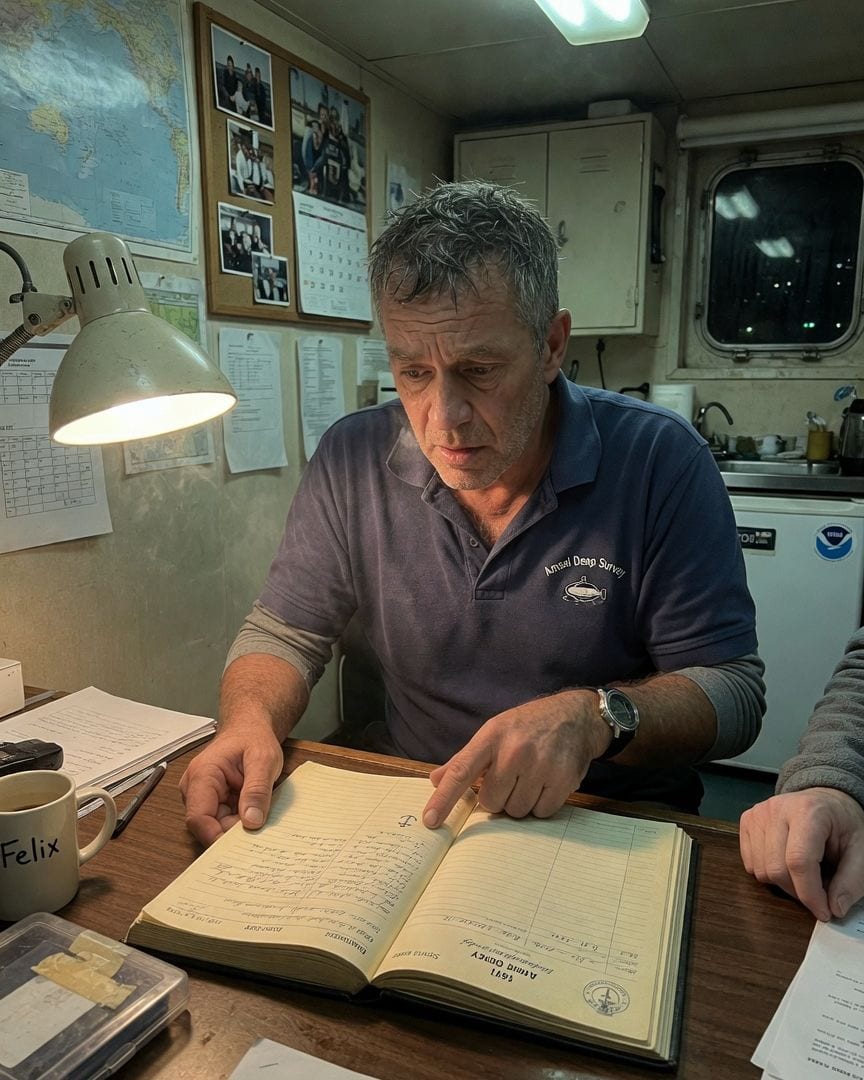 Declassified
Deep-sea surveyor Hugo Amsel embarked on his final major dive, anticipating a quiet retirement after decades exploring the crushing pressures of the deep. His submersible's lights cut through the murky green, revealing the *Wynn Portal*, a sealer vanished in 1991, eerily preserved with unnervingly clear windows, free of any marine growth. Then, the inexplicable: the wreck's rudder angle indicator, softly lit, twitched two degrees further to starboard. Later, inside the wheelhouse, Hugo found the ship's official logbook, its final entry dated three days *after* the vessel's recorded disappearance, hundreds of miles north. How could a ship vanish, only to log a journey days later, from a place it never reached?
11 min read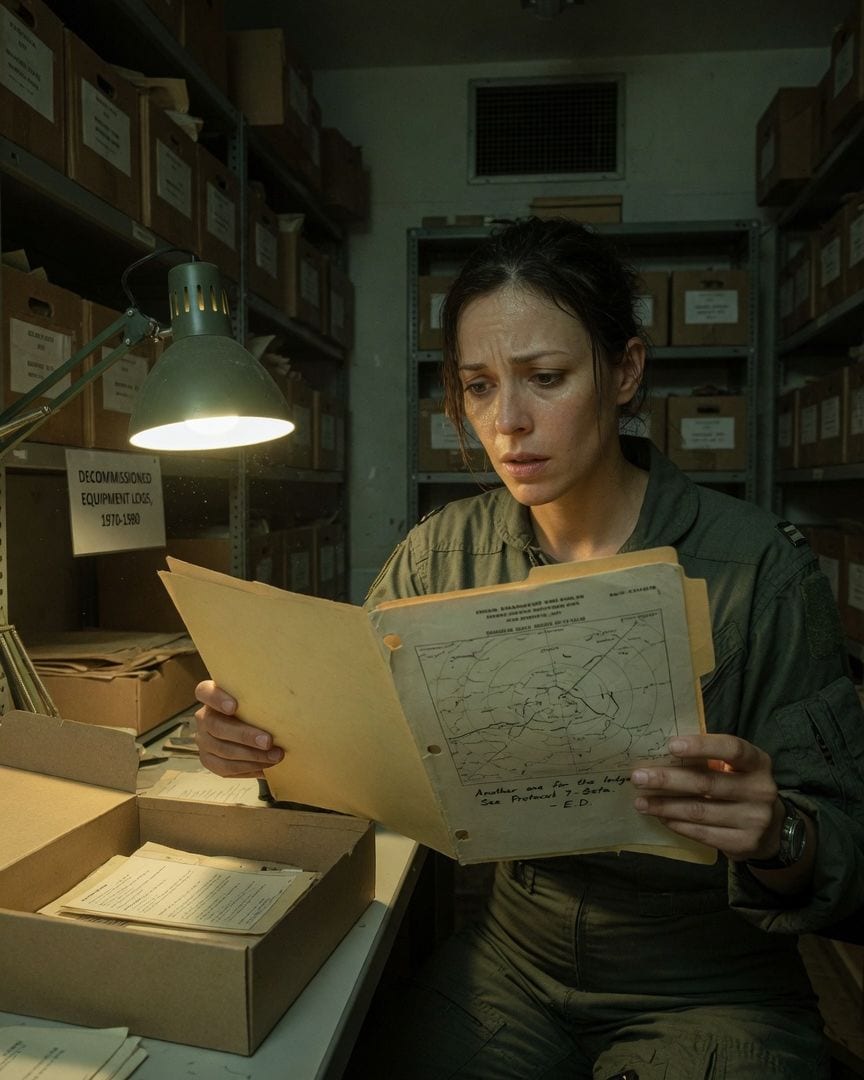 Declassified
Captain Ines Bardolph, a 34-year-old radar operator in Bavaria, lived by the precise hum of her console. One quiet night, an impossible contact appeared over the Danube, then vanished from her scope just as a pilot swore it filled his windscreen. Replays showed the object had crossed the Alps in a single blink, defying all known physics. When bureaucracy sought to bury the incident, Captain Bardolph sought answers, leading her to a forgotten archive where a brittle folder revealed a chilling pattern: 'Another one for the ledger.'
9 min read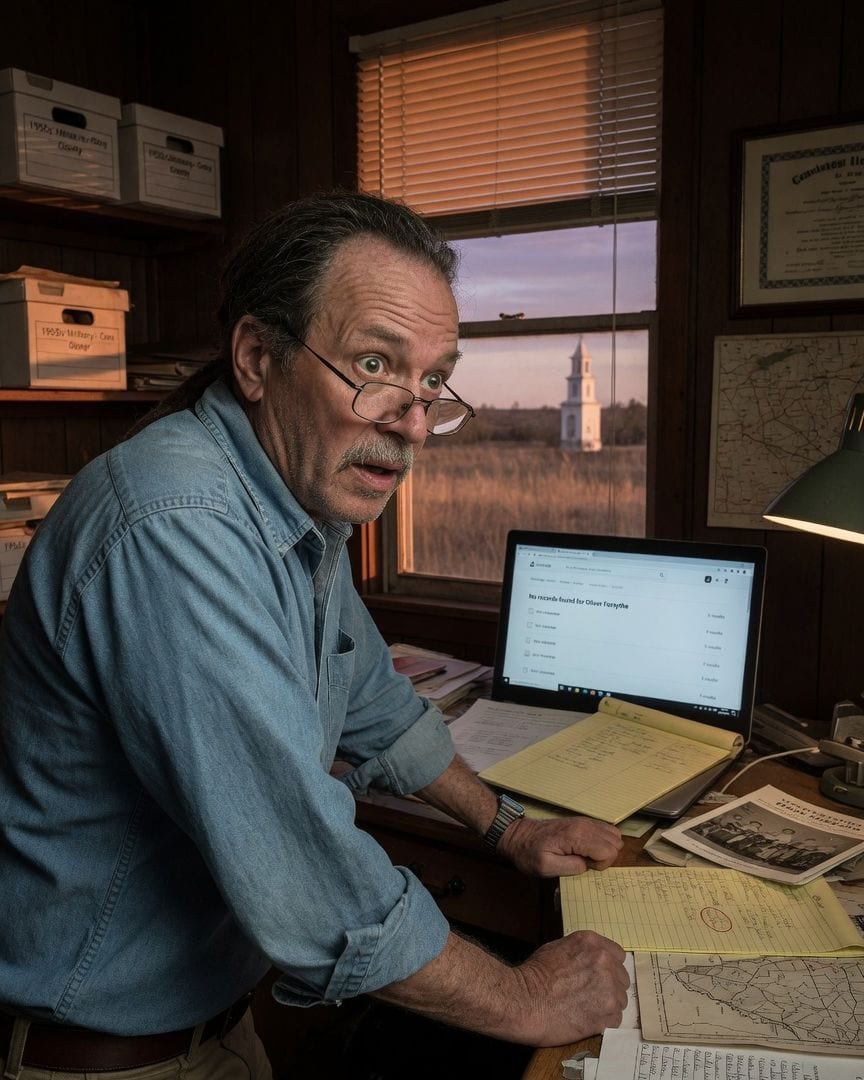 Declassified
Approaching retirement, lineage historian Owen Sarkis took on one final project: solving the mystery of the 250th Chemical Company, a unit that vanished after a single 1955 parade. His search led him down Carolina backroads to a lonely, weathered chapel, behind which lay forty-one identical gray headstones in neat rows. Each stone bore a name, but chillingly, not one had a date of death, a silence louder than any inscription. Then, on one stone, he found a small, industrial metal plate bearing a cryptic code and a symbol he recognized from a declassified document on 'unconventional materials handling.' The true nature of these 'graves' began to curdle in his mind, suggesting something far colder than death itself.
15 min read