 Declassified
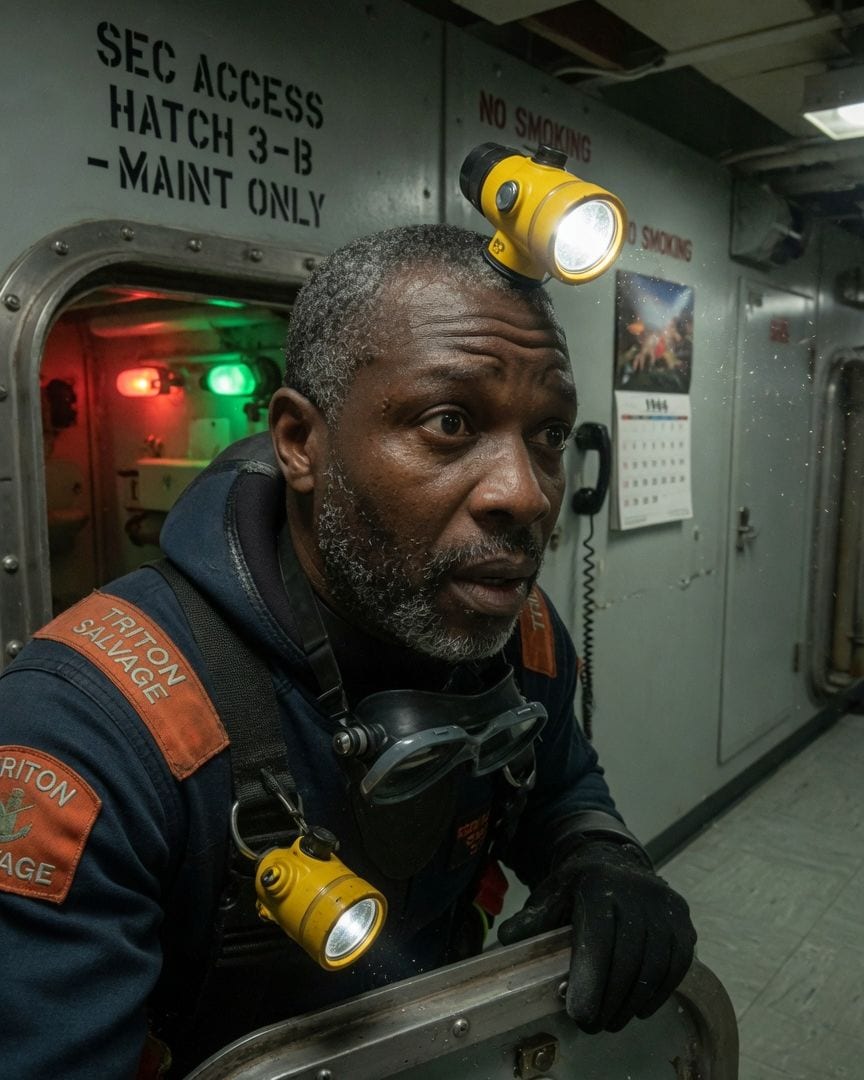
Salvage Master Bram Oduya, a man dedicated to finding the lost, stared at an impossible sonar readout in the calm Java Sea. Beneath his vessel, the Triton, lay the USS Palo Cinder, an escort vessel officially lost in 1966. What truly froze him were its running lights, burning steady and bright after nearly six decades in salt water. He ordered his ROV to surface, and as its camera rose into position, it captured the impossible sight: the Palo Cinder, motionless, yet showing a faint bow wave around its pristine hull. Bram knew this was no ordinary wreck, and he prepared for a dive, determined to touch the seam where reality had torn open.
11 min read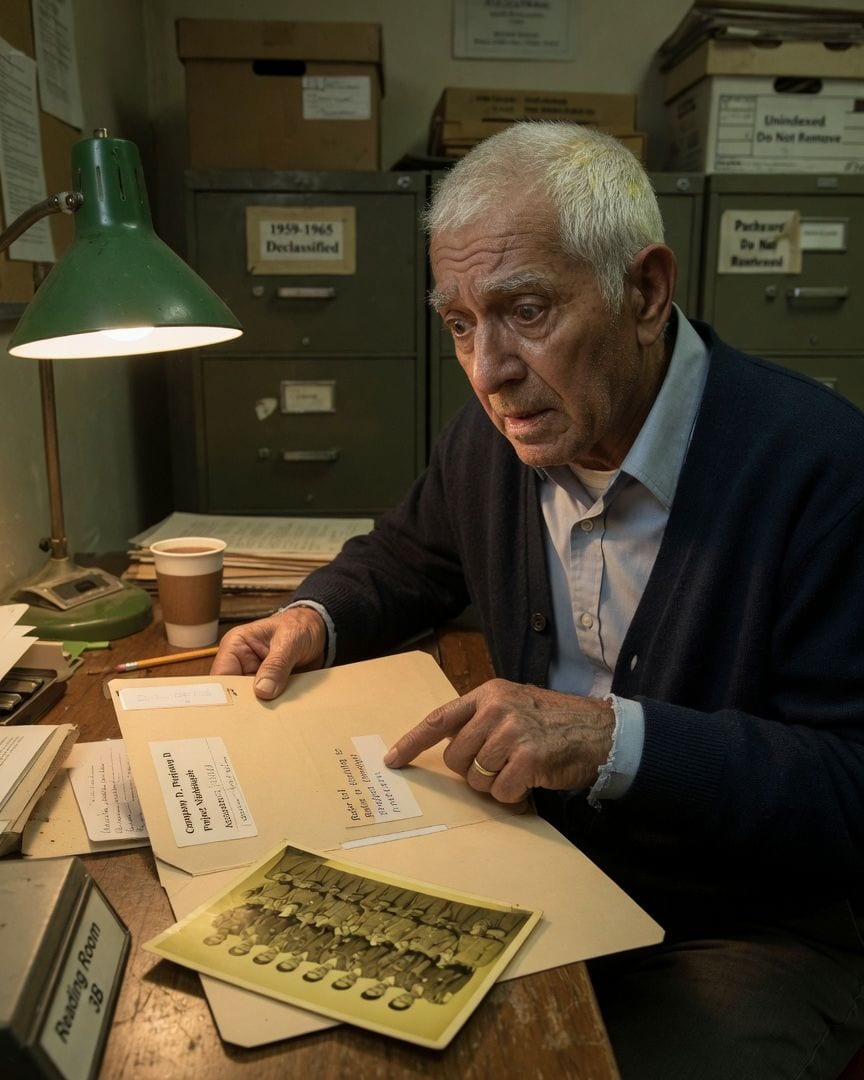 Declassified
Eighty-four-year-old Trevor Machado clutched a yellowed photograph, his last hope to prove Company D existed before Friday's lineage board meeting. He knew the 1961 aerial survey of his unit’s parade field showed only grass and an impossibly sharp shadow with no object casting it. At the National Archives, a methodical archivist named Lorraine Sterling initially found no trace of Company D, but an unindexed sub-basement held a forgotten folder. Inside, Trevor's service record detailed his discharge from a unit officially deactivated the very year he joined, but a chilling handwritten note at the bottom, dated decades before Lorraine was born, bore her own name.
11 min read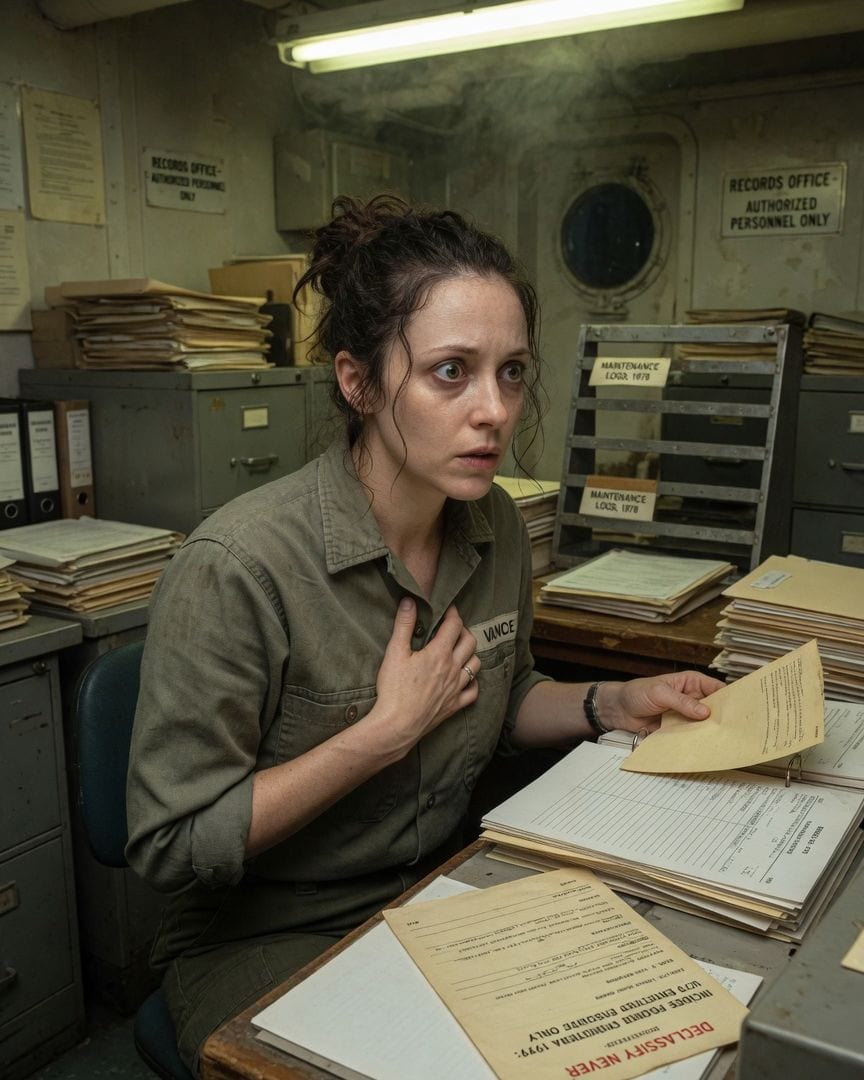 Declassified
A young radar operator, Peggy Vance, faced her first night alone in the USS Enterprise's Combat Information Center, the massive carrier steaming silently off San Diego. Her green-lit scope revealed an impossible contact: a craft dropping sixty thousand feet in under four seconds, then holding station just two hundred yards off the bow. Despite her detailed log, the tape reel vanished and official records showed no incident. The ship's history had been tampered with.
11 min read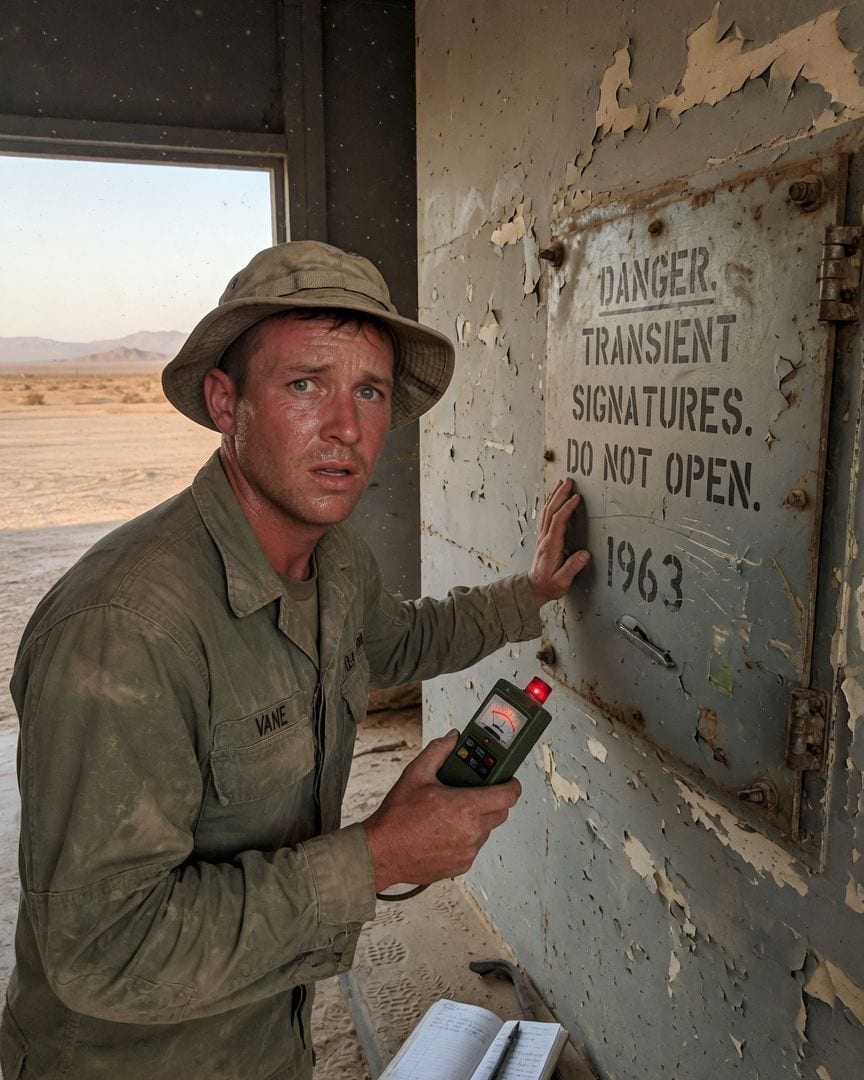 Declassified
Airman Purdy Vane conducted his final, lonely survey of Sable Draw, a vast desert testing range slated for permanent closure. Under the relentless late summer sun, his Geiger counter, usually silent, suddenly shrieked. It led him to a perfect, four-hundred-yard track of intense radiation readings, like unhurried footprints, ending abruptly against the blank, doorless wall of a concrete instrument shed. Despite the range being officially cold for decades, Purdy later uncovered a hidden steel panel on that wall, bearing a stark, hand-painted warning: 'DANGER. TRANSIENT SIGNATURES. DO NOT OPEN. 1963.' How could something so dangerous remain hidden, decades after the desert was declared safe?
15 min read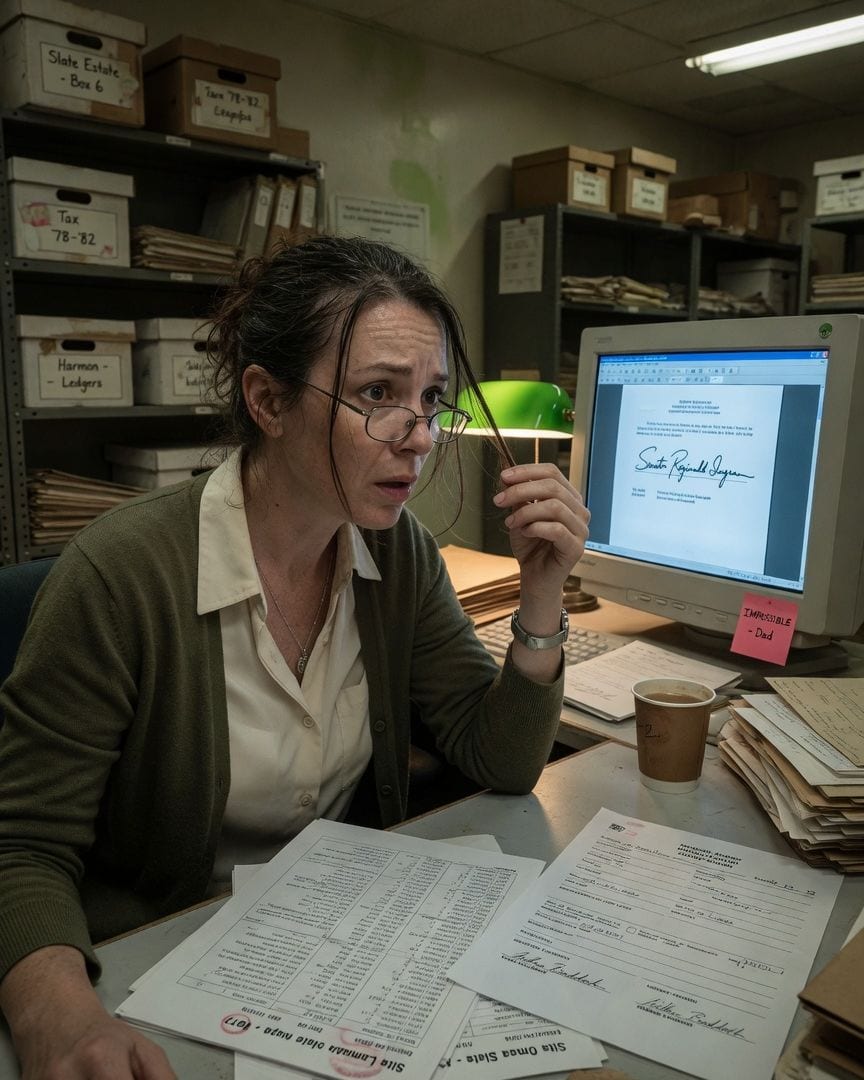 Declassified
Nell Braddock, a meticulous archivist, dedicated her days to the quiet precision of sorting through decades of old papers. Her current task, the estate of Harmon Slate, promised nothing more than mundane accounting until she unearthed a secret operations roster from 1977. The document listed Slate as present at a desert facility, yet hospital records confirmed he was laid up with a broken back at the exact same time. A cold certainty bloomed when she recognized the familiar signature at the bottom of both impossible documents: her own father's. As Nell dug deeper, she found more such anomalies, each bearing her father's unnervingly perfect hand, twisting her reality into something utterly alien.
12 min read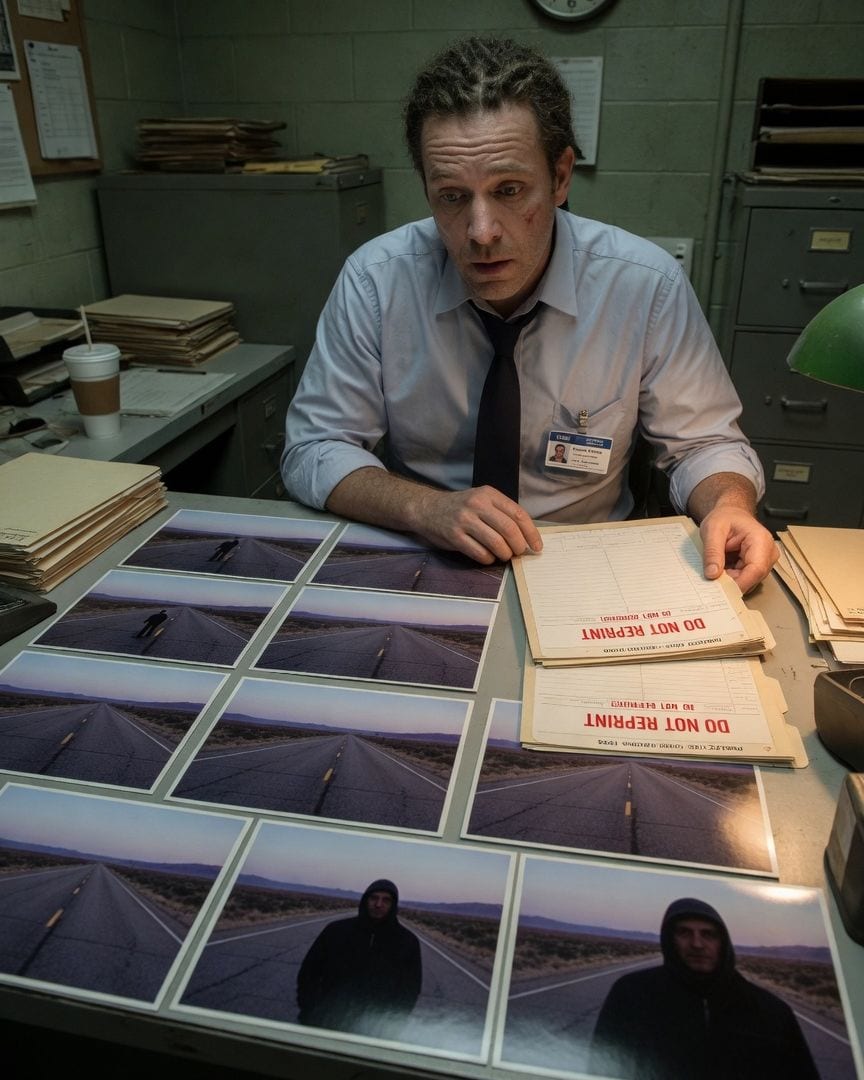 Declassified
Reviewer Corwin Ashby, whose professional life was built on faith in official records, pulled a Cold War-era file from the backlog, expecting routine images. Instead, he found nineteen glossy prints of an empty Nevada highway, each showing a lone hitchhiker advancing impossibly fast towards the lens. The twentieth photo was missing, replaced by a stark 'DO NOT REPRINT' stamp. Corwin's search for an explanation led him to a second, identical file from 1958, revealing the same impossible sequence and another vanished photographer. What secret did these missing photos hide?
10 min read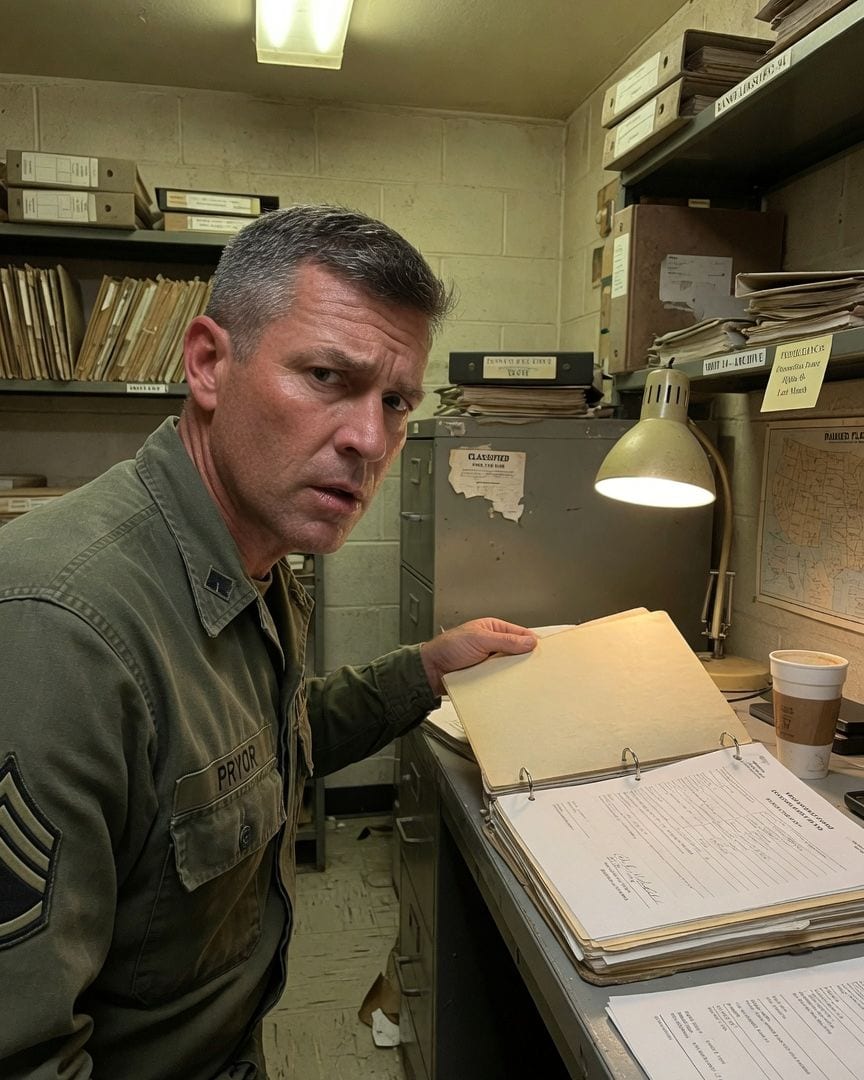 Declassified
Sergeant Alden Pryor was counting down his final eleven days on a twenty-year hitch, expecting to spend them on routine patrols along the Ranier Flats fence line. Instead, his truck stopped at a bizarre sight: a four-hundred-foot glassed crater, miles from anywhere, its sand faintly warm at dawn despite no one recalling a blast. The air above it shimmered with an unnatural distortion, a silent scar of erased violence, and the official file for 'Shot 14' showed recent maintenance sign-offs for a decommissioned tower at the crater site. All these active documents were signed by Captain Everett Caldwell, who had been officially lost in operations thirty years ago, leaving Sergeant Pryor to wonder how a dead man could still be filing reports.
12 min read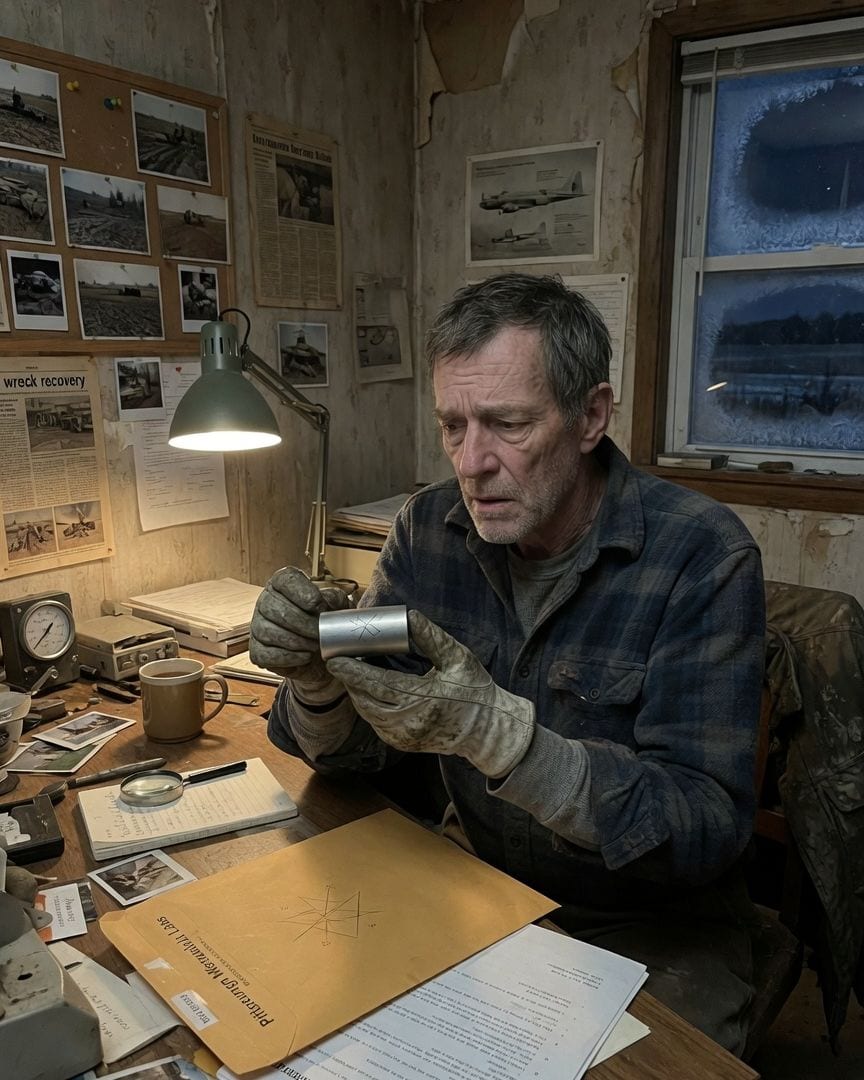 Declassified
Wreck-hunter Anselm Roeder, 56, carefully navigated his custom truck through the frozen, muddy fields of a rural Pennsylvania valley. He had spent a week tracking a farmer's odd report of 'bad ground,' now confirmed by his radar: an immense object buried twelve feet down. In the sharp winter air, his team finally unearthed the mud-caked wing of a B-17 bomber, remarkably preserved since 1944. But as Anselm knelt, he heard a faint, steady hiss from an oxygen bottle, impossibly charged, and then found a small, smooth metallic cylinder, too perfect for eighty years underground, bearing a symbol from a redacted Cold War file.
11 min read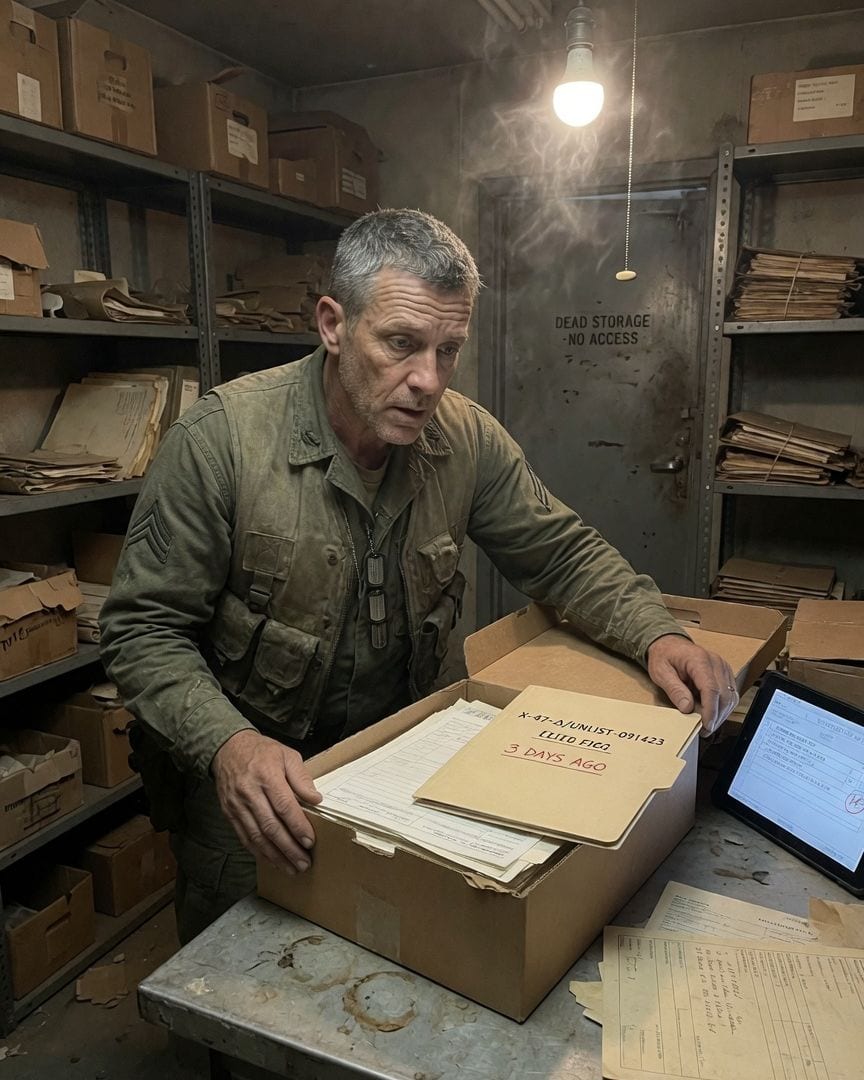 Declassified
Sergeant Alden Pryor, forty years old and just eleven days from retirement, drove the familiar Ranier Flats fence line for one of his final patrols. The desert stretched out, silent and vast, until he discovered a four-hundred-foot crater, dark and impossibly vast, where the sand had fused into slick glass. The ground within the crater was still faintly warm, a subtle heat defying the cool desert air. Yet, every official log confirmed the blast, while no one recalled a tremor or flash across three states.
10 min read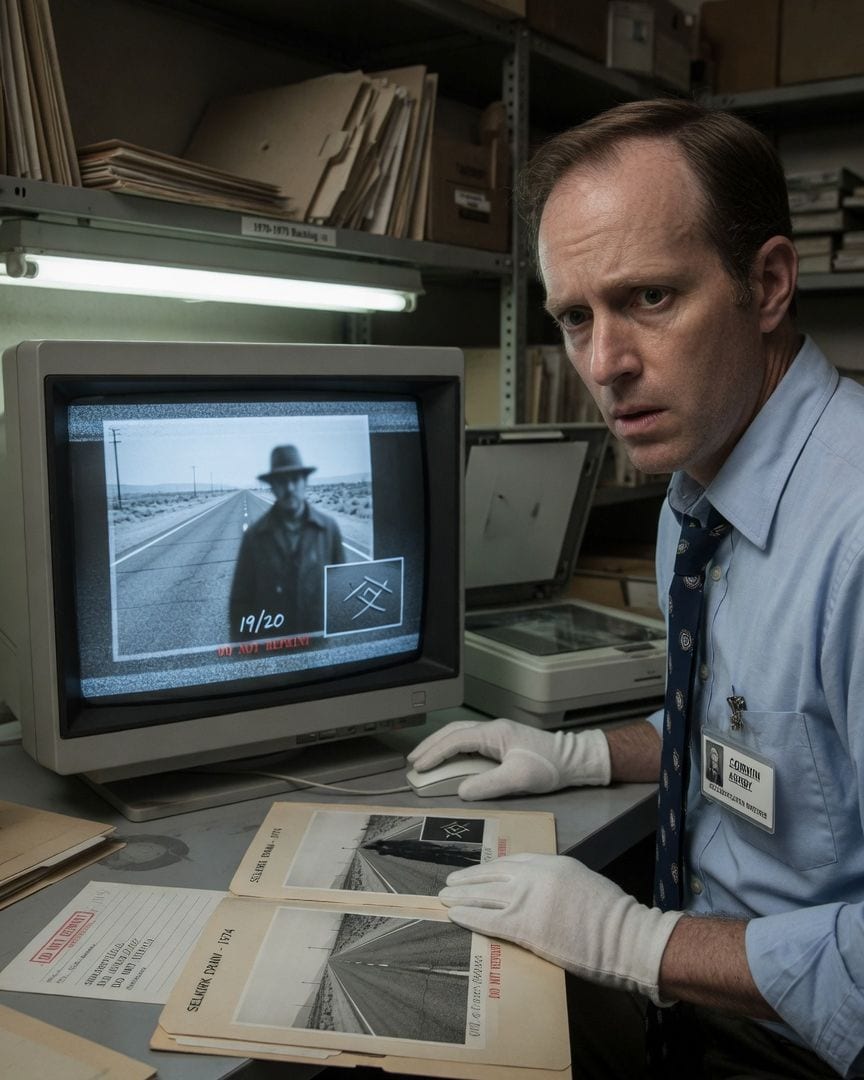 Declassified
Corwin Ashby, a declassification reviewer whose life revolved around meticulous order, pulled a dusty file from a 1974 backlog. Inside, nineteen black-and-white photographs tracked a lone hitchhiker on a desolate Nevada road, each image showing him steadily nearing the camera until his face blurred inches from the lens. The twentieth photo was missing, but its slot bore a stark 'DO NOT REPRINT' stamp and the unsettling handwritten notes: 'SUBJECT ACQUIRED' and 'DO NOT VIEW.' As Corwin tried to digitally enhance the final available image, the hitchhiker's blurred eyes in the photograph seemed to shift, looking directly out of the frame.
10 min read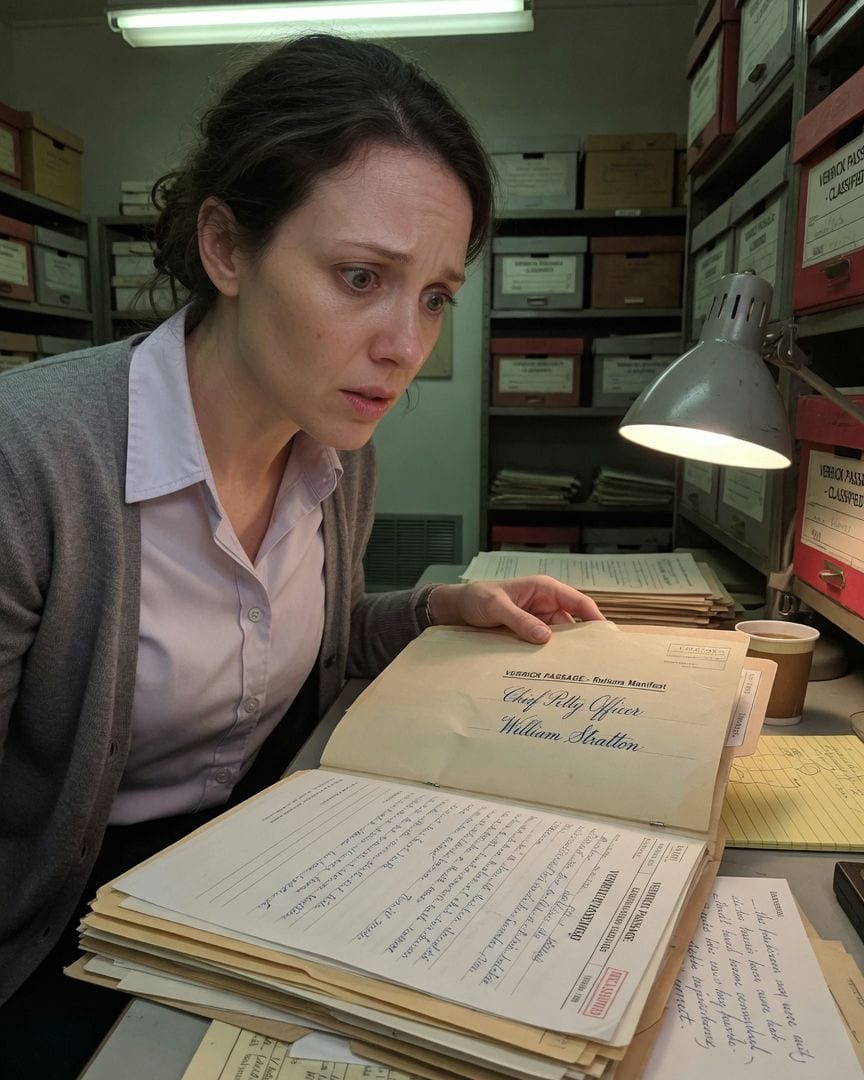 Declassified
In the sterile hush of the declassified archives, meticulous reviewer Ione Fash had a routine task: cross-referencing witness statements from the Verrick Passage file. But as she reviewed files eighty years thick with official silence, she found nine separate interviews containing the exact same chilling sentence, all in an identical, precise hand. Her rational mind sought explanation, yet then she discovered something worse: personnel files for men lost in 1943, still being updated with modern requisitions and payroll runs. Each impossible entry, including a manifest signed just two weeks ago by a casualty from eighty years prior, bore the same unnervingly perfect signature. The file wasn't just a record of the lost; it was still being signed.
9 min read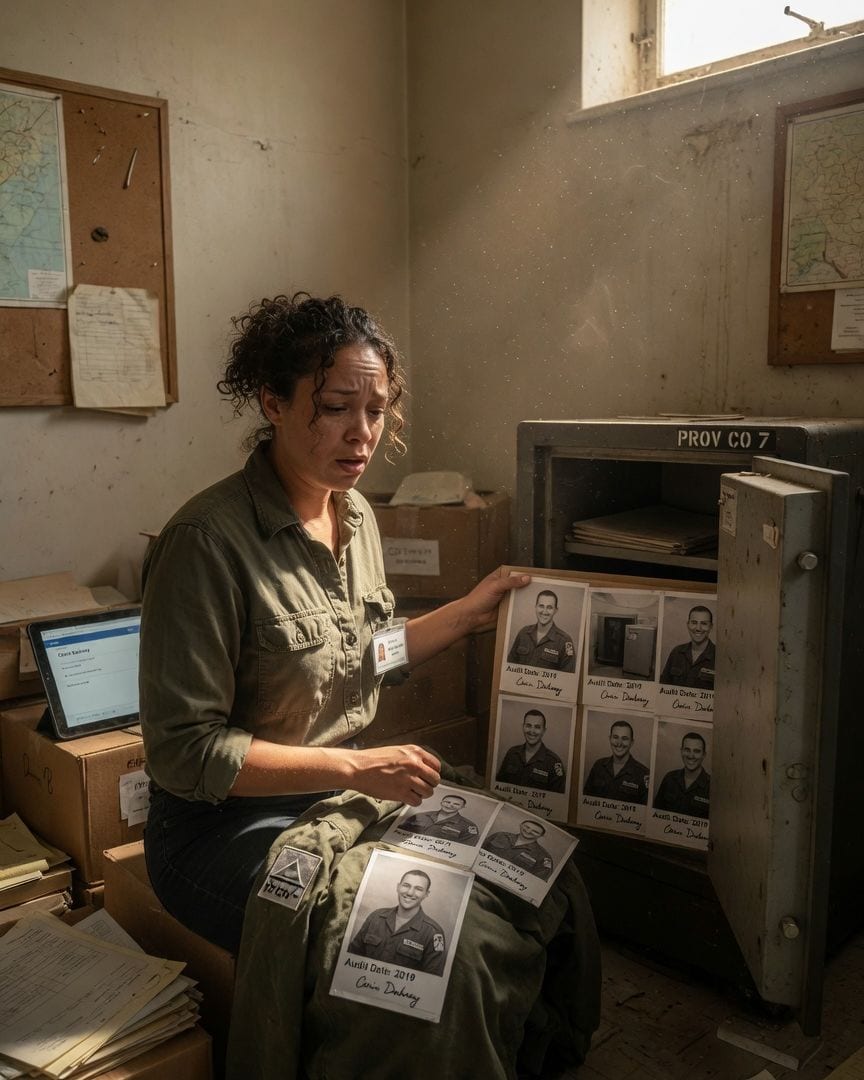 Declassified
With just eight days left before Fort Halloway was gutted by demolition crews, Corin Calloway worked to clear half a century of forgotten lives from its dusty archives. As she meticulously sorted through records, she discovered an old, unlisted safe, its pitted door stenciled with a phantom designation. Inside, Corin found seven personnel jackets, each dated '2019' and signed with the name 'Corin Dabney.' But Corin Calloway knew she had never set foot in the building before this week, and the name 'Corin Dabney' existed nowhere in the base's official history. What secret was Fort Halloway's forgotten safe trying to reveal?
13 min read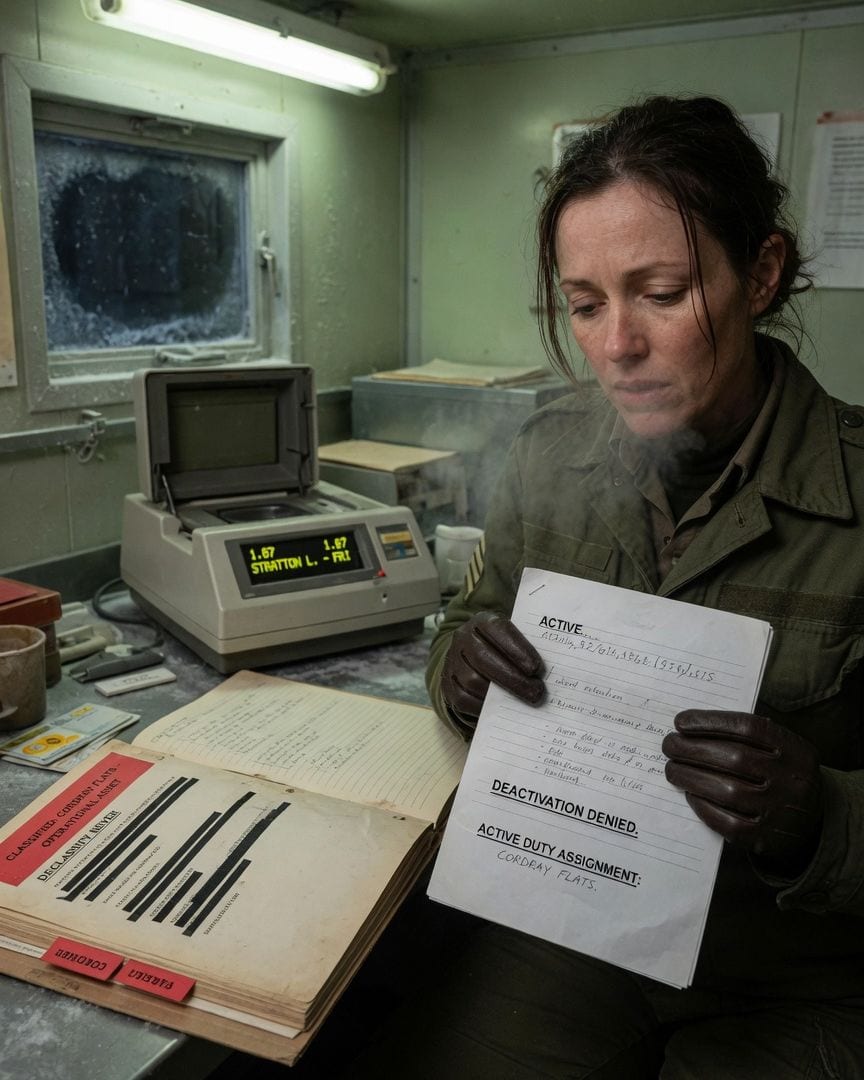 Declassified
Corporal Hettie Vance moved like a ghost through the cold, empty Cordray Flats in the winter of 1988. The decommissioned range was quiet, her film-badge processing a rote exercise, until the 141st badge appeared. It belonged to Leonard Stratton, a research assistant who'd died in 1987, yet the scanner showed a full working exposure. Hettie found its date wheel manually reset for the coming Friday, and a secret file later confirmed an impossible directive: 'ACTIVE DUTY ASSIGNMENT: CORDRAY FLATS.' Who reset the badge, and for what purpose, on a range supposedly abandoned?
12 min read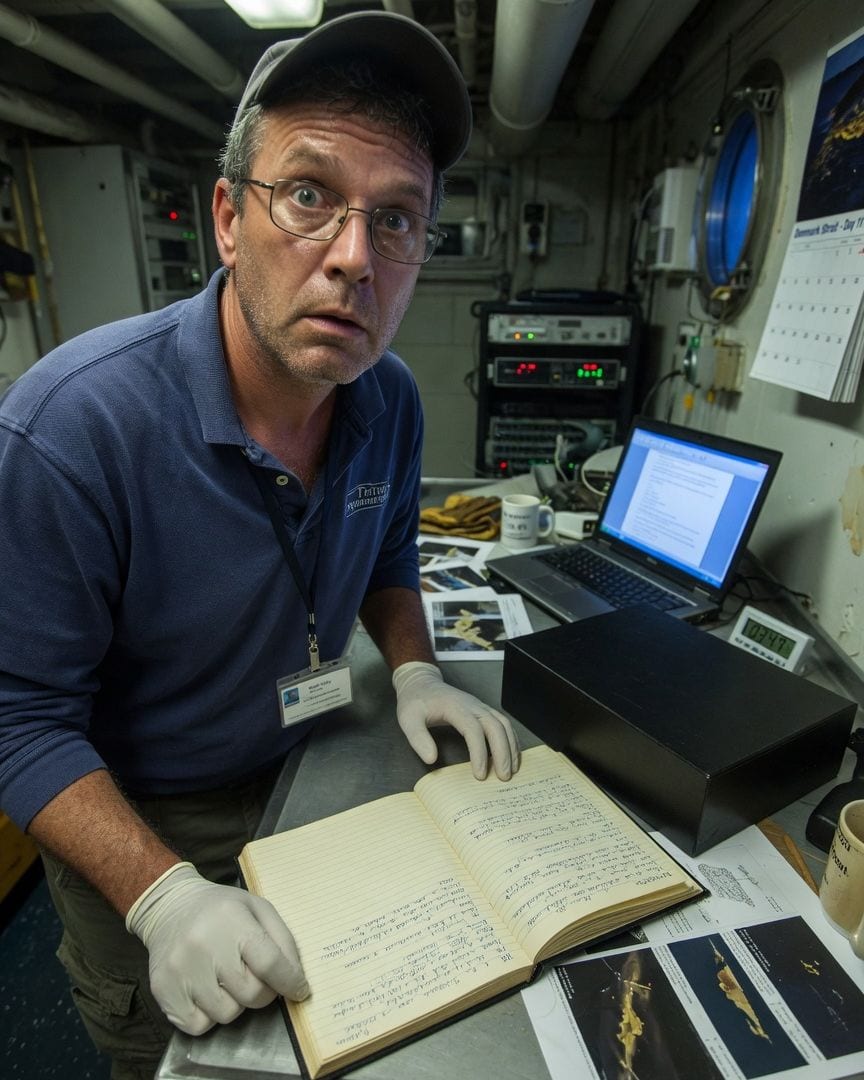 Declassified
Hydrographer Wells Duffy had spent eleven days in the *Triton*'s control room, guiding the deep-sea submersible through the crushing dark of the Denmark Strait, chasing a phantom sonar signature. When the USS *Gale Prescott*, lost with all hands in 1968, finally resolved on his monitors, triumph turned to unease as he saw its escape hatch stood simply ajar. The hatch rim and ladder rungs were eerily clean and worn bright, used repeatedly long after the ocean claimed the vessel, prompting Captain Crane to authorize an unauthorized dive. Inside the frigid wreck, Wells discovered a non-Navy container, strangely warm, holding a logbook whose precise entries continued across the decades, ending in the impossible date of '12.03.2012'.
11 min read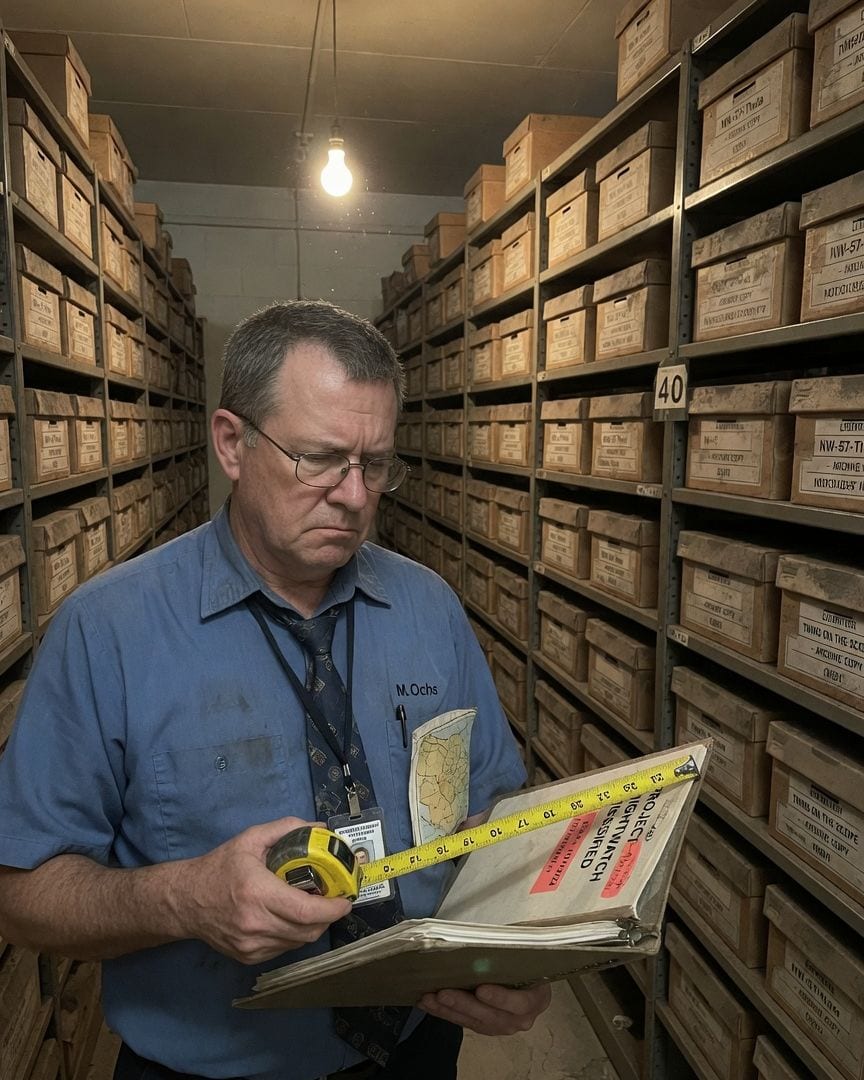 Declassified
Marlin Ochs, a creature of habit after nineteen years at the St. Louis federal records depot, faced his final patrol through Aisle 40 before its scheduled pulping. His routine walk, usually 92 precise strides, suddenly stretched to an impossible 119, making the aisle 61 feet longer than its blueprint. The extra section felt colder, lined with dust-laden boxes bearing alien classification codes and no manifest. Inside one, he found a metal-bound file: 'PROJECT NIGHTWATCH - CLASSIFIED,' dated 1957, but with a timestamp just hours old.
10 min read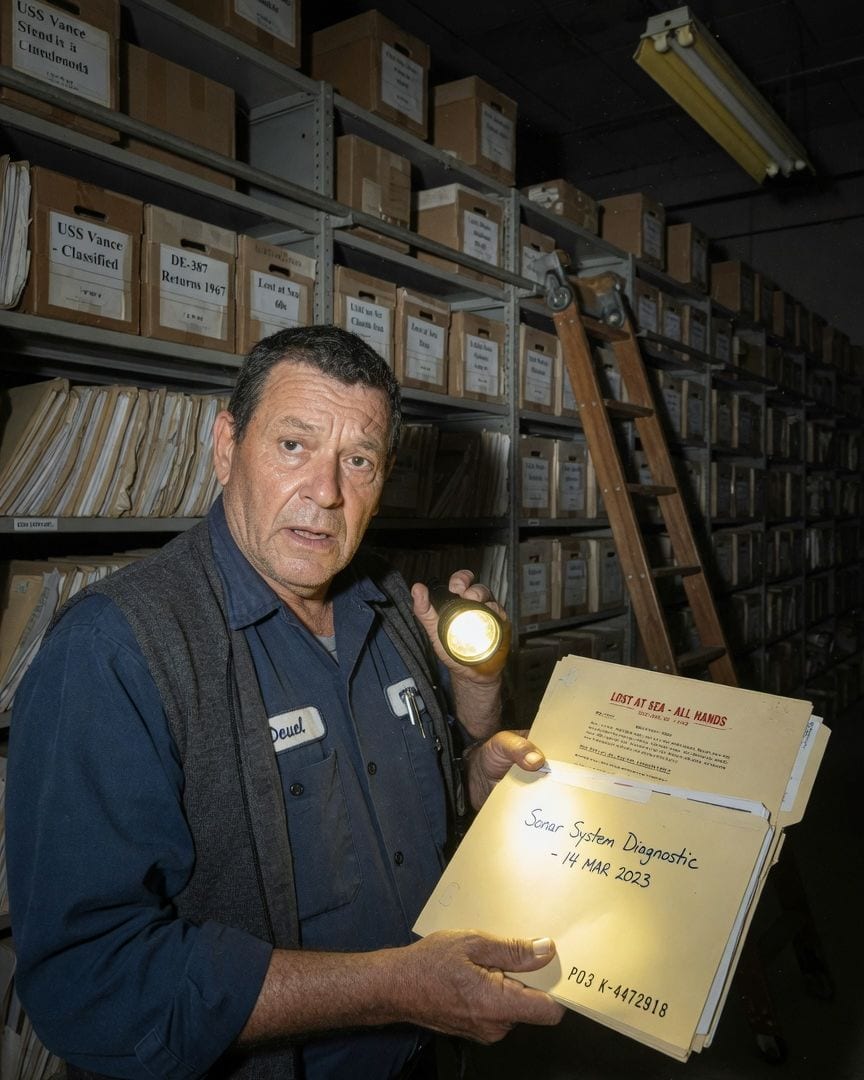 Declassified
Carmine Deuel, 62, spent forty years amidst the dust and forgotten files of the Suitland annex. One night, alone in the cavernous space, a sticky squeal and the faint sway of a rolling ladder broke the silence. He found a classified file from the USS Vance, a ship lost in 1968, pulled from its shelf. Inside, a typed form held a handwritten entry: a routine sonar check, dated last Tuesday. The ink, impossibly, looked damp yet was perfectly dry. Who had accessed the file, and how could its entry be so recent?
9 min read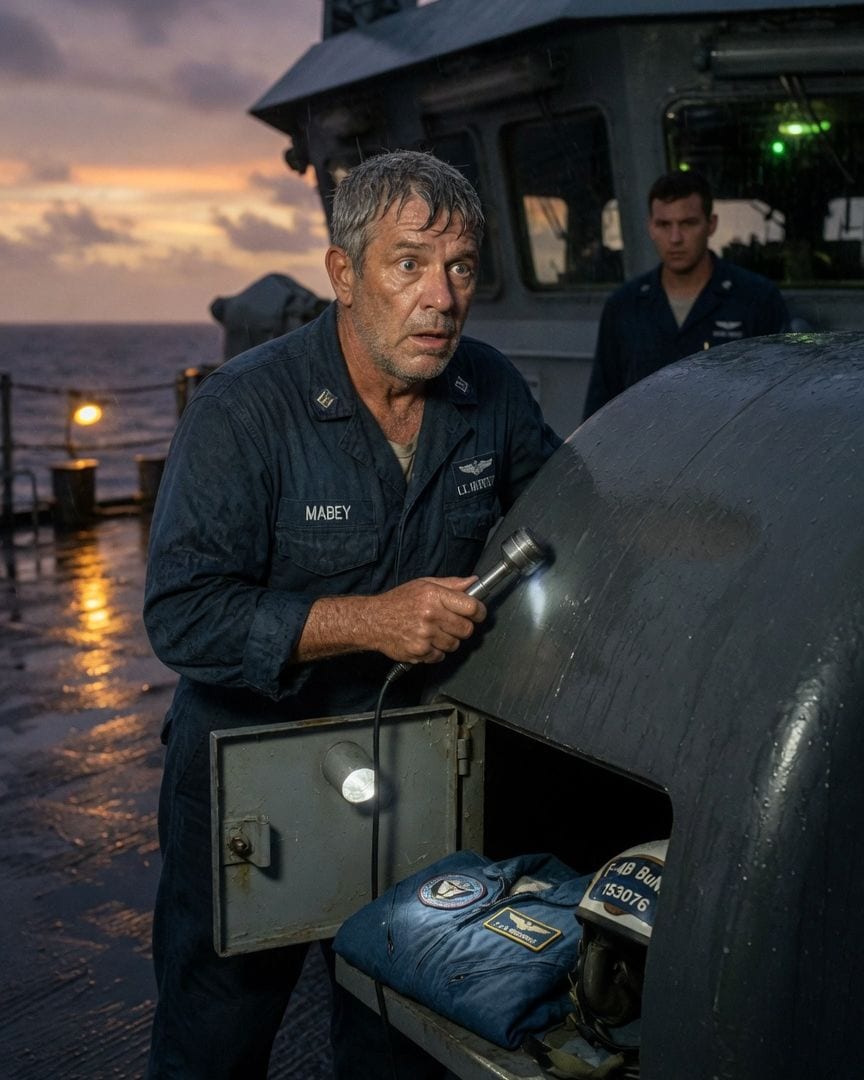 Declassified
In 1972, Chief Petty Officer Walter Mabey supervised a recovery mission aboard the USS Vance, straining against rain and unease as the crane began to haul up what sonar promised was a lost F-4 fighter jet. But the crane's gauge screamed past sixty tons, a massive weight for a jet, and the dark shape that broke the surface was no mangled aircraft. Instead, a seamless, charcoal-gray mass sat on the deck, cool and featureless, devoid of any wings, cockpit, or even a single rivet. As Mabey investigated its impossibly smooth surface, a hidden hatch opened to reveal a pristine Navy flight suit inside, bearing the name and tail number of the very pilot they were meant to be recovering.
14 min read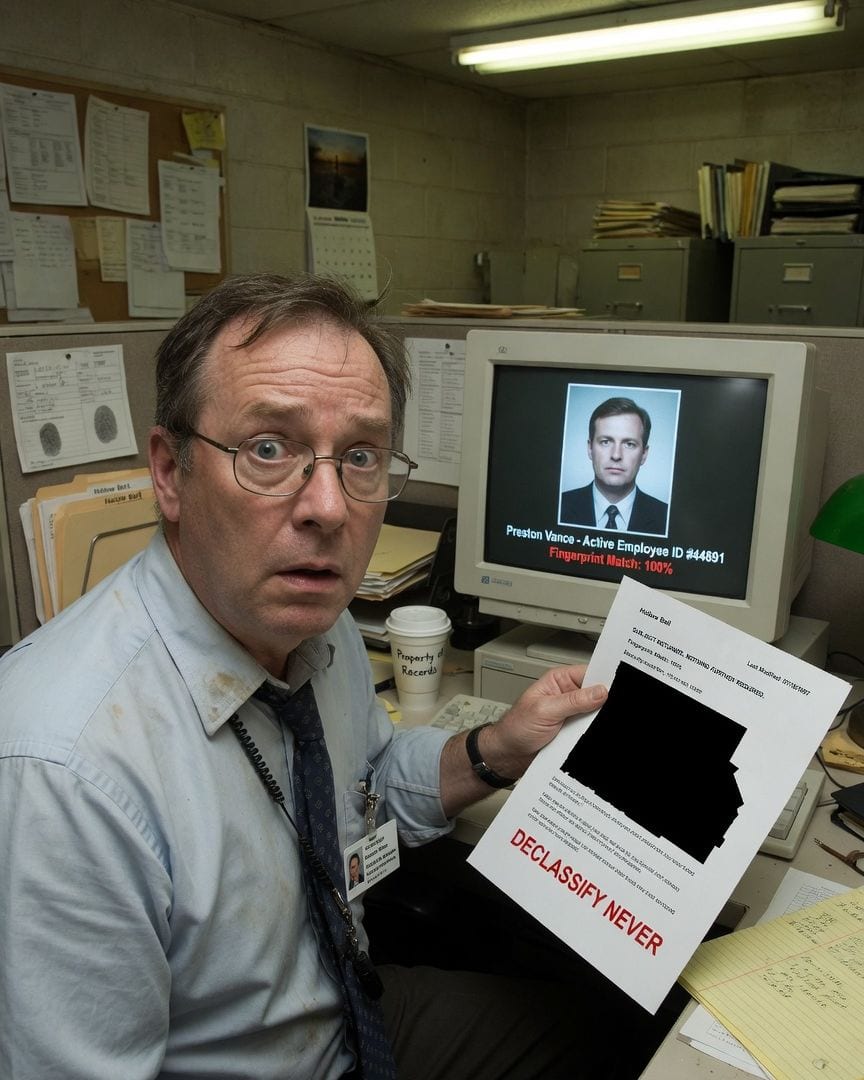 Declassified
Anton Skeel, a government records reviewer nearing retirement, anticipated a quiet end to his career. His days were spent in a dull, windowless office, sifting through the lingering paperwork of a bygone era. But a file labeled 'Hollow Bell' stopped him cold: it held fingerprints from a man, Preston Vance, reported dead in 1951. Anton's system then matched those prints to an active employee, badged into his very building that morning, whose personnel file showed a stranger's face and a section with a 'DECLASSIFY NEVER' redaction. Who exactly is Preston Vance?
12 min read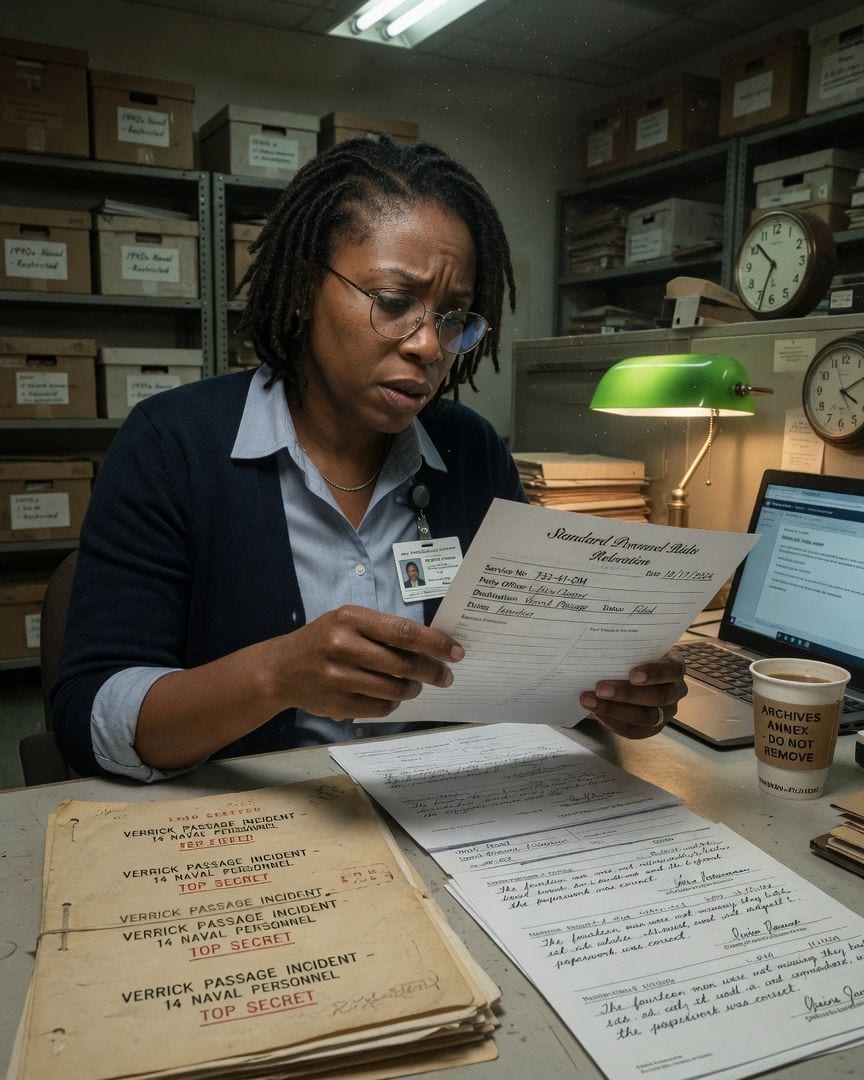 Declassified
Declassification reviewer Ione Fash worked against a looming deadline, her final hurdle a stack of heavily redacted Verrick Passage files. Inside reports from 1944 detailing fourteen missing naval personnel, she found nine witness statements all containing the exact same phrase, penned in an identical, machine-like hand. Her methodical mind flagged the impossible anomaly, but true dread landed when she uncovered a standard requisition form. Dated yesterday, it listed a living, active-duty Petty Officer for 'Relocation' to the Verrick Passage, bearing that same chilling, impossible handwriting.
12 min read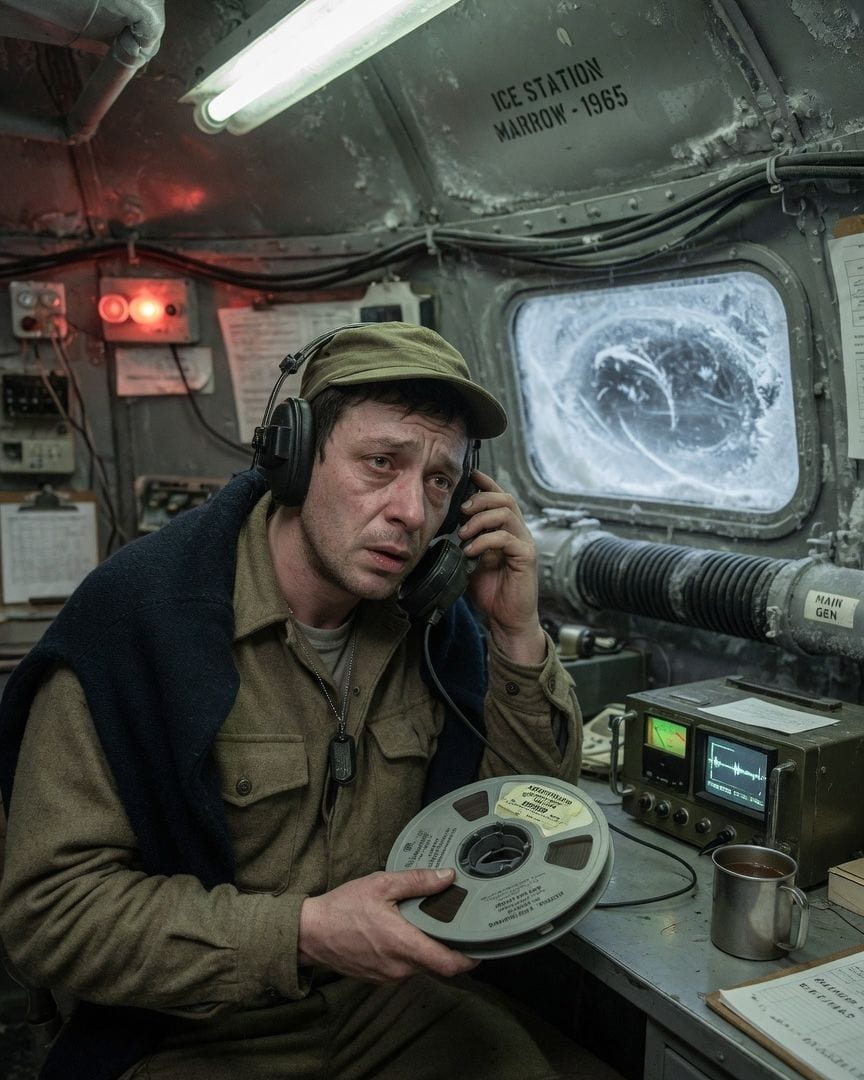 Declassified
At Ice Station Marrow in the winter of 1965, Corporal Yves Boudrie was bone-deep in loneliness after six days of relentless whiteout. With mail cut off since October, his only escape from the isolation was a stack of declassified archive reels. He played one, a woman’s voice reading Russian numbers, but a high-pitched moan like wind accompanied a sudden blizzard outside. The recording, labeled 1959 Bavaria, seemed to perfectly echo the storm's fury and its subsequent ebb. Yves soon discovered the reel also carried the distinct thrum of his own station's massive diesel generator, an impossible sound from six years and thousands of miles away. How could a Cold War recording from another continent mirror his present reality so precisely?
12 min read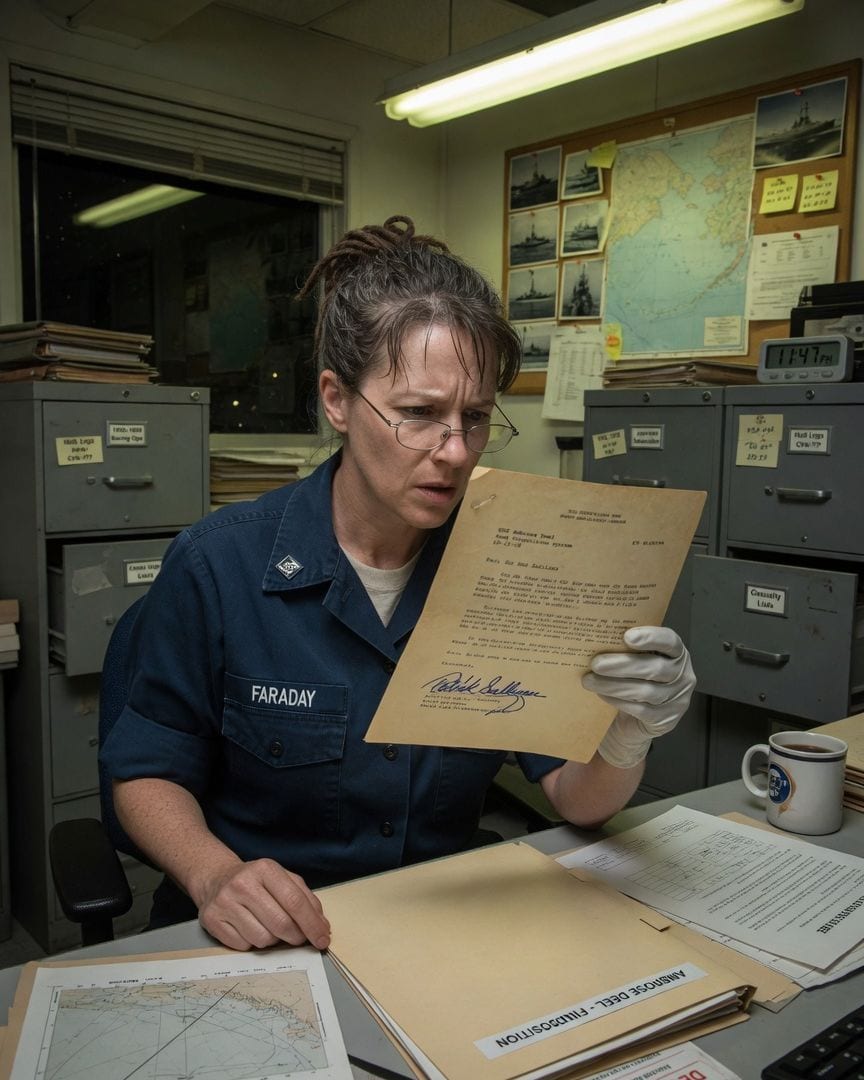 Declassified
Lieutenant Commander Josie Faraday faced a Friday deadline to close a sixty-year-old Cold War naval tragedy, reviewing the USS Ambrose Deel's final disposition in the declassification office. Unease pricked at her as three official records agreed on the sunken fleet tug's location and towing vessel, yet Josie found no ship matching that hull number had ever been built. Sifting through brittle, salt-and-dust-scented papers, she then discovered a maintenance sign-off for the Ambrose Deel dated three years after its official loss. The signature belonged to Patrick Sullivan, the Chief Engineer officially lost with the ship in 1955. How could a dead man sign off on repairs to a vessel already at the bottom of the Bering Sea?
11 min read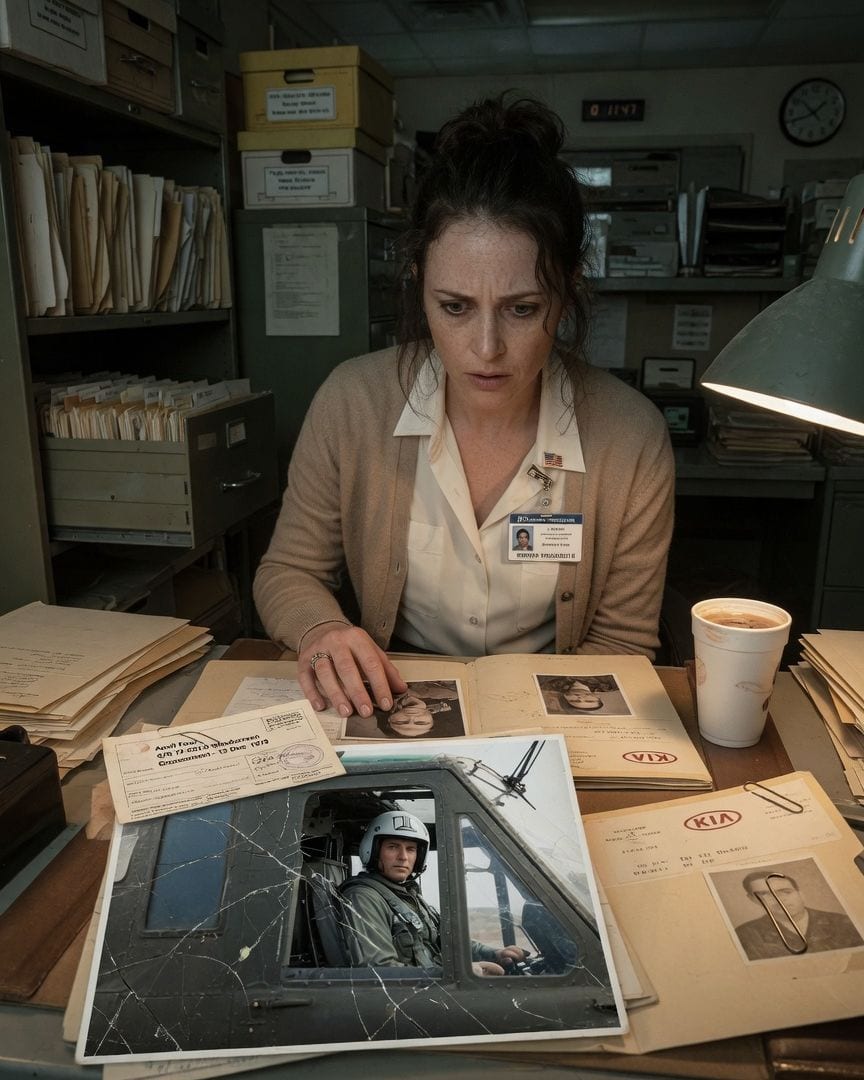 Declassified
Josie Ilnicki, a meticulous Department of Defense archivist, finally processed a file requested annually for forty years by a woman in Reno. The Anvil Four file detailed a UH-1H helicopter officially lost in April 1979 during a training exercise over the vast Nevada ranges, holding the usual reports of a cold disaster. But tucked inside, dated eight months after the crash, was a maintenance sheet for Anvil Four, complete with a grainy photograph. The image showed a man, calm and unsmiling, sitting in the helicopter's cracked cockpit – a man Josie identified as Major Oscar Vance, the pilot declared Missing In Action on the very day the helicopter vanished. What impossible truth did the official records truly hold?
12 min read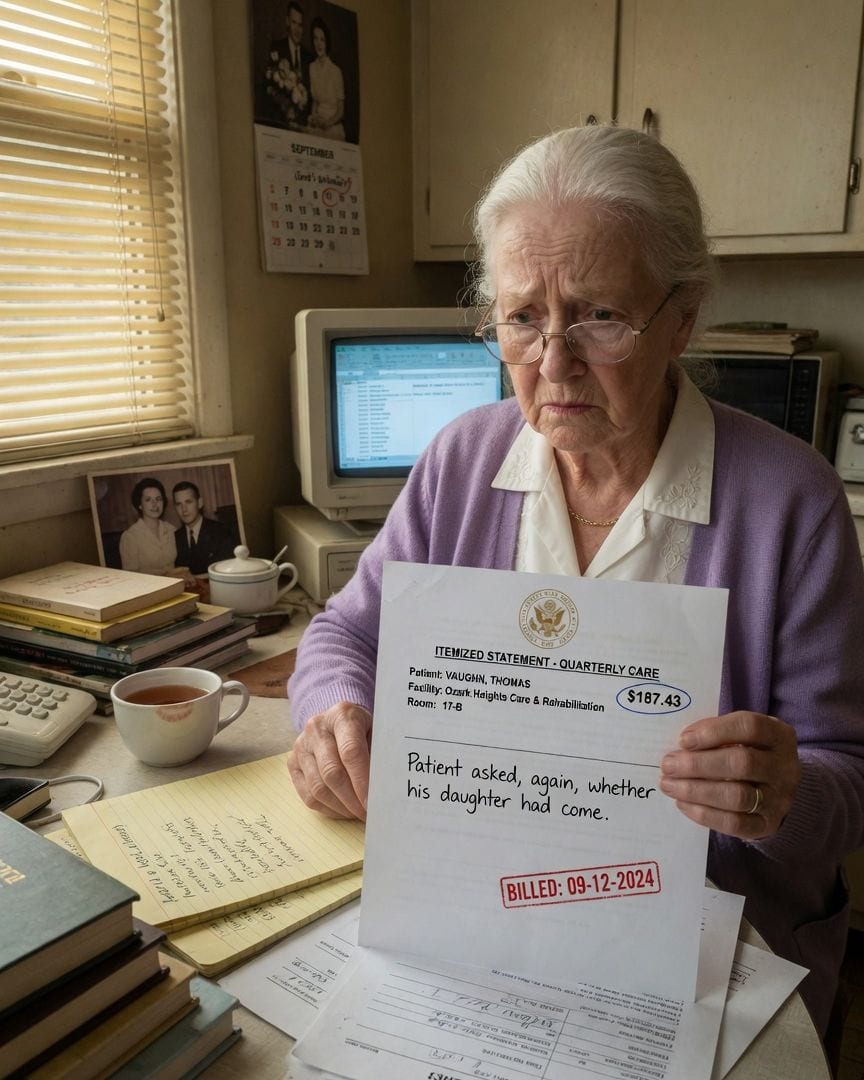 Declassified
Retired librarian Odette Cardew, 76, found her quiet morning shattered by an official Army medical bill. It was for her father, Thomas Vaughn, declared dead in the Chosin cold 74 years ago, yet listed active care at an Ozarks facility, with a note asking for his daughter. As she painstakingly cross-referenced defunct directories, she uncovered a secret Cold War 'Special Observation Unit' at the address, a black hole on any public map. Then, a declassified manifest revealed Thomas Vaughn was 'RELOC, INDET TERM,' not deceased, and a chilling line designated Odette herself: 'Dependent: Cardew, Odette. Status: Monitored.'
10 min read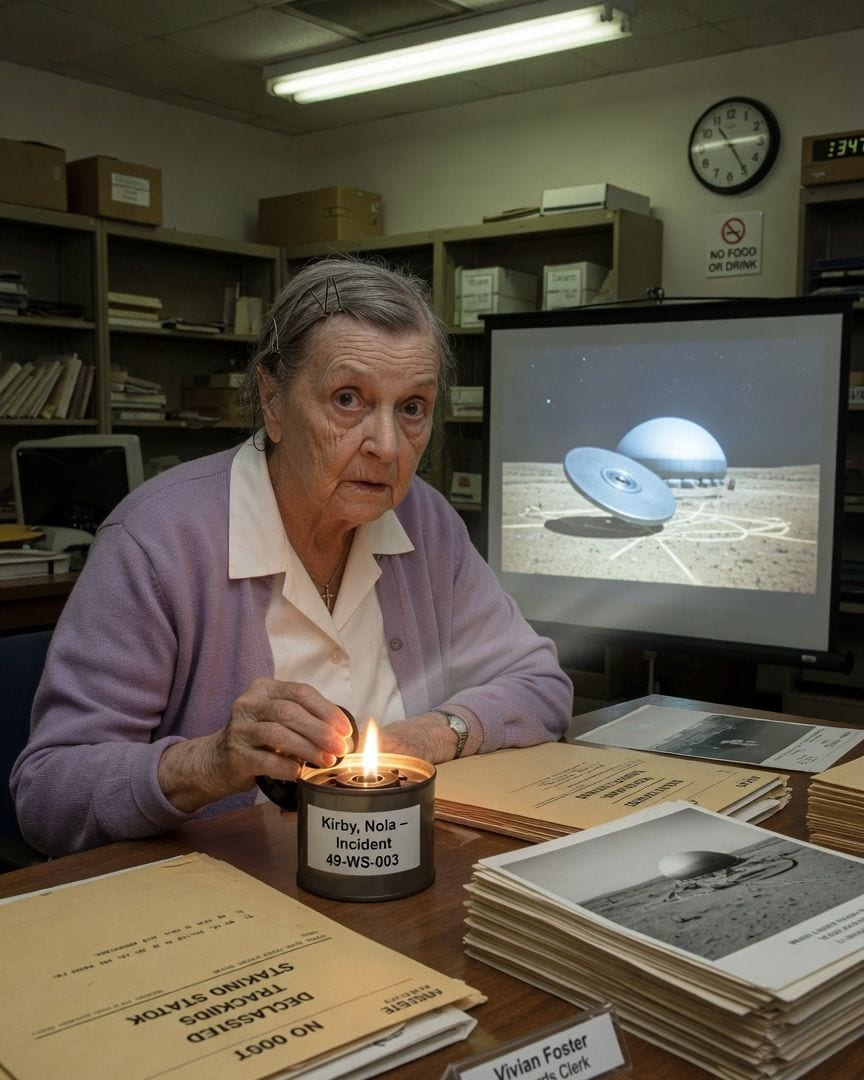 Declassified
Retired civilian Nola Kirby spent decades fighting bureaucracy to declassify her 1949 White Sands file. Back then, Staff Sergeant Kirby tracked an impossibly fast silver disc that paused deliberately, seeming to observe her as much as she observed it. Fifty-one years later, viewing her original film, she saw glowing lines etched around her tracking station in the object's reflection – lines she never saw that night. But the file held a deeper chill: official documents with her name and signature, dated decades after her retirement, including a maintenance sign-off from just two years ago. How could her name appear on records from long after she left service?
13 min read